Gaining Experience in More Developed Countries 1985–1992
In 1987, a Dutch restaurant owner studied Hungarian culinary literature and organized a Hungarian gastronomy week in one of his restaurants in Amsterdam. I was invited to be the team leader for this event. They sent the list of selected dishes, and I gladly accepted. I brought two more people with me: Sándor Kellermayer, who at the time was the most skilled student at the college, and János Czerman, the college’s pastry chef.
*
The week was a great success. Every evening we had to serve a full-house dinner at the restaurant located in the Nieuwe Kerk (New Church) on the main square of Amsterdam, the t’ Nieuwe Kafe. The guests gave us a standing ovation every evening. Mr. Jong, the owner, would come each night to ask what ingredients we needed for the next day, pick up the phone in the kitchen, and order everything. By the next morning, everything was in the restaurant. After the first evening’s dinner and the well-deserved applause, he came into the kitchen and praised us, saying everything was superb. He asked if one thing could be arranged—namely, that the roast duck should be served boneless, because, as he said: “Here the guests are so comfortable, they don’t like to bother with bones.” Of course, I said, and from the next day on we served the roast duck without bones. I managed to bring a look of surprise to the boss’s face when I poured French champagne in a high arc into the braised cabbage, which was enhanced with apples and prunes, served with the duck.
The following picture shows the main square (Dam Square) with the Royal Palace and the New Church. The latter, where we worked, is to the right of the palace.
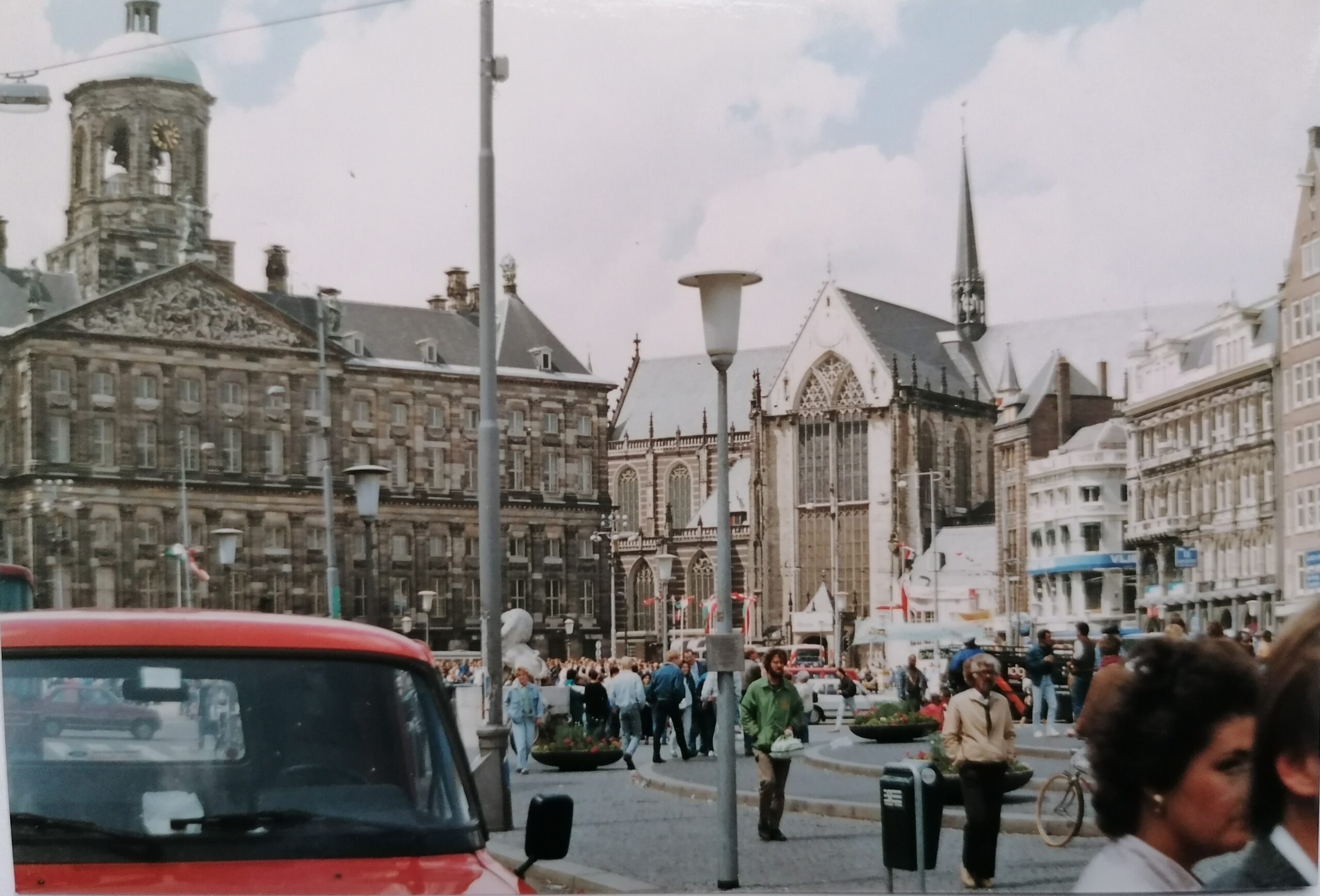
Main/Grand Square Amsterdam
There was likewise no problem when it turned out that one ingredient — pike-perch for the Gundel-style dish — couldn’t be sourced, and the owner asked what fish should be used instead. I said turbot (turbo in French), which is the large flatfish. Years later, I realized that this is one of the most expensive sea fish. Sanyi performed excellently, quickly adapted to the work pace, and made good use of his English and German skills. János, in addition to making, for example, a Dobos cake, also helped with various tasks during service. His habit was that when I said something like, “Jani, bring the mashed potatoes from the fridge,” he would reply, “Yes, Mr. Dénes,” then turn 360 degrees on his axis and proceed to carry out the task. It was hilariously funny :).
Jani had quite a challenge using Dutch ingredients — butter, cocoa powder — and worked all night to rewrite the proportions for the Parisian cream, as his first batch came out as hard as concrete.
During the daily work, we learned, for instance, that green beans are only blanched for 1–2 minutes and then immediately cooled on an ice bed. This technology, of course, was known to us as well — mostly in theory.
*
On one occasion, we were asked if we wanted to help with an off-site lunch event, to which we naturally said yes. We took hot turtle soup in thermoses and cold dishes, mainly fish. It turned out the event would take place on a boat cruising the canals of Amsterdam. At the back of the boat, we set up a small “hinterland” and plated the cold dishes, which included a deviled/stuffed egg and four or five types of cold fish, such as pickled herring with onions, mackerel, smoked trout and salmon, spicy shrimp, caviar, etc., along with some salad.
We were ready for service when they told us to step ashore next to the boat, where we lined up and waited for the guests. They didn’t say who was coming, but we figured they must be “important” people if they were getting such a formal welcome. The delegation arrived. The main guest first approached the captain, who stood at the front of the line. They shook hands while the ship’s captain greeted him in Flemish. Then the restaurant owner greeted him in English, and then he stepped up to me, and while shaking hands he said: “Béla Köpeczi.” I responded: “Good afternoon in Hungarian! Dénes Sándor, Hospitality College, Hungary.” He stepped on, slightly surprised.
By this time, it had become clear that the Dutch and Hungarian Ministers of Education were meeting on the boat. In his speech, the Hungarian minister said he would like to see the return of the “practice of foreign studies” that already functioned well in the 17th–18th centuries. At the time — and even now — I considered this proposal a key idea.
When the guests, especially the Hungarians, received the cold assorted platter, they weren’t too fond of it due to the large amount of fish. After a while, they started asking if there might be some more deviled eggs. Of course, we had reserves, so we quickly served several extra plates of eggs, for which they were extremely grateful.
*
One day, we were invited to lunch at an upscale restaurant. The main course’s “al dente” (crisp-tender) vegetable side dishes — including asparagus, artichoke, carrot — and the mashed potatoes were served on a silver platter placed at our table. The steak was sliced in front of us and placed on our plates, while the sauce was offered on the side. The lunch was delicious. As we were leaving the restaurant, we heard a rhythmic clacking sound behind us on the street. We turned around and saw that a waitress was running after us because one of our group had left behind half a pack of cigarettes in the restaurant — she had brought it after us. This remains a memorable and instructive moment for me to this day.
*
From the restaurant where we worked, after the daily shift we would go in the evenings to the “Red Light” district, to a pub blasting Latin music, to have a beer. Incidentally, during work we were also offered “protective” drinks — we could choose from cola, coffee, water, or beer. I chose the latter. The so-called staff changing room was co-ed and located in a side wing of the church, up a staircase. On one occasion, we were waiting in the restaurant to go up and change clothes. The boss asked what we were waiting for. I told him we were waiting for the changing room to be empty because the waitress girls were upstairs. The boss replied that we should just go up and change — this is a democracy. So we did. True, some of the girls were half-naked at the time, but neither they nor we were bothered by it.
*
On one occasion, Mr. Jong took us to his procurement site. It was a wholesale complex, where separate buildings housed vegetables and fruits, fish, meat, cheese, etc. The variety and quality of the goods were delightful. Seeing the fantastic abundance of meats and meat products, I remembered how back then in Hungary many proudly claimed that nothing could surpass Hungarian meat products. Even today, I say this needs to be approached with nuance: there are excellent quality meat products in our country, but one can also find superb quality goods on the global market.
In the building selling cheese, we were offered a piece of Edam cheese, which the vendor cut on a cheese block. He brought out a few more types for us to taste, and finally presented his personal favorite — a very mature goat cheese. We tasted it with poker faces, but in an act of self-preservation — since there was nothing else to taste besides cheese — we asked for a bit more Edam to neutralize the flavors.
The next two pictures provide a glimpse into the selection of Dutch meat products and cheeses in 1987.
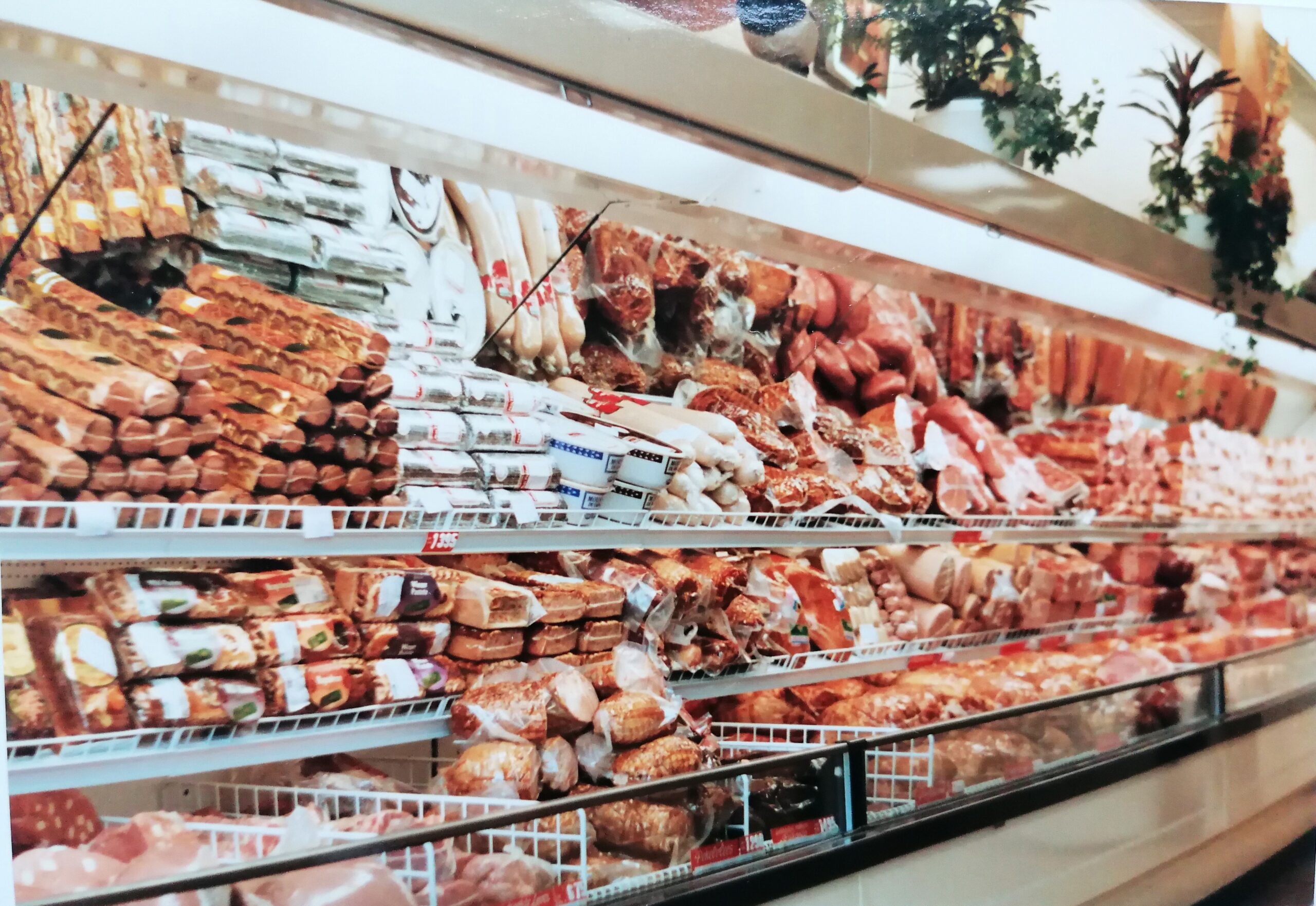
Meat Products
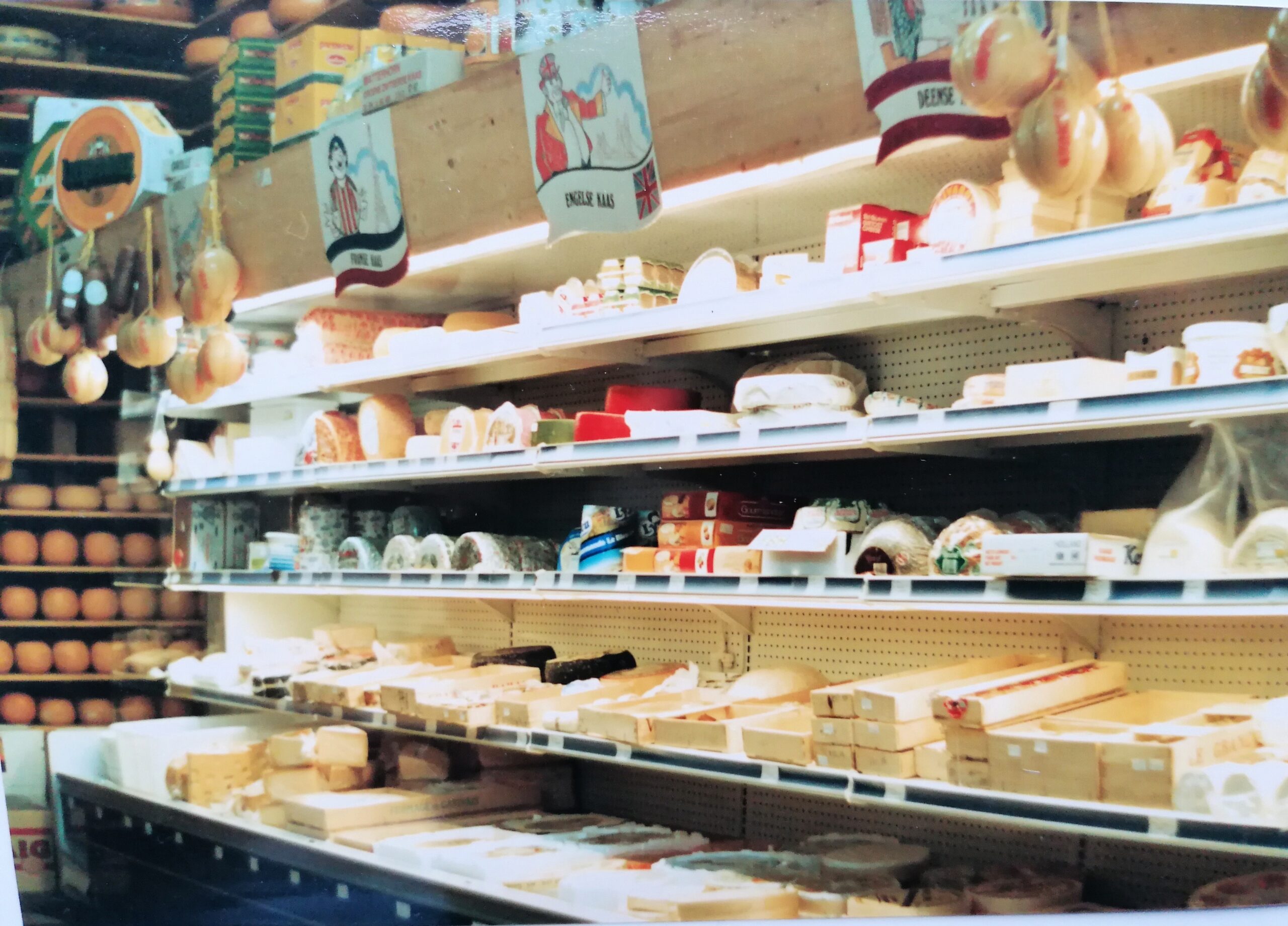
Cheeses
*
As already mentioned, the gastronomy week was a great success, we had a wonderful time, and the boss was very satisfied. When we visited the aforementioned food complex, we went to the non-perishable goods section and started buying sweets, mostly chocolates, as gifts. The three of us loaded the conveyor belt at the cashier with all sorts of chocolates when the boss stepped up and, with a gesture that allowed no objection, indicated that he would pay.
*
After that, the four of us went on a trip to the seaside, where we tasted freshly made tarkedli (mini doughnuts) sprinkled with vanilla-flavored powdered sugar. There were also several kinds of jam, Nutella, etc., available for tasting. Afterwards, we visited a few more towns, shops selling wooden clogs, and finally stopped to admire the stunning flower fields and windmills.
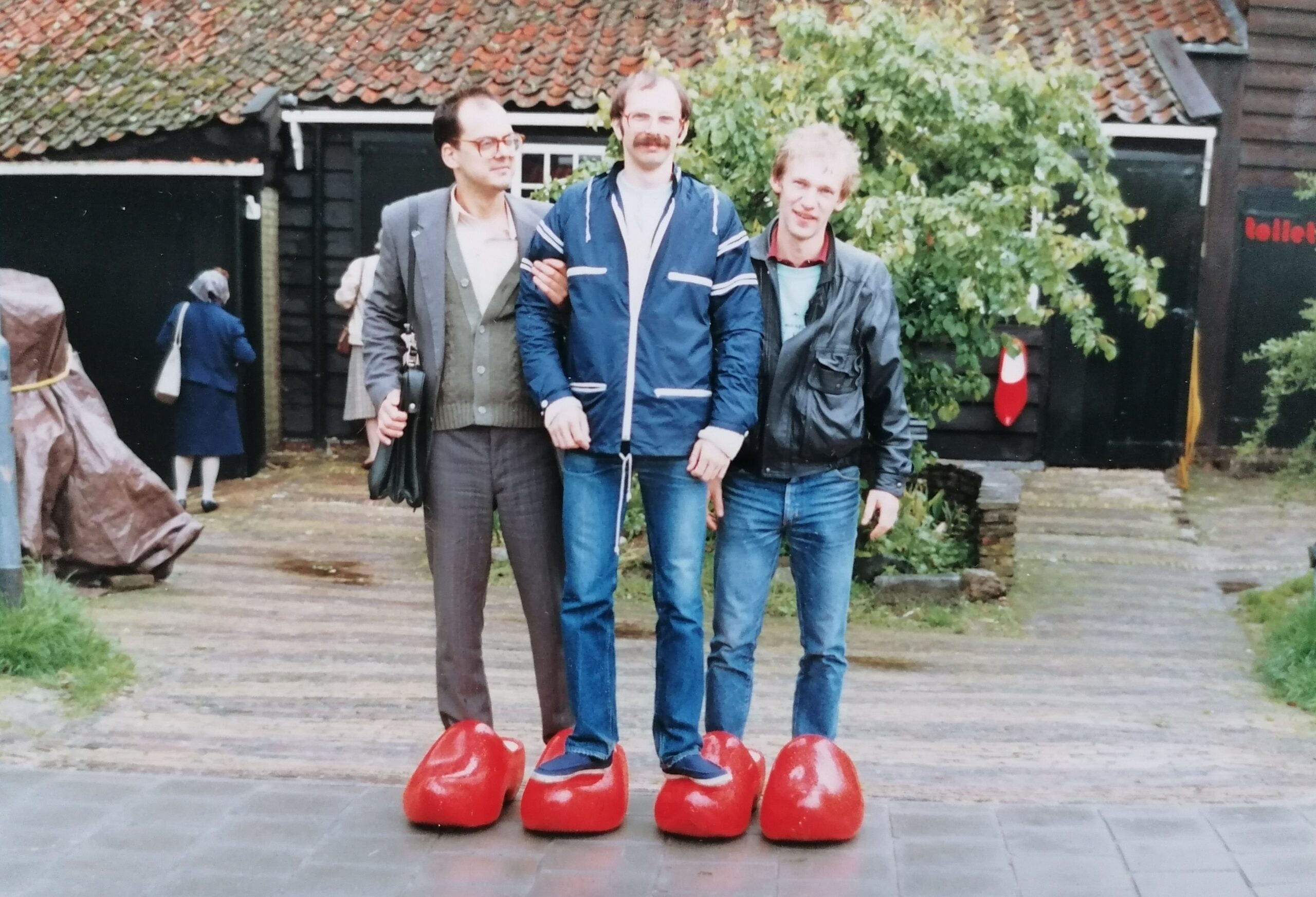
János Czerman, me, Sándor Kellermayer
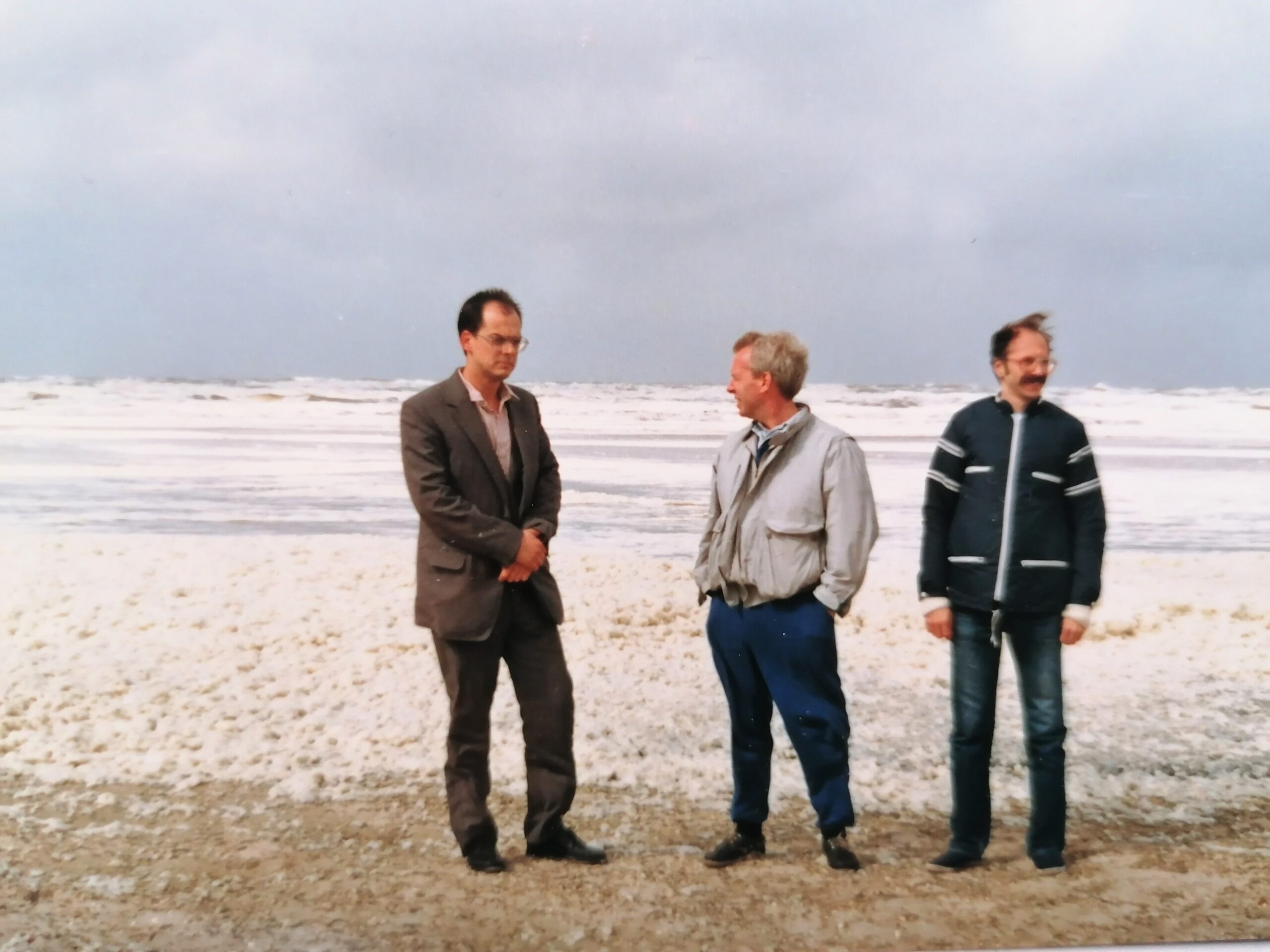
With János Czerman and Mr. Jong at the North Sea
*
We were already seated on the plane when we could open the envelope we received from the boss at our farewell. There were 100-100-100 guilders inside. So the boss paid the agreed honorarium, which he increased compared to the original amount, bought our sweets on our behalf, and even gave us 100 guilders as a surprise. That’s a gentleman who is satisfied and expresses it in various ways. The latter was a letter praising us, sent to the College management.
*
In 1988, we visited several hospitality vocational schools in Belgium. The traveling team again consisted of the best students at the time, and besides me, two colleagues from Erzsébet Hotel: Tibor Kocsis, head pastry chef, and László Dankai, sous chef. We arrived at the school campus with the college minibus and a passenger car, where we stayed for a few days. The next day, we visited the Wemmeli Hospitality Vocational School, which invited us, and we were invited to lunch in the training restaurant. The organizers seated the Hungarian and host school students so they could talk to each other. Both the training kitchen and the training restaurant were excellently equipped. The part of the restaurant where we sat was a step or two higher than the other section where other guests were dining. I observed one student waiter serving guests at a table, smiling the whole time. If one guest didn’t want coffee, he politely kept trying to offer tea while continuing to communicate. The boy’s work was extremely likable, showing a genuine hospitality spirit, even though he was probably only 16-17 years old. Our lunch was served by plate service, but complemented by food preparation and serving in front of the guests. The dishes were delicious. The next picture shows four Hungarian students and László Dankai.
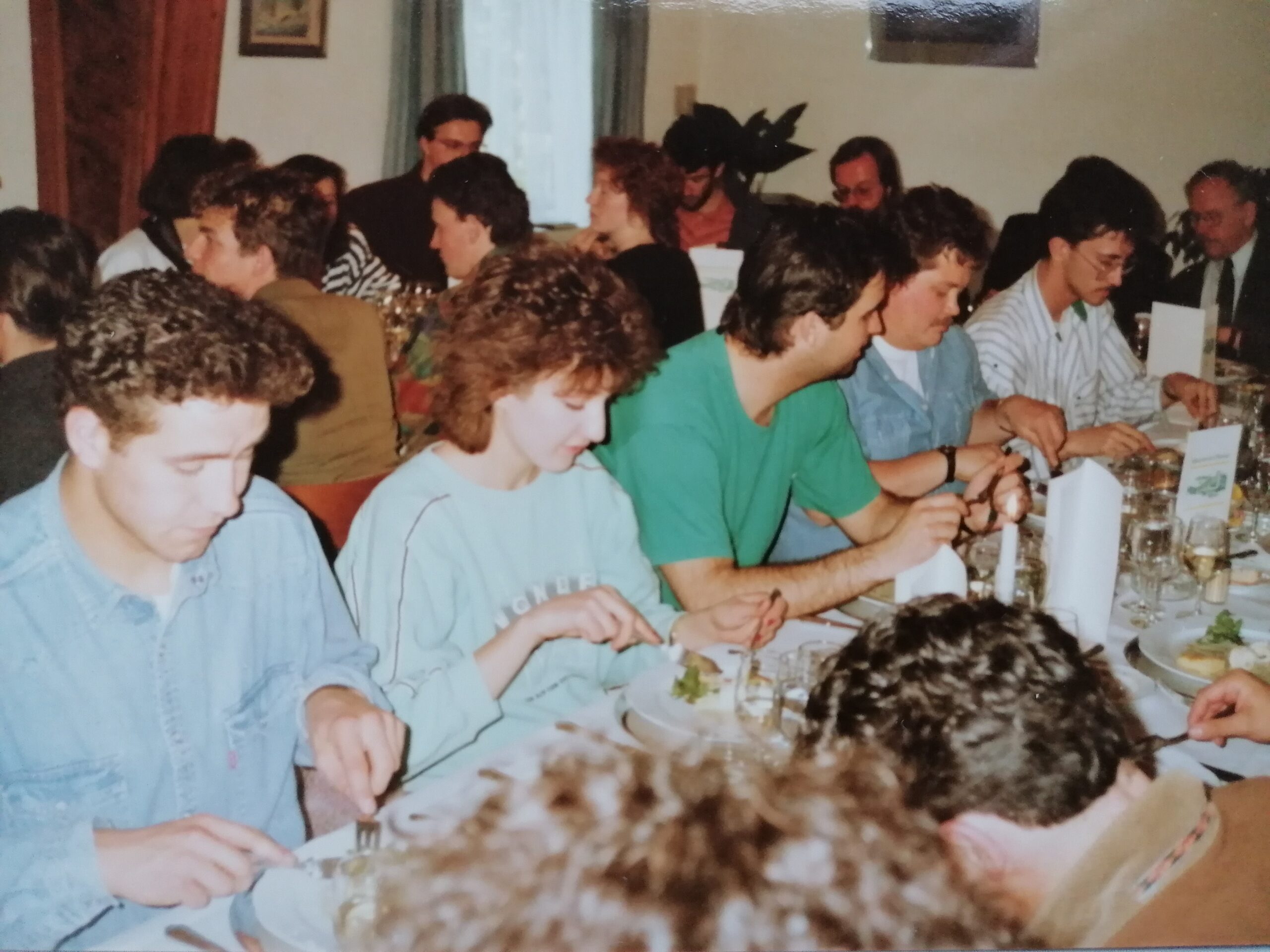
From left to right: 3 students, László Dankai, and one more student
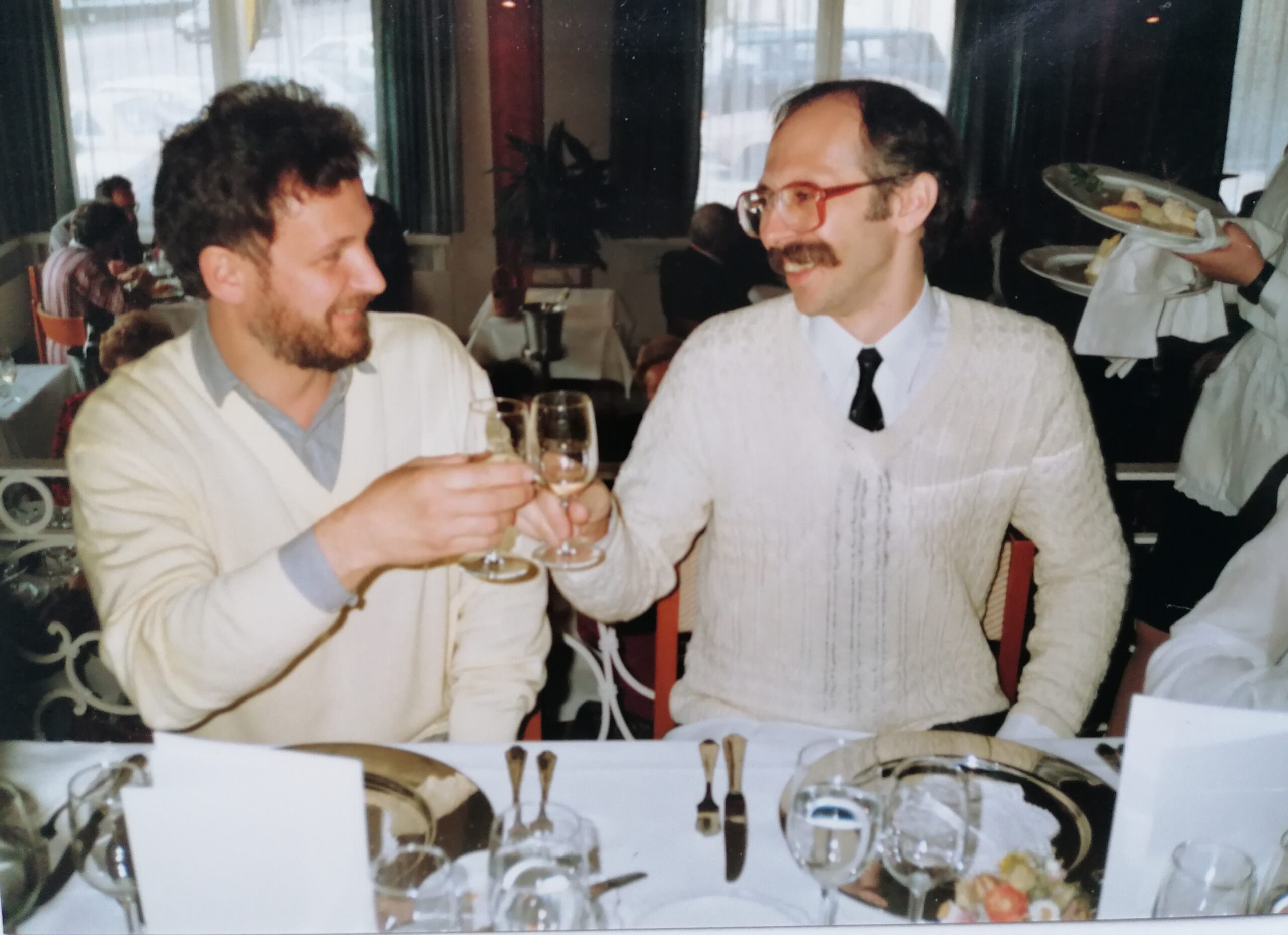
Toasting with Tibor Kocsis
*
The hosts also took us to Liège to another hospitality vocational school, which was also well equipped, and where we could have lunch with the local students in the cafeteria. It was interesting to see that the boys and girls around 16 years old each consumed/could consume a glass of wine during their lunch. This custom was part of the teaching, as they sipped the appropriately matched wine with their food in proper wine glasses.
*
The host school organized our programs very professionally, as they took us to several cities, e.g., Bruges, Brussels, Waterloo, and during the sightseeing tours, it was the task of the tourism students to present the various sites. They introduced the landmarks in three languages (French, English, German) to our groups, which were divided into three parts according to language, including other foreign students and teachers. The local teachers only rarely helped with communication. This was true practical education.
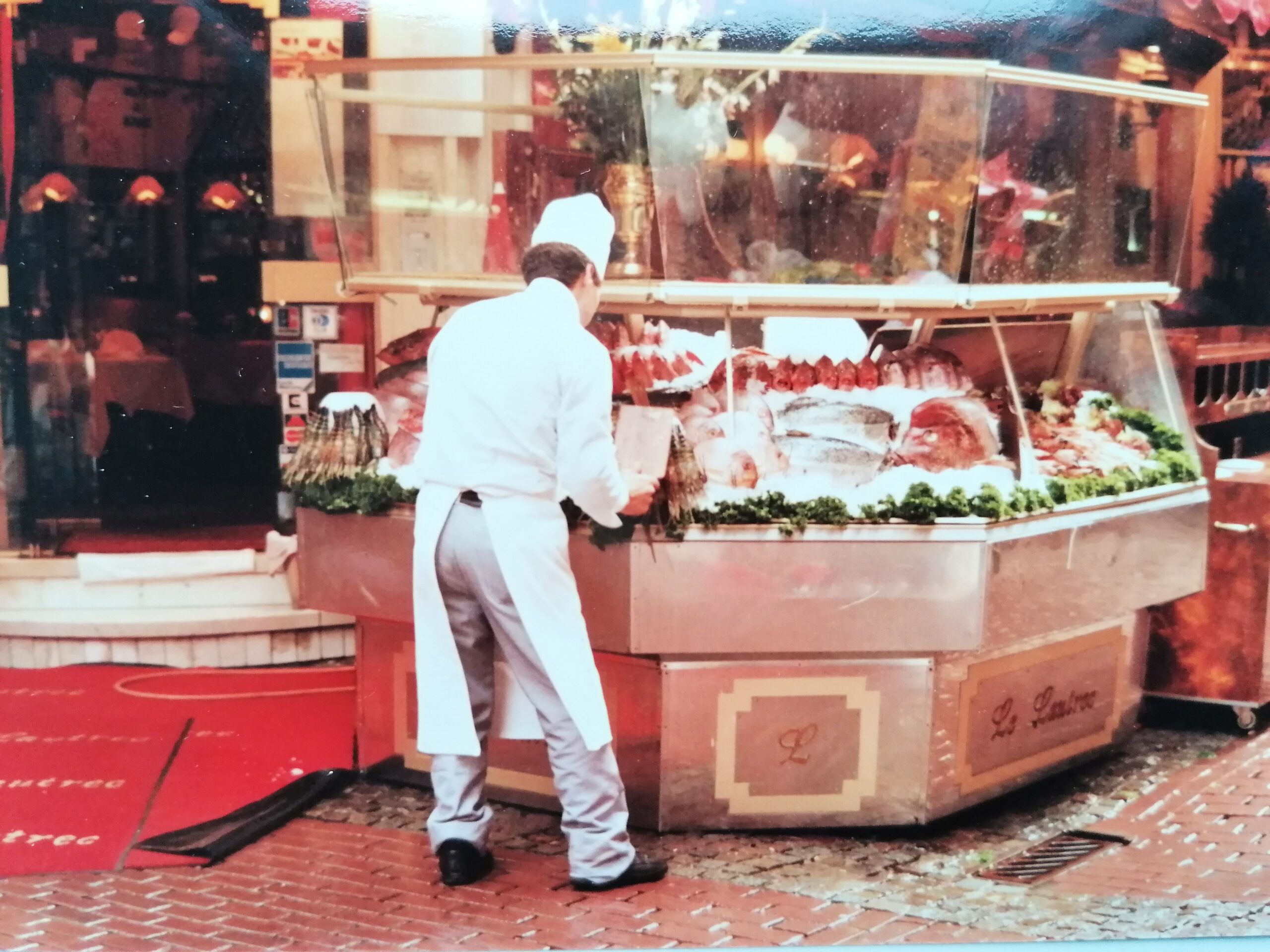
Brussels seafood display in 1988
On one occasion, we were taken on a professional trip to visit the Stella Artois brewery in Leuven. The whole experience was impressive. From a corridor on an upper floor in the bottling plant, we could watch the bottling process while the department manager explained what was happening and why. After the bottles were washed and before filling, some bottles were diverted back toward the washer on a returning side track. Our guide explained that before filling the beer, the washed clean bottles are also scanned with a laser, which detects if any debris, such as chewing gum, remains inside the bottle. The system then filters out these bottles and sends them back to the washer.
*
After the plant visit, the marketing director demonstrated the proper way to pour/draught beer in a training restaurant specially designed for this purpose. He took off his jacket, rolled up his shirt sleeve, then started opening the beer tap and let some beer run out of the pipe into the sink. “You’re probably surprised now, right?” he asked. “You always have to let the beer in the pipe run out before pouring it into the glass,” he said. Then he showed how to rinse the glass spraying it with cold water with the built-in brush. “The glass is clean when water running out of an upside-down glass flows evenly without leaving spots on the glass walls,” he said and demonstrated. The cold water serves not only to clean the glass but also to chill it. Next, beer was poured into a tilted glass, and at the end of pouring, the director created some foam in the now upright glass. He also explained other important details, such as the need for the matching glass and coaster with the specific beer, and that the beer glass must be placed before the guest with the logo facing them.
*
After the demonstration, several Belgian beers were tasted. The gentleman then invited us adults to visit a pub. We entered the closest pub. He was immediately recognized and hardly had to order before five glasses of freshly tapped beer were brought. He also explained that one should drink a glass of beer in three sips. If any beer was left in the glass, it would automatically be taken away and replaced with a freshly poured glass. We visited several more pubs, applied the knowledge we had gained, and then returned to the younger group in good spirits.
*
The Belgian study trip concluded successfully, and we returned to Hungary enriched with experiences and recharged.
***
*
Just as 1989 is an important year in Hungarian history because of the regime change and I was lucky to see and hear Mátyás Szűrös announce from the balcony of the Parliament at Kossuth Square that the new form of state is the “Hungarian Republic,” I also had a little trip to the USA.
*
This story began at the college. I had a student, Líviusz, whose father lived in Los Angeles, but the boy was studying full-time at the KVF. When we prepared soups in the training kitchen and I tasted Líviusz’s soup, I felt it was completely unsalted. I mentioned this during the evaluation, and he said that at home they don’t use salt. The whole group, myself included, was (very) surprised. Of course, in such cases, I always told the students that this is fine, I respect it, but if they owned a restaurant, they could not do this because they wouldn’t have customers. One must create an “average taste” that at least 90 out of 100 people like, but strive to make the food pleasant for all 100 guests.
*
On another occasion, Líviusz told me that his father would invite me to work as a cook in LA for the summer. I spoke with Líviusz’s father on the phone and asked if there would be a job opportunity for me in the summer to work? He said, “That’s not a problem.” We agreed.
*
When I arrived at the airport, nobody was waiting for me; I tried to call but got no answer. Eventually, someone came for me and took me to a house in a luxury neighborhood. The owner of the house was also a Hungarian businessman, a friend of Líviusz’s father. The next day the father appeared, who was not very bothered by the “cool” welcome the previous day but said we should go and look at job opportunities. I asked if there was actually a job for me as a cook, and he said, “That’s not a problem.” I think I had heard that before… We drove around different hotels, restaurants, sometimes rundown places, but he always returned to the car disappointed. He said he would look around again the next day and inquire where I could work.
*
Several days passed while I tried to keep myself busy by preparing food for the people living in the house. I found only a minimal amount of salt in the kitchen, so I told the host there was no salt. He said they would buy some. The next day I had to cook with zero salt, but they didn’t worry at all. They were actually very grateful to have freshly made meals. Their eating habits were funny because they drank zero sugar and caffeine cola, which was already available in the USA then, thinking they were eating healthily, but at the same time, they ate a bunch of muffins daily. I reminded them again to buy salt. On the fourth day, the salt finally arrived. Around this time, I told them that since there was no job, and not even at a high standard place, I was going back home to Hungary. They were sorry but arranged for me to have a plane ticket about a week later. The house was a pleasant place with an outdoor swimming pool, situated on a hillside with a panorama. It was a good adventure, but that wasn’t why I went there—I wanted to earn some money during the summer teaching break and improve my professional knowledge. It didn’t turn out that way, but I don’t regret the two weeks I spent there.
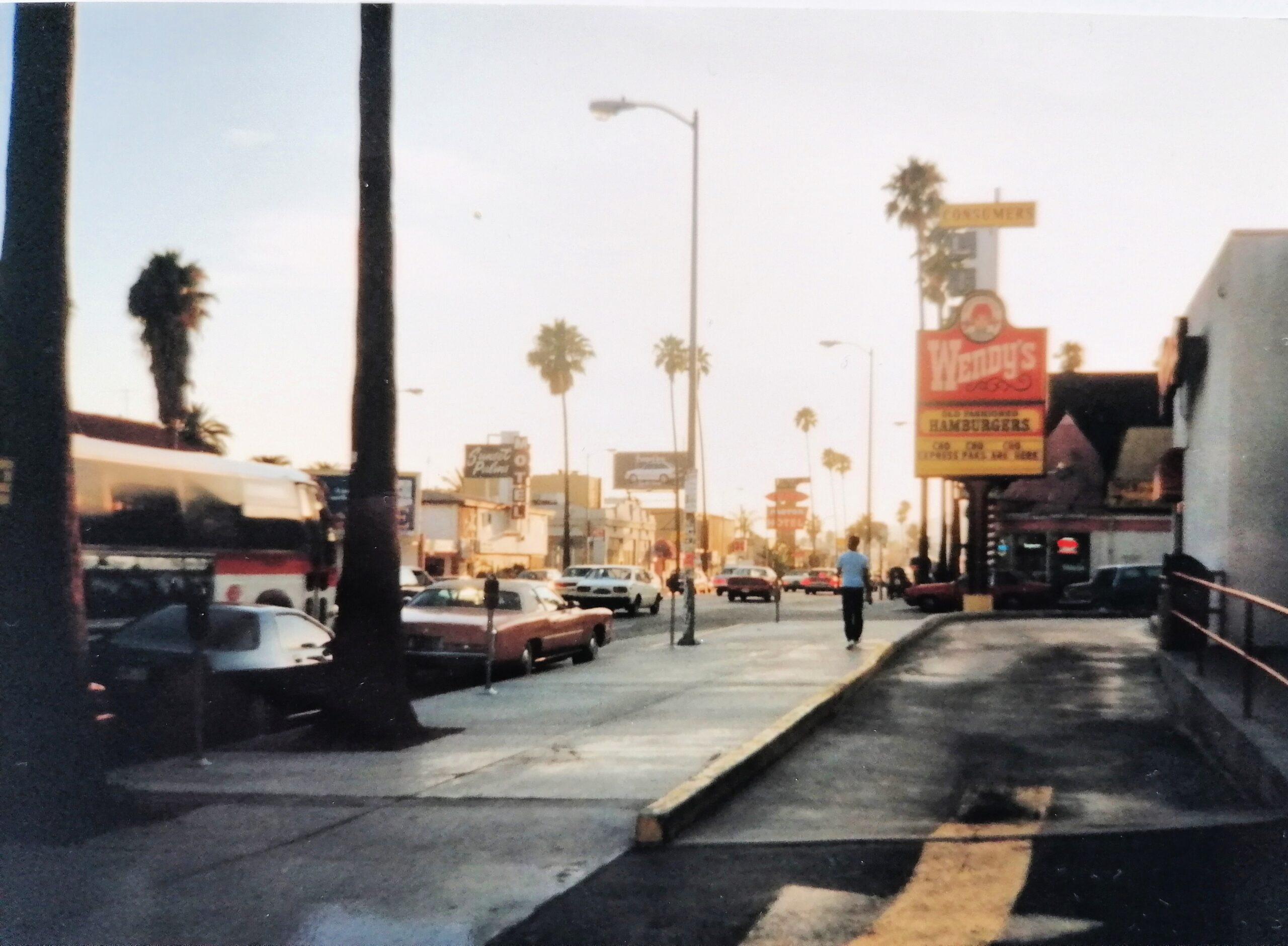
Sunset Boulevard, L.A.
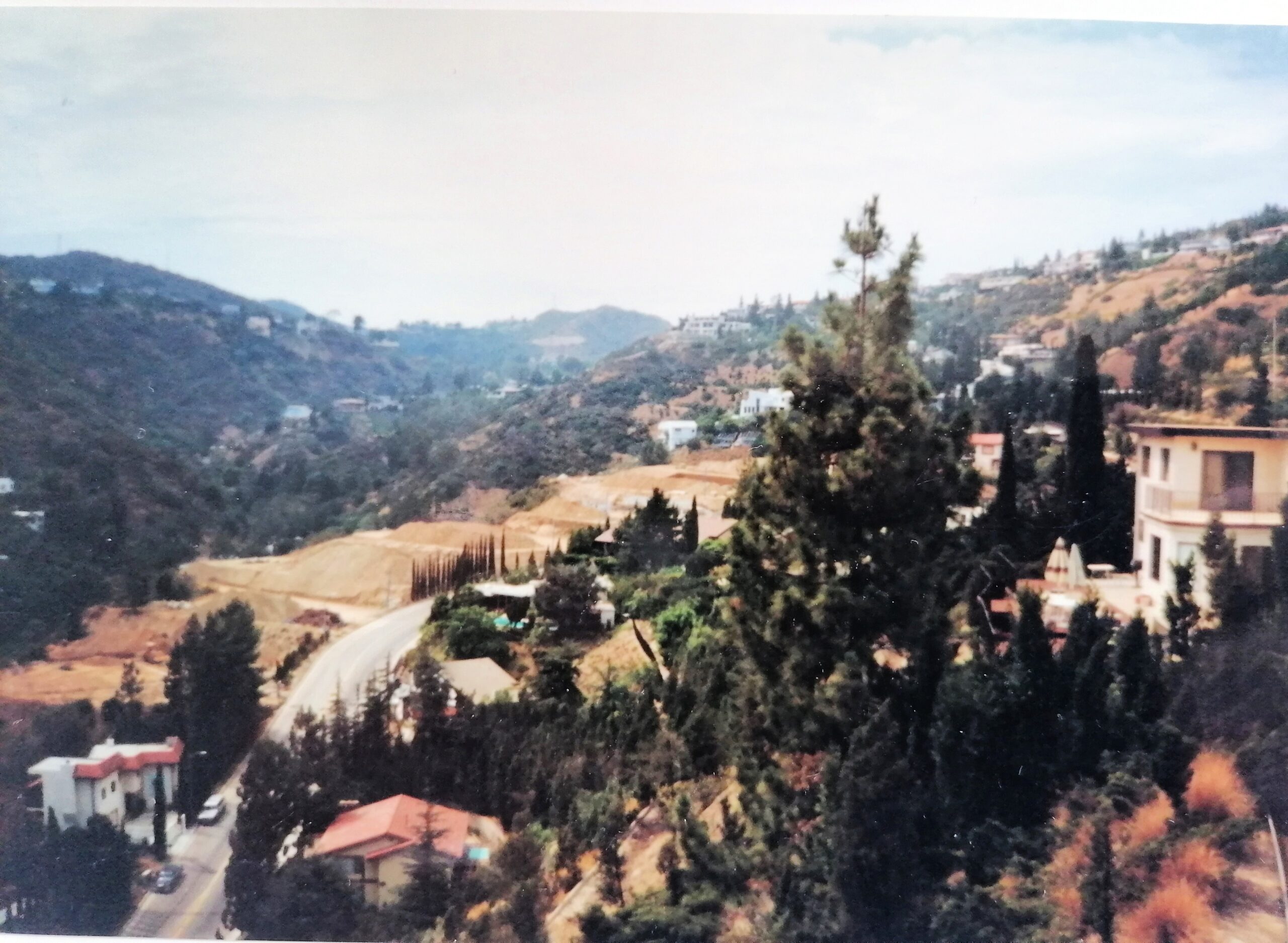
View from the house/garden
***
In 1991, I applied for and was awarded a three-month British teaching scholarship, supported by the British Council, and I was at Surrey University in England. When I arrived at the university, a kind colleague, who had just found out that I would be there for three months, theatrically swept everything off one of the desks in his office and said, “Welcome to Surrey University, please feel you are at home.” After introducing ourselves, I learned that the gentleman was Willi Bode, whose main specialty was gastronomy and food preparation, just like mine. He had already published several books, including European Gastronomy, which was based on his PhD dissertation.
*
Willi took me under his wing and helped arrange my weekly schedule, which was aligned with his classes. Accordingly, I either attended and took notes in his lectures or participated in kitchen practicals. A detail from one of my notes can be seen in the following picture.
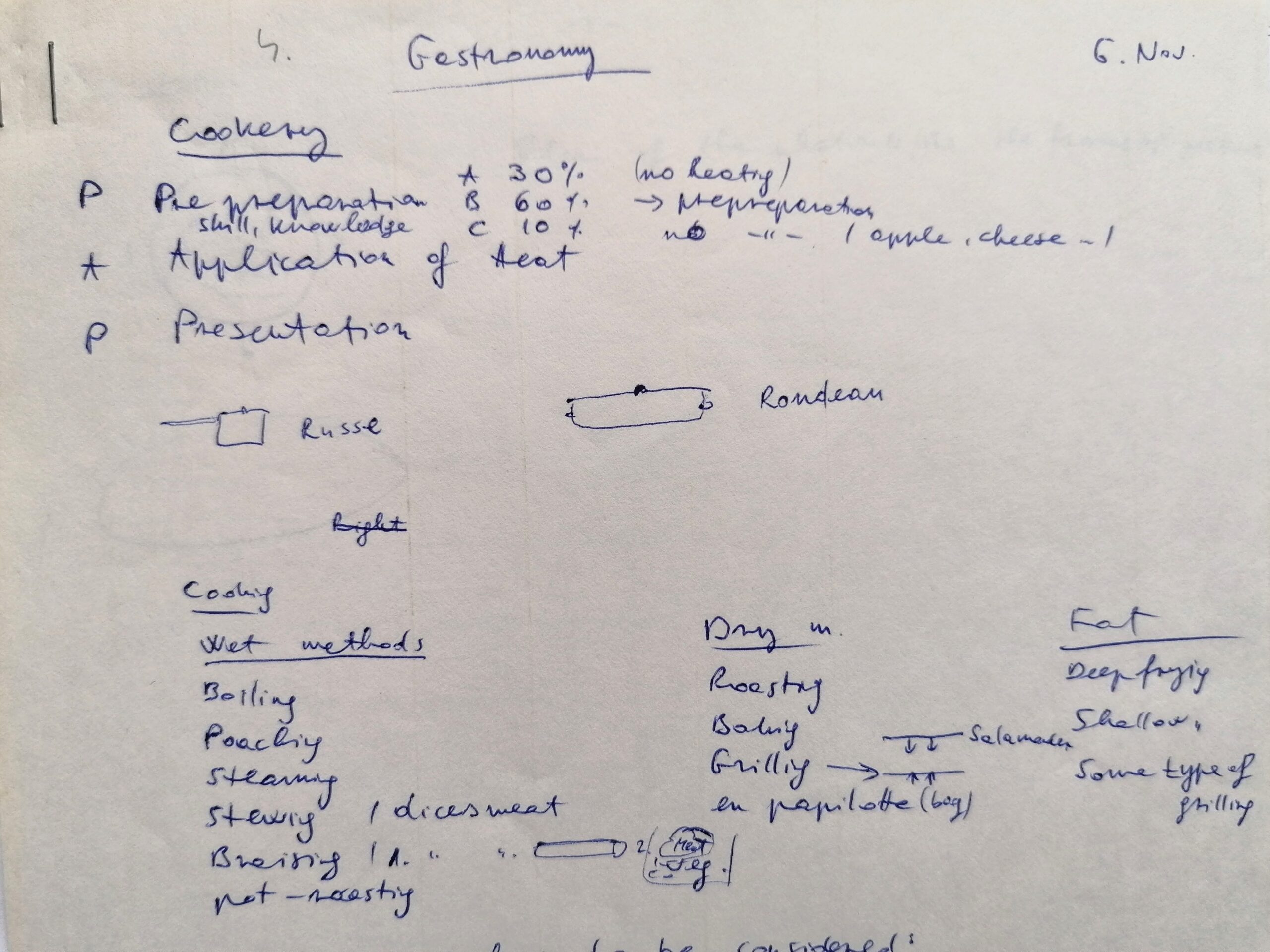
A note of mine at Surrey University, autumn 1991
In the kitchen, I couldn’t resist helping the students. Then the technician lady said that what I was doing was real kitchen work, so I should kindly dress properly in a chef’s uniform and hat, which she immediately provided for me.
*
The dishes prepared during the practical sessions were sold in the training restaurant. That was when I learned to make coleslaw salad, which has been part of our Christmas menu at home ever since.
When Willi didn’t have a class or wasn’t present, I studied the previously discussed teaching materials or the literature available in the library (professional books, journals).
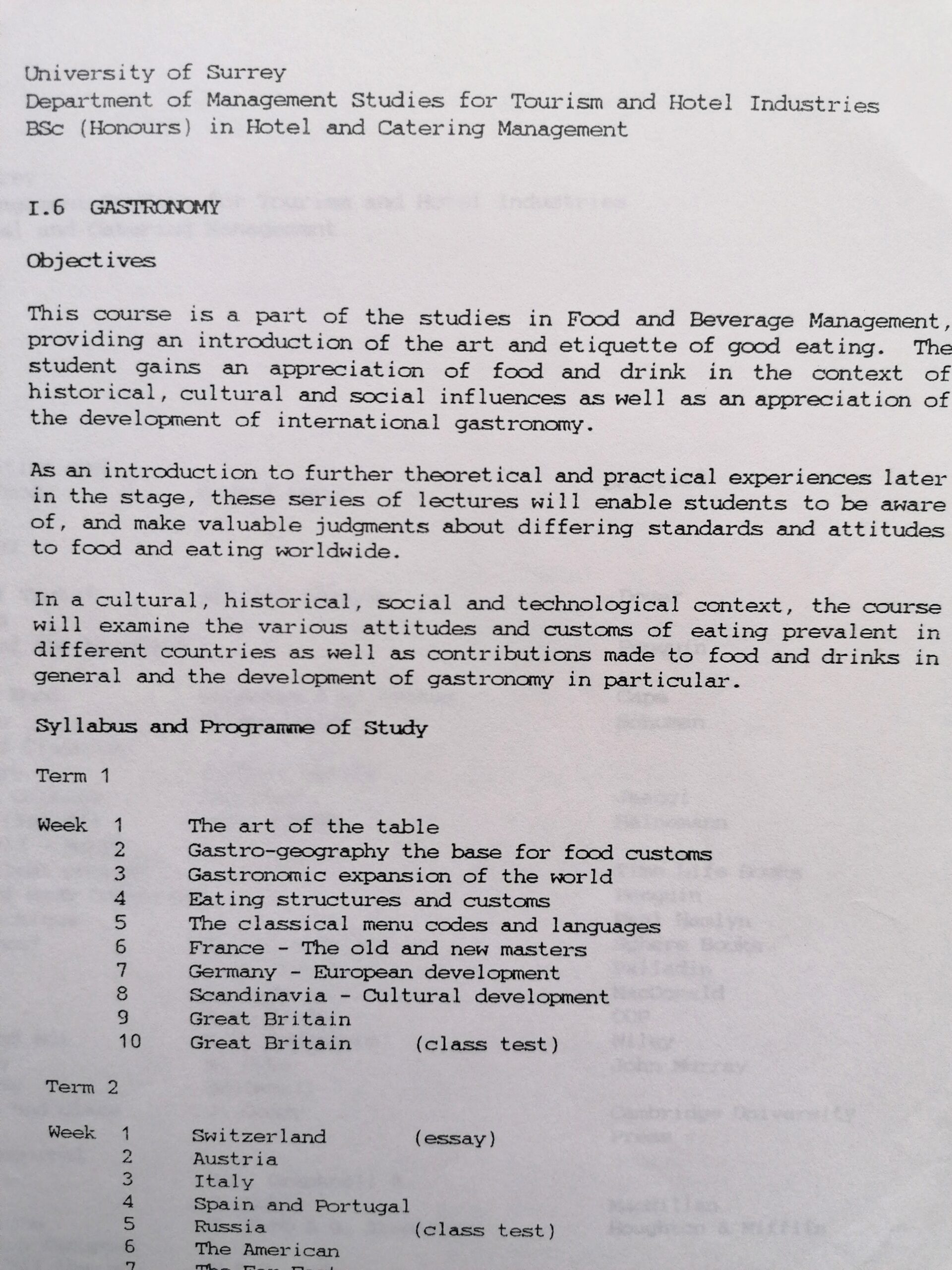
Syllabus and Program of the Gastronomy Course at Surrey University, 1991
From the perspective of the English language, these three months were truly deep water for me, as I was the only Hungarian and everyone else spoke English. At the same time, this situation was a great advantage because I was forced to concentrate intensely during communications. I also tried to improve my listening skills by watching parliamentary broadcasts or other programs on TV in the evenings.
*
In the afternoons, after leaving the university, I sometimes took the train to London, which is about 60 km from Guildford, where the university is located. I bought a “daily ticket,” which was a return ticket and also valid for London’s public transport. I freely roamed the streets, squares, and parks of London. On several occasions, I visited the National Gallery and admired the beautiful paintings there, including the two below. The second one was exhibited in April 2024 at the BOK Hall in Budapest.
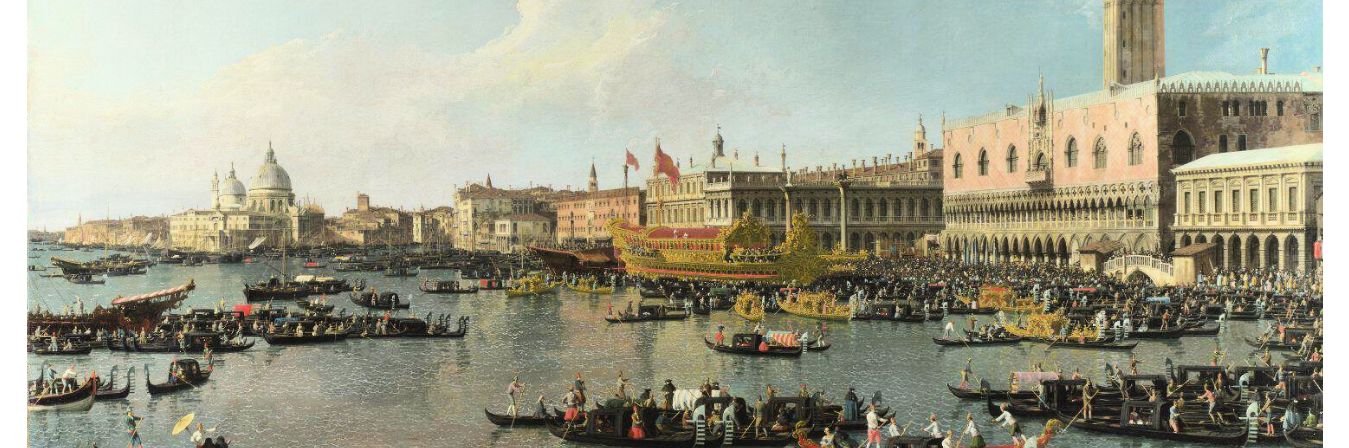
Venice: The Basin of San Marco on Ascension Day, Canaletto
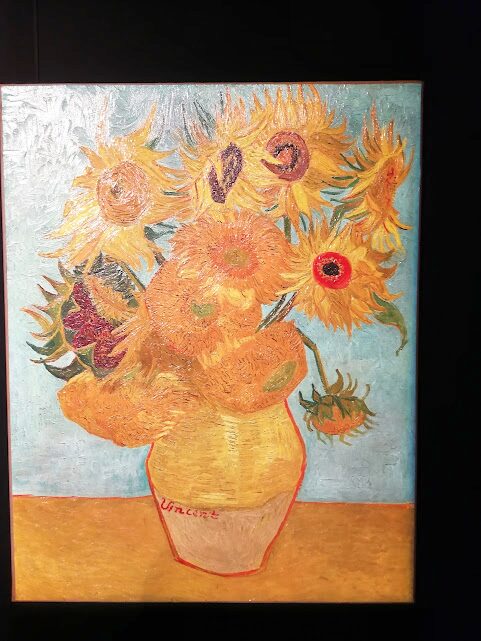
Sunflowers, Van Gogh
Every other weekend I spent in Hastings, where my wife’s mother’s brother lived with his wife, who was a native Englishwoman and the principal of the local Hastings College, which I also visited. By the way, every evening they ate/crunched raw vegetables like cauliflower florets, carrot sticks, bell pepper cubes, sliced button mushrooms, celery pieces, radishes, tomato wedges, etc. Of course, to complement these healthy bites, they sipped whiskey or gin and tonic as an aperitif, along with me.
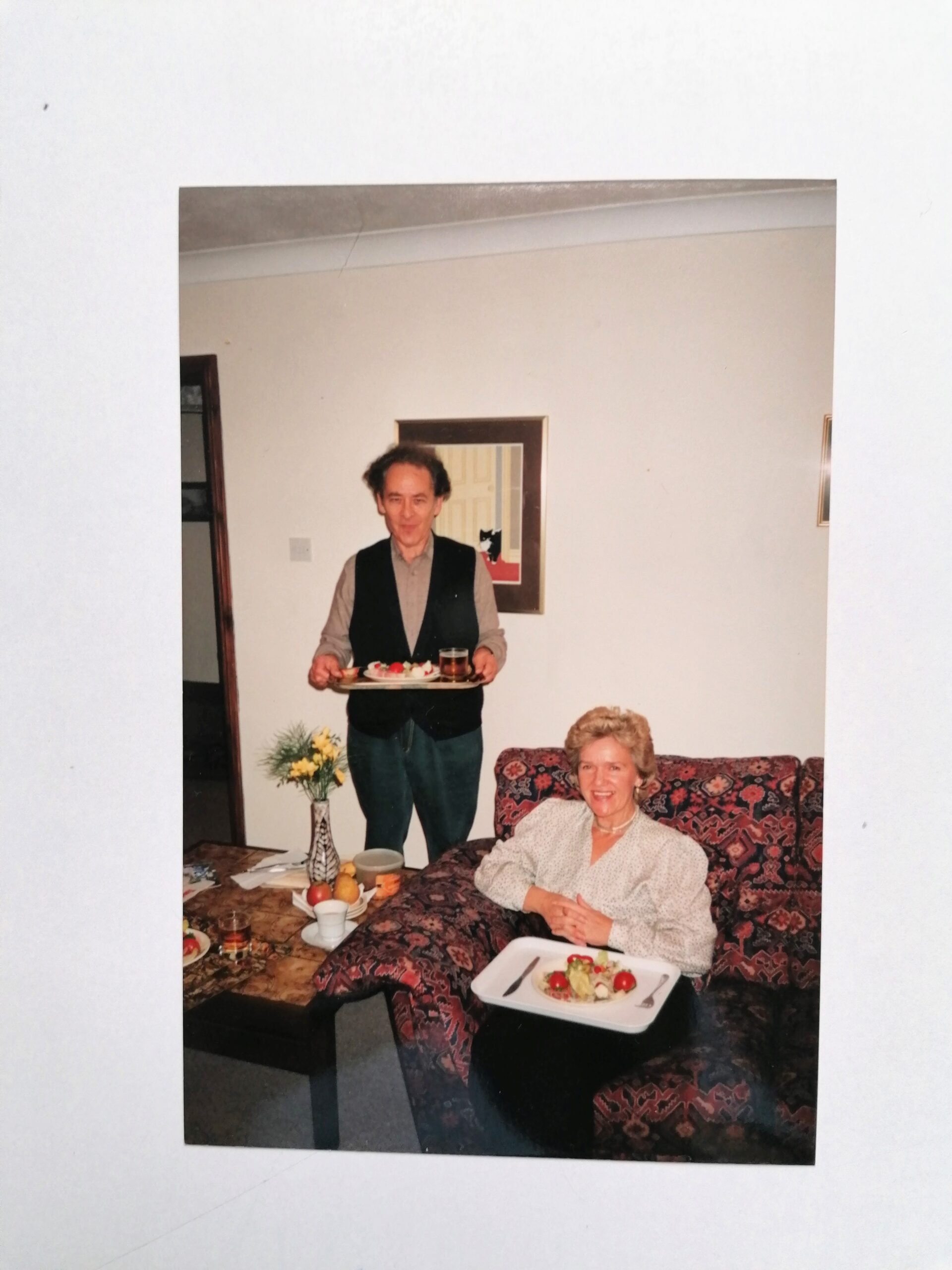
István Végh (Uncle Pista) and Judy Végh
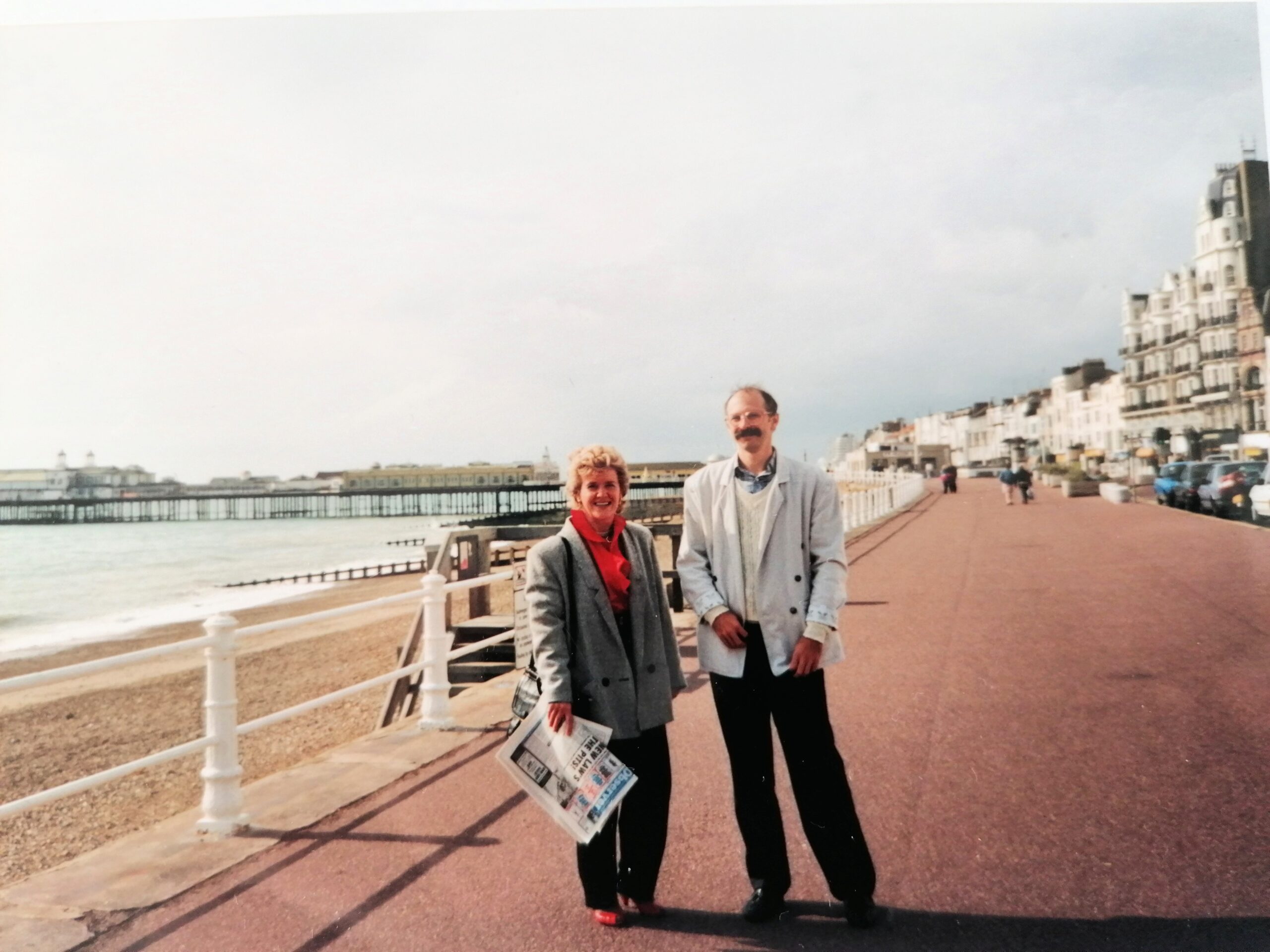
With Judy at the Hastings seaside
They organized programs and excursions for me. The experiences I had in the restaurants became part of my professional knowledge.
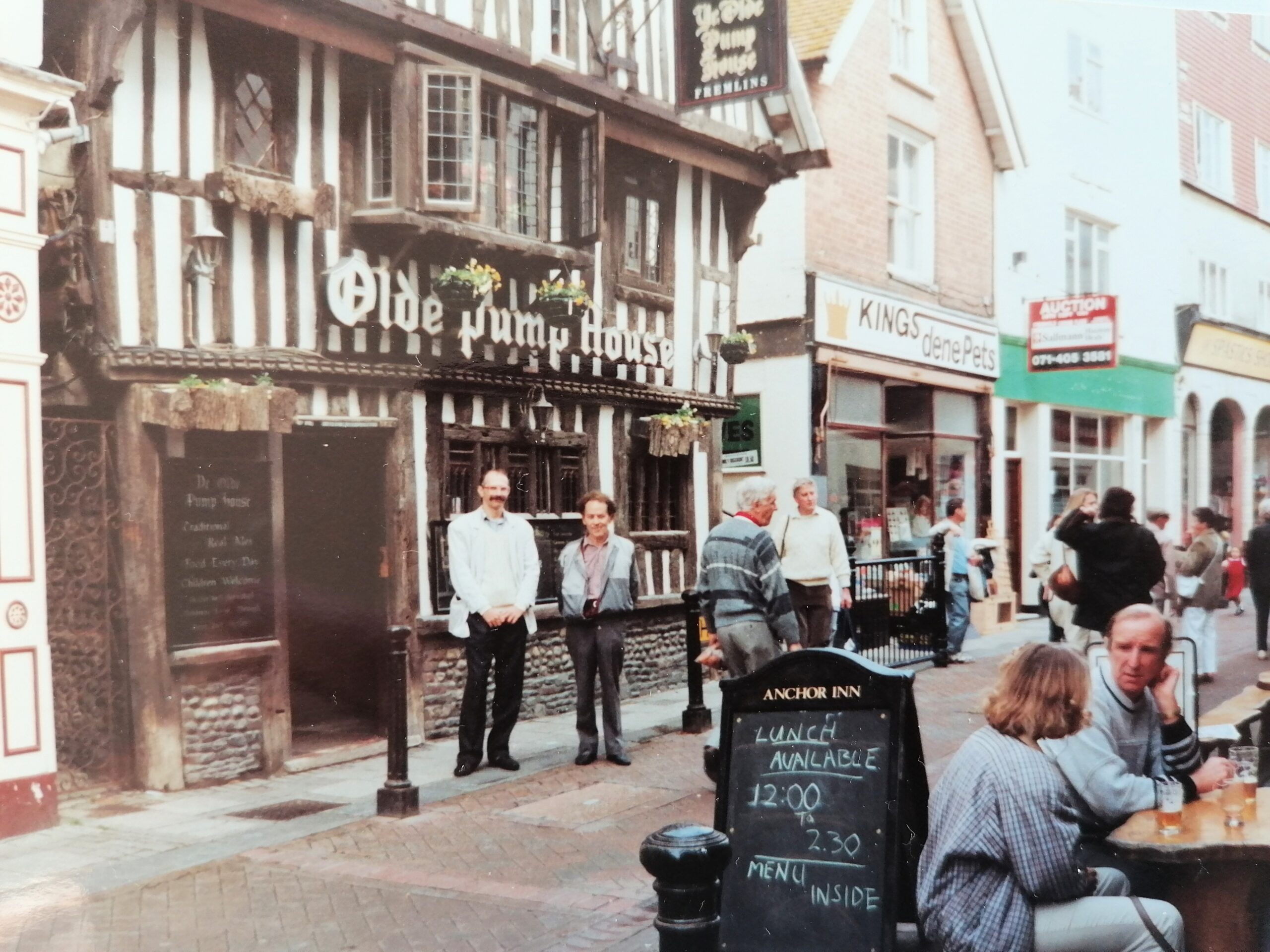
A medieval pub in Hastings
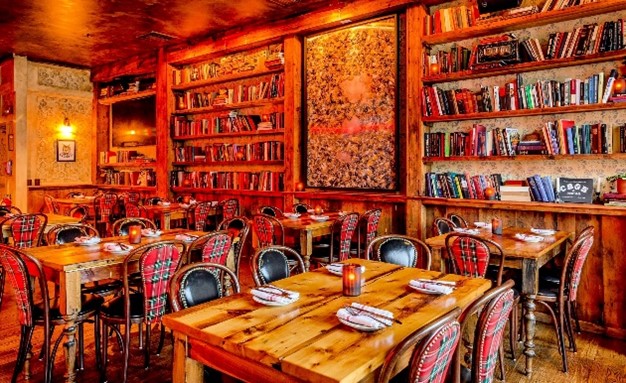
Interior of a pub/restaurant
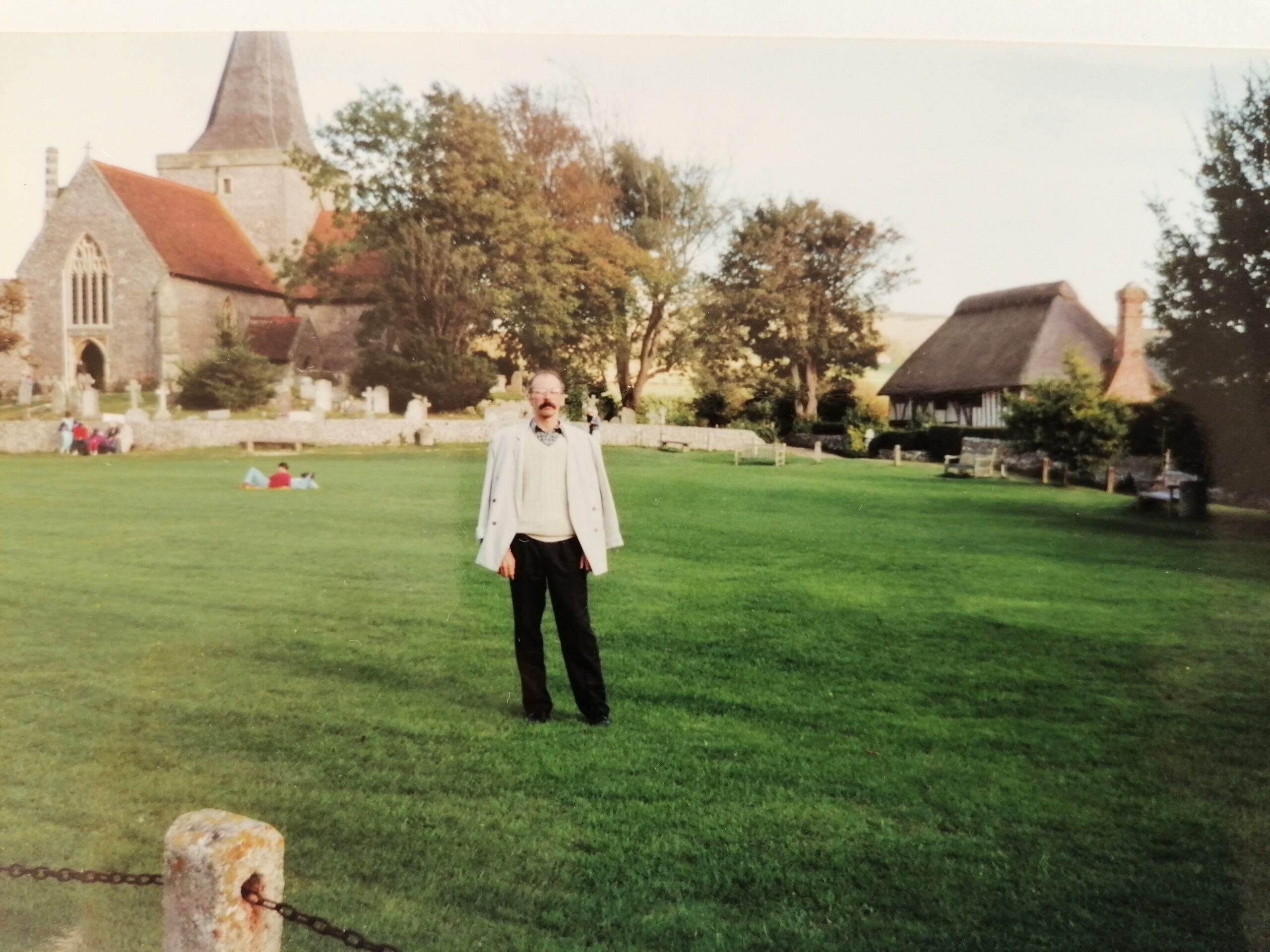
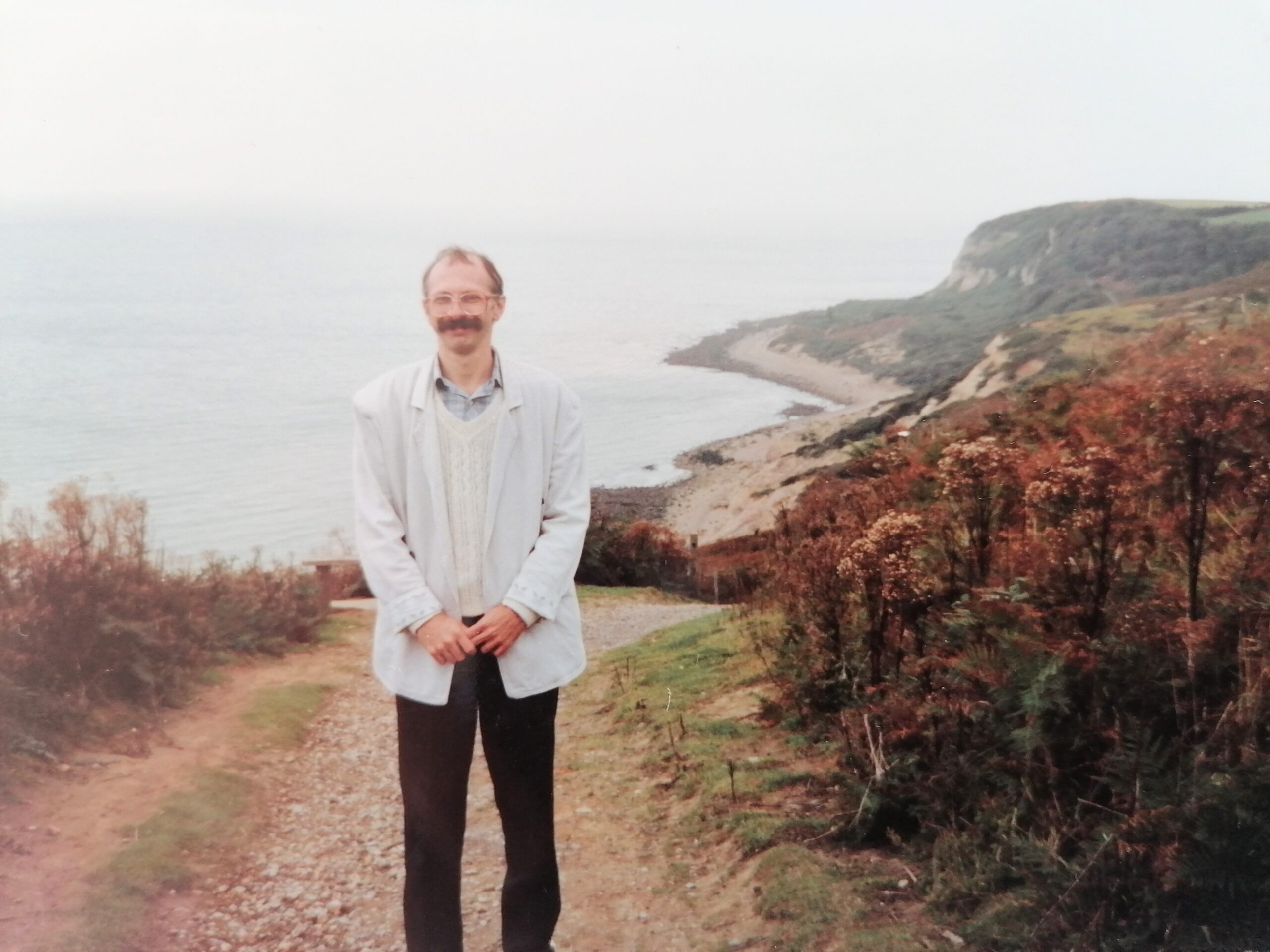
Idyllic weekends in Hastings
*
At the university, the “canteen” was actually a self-service restaurant, where you could choose from the salad bar, the daily soup, and three main dishes, one of which was vegetarian, complemented by some dessert options. If someone was not specifically seeking domestic flavors, the quality of the food was acceptable, as the dishes were freshly prepared and included traditional foods from other nations, e.g., lasagne, spaghetti bolognese, or chicken curry, etc. The scholarship provided me with meal options at the university, so I was given a card with which I “paid” at lunch. Occasionally, when two of us went to eat, we would go to the à la carte restaurant, where you could choose from a menu. Here I tried the “minute steak” for the first time, which was a thin sirloin slice with herb butter, sides, and cress.
*
In the evenings, I dined at the YMCA restaurant, where I also stayed. The food selection was similar but narrower than at the university at lunchtime. What stood out at both places was the temperature of the hot dishes. The ladies serving the food could only hold the hot plates with a kitchen towel, on which they served the steaming, piping hot meals. It was educational to see this. Often I dined together with a Portuguese university professor colleague, Herminio Curado, who, when he tasted his food, immediately started theatrically seasoning it with salt, pepper, and vinegar while criticizing the bland dish. He was capable of doing this at every dinner. It was amusing.
*
In my opinion, traditional English cuisine is modestly seasoned, especially regarding salt and spices; however, the original taste of the vegetables is more noticeable. On the other hand, all ingredients are available year-round because domestic seasonal products are supplemented with global market imports, and the cuisines of many countries are present in the British food selection.
*
On one occasion, I visited the Bournemouth Polytechnic institution, where hospitality subjects were taught using a methodology similar to that of the university. I met Mr. Gianfranco Nobis, who is one of the authors of the professional book “The New Catering Repertoire” and taught at the institution.
*
At Surrey University, the students were preparing for a project event, which was a Hungarian dinner evening, taking advantage of my ability to help them. I was glad to be asked and together we worked out the menu for the evening, discussed what kind of decoration would be needed, what music, etc. The next day, I started calling from the university to the tourism office in Hungary at the time, asking them to send posters, Hungarian music cassettes/CDs, and anything else to liven up the planned Hungarian dinner evening. The following day, I was called into the university’s administration office and told that the cost of my phone calls to Hungary was X pounds, which I was asked to pay. It should be noted that on the day I arrived, I received a phone card, which was also part of my scholarship, allowing me to call home every day. I said that my calls were not private but related to requesting materials for the upcoming student event from Hungary, but I was unsuccessful. With Willi’s intervention, it was arranged that I did not have to pay for the calls after all.
The event was successful, everyone was satisfied, and there were some guests of Hungarian origin, such as Willi’s wife, Marika. I was happy to acknowledge the evening’s success with a good feeling.
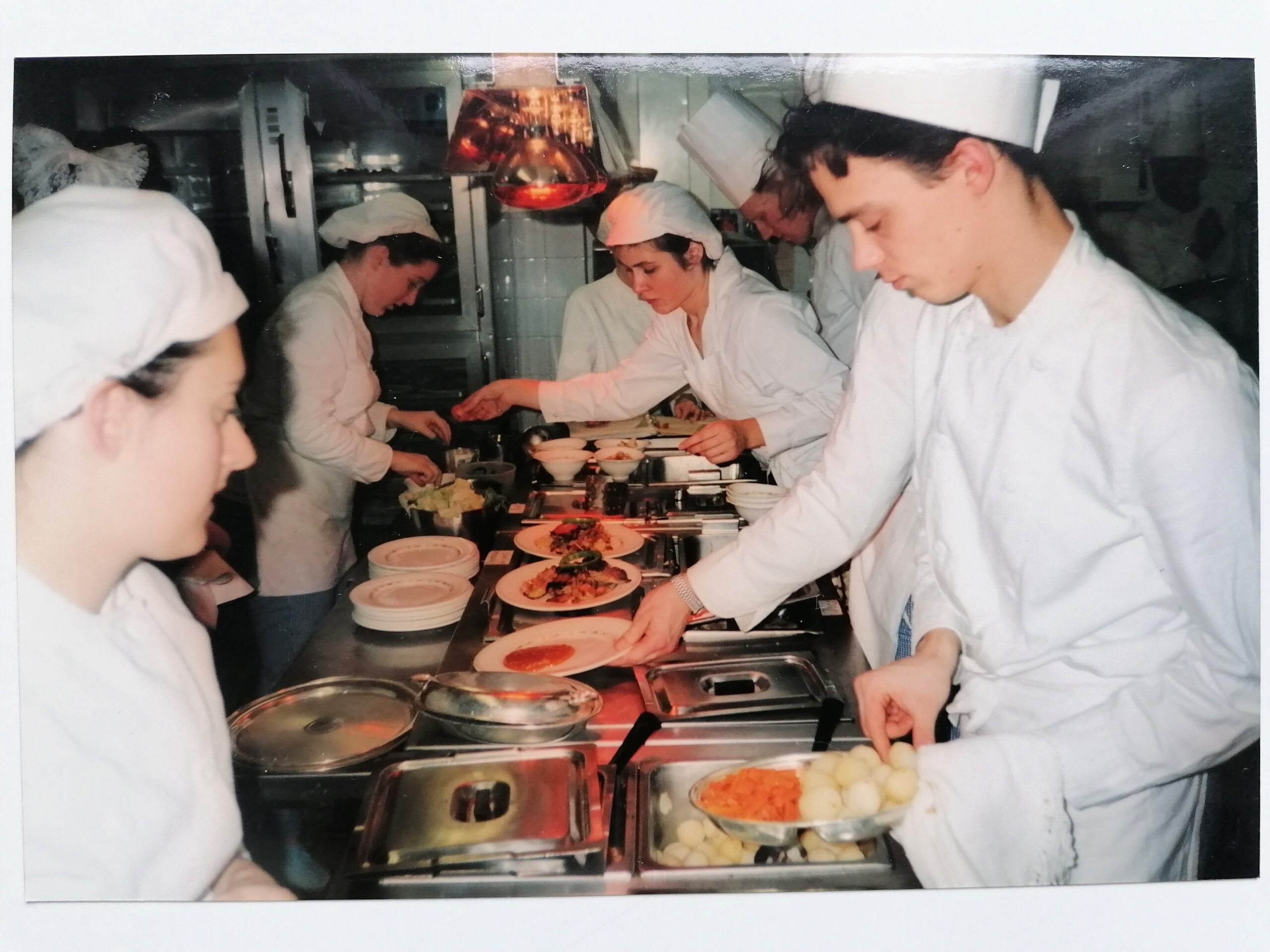
The kitchen team during serving
With the Hungarian project student leaders
During the three months, I gathered a great deal of professional material. I gained insight into the daily life of education, and it became clear that the methodology of higher education institutions teaching British hospitality and gastronomy is of high quality, and therefore could serve as a model to follow in our country as well. (In the following years, similar methodological solutions in other developed countries also confirmed this assumption.) I formed a definite plan that I would utilize the experiences gained at KVF as much as possible.
*
It was good to experience the English mentality. To see, primarily, the food offerings of rural restaurants and to taste their authentic dishes. Such dishes included Fish Pie, which is made with boiled fish and mashed potatoes, or the somewhat similar Shepherd’s Pie or Cottage Pie, the former made with minced, stewed lamb, while the latter with beef, but the mashed potatoes are placed on top of the dish similarly to Fish Pie before baking. It is well known that the quality of English roasted meats, such as Roast Beef (a whole roasted beef sirloin) or roast lamb, is excellent due to the good quality meat used and traditional cooking techniques. Yorkshire Pudding is one of the emblematic side dishes for these roasts, which is a savory batter baked in a pudding mold. With roast lamb, in addition to gravy (thick roasting juices), mint sauce is also consumed. Christmas Pudding, on the other hand, is a traditional Christmas dessert made with many ingredients.
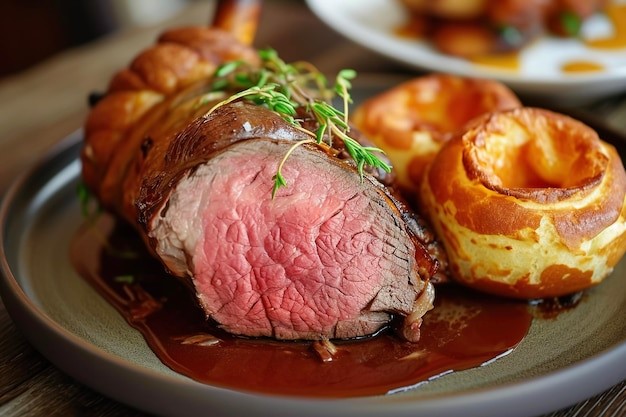
Roast Beef, Yorkshire Pudding, Gravy
The “recipe” for a wedding cake put together with the humorous English mentality looks like this:

A good wedding cake, according to the English mentality
I returned to Hungary with a lot of professional material (books, educational materials). At Heathrow, I had to pay over 100 pounds for excess baggage, although they somewhat reduced the fine when I showed the university’s official letter proving I was there on a study scholarship. At Ferihegy, it was funny when I arrived with eight pieces of luggage pushed into two carts and was asked if I had anything to declare. I calmly replied that I did not, and with a poker face, I proceeded toward the exit.
***

In 1992, I worked for three months at the Seville World Expo in the Mathias Rex restaurant as a cook and sous chef. The ’92 Expo boasts one of the best Hungarian performances of all time, so much so that the Hungarian team at the Dubai Expo held in 2022 regarded the Seville results as a benchmark. The restaurant in the Hungarian pavilion won the bronze medal among nations, while the Mathias Rex restaurant earned the four-fork rating for the best restaurant twice within six months.
*
We started preparing for the Seville trip as early as the autumn of 1991, studying Spanish intensively for a month, 40 hours per week. I was also tasked with giving a “Kitchen Health Regulations in Spain” training to the kitchen staff. The language classes were taught by my colleague Dr. András Kéri, who was an excellent instructor and taught us this as the first sentence: “Dos frias cervezas por favor” (“Two cold beers, please”). The small group of hospitality professionals immediately took the teacher to their hearts.
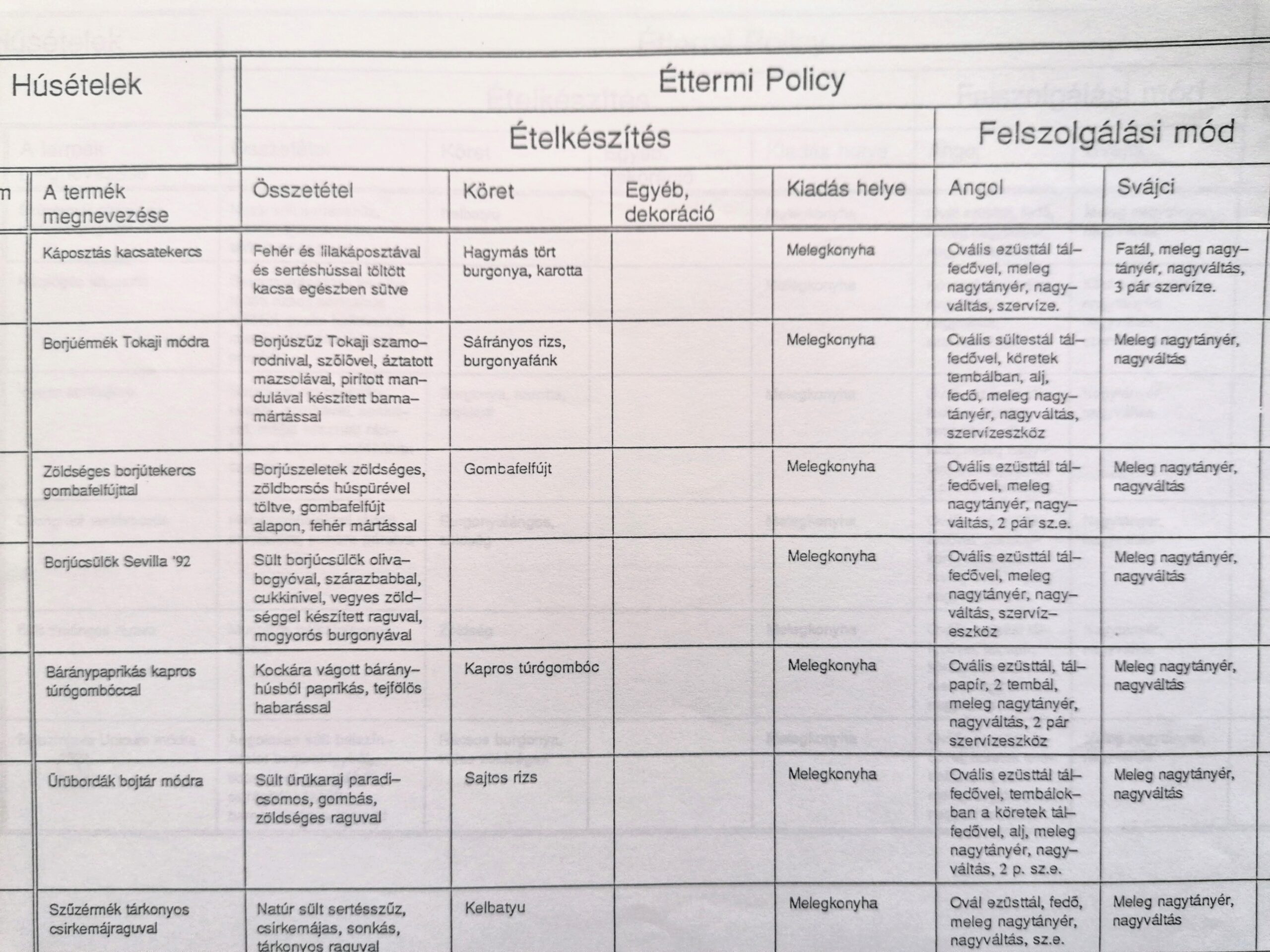
The Restaurant Policy of the Two Hungarian Restaurants at the 1992 Expo, Seville
We traveled to the Expo on April 10, 1992, about 150 of us, of whom more than 100 were third-year students from KVIK at the time. I committed to three months of the otherwise six-month-long work because we were opening the Teaching Cabinet (training kitchen-restaurant) in September, and I wanted to be at the school for that occasion.
*
A few days into the work, Chef Gyula Pár and Head Pastry Chef László Benke called me and offered me a sous chef position, saying they were very satisfied with my work so far. I accepted the appointment with gratitude and pride, which also came with extra financial benefits, as the tips were divided between the kitchen and the restaurant, and people received their share according to their position.
*
Gyula Pár was an outstanding head chef both personally and professionally. He kept an eye on everything and requested corrections related to kitchen work when necessary. On one occasion, for example, he checked the “disk plate” I prepared at the serving counter — a dish containing multiple components of meat, side dishes, and sauce, reheated in the oven — but after looking inside and finding everything in order, he closed the container and served the dish.
There was a time when he showed us how to fillet plaice and told us that when he worked in the Netherlands, Dutch chefs couldn’t fillet fish because all fish arrived already filleted. I recalled my Dutch experience five years earlier, and indeed, we also received fillets of turbot at the restaurant.
Once, his TV interview in the kitchen lasted quite a while, and sweat was pouring down from him in streams, then when it finally ended, the chef exclaimed, “Who was the fool who left the salamander on”? Maybe he didn’t say “fool,” but I’d rather not write what he said.
*
In the kitchen team, besides the already mentioned Gyula Pár and László Benke, I worked together with chefs Ferenc Oriskó, Károly Varga, József Domonkos, Zsolt Várszegi, pastry chef Zoltán Kiss, and quite a few excellent students. It was a great team.
Károly Varga already showed up at the kitchen before 12 o’clock in his modest way, ready to work, even though officially he was supposed to come in the afternoon. “What can I help with?” he asked me. I told him he was very kind, but nothing was needed, and anyway, he was only supposed to come in the afternoon. He said, “I know, but since there are several groups for lunch, I came to help. What can I do?” I gave up refusing him. “Thanks, Karcsi, you’re great!” “Please, prepare some vegetable garnishes for the event platters!”
The kitchen butcher, Feri bá/Uncle Feri, was a somewhat odd character because during service he handed out the requested meat slices rather slowly and awkwardly. He was humorously portrayed by Balázs Szűcs, who was then a college student, in a parody.
*
Basically, we worked two shifts: 7:30–15:30 and 15:30–23:30. The intensity of the work is illustrated by the fact that in the morning I was at the accommodation’s restroom, and if lucky, before lunch around 1 pm I could run upstairs to the restroom, but often I only managed to satisfy this need at shift change around 4 pm. We simply worked continuously. In the morning, we reviewed leftovers and based on that, started the mise en place, which means the preparatory operations, heat treatments, and readiness for serving. There was always something to do. Often I prepared a cold mixed fruit soup for the staff. It was a quick preparation soup with fresh, chopped fruits like pineapple, strawberry, kiwi, nectarine, grape, etc., mixed with orange and/or other fruit juices, cream, and ice cubes, which my colleagues loved. Some even ate just this soup twice and didn’t ask for a main dish. The main courses were first-class both in quantity and quality. Chef Gyula Pár wished that if a fish fillet was so large it hung over the edge of the plate, it should still be served that way to the staff.
*
I made a sport out of how fast I could shower after the shift change. Ideally, I could catch the minibus leaving at 3:30 pm (officially at 3:35 pm to allow a few minutes’ grace) which then took us to our accommodation. I showed up in the changing room at about 3:22 pm, showered lightning-fast, and then, adapting to the approximately 40-degree Celsius heat outside, didn’t overdress and walked briskly to the bus on time.
*
During one dinner, the dining room manager came into the kitchen and said, “Dénes, I know every dish is always good, but now please pay special attention to the next order!” I did so. Later the dining room manager came back and said the guest was completely satisfied. He asked, “Do you know who the guest was?” I said, “No.” “Placido Domingo,” he said. “Wow,” I said, filled with pride. I was especially happy when the tenor giant visited us again for dinner on a later occasion. Years later (25–30 years), I learned from László Kovács, the restaurant director, that the food was probably excellent at the time, but there was also a pretty college girl involved who was also attractive to the maestro.
*
The “normal” daily work routine was occasionally supplemented with external events, for example, an exclusive event at another pavilion. Cold and hot dishes were prepared in parallel, but that process lasted two to three days. On one occasion, I had already worked nearly forty hours when we were doing well with the dishes, so I finished my long shift with a good feeling. The reception held in honor of the King of Jordan was very successful. The buffet tables were laden with mouth-watering dishes and edible table decorations (vegetables, fruits, chocolate).
*
When my committed three months were up, I said goodbye — although they really wanted me to stay — because on the one hand, I wanted to be at the college for the start of the school year and the opening of the new Teaching Cabinet. On the other hand, my wife and two daughters arrived with the goal of traveling for two weeks mainly in southern Spain and Portugal before returning home. Thus, we visited, among others, Madrid and the towns of Córdoba, Toledo, Ronda, Lisbon, Aveiro, Porto, and the British city-state of Gibraltar.
*
The three-month adventure in Seville left deep, positive marks on my life. I still recall with joy the events mentioned above. The whole team performed excellently. Everyone was aware that they represented Hungary at a world event, even if we didn’t mention it during daily work. The graduating students also enriched their semester practice with lifelong experiences. The professionals still recall the various stories that happened with us to this day. Every five years, we get together and celebrate our current, three years ago 30th, anniversary of Seville.
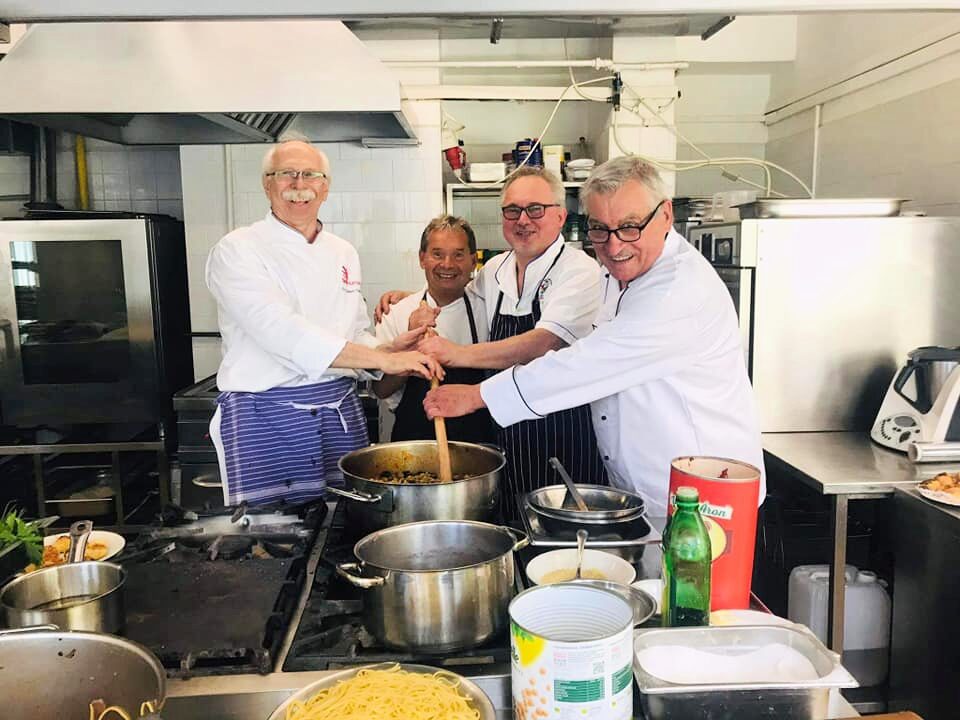
With Sándor Tóth, Károly Varga, and Ferenc Oriskó in Budapest in 2022
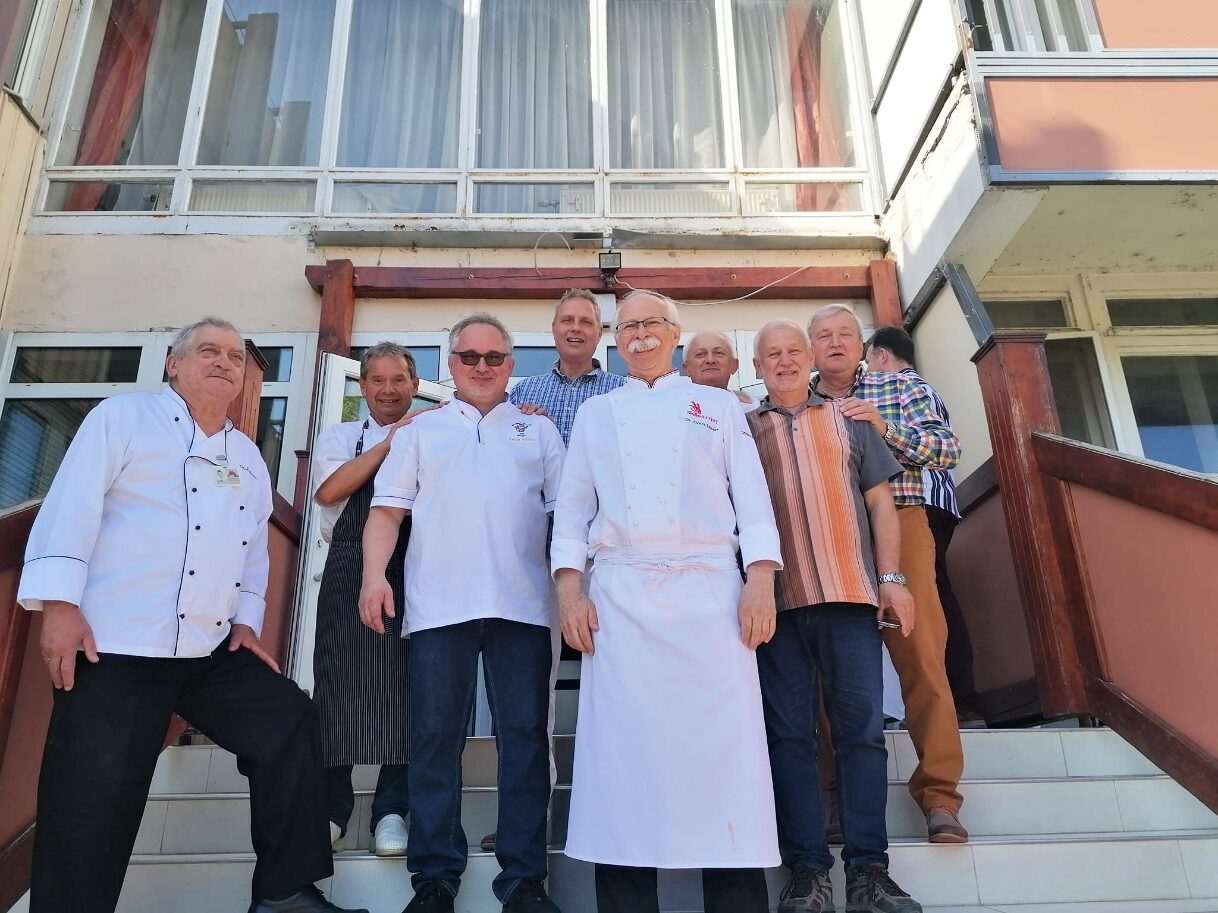
Ferenc Oriskó, Sándor Tóth, Károly Varga, Balázs Szűcs, Dénes Sándor, Tibor Kocsis, Sándor Kovács — part of the kitchen team at the 30th Sevilla anniversary in Budapest, 2022
***
In the autumn of 1992, I was on a two-week study trip at the Dublin Institute of Technology in Dublin, Ireland. The teacher who taught kitchen practice and gastronomy, Jim Bowe, was very professional and helpful in every way. When I told him how kindly Willi Bode welcomed me in England, he said, “You already have a friend in Ireland too!”
*
During one of his classes, held in a traditional lecture hall but also fully equipped with a kitchen block, he gave a cooking demonstration to the audience. Before starting, he said, “Ladies and gentlemen, I present to you our dear guest, colleague Dénes Sándor from the partner institution in Budapest.” I stood up and they applauded me. It was a tingling feeling. Jim, dressed in chef’s attire and hat, professionally demonstrated the preparation of some Indian dishes. At serving time, he warmed up the serving dishes in the oven and presented the dishes as if serving guests, then Jim invited everyone to the podium to taste the food.
*
The next day, I offered Jim that if they wanted, I would gladly prepare some Hungarian dishes on one occasion. A few days later, together with the local students, we prepared the selected dishes. Fortunately, Jim had excellent quality Spanish paprika powder, if not Hungarian, so there was no obstacle, for example, to making goulash soup. One chef colleague teaching in the kitchen asked for only the soup, but had it multiple times.
***
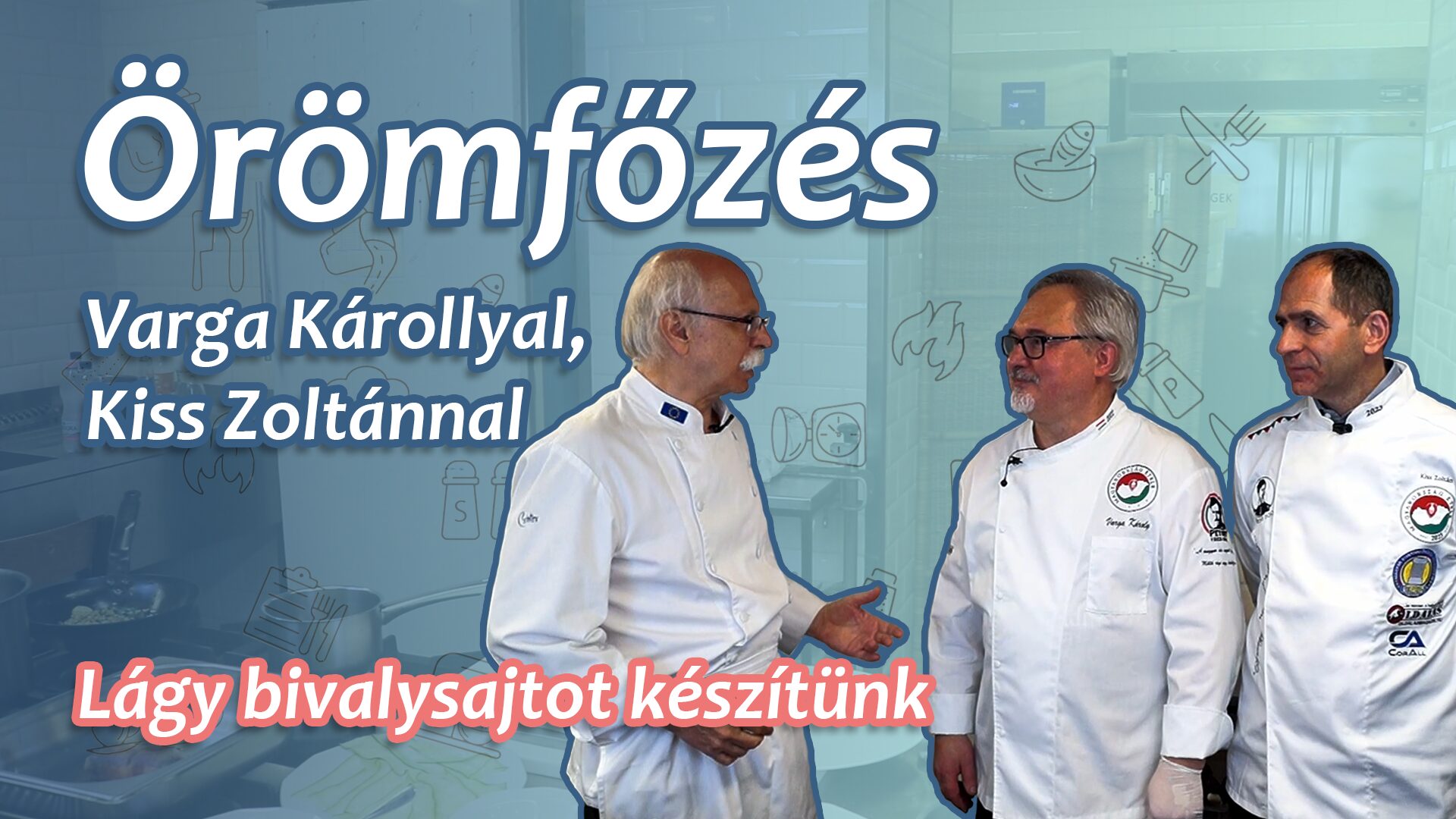
Click on the image to watch the “Soft buffalo” video made at the Joyful cooking event!
You can find the recipe below the video!
You can watch the interview with Károly Varga on YouTube by clicking here.
You can watch the interview with Zoltán Kiss on YouTube by clicking here.
The spontaneously told stories from the Joyful cooking event can be found here:
https://youtu.be/C3BM3QmyjgU
https://youtu.be/vN9I1wIJDOk
https://youtu.be/ksQnpg_ohqk
https://youtu.be/xKeBnIvoPl8
https://youtu.be/R8II8aQ0hv8
https://youtu.be/rn0Yr0WwMfg
https://youtu.be/oZroa2KE2DY
https://youtu.be/M_tIzcvMhso
https://youtu.be/Ct6OHL5NV8s
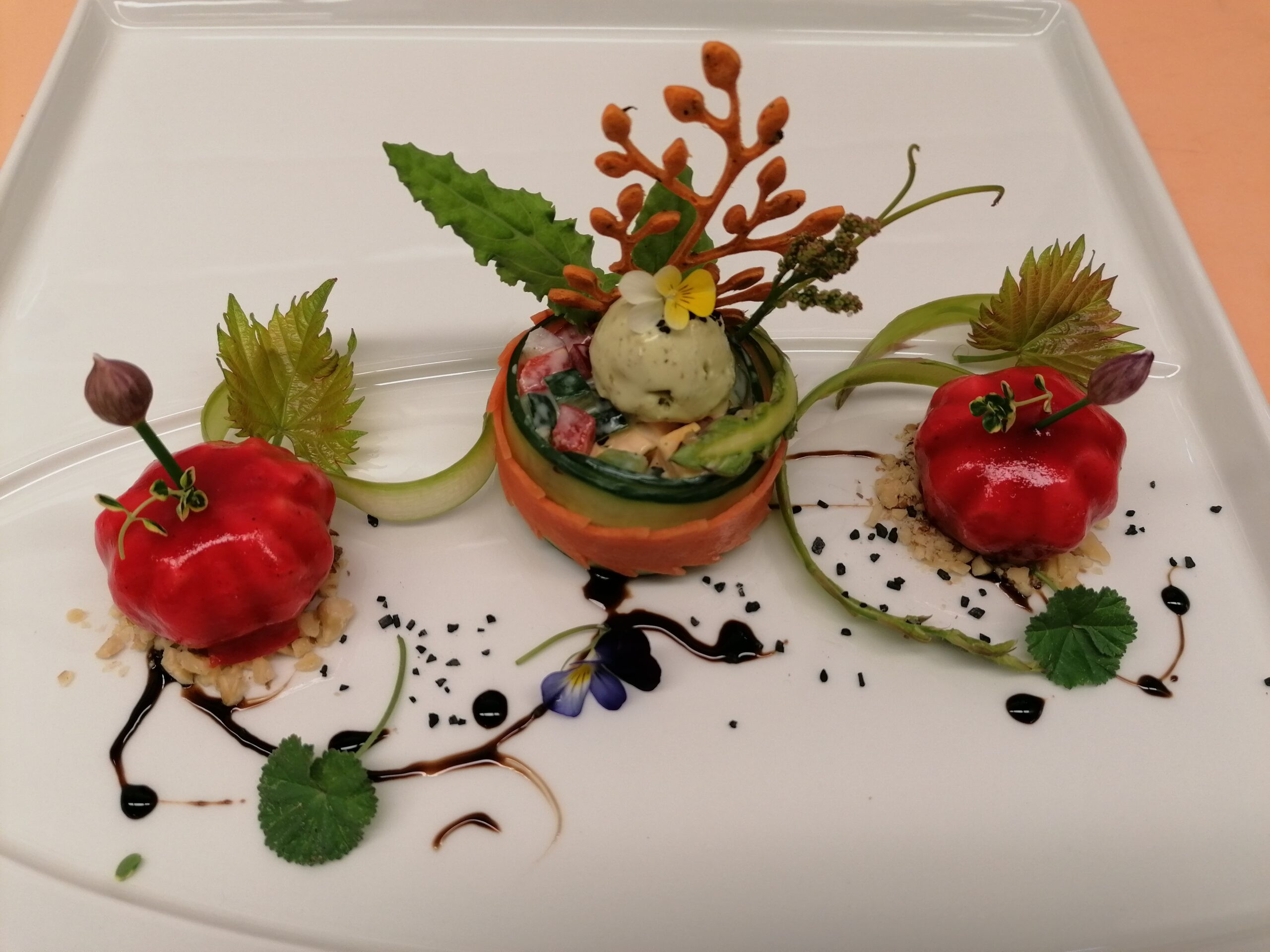
Soft buffalo cheese with mayonnase with yogurt crispy salad, basil-green apple sorbet, and tuile leaf
Recommended ingredients for 4 servings:
For the tuile:
100 g cream cheese
30 g sour cream
10 g starch
salt
coloring can be green herb dressing, pesto, beetroot powder, etc.
For the buffalo cheese:
100 g Garabonciás soft buffalo cheese
40 g butter
40 g walnuts
For the mozzarella:
100 g mini mozzarella
For the pesto:
10 g garlic
50 g walnuts
60 ml extra virgin olive oil
30 g parmesan
1 bunch basil
40 g iceberg lettuce
For the Jogonaise:
1 egg yolk
lemon juice, mustard, salt
120 ml sunflower oil
dry white wine
100 ml yogurt
fresh dill
For the salad:
4 green asparagus spears
50-50-50 g three colors of bell pepper (red, yellow, green)
50 g cucumber
50 g green apple
50 g cheddar cheese
lime jelly
dill Jogonaise
For the mirror glaze:
80 g red bell pepper
80 g pritamin pepper (sweet pepper)
80 g tomato
brown sugar
balsamic vinegar
2 gelatin sheets
For the basil-green apple sorbet:
200 ml mineral water (non-carbonated)
200 g sugar
lemon juice
1 egg white
1 bunch basil
3 green apples
balsamic vinegar
For decoration:
balsamic cream, toasted walnut bits, papsajt leaf, baby sorrel, green asparagus, grape tendril and leaf, Maldon salt
Preparation steps:
For the sorbet, prepare a sugar syrup. Boil the mineral water with the sugar, cool it down, then add lemon juice, egg white, basil blended with green apple juice, and balsamic vinegar. Freeze the mixture in an ice cream maker.
Mix the ingredients for the tuile, put the batter into a piping bag, fill silicone molds, smooth the surface, and bake at 180°C (356°F) for about 5 minutes until crisp.
Dry-toast the walnuts for the cheese cream without oil, cool them, then blend them with the other ingredients.
Prepare the pesto by putting peeled, slightly crushed garlic, walnuts, olive oil, grated parmesan, basil leaves, and ice into a food processor and blend everything. The ice is used to preserve the green color of the basil.
Toss the mozzarella in the pesto, cover with cling film, and marinate in the fridge for 30 minutes.
Pipe part of the cheese cream into bell pepper (pritamin) shaped silicone molds, place the mozzarella pieces inside, cover with more cheese cream, then freeze everything.
Whisk the egg yolk with a little lemon juice, mustard, and salt, then slowly add the oil in a thin stream while continuously whisking. Continue whisking with some white wine and yogurt, finally fold in finely chopped dill to make it homogeneous.
Dice the salad ingredients finely, mix with the jogonaise, and season with lime jelly.
For the mirror glaze, roast the peppers until blackened, peel them, then cook the pepper flesh with peeled and seeded tomatoes, caramelized sugar, and balsamic vinegar. Blend the mixture thoroughly and finally mix in soaked and squeezed gelatin.
Using a dipping fork, dip the frozen cheeses into the glaze and let them drip off.
For plating, decorate the plate with balsamic cream. Place a strip of cucumber and carrot into a plating ring, fill with salad, add the sorbet, then place the cheese on toasted walnuts. Finally, garnish the composition with green leaves, tuile, and Maldon salt.
*
Preview
Work at the College of Hospitality (KVIF, BGF KVIK) 1992–2004 Part 1.
Joyful Cooking with Tamás Lusztig (master) and Attila Bicsár (his student, who is also a master), whom I have known several decades.
Tamás was a legendary chef at the Sport and then Flamenco hotels, where I started my career earlier. That’s why I’ve been following his career since the 70s.
Attila and I have known each other since the 90s, primarily through cooking competitions organized at college.
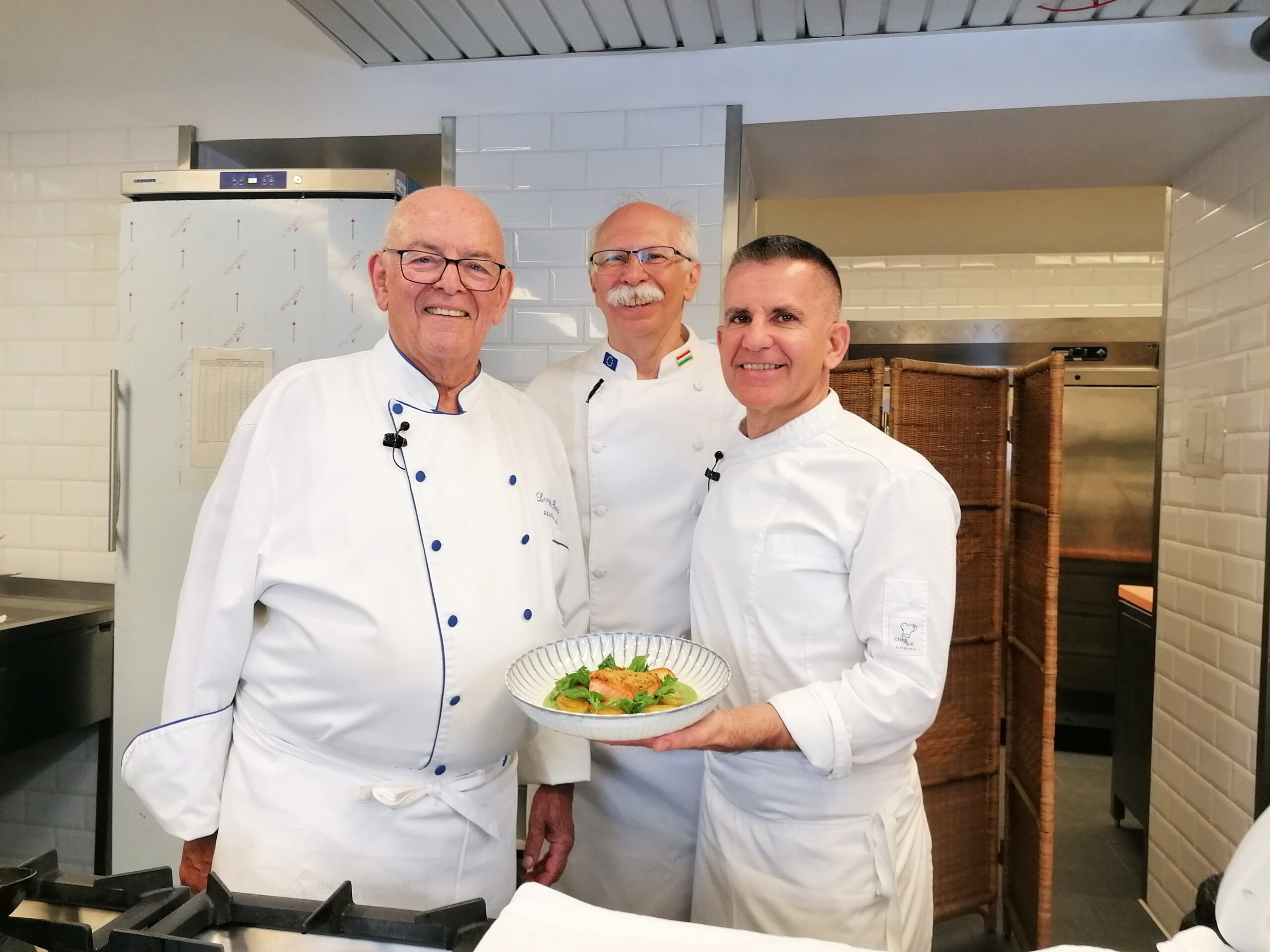
With Tamás Lusztig and Attila Bicsár
*