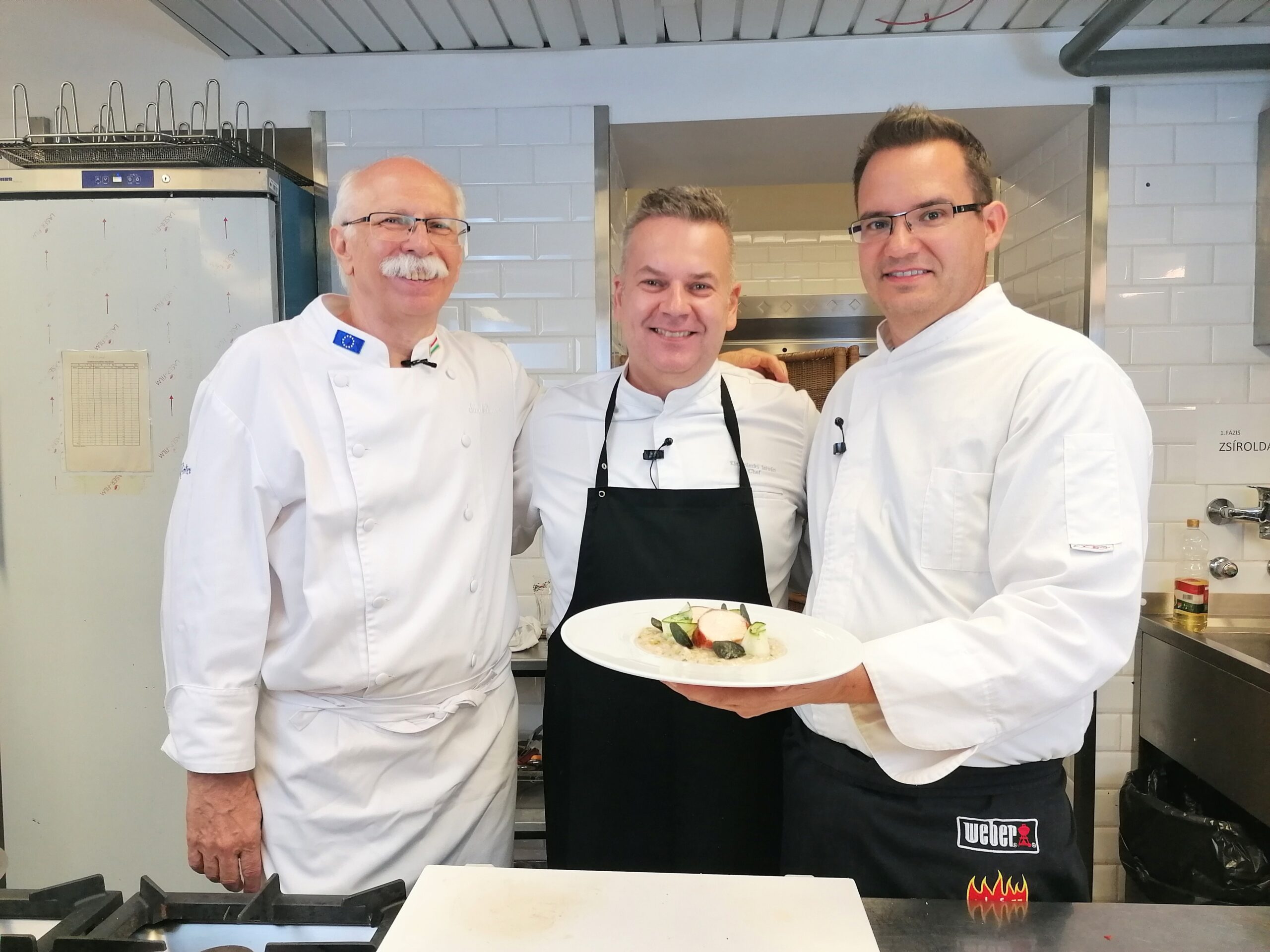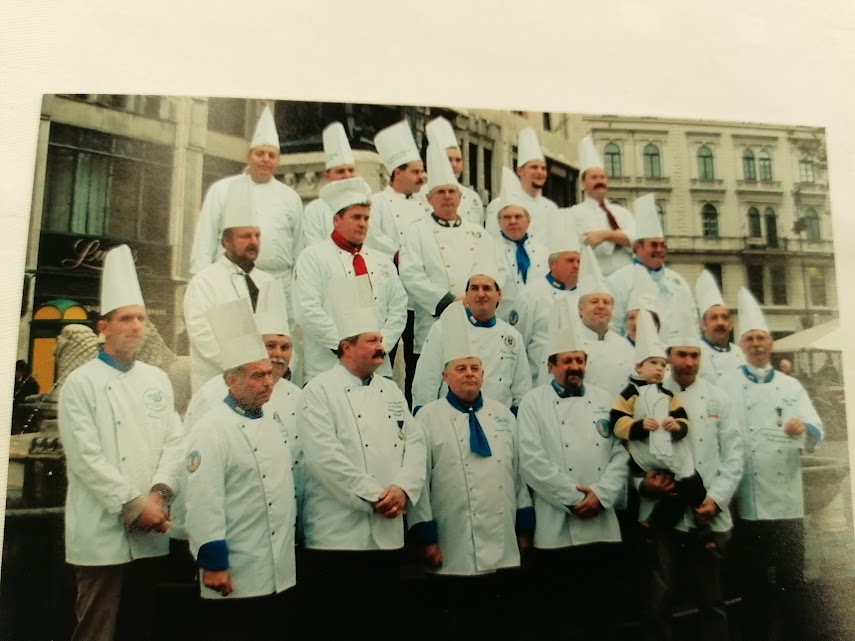
The Hungarian Executive Chefs Association was officially registered in 2002; however, the founding members had already been meeting regularly since the mid-1990s in order to preserve the values of Hungarian cuisine while also taking part in the necessary reforms.
During a New Year’s Eve celebration spent with Péter Mózes who suggested to me the idea that we should begin to take organized action in support of kitchen reforms. I thought it was a good idea – in fact, I believed that the then – president of the HNGF was no longer fulfilling his position adequately, and for that reason as well, we needed to act to promote the development of Hungarian gastronomy. So we began organizing; we spoke to a few chef colleagues who wholeheartedly supported the realization of the plan.
The monthly meetings were held in one of the college’s restaurants. From 1996, the participants were: chef Zsolt Both (Novotel Congress Center), chef Ferenc Kovács (Grand Hotel Margitsziget), chef Péter Mózes (Fortuna Restaurant), chef Péter Buday (Remíz Restaurant), chef Dénes Nemeskövi (Korona Hotel), chef István Pálvölgyi (KVIF), chef György Réti (Udvarház Restaurant), chef József Révész (Parliament), associate professor/senior lecturer Dénes Sándor (KVFK), and chef István Varga (bio-vega).
At the first meeting, we agreed that anything could be discussed – except politics. We believed this would be a forum where a chef could say anything to the colleagues present, since at work the power dynamics are different, and of course he mostly just talks to his subordinates. Also, at home, his wife might not necessarily be interested in what his problems are as a head chef.
We were all enthusiastic; we wanted to serve the development of Hungarian gastronomy not only at our individual workplaces but in an organized way, pooling our strengths and ideas, taking advantage of the synergy effect. At the gatherings, heated debates sometimes broke out. Zsolt Both and Péter Buday were especially able to immerse themselves in the topic, and in many cases, a constructive and loud exchange of words developed between the two of them. Zsolt, despite his build, argued in a resonant voice, while Péter, not recognizing full stops, responded in continuous run-on sentences. Fearing that the argument might escalate into physical confrontation , I tried to calm Péter down, who at that time, with a body weight of 160 kg, was trying to convince Zsolt. On my third call of “Peti!”, “Peti!”, “Peti!”, his voice began to quiet down, and his massive body, retreating, settled back calmly into his chair. Then Zsolt turned to me and asked: “But I’m right, Sir, aren’t I?”
After a few years of preparation – choosing a name (Étrend, based on my idea, because it expresses, on the one hand, the concept of a menu as a sequence of food and drinks at an event; on the other hand, it contains the word trend, which refers to progress; and thirdly, the word rend, which refers to a group of chef members with equal rights and responsibilities), logo, objectives, the choice of an organizational structure for the association in order to secure the financial resources necessary to achieve the goals, etc.— In 2001 we announced the association recommendation that can be read here.
“Our goals were formulated in our founding charter as follows:
- To create a society with concentrated intellectual and professional practice that is committed to Hungarian gastronomy, one that monitors global trends and modern, healthy eating habits while respecting the traditions of classical Hungarian cuisine, adapts them to contemporary expectations, and promotes the diversity, richness of flavor, and recognition of our cuisine both domestically and abroad through its work.
- To collect, systematize, and publish the classic folk recipes of Hungary’s regions, to present contemporary Hungarian culinary art, and to assist the preparation of young professionals participating in domestic and international events.
- To provide a forum for discussing professional issues, to form opinions and take positions on them, to support vocational training, and to create reliable databases.”
According to the association’s founding charter, the previously mentioned membership of 10 was expanded by four members.
Founding members:
László Boros (Debrecen, chef), Zsolt Both, Ferenc Kovács, Péter Mózes, Péter Buday, András Ments (managing director of Gravitál Kereskedelmi Ltd.), Dénes Nemeskövi, Miklós Niszkács (Hospitality, editor-in-chief), István Pálvölgyi, István Pető (Győr, restaurant owner), György Réti, József Révész, Dénes Sándor, István Varga, Frigyes Vomberg (chef, adjunct at BGF KVIK).
The Hungarian Executive Chefs Association was registered by the court in 2002, but already in 2001, on the commission of Ottó Végh, the director of Nestlé Hungary, we carried out work—creating recipes from the company’s products at that time—whose proceeds along with membership fees initiated the association’s financial management and the realization of the planned goals.
I considered it a great honor to be elected founding president, and I served the association responsibly and with all my professional diplomatic sensitivity for four years. We met monthly—except in July, August, and January—on the first Monday of the month in one of the restaurants in the BGF building on Alkotmány Street. Our membership grew steadily, although we did not want to become a mammoth organization with more than 100 members. The member list can be found here.
István Varga was a founding member and the association’s secretary, who was my right-hand man over the years. He took notes and wrote, for example, the monthly association minutes, through which we can learn about the diverse activities of the association and how much we dealt with— I myself was surprised when, looking back after 23 years, I recalled the events of that time—voluntarily for the development of our profession. István’s writings were interwoven with humor, so even a dry minute could be read with a smile. I prepared the agenda for the monthly meetings and presented it to the members at the beginning of the session. In addition, I also prepared the general assembly materials and the annual summary documents. For each meeting, I tried to organize some kind of presentation, which was either professional and/or promotional in nature.
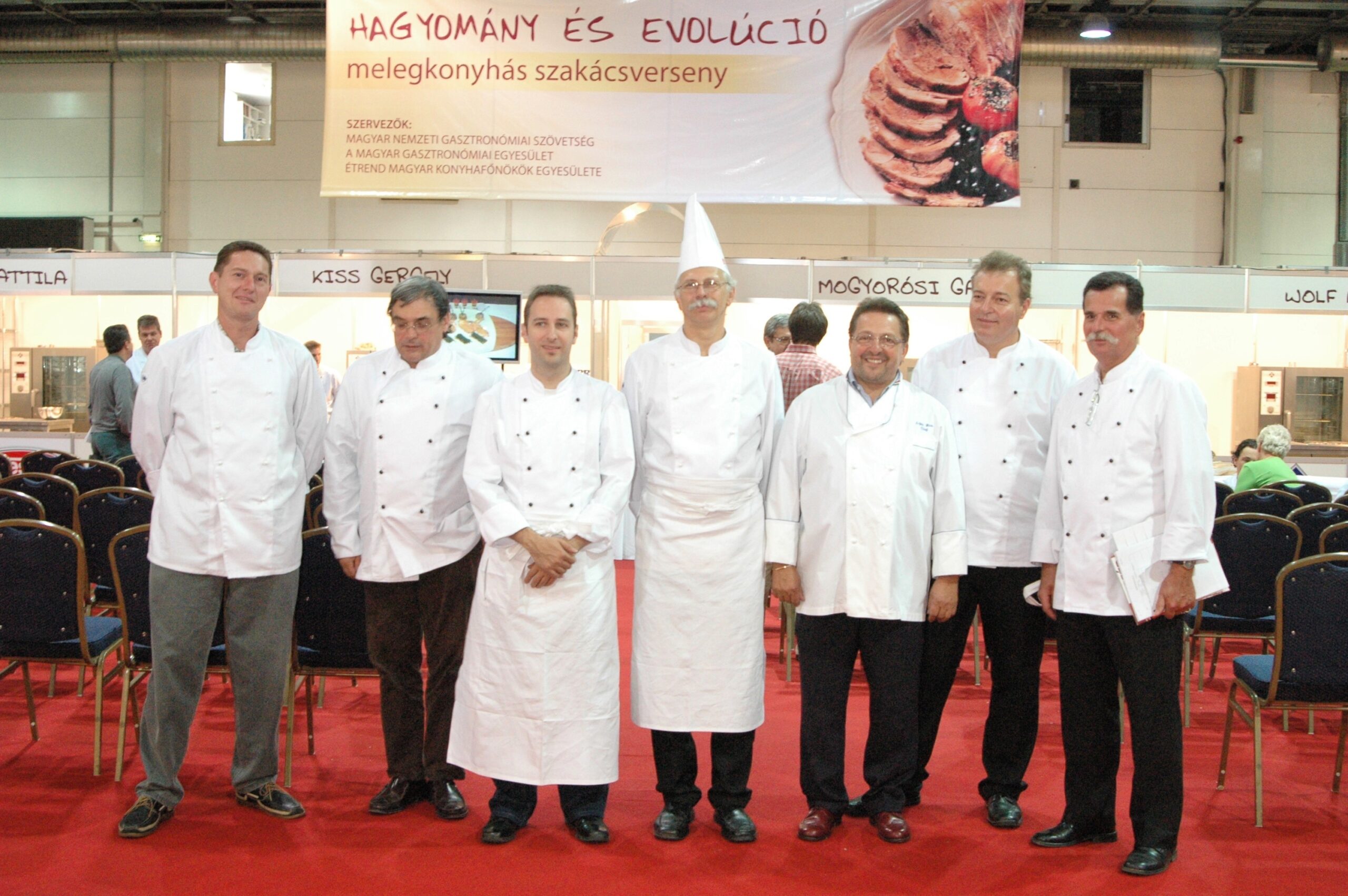
In 2001, the Hungarian Executive Chefs Association prepared a chef competition announcement that, besides the classic cold kitchen category, also included a hot kitchen chef duel. We considered it very important that the decorative work be complemented by a live cooking competition in the warm kitchen category, where participants had to prepare dishes from a basket of raw ingredients within a time limit, in front of an audience. Personally, I have always preferred and still prefer hot kitchen work, so I was very happy that for the first time in Hungary, in February 2002 at the UKBA exhibition, a hot kitchen chef duel was realized. This competition category continued for years and appeared not only in Budapest but also in various parts of the country.
At one world competition, I asked Reinhold Metz, who was then the European president of WACS, what his opinion was about cold kitchen competitions and why they are necessary. I did not want to influence his answer, but I added that I personally prefer the hot kitchen because there you have to prepare tasty, edible food. He replied that he agreed with me but said that decorative work is also necessary because it develops manual skills/dexterity. In this, he was right.
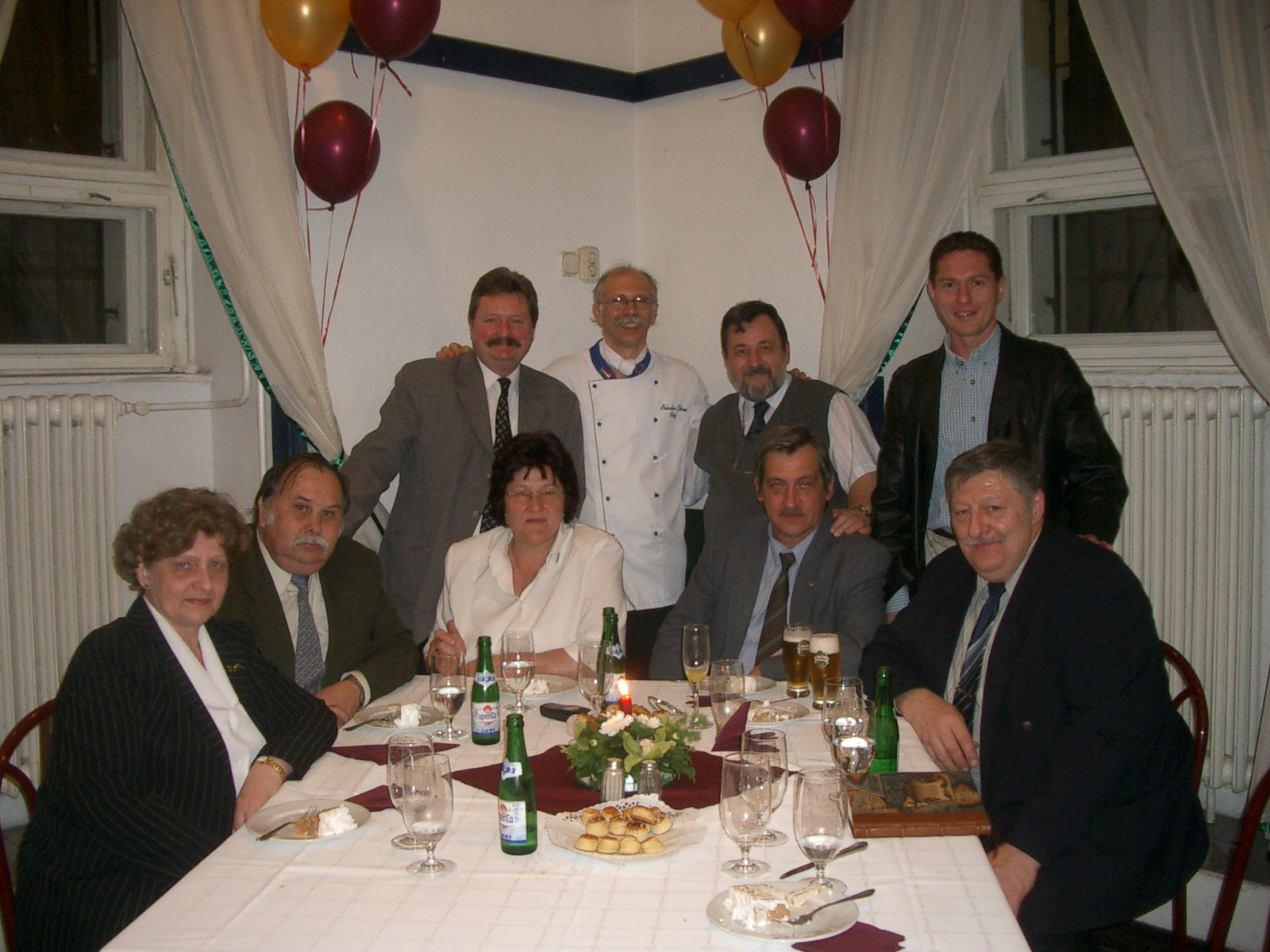
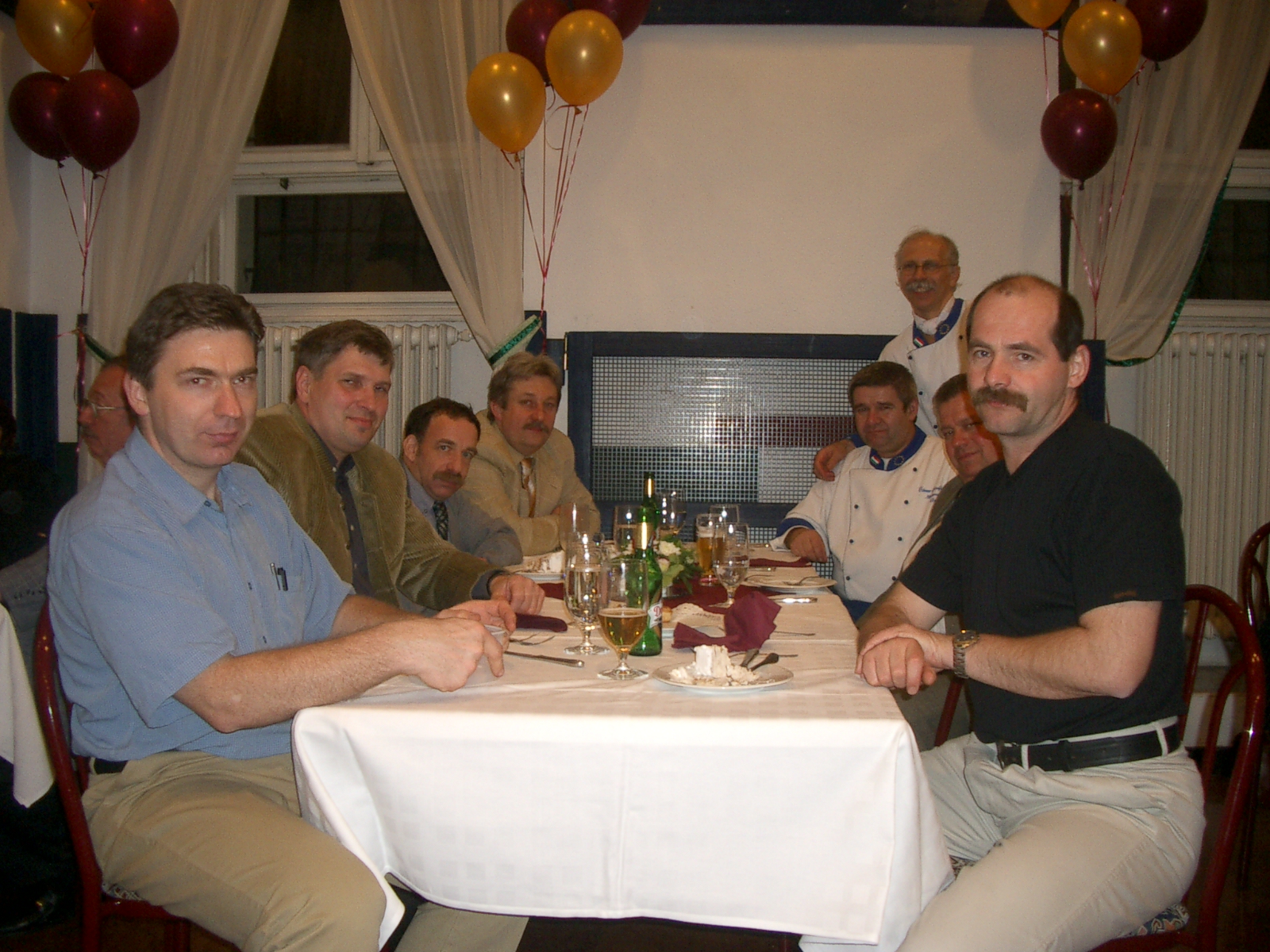
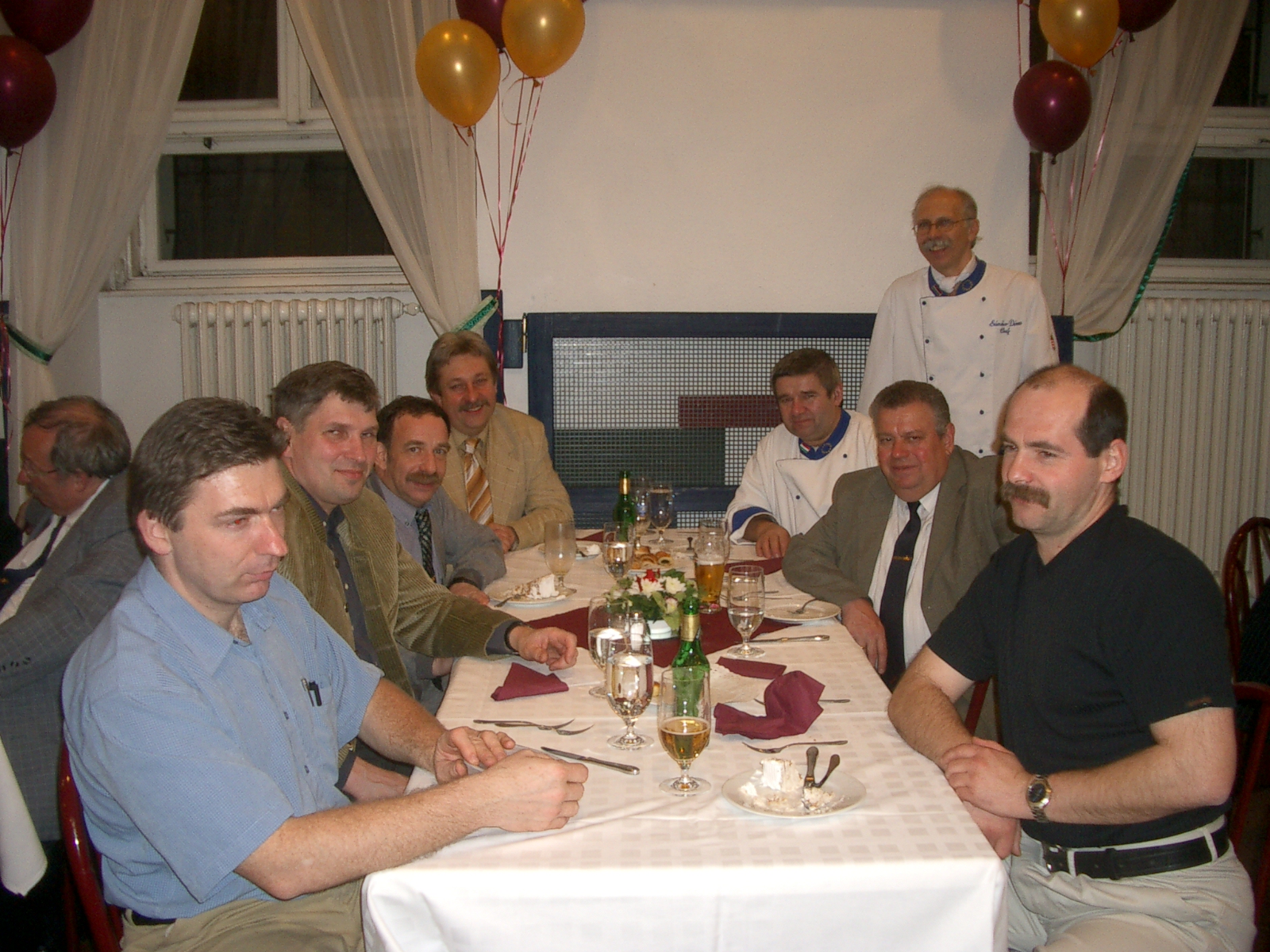
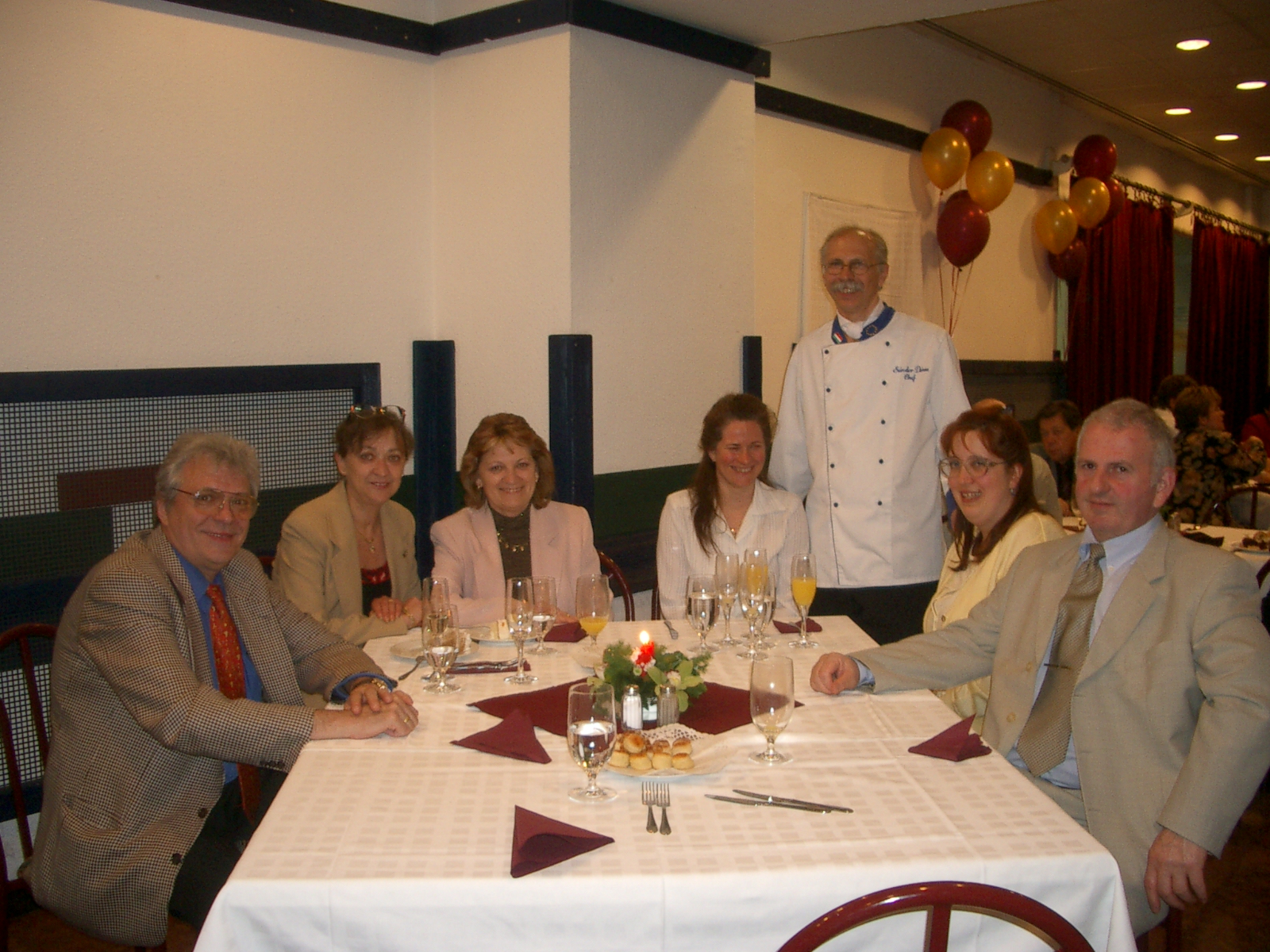
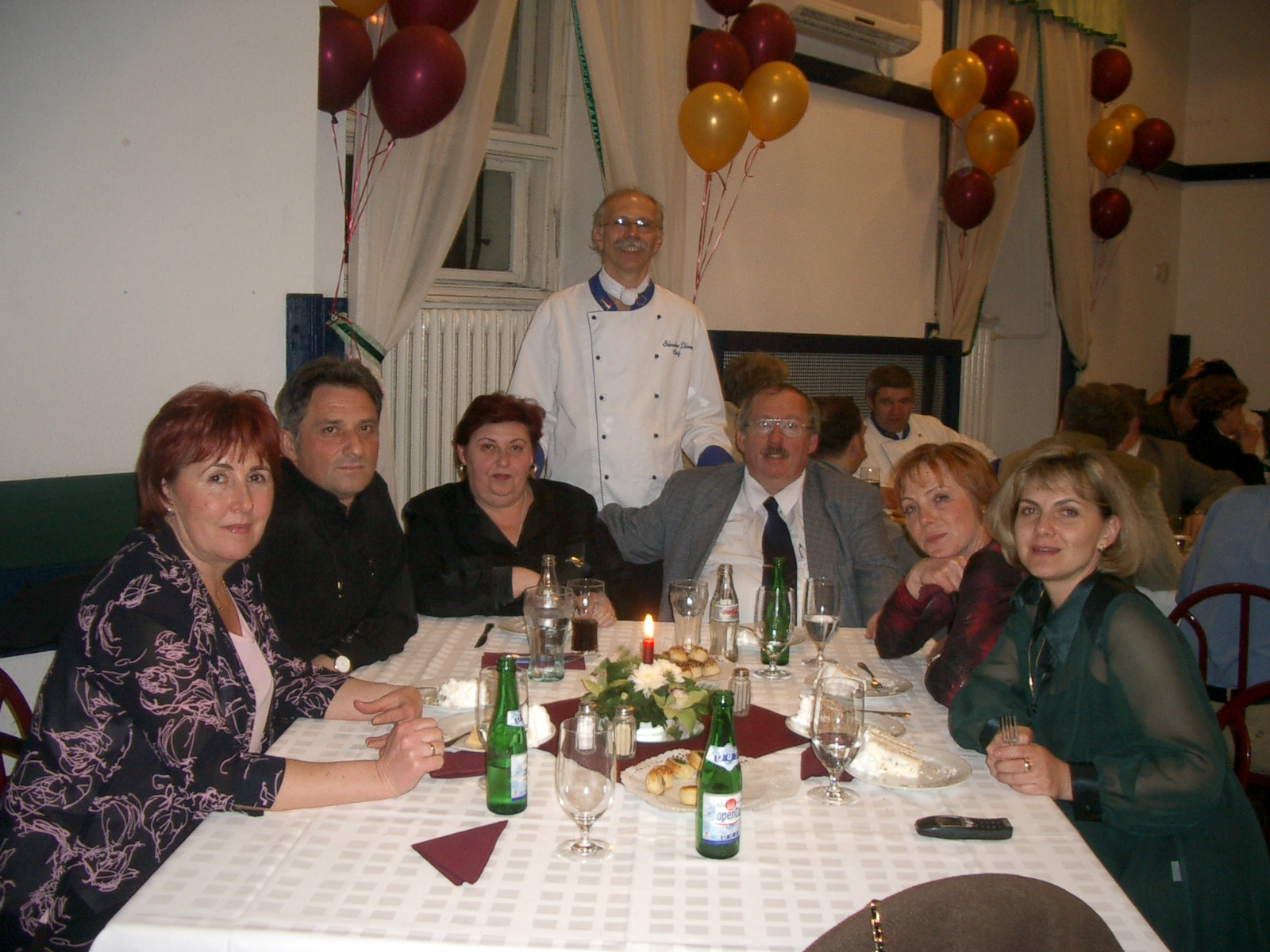
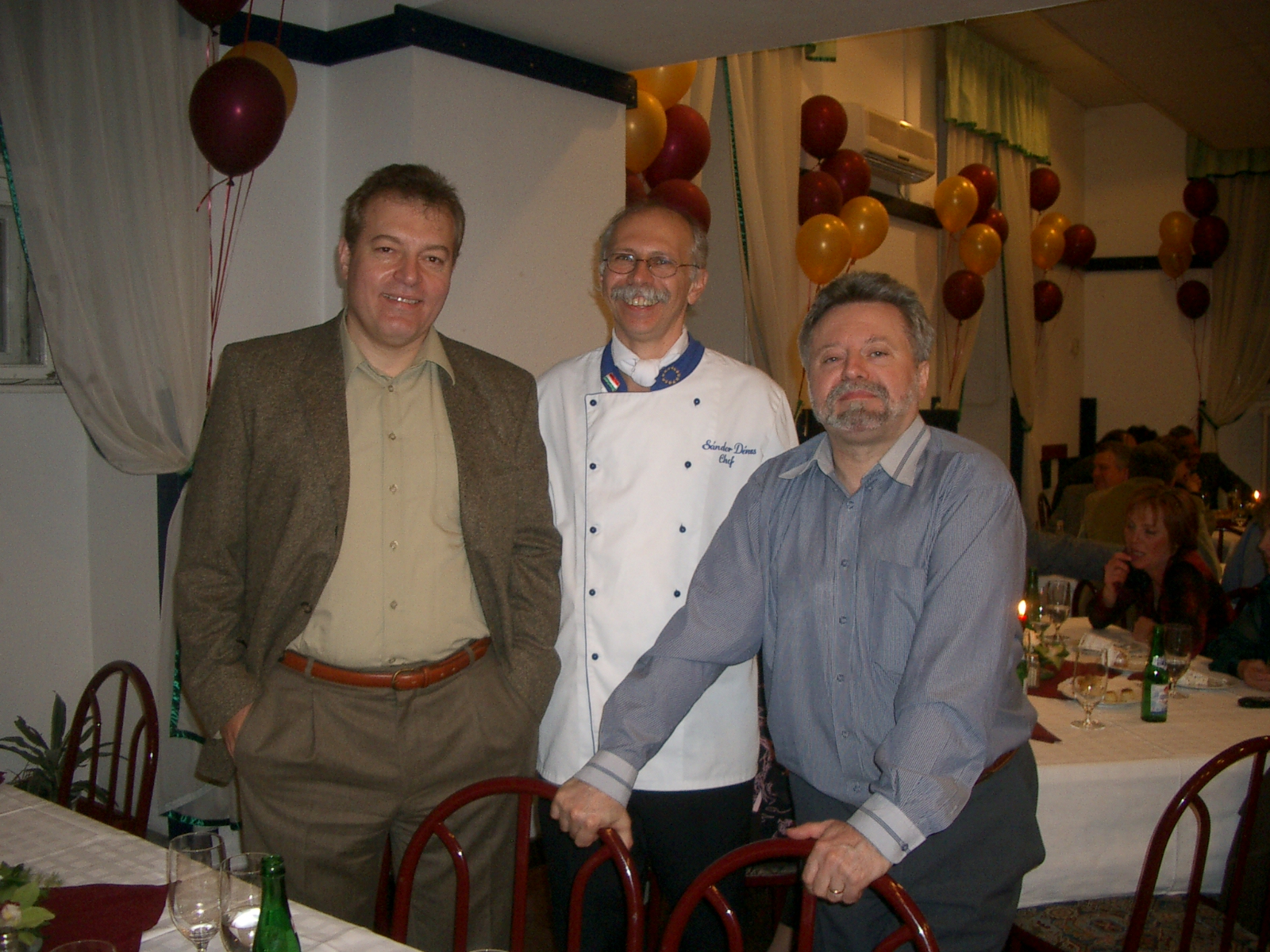
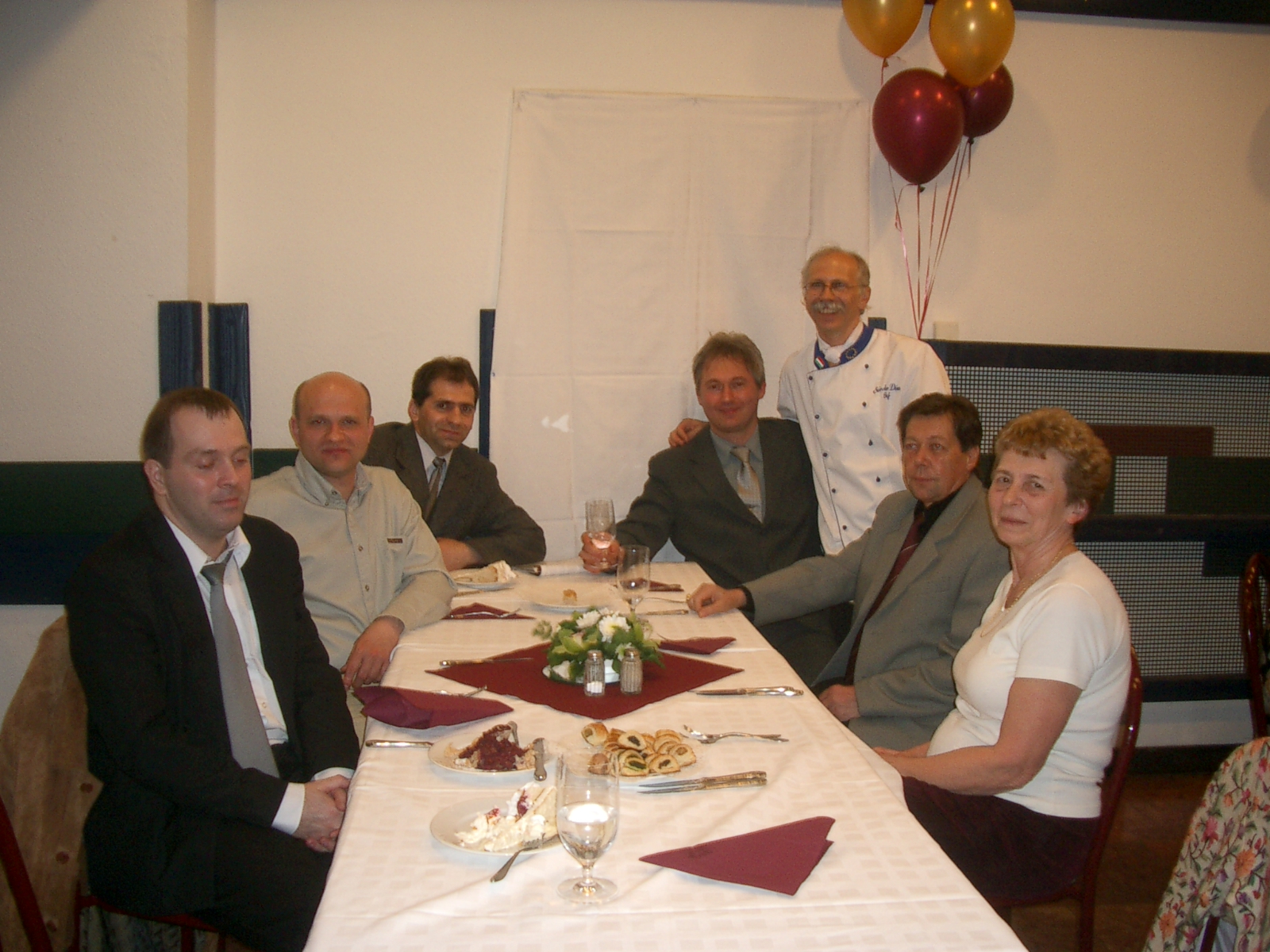
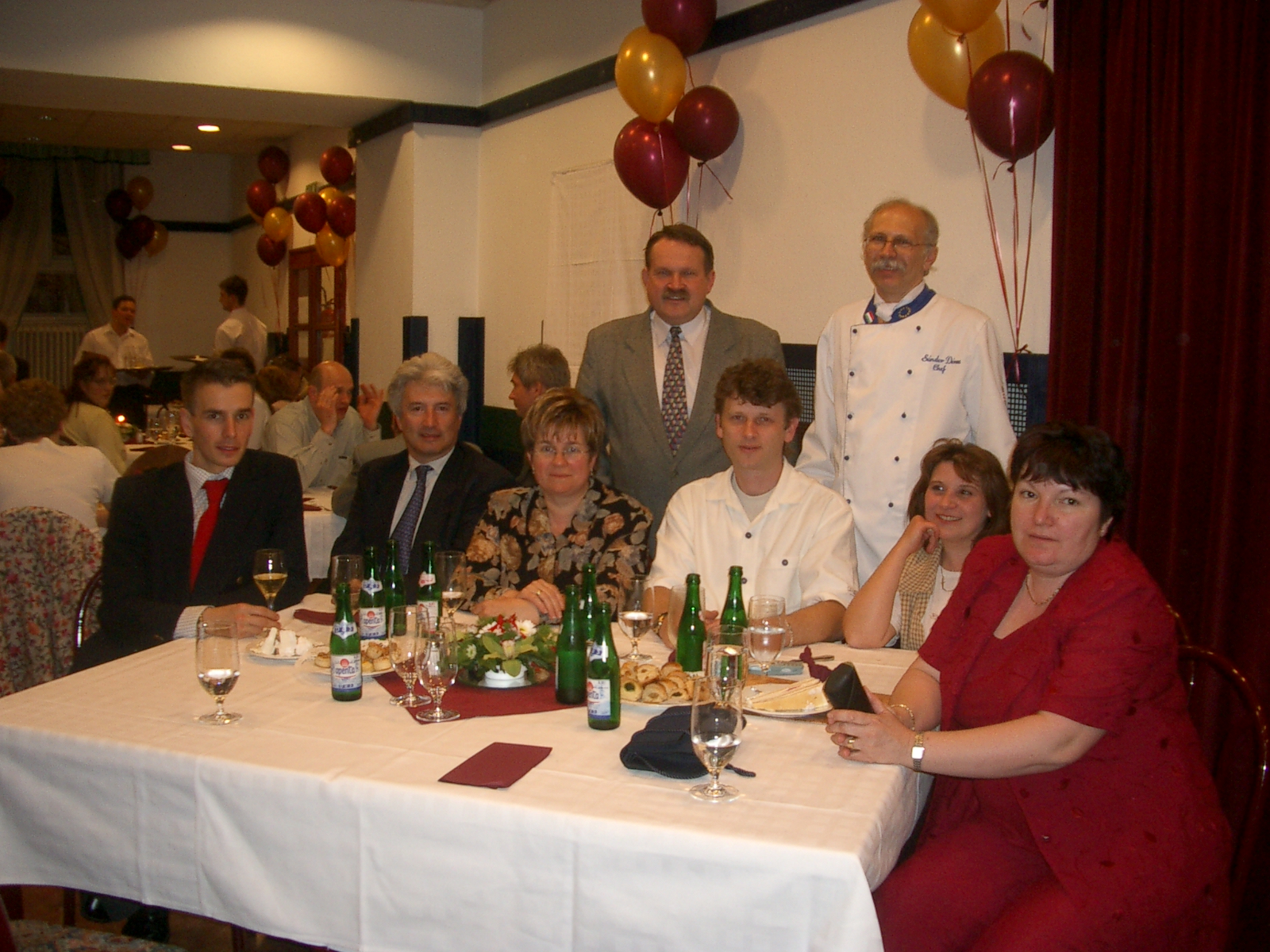
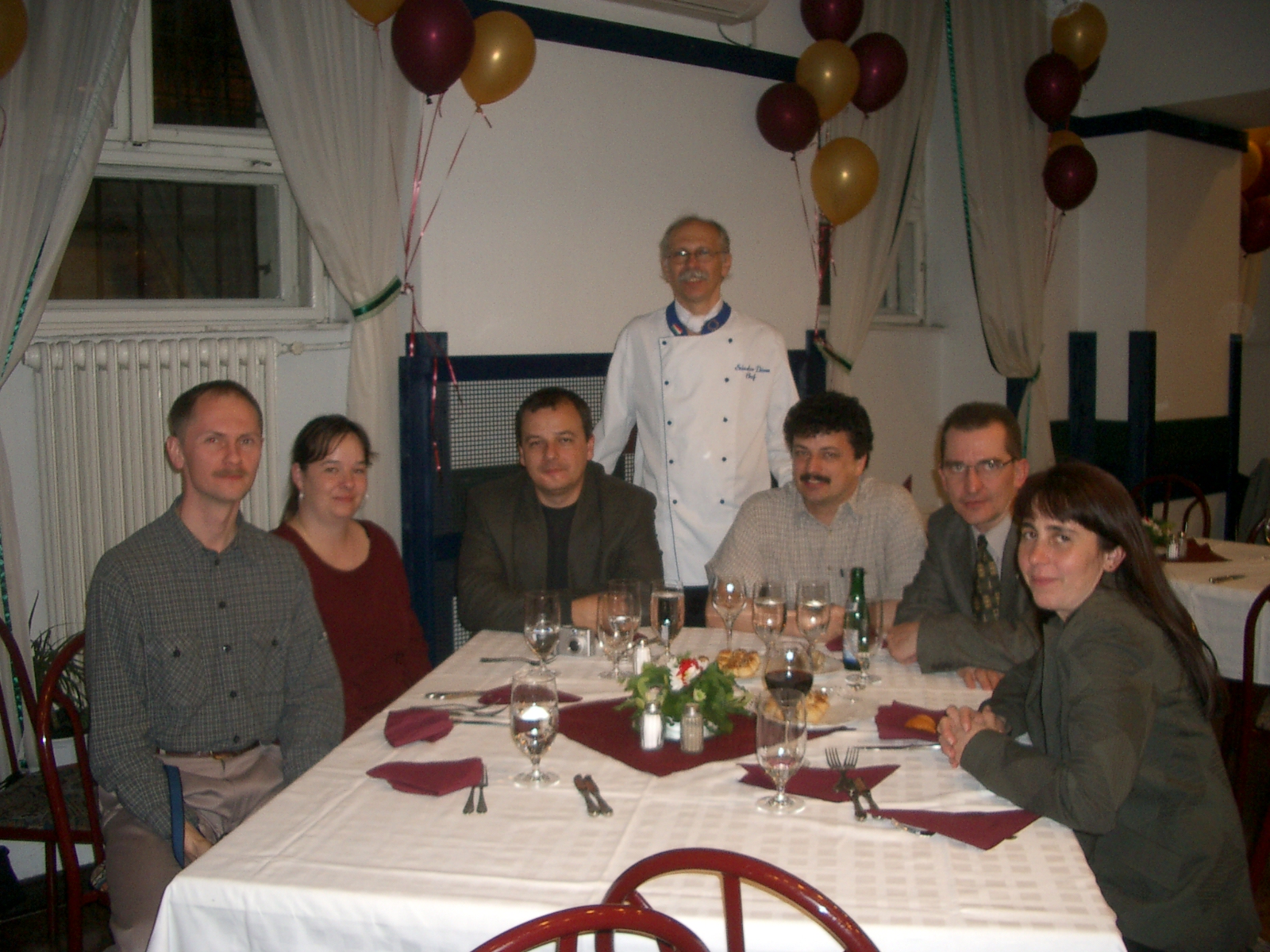
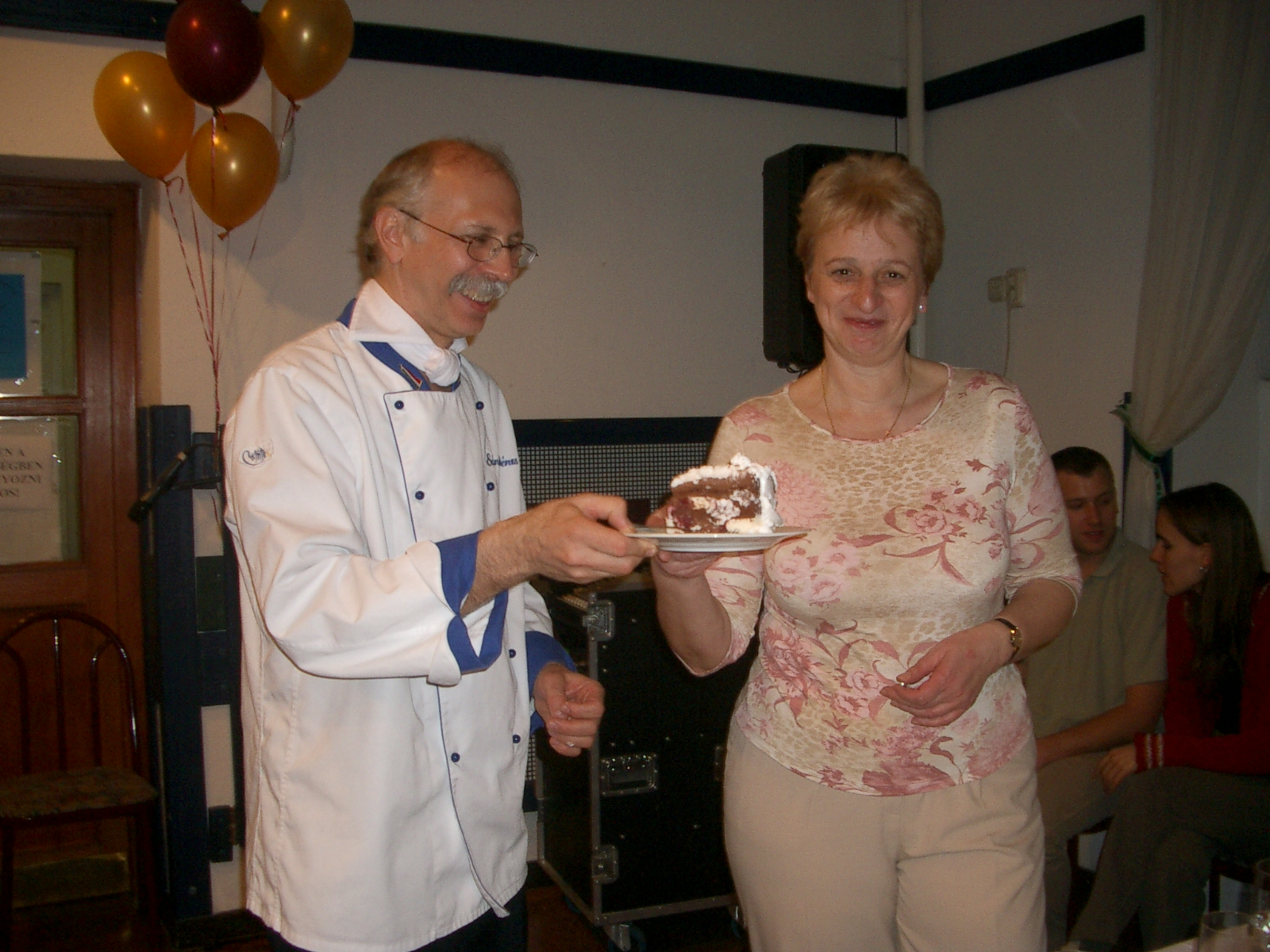
In 2004 I was 50 years old and we organized a celebration, partly with the help of colleagues from Étrend. We can see pictures from this event held at BGF KVIK:
My previously mentioned experience gained in Lyon—where I shared the information, photos, and films taken at the competitions with the association members—and my lobbying efforts at the 2003 and 2005 Bocuse d’Or competitions inspired many Étrend Hungarian Executive Chefs Association members, and in fact, many of them were present with me at the 2005 competition. Unfortunately, at that time, in Hungary, based on my personal experience, not a single penny of support was given by political and professional authorities for gastronomic purposes, so we could not realize the professional invitation. It is sad that there was a potential Bocuse d’Or-winning competitor who would have come to teach Hungarian colleagues, but unfortunately, we could not finance this “thanks to” the then responsible authorities.
We received a similar rejection when István Pető and I went lobbying for support for the first “Tradition and Evolution” and/or the WACS’s first hot kitchen competition from the then head of the Hungarian Tourism Ltd. The CEO received us very friendly and even offered to use the informal form of address, but from the requested 1 million forints for the installation needed for the competition, we received 0 forints. I have the name of the person responsible, but it doesn’t matter.
At the same time, the Étrend Hungarian Executive Chefs Association, the Hungarian Gastronomic Association, and the Hungarian National Gastronomic Federation decided to apply for Hungary’s participation in the 2007 Bocuse d’Or competition. I was the president of the first Hungarian Bocuse d’Or application, and Tamás Molnár B. was responsible for media relations. The application had to be submitted in the fall of 2005. The necessary funds for the application were paid by the Étrend Association and transferred to the French organizers.
We also agreed that if we were not immediately accepted into the competition’s lineup, we would definitely hold Tamás Molnár B.’s idea, the “Tradition and Evolution” hot kitchen chef competition, in 2006.
After lengthy consideration, the French organizers decided that although our application was good, they would not accept new countries for the 2007 competition because a total of 35 countries applied, but only 24 kitchens could participate in the two-day competition. They also announced that for the 2009 competition, continental qualifiers would be held, so only after a preliminary screening could one participate in the Lyon finals.
We regretted the decision but understood it. However, this allowed us to fully concentrate on the first “Tradition and Evolution” competition in 2006. We created an operational group to organize the preparations necessary for the competition. We prepared the competition announcement, received and evaluated the applications. Utilizing my previous experience and contacts from the Étrend Association, I managed during the negotiations to organize the four necessary competition kitchens with the required equipment, and to secure what were then very good prizes – 1st place 500,000 HUF, 2nd place 300,000 HUF, 3rd place 200,000 HUF – with the support of sponsors.
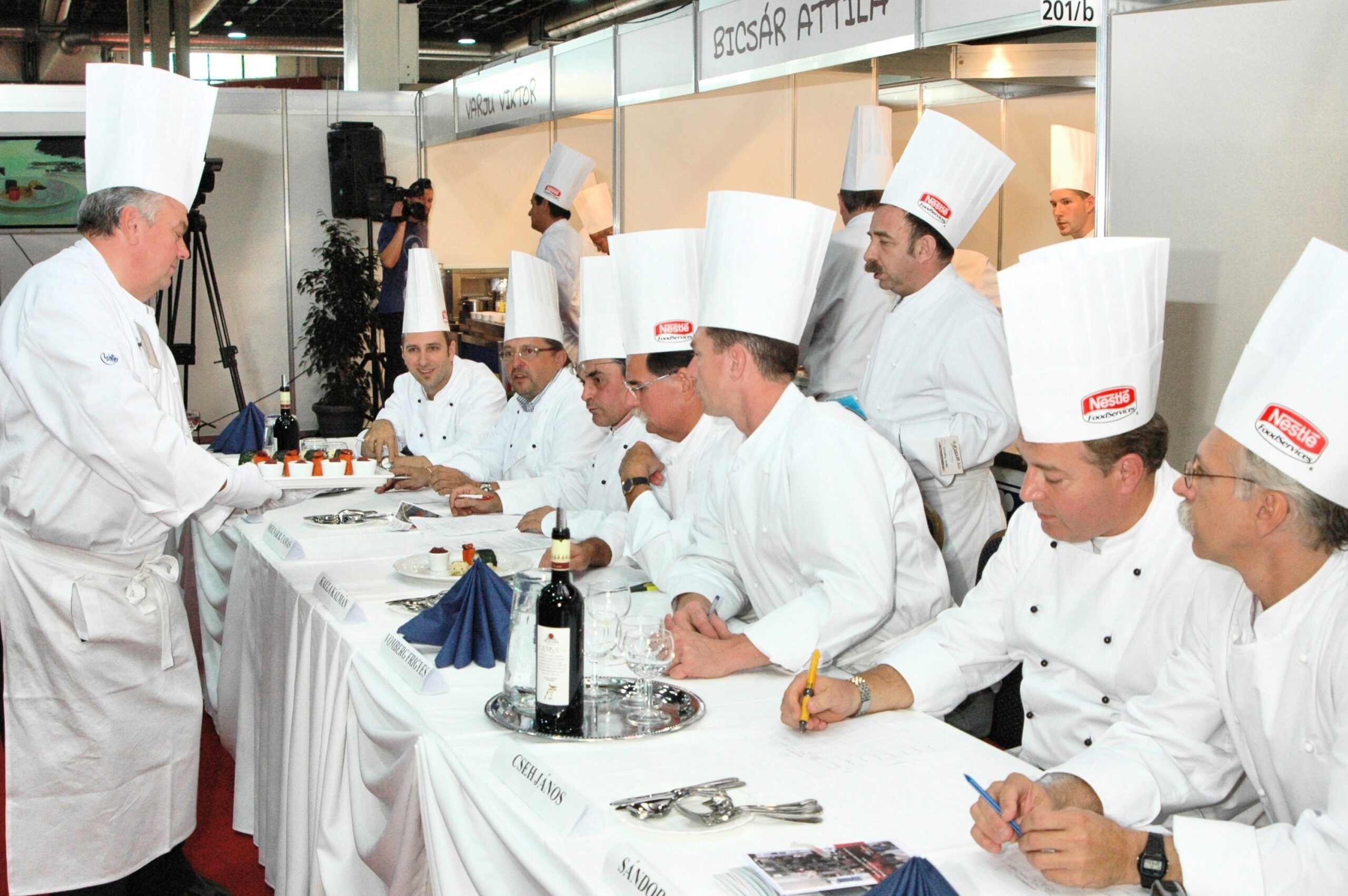
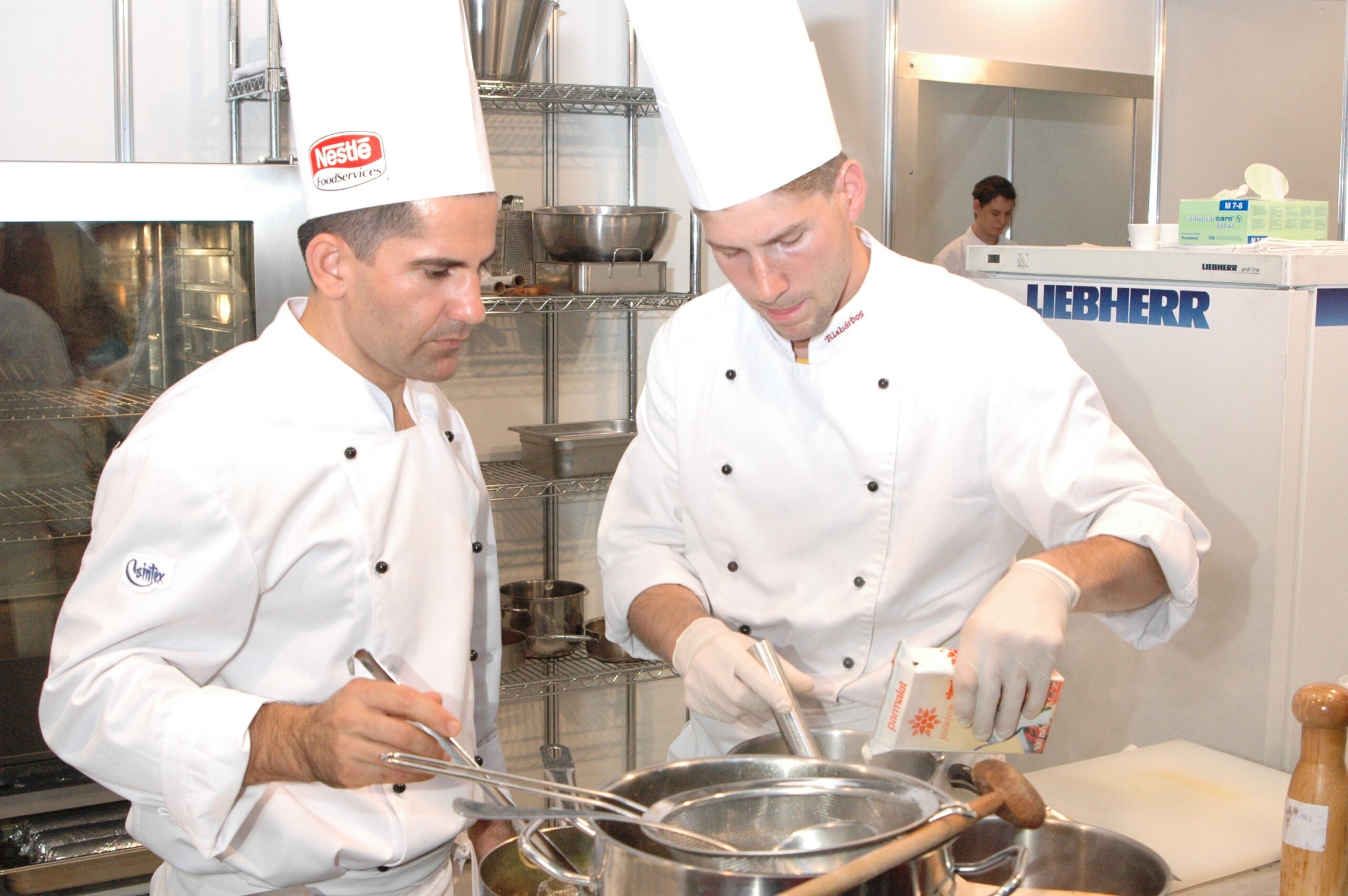
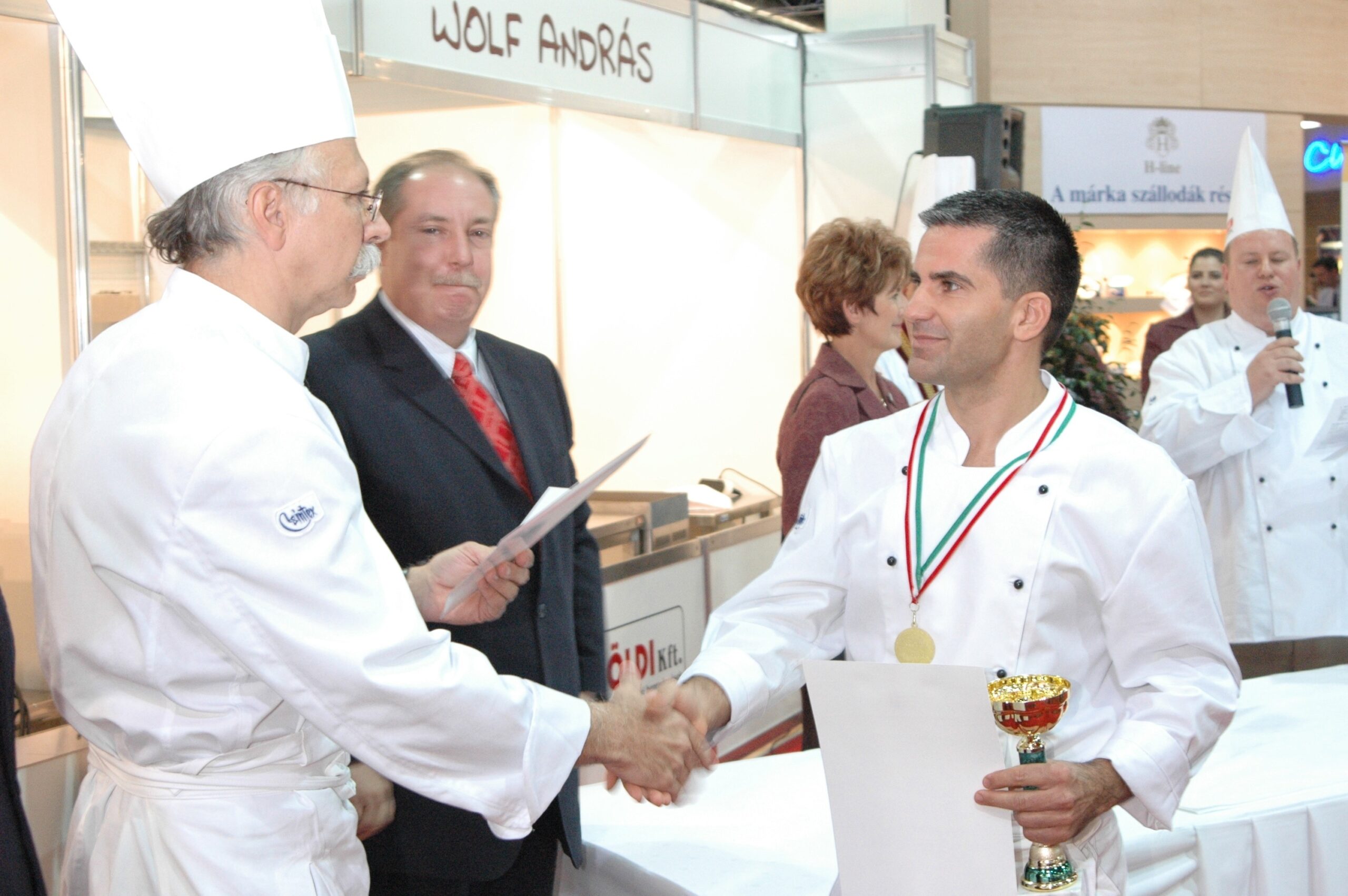
The competition featured the top eight chefs and sous chefs selected from the applications: Attila Bicsár, Sándor Pető, Zoltán Viola, Viktor Varjú, Gábor Mogyorósi, Gergely Kiss, András Wolf, and Attila Keresztes. The winner was Attila Bicsár from Alabárdos Restaurant, second place went to Sándor Pető from Sofitel Budapest Hotel, and third place was taken by Zoltán Viola, also from Sofitel Budapest Hotel. According to the competition task, each participant had to prepare a main dish using catfish and free-range chicken, producing 6 portions each with two to three side dishes and sauces within five hours. Each competitor was assisted by a young chef.
The seven-member jury—Lajos Bíró, János Cseh, Kálmán Kalla, Tamás Molnár B., Dénes Sándor, Viktor Segal, and Frigyes Vomberg—could award a maximum of 80 points per dish (20 for work execution, 20 for presentation, and 40 for taste). The highest and lowest scores were automatically discarded, so a maximum of 800 points in total could be earned for the two dishes. Attila Bicsár scored 677 points, Sándor Pető 655 points, and Zoltán Viola 642 points.
The competition was successful, thanks in large part to the active involvement of members of the Étrend Association at this and later competitions, including: Endre Kelemen, András Schwarcz, Krisztina Németh, Viktorné Tóth (Jutka), Ferenc Szamosi, László Boros, István Ferenczi, Csaba Czímer, J. Csaba Daniss, András Balázs, Miklós Várhelyi, Zoltán Jeles, Ferenc Balatoni, and Tamás Sóskuti. Coverage of the competition was published in Gasztro Fórum, Volume II, Issue 11.
The pictures of the competition:
Hungarian National Gastronomic Federation (HNGF)
From 2003 to 2005, I served as the chairman of the Education Committee, and from 2005 to 2007 as vice president, supporting the work of the Hungarian National Gastronomic Federation. During this period, István Pető was the president of the association, a fair, highly resilient professional dedicated to gastronomy. He was also a founding member of the Étrend Association, so over the years a good working relationship developed between us. We managed many jointly organized projects—competitions, gastronomic events—or participated together in domestic and international professional conferences and congresses.
At that time, the HNGF was a large nationwide organization with over a thousand members. Part of the membership was committed to professional development, but many were simply “doing the daily routine,” which was not necessarily professionally acceptable. For example, an excessively wide food selection on the menus, which conflicts with serving high-quality dishes. The two cannot be implemented together, in one place and at one time. Naturally, this practice (wide food selection) was not only characteristic of some HNGF members ’ restaurant; unfortunately, such daily routine still exist in Hungarian hospitality to this day.
According to its organizational structure, the HNGF operated with regional divisions, and each region had a president. When there was a board meeting, once or twice a year, more than 30 of us gathered: the HNGF president, four vice presidents (chef, pastry chef, restaurant, and bartender), and regional presidents. The meetings were held in a very good atmosphere, but their efficiency was questionable. Most participants passively listened to the reports following the agenda points and, I suppose, conveyed the gathered information at another meeting to the regional membership. Of course, there were constructive comments, but generally and overall, the work necessary for implementation was not… No one really took responsibility for it. As a result, there were times when István Pető and I worked late into the night on weekends via Skype to meet deadlines and achieve the set goals.
President Pető strongly encouraged me to take over the presidential position when his four-year term ended. On this matter, I was adamant—I did not want to become president. On one hand, as I wrote, I considered the HNGF to be too large an organization that could not operate efficiently. On the other hand, I had just started my PhD studies, and my regular work plus doctoral training already provided more than enough tasks to responsibly handle.
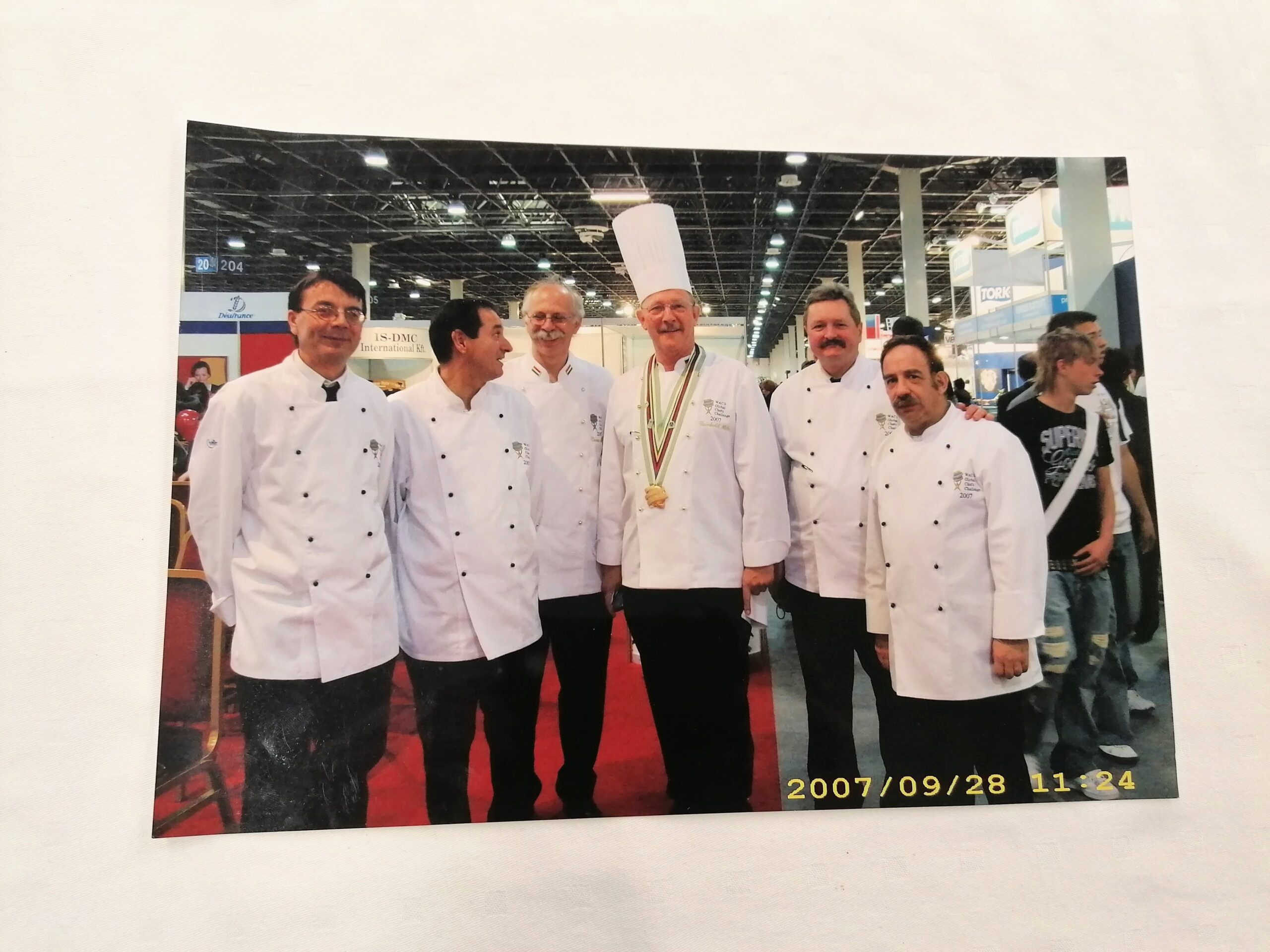
So, in 2007, we fully organized the WACS Global Challenge, the world organization’s first hot kitchen chef competition, which was very successful. After that, however, I “retired”—at least temporarily—from my active voluntary work supporting gastronomy. Part of the team organizing the competition can be seen in the following picture with Reinhold Metz, who was the European president of WACS:
In 2007, however, an event took place that still resonates with many, related to the Bocuse d’Or competition. Tamás Molnár B. and János Cseh went to István Pető and raised the idea that the Hungarian Gastronomic Association (HGA) would like to manage all tasks related to the Bocuse d’Or competition in the future. István Pető, president of the Hungarian National Gastronomic Federation (HNGF), suggested that he could imagine a cooperation, for example, in the selection of the future competitor, where the jury members would be delegated by two or even all three gastronomic organizations (HNGF, HGA, Étrend Association). To this, Tamás Molnár B. replied that there was no one in the HNGF who could be a jury member. Pető István then remarked that Károly Varga could be suitable. Molnár B. Tamás responded: “The vegetable carver?” It was well known that Károly Varga was already then one of the most successful Hungarian competitors in international competitions and was highly respected worldwide. After this, it was agreed that István Pető would bring the HGA’s request before the HNGF presidency. This meeting took place in June 2007.
A few months later, the Bocuse d’Or organizers called from Lyon asking if I knew Dóra Bittera and Tamás Molnár B. They probably called me because I was the chair of the Hungarian application submitted in 2005 for the 2007 competition. I said yes, they were food journalists. They then said they had submitted an application for the 2009 Bocuse d’Or competition. I informed István Pető, who said that if Tamás Molnár B. did not wait for the opinion of the HNGF presidency on this matter, then the HNGF would also submit its own application. That is what happened, and the French accepted the HNGF’s application.
After that, I became the “black sheep” in the eyes of Tamás Molnár B. and his followers. However, then and now, I believe—knowing the conditions of the application call at the time, which stated that the head of the application could only be a current or former chef—that the MGE’s application was invalid from the start.
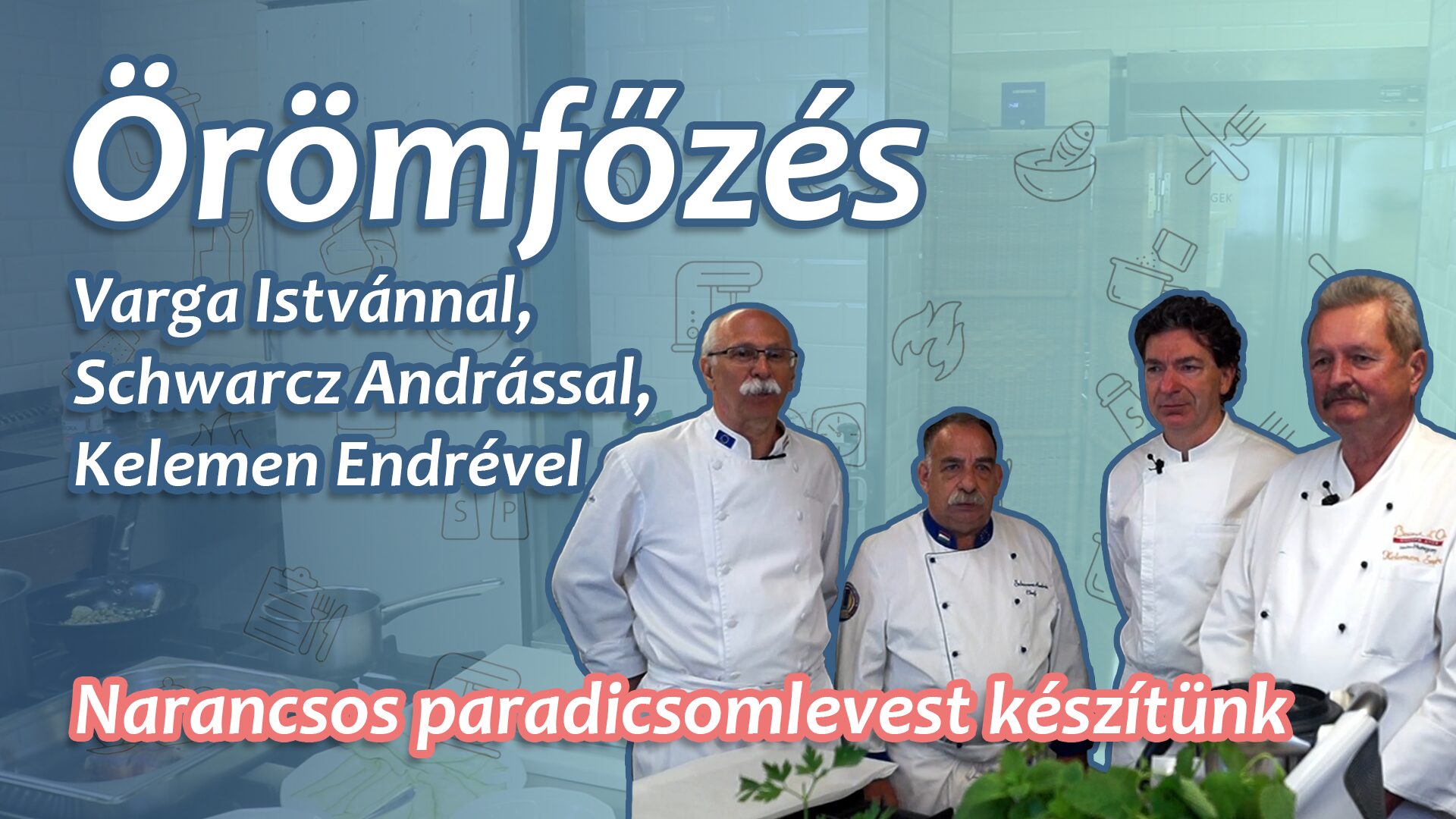
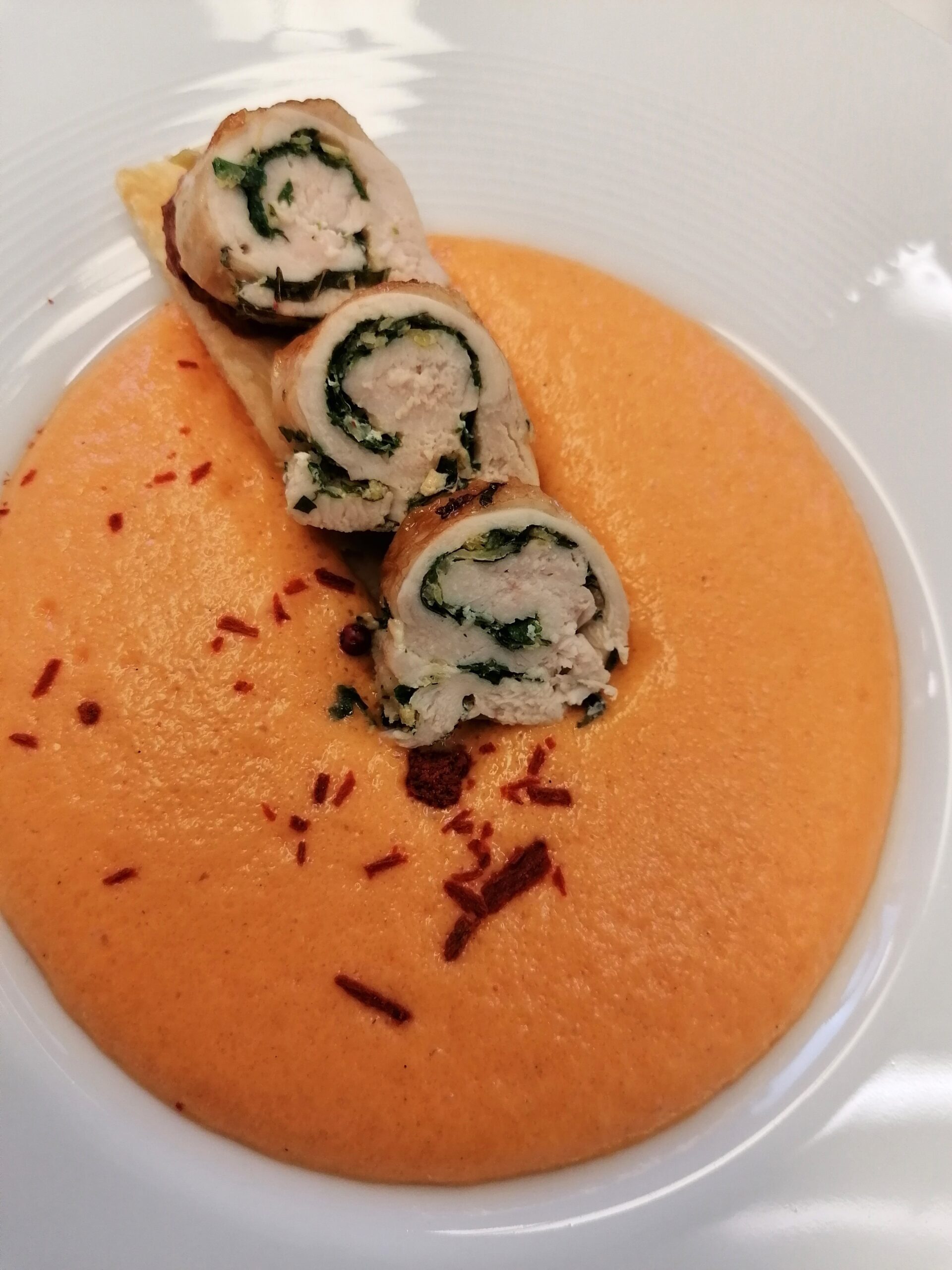
Click on the image to watch the video of the “Orange Tomato Soup with Tofu Mille-Feuille and Lemon Chicken Breast” prepared at the Joyful Cooking event! You can find the recipe below the video!
You can watch the interview with István Varga on YouTube by clicking here.
You can watch the interview with Endre Kelemen on YouTube by clicking here.
You can watch the interview with András Schwarcz on YouTube by clicking here.
You can find the spontaneously shared stories from the Joy Cooking event here:
https://www.youtube.com/watch?v=-hYsgWTPXf8
https://www.youtube.com/watch?v=OBLoR1svWCA
https://www.youtube.com/watch?v=NPhGGnIa3YQ
https://www.youtube.com/watch?v=xL2Ro8-y0qs
https://www.youtube.com/watch?v=JZMMMvcKW5I
https://www.youtube.com/watch?v=7GwMuRlJS04
https://www.youtube.com/watch?v=Repn7yuPpyk
https://www.youtube.com/watch?v=hFc7yydMTBo
https://www.youtube.com/watch?v=yh7mWP3Gj7s
https://www.youtube.com/watch?v=1cweIhWAXqU
https://www.youtube.com/watch?v=BJC_E5Gs1aY
https://www.youtube.com/watch?v=lmLCTGqlgK8
https://www.youtube.com/watch?v=otljijtnAEg
https://www.youtube.com/watch?v=R3JQq6yo1AM
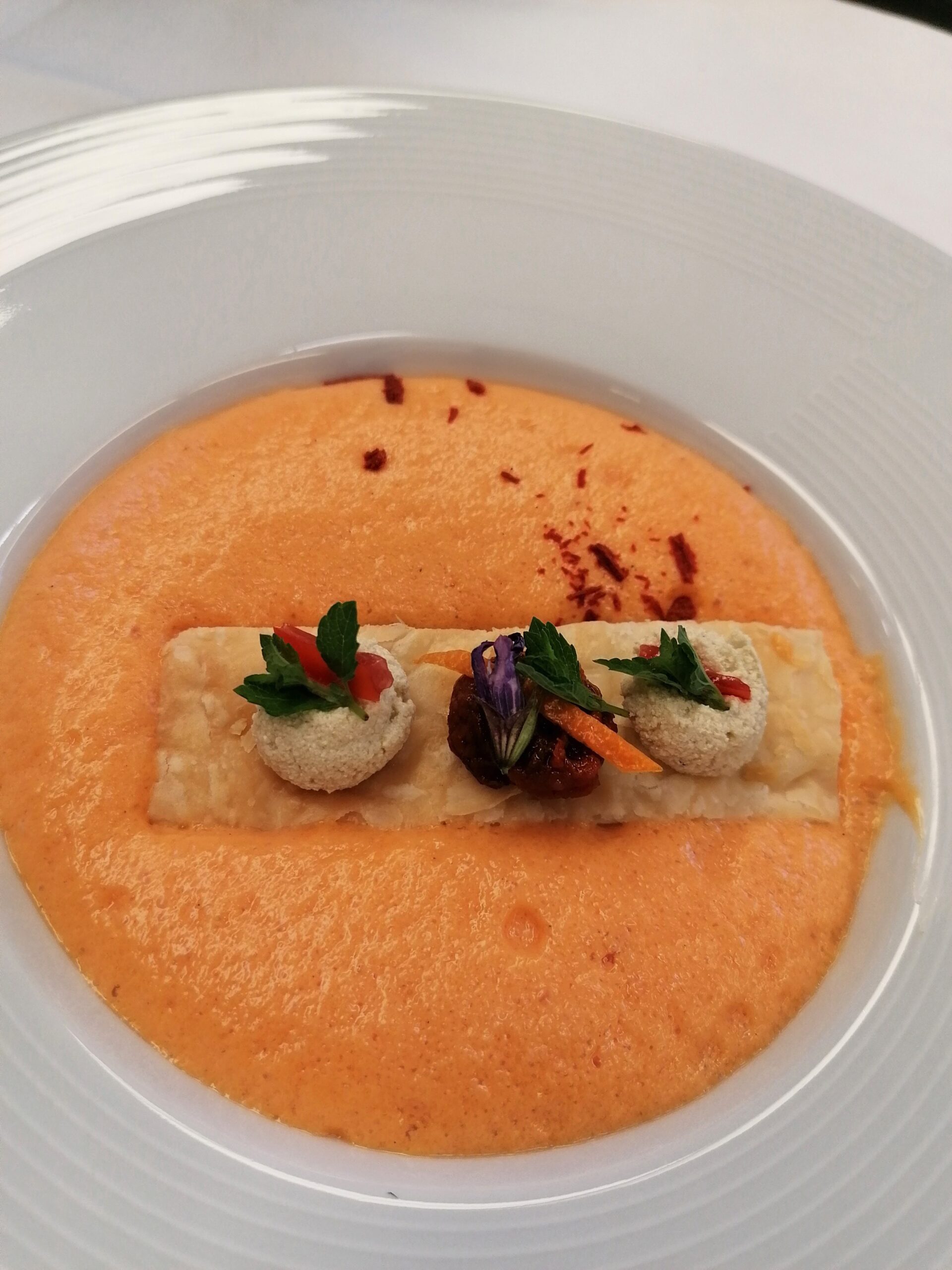
Orange tomato soup with tofu mille-feuille and lemon chicken breast
Recommended ingredient quantities for 4 people:
For the soup:
600 g tomatoes
300 g organic orange
50 ml olive oil
100 g potato
salt, vanilla
For the tofu mille-feuille:
200 g puff pastry
200 g natural tofu
100 g sun-dried tomatoes
40 g cherry tomatoes
50 g organic orange
salt, pink pepper, tomato flakes
For the chicken breast:
400 g chicken breast fillet
100 g organic lemon
50 ml olive oil
salt, lemon verbena
Preparation steps:
- Blend the tomatoes together with the orange peels until creamy. Add the squeezed juice of the oranges, the cooked and peeled potatoes, and the olive oil. Season with salt and flavor with vanilla.
- Place the puff pastry on a baking tray lined with parchment paper, cover it with another sheet of paper and place a second baking tray on top. Bake at 200 °C for 8 minutes.
- Remove the top baking tray, turn the pastry over, remove the top parchment paper, and bake for another 3-4 minutes until nicely golden.
- Remove the pastry from the oven and immediately cut it into 9×3 cm rectangles.
- Blend the tofu with olive oil until creamy, season with salt, and fill into a piping bag.
- Make a cream from the sun-dried tomatoes in a blender, season with salt if needed, and fill into a piping bag.
- Alternate small dollops of tofu and tomato cream on one pastry sheet, place a second pastry sheet on top and decorate it with the creams again, finally garnish with orange, tomatoes, and pink pepper.
- Shape the chicken breast fillet roughly into a rectangular block, then “open” it by slicing it into a roughly half-centimeter thick flat piece.
- Salt it, generously sprinkle with grated lemon zest and lemon verbena, then roll it tightly so that the skin is on top.
- Drizzle with olive oil and bake at 200 °C until browned. Let it rest, then slice into rounds.
- On one pastry sheet, pipe a mixture of tofu and tomato creams and place the chicken breast slices on top in an attractive way. Garnish with pink pepper, lemon, and lemon verbena.
- Pour the soup into a siphon, insert a cartridge, and shake well. Dispense the soup into a deep plate, carefully place the prepared tofu or chicken pastry on top, and serve immediately.