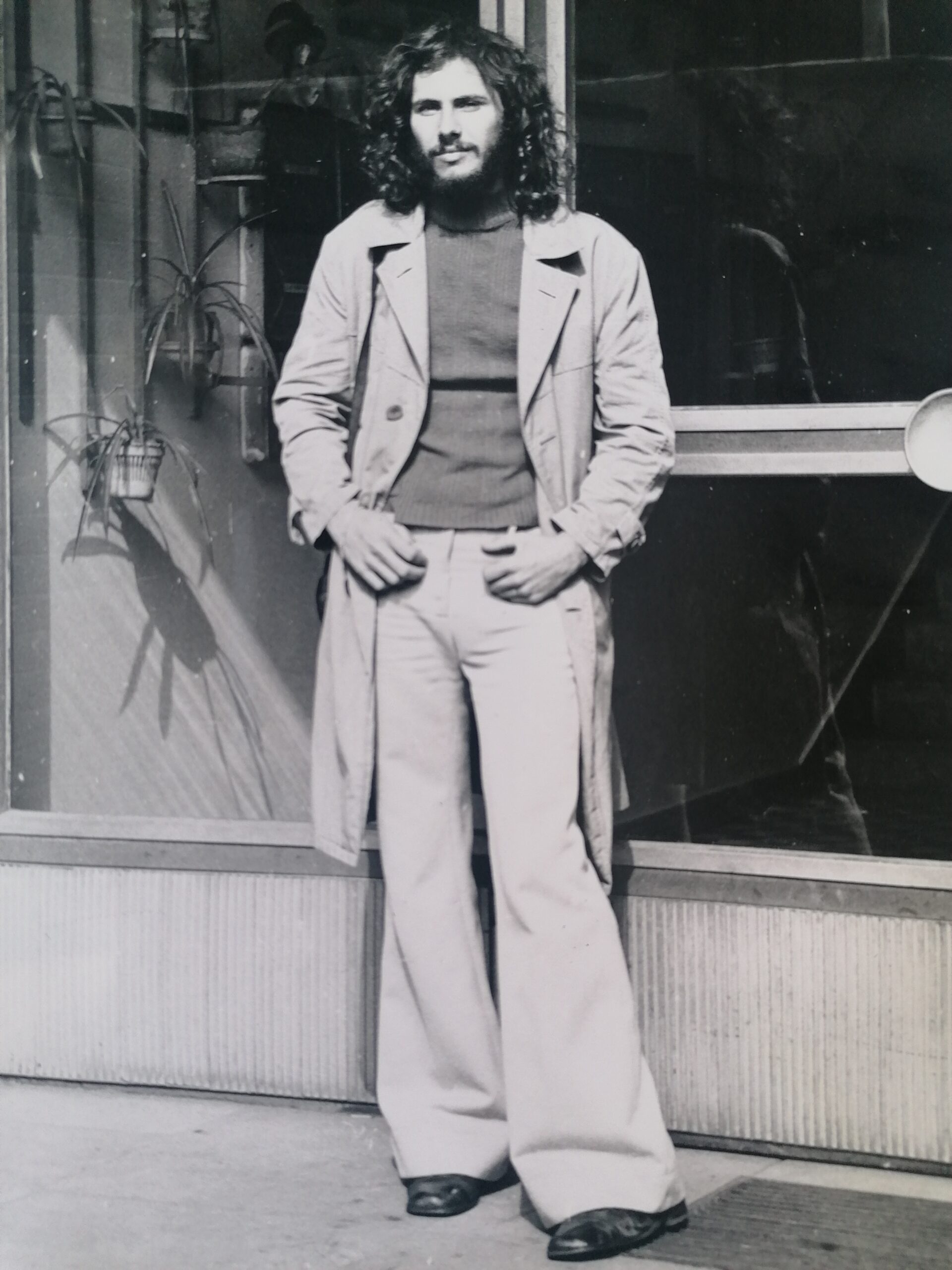
1970s
Holiday Resort of the Ministry of Domestic Trade
As I already mentioned, after six years of work I changed workplaces and went to work at Lake Balaton for a summer. At that time, many chefs tried working through a Balaton season. In 1974, I was twenty years old, young and carefree, so this getaway came in handy. We went to the Holiday Resort of the Ministry of Domestic Trade in Balatonszabadi with my former colleague Ferenc Ácsbold. He was the head chef, I was the cook. I had long hair at the time, so I could only work if I tied it up in a hairnet. The work tasks quickly became part of the daily routine, as we had to prepare breakfast, lunch, and dinner for nearly 200 people. The agreed menu rotated on a two-week cycle.
However, every afternoon there was time to play football, and every day—often multiple times—we could swim in Lake Balaton, which was directly connected to the resort grounds. It was true “dolce vita.”
The kitchen was unbearably hot, because there was a stove that operated on oil, which literally glowed red above the flame. In retrospect, it seems bizarre, but with permission, I worked shirtless—of course, strictly wearing a hairnet—while tearing dozens of kilos of dumplings over the stove. In the next photo, you can see why I had to work wearing a hairnet.
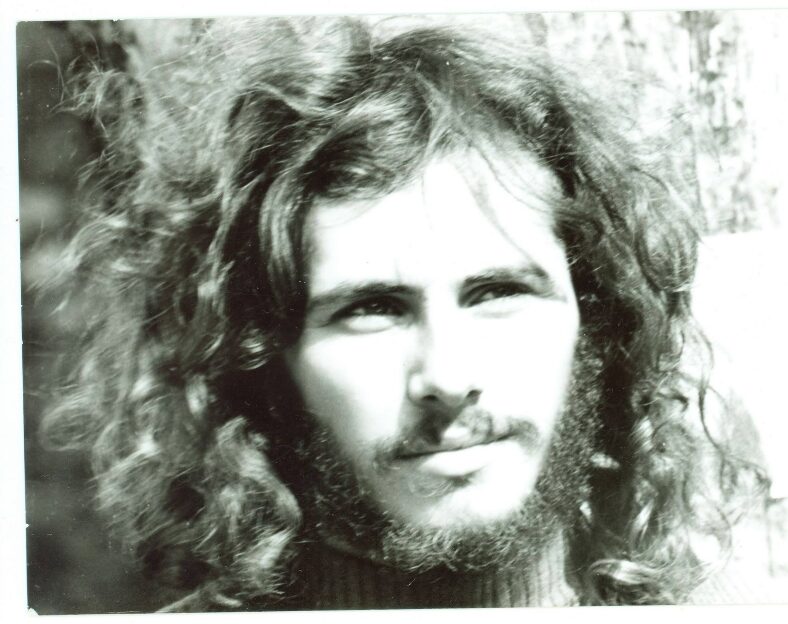
At the age of 20
We were about halfway through the committed three months when Ferenc Ácsbold had a falling out with the female boss—words were exchanged, quite loudly. The argument ended with Feri leaving, and I was left alone in the kitchen for the remainder of the season, being appointed head chef.
The Balaton summer remained memorable, not primarily because of the work, but because of the complete experience of freedom.
Pilvax Café and Restaurant
The Pilvax, a café of defining significance in Hungarian history, operated more as a restaurant during the 1970s.
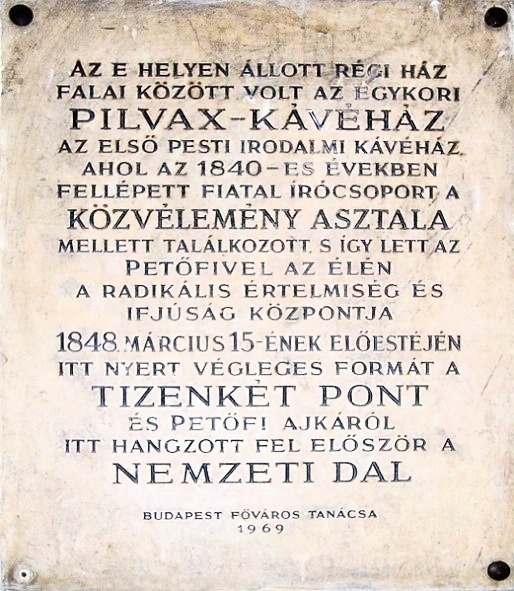
The memorial plaque of the Pilvax
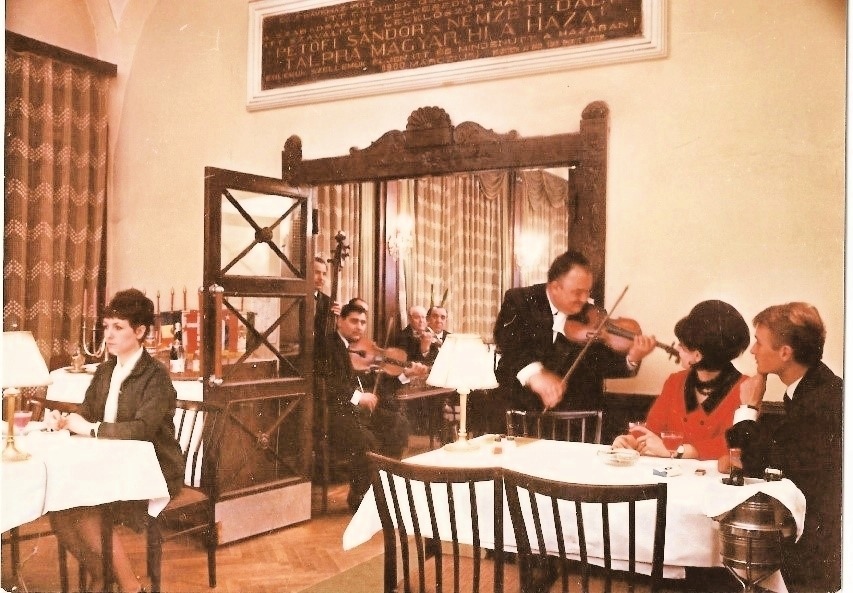
The Pilvax Restaurant in the 1960s
In the autumn of 1974, I was already working at the Pilvax Restaurant, which belonged to the Belvárosi Vendéglátó Vállalat (Downtown Catering Company). The establishment had one kitchen and three restaurants: a first-class restaurant, a second-class beer hall, and a self-service canteen. The kitchen work was extremely overloaded, as during the morning shift, from 7 a.m. to 3 p.m., meals had to be prepared for all three restaurants with minimal staff, while the self-service section opened as early as 11.
Often, only two cooks worked in the morning, and in many cases, we even had to wash the large dirty pots in the black dishwashing area before we could start cooking. Around 8 a.m., food was cooking across the entire surface of the stove and on all five gas burners. At the same time, meats and then pasta dishes were baking in the electric oven. To ensure that the food was ready by the time the restaurants opened, we sometimes prepared the base for the next dishes in pots placed directly on the tiled kitchen floor. (If the health authority at the time, Köjál, had known this…)
Between 1974 and 1977, I worked at Pilvax. Several head chefs succeeded one another during this period. Professionally and personally, Ferenc Balatoni stood out among them. For a time, I was his deputy, although both of us were also cooking full steam alongside our managerial duties.
Another head chef, who left a less positive impression, was Gyula Sz., who primarily directed and criticized. We didn’t care much for his unfair remarks. One such occasion was when the chef showed up around 7:30 one morning, just as I was taking a bite of a sandwich, and he said: “What’s this, you’re already eating?” I didn’t say anything in response—just let my piece of bread drop dramatically to the floor. The “dear” chef couldn’t have known—how would he have—that I had already started my day well before 7, washing dishes, and just wanted a bite to eat before cooking.
And so came the cook’s revenge. For a few weeks afterward, a colleague and I made ourselves snacks from expensive ingredients. Our meals put a bit of strain on the kitchen’s inventory: steak tartare enriched with a bit of caviar, grilled pike-perch fillet, beef tenderloin slices with foie gras, etc. Why did we do all this? We resented that we didn’t see him as a team player, his professional decisions were sometimes questionable, and we saw no other way to express our dissatisfaction.
On another occasion, a colleague suffered a burn injury when the two of us tried to lift a 90-liter pot of potato dumplings off the gas burner to drain it. The handle on the chef’s side broke off, and the boiling water poured toward him. Poor guy was working in regular high-top shoes—we tried to pull them off along with his trousers. While we waited for the paramedics, we got all kinds of “wise” advice: “Put sour cream on it, put egg white on it,” etc. I said we should put his foot in cold water, but no one listened. When the paramedics arrived, they were shocked to see all sorts of inappropriate substances on the injured leg and said that cold water should have been the only first aid applied.
Among the managers, Dénes Papp stood out with his exceptional work. He arrived at the unit at half past seven and went straight into the kitchen—without having coffee or starting the day with unnecessary things—and asked, “What problems are there?” And since there were always problems, we began listing them: “The fresh meat for the day didn’t arrive, the button mushrooms weren’t of proper quality, one of the gas burners broke down, and the cold kitchen refrigerator, etc.” He would turn on his heel and immediately go to the office to make calls. By around 9 o’clock, everything was settled, and all the reported issues were resolved.
To this day, this mentality and professionalism remain exemplary to me. I am glad that a few years ago—about 45 years after these events—I told him this in Pub. Unfortunately, I couldn’t do that today, as he is already helping solve the angels’ problems. A photo with Dénes Papp was taken in June 2019 in the BGE training kitchen.
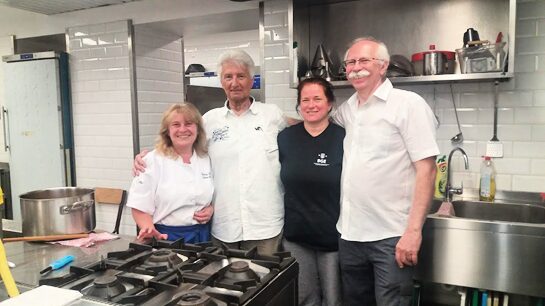
Balogh-Siposné Szőcze Anikó, Papp Dénes, Hidvégi Hédi, Sándor Dénes
Dénes Papp is a member of the famous Papp restaurateur family, who had already graduated from the College of Catering Industry by the mid-1970s and thus worked at Pilvax. Later on, we worked together several times—for example, when at my next workplace, the mentioned college, we invited him as a guest lecturer to teach restaurant practice courses.
One time during lunch at Pilvax, he came into the kitchen and said that a former teacher from the college was visiting as a guest, so I should prepare an especially nice veal schnitzel. I asked, “Is this teacher an important person?” He replied, “There are many important people there.” I could not have known then that a few years later I would be working directly with Pál Vajda, who truly was a highly knowledgeable lecturer.
There was also a newly graduated deputy manager colleague at Pilvax who came from the restaurant to the dining area, didn’t greet anyone, and immediately asked what he could eat. We automatically replied, “Staff meal.” Otherwise, we would have gladly prepared anything for him—if only he had greeted us. I often cited this negative example—not greeting anyone—later to college and university students, in the context of, “This is not okay, avoid this.”
Endre Papp, Dénes’s father, was the manager of Mátyás Pince in the 1970s. The current manager at that time—not yet his son—did not necessarily run Pilvax smoothly, so Uncle Bandi was entrusted at the Downtown Catering Company headquarters to supervise Pilvax alongside Mátyás Pince. One day, shortly after 11 a.m., he appeared through the serving counter of the self-service restaurant into the kitchen and said to me: “Well done, Dénes, you’re working nicely, congratulations,” shook my hand, and continued, “The guests said all the food was delicious.” It turned out that he had gone to the self-service restaurant at opening time, sat down next to some guests, and questioned them about the food, then came into the kitchen afterward. I think this is also a teachable method when applied under appropriate conditions. It’s the old version of a modern questionnaire survey. Later on, I also gladly used this method at the College’s Training Restaurant.
Even during my time at the Sport Hotel, I used to help out with extra work, and I continued this practice during my Pilvax period as well. In the 1970s, as a cook, I assisted at several places, including the Tüköry Restaurant, the Három Szív Inn, the Szép Juhászné Restaurant, and the Kispipa Restaurant. I only went to the latter once because the kitchen conditions there were unbelievable. There were about 200 dishes on the menu, so the amount of leftover food was unmanageable. This is a classic example that with such a wide menu selection, no matter the good intentions, it’s impossible to operate a restaurant properly.
On one occasion, while working at Pilvax, I was called from headquarters that it was very important to help out at another restaurant belonging to the company on a Saturday. I said I understood but unfortunately couldn’t go because there was quite a lot of work at Pilvax as well. The lady kept persuading me, so I quoted three to four times the usual extra-help pay rate at that time to make it worth my while. She agreed and said I should be at the restaurant by 7:30 in the morning—it opened from Múzeum Boulevard. There was no turning back.
On Saturday morning, I arrived at the restaurant and, as a routine, entered through the staff entrance rather than the main one. There was a young woman working in the kitchen who asked if I was the extra cook. I said yes. She showed me the list of dishes to be prepared, and I immediately started cooking. Around 11 a.m., the manager arrived, greeted me, but soon it became clear that I was supposed to work at the Csendes Restaurant, not this one at Múzeum. He called over and said the extra cook would be there in a few minutes. He paid me half of the agreed money, and I hurried over to the Csendes Restaurant, where I was eagerly awaited. I started cooking there as well. From noon on, only cold dishes, salads, and freshly fried items could be served to the guests, but as soon as I finished preparing the hot meals, those were offered as well.
Between 1974 and 1977, the Pilvax menu featured dishes typical of that era. Among the Cold appetizers were: Casino eggs, Horseradish cream ham rolls, Swedish mushroom salad, Caviar (actually lumpfish roe), etc. The Soups included Broth and Consommé, and their variations, Pureed soups, Cream soups, Complex soups, and Cold fruit soups. Among the Hot appetizers were Hortobágyi pancakes, Stuffed mushroom caps, Butter pâtés, Risottos (which at the time was actually pilaf), Milanese spaghetti (which Italians do not recognize, yet it is listed in the Larousse Gastronomic Encyclopedia the style what was known as Milanese in Hungary.).
Among the Main dishes on the menu were: Veal paprikash, Pork paprika, Beef and other meat stews, Stuffed and layered cabbage, Székely goulash, Braised lights in piquant sauce, Pork kidney and brain, Delicacy pork loin, Pork loin stuffed with Gyulai sausage, Roasted spare ribs, Stuffed brisket, Braised ribeyes (Esterházy, Csáki, pan-fried), Braised pork chops (butcher style, Temesvár style), Brassói style, Onion ribeye, Wiener schnitzel, Pork and Beef en brochette, Whole deep-fried pike-perch, Pike-perch fillet varieties (meuniere, Jean Bart, bonne femme), Fine carp bites. Vegetable stews, Cold desserts, and Hot sweets were also constantly available among the dishes.
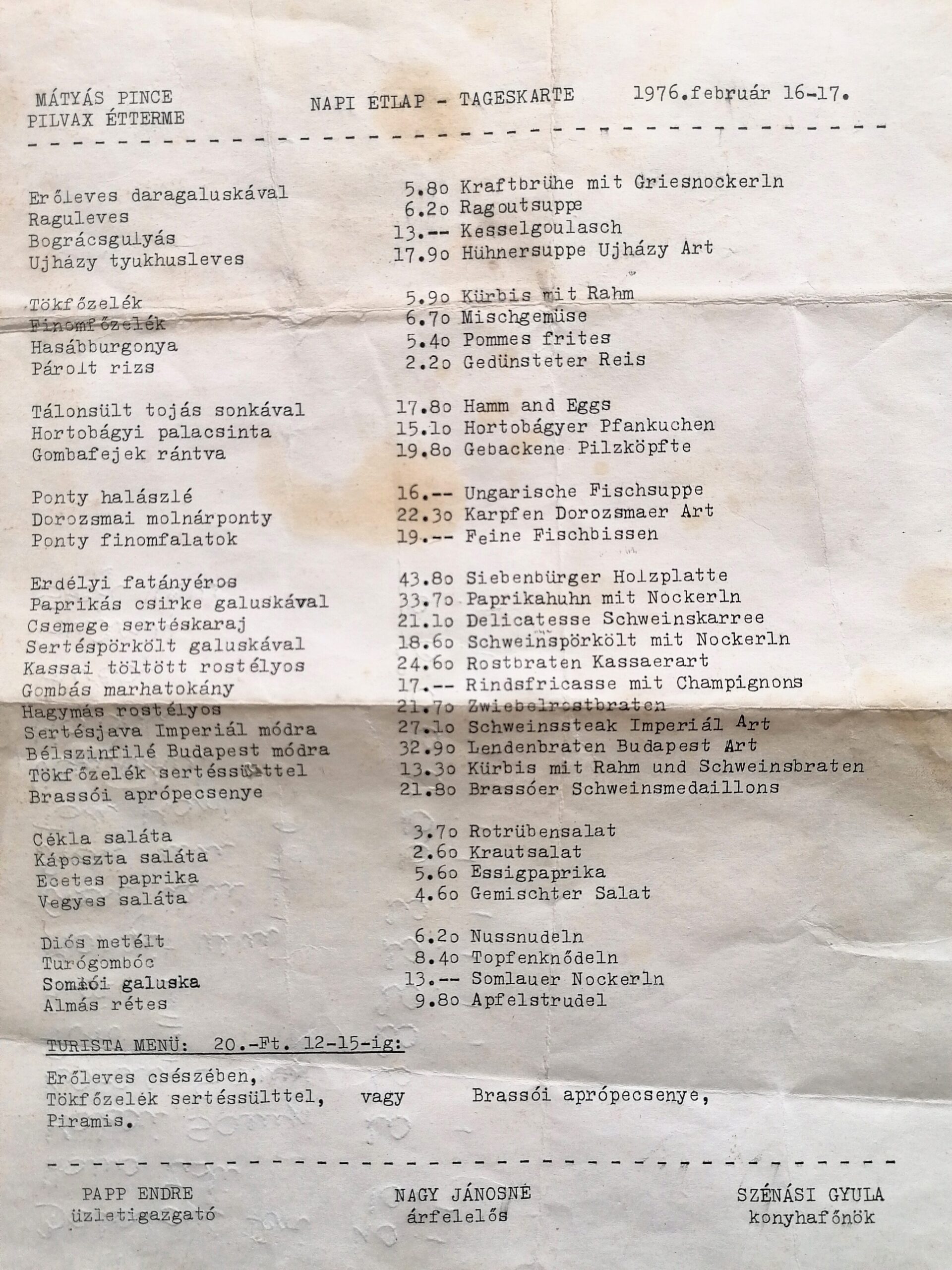
A 1976 Pilvax menu
During the three years spent at Pilvax, I had the opportunity to perfect the logistics of food preparation so that the guests of the three restaurants could always taste the highest quality dishes.
On one occasion, I had a short shift from Sunday to Monday, finishing before midnight and going back to work at 7 a.m. on Monday. Before the end of the Sunday shift, I had a great idea to have a perfect consommé for Monday, so late in the evening, I put the soup to cook on the gas stove and turned the flame to the lowest possible setting — closer to off than to a simmer. The soup was just barely bubbling. By morning, we had consommé of perfect quality. Of course, I never tried this method again because all regulations forbid it due to explosion, fire, and safety hazards.
Among the chef colleagues at Pilvax were Miklós Várhelyi, who already preferred preparing cold kitchen dishes; István Váry, who besides cooking — though not simultaneously — played the piano excellently; and Emil Szalánczi, who worked as a chef but was also a professional chess player.
On one occasion, the colleague assigned to the white dishwashing area didn’t show up, so the dirty restaurant dishes started piling up toward the end of the evening shift. Then the on-duty assistant manager took off his jacket and tie, rolled up his shirt sleeves, and started washing dishes, saying the place couldn’t be left like that overnight. For me, this was an exemplary attitude, and I often shared this story with my students later, just to show that sometimes even a leader has to wash dishes.
Another funny story is connected to a waiter colleague. It happened that this colleague was always sneaking bites of food as he came — instead of using the official route through the corridor, he cut through the cold kitchen and dessert prep area, where a cook was only present if there was an order. We came up with the idea that he should whistle loudly when entering the dining area, thinking this way at least he wouldn’t be able to eat unnoticed. We heard the waiter whistle as he entered the dining area and were relieved, thinking our plan worked and food mysteriously disappearing from the less guarded kitchen area would stop. We were amazed when the clever waiter visibly entered the restaurant but came back to the dining area a few seconds later saying: “Look in my pockets!” Then he started pulling out Somlo Dumplings stuffed into the pockets of his waiter’s jacket!
Founding of family
During the three years I spent at Pilvax (1974-77), important changes happened in my family life. On the one hand, in the spring of 1975, I met Judit, who became my life partner and remains so to this day. On the other hand, also in 1975, my mother was diagnosed with a brain tumor, which was surgically removed. Her treating doctor told me that my mother had 10-12 months left to live. After the operation, it was as if my mother was reborn. She could smile again! We bought her a wig, and her pain disappeared. Unfortunately, the doctor’s prognosis came true. After a few happy months, my mother’s condition rapidly worsened, and she grew thin. Alongside my work, I cared for her at home, bathing and cleaning her. She spent the last few days of her life in the hospital.
I met Judit at the disco of the Europa Hotel on Budakeszi Street. At first glance, I might have seemed like a life-loving handsome guy. That was partly true :). However, despite being only 21 years old, I had already experienced a lot. Judit was already working as a graduate high school teacher and research chemist at Chinoin. I was enchanted by her intelligence and reserved presence. When I had the chance to host her, I surprised her with a beautifully golden-brown cheese omelet. Luckily, it must have turned out well because we both still remember it today. Judit and I understood each other very well. Earlier, both of us, without knowing anything about each other, used to hang out at the E-Club and Illés Club; I also frequented discos like the Olimpia Hotel, Éden Bar, or the Youth Park. Together, however, we mostly went to concerts. We enjoyed having lunch in the garden area of the Kisbuda restaurant or dining in the restaurant itself, where they made excellent Beef Steak with Fried Onion Rings and Brassói (braised pork with potatoes).

Hotel Europa in 1975
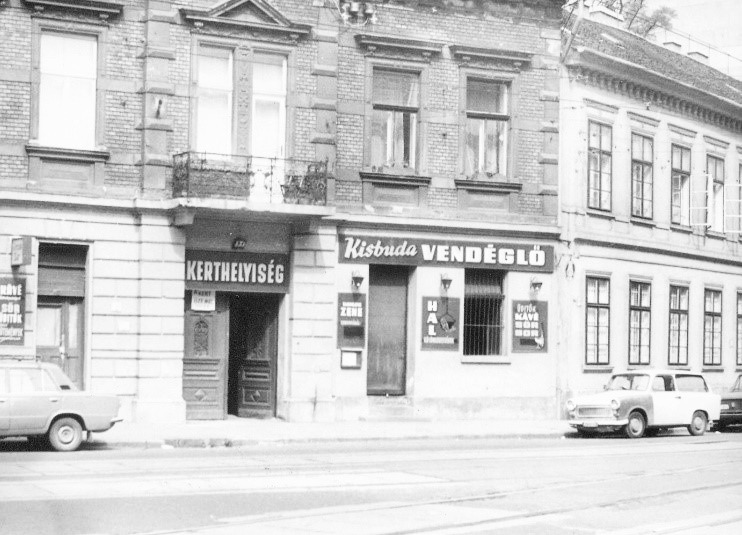
Kisbuda Restaurant in 1984
Our relationship deepened with Judit, and when her father unexpectedly passed away in the spring of 1976, we decided to unite our lives for good. Our wedding was on September 30, 1976.
On April 25, 1977, Orsi was born, and on May 27, 1978, our daughter Kati was born.
In 1977, we moved into a new apartment and enjoyed starting our family in our new shared home.
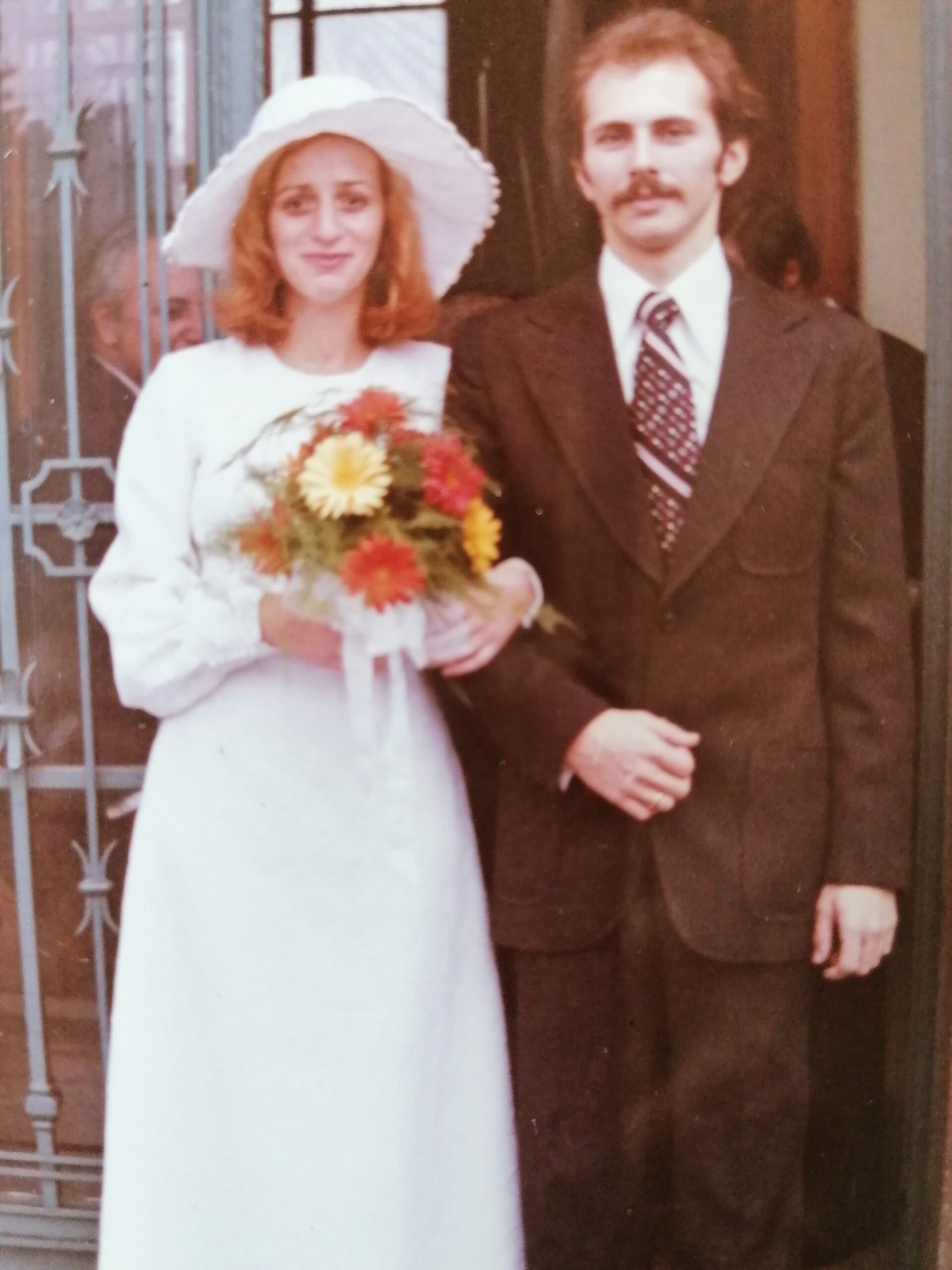
With Judit at our wedding
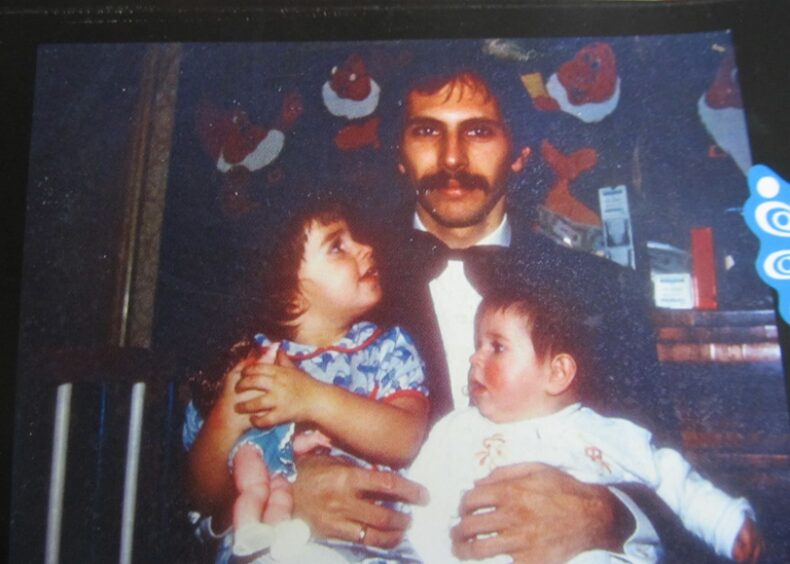
With Orsi and Kati at Christmas in 1978
My High School Years
It was a big dream of mine that one day, as a cook, I would complete the College of Hospitality. I thought that by building up from the foundations I already had, graduating from the college would open wonderful career opportunities in various areas of hospitality. Therefore, first, between 1974-77, alongside my working years at Pilvax, I completed the Workers’ High School in the building of Ötvös József High School. I completed the first two school years in one year, while I completed the third and fourth grades via correspondence education. It was a big challenge to graduate while working. Luckily, Judit, who graduated as a high school teacher in chemistry and physics from ELTE in 1974, helped me a lot with my studies. This was especially true from September 1976 when I started attending preparatory courses for admission to the College of Commerce and Hospitality, where two subjects were taught: mathematics and chemistry. Judit also helped me decide whether to apply for evening or daytime education at the college. Due to the family-building period, evening education would have been more obvious, but because of the pursuit of quality, Judit said: “Daytime education is still different.” We stuck with that. My enthusiasm about the opportunity to take the entrance exam to the top institution of hospitality education, combined with Judit’s help, was a great combination. Then there was Dr. Lajos Kádas, who taught chemistry and introduced himself at the first class with the words: “My father, who was a chemist, told me never to deal with chemistry.” “Well, here I am,” summarized the professor the failed paternal advice. Professor Kádas was an excellent teacher and still is to this day.
There were some oddities during the preparatory course, like one time during math class when I was alone with the teacher in a large lecture hall, room I, who asked me whether I wanted to sit in the first row or at the blackboard. I chose the blackboard, which I had to erase several times after filling it with examples of derivatives.
Thanks to good preparation (from the college and Judit) and my diligent studying, the fruit was that both of my entrance exams went well, and I was admitted on the first try to the college’s hospitality program, full-time. I was very happy and proud that I got in on my first attempt from evening high school! Of course, I was and am aware that this was the result of good teamwork.

Click on the image to watch the “Catfish fine bites with mashed potatoes” video made at the Joyful cooking event!
You can find the recipe below the video!
You can watch the interview with Ferenc Balatoni on YouTube by clicking here.
The spontaneously told stories from the Joyful cooking event can be found here:
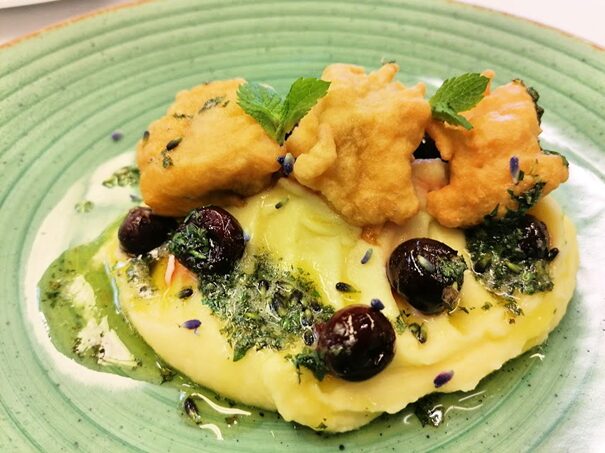
Catfish delicate bites with mashed potatoes, lavender-honey cherries, and parsley-lemon balm butter
Recommended ingredients for 4 servings:
for the fish:
0.6 kg African catfish fillet
salt,
flour,
oil.
for the mashed potatoes:
0.8 kg potatoes, type C, e.g., Agria
salt,
60 g butter,
120 ml milk.
for the sour cherries:
150 g sour cherries, pitted, frozen
25 g acacia honey,
lavender sprig.
for the parsley–lemon balm butter:
60 g butter,
1 bunch parsley greens,
1 lemon balm.
for the pancake batter:
140 g flour,
2 eggs,
80 ml milk,
salt,
soda water or mineral water.
oil for frying
lavender flowers and lemon balm (for garnish)
The preparation steps:
Cut the washed, dried, and cleaned catfish fillet into smaller pieces of about 2-3 cm. Salt the prepared fish and let it rest in the refrigerator for 30 minutes.
Peel the potatoes, cut into cubes, and cook them in salted water until tender.
Pass the cooked potatoes through a sieve/metal strainer, then mix smoothly with room-temperature butter and hot milk, seasoning with salt.
Prepare a thick pancake batter by whipping the egg whites with a pinch of salt until frothy, mixing the yolks with milk, soda or sparkling mineral water, and flour until smooth, then gently fold in the egg white foam.
Warm the cherries through honey and flavor them with lavender.
Briefly sauté finely chopped parsley and lemon balm in butter.
Dip the fish first in flour, then in the batter, and gently place them one by one into plenty of hot oil, frying until golden yellow. Remove with a slotted spoon, drain well, and blot excess oil on paper towels.
For serving, place the mashed potatoes in the center of the plate, decorate fan-like with a buttered spoon, add the cherries, the fish, then drizzle the whole with the herb butter, and finally garnish with lavender flowers and lemon balm.
Preview
1970-80s Part 1.
Joyful Cooking sessions with György Haris, father, and Eszter Haris, his daughter, both of whom were my students at the college, Gyuri at the beginning of 80s, Eszter at the end of the 2000s.
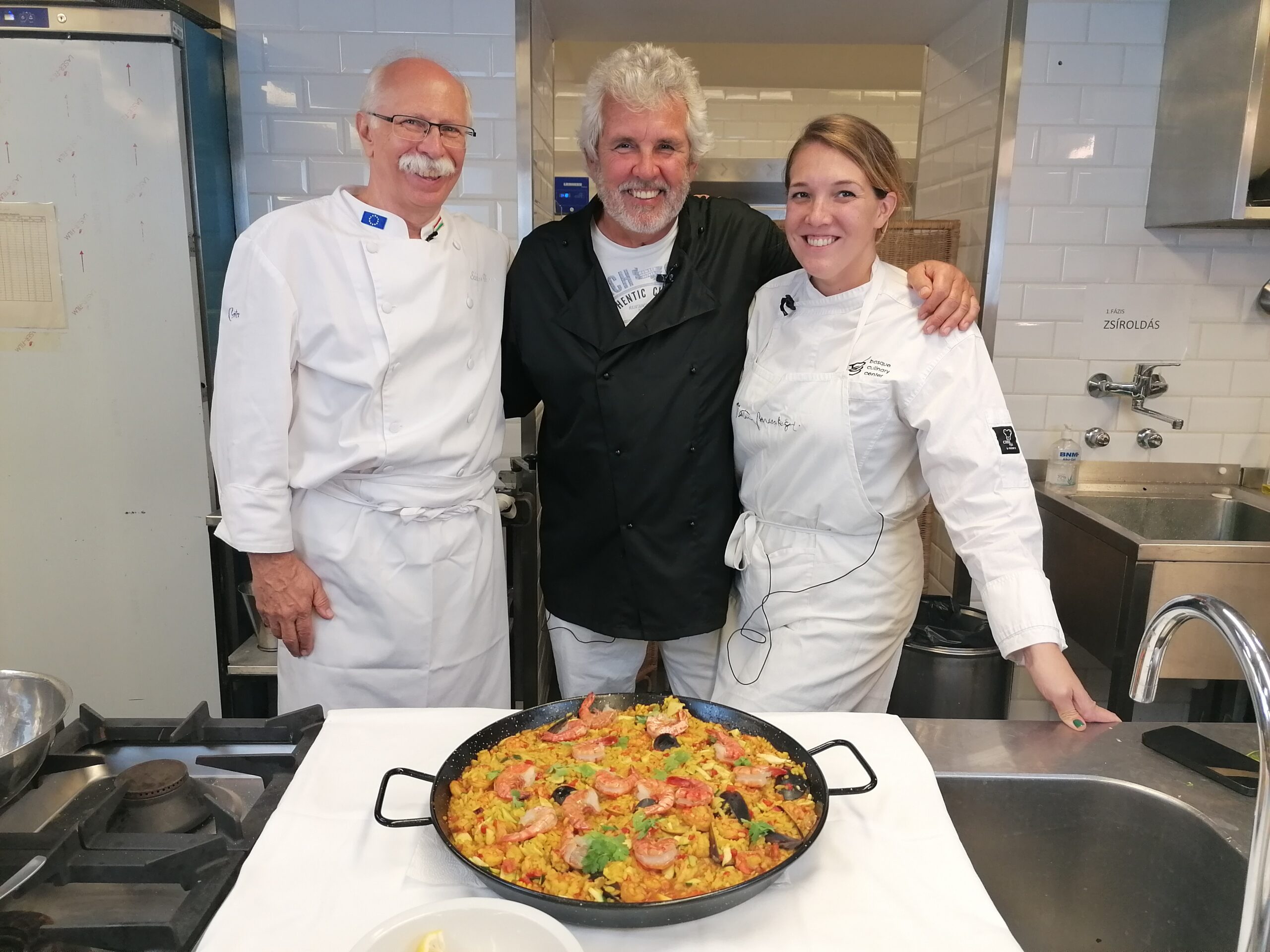
With Gyuri Haris and Eszter Haris