Gaining Experience in More Developed Countries 2005-2018 and PhD studies 2006-2012
I have already reported on my visits to the Bocuse d’Or in 2003 and 2005, where as the president of the Étrend Hungarian Executive Chefs Association I lobbied for the development of Hungarian gastronomy regarding the possibilities of participating in the competition and inviting winning competitors to Hungary in Lyon.
It is worth mentioning that I visited the Bocuse Institute in Lyon, which I also viewed again later in 2017. On the latter occasion, we discussed cooperation opportunities between the Bocuse Institute and BGE KVIK with my hosts.
*
In 2005, through the connection with BGF, I conducted theoretical training in gastronomy and food preparation in Sepsiszentgyörgy (Romania, former Hungarian area) for local and surrounding hospitality workers. I could not miss asking if they knew the dish called “brassói.” The answer was almost unanimously yes. To the question of how they prepare or know the method, I received different recipes. Each was similar to what we know in Hungary, but the ingredients often differed. This is interesting because in our country, as a basic case, chefs and hospitality workers say that in Brassó they do not even know brassói. However, at the Sepsiszentgyörgy course, 70-80 Hungarian-speaking hospitality workers participated, some of whom came from Brassó or its surroundings.
*
In 2005, I was invited to a two-week American chef training in Louisiana, USA. I quote from the article I wrote, which was published under the title “Chef Training in Louisiana and the Local Gastronomy” in VENDÉGLÁTÁS: VENDÉGLÁTÓIPARI ÉS TURISZTIKAI SZAKLAP, 48:(7-8) pp. 34-36. (2005).
“During the two-week training, which was funded by SUSTA (Southern United States Trade Association) and took place at Nicholls State University, an overview of the gastro-culture of 15 southern states and Puerto Rico was provided. The effort was very successful, as the 11 chefs (five Russian, three Czech, and one each Slovenian, Croatian, and Hungarian) spent professionally useful days in Louisiana. The program covered the following areas through kitchen practices: South Louisiana, Latin American, Cuban, Caribbean, Delaware, Maryland, Virginia, Tex-Mex, and local seafood cuisine.”
They welcomed us by saying that everyone would gain 5 kg during the two weeks because they eat such abundant dishes made from excellent quality, local ingredients. I don’t know how much weight everyone gained, but it is a fact that restaurants serve enormous amounts of food. On one occasion, we entered a bistro where we smiled at one guest’s meal because a tray similar to the old round beer tray was full of cooked crabs, which the gentleman was eating. Our smiles froze on our faces when we also received our ordered food. For example, I ordered fried oysters and shrimp and got a Swiss plate heaped high.
Here is another quote from the aforementioned article, in which I describe the preparation of one of the most characteristic Louisiana dishes. “On a separate occasion, we practiced the secrets of making gumbo. The six different gumbos are made either with brown roux or by adding okra. Then finely chopped onions, celery stalks, and bell peppers (California peppers) are sautéed into the roux. The ingredients that give it its character, such as andouille (smoked sausage), various meats (beef, duck, etc.), seafood (oysters, crab, shrimp, etc.) are added, and then the dish is simmered with the appropriate broth, seasoned well with various spices and flavorings such as thyme, basil, garlic, Tabasco, bay leaf, pepper, parsley, etc. Before serving, ‘filé powder’ is added to the gumbo made with roux, which slightly binds and thickens the dish. The thick one-pot dish served in a cast-iron, thick-walled pot—similar to a cauldron—is ladled over cooked rice and eaten this way.” The “filé powder” is a powder made from the dried and ground aromatic leaves of the sassafras bay tree.
On one occasion, we were guests of John Folse, a famous American chef who then had ten restaurants worldwide. His country guesthouse had an organic garden with vegetables and herbs. He demonstrated the preparation of jambalaya (a rice one-pot dish) and gumbo as well. It was a pleasure to sit at the set table where freshly cooked, red-shelled freshwater crayfish were piled on silver stands as decoration and a tasty delicacy.
The participating chefs in the training also had the opportunity to present some dishes from their own kitchens. By popular demand, I prepared goulash soup, chicken paprikash, and also included a “máglyarakás” (a Hungarian layered dessert, Hungarian Bread and Butter Pudding) in the menu. A total of twenty dishes were prepared. Toward the end of the cooking, the kitchen quieted down, practically only I was inside. I went out to the service yard where I saw the Russian chefs sitting on the stairs, each eating goulash soup from a bowl. They had improvised and served themselves. Cheers to their health!
I will end my Louisiana report with another quote: “In summary, the Louisiana chef training was very useful because it provided a taste of the local culture, a significant part of which is gastronomy. Fresh, high-quality raw materials such as oysters, freshwater crayfish, fish, meats, vegetables, and spices are abundantly available. The portion sizes are quite large, for example, six to seven crabs or 20-25 oysters per person. Traditional cooking methods, such as the use of roux in making gumbo, are natural and not modernized. Perhaps knowledge of this latter practice can have a beneficial effect on preserving traditional Hungarian cuisine.”
It is important that the roux is only a small part of the gumbo and does not dominate it, but it is part of the dish. This is the key to its use in Hungarian cooking as well. By the way, roux is not originally a Hungarian thickening agent; it is a component of some French basic sauces, for example, béchamel or velouté.
*
In 2005, I participated as vice president of MNGSZ (Hungarian Gastronomic Federation) and president of the Étrend Hungarian Executive Chefs Association in the WACS European presidential conference in Malta. I gave a presentation, similar to the WACS 2004 world congress, on the topic “Gastronomic Museums of Nations.”
*
In 2005, I visited the “Le Salon Culinaire Mondial” chef world competition in Basel, Switzerland. At this competition, chefs compete in several categories, including cold platters, hot dishes served cold, artistic presentations, and hot kitchen. In a broader sense, all segments of the food industry and hospitality are present at the event. Beyond the professional lessons, a lasting experience was the excellent quality of horseradish fig jam.
*
In 2006, representing MNGSZ with President István Pető, and as president of the Étrend Association, I participated in the WACS world congress in New Zealand. Similar to previous WACS events (conferences, congresses), I gave a presentation on the topic “Gastronomic Museums of Nations” and reported on the current status of the project.
Among the professional programs, the most interesting was the preparation of a traditional Maori dish called hāngī during a gala party. The essence of the ceremony is that large pieces of seasoned meat are wrapped in multiple layers of thick aluminum foil, a pit is filled with embers, the meat is placed on it, then covered with embers and finally buried with soil. While the roasts are cooking, they celebrate with chants, music, and dance. Finally, the roasts are carefully dug up and unwrapped, and their excellent quality—perfect texture, a kaleidoscope of flavors—cannot be described in words.
The preparation of Hāngī can be seen here.
*
In 2006, I participated as vice president of MNGSZ and president of the Étrend Association in the WACS European presidential conference, which was jointly organized by two countries in Helsinki (Finland) and Tallinn (Estonia). At the conference, I reported on current developments related to Hungarian gastronomy and upcoming events in the near future.
In 2007, I participated in the WACS European presidential conference in Bratislava, Slovakia. At the conference, I reported on current developments related to Hungarian gastronomy and upcoming events in the near future.
*
In October 2008, within the framework of the Erasmus program, I was in Tampere, Finland, at the Pirkanmaa Polytechnic – University of Applied Sciences, where I gave a presentation about Hungarian gastronomy and together with Finnish university students, we prepared Hungarian dishes.
The hosts showed us the Finnish countryside farther from the city, and we visited local producers of berry jam and wine made from it. We also had the opportunity to taste local flavors in several restaurants. In one small family restaurant, which belonged to the Chaine des Rotisseurs chain, a chef working alone in the kitchen prepared perfect poached salmon fillet using traditional techniques.
*
In 2009, together with a college team and several nationalities, we participated in a gastronomic event in Florence, which was followed by many similar events over the years. The event, “Saperi e Sapori in Cattedra,” is an international cultural event that places a high emphasis on gastronomy, held in Florence from December 6 to 13, 2009. The Italian organizer’s basic idea was that the Visegrád countries and Italy should nurture and build their own cultures, then share the existing knowledge with the other involved nations.
At this event, alongside the hosts, a Czech hospitality vocational school and BGF KVIK also participated. During the program, besides various professional visits such as visiting a winery in the Chianti wine region, each nation had to prepare a dish at two dinners. Among the guests at these events were the Hungarian and Czech honorary consul Ferenc Ungár, Giovanna Dani, the president of the chefs of the Florence region Angelo Mazzo, and guests of the local Rotary Club.
We were pleased to note that the guests received with complete satisfaction the students’ English-language presentation “Development of Hungarian Cuisine,” which was complemented by melodies played on the tárogató corresponding to historical eras, as well as our delicious dishes with compositions appropriate to the modern era.
The students who participated in the event were: Orsolya Kakócz, Eszter Kohár, Andrea Tempfli, János Debreceni, Roland Ducharme, Dániel Nagy, Csaba Pavlicsek, Tibor Szalai, Alex Tóth.
The team leader was Dénes Sándor.
*
In 2010, I was a guest at the Hanoi Tourism College in Vietnam along with my language teacher colleague Gyula Hegedűs. I gave a presentation about Hungarian gastronomy, then together with the local students we prepared Hungarian dishes. For the desserts, I demonstrated how to make rice soufflé, curious to see how they would react to the sweet rice dish. They liked it. It is worth mentioning that during one session the local students carved vegetables. This is how gastronomy should be imagined—it has many segments.
The hosts took us to eat at several places. At one of the locally considered best restaurants, there was minimal space for guests—tight tables, chairs, and floor area. However, the Pho soup served with Vietnamese mint was very rich and tasty. Of course, this restaurant was considered a luxury place compared to the street food stalls, where guests were greeted with child-sized tables and chairs. The local crowd threw leftovers, such as bones, onto the ground, so the nearby animals eventually benefited. On the recommendation of college colleagues, we ate at such places mainly because the dishes were freshly cooked in a wok over huge flames, so we hoped there would be no major problems.
At another traditional restaurant, before the appetizers, they offered vodka, accompanied by a crate of cold beer, followed by numerous appetizers and main courses. The dishes were tasty. Since the Vietnamese colleagues had already given a presentation at BGF KVIK earlier, the local dishes were partially familiar to us.
For the farewell dinner, we were hosted in a high-quality Chinese restaurant. Here, the service was done in the way we know, except for the traditional Chinese round table with a revolving center.
*
In 2010, at the EuroSkills competition in Lisbon, Portugal, I represented our country as a chef expert together with competitor Péter Molnár. I will report on this competition series in a separate chapter.
*
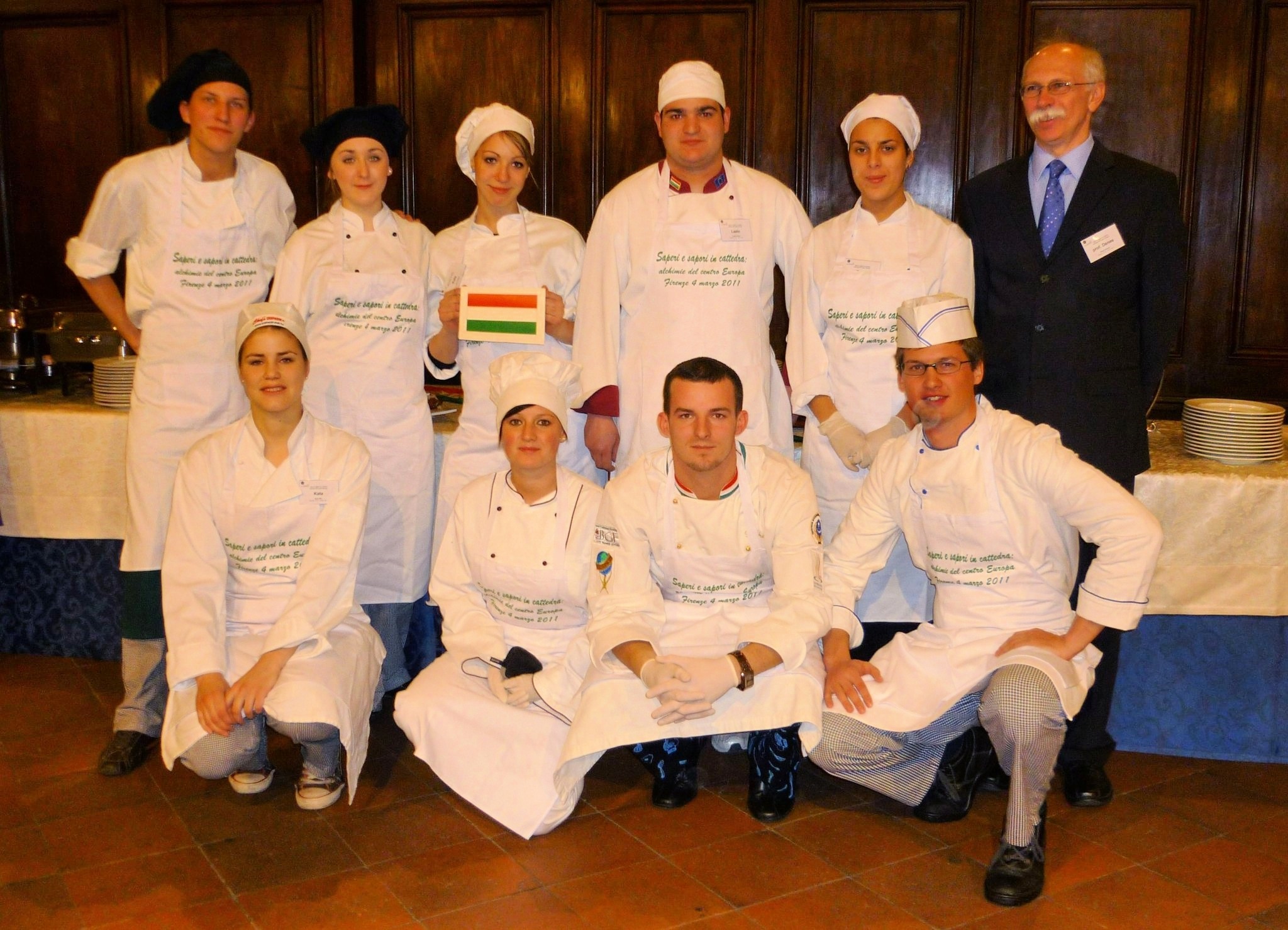
In 2011, my journey led me again to Florence, as after 2009 we once more participated in the “Saperi e Sapori in Cattedra” event. The article prepared at that time can be read below.
Gastro week in Florence
The Italian nonprofit organization Life Beyond Tourism contacted KVIK for the second time to have it represented at the international gastro-cultural meeting of the Visegrád countries alongside Poland, the Czech Republic, and Italy, in the latter’s homeland, Florence. The most important result of the project was that at the gala dinner, the Italian main organizer announced that the preparation of the next event had begun. The professional benefit of the project was that our students could work in Florence restaurants, which was basically due to the local organization. Another positive aspect was that international teams – Italian, Hungarian, Czech, Polish – could work in the kitchens. The professional success of the college students at the gala dinner was recognized and praised, among others, by the Hungarian ambassador to Italy and the honorary Hungarian consul in Florence.
Beyond cultural programs and gastronomic acquaintance at the event, a gala dinner organized with the participation of illustrious guests was also emphasized. At the gala dinner, everyone had to prepare a four-course menu, with cold and hot appetizers, main course, and dessert. The success of the Hungarian menu was partly due to its composition, which, based on the ideas of Csaba Pavlicsek, included an authentic Hungarian sausage and cheese tasting, along with milk-aged chicken thigh on a bed of zucchini with baked beetroot, duck breast served on a potato disc with red wine pears, dried plums, roasted leeks, and for dessert, homemade apricot jam poppy seed cake flambéed with forest fruits.
The KVIK team members were: students Anna Nóra Boér, Kata Rudolf, Anna Vidovich, Kata Bús, Dóra Heilmann, Csaba Pavlicsek, Csaba Reitli, László Erdélyi, Bertalan Nagy, and Dénes Sándor, Head of the Teaching Cabinet, who assisted the preparation as a mentor to the students, visited all nine restaurants where the students worked, and contributed greatly to the success of the gala dinner.
Csaba Reitli, Anna Vidovich, Kata Rudolf, László Erdélyi, Dóra Heilmann, Dénes Sándor, Kata Bús, Anna Nóra Boér, Csaba Pavlicsek, Bertalan Nagy
*
In 2011, I represented our country as a chef expert at the WorldSkills competition in London, England, together with chef competitor Ádám Deák.
*
In 2012, I represented our country as a chef expert at the EuroSkills competition in Spa-Francorchamps, Belgium, together with chef competitor Zsolt Berki.
*
In 2012, we again participated in the “Saperi e Sapori in Cattedra” gastro-cultural event in Florence.
*
In 2013, I represented our country as a chef expert at the WorldSkills competition in Leipzig, Germany, together with chef competitor Márió Molnár.
*
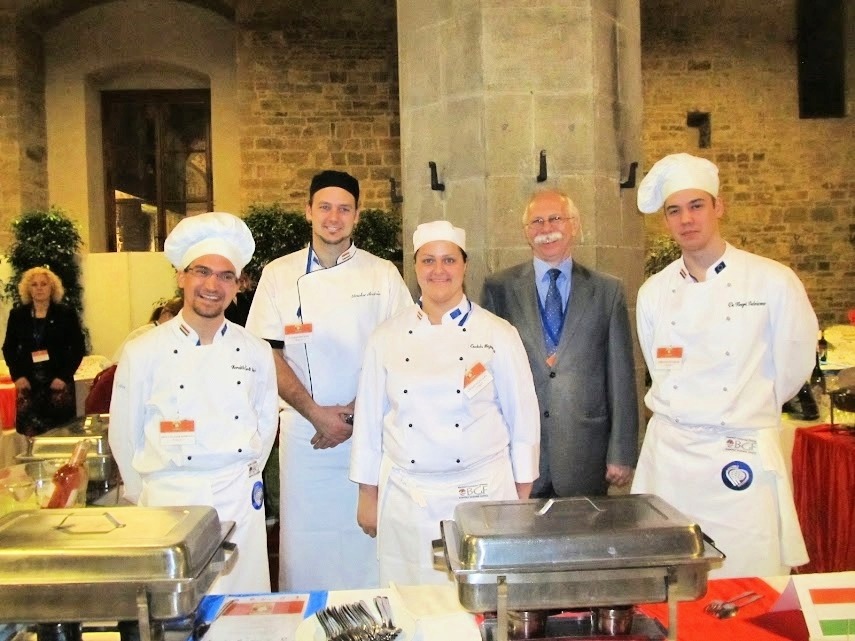
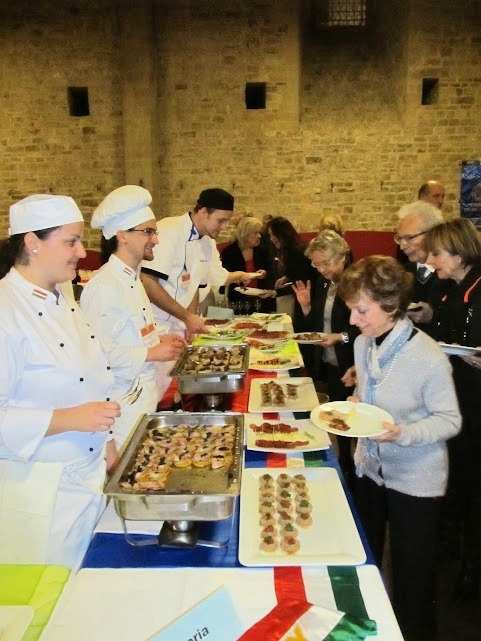
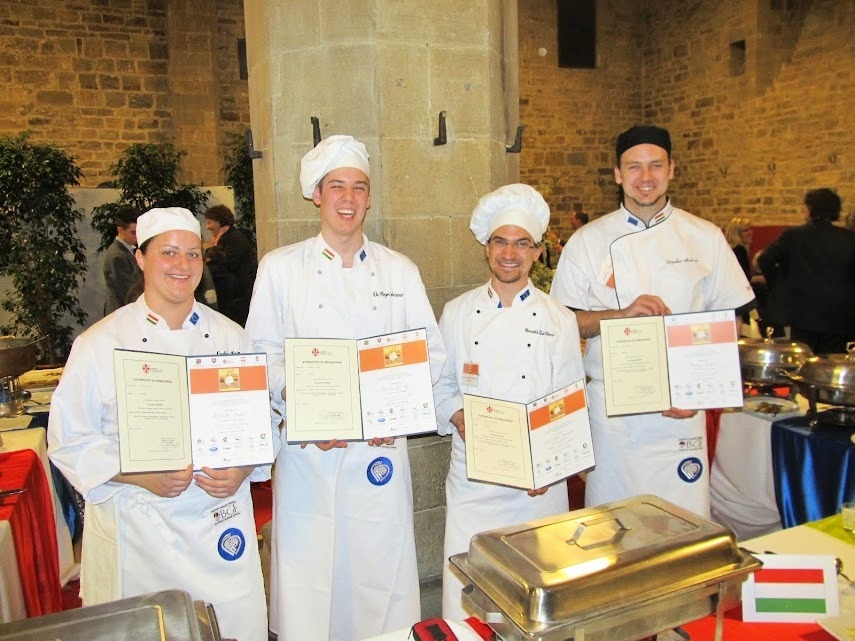
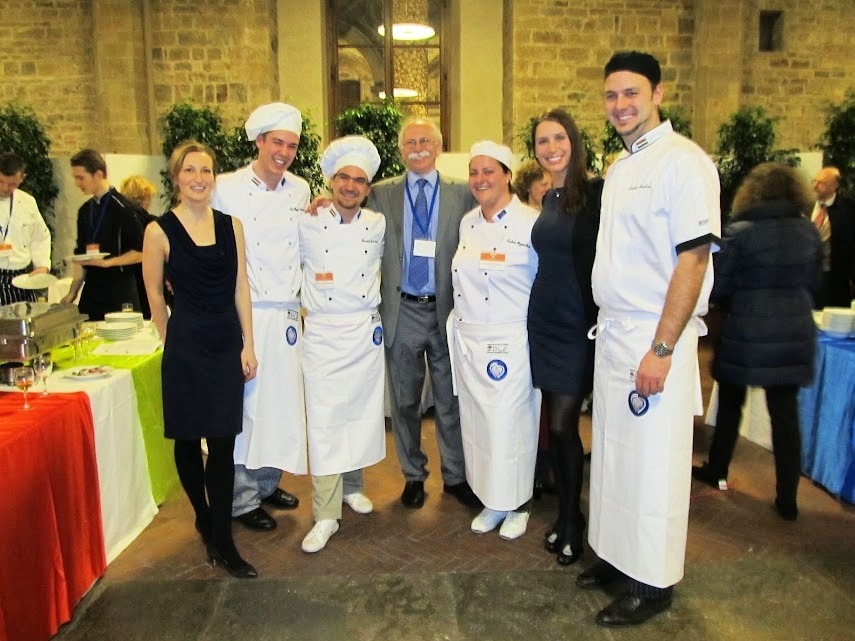
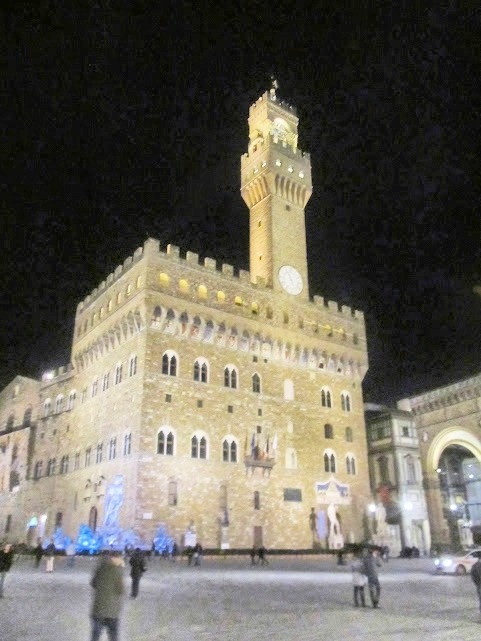
In 2014, I attended the “Saperi e Sapori in Cattedra” event in Florence for the fourth time. The gastro-cultural event, held from March 2 to 9, 2014, with the participation of five countries, included a presentation I gave about BGF KVIK and Hungarian gastronomy. We learned and prepared Italian dishes at a vocational school. Finally, at a gala dinner at the Palazzo Vecchio, we prepared and served cold and hot dishes to the guests.
At the gala dinner, the Hungarian college team prepared the following dishes:
Starter: Goose rillettes on toast spread with green pepper cream, topped with tomato concassé
Main courses: Rabbit pâté on pumpkin pancakes with zucchini and carrot spaghetti and cranberry sauce, and pork roulade stuffed with mushrooms and liver, layered polenta with smoked meat and red onions, and red cabbage with apple and raisin served with gravy
Dessert: Baked poppy seed and semolina cake with plum ragout
The team: Hajnalka Csukás, Zsolt Horváth, Adriano De Negri – 3rd year hospitality and hotel management students at BGF KVIK, András Stricker – recent graduate, and Dr. Dénes Sándor – instructor and mentor.
Photos of the event series:
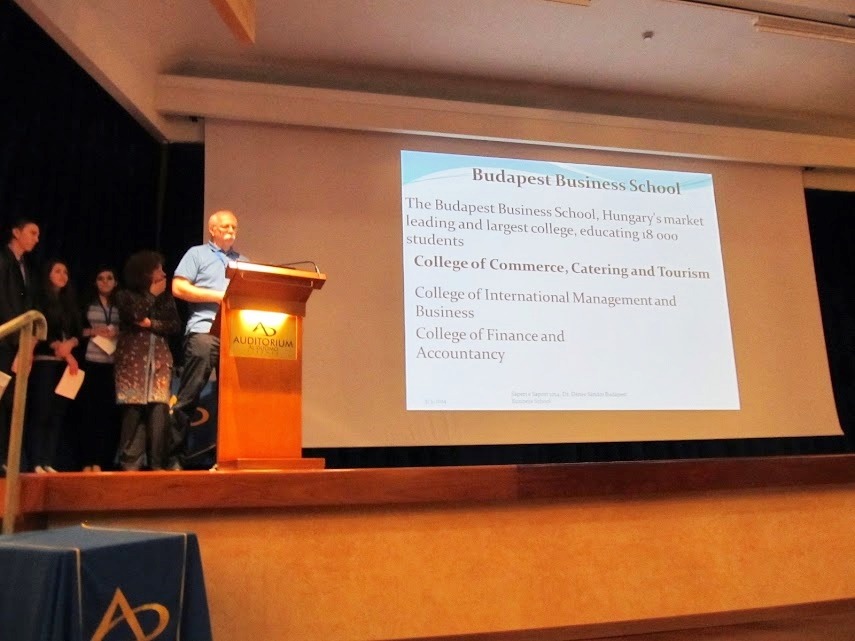
My presentation about BGF KVIK and Hungarian gastronomy
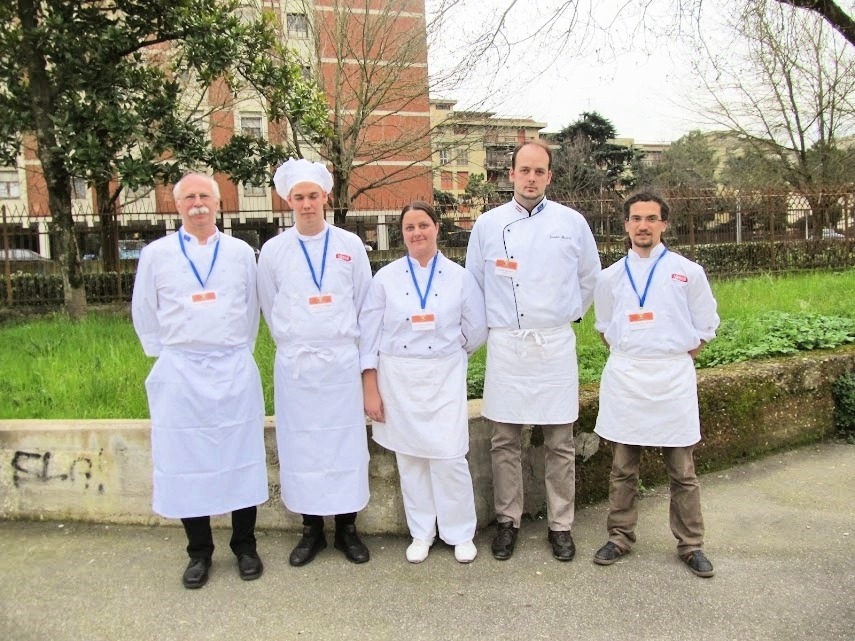
Dénes Sándor, Di Negri Adriano, Hajnalka Csukás, András Stricker, Zsolt Horváth
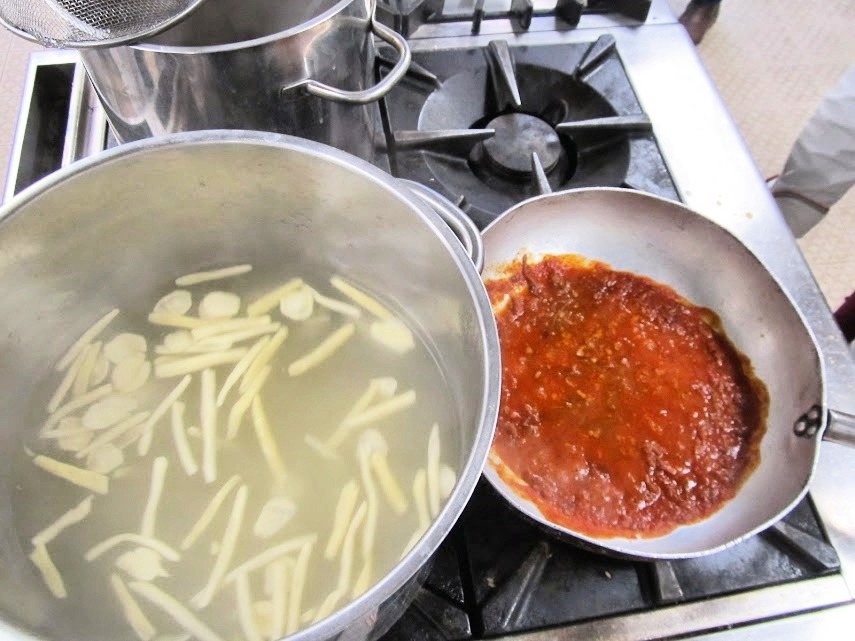
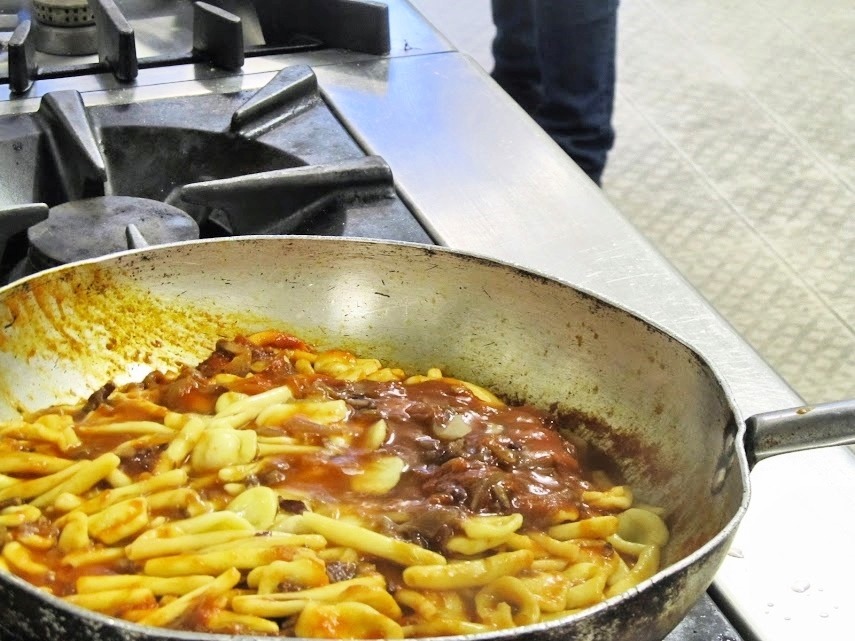
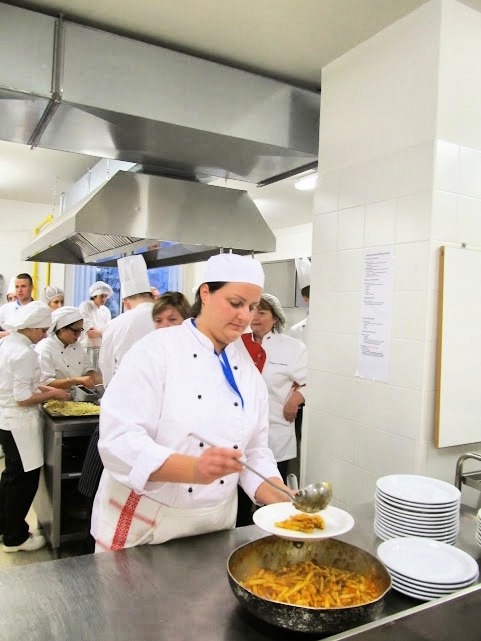
The mixed Bologna-style pasta is being prepared in Florence
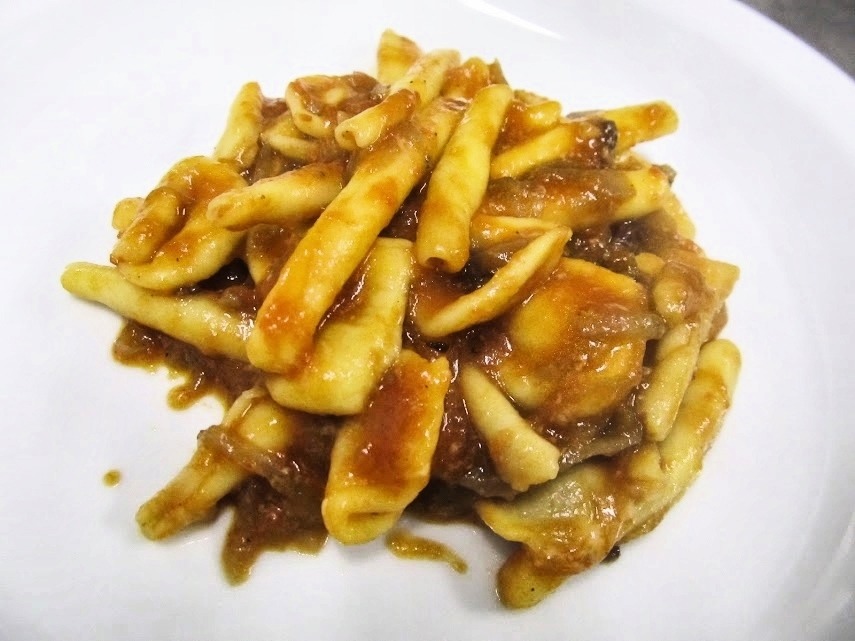
The “piece” is finished.
The photos of Gala Dinner:
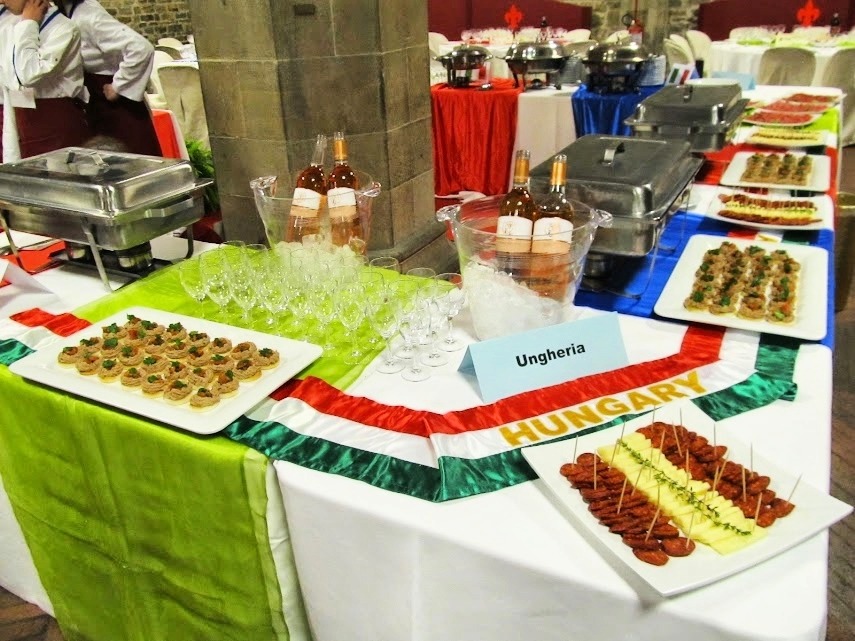
*
In 2014, I was once again a guest lecturer at TAMK University in Tampere, Finland. The inviting organizers put together a varied program, which included, for example, a university course exploring the topic of “Social Responsibility” related to the consumption and tasting of foods.
I presented one of the outstanding slices of Hungarian gastronomy—the Gundel heritage—to the Finnish students and their teacher through a presentation and a joint cooking session. Everything went excellently, but unfortunately, there was one mishap in making the palóc soup because instead of the stock I requested/prescribed, lamb seasoning powder was used. The consequence was that the soup became incredibly salty! I tried to salvage what I could, but I was not satisfied with the final result.
By the way, I hadn’t used seasoning powders for about thirty years because since then we always made stocks in the college’s training kitchen. On one occasion, for example, a chef came over from the large kitchen and asked my colleagues in the training kitchen for soup powder—because they had run out—but they said we don’t have any. He didn’t believe it and left offended.
*
In 2016, I was once again invited as a guest lecturer to Tampere University. The purpose of my visit this time was to present Hungarian gastronomy to the Finnish BA students and to about 30 colleagues from various countries attending the international week taking place at that time, through a lecture.
The well-established cooking practice could not be missed either, so we prepared dishes from a menu consisting of Hungarian foods with the help of Finnish students. During the interactive cooking session, two students assisted in preparing the dishes, while the other students asked or could ask questions about the dishes, Hungarian cuisine, and gastronomy.
*
In 2016, I represented our country as a chef expert at the EuroSkills competition together with chef competitor Barbara Ramocsai in Gothenburg, Sweden.
*
In 2017, I visited the Bocuse d’Or competition in Lyon and shared in the great joy of the Hungarian team’s huge success, with Tamás Széll as the competitor, achieving 4th place in the overall competition. These were historic moments. I wrote a report about this competition at the time, which can be read here:
“At the 2017 Bocuse d’Or chef competition in Lyon, the Hungarian team finished in fourth place.
After the continental qualifying competitions, 24 teams advance to the Bocuse d’Or Lyon final, held every two years. The 2017 competition was the 16th edition since the event began in 1987.
The members of the Hungarian team were: chef competitor Tamás Széll, commis Kevin Szabó, coach Frigyes Vomberg, president Zoltán Hamvas (Hungarian Bocuse d’Or Academy), jury member and preparation assistant Szabina Szulló. The training was supported by Rasmus Kofoed, a former Danish Bocuse d’Or competitor who uniquely holds bronze, silver, and gold medals in the Bocuse d’Or worldwide.
The Hungarian team’s fourth place and special prize for the meat dish presentation is an outstanding and historic achievement. The previous best result was also achieved by Tamás Széll and his team at the 2013 competition, where they finished 10th. The excellent result this time was the result of huge work: six days a week, months of preparation, a lot of work, and practicing the execution of every single dish element at the highest possible level led to success. Every team member was focused physically and mentally solely on the competition.
It was a great experience to follow the team’s performance in the Lyon competition kitchen live on site. The Hungarian team’s work was characterized by silent but professionally executed movements. With perfect timing, the team performed the tasks at peak form during the competition. Tamás Széll and Kevin Szabó worked with an enjoyable kitchen flow, while Frigyes Vomberg “conducted” as a maestro, ensuring timing was kept. It was a special joy and pride that the Hungarian team received the highest score for kitchen work—340 points—in a tie with Norway and Iceland.
During the competition, the team had to prepare and plate 14 vegan dish variations and a platter containing 14 Bresse chickens, lobster, appropriate side dishes, and sauces within 5 hours and 35 minutes.
The competition was won by the USA with 1644 points. Norway came second with 1600 points, Iceland third with 1581 points, while Hungary finished fourth with 1565 points. The French team was fifth with 1562 points, just three points behind Hungary.
Huge congratulations to the Hungarian team!
Dr. Dénes Sándor”
*
I have already reported on my 2017 visit to the Bocuse Institute.
My report about it can be read here:
“Visit to the Bocuse Institute in Lyon
On January 26, 2017, the day after the Bocuse d’Or competition, I accepted a kind invitation and visited the Bocuse Institute in Lyon. Since my first visit in 2003, the institution has developed dynamically, opening new buildings, developing numerous training programs, and significantly expanding its international connections.
The purpose of my visit was to explore under what conditions we—BGE—could establish a partnership with this world-famous and highly prestigious institution. The leaders of the institute were open to this and would be pleased to welcome BGE among the Bocuse Institute’s allies. The official process of becoming a partner will be sent soon.
The partnership would, among other things, allow student and teacher exchanges, the use of the Bocuse Institute logo on the BGE website, and the use of the logo, for example, to promote the High Gastronomy training. There is no question that supporting and establishing cooperation would bring serious educational quality and market advantages for BGE.
The professional prestige of the Bocuse Institute is well illustrated by the fact that approximately 20 Michelin-starred chefs—each with 1, 2, or 3 stars—teach at the institution. They don’t even know the exact number of their training kitchens because a new one is constantly opening, but the number is between 15 and 20.”
Photos of the Bocuse Institute:
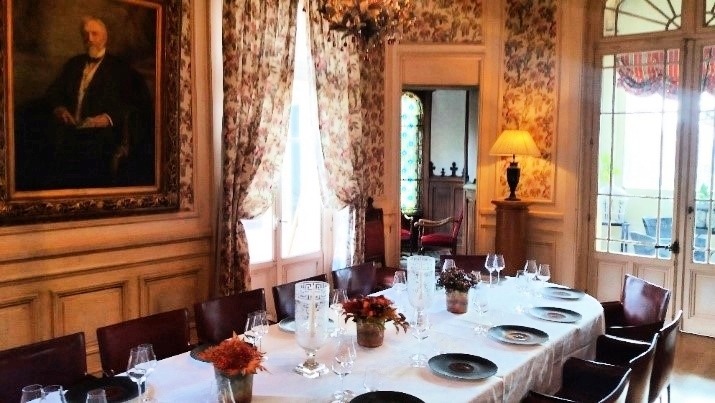
One of the private rooms in the castle
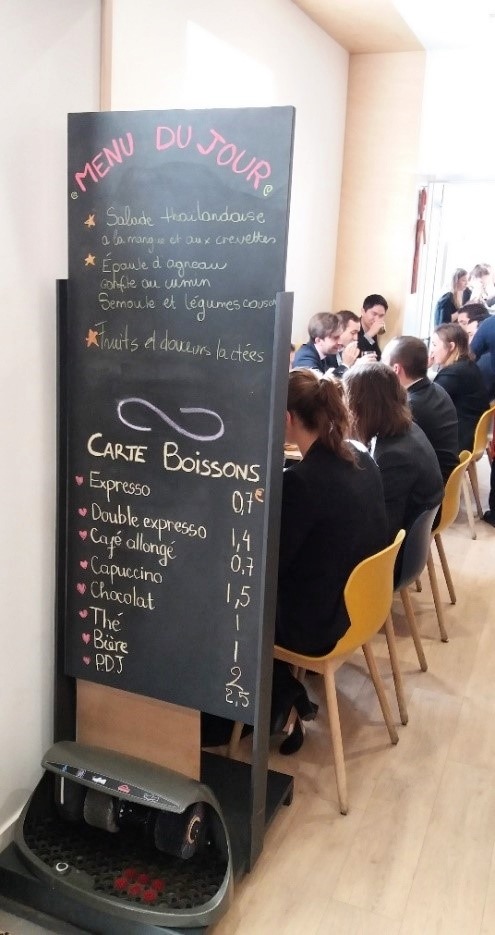
One of the teaching restaurants during lunch
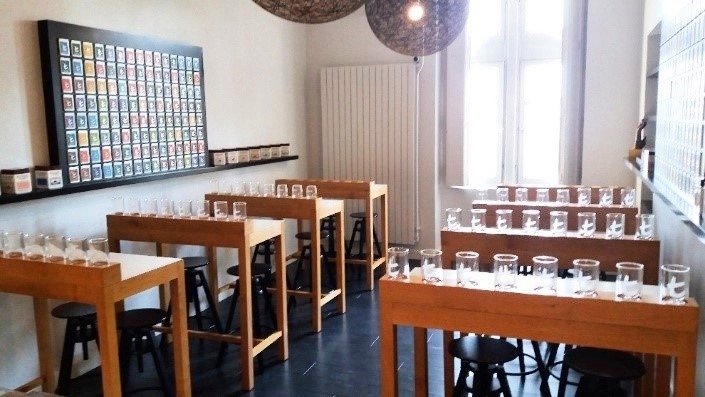
The tea tasting room
*
In 2017, I visited a Swiss private university, the HTMi (Hotel & Tourism Management Institute), on behalf of BGE. The following article about the event appeared in the May 2017 faculty news of BGE KVIK.
Signing of a Letter of Intent for Cooperation between HTMi Hotel & Tourism Management Institute and KVIK
The HTMi Hotel & Tourism Management Institute, based in Sörenberg, Switzerland, is one of the world-renowned higher education institutions for tourism and hotel management training, with a wide international network. On May 5, 2017, at the partner’s headquarters, a grand gala event was held where a letter of intent for cooperation was signed between our faculty and the Swiss university. The event was attended by a representative of Hungary’s Swiss embassy, and the faculty was represented by Dr. Dénes Sándor, associate professor.
Photos taken during the visit to HTMi:
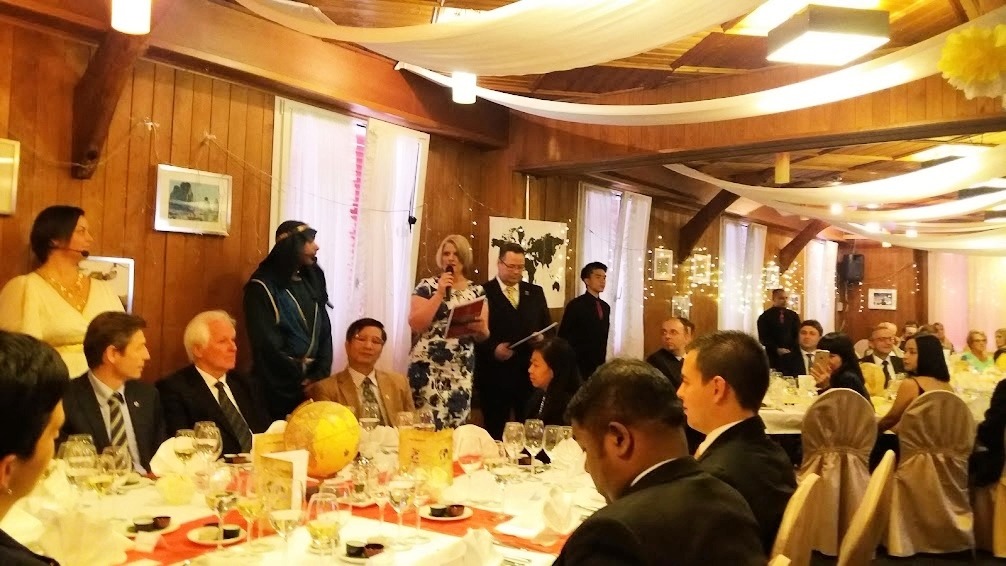
Gala party
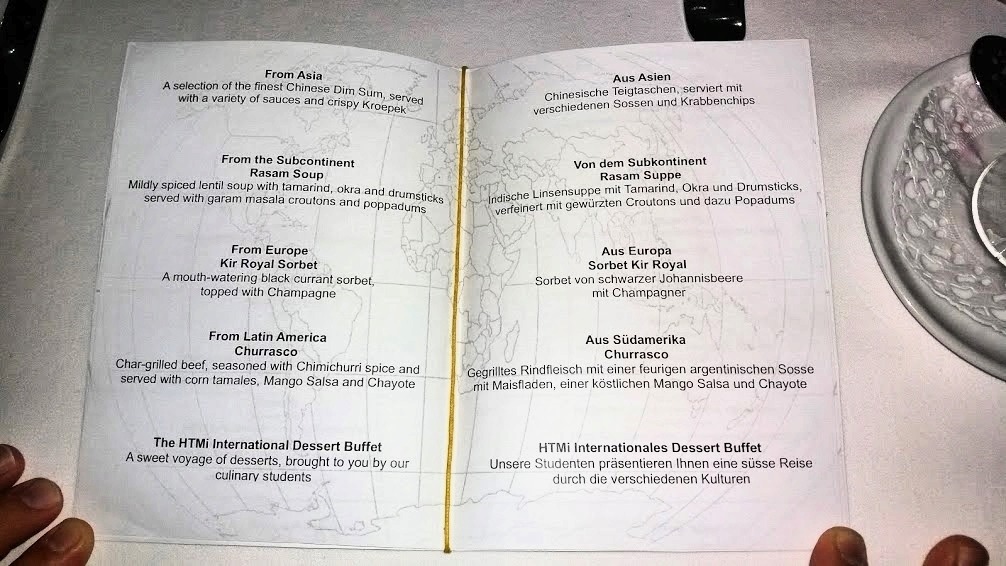
International menu
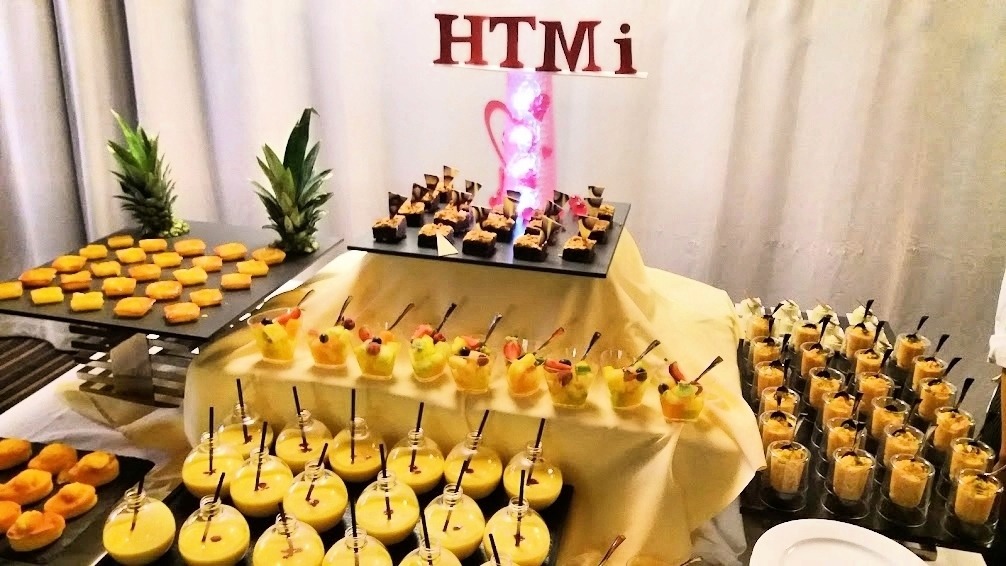
Dessert selection on the buffet table
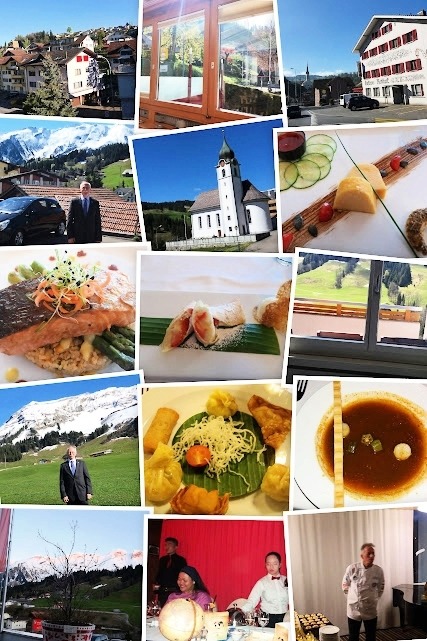
Mosaic images from the visit
*
In 2017, I represented our country as a chef expert at the WorldSkills competition with chef competitor Hunor Égető in Abu Dhabi, United Arab Emirates.
*
In October 2018, with the help of Gabriella Szlávik, I participated in a professional trip to Italy—focused on the production and use of Gorgonzola and Parmigiano Reggiano cheeses—funded by a European Union grant. The team members were Bence Angeli, Áron Barka, György Lipták, and myself.
During the trip, we were able to observe up close the production of the two world-famous cheeses. We went through the Gorgonzola production process step by step, while they explained what was happening with the cheese at each stage. Among other things, we saw the shaking device that ensures the even development of the noble mold in the inoculated cheese, and we were also shown an impromptu sampling of the finished cheeses.
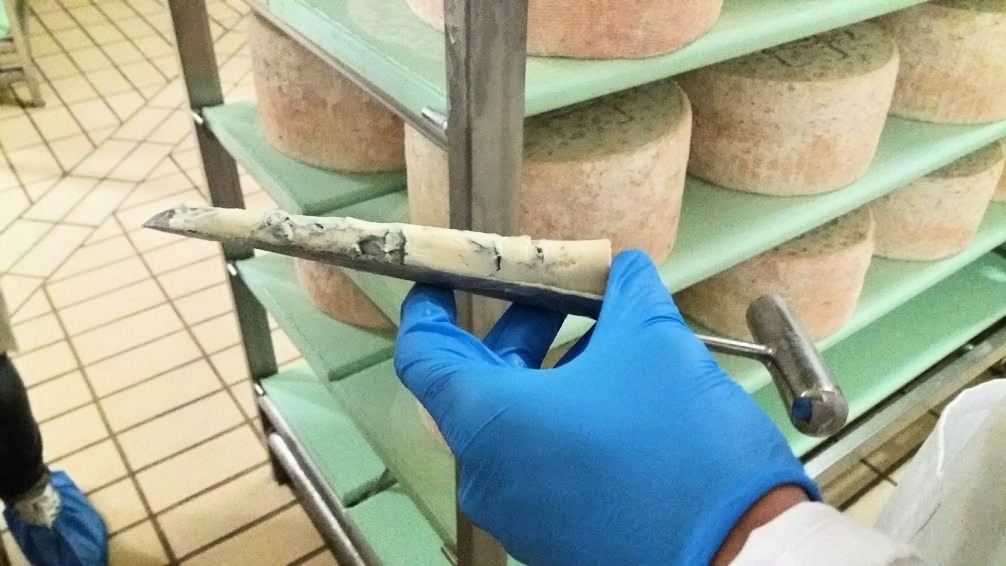
Gorgonzola sampling
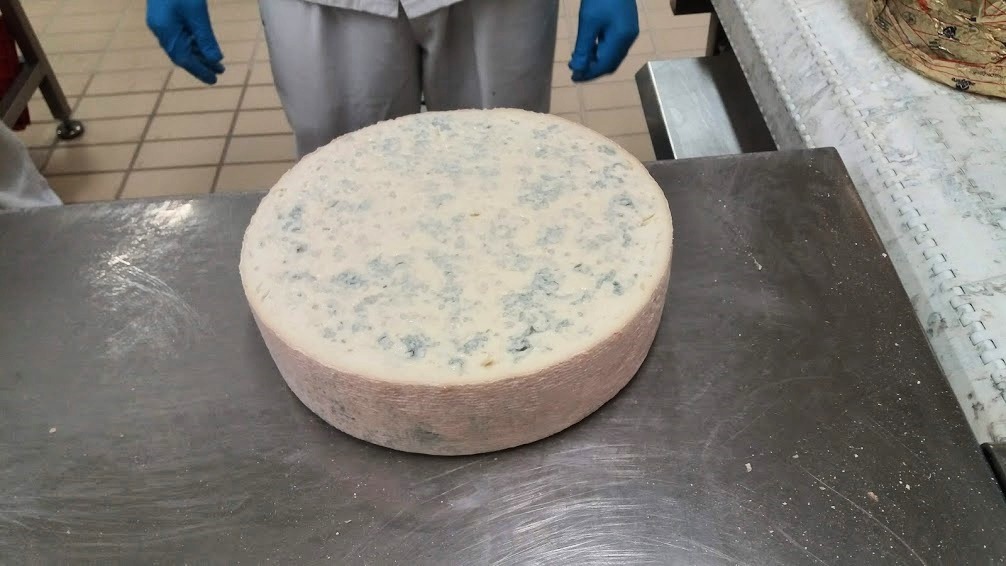
Gorgonzola
After that, we were taken to a restaurant where the chef gave us an interactive demonstration on the use of Gorgonzola in dishes. It was a very professionally useful program, as within the framework of a menu, we could see and taste dishes prepared with the younger, sweeter Gorgonzola and the longer-aged, more characterful flavored Gorgonzola, photos of which can be seen here.
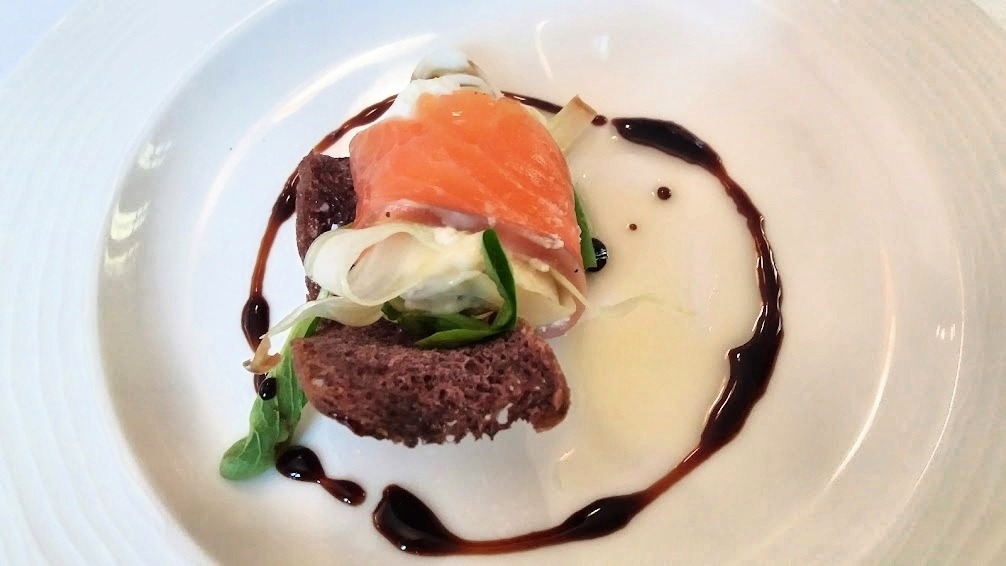
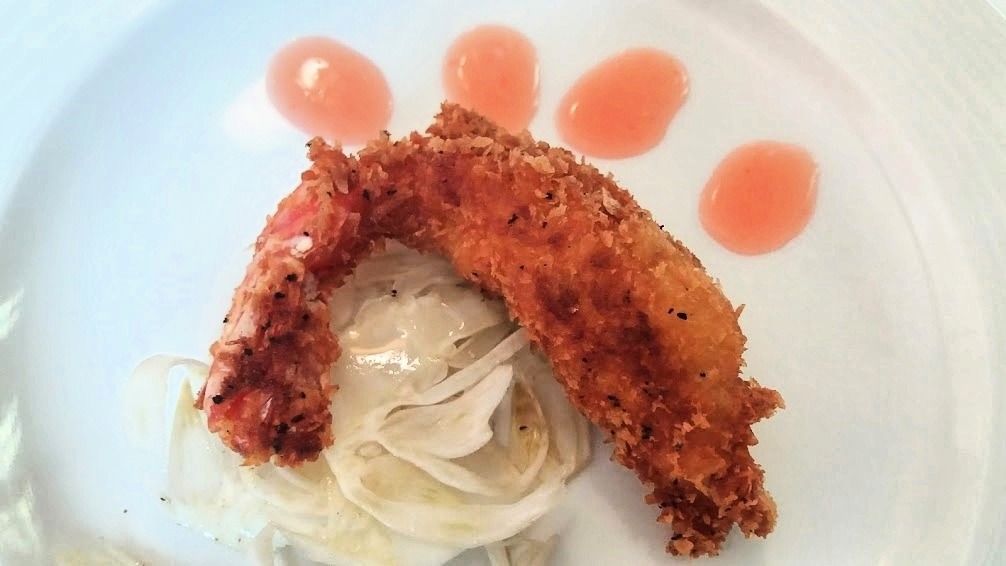
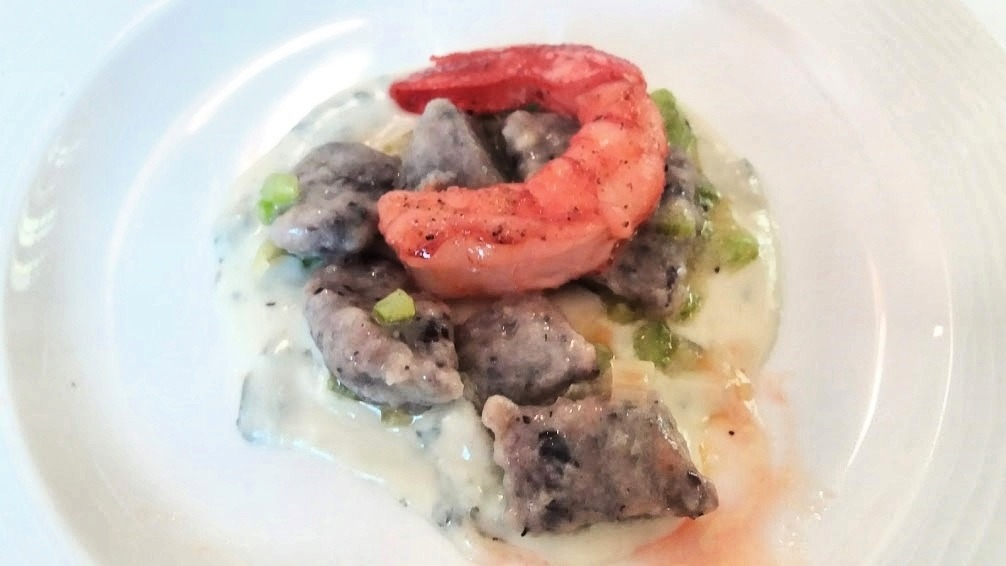
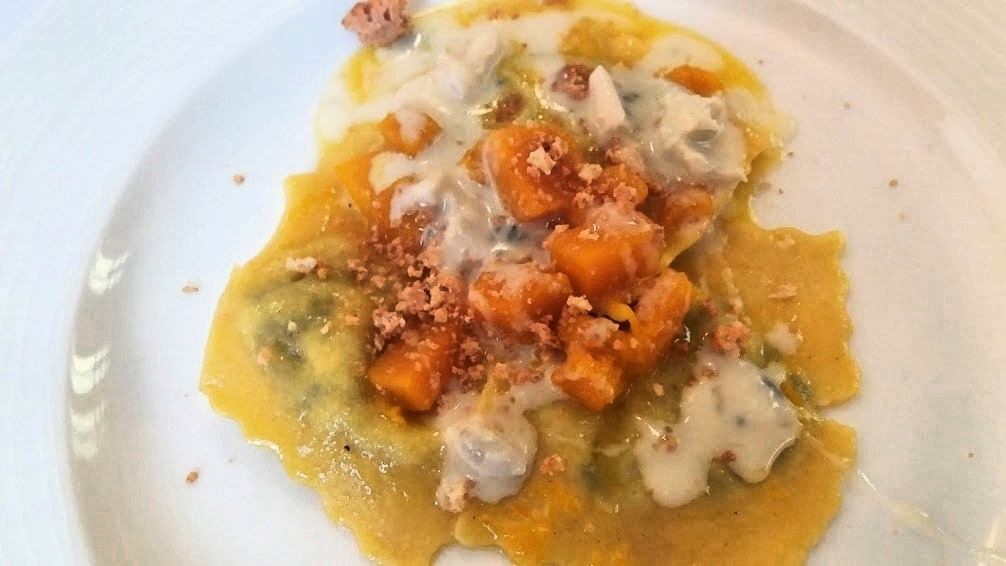
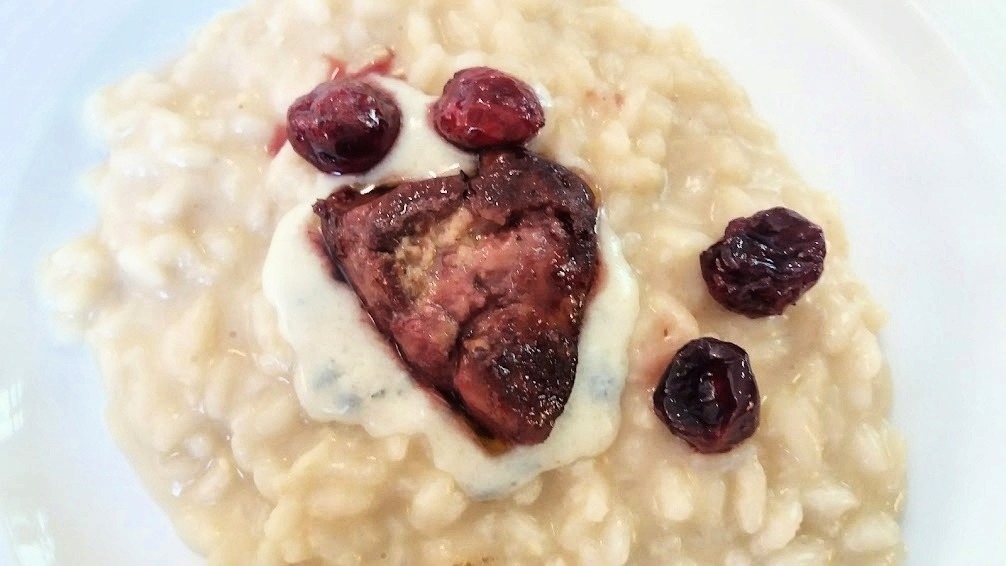
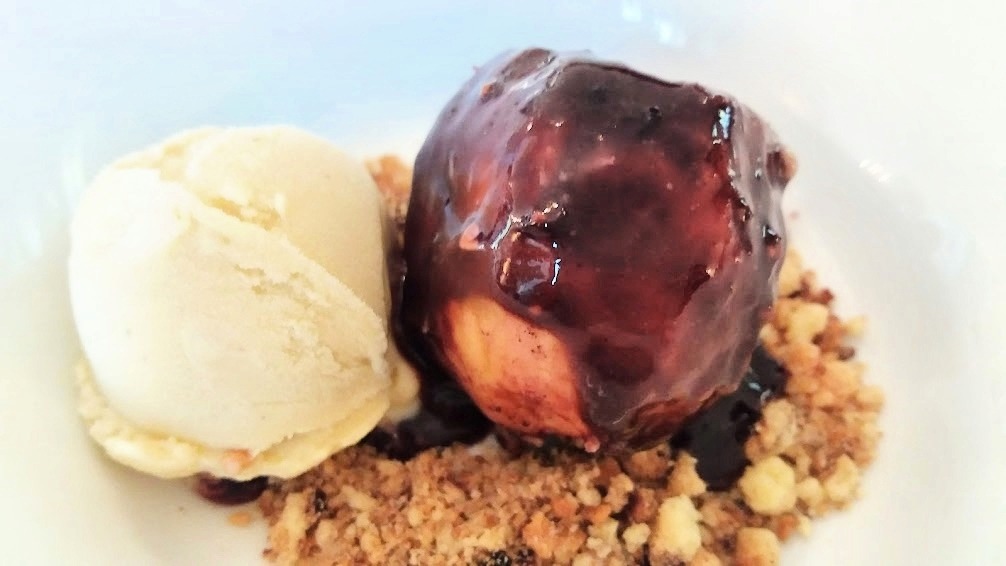
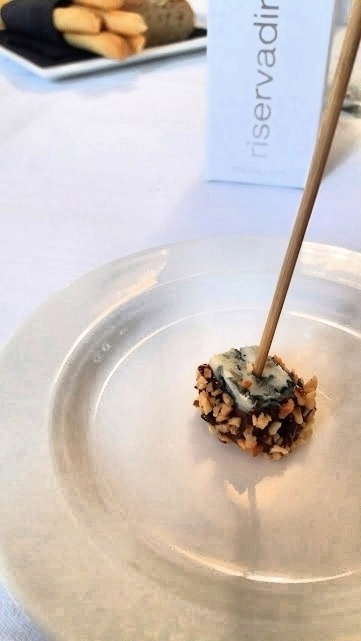
During the Parmesan production, we were able to follow an entire shift at a cheese-making manufactory where almost every resident of the small mountain village is a part-owner. We could only enter the milk processing room if we were dressed head to toe in protective clothing. It was interesting to see that in the small facility, everything that came into contact with the milk was made of stainless steel, yet manual labor still had a special role, just as it did in the past. For example, the hand and arm check of the inoculated milk mass before lifting it out. The facility was spotlessly clean, so we asked how this purely manual action could comply with hygiene regulations. The cheesemaker smiled and replied that he personally contributes to the unique composition of the cheese produced there by doing it this way, which makes their cheese truly unique.
Another manual task was when the fresh cheese mass was gathered into a straining cloth, tied to a rod, then two men — the only two men working there alongside one woman — lifted the whole thing and carried it to another room to let the cheese mass drain.
After finishing the daily processes, they showed us the Parmesan vault. This was a separate building where the cheeses were aged. It was funny that the door to the building storing a cheese stock worth an enormous, hard-to-express amount in euros was secured with a simple padlock. Inside, from floor to ceiling, 40 kg Parmesan wheels were stacked on storage shelves. When we entered, we stopped, looked up and around, as if we were in a church. The sight of thousands of cheeses was impressive.
After a cheese tasting, they showed us their small delicatessen shop where we could buy Parmesan of various maturities — 18, 24, and 36 months — as well as other products such as olive oil, olives, dried tomatoes, mushrooms, etc.
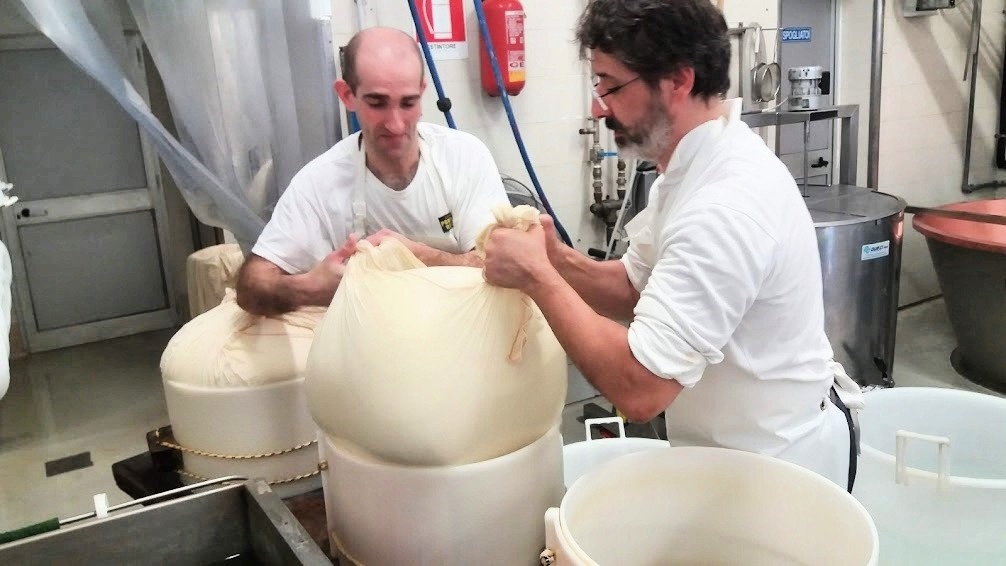
Parmigiano Reggiano production
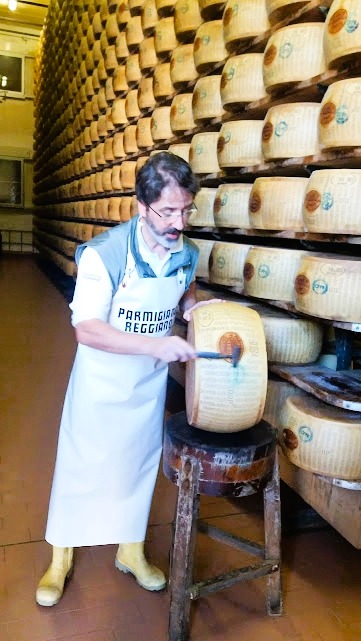
Parmesan aging in the vault
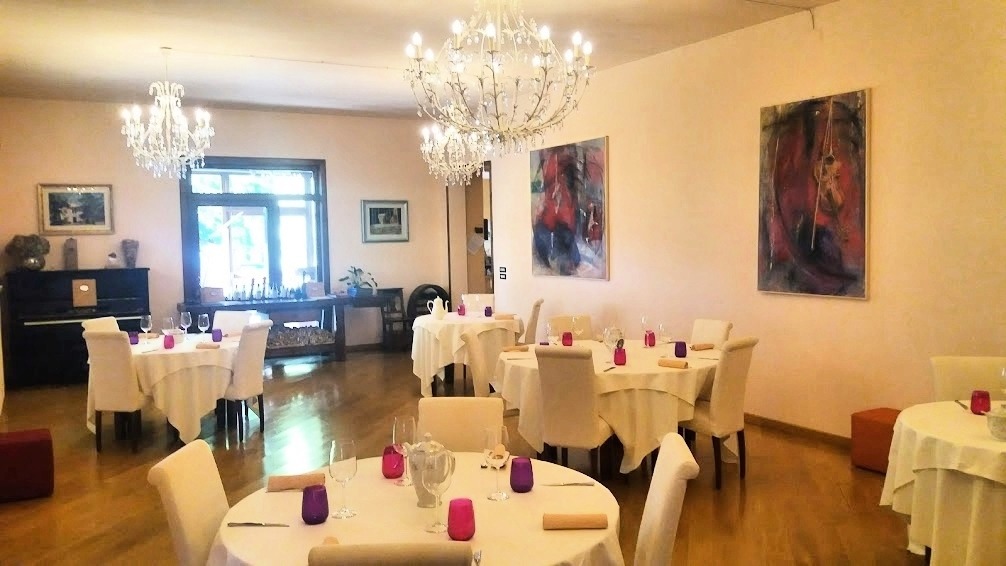
During the study trip, the organizers took us to several restaurants for meals. One of these stood out for its exceptional quality. At the La Brace di Maiatico restaurant, Chef Francesca Ghirardi invited us into the kitchen and involved us in preparing our lunch menu. It was an experience to be in the kitchen with the young female chef, who sincerely shared her knowledge with us. As we prepared for plating, we sat down at a lavishly set table in the restaurant, with no other guests present. Although we had been in the kitchen, the chef still managed to surprise us with the creative and elegant presentation of the dishes. Every course was delicious and refined. At the end of the meal, we told Francesca that, in our opinion, the dishes and the entire atmosphere were at Michelin star level. She modestly thanked us for the compliment/professional opinion.
Pictures from a visit to the La Brace di Maiatico restaurant:
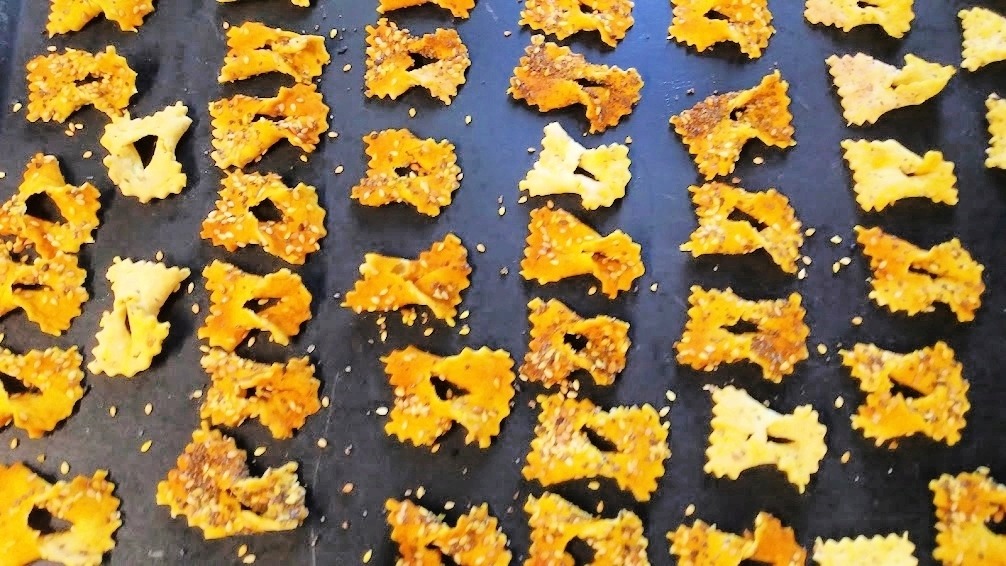
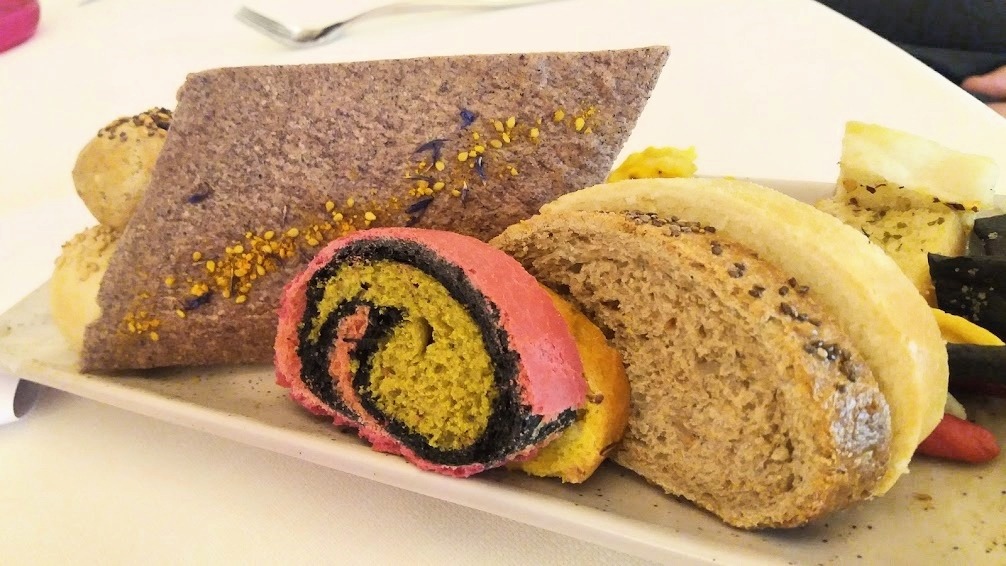
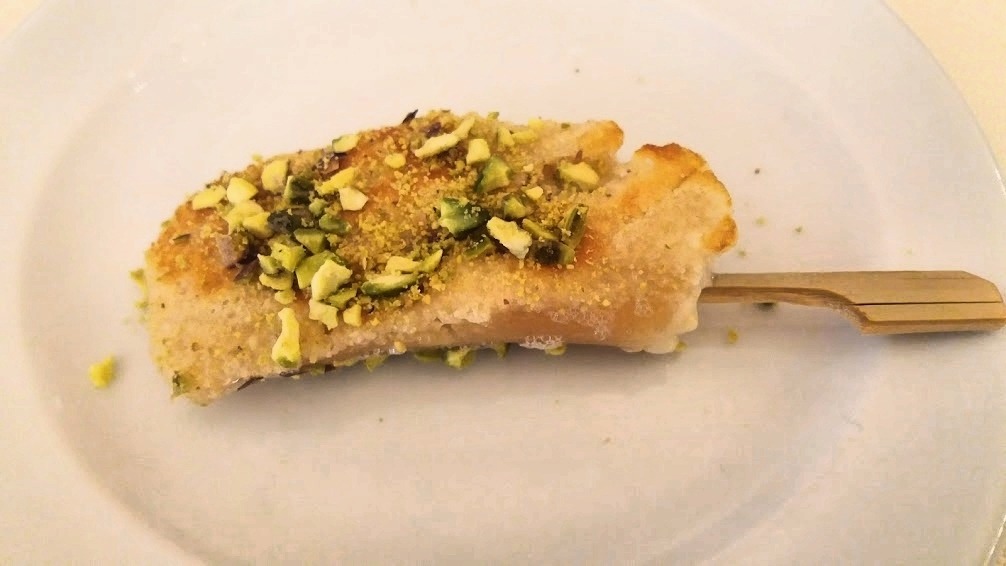
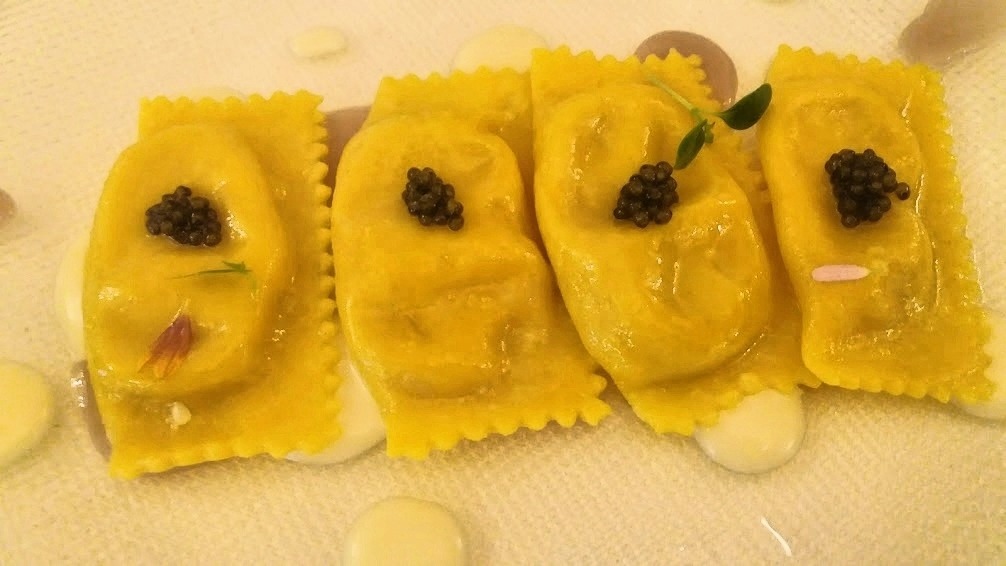
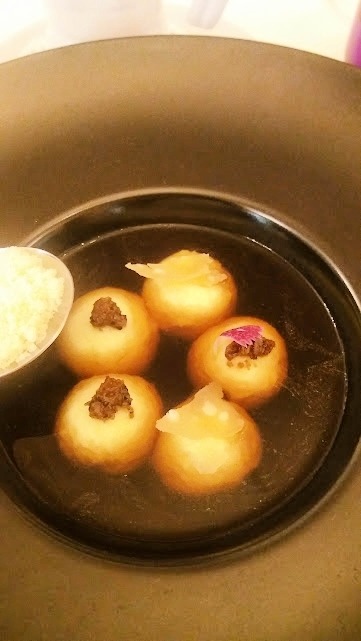
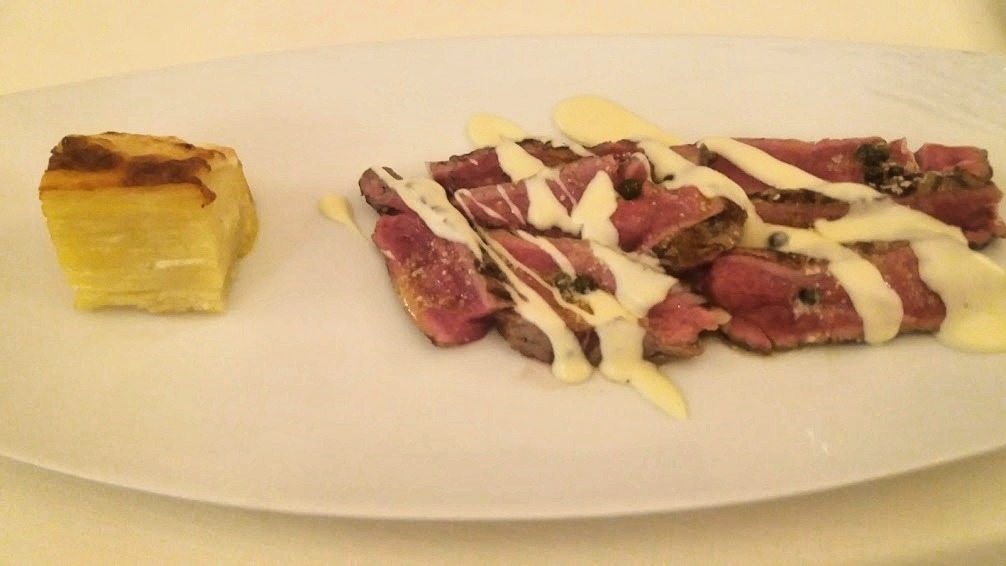
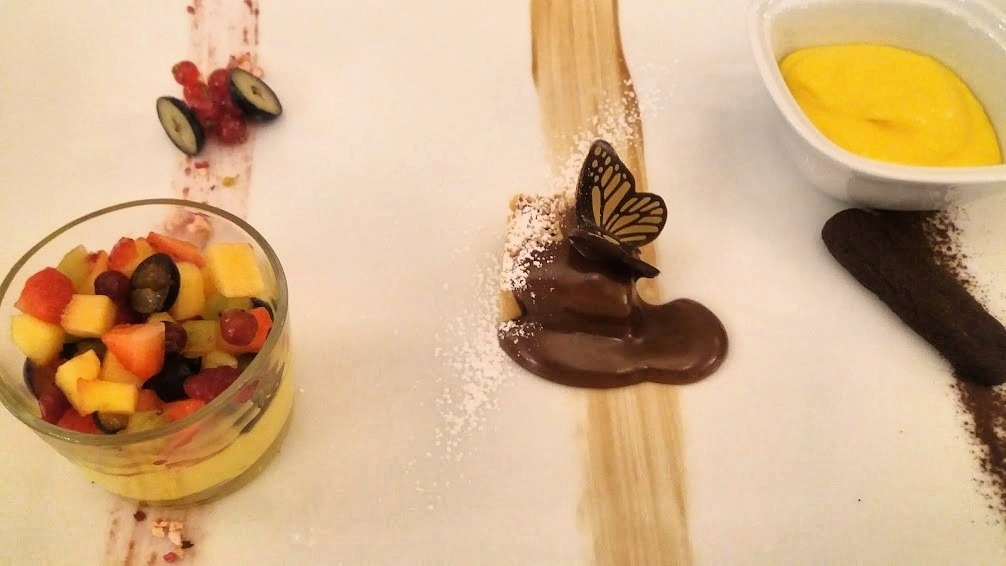
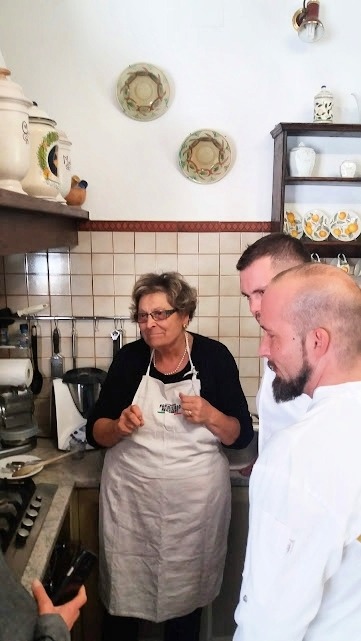
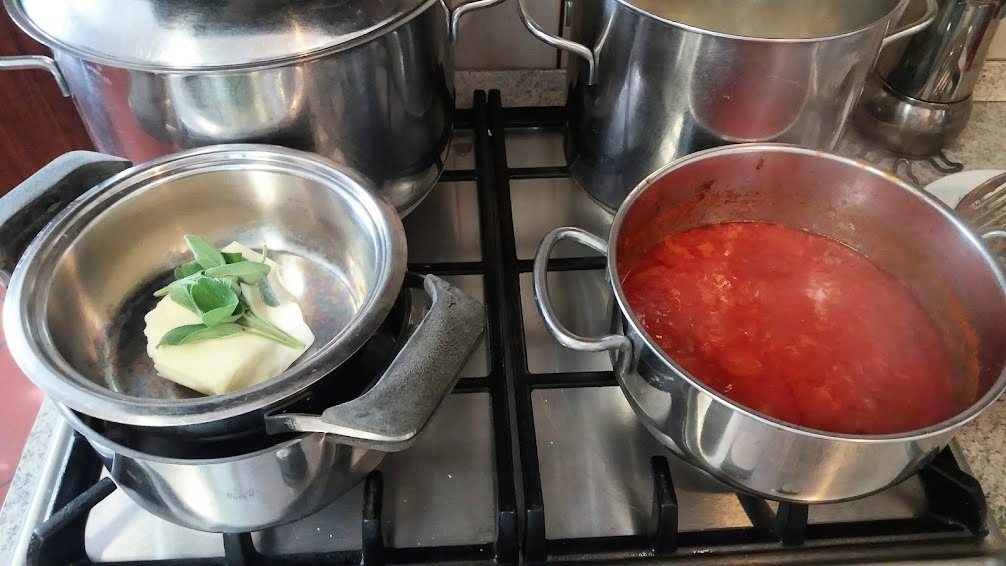
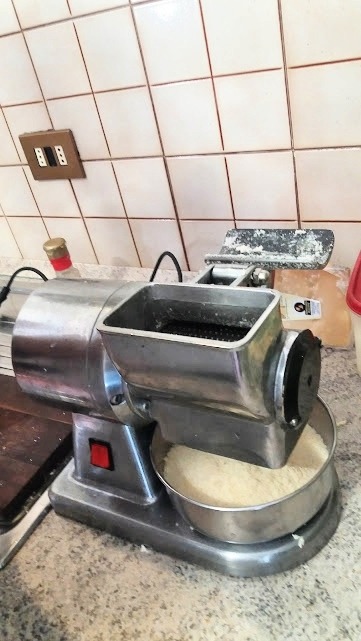
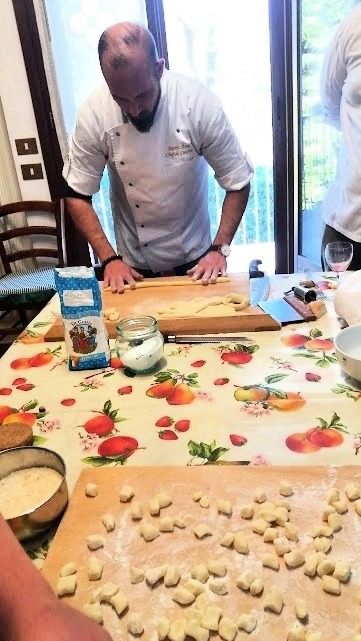
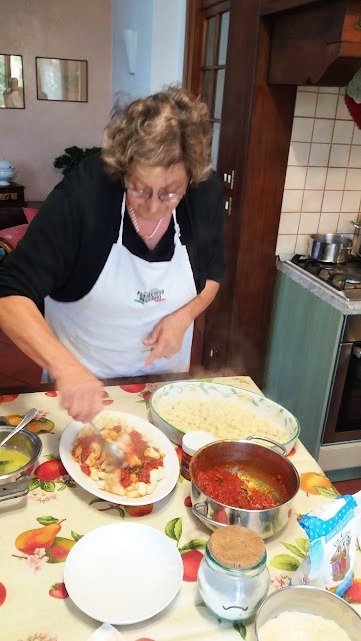
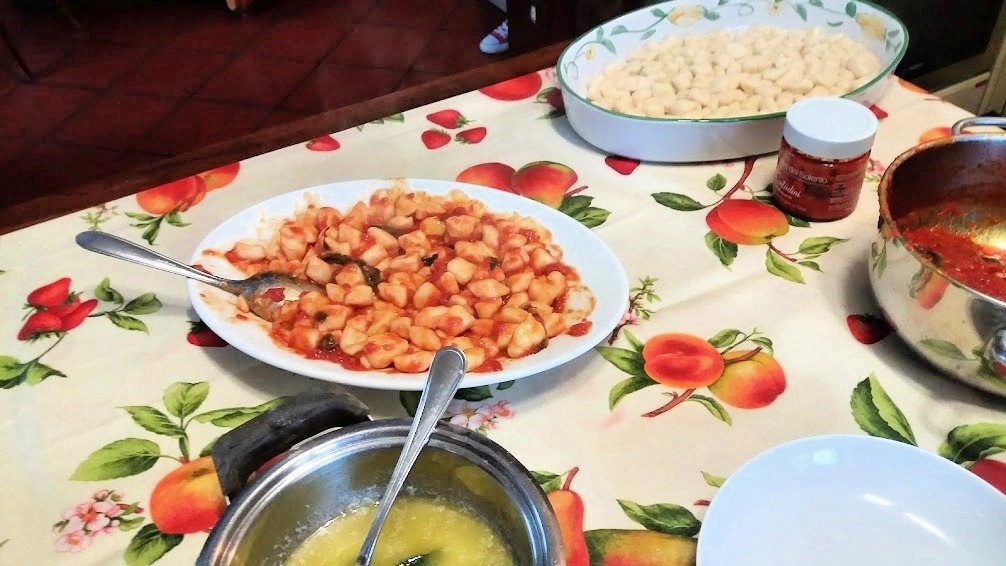
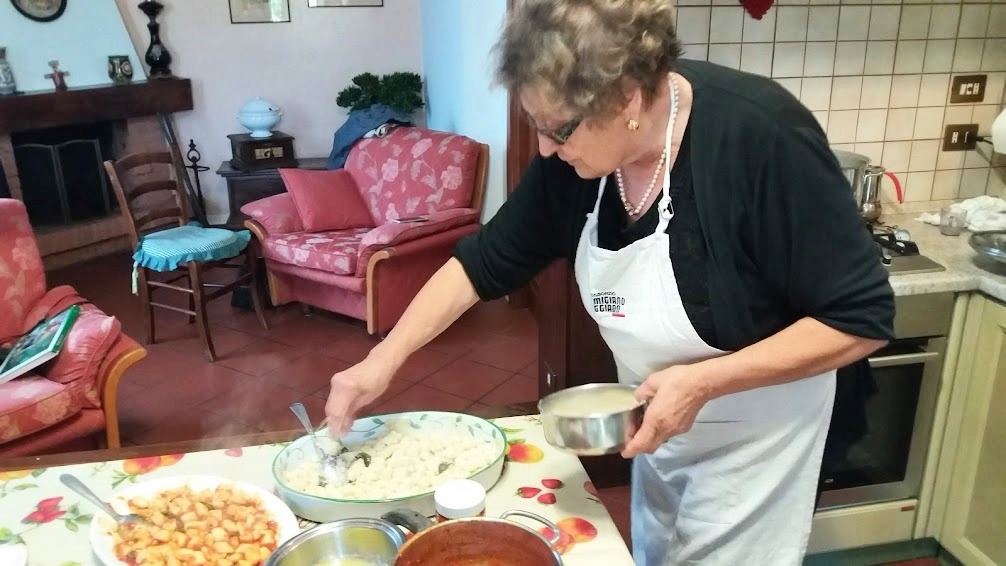
It was also a special program when a hostess welcomed us into her home for a joint cooking session. From the very first moments, an Italian atmosphere developed because the Mamma was very warm and friendly with us. While making gnocchi, we tasted wines and kept joking around. It was nice to see and use a small but industrial-quality Parmesan grater. Everyone took part in the work, which for us was not work but joy. Thanks to the good mood, we also started using a few Italian words, which made the Mamma even more cheerful with us. This is what I call true joy cooking! It was a fantastic experience to be guests at an Italian hostess’s home while also being able to participate in the cooking.
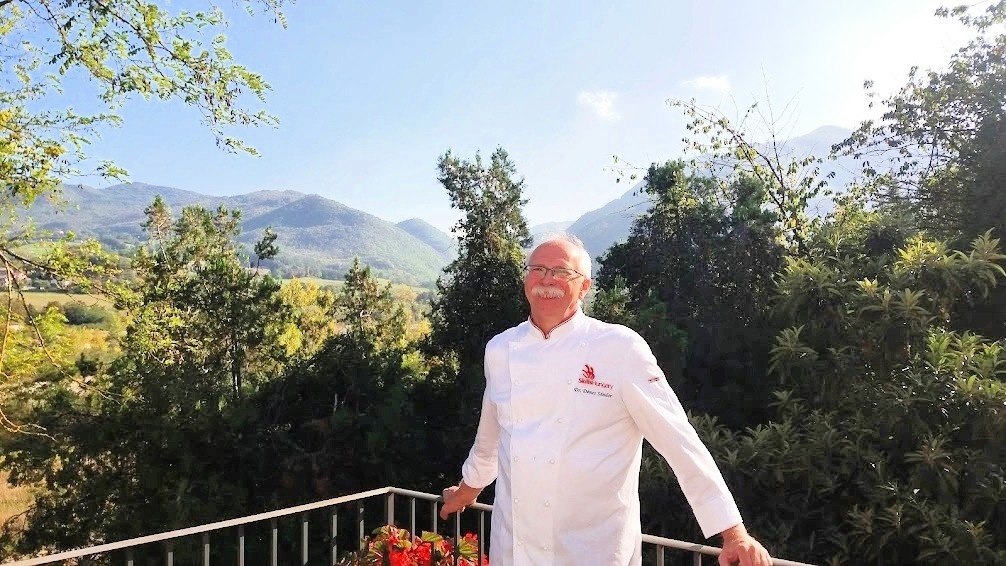
Pictures taken at Mamma‘s home:
*
PhD studies 2006-2012
In the autumn of 2006, I began my PhD studies at the Doctoral School of Earth Sciences at the University of Pécs. Prior to this, there was an entrance interview where the head of the Doctoral School, Professor József Tóth, who said at our first meeting about my planned research topic – “Investigation of the appearance of local raw materials and regional dishes in restaurant menus” – “You know what an awesome topic you have!” I thanked him for his honest opinion. When I suggested that I was thinking about a nationwide menu analysis after reviewing about 30 menus, he said: “You need to analyze 300 menus for this work.” I was a bit stunned by this, but I completed the task because I examined and analyzed 381 menus for my doctoral dissertation.
I greatly appreciated Professor Tóth’s broad-minded, inclusive, and open approach to my topic because this made it possible for my topic to be accepted at the Doctoral School of Earth Sciences, as geography is part of earth sciences, and tourism geography is directly connected to gastronomy. Today, one could even say that earth sciences are connected to gastronomy in the way that the produced foodstuffs and their use are themselves gastronomy, and on a global scale, geography is an indispensable science.
The education began. Once a month, we had to attend contact hours. Traveling to Pécs was adventurous at that time because the M6 motorway was not yet finished, so I took the M7 motorway to Siófok and then the 65 main road toward Pécs. The countryside was beautiful but dangerous due to reckless drivers.
During the education, I was provided with plenty of geography-related topics, such as “Introduction to the system of earth sciences,” “Cultural geography,” “Mathematical and statistical methods in geography,” “Research methods in earth sciences,” etc. In the second semester of the first year, I took 13 subjects. On one hand, I enjoyed being a student again (at age 52), on the other hand, completing the assessments (closed-book tests, homework assignments) was only possible with precisely planned and executed tasks.
The education continued for two academic years, four semesters, during which I completed all assignments on time. My basic characteristic is that if I commit to something, I carry it out fully and precisely.
The third year was the research year, when I had to collect the materials necessary for the dissertation and start publishing the research results. By then, I had collected 381 menus from various parts of the country from different types of warm kitchen hospitality units (restaurants, inns, taverns). I analyzed their food offerings by grouping the menus into nine tourism regions, then separately examined the offerings of different types of units. I entered the data into Excel spreadsheets; it was a huge job. The menus altogether contained about 30,000 dishes. My fundamental research goal was the study of local ingredients and regional dishes, but I also analyzed all food groups.
My supervisor was Dr. Antal Aubert, with whom I discussed my research plans, and then he let me research and work independently. In the fourth and fifth years, during the dissertation writing period – when inspiration often failed and I tried to gain inspiration with a shot of pálinka and a little spritzer – he did not significantly interfere with my dissertation. When I had already written over 200 pages, however, he criticized many things, especially the overly extensive material. So, I worked on my material for another year to have it accepted. I was a bit annoyed because if he had told me earlier, I wouldn’t have worked in vain, and I would have finished my PhD studies a year earlier. Of course, this probably had to happen this way…
I had more time to publish scientific articles in Hungarian and English in domestic and international professional journals approved by the university. Besides publications, it was also important and mandatory to participate in and present at conferences. I diligently fulfilled this expectation by the deadline.
In the sixth year of my studies, I met all the requirements – required credits, publications, conferences, dissertation, etc. – so I had to defend my dissertation first in a “house defense” where colleagues from PTE participated, and I received both praise and criticism. There were young talents familiar with earth sciences who heavily criticized the topic that was far from their field. Then Professor Tóth, head of the Doctoral School, spoke and said, “Stop the process, this topic and its primary research-based processing are of national significance.” That felt good. I accepted the relevant advice, for example, I delved into the topic of ArcGIS (Computer Geographic Information System) with the help of a young colleague who was one of the critics of my material, and with this knowledge, I supplemented my dissertation with my own edited maps.
Before the second defense – the final/public defense – two reviewers sent their comments on the dissertation (this was also the case before the house defense), and there was an opportunity to respond in writing. One of my opponents was Dr. Géza Szabó, who was not only one of the reviewers before the house defense but also a lecturer at BGE KVIK Tourism Department, so I can call him a colleague. It seemed to me that he did not carefully read my revised and corrected dissertation because he raised similar objections as in his first review.
At the final defense, it was awkward for me when Dr. Géza Szabó began reading his review because he did not consider my response, in which I wrote that this was no longer the original material. Of course, afterward, I felt confident because I refuted his objections point by point with page and paragraph references. I probably did well because Professor Zoltán Dövényi, head of the Doctoral School, said it was a defense to be taught, as I defended my dissertation substantively, not in general terms but point by point. Thus, the Final Defense Committee approved my PhD degree.
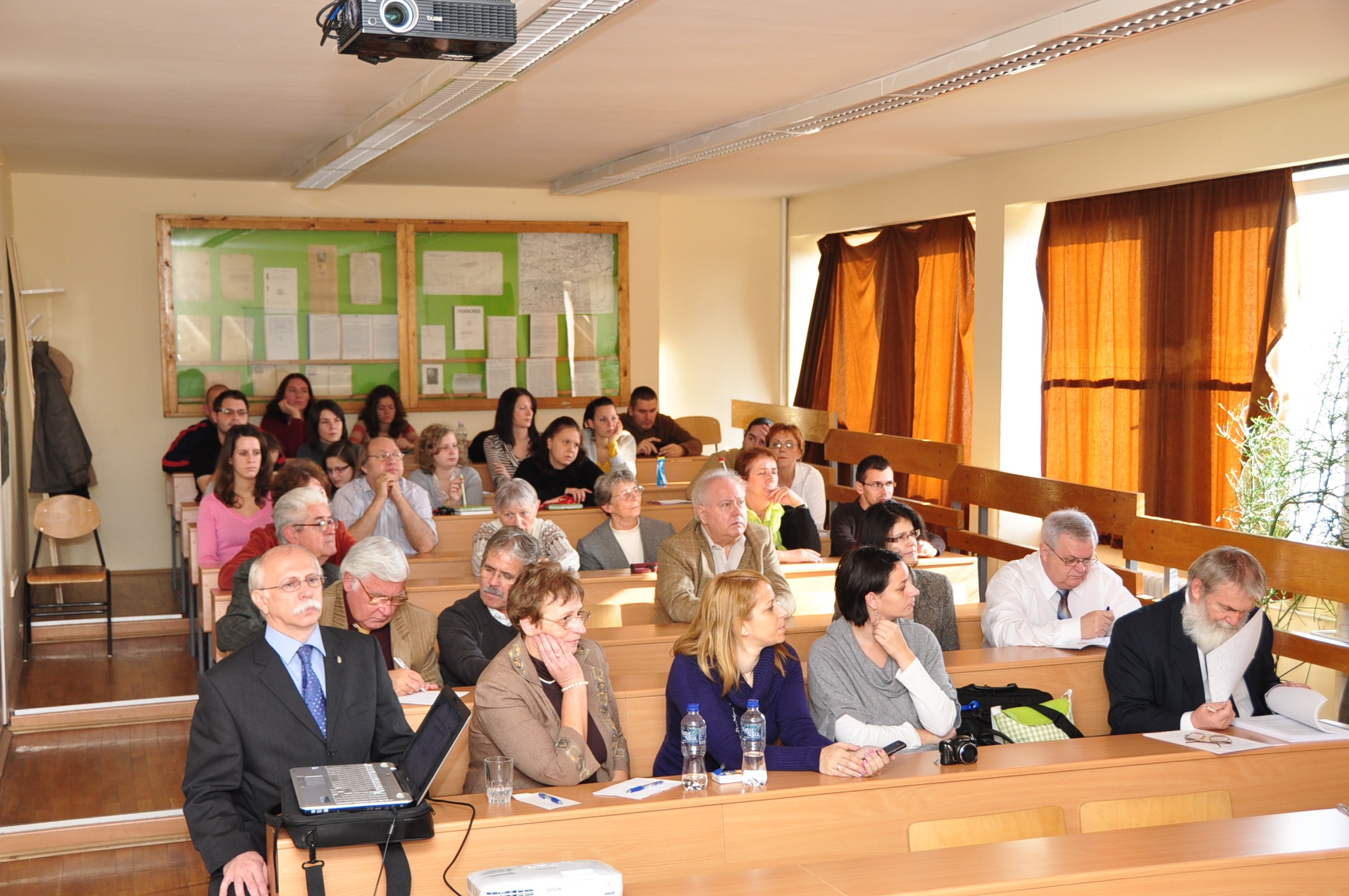
The photos of my final defense:
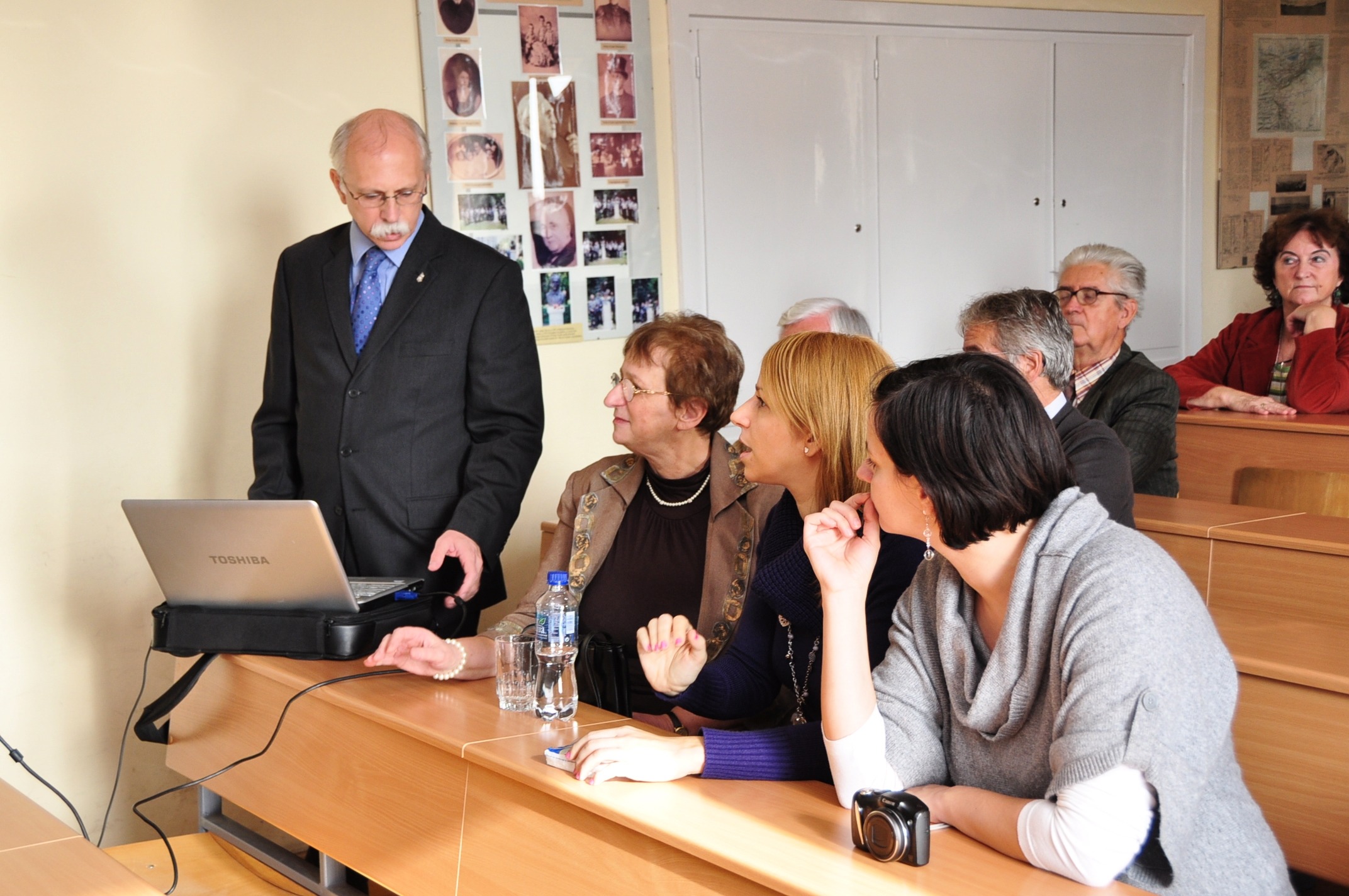
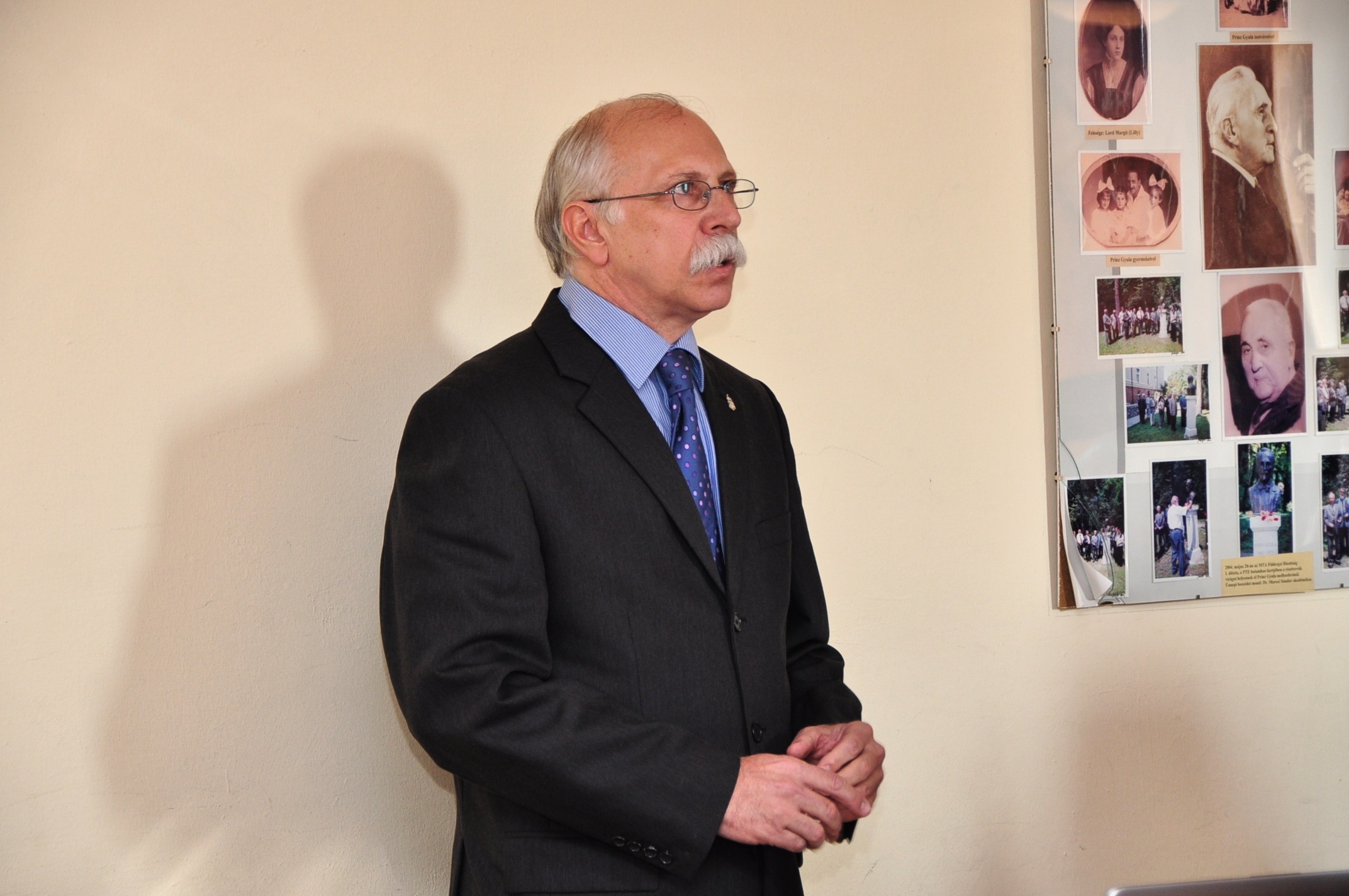
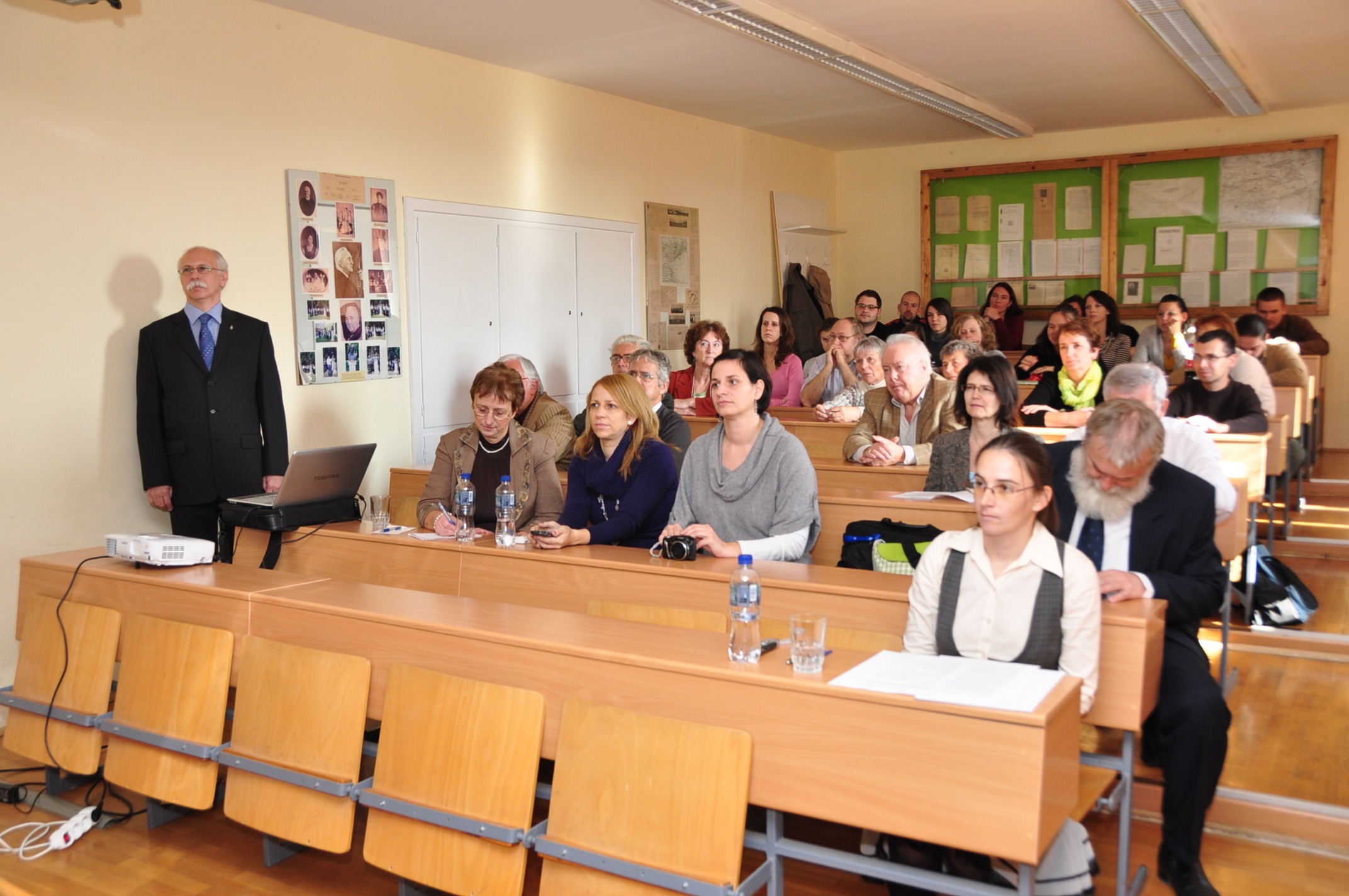
During the defense
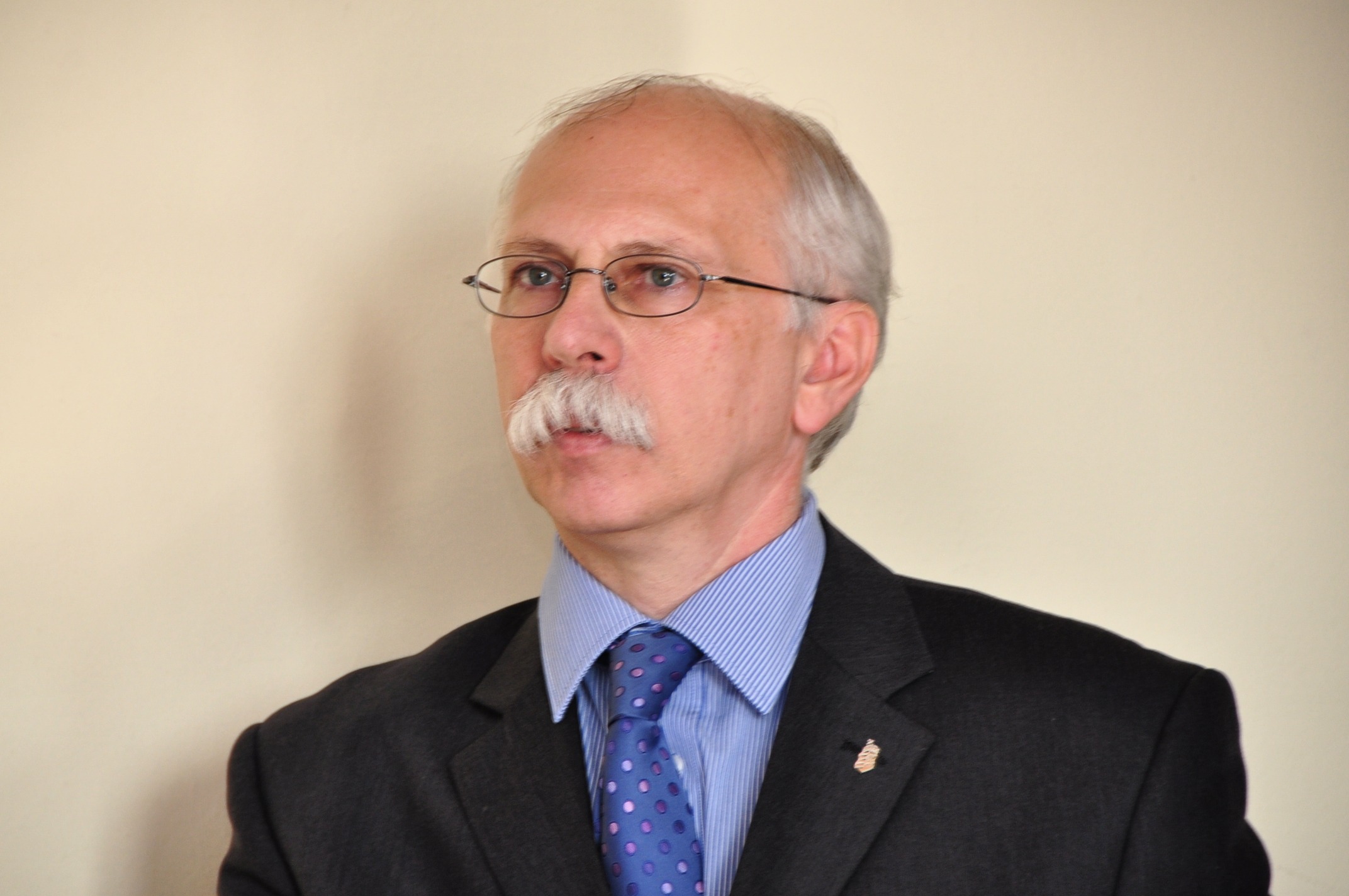
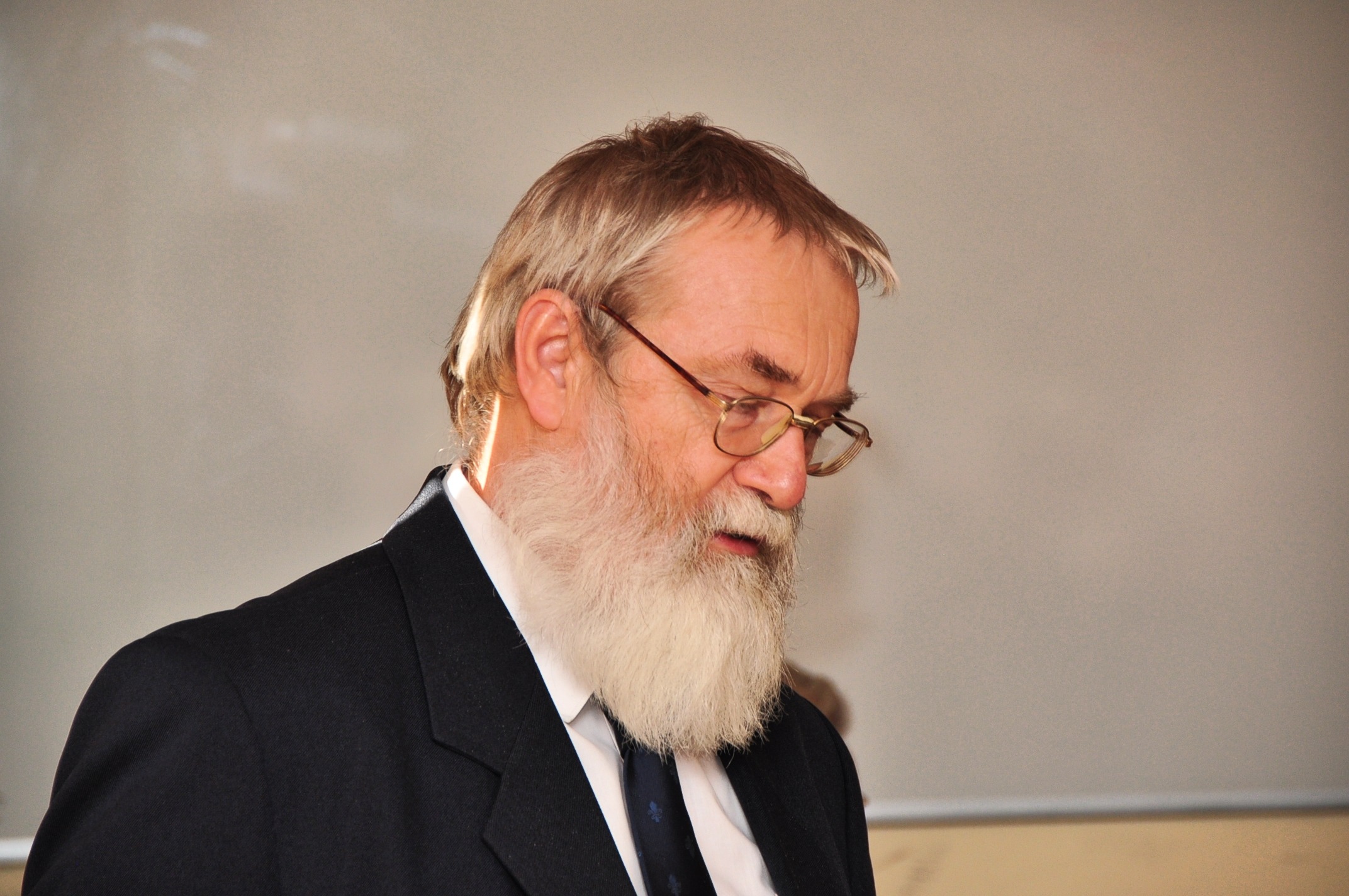
Professor Dr. Zoltán Dövényi evaluating
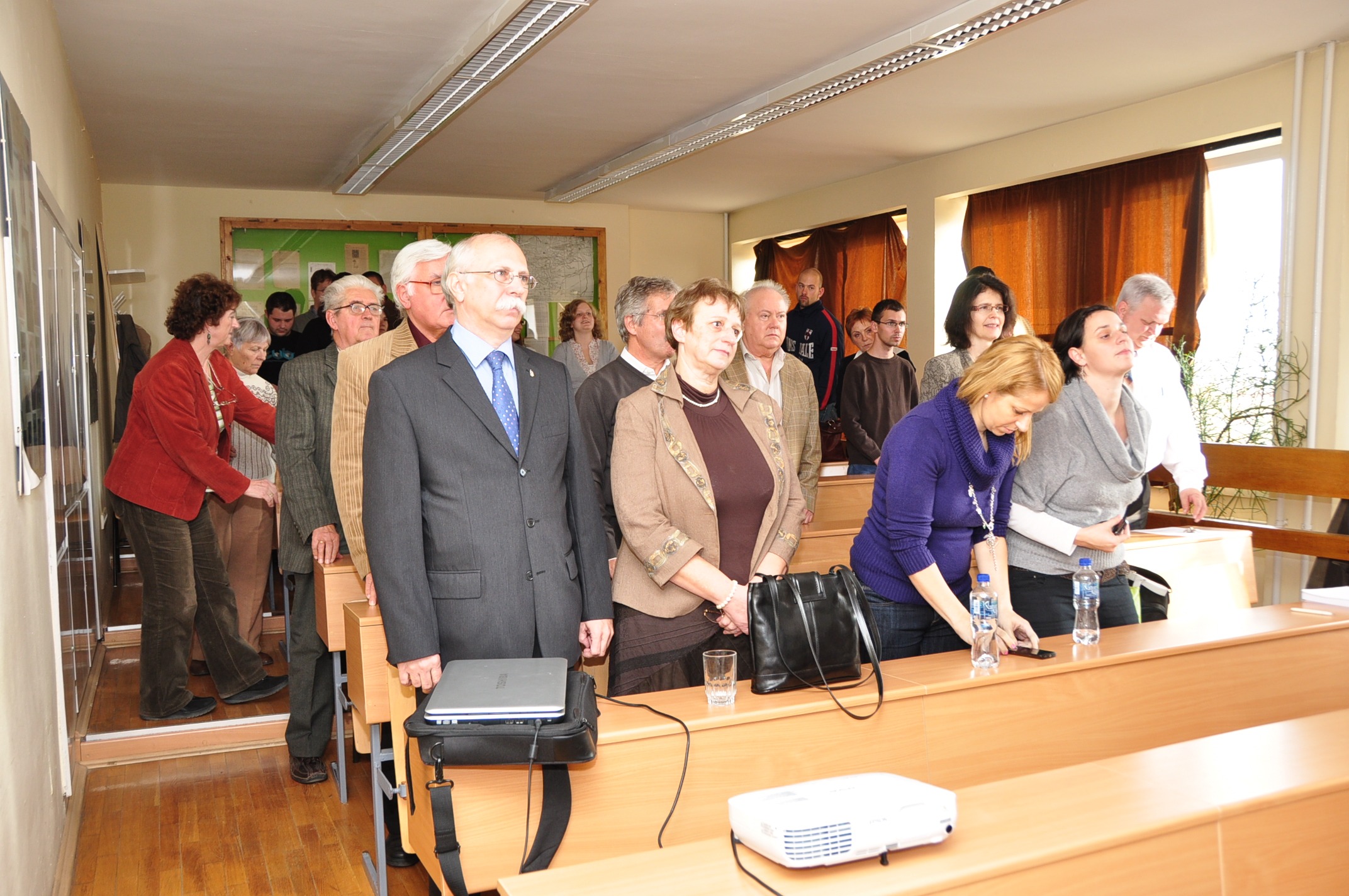
The audience
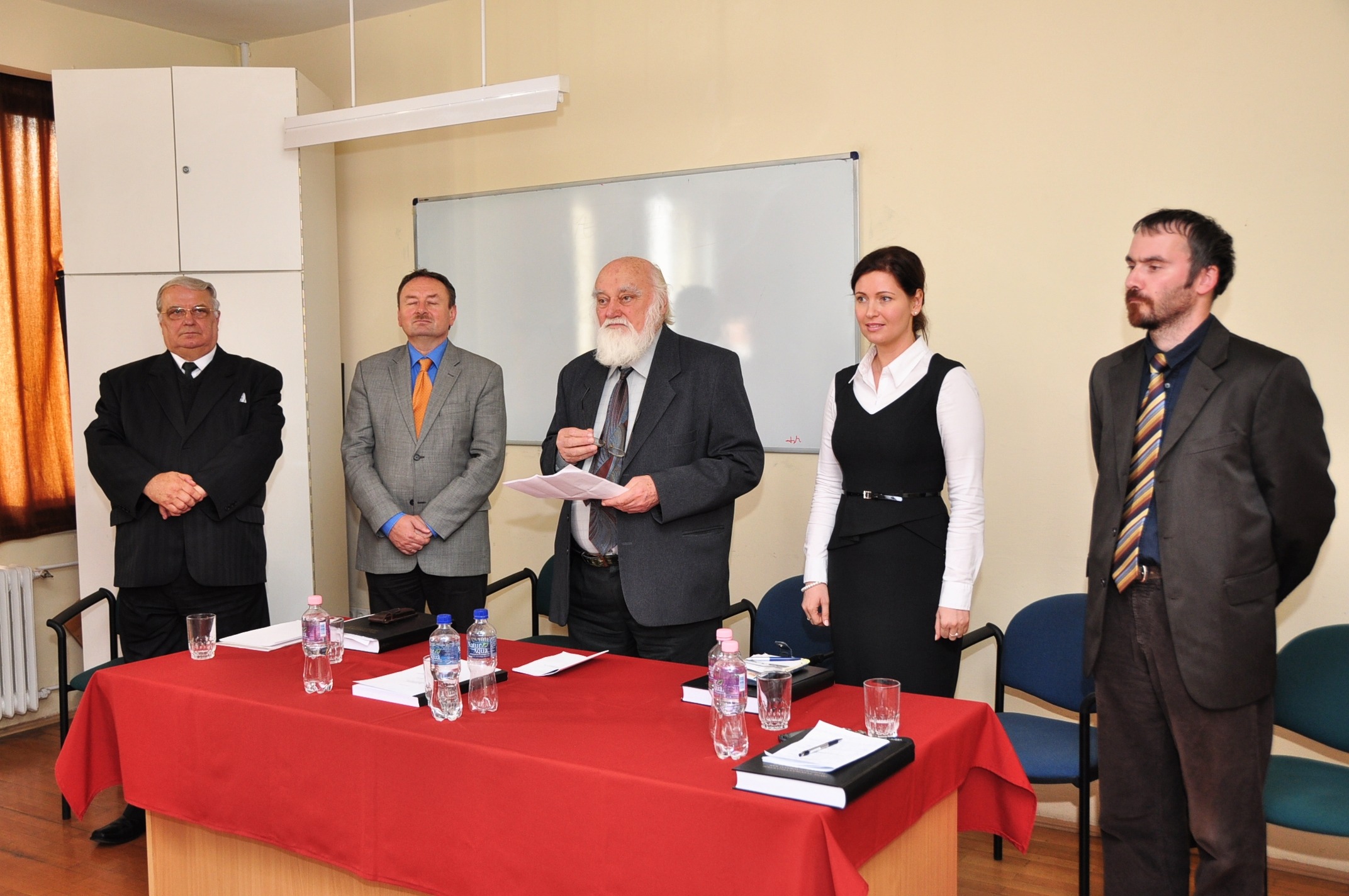
The examining committee
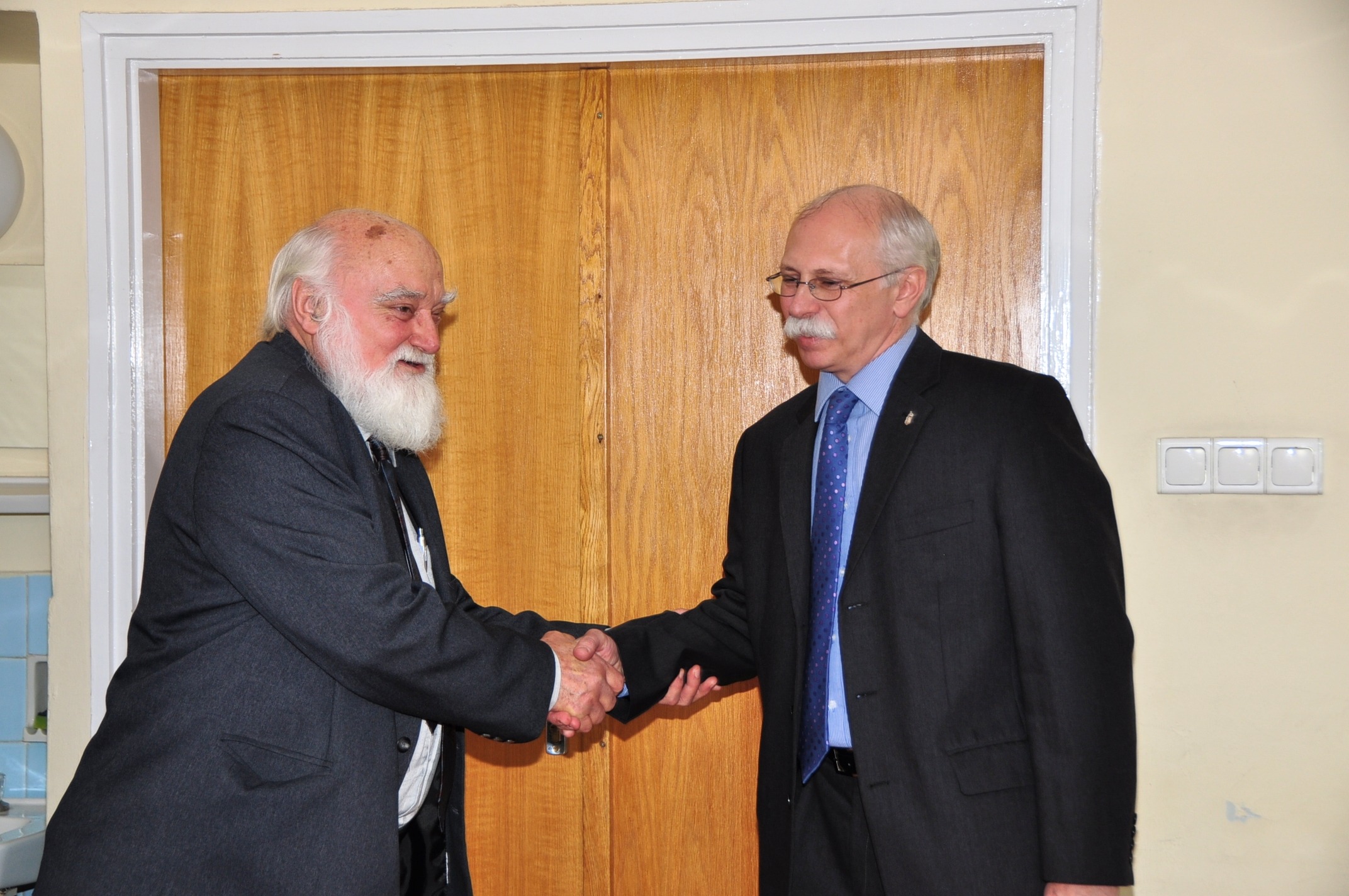
Professor Dr. József Tóth congratulates
My PhD dissertation titled “The Role of Gastronomy in the Tourism Geography of Hungary” can be found at the following link: https://pea.lib.pte.hu https://pea.lib.pte.hu/handle/pea/15104
*
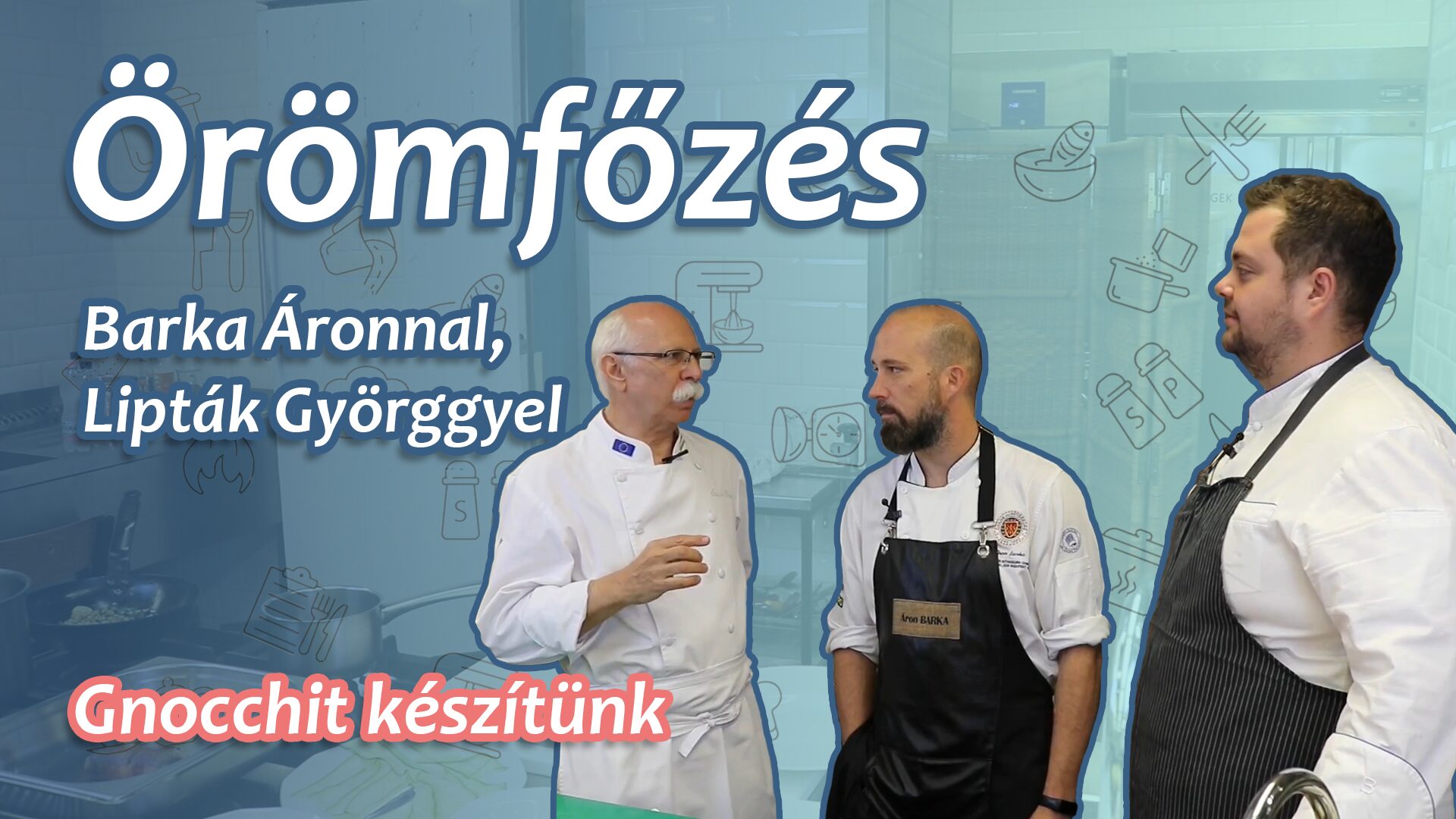
Click on the image to watch the video of “Gnocchi with Rosemary Tomato Ragout and Sage Butter” made at Joyful Cooking! You can find the recipe below the video!
You can watch the interview with Áron Barka on YouTube by clicking here.
You can watch the interview with György Lipták on YouTube by clicking here.
You can find the stories spontaneously told at Joyful Cooking here:
https://www.youtube.com/watch?v=QSh7Fc6WSwk
https://www.youtube.com/watch?v=TrP-NEh3D7w
https://www.youtube.com/watch?v=pSnj7NsKpkE
https://www.youtube.com/watch?v=y7wtJkUBjIE
https://www.youtube.com/watch?v=47INNI5-FQs
https://www.youtube.com/watch?v=2iWog5yzT_Q
https://www.youtube.com/watch?v=Ooslz8oFW2o
https://www.youtube.com/watch?v=_VXTxjCcnfc
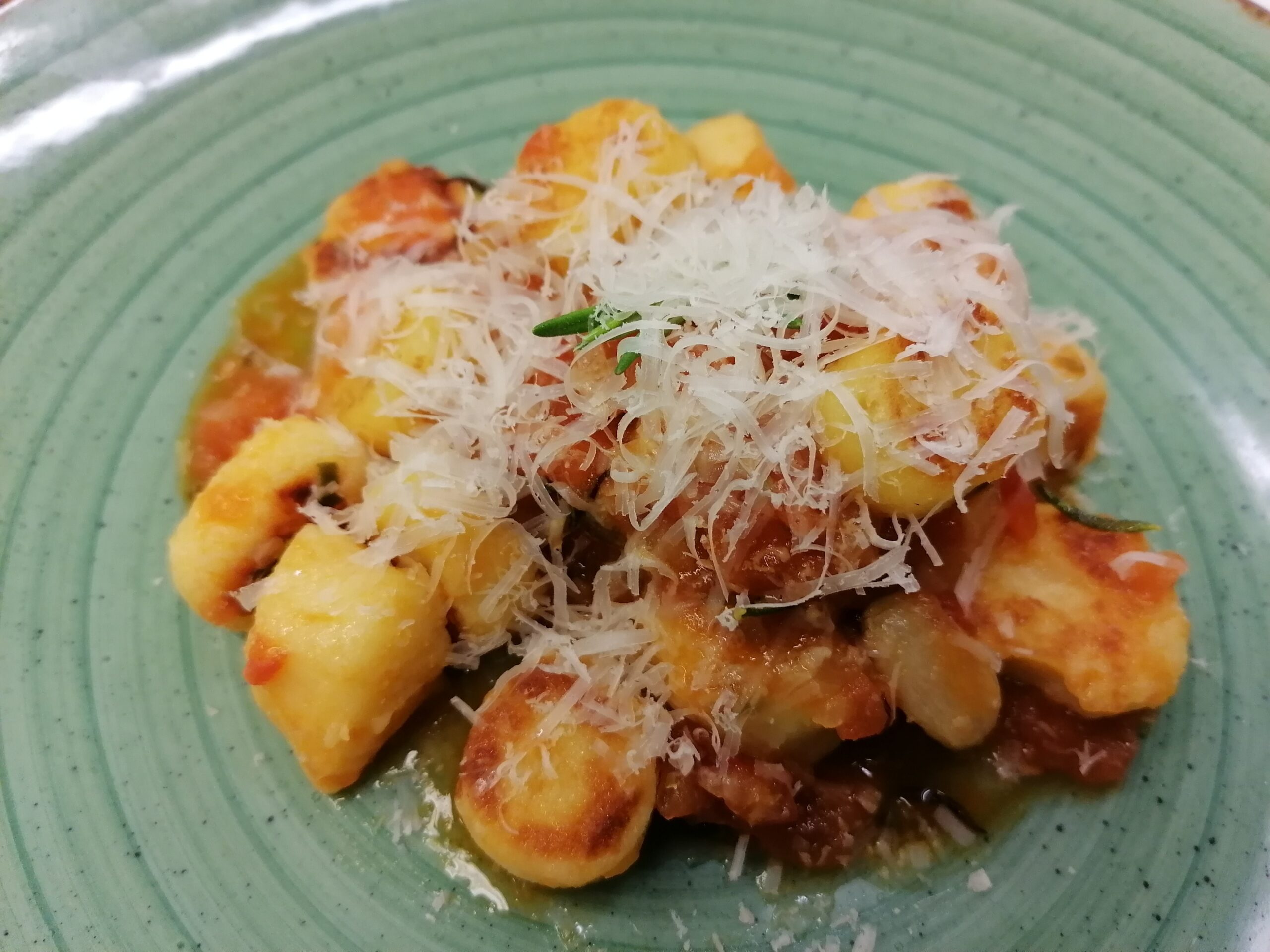
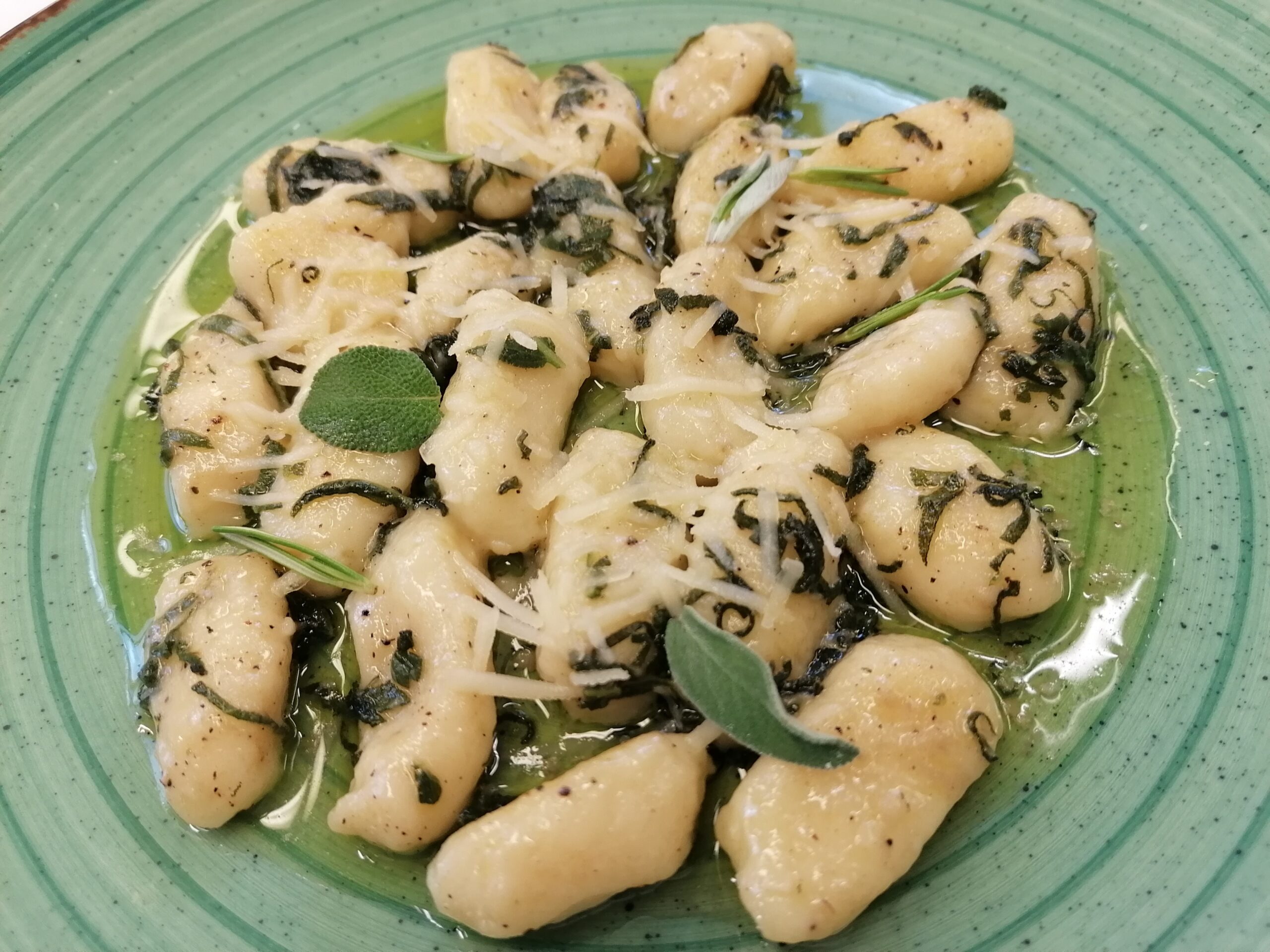
Gnocchi with rosemary tomato ragout and sage butter
Recommended ingredient quantities for 4 servings:
For the gnocchi:
0.6 kg potatoes, type C, e.g., Agria
240 g flour, 00 or pizza flour
2 egg yolks
salt
For the tomato ragout (2 servings):
30 ml olive oil
30 g butter
40 g onion
2 cloves garlic
2 tomatoes, concassé
rosemary
salt, pepper
For frying:
30 ml olive oil
30 g butter
For the sage butter (2 servings):
60 g butter
sage
120 g Parmesan, grated
For garnish: sage leaves, rosemary
The preparation steps:
- Wash the potatoes and boil them in salted water until tender.
- Peel the cooked potatoes, then press them through a potato ricer onto a floured rolling board and spread them out.
- When cooled, add the egg yolks, flour, salt, and knead the dough for the gnocchi.
- Prepare the tomato ragout by sautéing finely chopped onion in olive oil and butter, add crushed garlic, chopped rosemary, peeled and seedless diced tomatoes, season with salt and pepper, and simmer everything with a little water.
- Make the sage butter by melting butter, adding finely chopped sage, and briefly heating the mixture.
- Divide the gnocchi dough into four parts, roll each part into logs on a floured board, cut into 2-3 cm pieces, shape them by hand, and cook in boiling salted water until they rise to the surface.
- Sauté half of the cooked and drained gnocchi in olive oil and butter; put the other half into the sage butter and simmer with a little cooking water.
- Combine the sautéed gnocchi with the tomato ragout and a little cooking water by simmering together.
- When serving, place 2 servings of each type of gnocchi on plates—either on separate plates by type or mixed on four plates—sprinkle with grated Parmesan, and garnish with the herbs.
*
Preview
Skills competitions.
Joyful cooking with Zsolt Berki and Frigyes Vomberg. Zsolt is the Skills cooking competitor with the best Hungarian result to date, and I mentored him. I have worked together with Frici (Frigyes) on many occasions—for example, we were founding members of the Étrend Hungarian Executive Chefs Association, represented Hungary together at a charity event in South Africa, and participated in a professional trip to Italy with some colleagues.
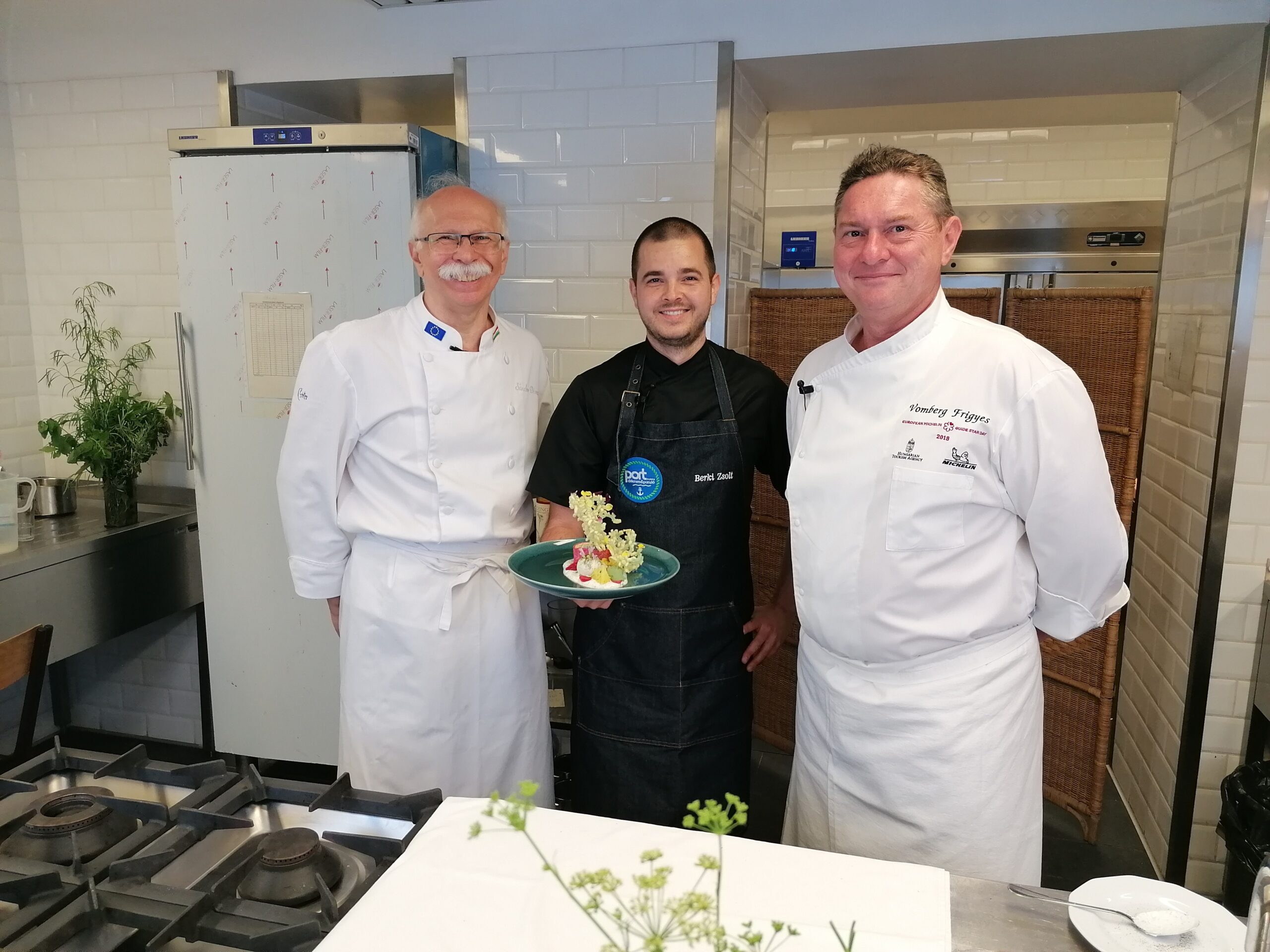
With Zsolt Berki and Frigyes Vomberg
*