Gaining experience in more developed countries 1993-2004
In 1993-94, I participated twice in one-week study visits at Manchester Metropolitan University in Manchester, England. I was already well acquainted with some of the staff members of the Department of Hospitality because we had worked together extensively in Budapest while preparing the English-language training program at KVIK. I felt comfortable for two reasons: first, the colleagues regarded me as a genuine direct collaborator. Second, the studied materials (curricula, course descriptions) showed many similarities to my previous experiences in England and Ireland, upon which we had already built a compatible hospitality training system at KVIK, unique in Hungary.
*
In 1994, in Switzerland, we were guest participants for a week at the world-famous hotel management school, École Hôtelière de Lausanne, along with my colleague Hédi Hidvégi and our then-best student, Róbert Ress. The school’s location, facilities, and educational system impressed us. Their main sponsor was Nestlé, and as a private school, the tuition fees were quite substantial. For four days, we had to prepare lunch for 50 people, so we created a “table d’hôte” menu where guests could choose one starter, one main course, and one dessert. The dishes were as follows: Starters: Gundel salad, Cold mixed appetizer, Goulash and Palóc soup; Main courses: Cod Gundel style, Budapest beef tenderloin, Veal medallions Bakony style; Desserts: Gundel pancake, Máglyarakás (Hungarian bread&butter pudding), Somlói galuska (trifle).
We worked in a large kitchen, assisted by two or three local students. We progressed well with the work, but there were a few interesting moments, such as when I wanted to prepare and serve vegetable side dishes alongside the dumplings for the Bakony medallions, but the head kitchen instructor said that the vegetables were unnecessary because it would make the dish too complicated and the students would not be able to manage the service. Excuse me?
By the way, this instructor was the only one who spoke English, despite the school proudly claiming to teach in three languages (French, English, German).
It was also strange when a student from the other half of the kitchen, from the local group, came over and curiously watched me preparing vegetable decoration for plating, and the instructor loudly told her off and ordered her back to her own group.
Professionally, it was good to see that they already had a blast chiller, into which we casually slid the freshly prepared hot lamb stew base in a large pot on a cart.
There was an almost embarrassing incident when I wanted to mix the prepared ingredients of the Gundel salad in a large bowl with the dressing. Fortunately, before I started mixing it by hand, I asked one of the local students to mix the salad instead. The girl, standing where she was, pulled out a drawer, took out a pair of gloves, and then mixed the salad. So it ended up only being an almost embarrassing situation.
In the evenings, we went for walks in the nearby forest, where the paths were covered with mulch, making walking springy and relaxing. On one occasion, as we left the campus area and headed toward the forest, a smaller but louder group of students kept shouting, “Bravo chef(s)!” and accompanied the impromptu performance with applause.
The students dressed extremely neatly throughout the school grounds, even studying in their rooms in the evenings; the girls wore suits and the boys wore suits and ties. However, on Thursday evenings, they could relax, and everyone enjoyed their freedom wearing jeans and casual tops. In fact, when we were there on a Thursday evening, an American rock band – The Subway Gunman – gave a spectacular concert.
At the Swiss hotel school, considered by many to be the best in the world, it was an honor to hold Hungarian gastronomic days. We ran one of the restaurants at full capacity every day, and the guests were very satisfied, as indicated by the open cheering described earlier.
The school’s technical equipment was impressive. For example, they had a demonstration kitchen in one room, where students sat in tiered rows of benches while the instructor chef worked in the kitchen area above, with mirrors so the students could see everything clearly. The entire school was spotlessly clean, and the students greeted politely and smiled. Enriched with yet another life-lasting experience, we returned to Hungary.
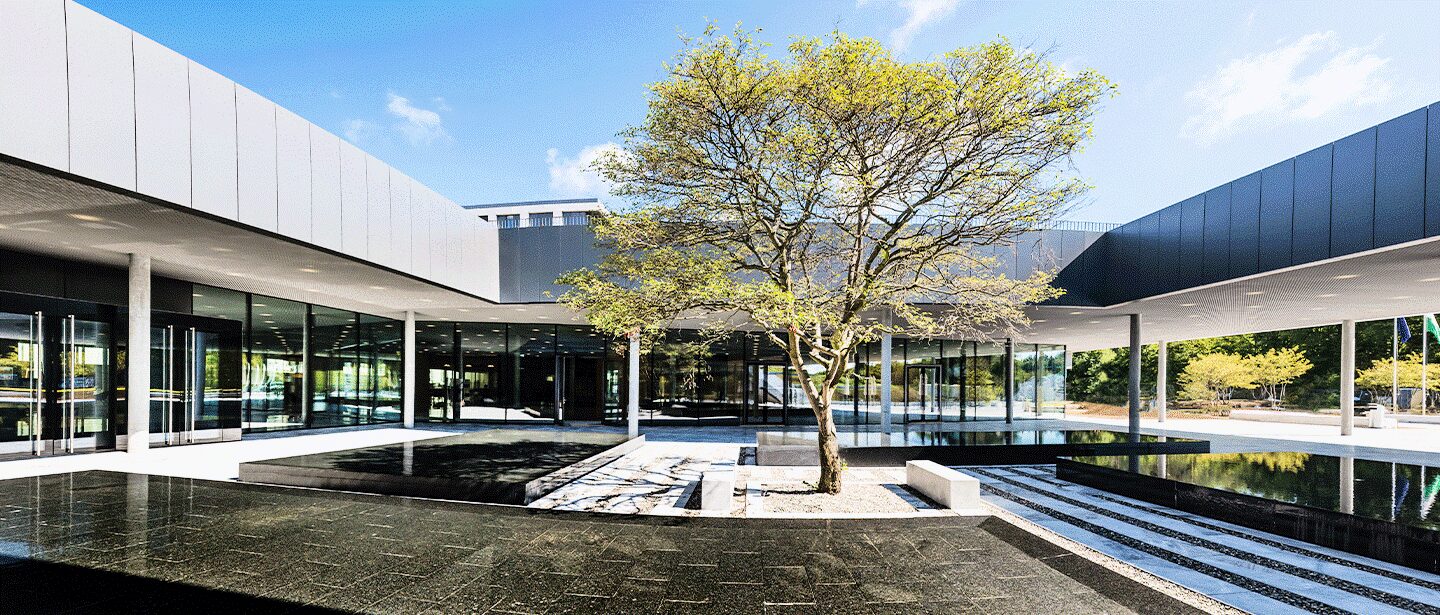
École Hôtelière de Lausanne
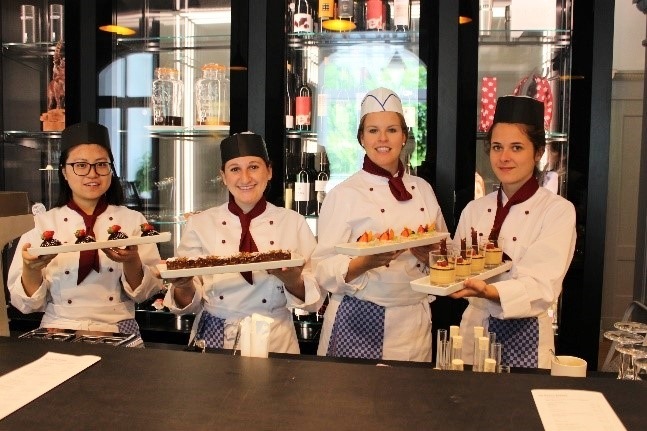
A scene of MBA students
*
In 1995, I once again received a three-month teaching scholarship supported by the British Council, which I spent at Manchester Metropolitan University. It was a familiar place, familiar surroundings, and especially familiar colleagues. My working method was similar to that at Surrey University: studying educational materials, professional books, and journals, and attending classes (both theoretical and practical). It was good to “immerse” myself again in the world of everyday English life, and I especially enjoyed hiking on weekends. I traveled the long distance between Hungary and England in my own Opel Astra, so I was able to explore the wonderful landscapes of the Lake and Peak Districts by car and on foot. I started working at the university in the morning and did office work in John Hobson’s office.
John was the colleague who was already a member of the first Manchester delegation to KVF in the 1990s; they were the ones who offered their help to develop our education. At the time, we did not know that with John we were establishing a professional and friendly relationship that has lasted since the early 1990s. He was also a professional who had entered academia from hospitality, so his knowledge was built on life experience. In addition to his university work, he ran the third-largest restaurant equipment rental company in Manchester.
At ten o’clock, a then-retired colleague came into the office and loudly called me for tea; I said I would come, but he insisted and told me to come now, as work could wait. Next to the kitchens, there was a separate break room where both staff and students could drink coffee or tea. If the students were, for example, in kitchen or restaurant practice, they could stop by with their teacher for a few minutes to have a coffee or tea.
Consistent with my previous experience in England, I saw that almost every basic ingredient was always available, and besides the English cuisine—which many do not consider very famous—it was possible to taste dishes from countless kitchens around the world. The world of English pubs also deserves mention, for example, one in Manchester that offers cheeses alongside beers. Accordingly, with a package fee, various beers and cheeses can be consumed within a time limit. The cheese selection includes blue cheese: Stilton, hard cheeses: Cheddar, Red Leicester, semi-hard cheeses: Gloucester, Sage Derby, soft to semi-soft cheeses: Stinking Bishop, etc. Fresh breads, crackers, and chutneys can be sampled alongside the cheeses and beers. Anyone who has tried this kind of (cheese-beer) pairing can confirm that it is a special dining experience.
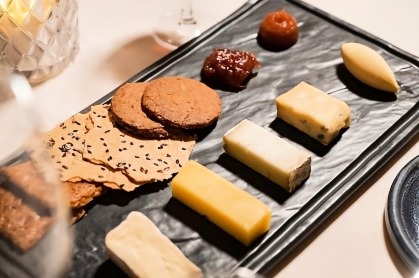
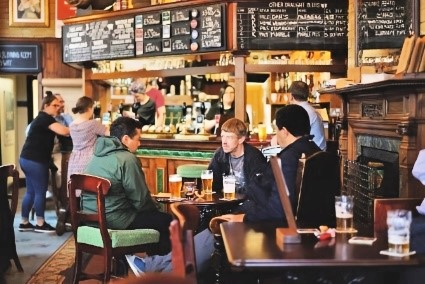
Tasting cheeses and accompaniments with beer in a Manchester pub
I collected materials for every subject taught at KVIF, but the most current was the “Student Project” course, which we introduced in the fall of 1995. My scholarship period was in the spring and early summer, so having the materials available for the start of the school year was extremely useful.
Just as in Spain, after my scholarship ended in England, I traveled around England with my family. We drove up to Scotland, where I showed them the Lake and Peak Districts, which I was already relatively familiar with. We took a ferry to Ireland, where Jim Bowe took us to a very old pub that had beaten-earth floors in its rooms. Returning to England, we drove south to Cornwall and finally ended up in Hastings. From there, my wife and two daughters went to London and then flew to Budapest. I set off by car at dawn toward Dover, then took a ferry to France, and after passing through Belgium, Luxembourg, Germany, and Austria, I arrived in Budapest at dawn the next day after a 24-hour journey with several stops.
*
Between 1993 and 1997, KVIF participated in the ECA (European Catering Association) “The Student of the Year” competition, where my colleague György Györe and I represented Hungary along with the two best students of the given year group. The competition was held in Maastricht (Netherlands) in 1993, Stockholm (Sweden) in 1994, London (England) in 1995, and Plöermel (France) in 1997. Two tasks had to be completed: one was a theoretical gastronomy test, and the other was a freely chosen presentation in which each team had to introduce the gastronomy of their own country in a few minutes. At the Maastricht competition, eight countries participated alongside us (England, Denmark, France, Netherlands, Ireland, Switzerland, Sweden). We won the trophies by winning both competition categories. The Tourism professional journal also reported on this competition (1993/13, issue 414). In the following years, the number of teams increased, and even the USA joined the competition. However, we continued to win the subsequent competitions as well.
We took our preparation for the competition seriously. Four of us brainstormed the presentation (for the Maastricht competition, the two students: Beáta Pető and Ferenc Dobos, and the two instructors: György Györe and myself), while we also practiced extensively for the test. Although the organizers asked me to provide questions for the test, I did not reveal the answers to our current students; instead, I had them review a large volume of thorough professional material to ensure they had real knowledge. Of course, the questions I submitted were included in the professional material. Week by week, we discussed their progress in theoretical preparation, and they also practiced the presentation.
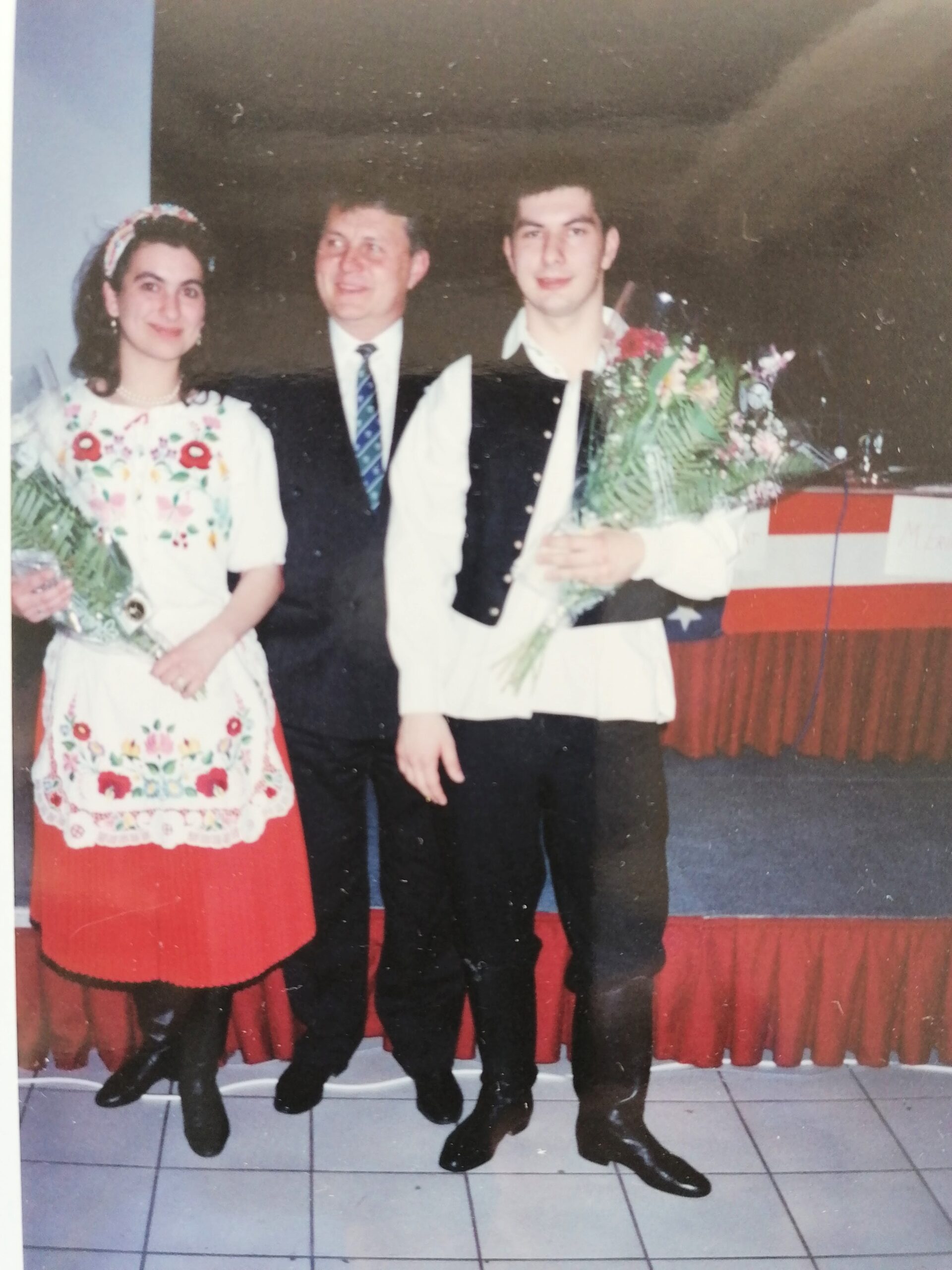
Beáta Pető, Dr. László Csizmadia, and Ferenc Dobos after the award ceremony of the ECA Maastricht competition in 1993
During the competitions, we also learned a great deal. For example, at the gala dinner held at the City Hall in Stockholm, the classic Swedish buffet (Smörgåsbord) food selection was available. Accordingly, they first eat pickled herring, followed by other cold fish dishes such as pickled salmon, smoked eel, fish roe, and salads. The third course consists of cold roasts and meat products, such as rare roast beef and liver pâté, and finally, the fourth course includes hot dishes, for example, some kind of meatballs. More details about this can be found in the cookbook I wrote, “Professional Culinary Knowledge,” which has been published in several editions.
Our selected competitors really performed very well; they spoke excellent English, which was the official language of communication at the competition. We found it strange that the two male members of the USA team at one competition did not talk to anyone and acted very arrogantly, sure of their victory. When we won the competition, they were the only ones who did not congratulate us.
On another occasion, during breakfast, the president of the ECA was telling the secretary general at the next table that he had a bottle of twenty-year-old Bordeaux red wine, which was quite expensive, costing 300 pounds, but he did not know on what occasion he should open and pour it. A funny yet thought-provoking story. There is a difference between problems and problems…
The competition series remains a lifelong memory, not only because of our excellent results but also due to the professional and cultural experiences gained in the four countries.
*
In 1998, I was invited as a jury member to the “Les Saveurs Régionales d’EUROPE” cooking competition in Montpellier, France. At the “European Regional Flavors” competition, Hungary was represented by two people, György László and myself. The competition had four categories: Starters, Fish Dishes, Meat Dishes, and Desserts. I served as a jury member for the latter, evaluating the dessert preparations. It was clear that the top three places could only be achieved with composite plated desserts. It was no use that the Italian contestant presented a beautiful sugar decoration alongside a simple dessert; that was not the winning level. The winning plates featured both a cold and a warm element, as well as fruit or fruit ragout, and, if possible, decoration too.
I immediately applied the experiences gained from the competition to the college dessert selection and during preparations for various competitions upon returning home.
In fact, whenever I saw something professionally progressive anywhere—whether in Hungary or abroad—I almost immediately incorporated it into the college repertoire. Alongside professional competitions and presentations held at KVIF and external guest lecturers/chefs, this activity primarily ensured the constant development of food preparation education.
*
In 1998, I went on a study trip with a few colleagues to Leeuwarden, the Netherlands, to the higher education institution there that teaches hospitality. According to my previous experiences, it was another confirmation for me of realistic hospitality education. Moreover, at this school, even the “canteen” was operated in a self-service restaurant format by the students under the supervision of professional teachers. Of course, we had already done this ourselves between 1992 and 1995, but as I mentioned, we were made unable to continue.
*
In 1998, my colleague György Györe and I went on a one-week study trip to MMU (Manchester Metropolitan University), a place I almost considered a second home. Upon our arrival, Gyuri told me that unfortunately, the pálinka/apricot brandy he had brought as a protective drink for the trip had broken inside his suitcase. He spread out his clothes in the hotel room, where a pleasant brandy scent lingered for days. We consoled ourselves by ordering a “Full English Breakfast” every morning, which included fried bacon, eggs, black pudding, sausage, mushrooms, tomatoes, fried triangular-shaped bread, and baked or fried beans with tomatoes—so our daily energy consumption was well covered.
Gyuri formulated various questions in Hungarian, which I translated into English, and that’s how we communicated with the local colleagues. On one occasion, John Hobson showed us a drink dispenser at a bar, which measured exactly the required 4 cl of alcohol, and only the manager could change the bottles. “It’s a closed and secure system,” John said. To this, Gyuri asked, “But what if the bartender cheats somehow, for example, pours the requested drink from a separate bottle?” At first, John didn’t understand the question. I repeated it, and he replied that if they found out, they would immediately fire the person. John continued that the staff wouldn’t risk it, and wouldn’t even think about it because they know that would be the consequence.
Once, we were guests during a restaurant practice session and watched the students’ activities. We saw a girl trying a bit awkwardly to serve something from a silver tray, so Gyuri jumped up, went over, and with a smile took the tray from her hands and showed her how to hold the food item with a fork and spoon and place it on the guest’s plate, then sat back down with us. John just smiled and said that for them, the main thing is that the guest feels comfortable; professional precision, due to limited teaching time, isn’t enforced so strictly.
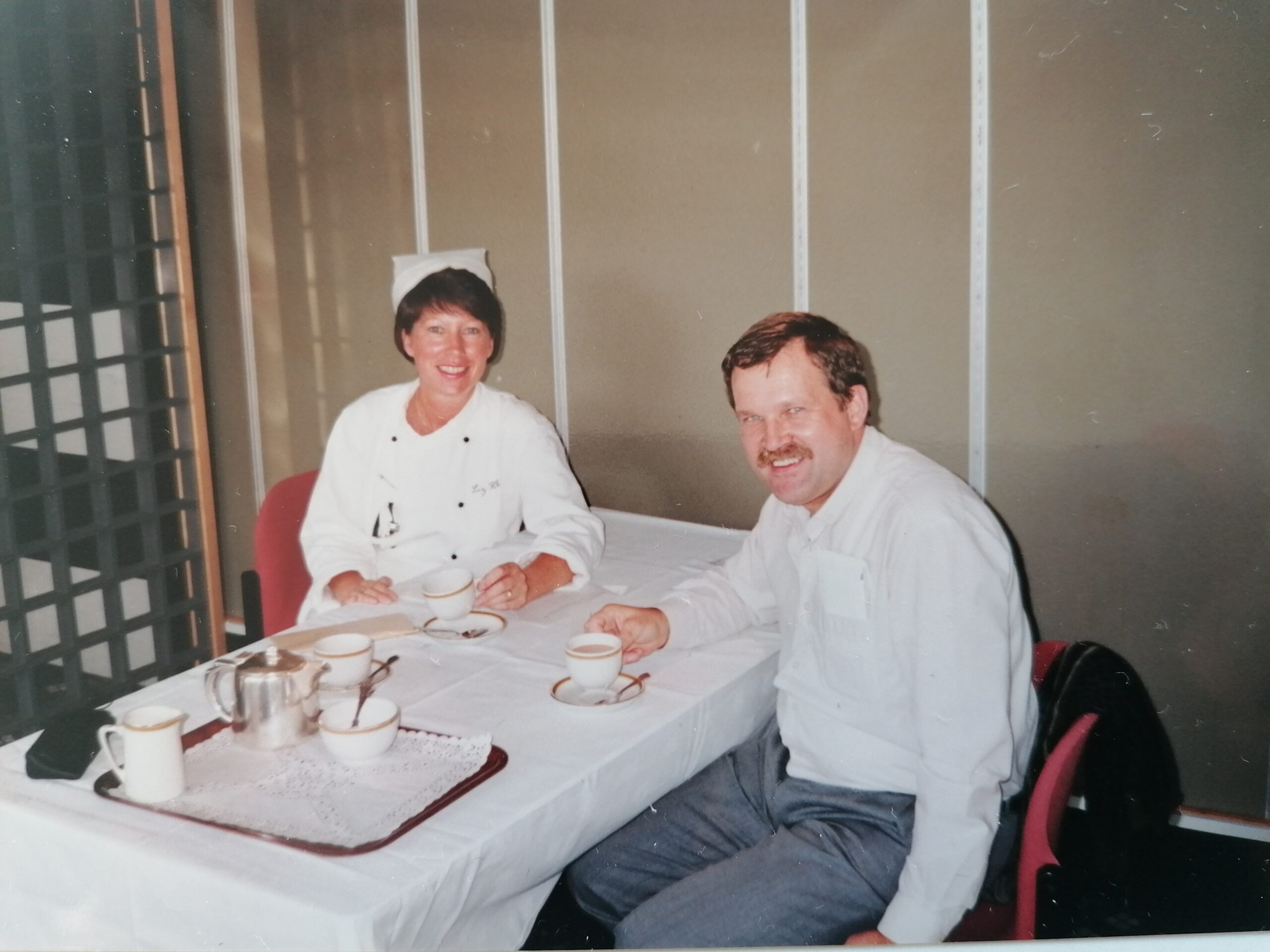
Liz Hill and György Györe
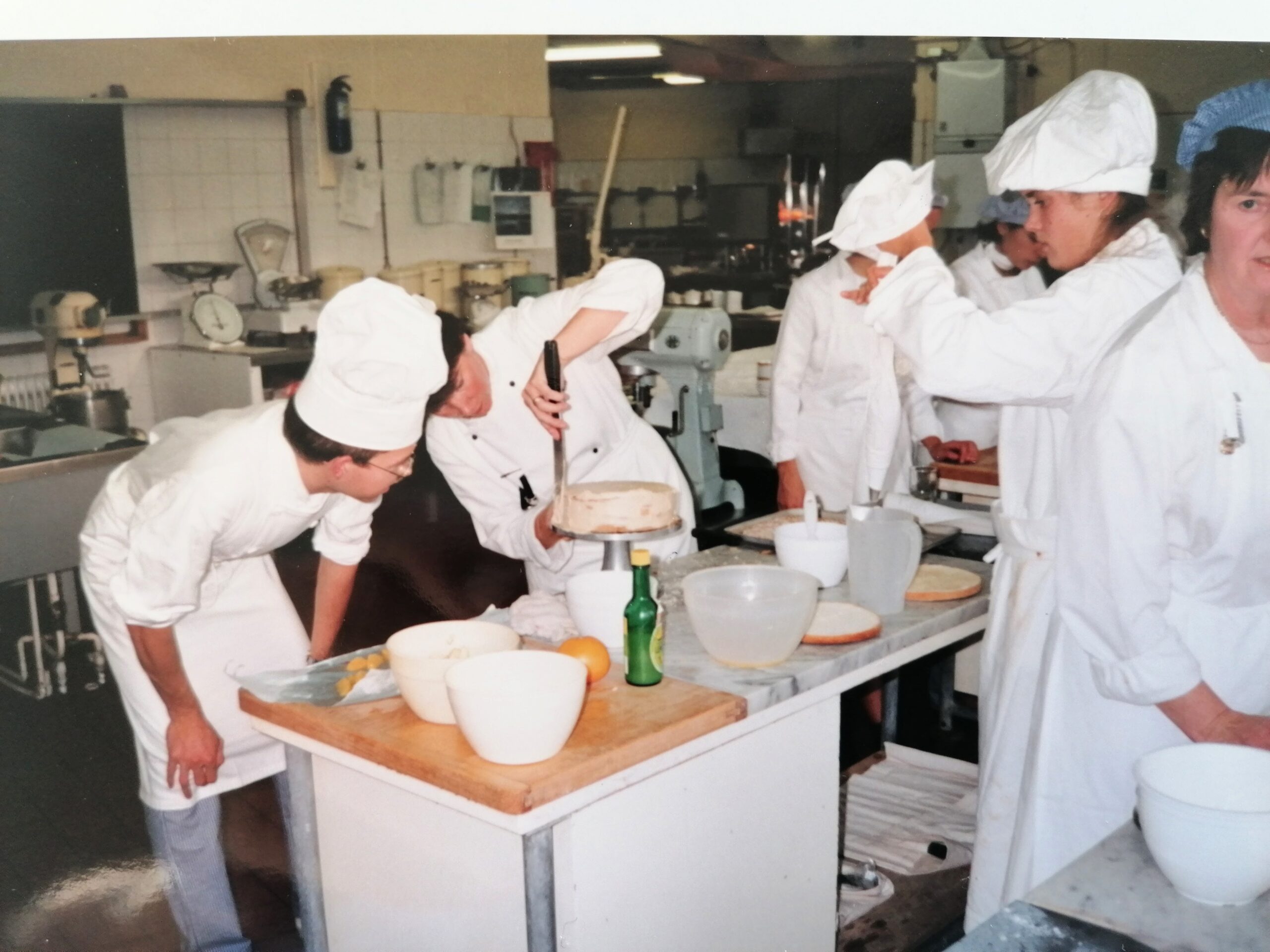
Practice in the training kitchen at MMU in 1998
*
In 1998, we were invited to the Business School, a hospitality higher education institution in La Rochelle, France. This was part of an exchange program between schools, during which the French partners first visited us at KVIF and prepared authentic dishes for nearly 100 guests. Procuring some ingredients caused a few problems because we were unable to provide certain raw materials, such as fresh pig’s blood, to the French chef-teacher, Chef Mijon. He was not pleased and wandered around with an even more serious expression. Among ourselves, we nicknamed the grumpy gentleman “demijohn.”
I traveled to France with two colleagues, dr. András Csizmadia and Gábor Endrődy. We had to prepare a lunch for about 50 guests. The afternoon before the event, there was an opportunity to carry out some preparatory tasks. We agreed with the head chef-instructor, Mr. Mijon—who had also been to their event in Budapest—that we would start and continue work at 7 a.m. In the morning, nobody was in the kitchen, and we couldn’t get the stove started because it worked together with the ventilation system, but our hosts had not shown us how to start it. Of course, we managed to find someone in the building who helped us solve this small “little” problem. While the preparation and cooking of the dishes was in full swing, Mr. Mijon appeared, walked around the kitchen, and started to “tidy up.” Without asking, he threw away some of the prepared ingredients meant for lunch. In his great eagerness, he even stuck his finger into a pot to taste it—thinking it was some kind of stock—only to find out it was actually dishwater. He smiled at the comic situation.
The lunch went well despite the difficulties, and Gábor, who was helping in the restaurant, told me to come out because a guest wanted to speak with me. The gentleman thanked me very much for the delicious food and immediately invited me, along with Gábor, to his home as guests. He explained that during World War II, fate had brought him together with a Hungarian soldier, they had become good friends, and he wanted to repay this through us. Finally, he pointed to the signet ring on his finger, which he had received from that soldier and still wears to this day.
First, he took us to an oyster farm where we could taste freshly harvested oysters “a la nature” to our heart’s content. I mentioned that I preferred oysters as a cooked dish, so he told the owner that we would take oysters for dinner for the three of us. Our host prepared gratinated oysters, and it turned out that he was a prominent member of the Chaîne des Rôtisseurs association. From the cellar fridge in the house, he brought out bottle after bottle and offered an excellent quality rosé champagne, which truly was a worthy companion to the wonderful dish. The oysters were returned to their shells, mixed with tomato concassé (tomato cubes without skin and seeds), finely chopped shallots, and green herbs, crowned with grated Comté cheese, then baked together.
Almost immediately, a good friendship developed between us. The hospitality was genuinely warm not only because of the food and drinks offered but also because the gentleman was a person of great character. As it turned out, we even had a mutual acquaintance through the Chaîne association, which operates in nearly a hundred countries worldwide, since by then I had already participated in organizing two or three world competitions in Hungary. The funniest scene was when he sat his dog down, placed a morsel above its nose, and delivered a monologue to it, then, dramatically signaling the end of his speech, the dog flipped up the morsel, caught it, and ate it. We laughed so much at this that he repeated the performance several times.
The French organizers went all out and arranged excellent professional programs for us. For example, they took us to an event where there was an oyster and champagne tasting in front of the building, and in the restaurant, both white and red wines were offered with the main course, saying there was no fixed rule about what wine the guest should drink—rather, they could drink whatever they liked.
Another dining-related story happened when we had lunch and dinner at a family-run restaurant. During dinner, the chef family member came out to take our order and, knowing what each of our party of ten had eaten for lunch, recommended accordingly. When one French lady was thoughtfully deciding out loud what to choose, the chef said, “Don’t choose the sole because you had that for lunch; rather, take the duck roast, which is orange-flavored and divine.” That professionalism really impressed me!
The organizers also took us to the city of Bordeaux and to some châteaux in the Bordeaux wine region, such as Château Margaux, where we could taste some of the finest wines and learn that on each vine, only a limited number of grapes are left to ensure excellent quality. András could fully indulge himself, as he is a great expert on wines.
Our next study trip took us to the city of Cognac and to one of its cognac producers. Perhaps less well known in Hungary is Cognac Frapin, which produces premium-quality spirits as a family business. They showed us the cellars and explained that their taxation works in such a way that tax inspectors fly over in a helicopter to inspect and photograph the black surface on the roofs of their buildings, which is a mold fungus, and from this they calculate the amount of cognac stored inside the warehouse, based on which they determine the tax to be paid. At the end of our tour, they took us to a room similar to a laboratory, where alongside the flasks, a considerable number of Cognac bottles were displayed. By then we suspected a tasting was coming—and indeed it did. However, our breath was taken away when the host gentleman took two mini bottles of Tokaji aszú essence, each a hundred years old, out of an old dresser and quickly opened them! He said that since we were gathered so nicely, we should taste them. It was an extraordinary experience!
Next, we visited another château owned by the Cointreau family, where the hosts invited us for lunch. After the impressive building tour, they served a truffle-based menu paired with carefully selected wines, in which the noble ingredient was used at least three times, for example in the main course, a tournedos Rossini variation.
The market in La Rochelle was a delight to explore. The shelves were laden with beautiful goods, everything fresh and “smiling.” There was no product type that could not be found, of course all of excellent quality. Returning to the partner school, when I told Mr. Mijon all this, he proudly straightened up, but as a joke—remembering how upset he had been about the lack of fresh pig’s blood in Budapest—I remarked that unfortunately there were no truffles. He replied that it was simply out of season. Indeed, the Périgord truffle was no longer in season, but as I described at the earlier lunch, non-Périgord truffles had been served, which could have been found at the market. What started as a joke turned into a professional question.
In La Rochelle—where I encountered an unlimited variety of fresh fish and seafood—I thought that upon returning home to KVIF, I would expand the modest selection of fish in the Food Preparation course curriculum and include a wide range of sea fish. Thus, the repertoire came to include monkfish, the huge flatfish, plaice, sole, turbot, cod, and so on. This was a qualitative leap in presenting and processing fish and also positively impacted the standard of education. My step was somewhat risky, as those monitoring our budget with eagle eyes could have noticed the increased costs. Fortunately, this did not happen.
*
Around 1999, an event showcasing the gastronomy of several countries was held at the Hotel and Tourism College in Estoril, Portugal, where we also participated as representatives of KVIF. In the Hungarian team, my colleague György Györe worked with me in the kitchen, while Department Head József Csizmár assisted us in bringing the beers, consumed as a protective drink, into the kitchen. This collaboration and the international experience greatly enriched our performance there.
*
In 2000, I was at Laurea University near Helsinki through the KVIF partnership to prepare Hungarian dishes involving the hospitality students there. It was a joy to watch how, among other things, the reindeer stew was devoured by the university students and their teachers. For them, it was a refreshing change to taste the rustic color and flavor compared to the more restrained seasoning they were accustomed to in their everyday meals. In the kitchen, about ten servings remained in the tilt skillet, which were skillfully packed, paid for at the staff price, and taken home. Unfortunately, this did not work that way with us. I did not allow leftover food from the teaching kitchen to be taken home, saying that food from a hospitality business is not taken home, especially not by the boss—who you will be, I told the students—because then the staff would do the same.
*
In 2001, the head of the Hungarian-Italian company Farnetani, Béla Kovács, invited several chef colleagues on a professional tour in Parma. The team included, among others, Ferenc Kovács, Zsolt Both, Péter Buday, Dénes Nemeskövi, Attila Bicsár, Frigyes Vomberg, Dénes Sándor, and the media was represented by Miklós Niszkács and Attila Mészáros.
Thus, we visited a manufactory where Parma ham was produced and stored, where the hams originally cured outdoors were now aged indoors at appropriate temperature and humidity with ensured air circulation for months. They showed us the crowned “PARMA” trademark stamp on the ham. The prosciutto di Parma deli quality—its aroma, taste, and texture—is now well known in our country as well.
We got insight into the secrets of mortadella production, for example, in the factory we visited, where the pork was always ground with an electric meat grinder using one finer perforated disc than the previous. Afterward, mosaic materials, seasonings, and spices were added.
We also visited a premium ready-meal manufacturing company where the raw materials were characteristic, daily-used Italian food items such as porcini mushrooms, asparagus, truffles, Parmesan, pecorino, etc., found in risotto or tortellini.
Very memorable and instructive was learning about the traditional balsamic vinegar production of the Malpighi family in Modena, with aging of at least 12 years. The grapes used come from the family’s Modena estates. The gently crushed grapes are cooked in open vessels over an open fire, then the filtered must is used to fill the largest barrel. The barrels are not sealed but only covered with gauze to allow evaporation of the vinegar. The six barrels of different sizes are made of different types of wood, such as oak, cherry, chestnut. The smallest barrel’s evaporated vinegar is replenished with vinegar from the next larger barrel. Following this order, fresh must is always added to the largest barrel to replace evaporated liquid. The quality and price of traditional balsamic vinegar aged 12 years or even several decades is remarkable. After tasting samples from the “youngest” 12-year-old to 25, 50, and 70 years old in a plastic demitasse spoon, we were increasingly amazed by the flavor, aroma, and texture. The dark brown, thick liquid shows a harmony of scent and taste, backed by good quality grapes, the must made from them, various wood aromas, and the aging time, which concentrates the balsamic vinegar more and more.
Next, we visited a restaurant where every dish contained some type of Malpighi balsamic vinegar. This does not cause any problem with salads, but with fish dishes careful selection of the vinegar is needed, it is not difficult to imagine a few drops of balsamic vinegar in the sauce of a beef roast, but with desserts, the possibilities of use have to be considered a bit more. In a restaurant specializing in balsamic vinegar, they paired the different character balsamic vinegars excellently with the dishes.
We were guests at the Borgo Conventi winery, where we attended a festive dinner. Naturally, the company’s own wines were offered alongside the dishes. The hospitality was splendid, and we had a very good time. At the end of the dinner, the owner asked if there were any comments regarding the food and drinks. Frici Vomberg made a substantive remark, perhaps about the sauvignon and chardonnay, suggesting that it would have been better to swap them because the acidity of the sauvignon overwhelmed the flavor of the scampi. The host considered this and said, “You are right.” The menu of the event is shown here.
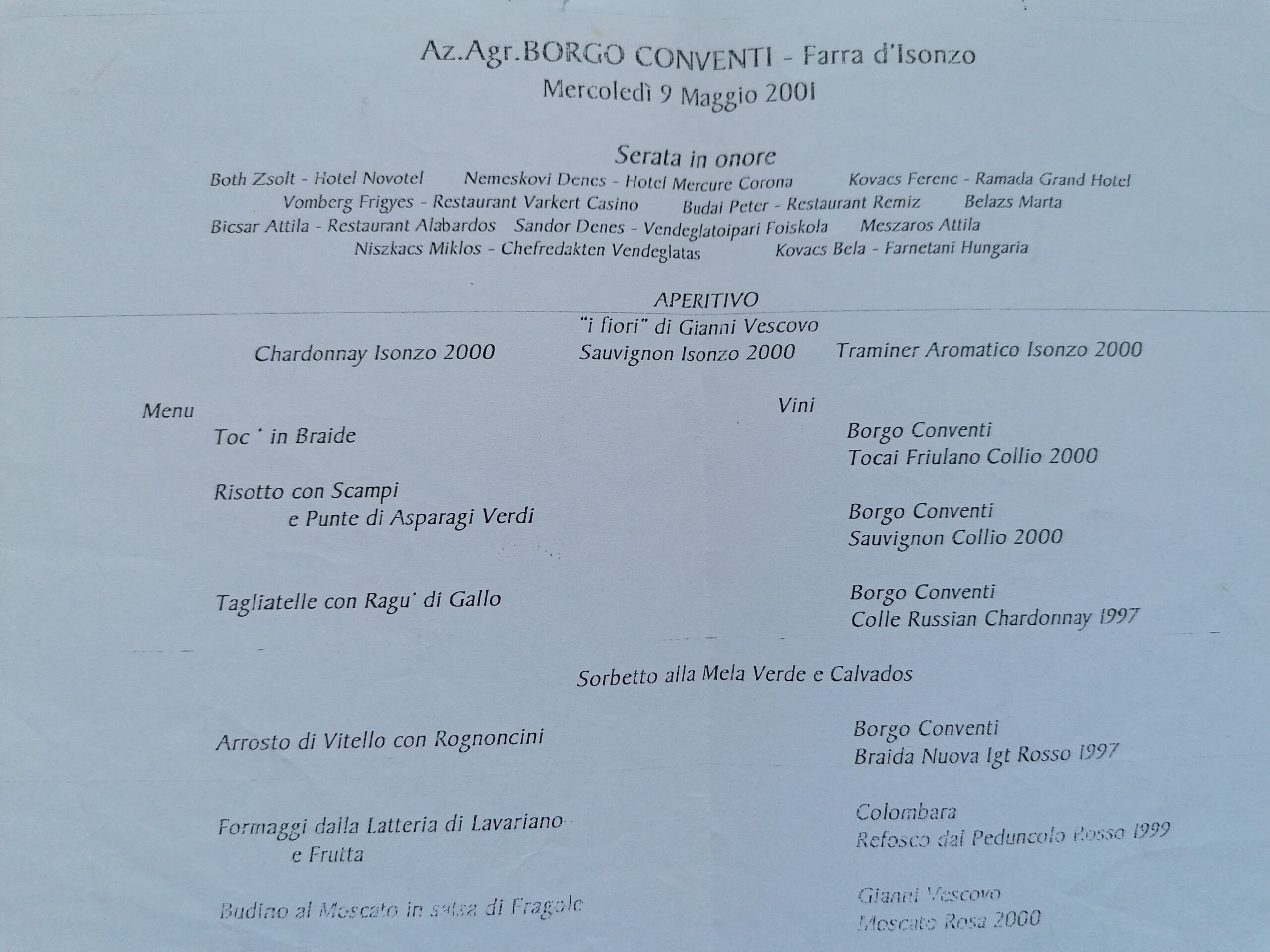
Menu of Borgo Conventi 2001, Farra d’Isonzo
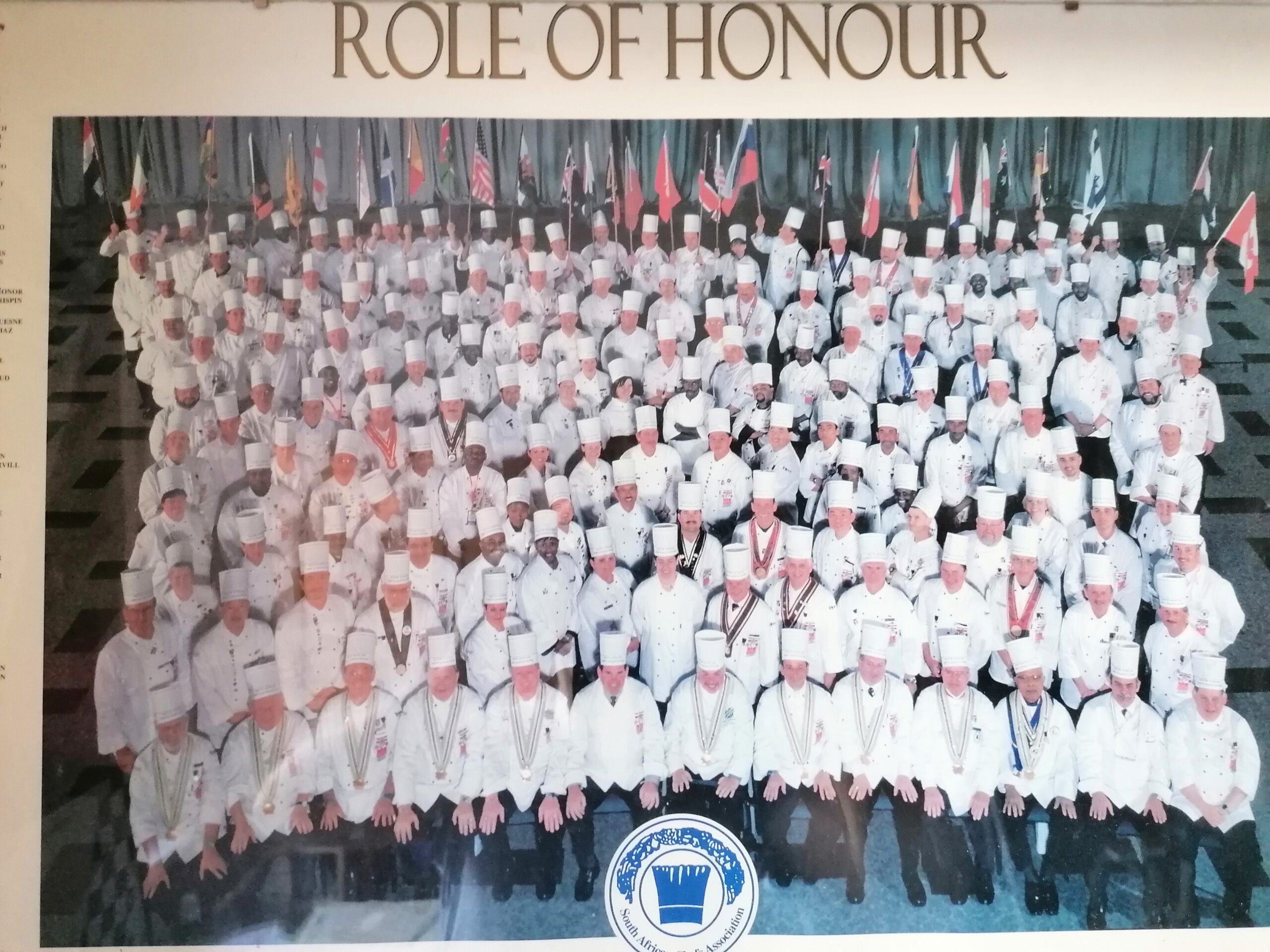
In 2003, Dr. Bill Gallagher, president of the South African Chefs Association, invited the global chef community to a large-scale charity event in Johannesburg. I asked Frigyes Vomberg to represent Hungary with me—at that time, I was the founding president of Étrend, the Hungarian Executive Chefs Association (I will write about the Hungarian Executive Chefs Association in a separate chapter), and Frici was a member of the association. A total of 150 chefs from 33 countries participated in the extraordinary one-week campaign to raise food for poor and orphaned children.
In addition to raising money for the children, we took part in food distributions and cooking demonstrations. During the food distributions, we had to serve ready-made meals to the needy children. On one occasion, we visited Soweto, the “tin town” — dressed in white chef jackets, tall white chef hats, and black trousers, representing the cooking profession — where people live in terrible conditions. Large families lived in cramped, dirt-floored shacks. The only concrete area was in front of the local fire station, where we served the one-pot meal to children patiently standing in a single-file line, who, despite the conditions, managed to smile. Once they received the food, they sat down on the ground and mostly started eating with their hands. On another occasion, as part of a zoo program, we distributed various meals to the children.
Our accommodation was at an Intercontinental Hotel relatively far from the center of Johannesburg, so a minibus was provided for our transfers. The driver, Steve, a black young man, was always smiling, and whenever we asked him for anything, for example if we wanted to visit somewhere during our free time, he would say: “Not a problem.”
At one of the cooking demonstrations held in a shopping mall, I prepared a milk semolina-based plated dessert. The inspiration came from a visit to a vocational school where they showed us local dishes, one of which was popularly called “pap,” made from cornmeal or corn grits boiled in hot salted water. I thought it would be interesting to introduce them to milk semolina, which is consumed as a dessert in our country. On the morning we left for the event, I “borrowed” (of course permanently) some beautiful marigolds from the hotel’s garden to decorate the dessert. At the mall, I prepared and plated the dish, and it was offered for tasting. Someone from the audience took the microphone to speak. The gentleman said emotionally that milk semolina was his favorite childhood dessert, but he hadn’t eaten it since 1956, when he came to South Africa. Therefore, he was very grateful to be able to eat milk semolina again after several decades.
At the closing event, a gala dinner where we were guests, the proceeds from the entrance tickets were also used for the designated charity, and there was even an auction, the revenue of which also went to help the children. At the end of the evening, we greeted with great applause the announcement that during the week, one million rand was raised, which corresponded to 40 million forints. With this amount, it was possible to provide several hundred needy children with one hot meal a day for an entire year.
During the event, the 150 chefs were invited to a group photo in a separate room, where a photographer carefully arranged the participants on a stand to ensure everyone was clearly visible, then took several pictures. The next morning, we were told that the photo session had to be repeated because none of the pictures had turned out. We thought it was a joke, but it wasn’t; we gathered again, and then a different photographer actually took a photo of us.
150 chefs from 33 countries in South Africa in 2003 at a charity event
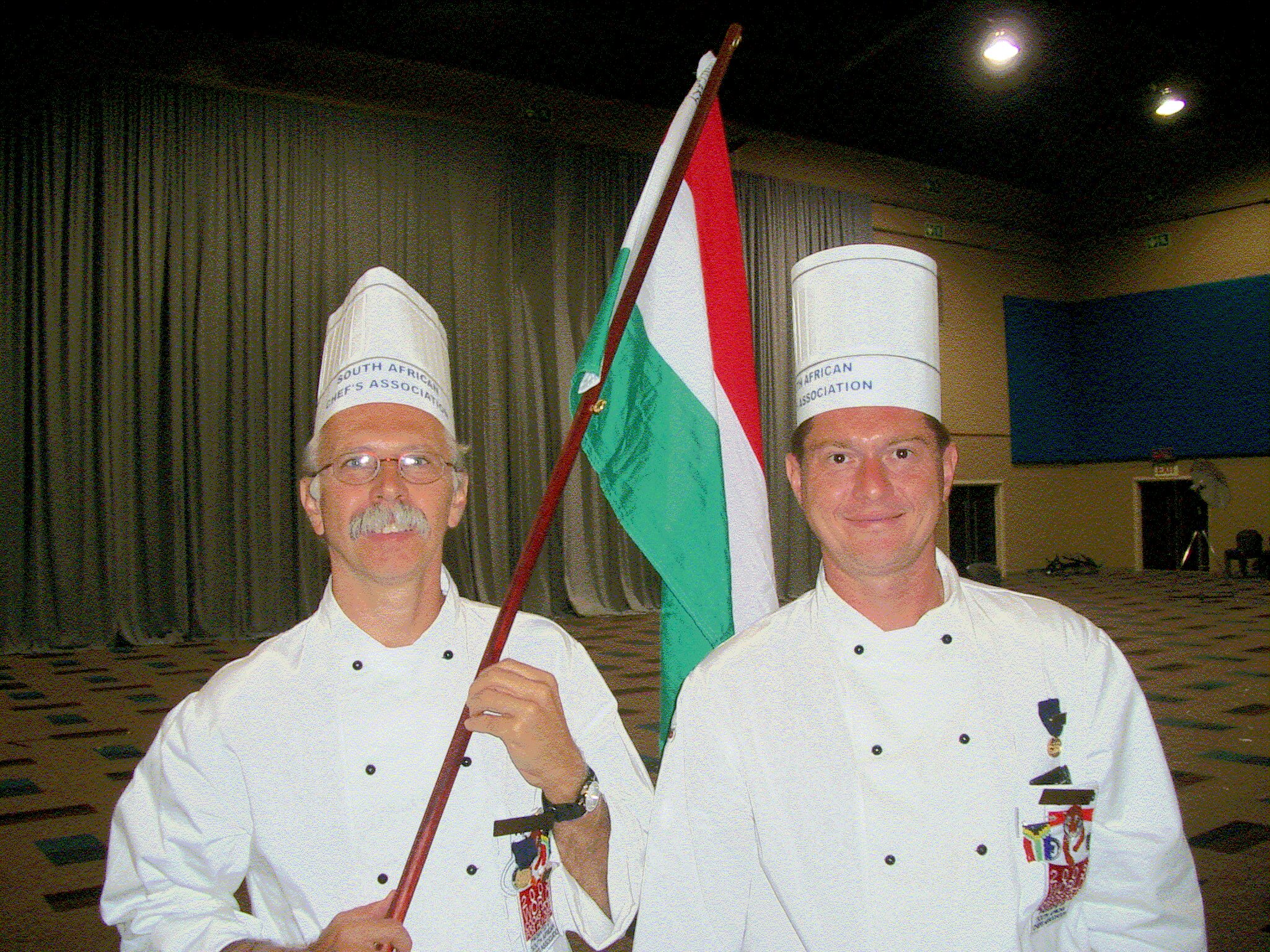
At the gala dinner photoshoot with Frici Vomberg
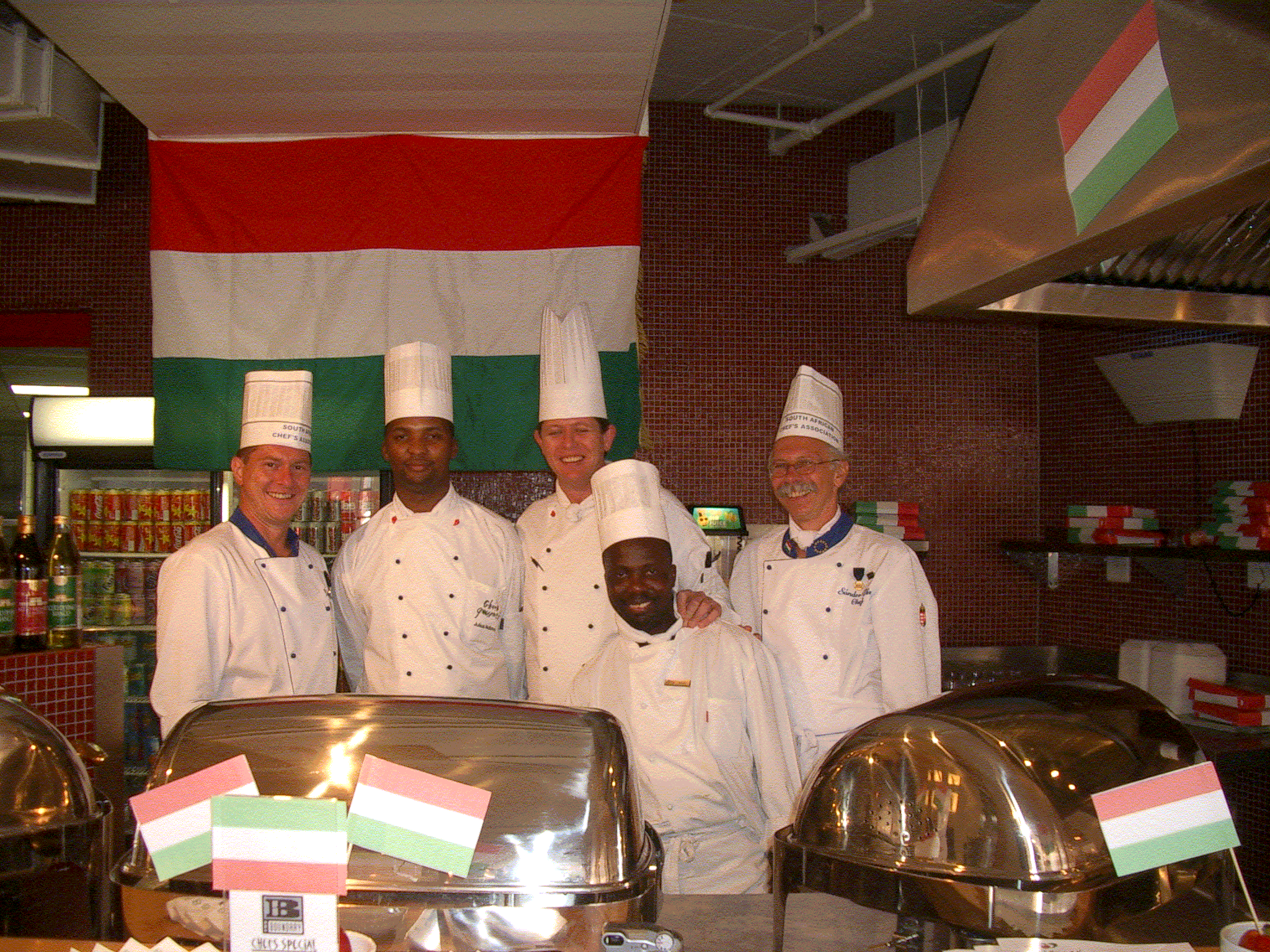
At one of the events with the local team
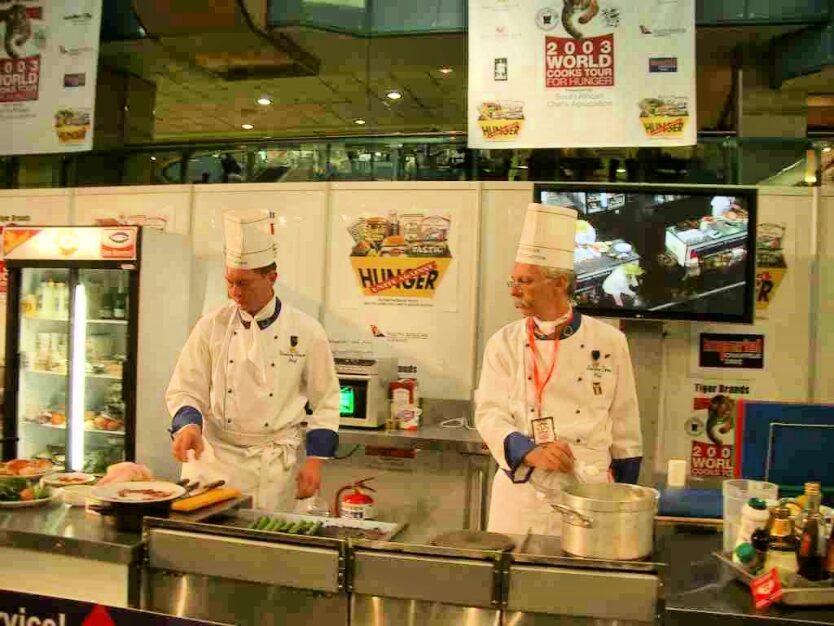
At a food demonstration with Frigyes Vomberg
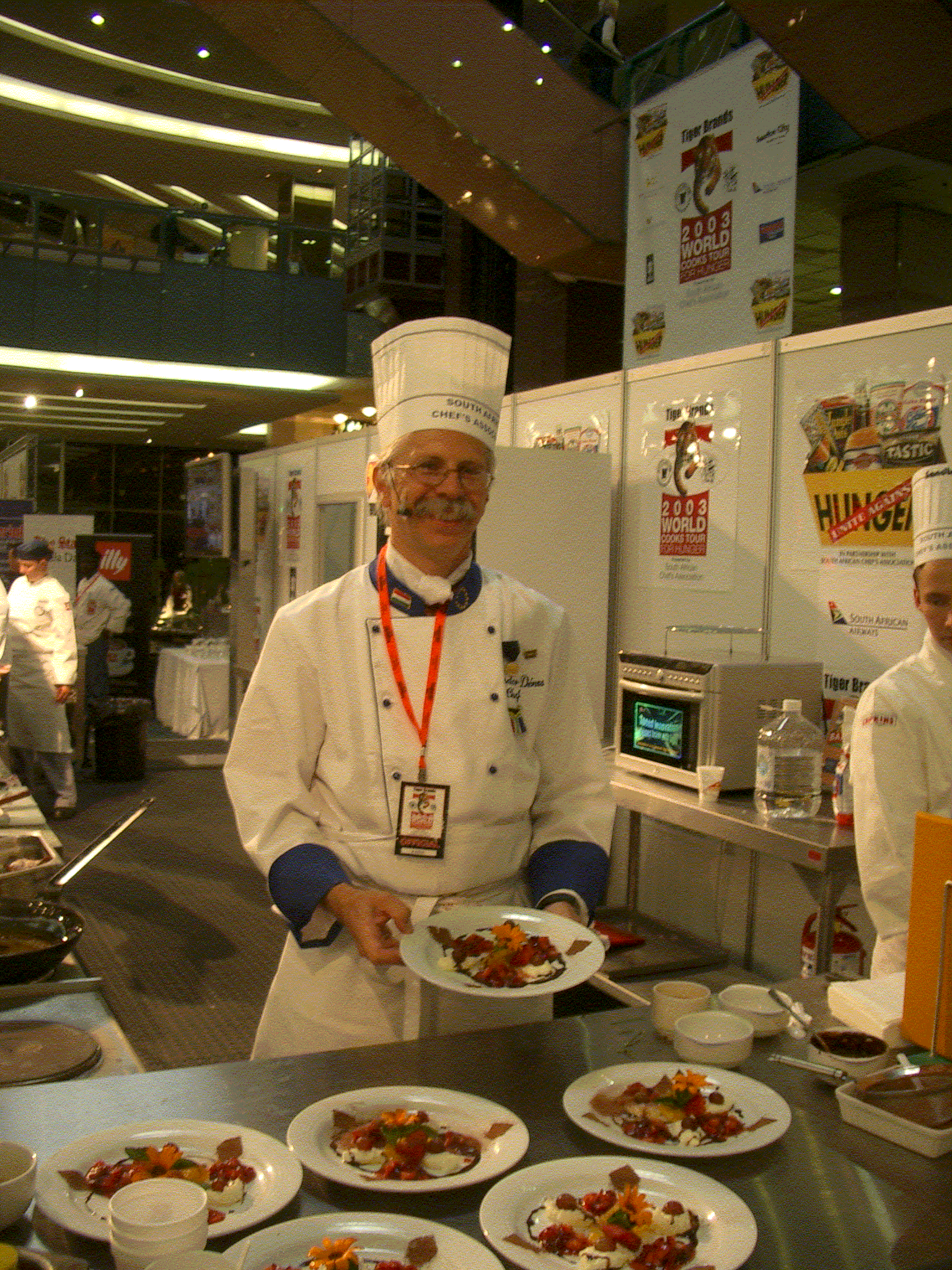
Semolina pudding presented
I had a few shared stories with Frici Vomberg at official events and also outside of them. Frici created really great dishes at the demonstrations—for example, one of his dishes was a medium-rare pork tenderloin cooked to perfection. The audience kept asking how he made it, especially since he served it with mini fried dough snacks.
At the back garden of our hotel, there was a pool where we went down to swim a bit. The staff working in the garden were almost literally “frozen” when they saw us, and the lifeguard warned us that the water was cold and not suitable for swimming. However, we cheerfully ignored the warnings and swam a little in the approximately 20-degree Celsius water.
On the flight home, I brought up to Frici that, inspired by our South African experiences, I had an idea about donating leftover but still 100% consumable food from Hungarian events to the poor. We pondered this topic at length during the trip. In Hungary, I had serious discussions with Miklós Vecsei, who at the time was the ministerial commissioner for homelessness and vice president of the Maltese Charity Service, about the possible implementation. However, in the end, due to potential health risks, the idea was not realized at that time.
*
In 2004, we were in the city of Gdynia, Poland, invited by the Polish Chefs Association—István Pálvölgyi, István Varga, and myself—representing the Hungarian Executive Chefs Association at a “Black Cod Catching and Cooking” competition. On the first day of the competition, fishing boats took us about 40 km offshore, where they located the cod with radar, and then we started fishing. The hook had to be lowered to 100 meters. Bites came one after another, and a 1 m³ tank on the boat’s deck quickly filled halfway. At that point, they lifted the anchor and navigated the boat to another location. After fishing again and filling the tank with fish, we headed back to the harbor. During the nearly three-hour trip, one sailor stood and gutted and washed all the fish in midair. At the harbor, the fish were professionally iced and immediately transported to a nearby hotel where we had the opportunity to carry out further preparatory work.
The next morning, the fish preparation competition began. Cooking and baking stations were set up at the Gdynia harbor, where we started to prepare our somewhat gourmet-style fish dish. We made fish broth, steamed fish rolls, an extract from the fish broth which was flavored with chives into a hollandaise sauce, and served it with various colored vegetable garnishes and mashed potatoes. We did not achieve a high placement but received praise for the stylish design of the dish. The winning dishes in the competition were hearty meals, featuring a grilled fish fillet hanging off the plate, served with eggplant and baked potatoes in their skins.
*
In 2004, we participated in the WACS (World Association of Chefs Societies) world congress hot kitchen junior chef competition in Dublin. The three-member team consisted of Attila Nagy, József Székely, and Attila Tóth. I was the team captain. During the preparation, we involved kitchen and pastry chefs, for example, Mária Luszthig helped with making the sugar cylinder, and we put together a three-course menu—starter, main course, plated dessert. We practiced cooking the menu piece by piece, then at the rehearsal held at the college, we prepared the menu for 20 guests, and it went well. Everything was completed on time, as planned and practiced. However, the competition was different. It started with a surprise when every participant was given a “Global” knife set as a gift, with which the young chefs began working. Within minutes, all three of our contestants cut their hands. This pushed them out of their comfort zones, and they consecutively ruined the dishes. Of course, there was also an incident where someone adjusted the oven set for the salmon fillet, causing it to be overcooked. In the end, we finished the competition with a diploma.
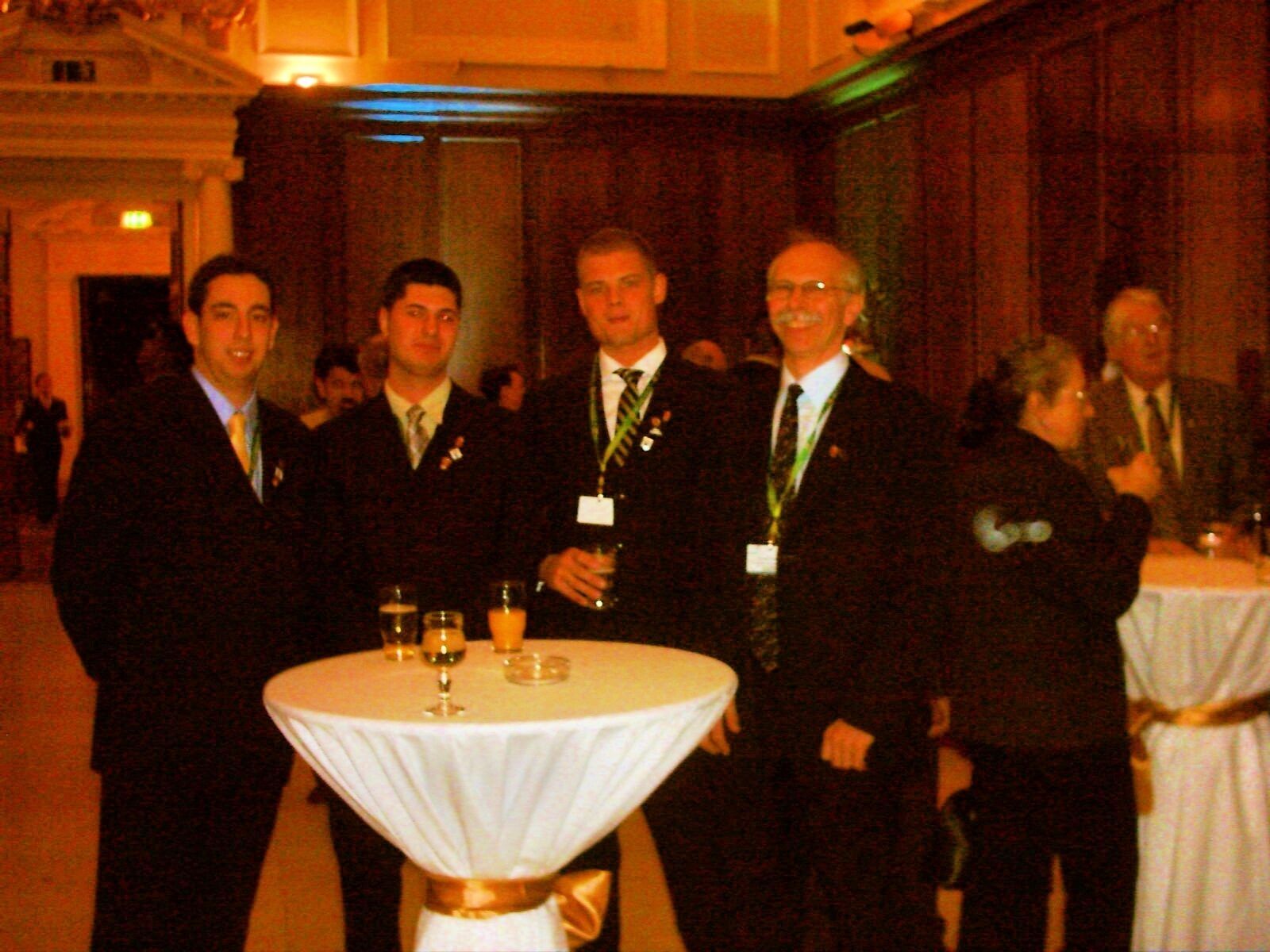
With József Székely, Attila Nagy, and Attila Tóth, Dublin 2004
I also participated in the WACS congress held in parallel with the competition, where the Hungarian Executive Chefs Association was granted WACS membership by vote. This was important for the association because until then, only the Hungarian National Gastronomic Association had membership in our country.
I gave a presentation at the congress titled “Gastronomic Museums of Nations,” which was a grand project plan with a significant impact on the world’s gastronomy. Its essence was that, on one hand, various documents, books, objects, etc., related to gastronomy would be preserved and exhibited for future generations in a multifunctional museum. On the other hand, authentic restaurants of different nations would be established in an open-air museum in the countryside, where the characteristic dishes of the given countries would be prepared for guests.
*
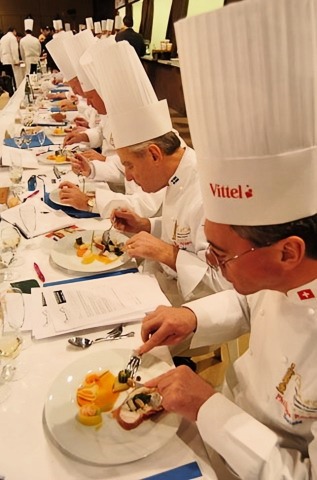
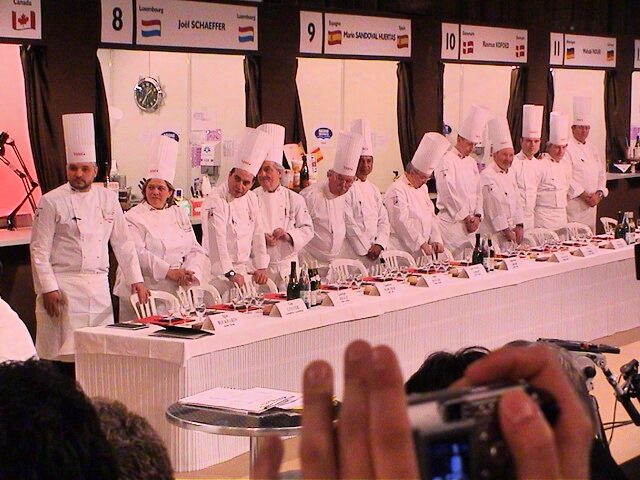
In 2003 and 2005, representing the Hungarian Executive Chefs Association, I was in Lyon at the Bocuse d’Or world chef competition. My goal was to involve Hungary in this competition series. At the first competition, I tried to observe everything, and to do so, I walked around everywhere except the competition kitchens wearing a chef’s coat. I saw up close the 12 kitchens, their equipment, and the work of the contestants. Before plating, since I was not wearing a chef’s hat, they asked me to leave the competition area. At that point, I went behind the photographers to the VIP section, from where I followed the entire competition on both days while taking photos and filming.
Food and plating pictures from the 2005 Bocuse d’Or in Lyon:
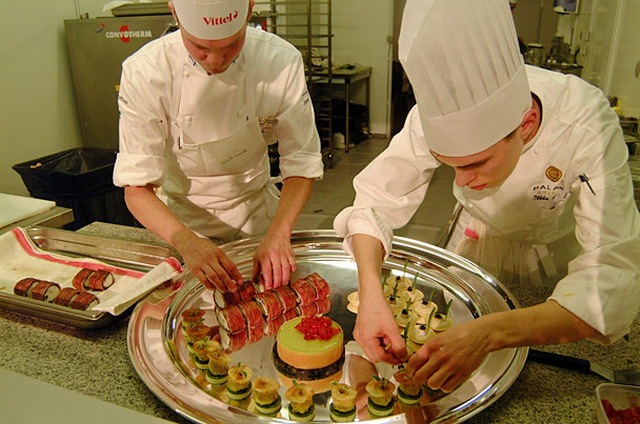
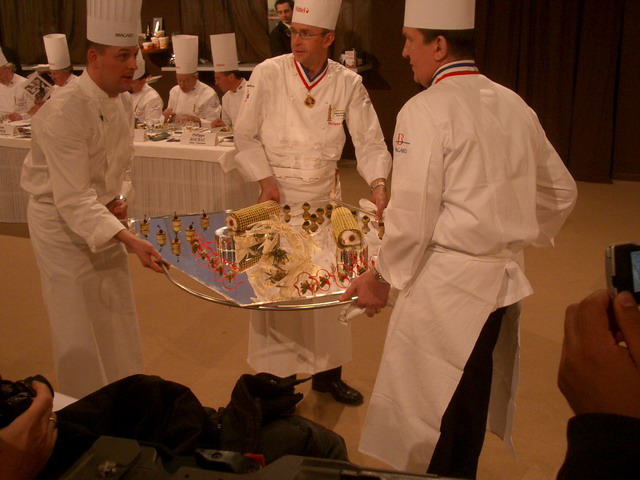
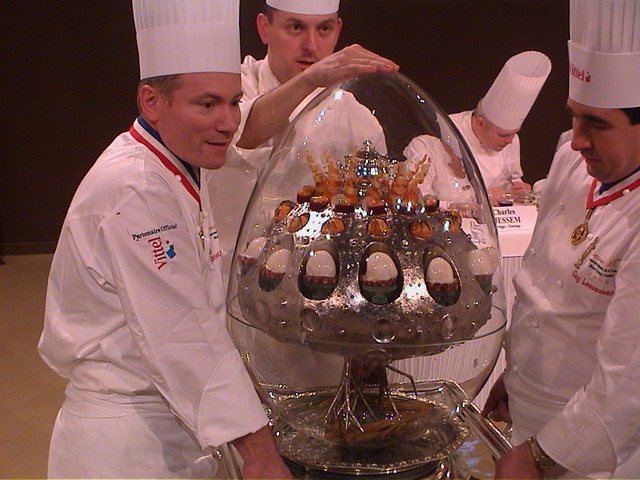
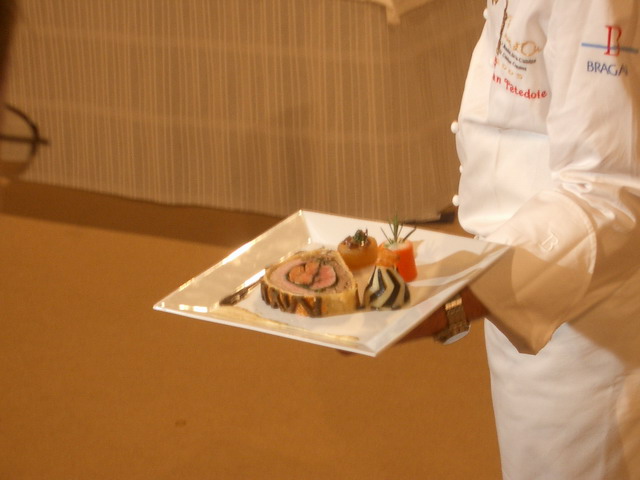
The contestants served wonderful culinary creations. It was only then that I truly believed hot dishes were being presented to the jury, when François Adamski, the 2001 competition winner and jury president, made a hand gesture pulling the air towards himself over the plate, smelling the dish. Beyond the professional lessons, the atmosphere of the competition also impressed me deeply.
My film made about the 2003 Bocuse d’Or competition can be seen here.
https://youtu.be/dqvIEq1kIN8
At the 2005 competition, I moved around the venue with confidence and established connections to help advance Hungarian gastronomy by inviting renowned chefs and ensuring Hungary could participate in the Bocuse d’Or as soon as possible. Beyond the official competition organizers, I spoke with Jérôme Bocuse and Charles Tjessem (the 2003 winner) about these plans, and they received my proposals positively. Paul Bocuse, the competition’s namesake and face, smiled jovially—this was his “role,” and he did not need to take part in the operational tasks.
Photos from the 2005 Bocuse d’Or in Lyon:
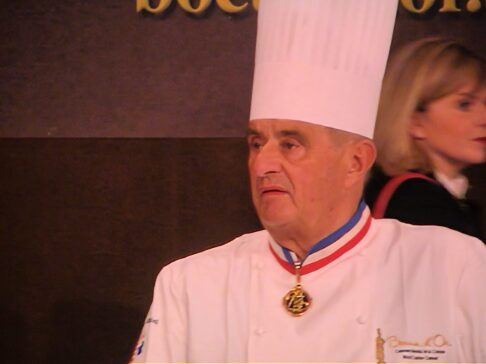
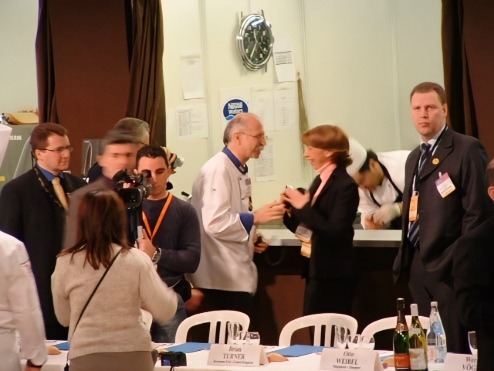
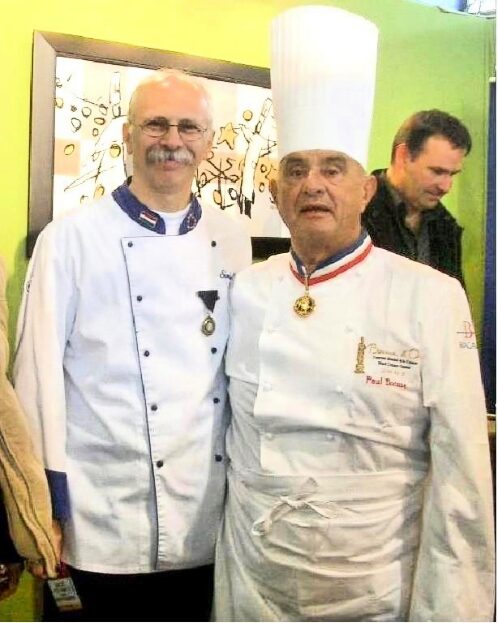
With Paul Bocuse, 2005, Lyon
For the 2005 competition, Nestlé, as a business partner, sponsored my trip and even treated me to meals. On one occasion, we had dinner at one of Paul Bocuse’s bistro restaurants; there were many guests, and the food was acceptable, although the steaks were not necessarily cooked as ordered. Better not to talk about the service.
At chef Christian Tetedoie’s restaurant, however, we tasted a lobster-based menu so exquisite that then and there, after three and a half years, I returned from a vegetarian diet to a mixed one.
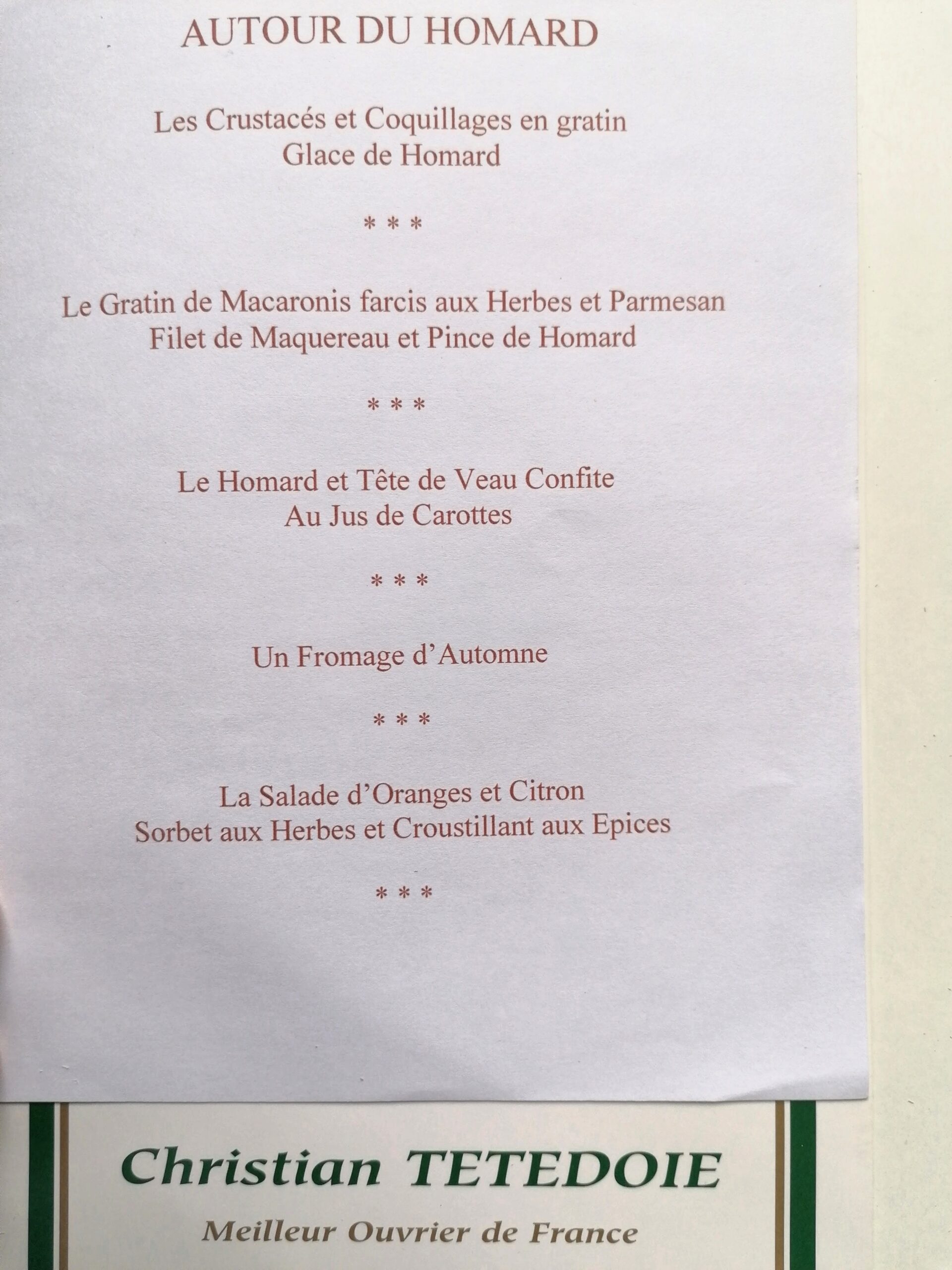
Christian Tetedoie’s menu, 2005, Lyon

Click on the image to watch the video of the “Pork tenderloin with gorgonzola, noodles, pear, and orange duo: with orange and orange gravy” prepared at Joyful Cooking! You can find the recipe below the video!
You can watch the interview with György László on YouTube by clicking here.
The spontaneous stories shared during Joy cooking can be found here:
https://www.youtube.com/watch?v=W1uWCiLdaCs
https://www.youtube.com/watch?v=miuebUHhkMY
https://www.youtube.com/watch?v=zavkzh5Wm4E
https://www.youtube.com/watch?v=JTp01XuB3AM
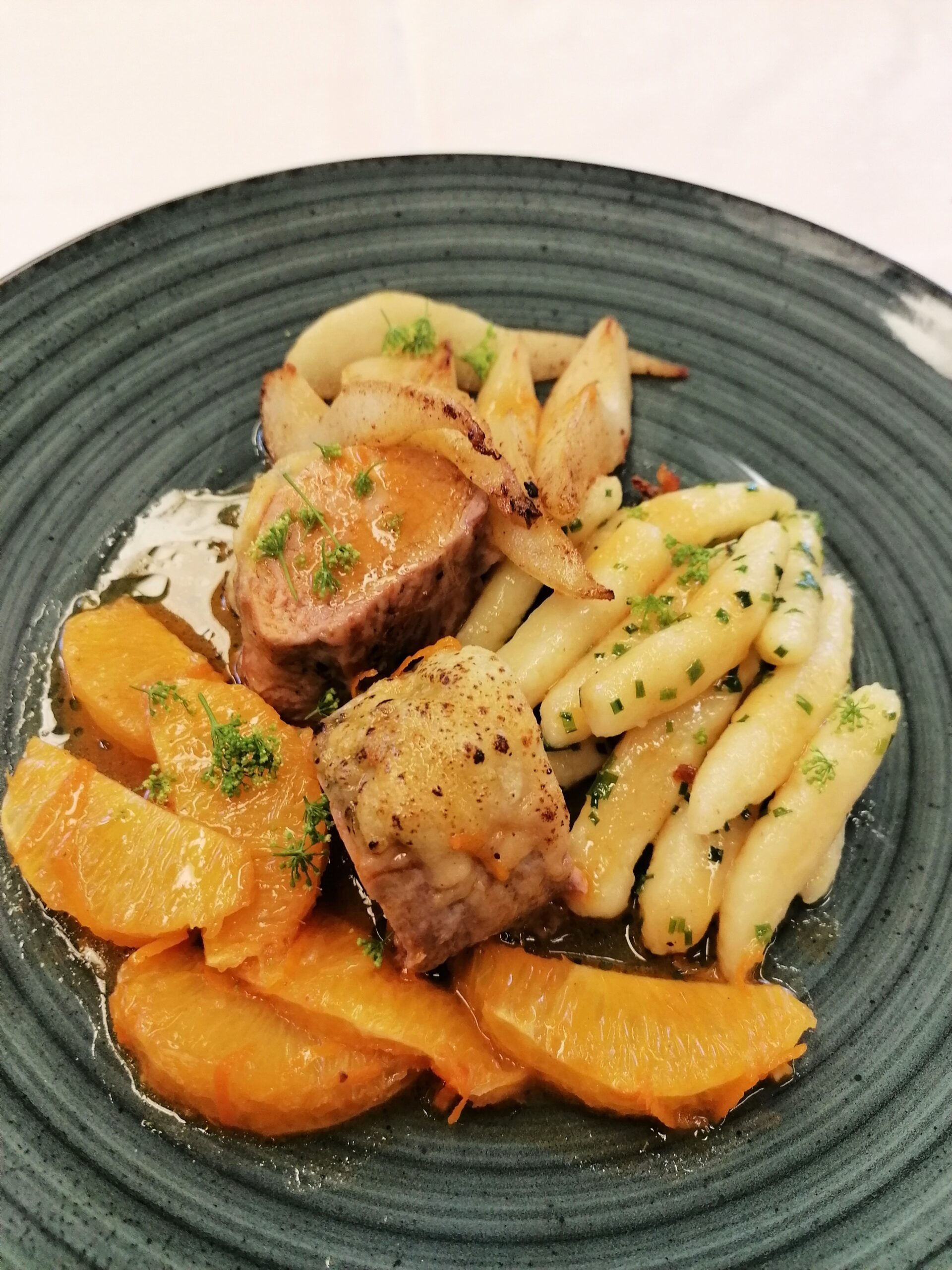
Pork tenderloin with gorgonzola, noodles, pear, and orange duo: with orange and orange gravy.
Recommended ingredient quantities for 4 people:
For the potato noodles:
0.4 kg potatoes, type C (e.g., Agria)
80 g flour
12 g semolina
Salt
For the meat:
0.7 kg pork tenderloin
Salt, pepper
Sunflower oil
Thyme
80 g gorgonzola
100 g gouda, grated
40 g butter
For the gravy:
Trimmings from the pork tenderloin
30 g onion
2 cloves garlic
40 g butter
1 tomato
10 g tomato paste
Salt, pepper
For the chive butter:
30 g butter
1/2 bunch chives
For the pear:
30 g butter
300 g pear (Conference)
Cinnamon
For the orange gravy and orange segments:
1 orange, organic
Cointreau, Grand Marnier, or another orange-based liqueur
For decoration:
Parsley flowers
Steps of preparation:
- For the noodles, cook the potatoes in salted water with their skins on. Drain the potatoes, let them cool slightly, peel them, and while still warm, mash them with a potato ricer onto a floured rolling board. Mix with the flour, semolina, and some salt, then divide into ten pieces. On a floured board, roll each piece into long cylinders. Finally, shape each noodle by hand so that the center is thicker and the two ends are thinner.
- Trim the meat, shape it, then sear it on all sides in a dry pan. Season with salt and pepper, add the thyme and meat trimmings. Remove from heat and add the butter, using it to baste the meat.
- Transfer the meat to a clean pan or baking dish, place the gorgonzola on top, sprinkle with gouda, then bake in a 180°C oven for 12-15 minutes.
- While the meat is roasting, prepare the gravy. In the pan with the browned meat trimmings, add half the butter, diced onion, and continue to sauté. Then add sliced garlic, and after a brief heat treatment, stir in the tomato paste and finally, the diced tomato. Bring everything to a boil, season with salt and pepper, then strain. Flavor this gravy with orange zest using an orange zesting tool, add the filleted orange segments, and pour in a little liqueur.
- Cook the noodles in salted water, then transfer them with a slotted spoon into finely chopped chive butter. Salt if necessary.
- Peel the pears, cut them into wedges, remove the cores, then lightly sauté them in butter.
- For serving, cut the rested meat into two pieces per portion and place it on the plate. Add the noodles, the pears (seasoned with freshly grated cinnamon), the orange segments, and pour the gravy over everything, along with the juices left from the roasting. Finally, garnish with parsley flowers.
*
Preview
Hungarian Executive Chefs Association and MNGSZ.
Joyful Cooking with István Varga, András Schwarcz, and Endre Kelemen, with whom I worked in the early 2000s at the Hungarian Executive Chefs Association.
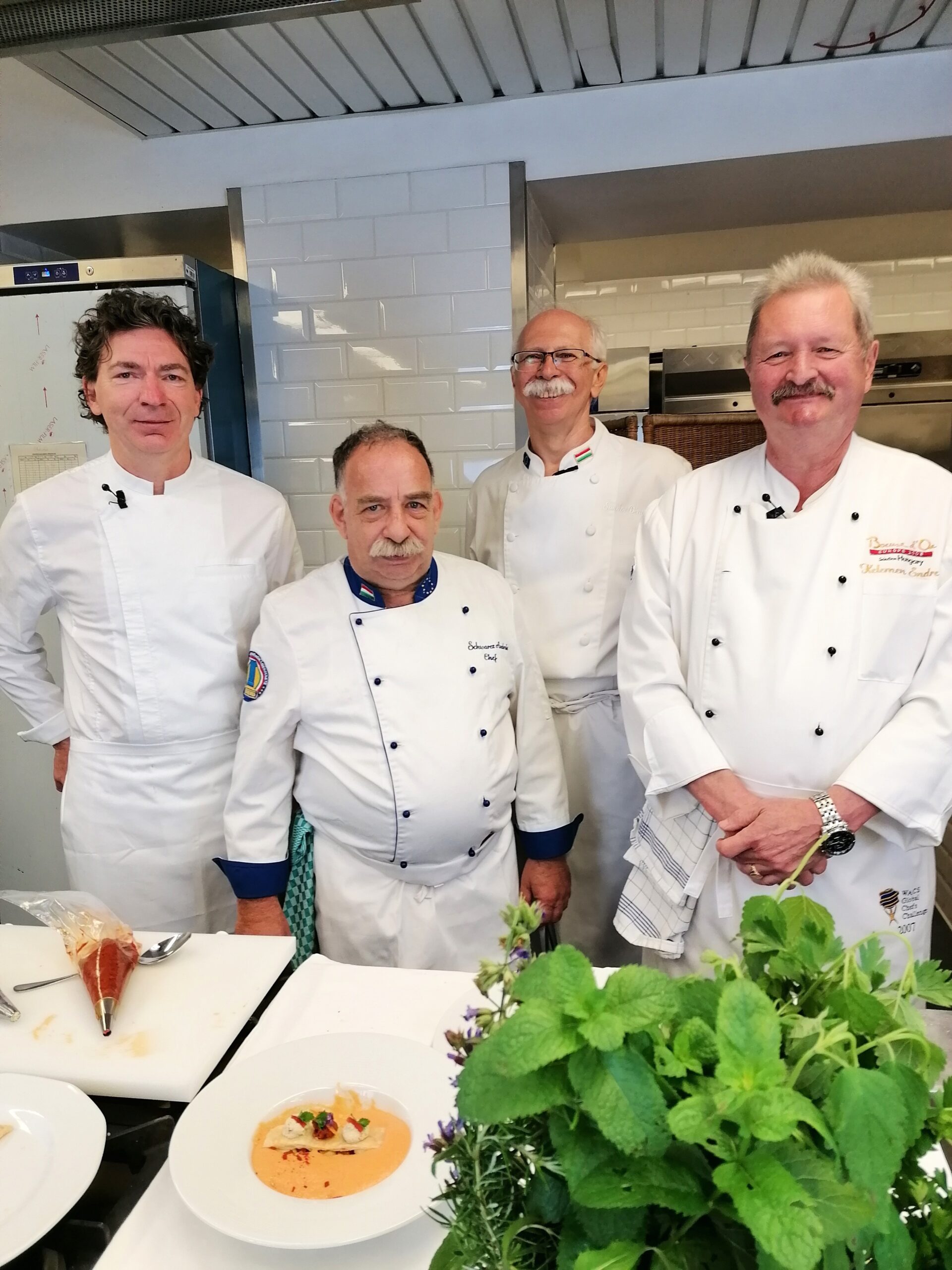
With István Varga, András Schwarcz, and Endre Kelemen.
*