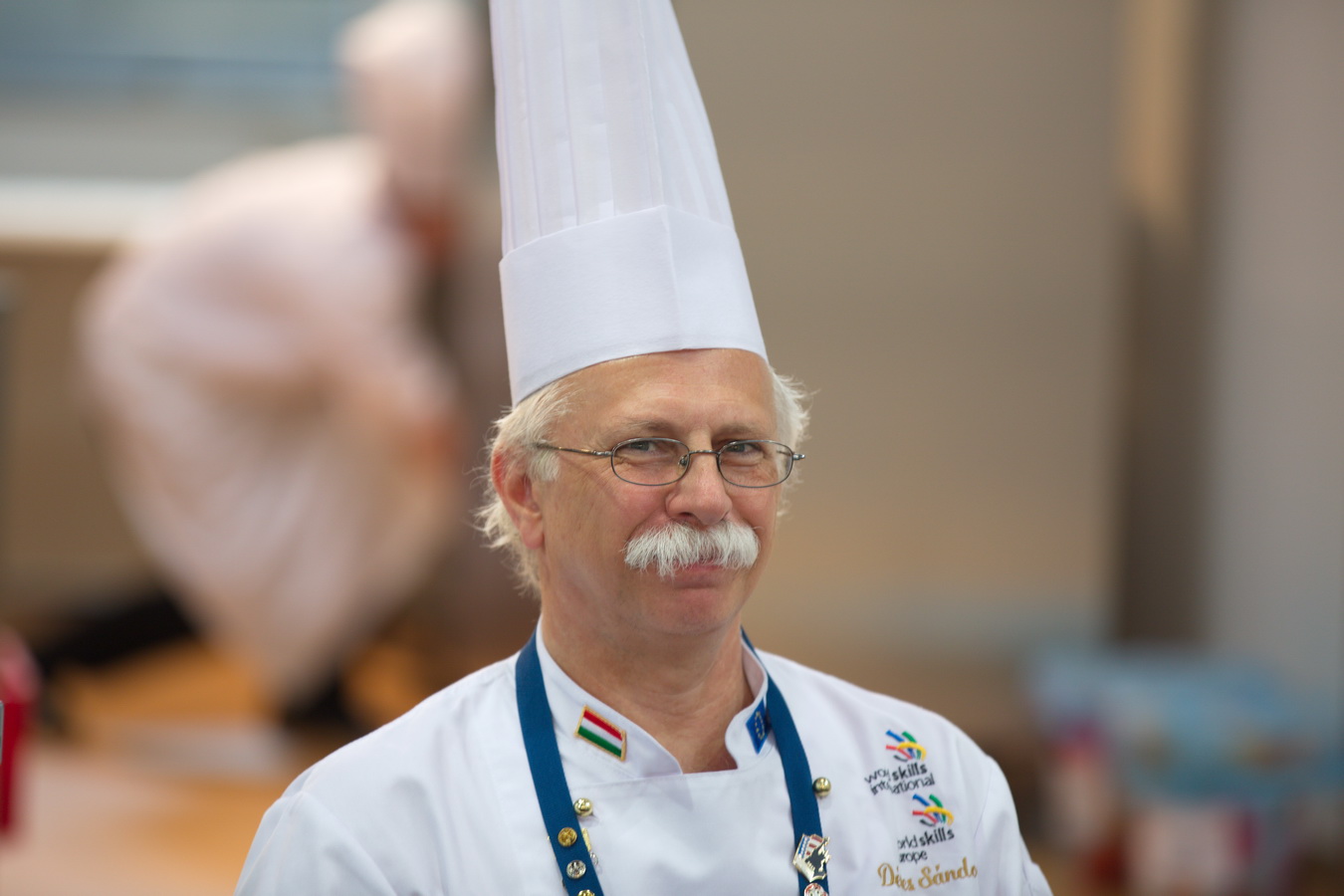
Skills competitions
Since 2010, I became involved in the Skills competitions, which means the parallel contest of various professions and entails continuous competition on national, European, and global levels. Naturally, representing the cooking profession, I became Hungary’s expert in cooking in 2010.
The essence of the competition is that young professionals – at that time, the age range for the WorldSkills and EuroSkills competitions differed, but it was between 21 and 24 years – generally have to compete alone in their respective fields. Thus, chefs must solve all tasks completely on their own during the multi-day competition. Those who apply must first prove themselves in the national competitions (qualifier, final). The winner will represent Hungary in the European or world competition, which alternate each year. Accordingly, in 2010 there was a EuroSkills competition in Lisbon, Portugal, where Péter Molnár was the Hungarian chef contestant. Péter placed 12th out of more than twenty competitors with 511 points out of a maximum of 600. For this performance, 85.2%, he earned a Medallion of Excellence.
During the three-day competition, on the first day, a vegetarian finger food mixed platter had to be prepared, on the second day, the dishes of a four-course menu had to be made: a cold fish starter, soup, main course, and plated dessert, while on the third day, a main course made from wild fowl had to be prepared.
The main task of the expert before the competition is to prepare the contestant for the event, then during the competition, the expert participates as a jury member.
Péter had a good professional foundation and practiced diligently for the EuroSkills competition alongside his work.
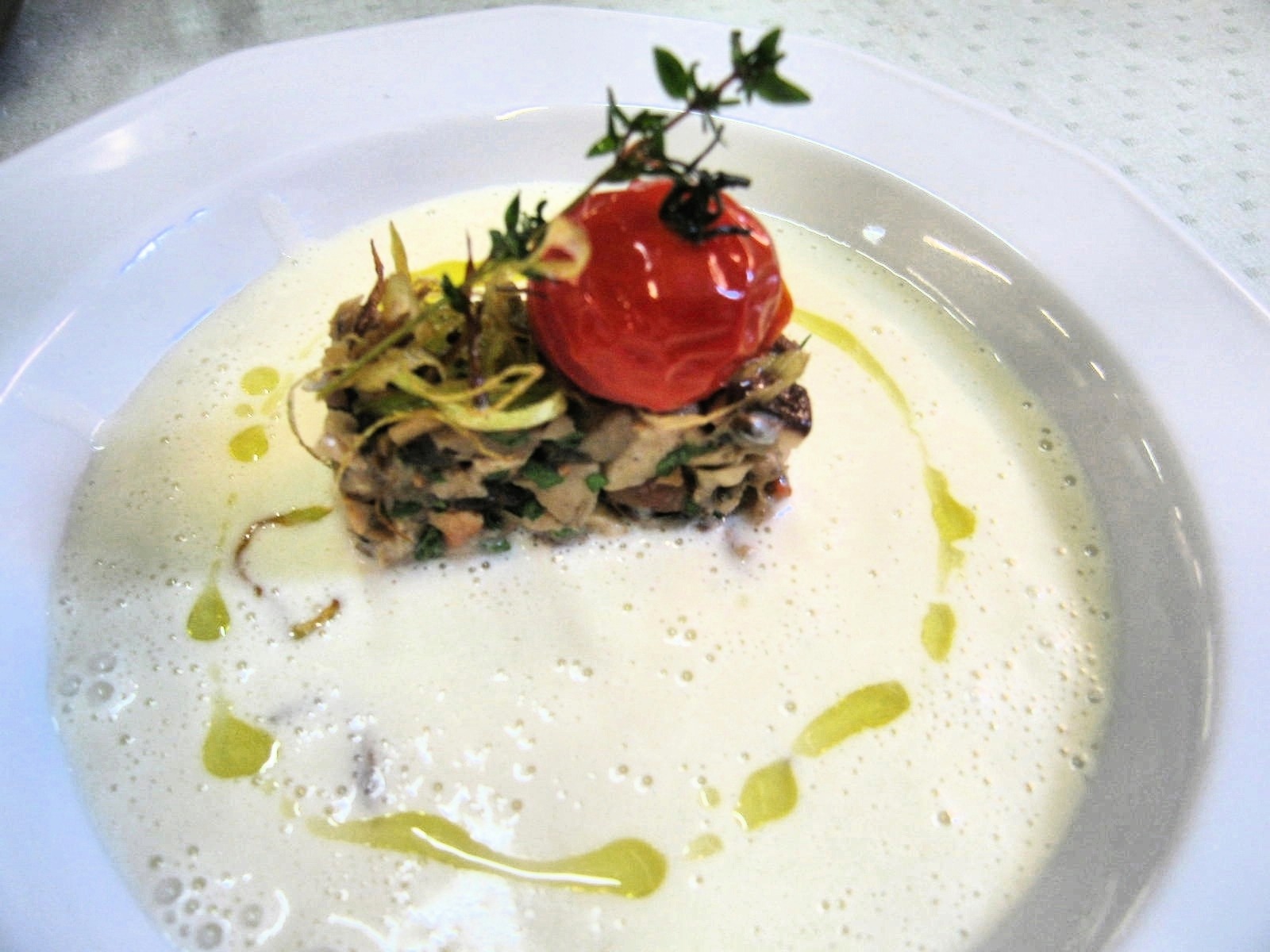
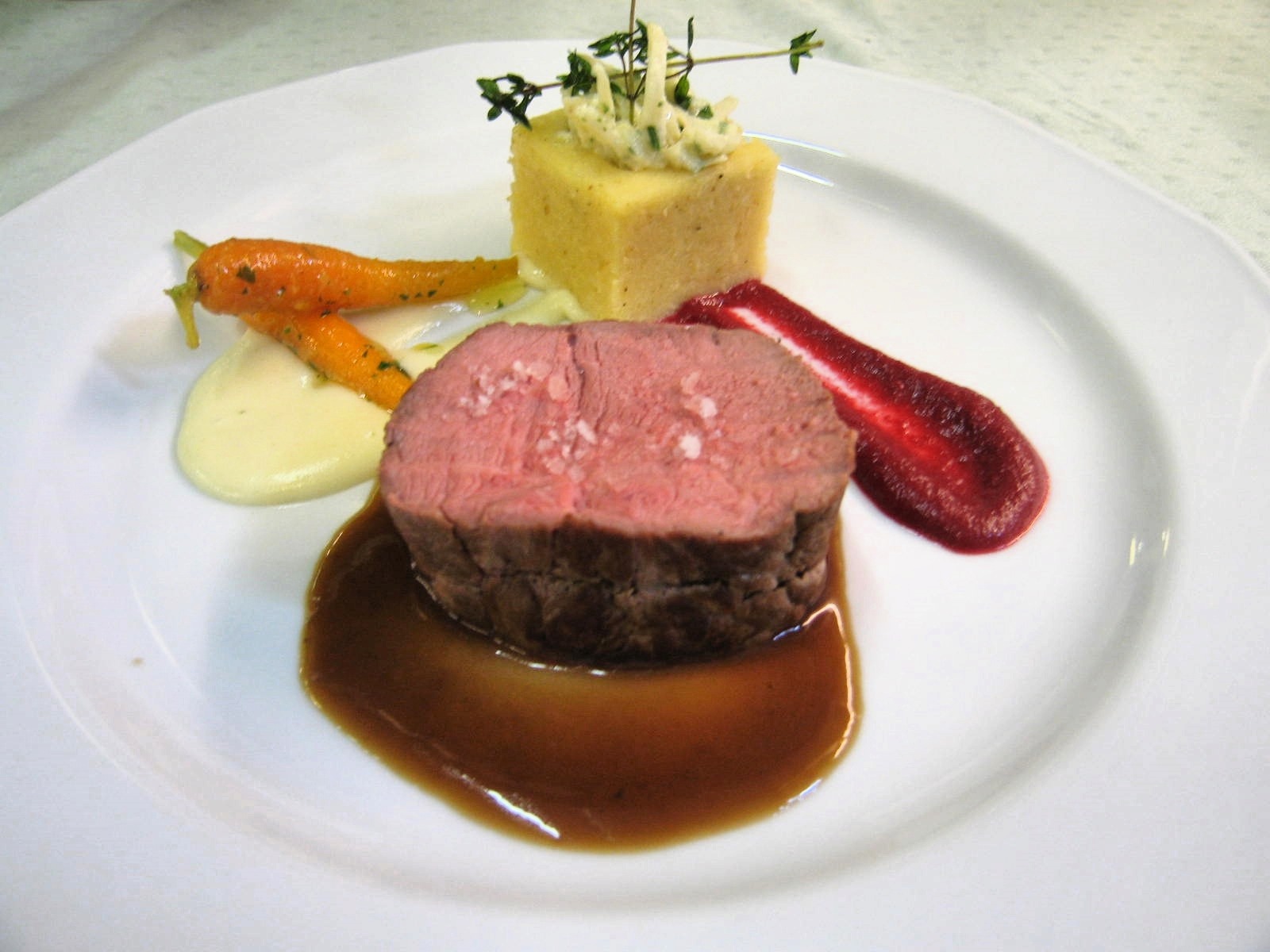
Péter’s hot appetizer and main course during the preparation, 2010, BGF
What caused a problem was the lack of English language knowledge. Unfortunately, this issue came up at the Portuguese competition as well, when a briefing was held in English before the competition tasks. Although I had explained everything to Péter beforehand, since he didn’t understand the information, he kept asking, “What is he saying, what is he saying?” This situation was unpleasant, so Péter competed more nervously than necessary, which affected his performance.
Before the competition starts, the experts/judges go over the already known competition procedures, timing, use of tools and food materials, etc. once more. I asked whether Péter could use the pacojet and thermomix we had brought with us in the competition. This led to a huge debate because some experts from other countries didn’t want him to use them since they hadn’t brought such technical equipment. I referred to the technical description, where the mentioned kitchen tools were not prohibited. The Norwegian head judge Svein Magnus Gjønvik agreed with me and put the question to a vote. After some confusion, the properly phrased question was finally voted on, so Péter was allowed to use the equipment.
Among the tasks was the preparation of a cold fish starter. We were confident that, due to the proximity of the Atlantic Ocean, the contestants would receive fresh, high-quality fish. Contrary to this, the organizers provided frozen fish that also gave off an unpleasant odor. I filed a complaint, to which the host chef smelled the fish and said there was nothing wrong with it. This was a big disappointment.
All in all, it was a valuable European competition. I was satisfied with Péter’s performance as well—considering the circumstances described earlier. I really liked the judging system, which was complex but ensured impartiality. I worked on both the tasting and the work jury.
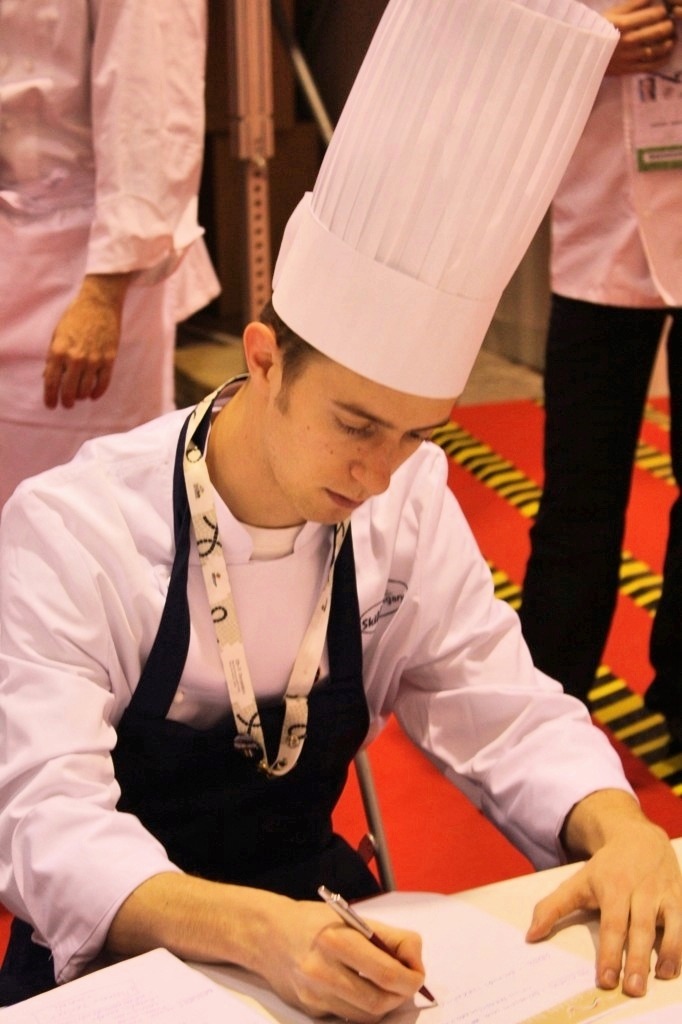
Péter Molnár during menu writing, his cream soup and salmon appetizer.
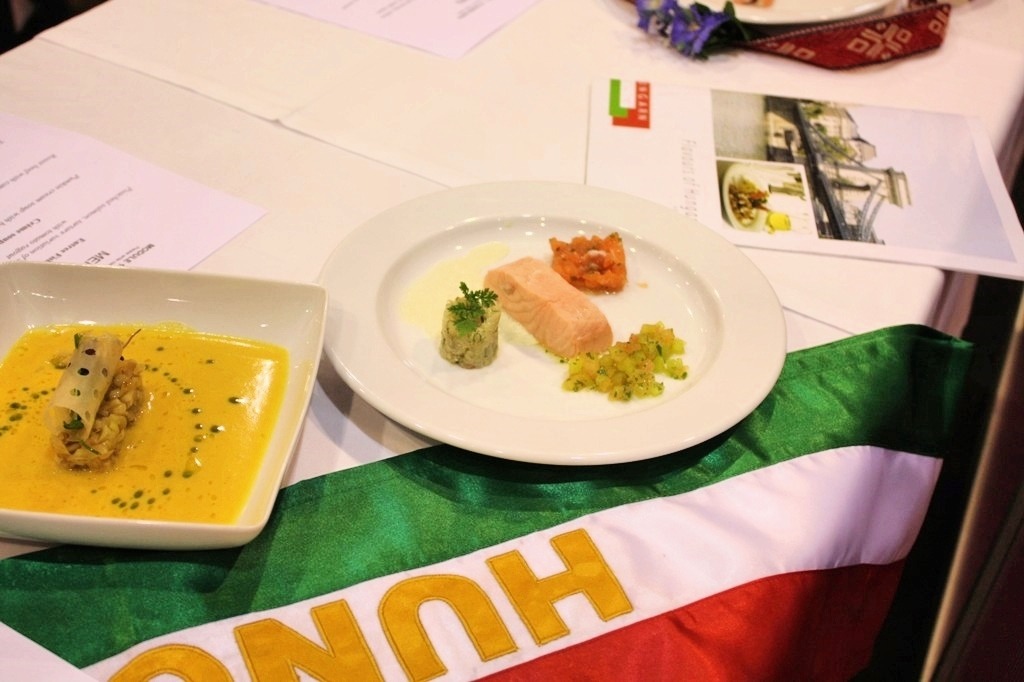
EuroSkills, Lisbon 2010
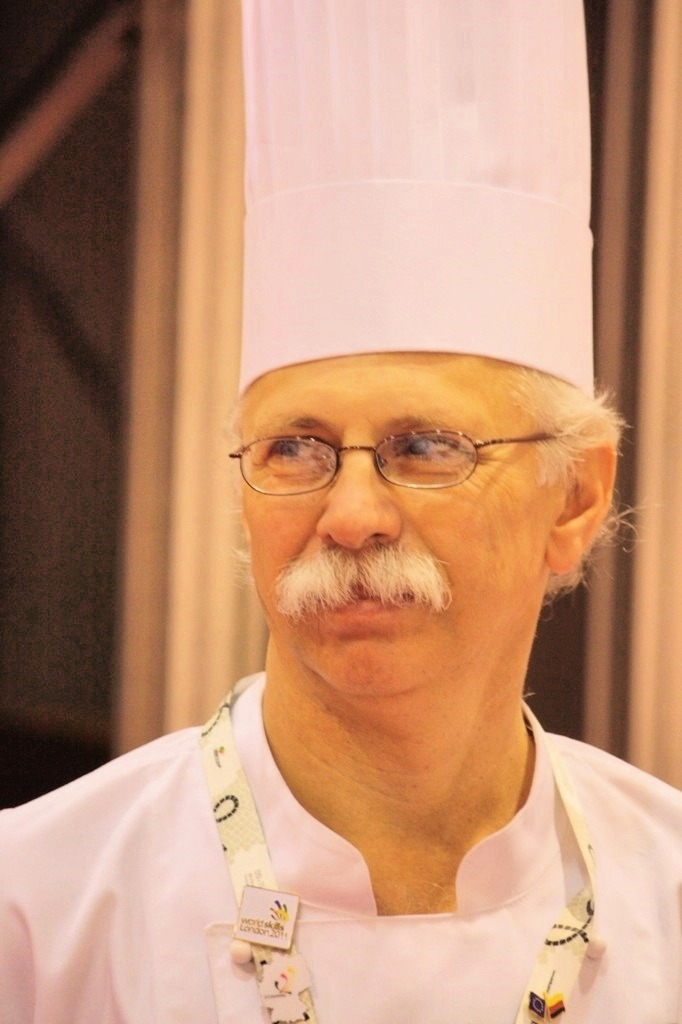
Do I like the food? 🙂
*
Barely had the Lisbon competition ended when preparations had to begin for the next world championship. In 2011, at the WorldSkills competition—similarly to the 2010 European competition—I once again represented our country as the expert in cooking, with chef contestant Ádám Deák in London, England. Among competitors from over thirty countries, Ádám finished in the lower third of the field. At that time, there was no national selection competition, so Ádám came into focus through recommendation. We prepared for the competition, but according to Hungarian custom, alongside his job, so overall, his result was realistic.
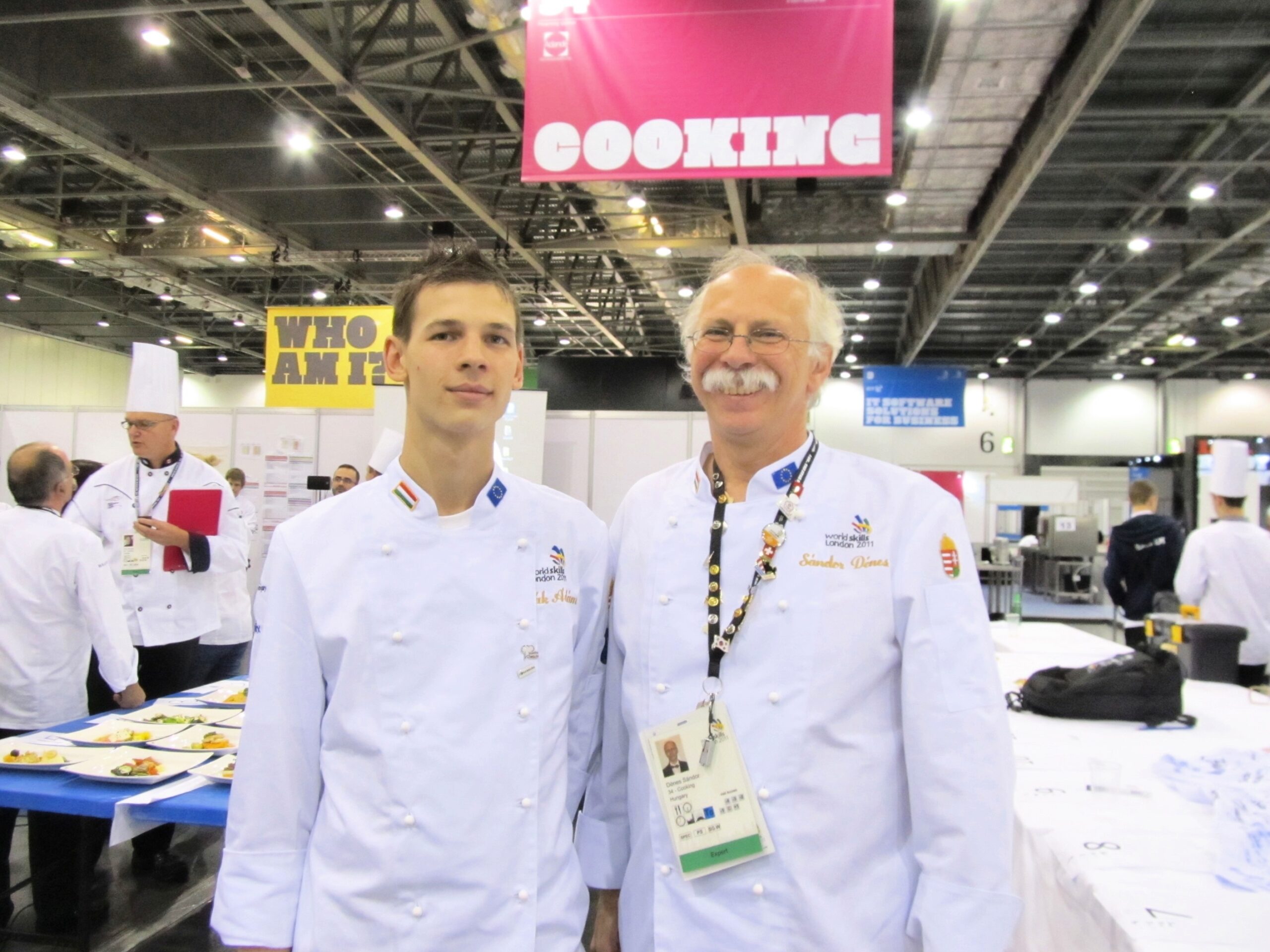
With Ádám Deák at the London WorldSkills, 2011
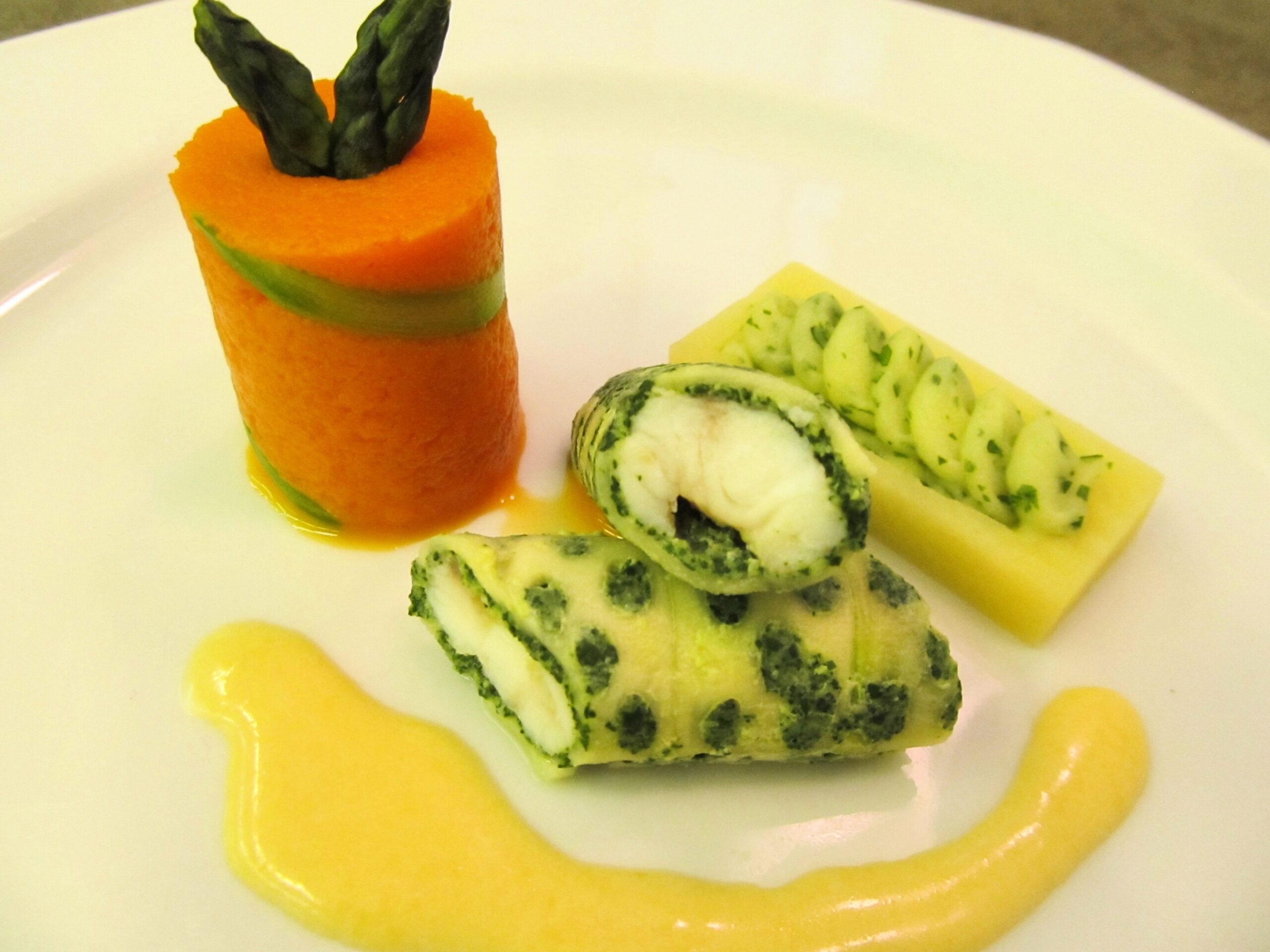
Ádám’s starter
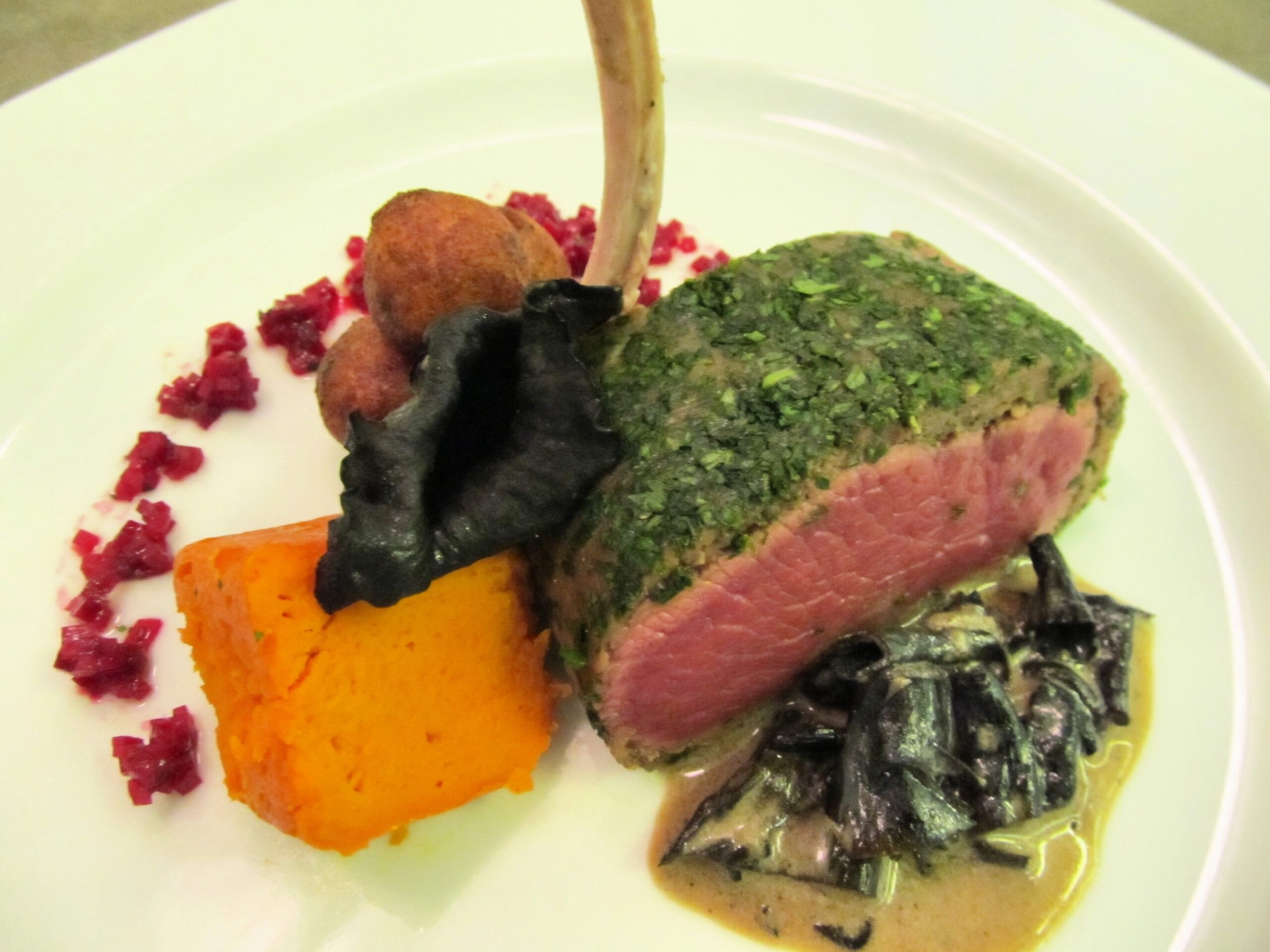
main course
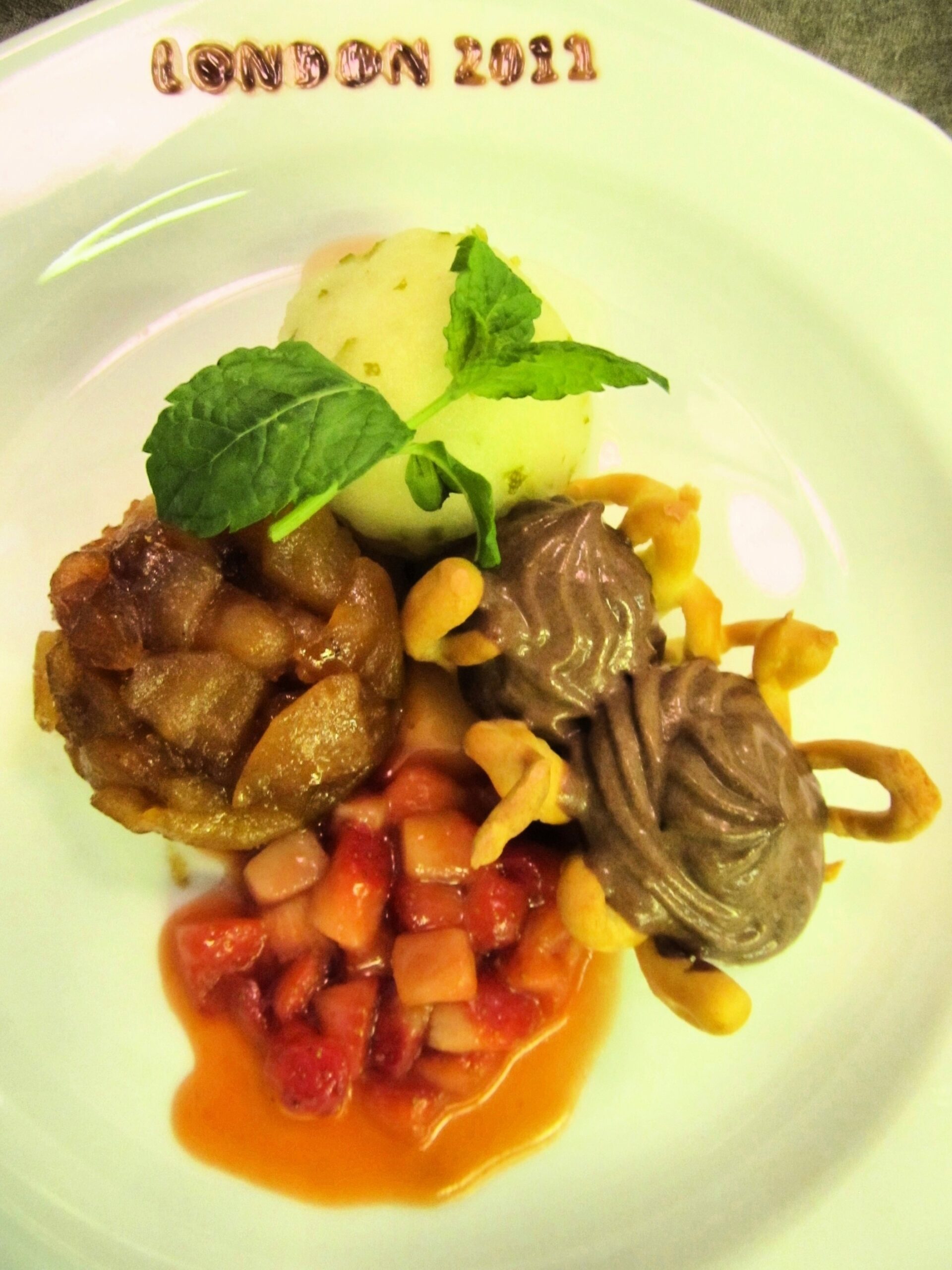
dessert
*
In 2012, there was another EuroSkills competition, this time in Spa-Francorchamps, Belgium, where we represented Hungary with chef contestant Zsolt Berki. It was a joy to watch Zsolt work during the preparation. I even told him it was as if I were seeing myself working when I was young. He worked quickly, cleanly, thoughtfully, well-organized, and efficiently, and to this was added his amazing creativity.
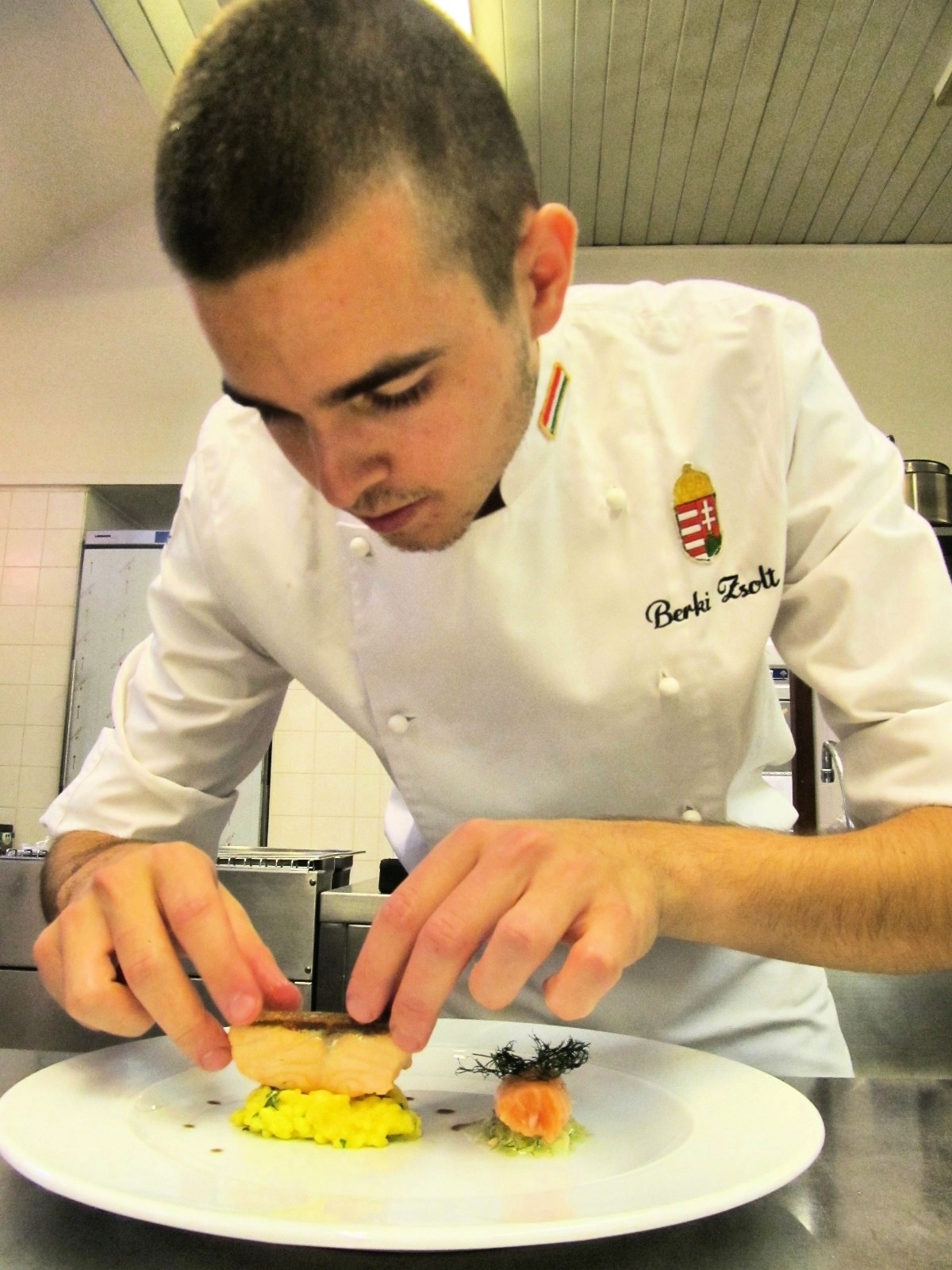
Zsolt Berki during preparation
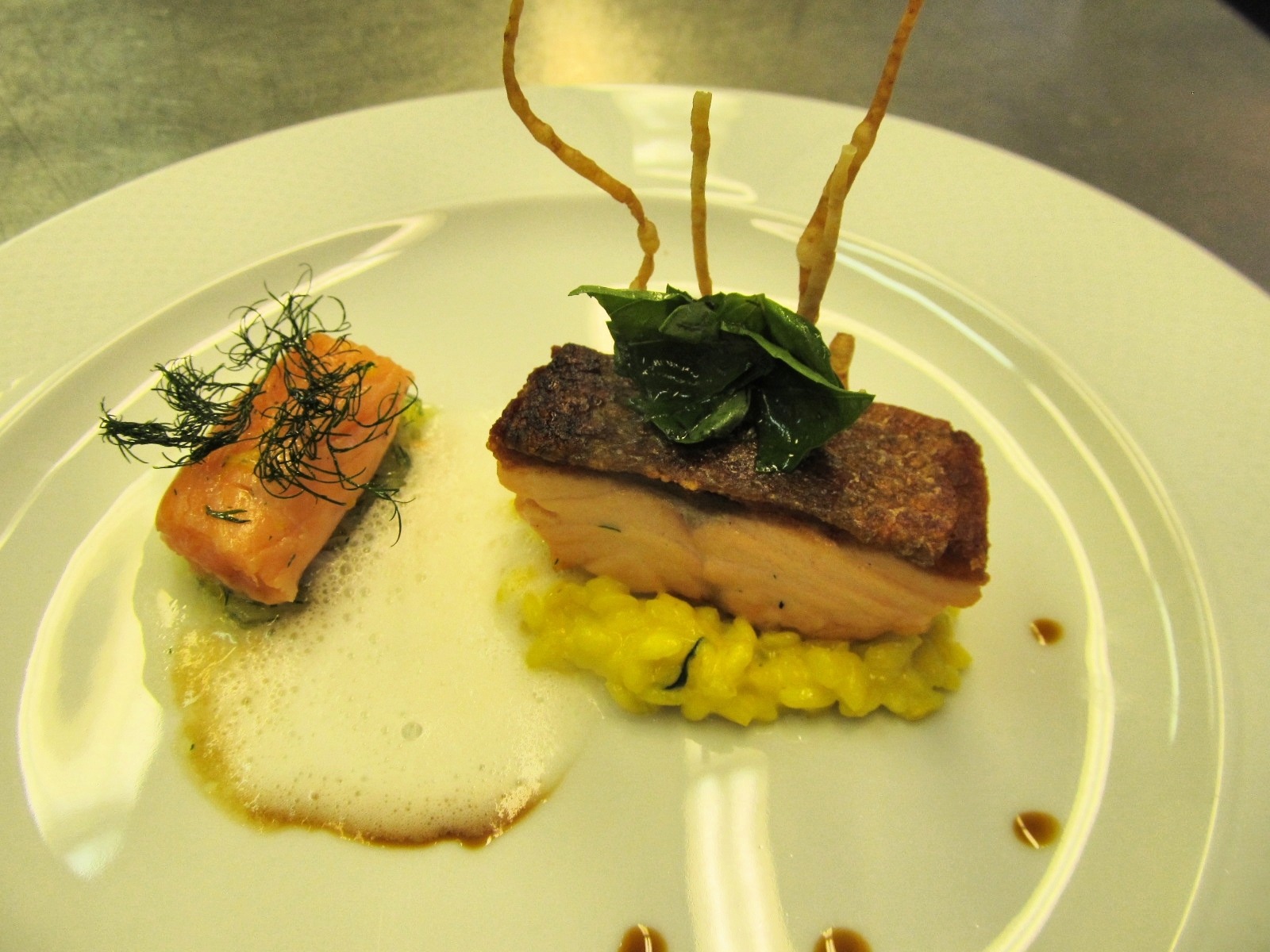
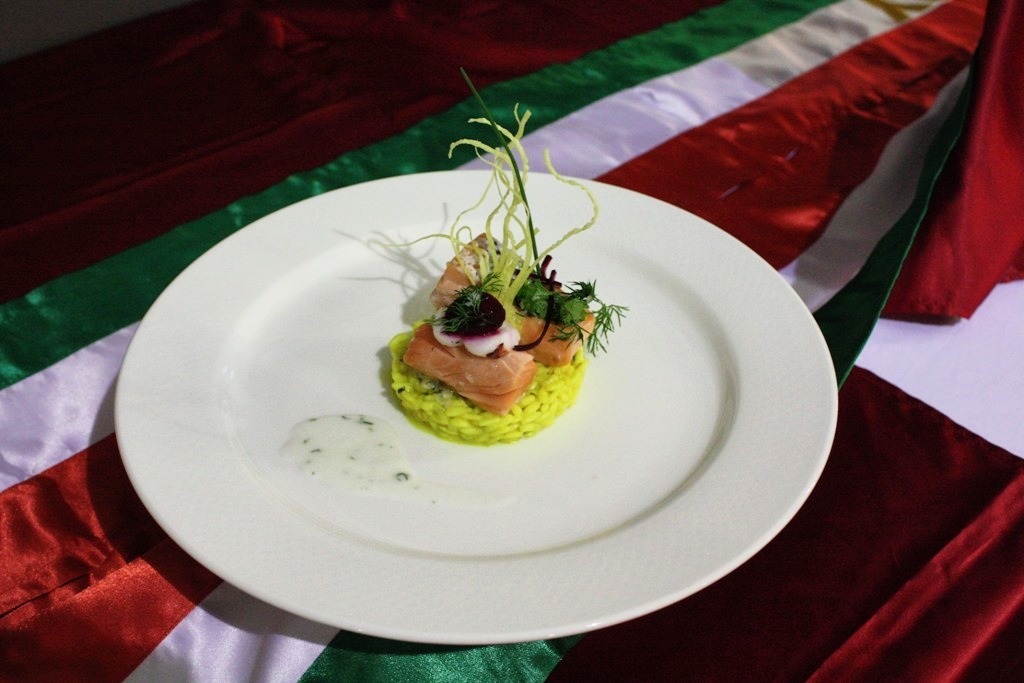
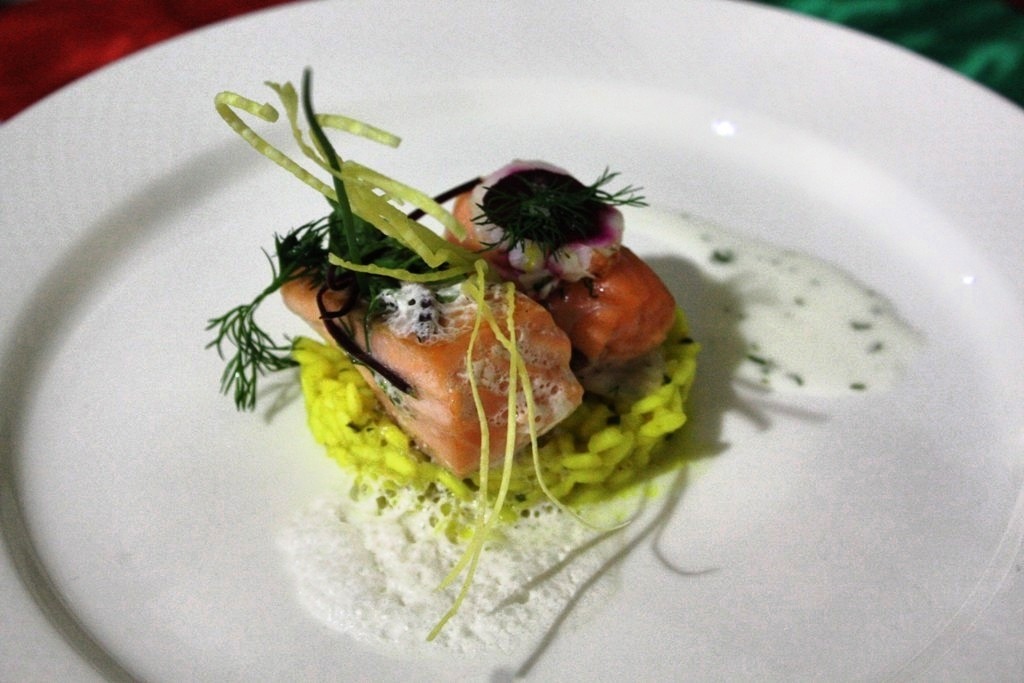
Salmon variation by Zsolt, 2012.09.06., BGF
At the competition in Belgium, Zsolt placed 4th individually and earned a Medallion of Excellence with 525 points (an 87.5% performance), and as part of a team with waitress contestant Jessica Kasko, they finished 3rd, winning the bronze medal. This was the best chef placement so far in the history of the Skills competitions.
Throughout the entire competition, Zsolt performed wonderfully; when my Austrian expert colleague saw his plated dessert, he asked, “Is Zsolt a pastry chef?” Zsolt wanted to win a medal individually as well, but unfortunately, he finished one point behind the Finnish girl.
During judging, I was disappointed because in one shift I was a member of a five-person tasting jury that included Martti Lehtinen from Finland, who rated everything perfectly for his own contestant and gave many 10-point scores. As I mentioned earlier, fortunately, the scoring system is well designed, so the highest and lowest scores are automatically dropped during scoring. Even so, I scored fairly, and besides many 10s, I also gave Zsolt a 9 because there was a phase in his work that was not flawless. When we learned the final result, I had a bad feeling that maybe because of the 9 points I gave, Zsolt did not get the bronze medal, but he reassured me, saying that the highest score would have been dropped anyway. Mathematically, it is possible that after the dropped 10, there was still another 10 that was not dropped, so my 9 could have counted, or if there was only one 10, then the biased Finnish scoring did not matter.
The Skills competitions provide excellent opportunities for young talents from various professions to compete nationally and internationally. However, there is a vast gap between the general level of domestic education and the knowledge of the selected contestants. Of course, this competition serves as a shining showcase because it allows Hungary to proudly display that vocational training is good here, as young people have achieved numerous excellent results at EuroSkills and WorldSkills competitions. The showcase politics included invitations from chambers, the prime minister, and the president of the republic, as well as joint appearances with the highest-level political leaders. Accordingly, some photos were taken, which I share with slight modifications, adding that I always thought that it was the political office held (not the person holding it at the time) that honored my profession and my contestant.

Zsolt Berki, the Prime Minister, and me in the Parliament on 2012.11.10.
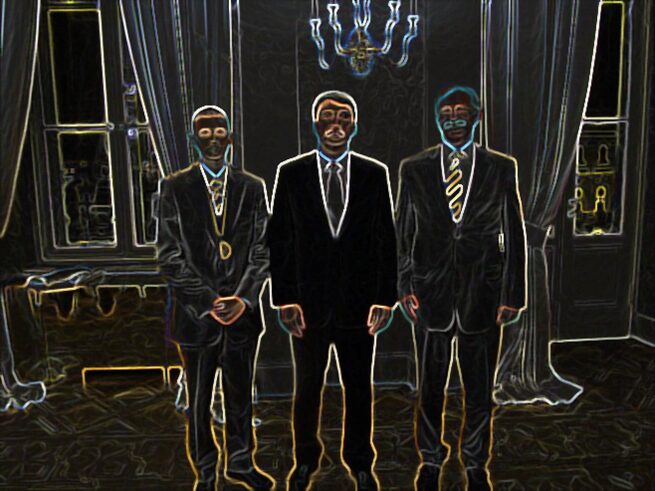
Zsolt Berki, the President of the Republic, and me at the Sándor Palace on 2012.10.18.
It must be noted, however, that the talents and aptitude of the young participants are complemented by the knowledge and dedication of the experts. Without claiming to be exhaustive, some of my expert colleagues are: Csaba Babanecz, master building carpenter; Attila Boros, master florist; Csaba Csáki, master painter and decorative painter; János Csőke, IT system operator; Zoltán Fekete, master French furniture carpenter; László Hajas, master hairdresser; Dr. László Jánosi, mechatronics university professor; Zoltán Sisák, web developer. From these professions, it is clear that the Skills competitions cover not only classic trades but also today’s high-tech fields. I will insert here my report to the MKIK (Hungarian Chamber of Commerce and Industry), as the main sponsor and chief organizer of the Skills competitions, about the 2012 competition in Belgium.
“My report on the EuroSkills 2012 Competition
Profession number and name: cook
Expert: Dénes Sándor
Contestant: Zsolt Berki
Number of contestants at EuroSkills 2012: 15
Placement achieved: 4th
Points achieved: 525
Medal/other awards: Medallion of Excellence, bronze medal in the cook-waiter team competition
- How do I evaluate my contestant’s performance?
Zsolt achieved the set goals. He prepared the dishes professionally and served them on time. The quality of the dishes always reached the level of the meals prepared at the Budapest rehearsal. Zsolt could be a welcomed professional anywhere in the world - What factors influenced my contestant’s result during the competition?
There were no really disturbing or result-influencing factors. Except perhaps that somewhat incomprehensibly, every expert/jury member scored their own contestant. As a result, the Finnish expert gave his contestant a perfect score once, while I did not do the same for Zsolt. Of course, the system dropped the minimum and maximum scores. Who knows, maybe Zsolt’s bronze medal depended on this?
- What factors influenced my contestant’s result during preparation?
Zsolt works as a young, 24-year-old cook and assistant chef in the kitchen of a high-standard castle hotel located in the town of Visz. During preparation, Zsolt had to manage his daily work at his workplace, and alongside this, we trained twice a week in Budapest in September. Furthermore, Zsolt practiced the agreed improvements at his workplace. (This could be changed or improved by having only training sessions during the preparation period or more training sessions while the contestant would be financially supported and would not risk losing his job; moreover, the country’s best young professional should be proudly promoted during his preparation.)
- What changes do I plan in my profession for the next competition?
There is a need for an earlier, broader-based national selection and a longer preparation time. (Among the suggestions, the idea of the Chamber’s support in this regard is ranked first.)
- What fundamental differences exist between the requirements expected by the OKJ (Hungarian Requirements of Culinary Education) and the expectations of the EuroSkills competition? (What is different in the OKJ, what is not included in the OKJ?)
Heaven and Earth.
A portion—or even the majority—of those entering domestic vocational schools must first be taught basic, general skills such as writing and reading in Hungarian. Only after this does the introduction to the cooking profession take place. The average achievable outcome is modest.
At the EuroSkills competition, countries with traditionally high-standard culinary education such as Finland, France, Austria, etc., also compete. For them, it is more natural and therefore simpler to prepare dishes and menus that fit into their daily restaurant practice.
In our case, the situation is different. The pool of contestants is significantly smaller in scale. The knowledge level of the few selected young people is above the Hungarian average for their age group, but bringing them up to international standards requires considerable further work.
6. Do I consider my contestant suitable to participate in the next WorldSkills competition?
Unfortunately, Zsolt can no longer compete in the Skills competitions. However, I am happy to be involved in the preparation of future contestants.
7. What suggestions do I have for the Hungarian Chamber of Commerce and Industry regarding the preparation of the entire Hungarian team, as well as ensuring other conditions and circumstances?
Suggestions:
- In chronological order, the very first and most important task in the cooking profession would be for the Chamber to hold a Forum before the domestic WorldSkills selection, which is expected to take place in early December. Young colleagues from high-standard restaurants and students delegated by vocational schools, who could potentially compete as candidates in the domestic competition, would be invited to this Forum. At this Forum, the young people would receive information about this competition.
Further suggestions:
- Nowadays, it would actually be necessary to participate as exchange or guest students in the education systems of countries leading globally in the given profession, and it would also be necessary to spend as much time as possible in their daily practice.
- However, for this, knowledge of the English language at a communicative and professional level is indispensable, so great emphasis should be placed on achieving this in education.
- Promotional campaigns should be held to popularize the cooking profession for the age group potentially entering vocational schools, during which career opportunities would be presented. This would, of course, require increasing the financial and social appreciation of cooks.
- The pool of competitors should be increased by involving all cooking vocational schools in the qualifying competitions. The best students and their instructors should be encouraged. An international jury should also be involved in domestic competitions.
- The 4-6 competitors who perform well in the domestic final should be further prepared in additional (domestic and international) training sessions. In this system, which does not yet exist in our country but is expected to be realized, continuous motivation would be provided by the opportunity to participate in European and world competitions. Thus, the, say, five potential competitors would feel motivated until the final selection, since it is possible that one of them will represent their country at the world competition.
- Long-term thinking and action are needed regarding competitions and competition preparation.
- Further training (domestic and international) should be organized for vocational teachers, and greater coherence and appreciation should be created between the performance and financial-social benefits of colleagues willing to innovate.
- Sponsors should adopt the international practice of proudly stating: “We proudly sponsor this competition or competition preparation!”
- It would be useful if similar, but professional feedback took place for vocational training after international competitions. 2012. október 25.
Dénes Sándor, expert”
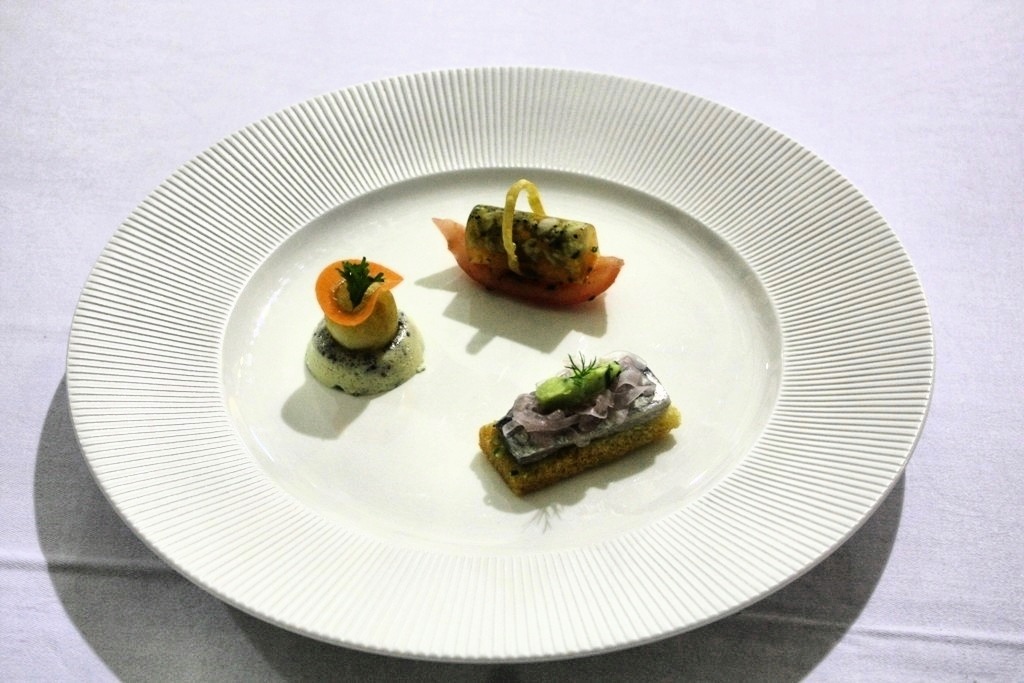
A taste of Zsolt Berki’s competition dishes:
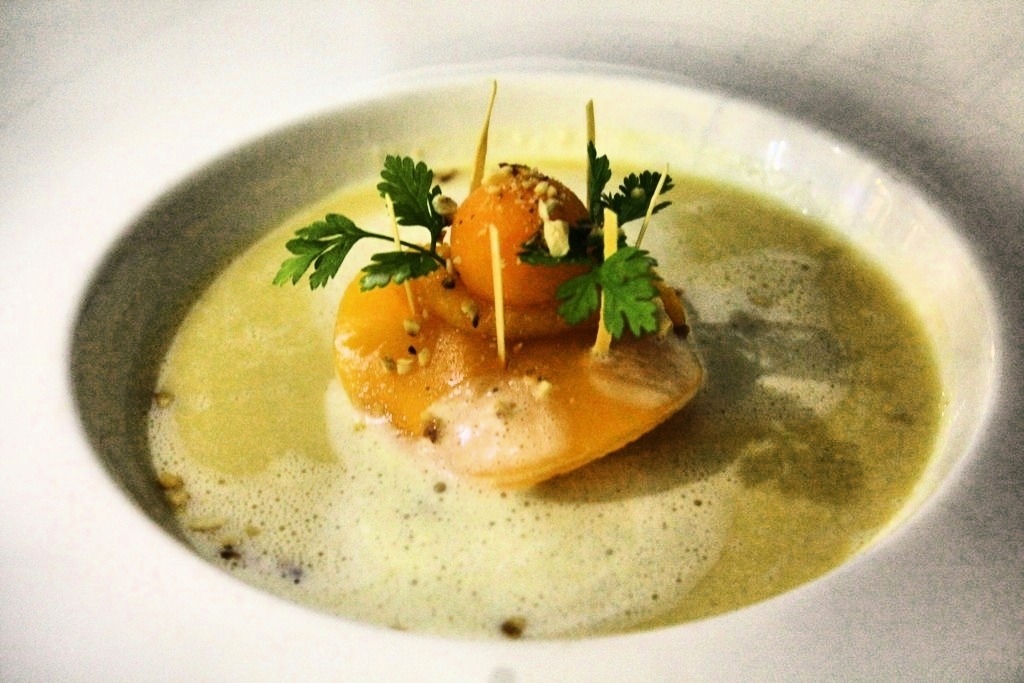
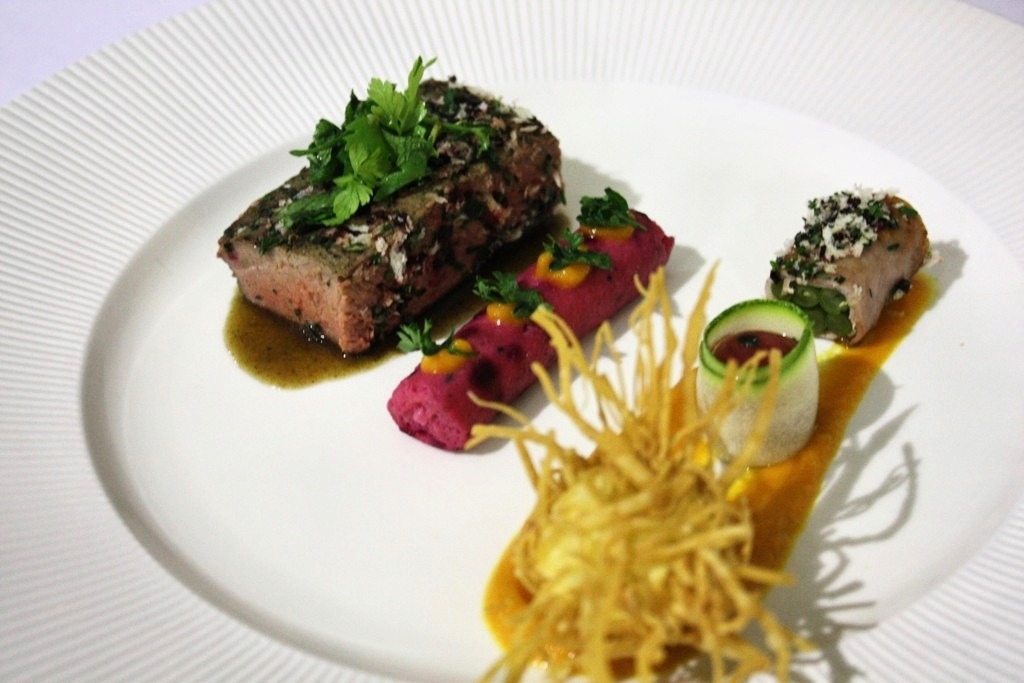
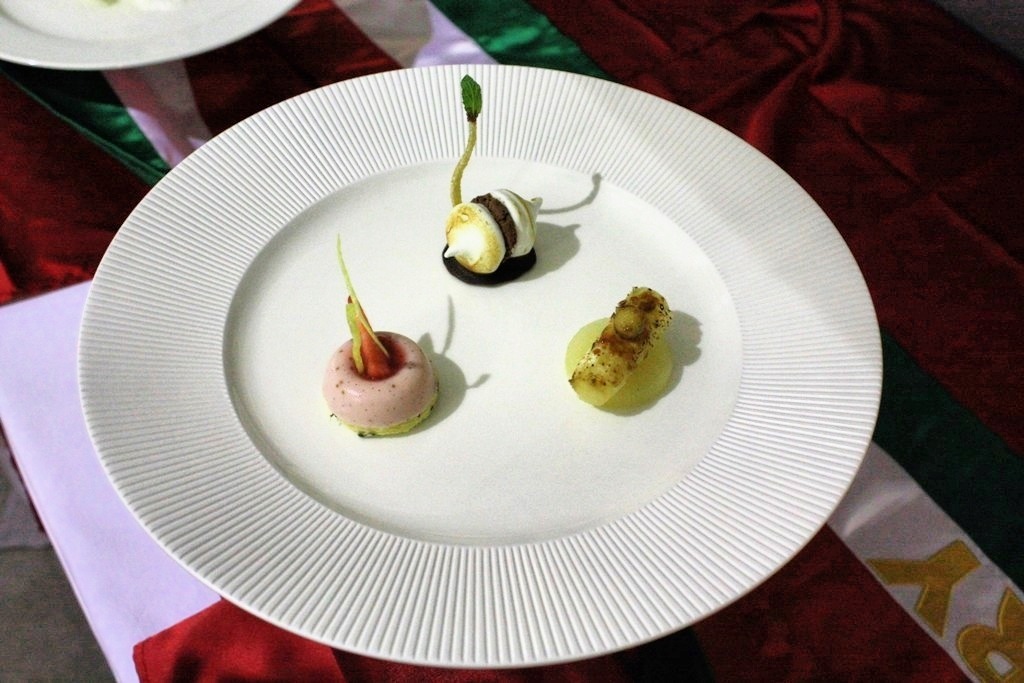
*
For the 2013 WorldSkills competition in Leipzig, I asked Berki Zsolt to help prepare the Hungarian qualifier winner, competitor Márió Molnár. This did happen. At that time, Márió was working at the Bárány Inn in Kaposvár, while Zsolt was at Chateau Visz, so we often met in Kaposvár when Márió finished his shift. The preparation went well, but at the world competition the problem of lacking English skills surfaced again, as well as an unexpected incident that completely ruined Márió’s work that day. It happened that during work, Márió’s pants ripped, leaving his backside not stage-appropriate, while crowds were watching the chefs’ work just a meter or two away from him. Because of this, Márió avoided turning his back to the audience, but of course, that is impossible while working.
At that time, I was on a tasting jury, and as the plated dishes were brought, I barely recognized which was Márió’s dish. I didn’t understand what was going on; I just looked at the poor presentations. The mishap only became clear at the end of the competition day. As a result, Márió finished in the middle of the pack, scoring 492 points out of a maximum 600, missing the Excellence medal by a few points, and his performance was 82%.
Márió Molnár’s preparation dishes:
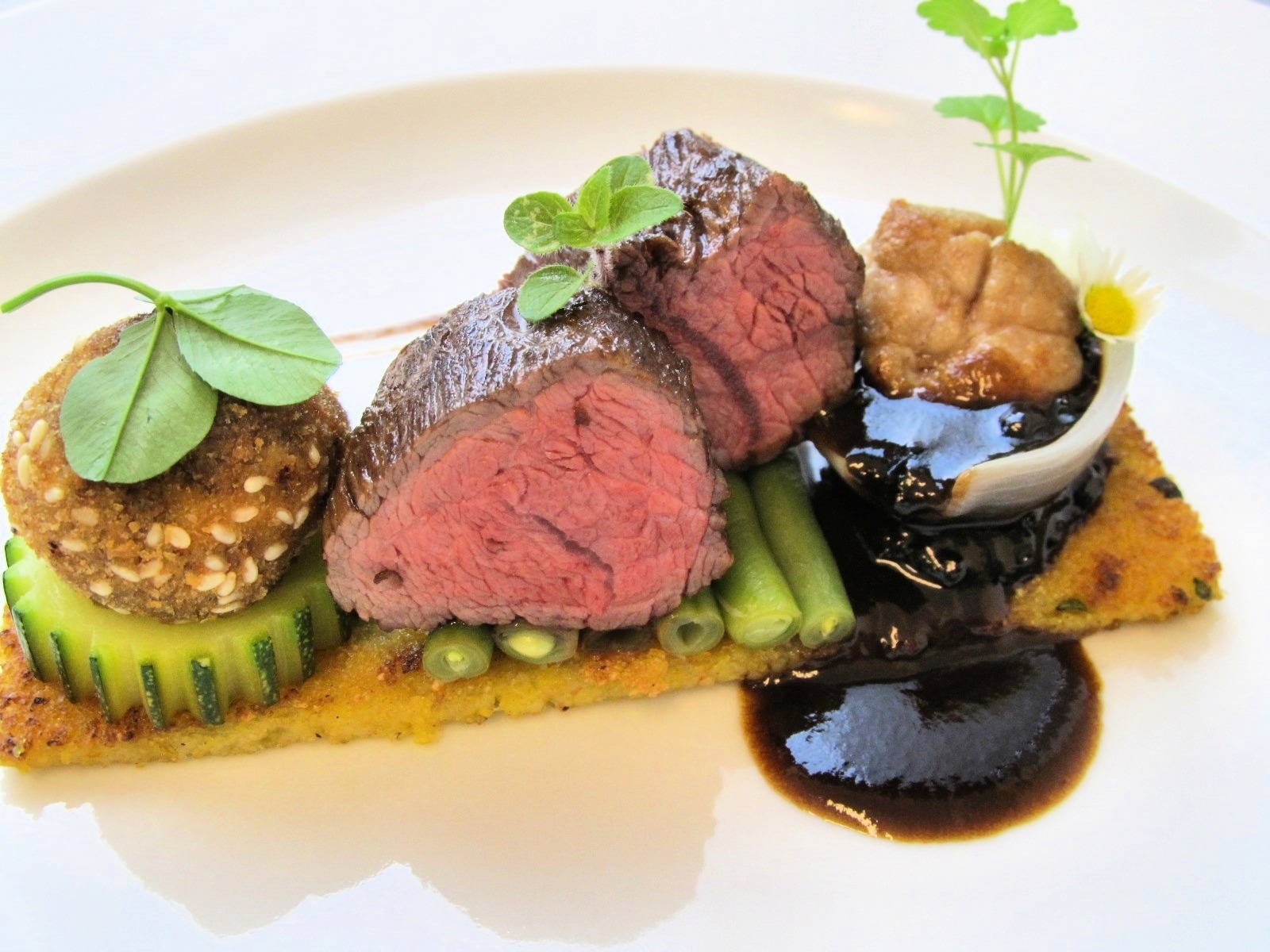
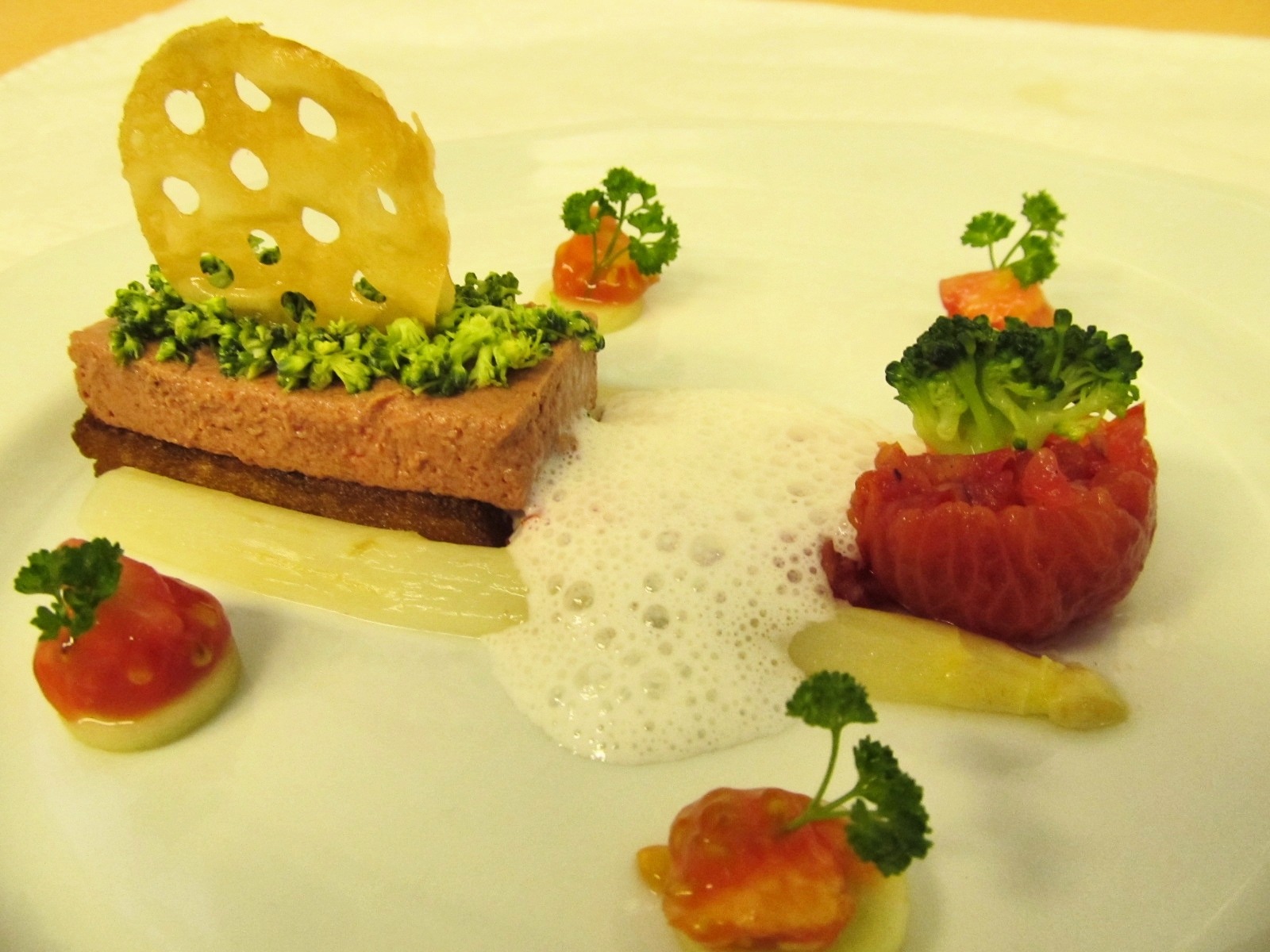
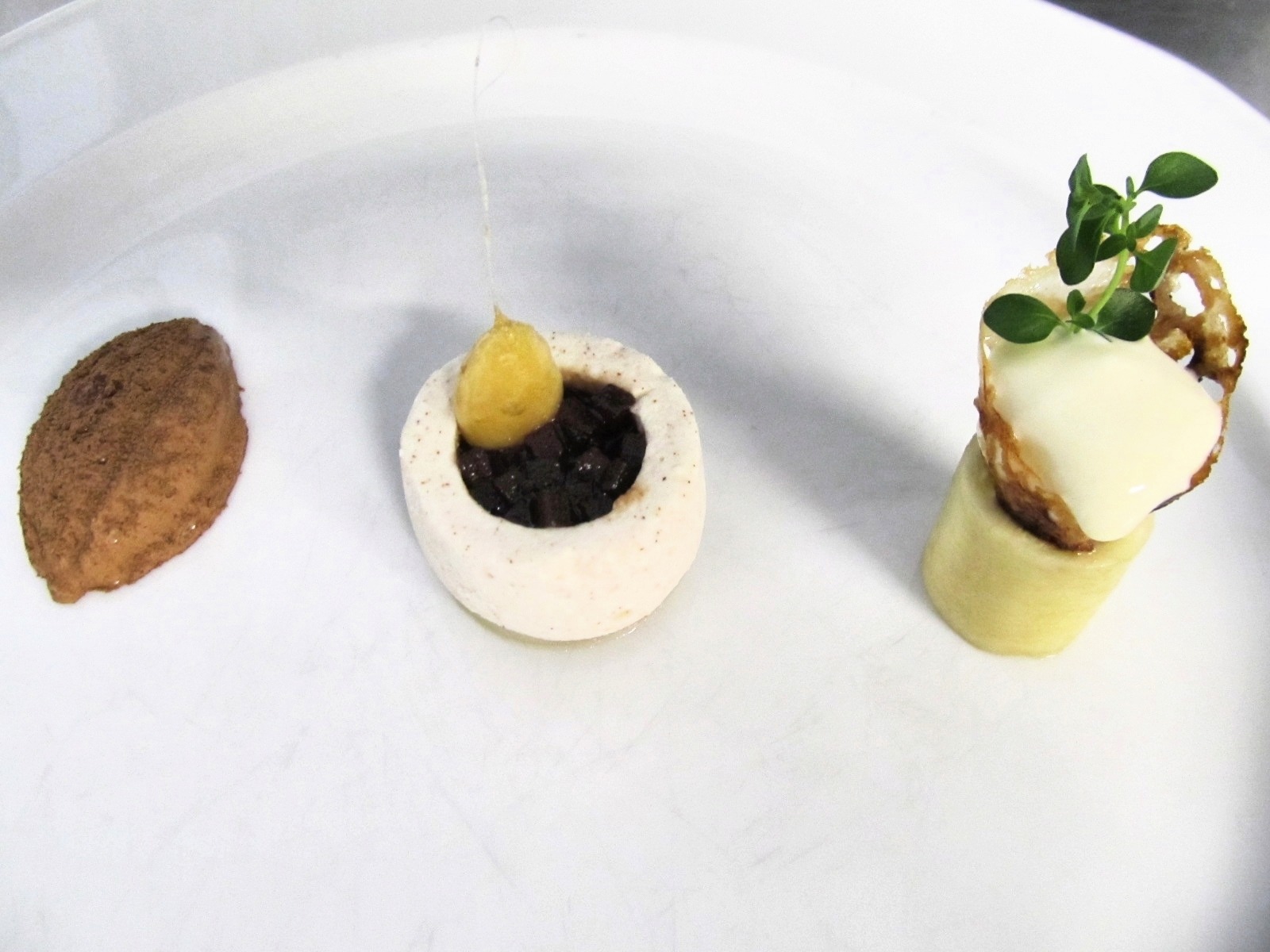
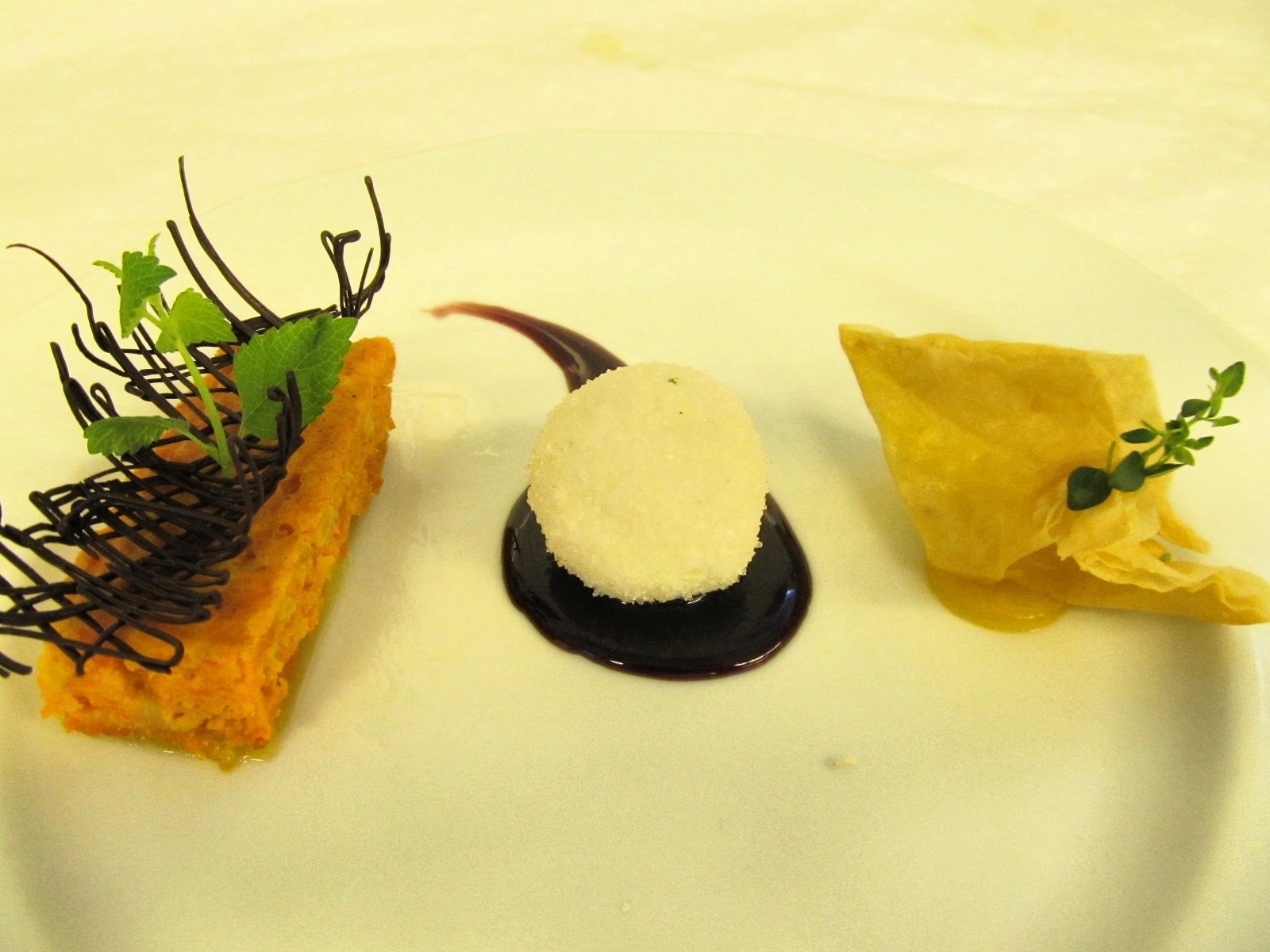
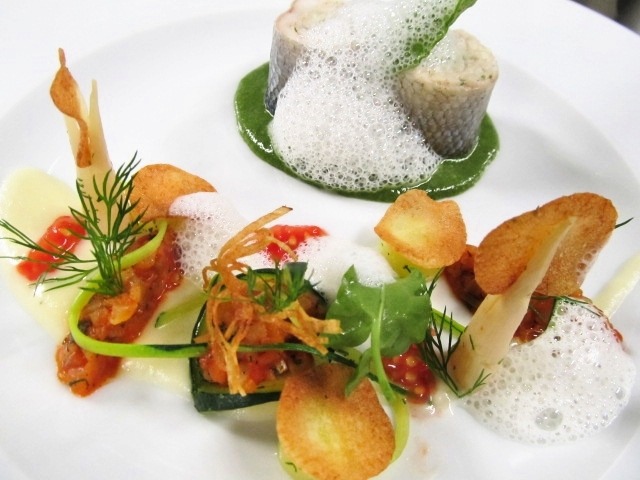
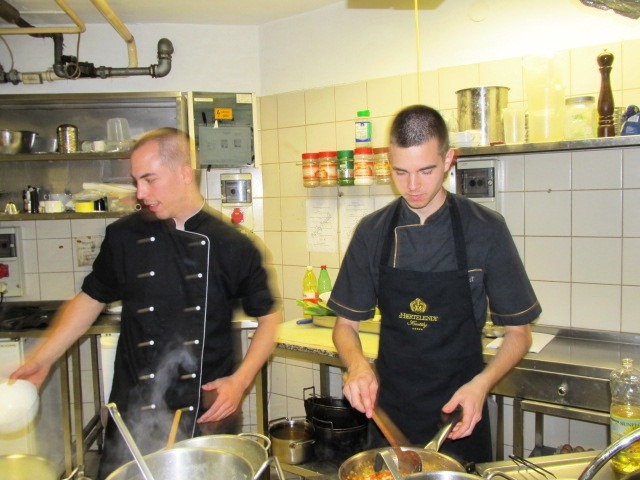
Molnár Márió with Berki Zsolt during the preparation process
*
In 2014 and 2015, there was no chef competitor in the Skills competitions because the professional sponsor, MNGSZ, did not undertake the establishment and furnishing of the four competition kitchens required for the domestic selection. To clarify the meaning of the words: the professional sponsor, even in previous competitions, existed only on paper, as I handled all the work related to preparation and competing. In fact, I traveled several times to Kaposvár at my own expense, obtained actual sponsored raw materials for the preparation, etc. The main sponsor, MKIK, could have paid for travel if I had gone by train, but as I mentioned earlier, due to the tight schedule, that was not an option.
*
When I explained to the leadership of BGE the actual role of the professional sponsor, the university took on this responsibility and supported the Skills competitions in both the chef and waiter professions. Thus, in 2016, I organized a nationwide two-round selection competition in the chef profession, which included an English language proficiency test as one element. The final took place on the Hungexpo grounds as part of the “Star of Profession Festival” competition, but independently from it. The competition was won by Barbara Ramocsai, so she was able to represent Hungary at the 2016 EuroSkills in Gothenburg, Sweden.
For half a year before the EuroSkills competition held at the end of 2016, we prepared intensively for the event. In my opinion, the preparation process was good. It consisted of three major units: foundation, practice of competition tasks, and coordinated modeling of competition tasks. The colleagues involved in the preparation were chef Csaba Ádám from Alabárdos and Olimpia restaurants, and pastry chef Péter Korponai from DesszertNeked pastry shop.
This was the first and also the last Skills competition abroad where the competitor had no problem with English language skills, because Barbara spoke excellent English. She was already able to use this knowledge during the pre-competition briefings, asking questions about anything that was unclear to her.
Barbara worked well, but with 496 points and an 82.7% performance, she placed 13th and just missed the Excellence medal. Barbara completed everything in the competition that we had practiced during preparation; in fact, considering the real competition situation, she worked even more cohesively and neatly. She took the competition rules seriously and adhered to them. With her head down, not communicating with me or the audience, she completed the seven competition tasks on time.
Barbara Ramocsai’s competition dishes:
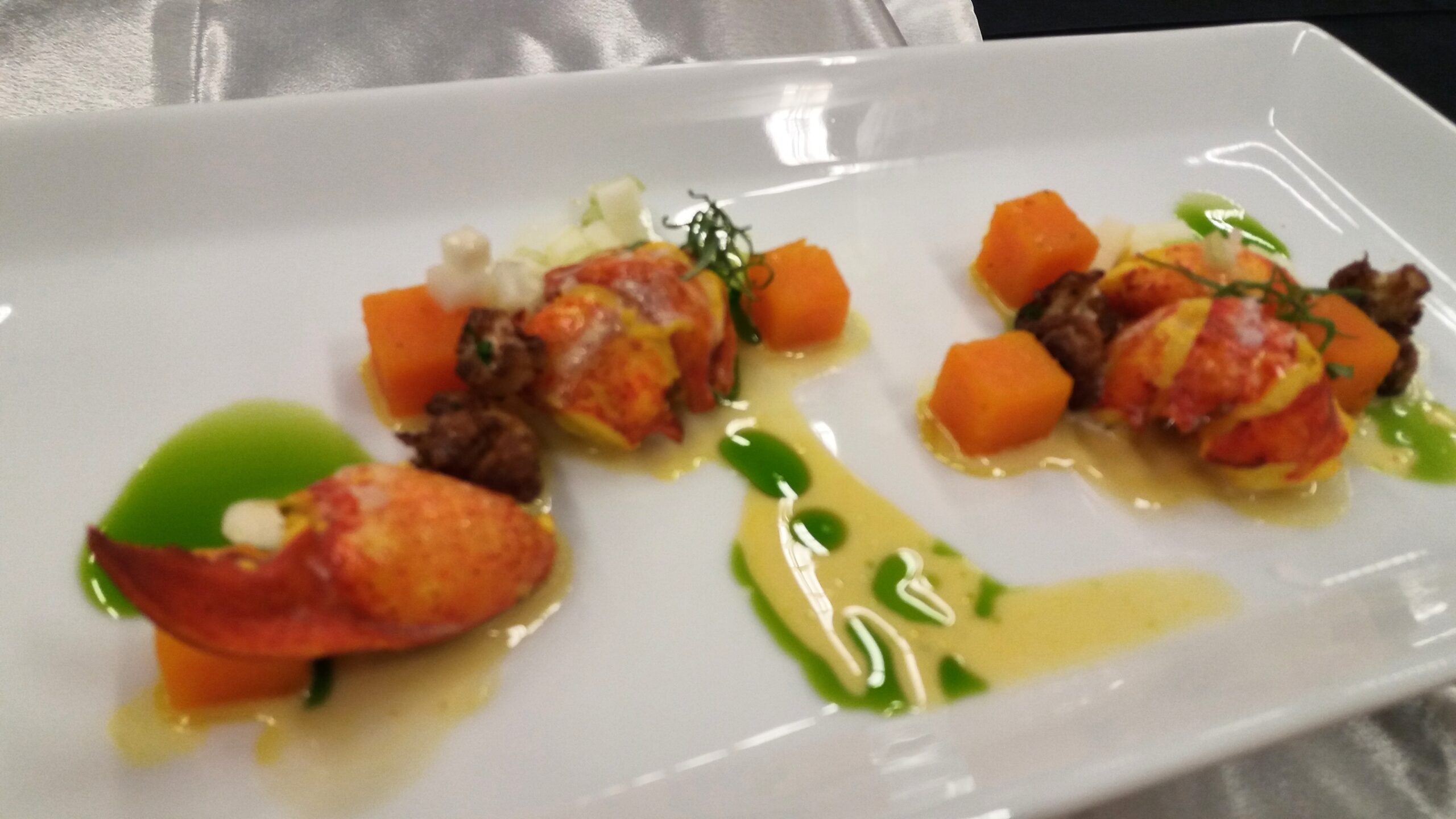
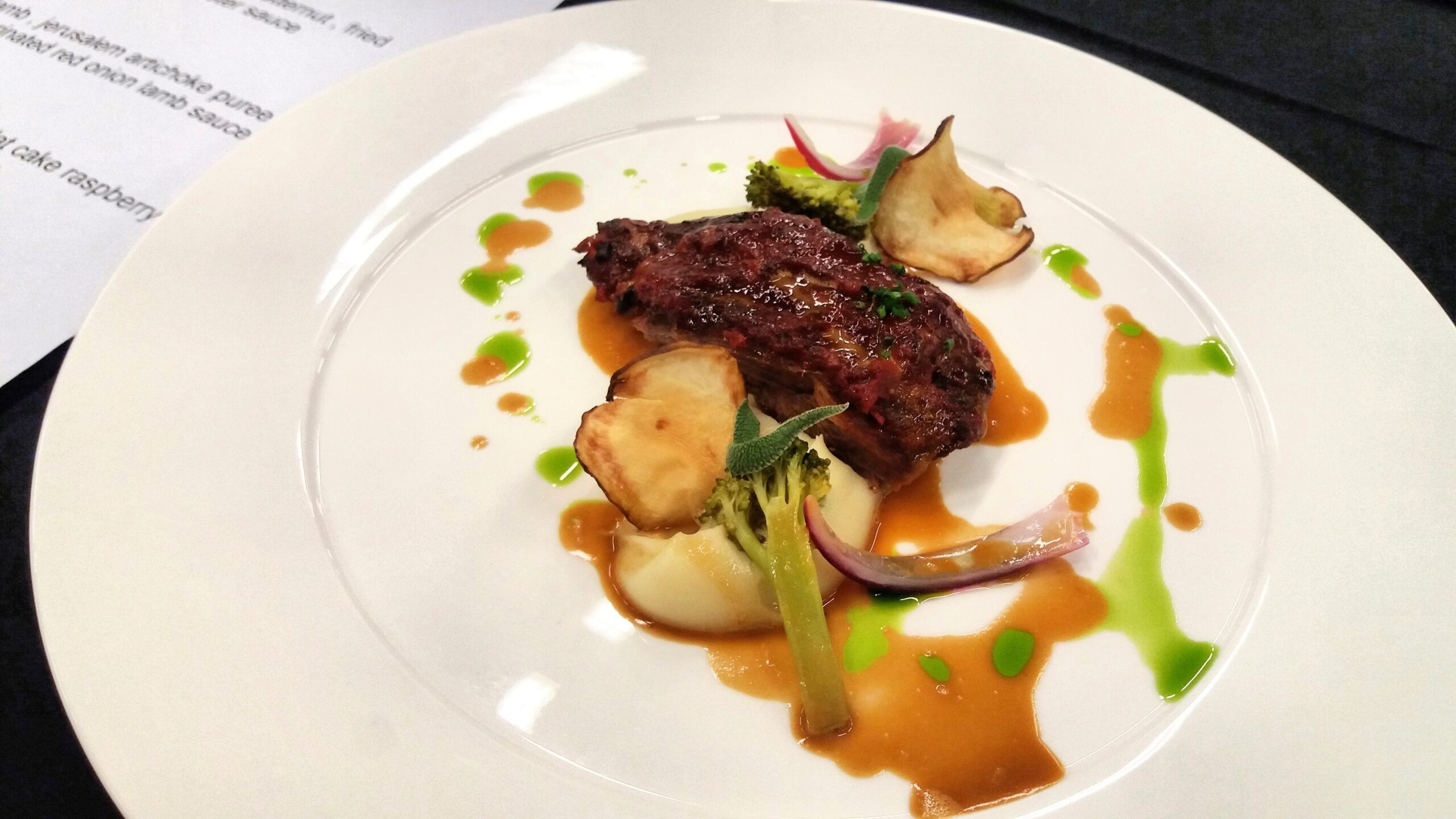
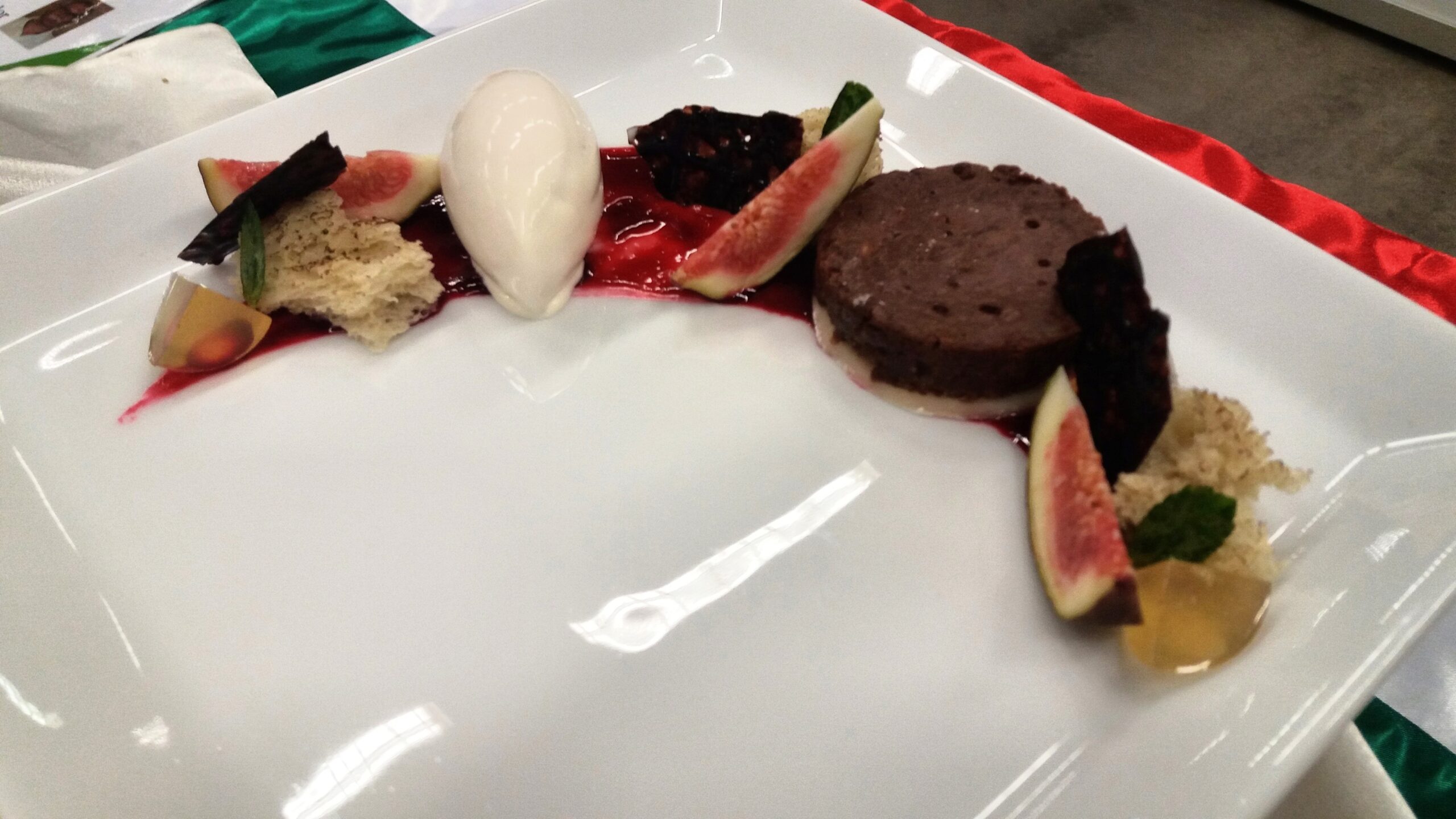
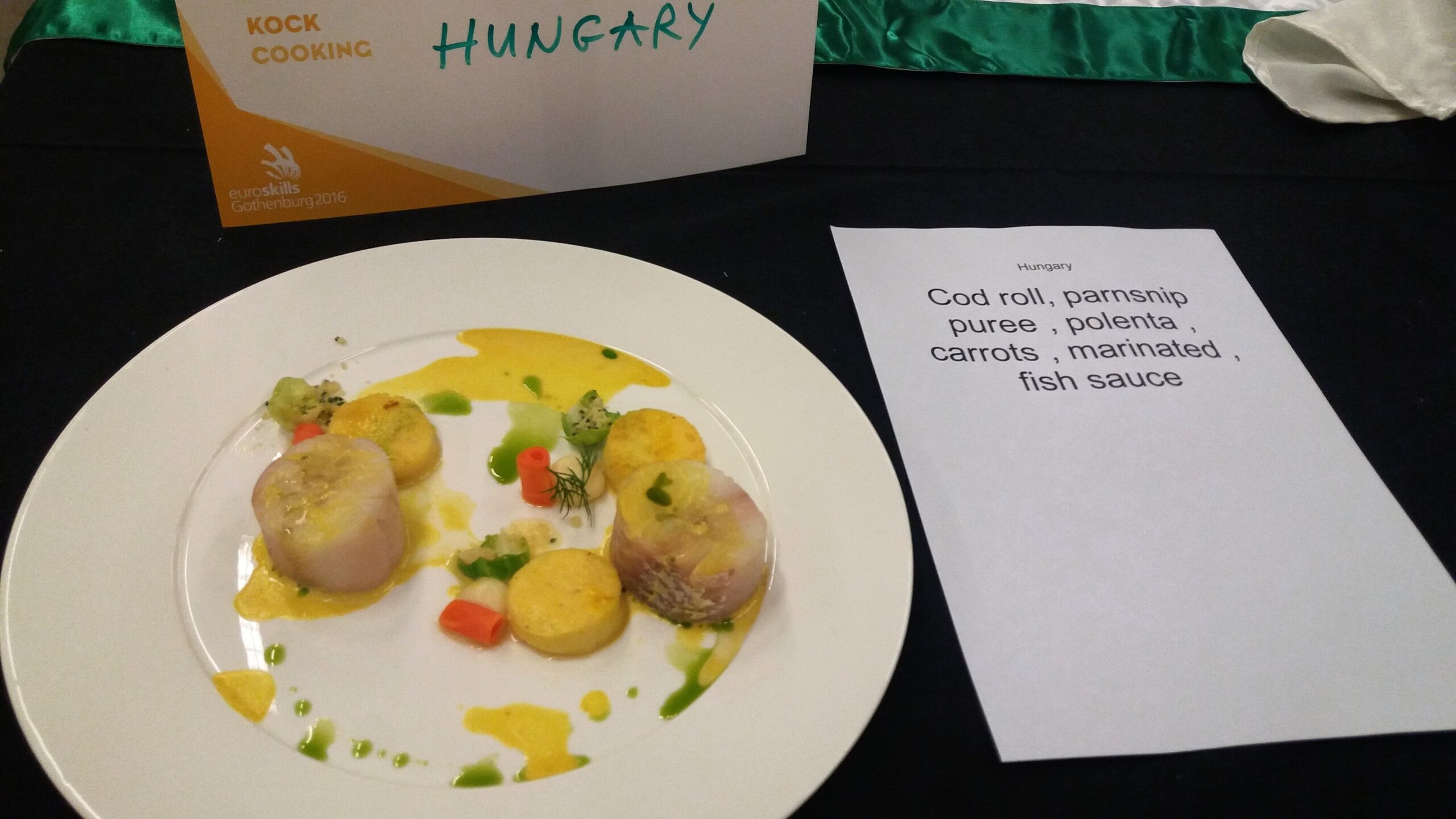
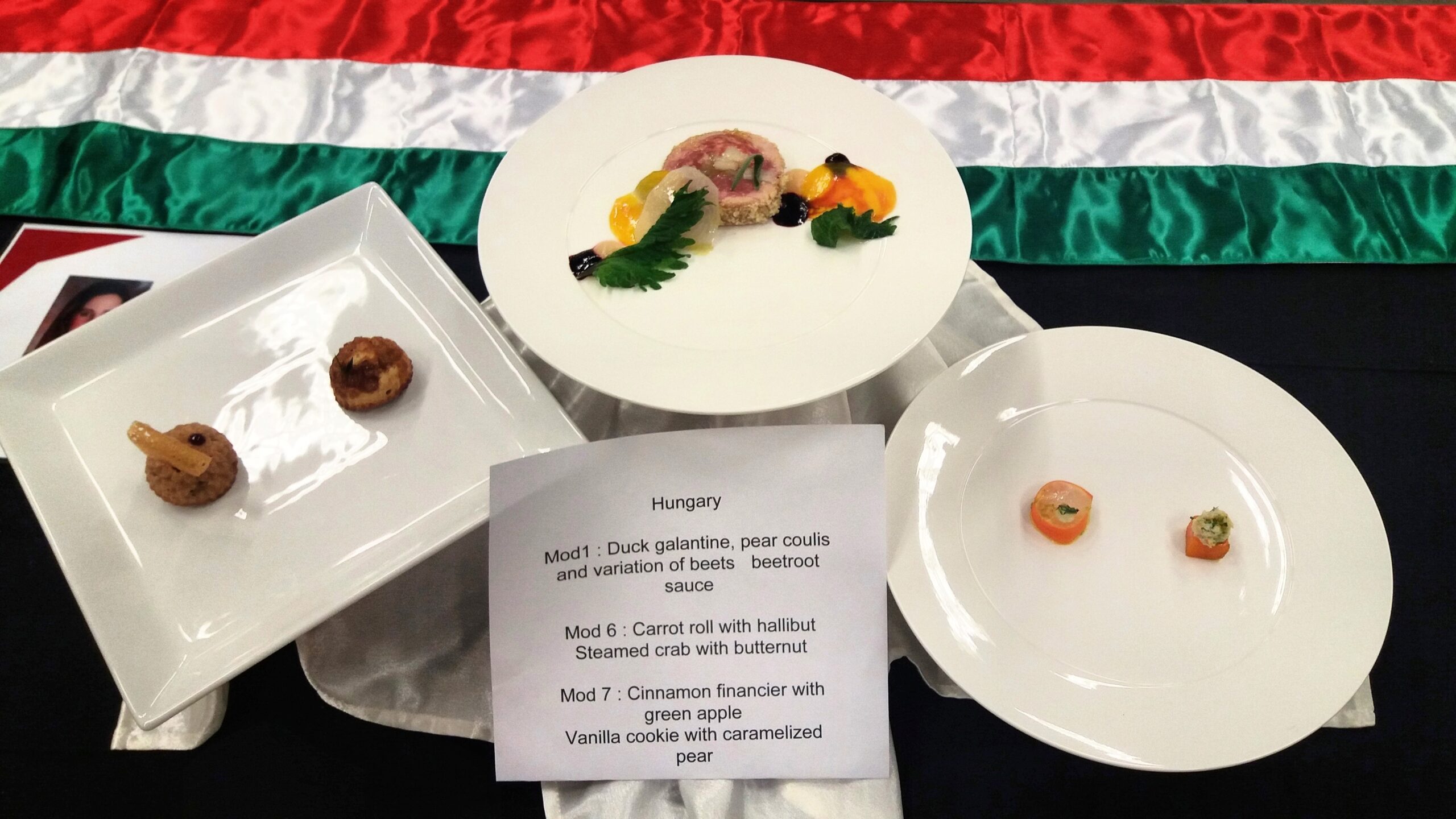
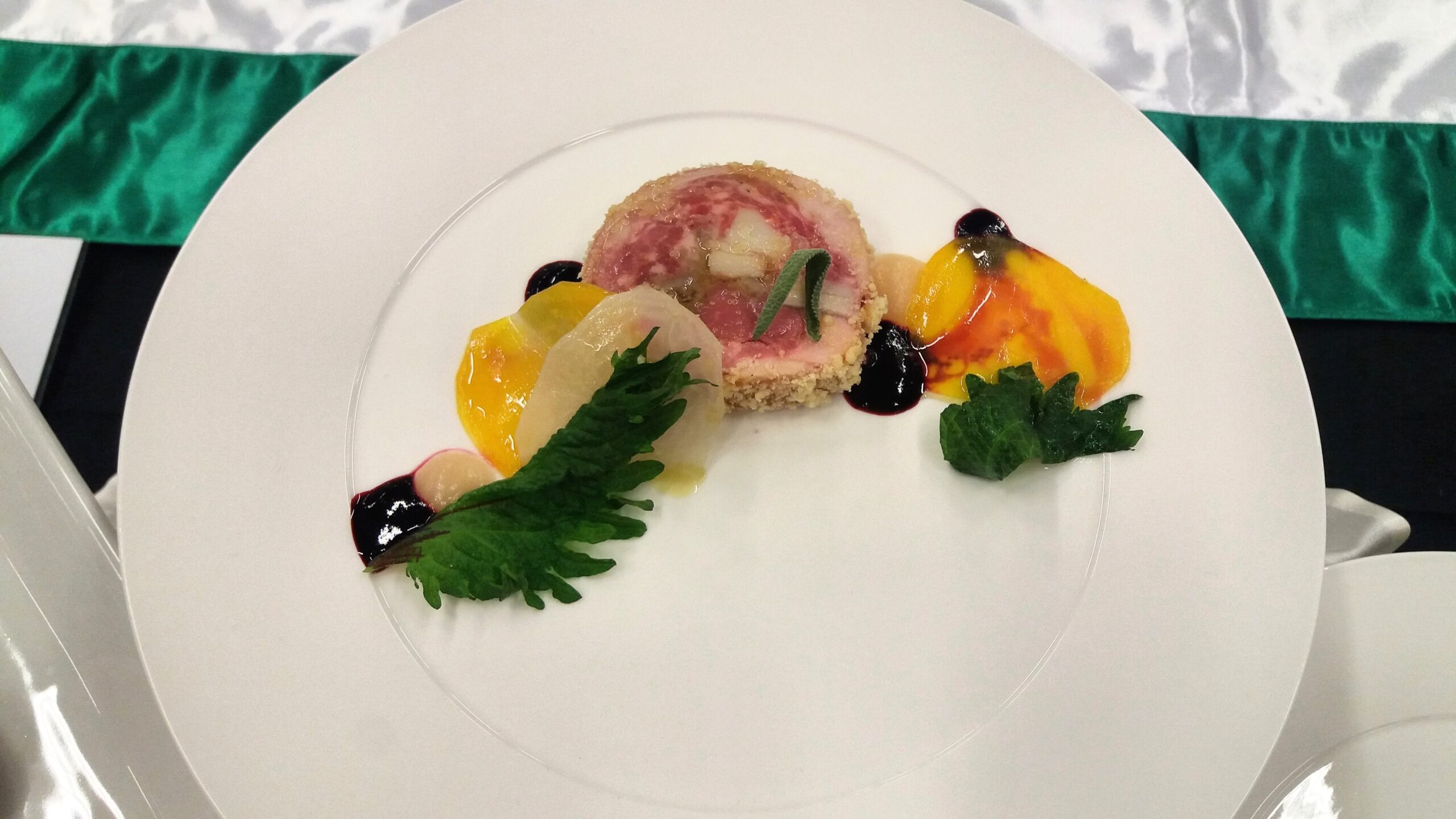
I quote a part from my summary report written to the MKIK.
“Based on the experiences gained at the EuroSkills Göteborg 2016 competition, I have the following suggestions regarding the organization of the 2018 Budapest competition:
My suggestions:
- Since I was chosen as chief expert, perhaps I will have some influence to ensure that in the chef profession, where subjective evaluation dominates the scoring, the upcoming competition in Budapest will be a fairer contest,
- To that end, I would support installing cameras in the chef competition area so that any disputed issues could be reviewed (in Göteborg there were tense, long debates!). This would encourage competitors and experts to follow the competition rules, e.g., not talking to their competitors during the contest. Furthermore, the recorded material could be excellently used in domestic vocational training.
- I would delegate a chef expert to assist me because it is not possible for one person to handle both tasks (chief expert and expert) with about twenty competitors. This happened before in Sven’s case.
- I envision more assistants (who would handle the dishwashing), one per competitor in this profession,
- Similarly, assistants would bring the plated dishes to the tasting jury, not the chief and deputy experts,
- Assistants would enter the scores into the CIS system in the presence of the chief or deputy chief,
- I plan shorter but more effective preparatory days before the competition,
- I also plan an evening professional program for experts and an evening program for competitors-experts”.
The chief expert is the head of all experts at the competition and serves as the jury president and main organizer for the given profession. When I was awarded this honorable yet highly responsible position, I thought that at the 2018 EuroSkills competition in Budapest, I would demonstrate to the other experts and competitors the benefits of efficient organization.
To earn this title, I had already presented a “Test project” (Competition plan) in the form of a PowerPoint presentation in Göteborg, which would serve as the material for the Budapest competition. Out of 3-4 rival experts, I was chosen by more than twenty experts.
*
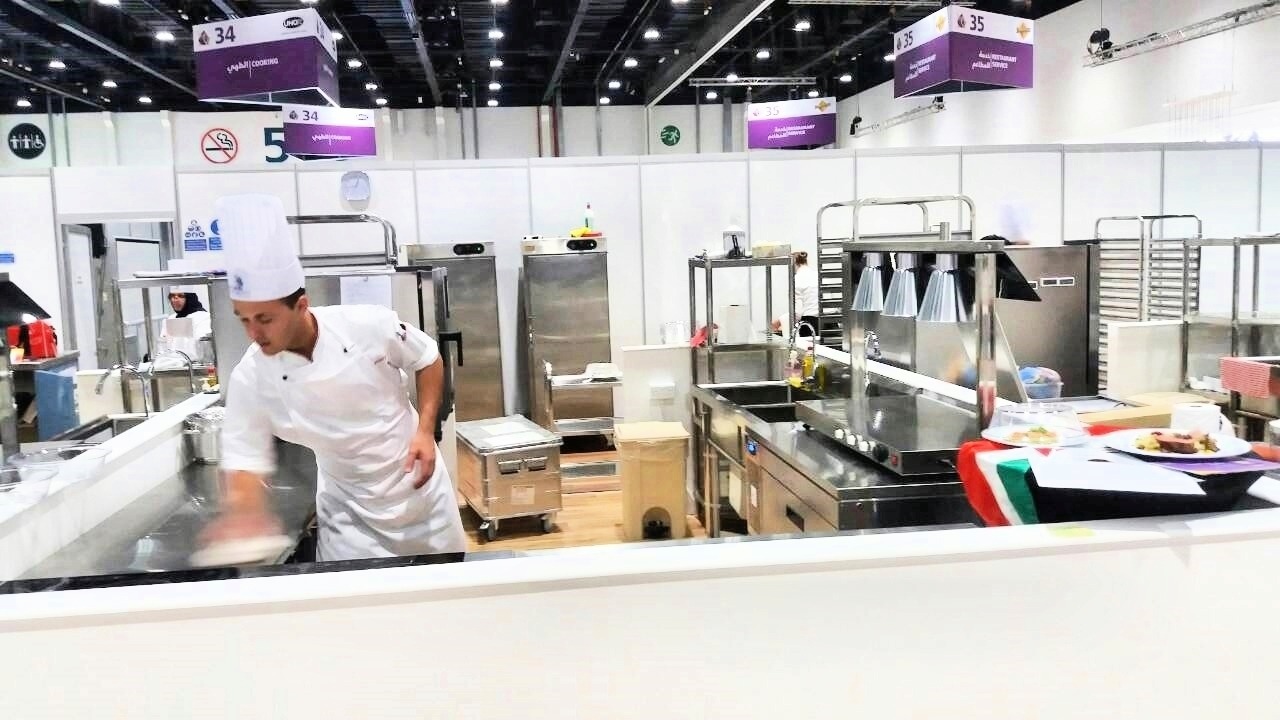
In 2017, I represented Hungary as a chef expert at the WorldSkills competition with competitor Hunor Égető in Abu Dhabi, United Arab Emirates. Hunor won the national qualifying competitions, so he could represent Hungary at the 2017 WorldSkills competition. At that time, Hunor worked at the Four Seasons under Chef Győrffy Árpád. His English language skills were not adequate, but we agreed that during the six months remaining until the competition, in addition to his professional development, he would also improve his English language skills.
The preparation process went well. It consisted of the three well-established major phases: foundation, practice of competition tasks, and coordinated modeling of competition tasks. The colleagues involved in the preparation were Zsolt Berki sous chef at Kristinus Winery, a former EuroSkills team bronze medalist and individual fourth-place finisher; Csaba Ádám executive chef at Olimpia Restaurant; Ádám Garai chef at Olimpia Restaurant; Ákos Sárközi executive chef at Borkonyha Restaurant; Gyula Molnár executive chef at Budapest Bistro; Frigyes Vomberg Bocuse d’Or coach; Árpád Győrffy executive chef at Kollázs Restaurant; Péter Palotás owner of Fishmonger; József Gran executive chef at Korona Hotel; Áron Barka executive chef at Continental Hotel; Barbara Ramocsai former EuroSkills competitor; and Péter Korponai pastry chef at DesszertNeked pastry shop.
Hunor completed almost everything at the competition that we practiced during the preparation, and considering the real competition situation, he worked even more organized and neatly. He served everything on time, which was the biggest challenge in this competition since the waiter profession also had to serve food to guests, so within two and a half hours, for example, 12 portions of appetizers and then 12 portions of main courses had to be served after half an hour. Due to the difficult conditions — short time, large quantity and variety of dishes to be prepared and served — some of the served dishes were not perfect aesthetically, for example, they were not decorated.
Hunor was very disappointed when he found out that he placed 34th out of 42 competitors, scoring 674 points out of a maximum of 800, which is an 84.3% performance.
In summary, looking at the results of chef competitors in skills competitions, it can be seen that except for one, everyone achieved a performance between 82-87.5%, which was enough for places between 4th and 34th depending on the competition. The most successful competitor was Zsolt Berki, who won a team bronze medal, an individual excellence medal, and placed 4th. Péter Molnár also received an excellence medal.
The expert work may seem enviable from the outside, as the competitions take place every year in different locations, but the preparation work is not easy either, including organizing and conducting domestic competitions, passing English language expert tests, and active participation in international skills competitions. The latter means 5-6 days of work from morning till evening. Moreover, the whole day’s work was not efficient, with many idle times. The first 2-3 days are spent preparing the competition, followed by 3-4 days of the competition itself. For the next competition, the “Test project” (competition tasks) must be planned, which are then always changed, so there was little point in investing effort in this. That is why I was glad in Gothenburg to be elected “Chief expert,” because I thought that in Budapest the “Test project” I prepared after consultations in Gothenburg would not be changed. However, in Abu Dhabi, I got fed up with the many hours of wasted time spent at the competition venue. Of course, it is not easy to keep a chef community from 42 countries united, but this certainly did not help the reputation of the then “Chief expert” Andreas Müller, who is German but has lived in Hong Kong for a long time, when he began his introduction in front of the 42 competitors and as many experts by saying “I am Adolf” while holding his finger under his nose like a mustache. I saw the shock appear on people’s faces.
This was worsened when, on the evening of the fourth (last) day of the competition, he did not let anyone go home, saying we had to wait until the CIS (IT system) was fixed, where the results were entered. It could have been organized so that we would check the entered results the next morning when we returned. We suggested this, but he did not accept it, so we could leave only around 1:30 AM to our accommodation, which was still half an hour by taxi. On the way back, it occurred to me, and I told my colleague Dr. György Cservák, Hungary’s waiter expert, that my involvement in Skills was over. He felt similarly, although he was still a waiter expert in Budapest in 2018. However, after returning home, I informed the MKIK that I was done with this activity after a few good and beautiful years in the service of Skills. They accepted my decision.
There were a few more incidents during the Abu Dhabi competition worth mentioning. One was when all experts were tested in cooking. We had to prepare a risotto based on a given recipe. To my surprise, I was chosen to the jury for experts, so I did not have to make the risotto, but I had to evaluate the work of about 40 colleagues, along with 2-3 other expert colleagues. A separate jury from Abu Dhabi hotels did the tasting.
Another notable event happened the afternoon before the first competition day, when the “Shop Master” responsible for supply said that he and two assistants were overwhelmed with preparing the goods and left. The “Chief expert” did not organize further work but only weakly asked the experts who would help with measuring out the goods. Together with a Swedish and a Finnish colleague, we went into the warehouse and continued measuring and distributing the raw materials where the warehouse staff had stopped. Sebastian Gibrand, a Swedish expert who won the Bocuse d’Or silver medal two years later in 2019, held the raw material list and told us what and how much to put on each tray, for example, “20 grams of tomato paste to tray 22 and 4 eggs to tray 31 please,” etc. The Finnish colleague and I quickly found the requested raw materials, measured them, and either we or Sebastian placed them in the designated places. Thanks to our coordinated and good-humored work, by around 9 PM we finished preparing and packing the raw materials for all competitors’ trays. The next day, not many people — except Chief expert Andreas Müller and Australian shop master Kim Stanton, who muttered a thank you — appreciated the significance of this work, but if we had not done it, the chef competition would not have started.
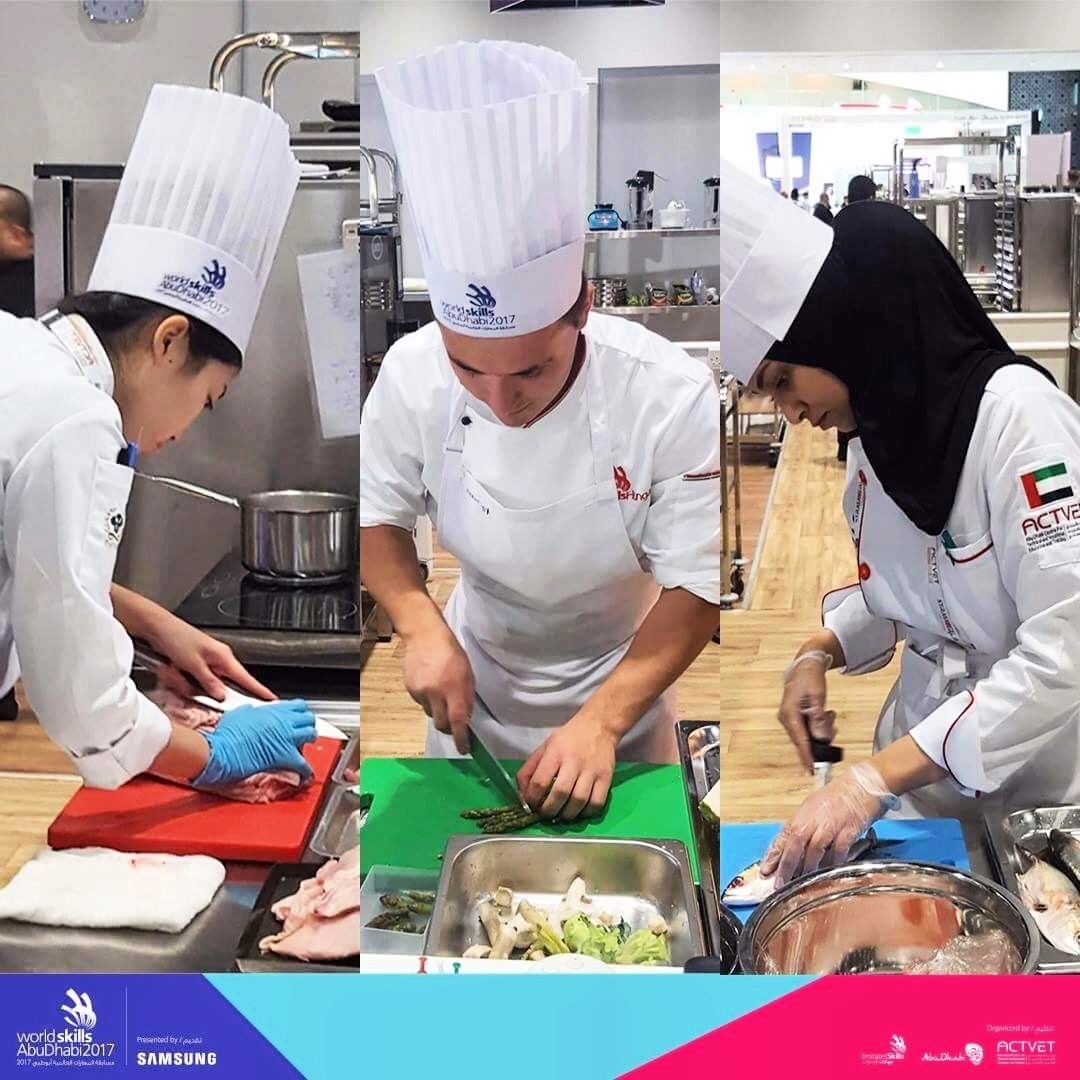
The photos from the 2017 WorldSkills competition preparation and the competition:
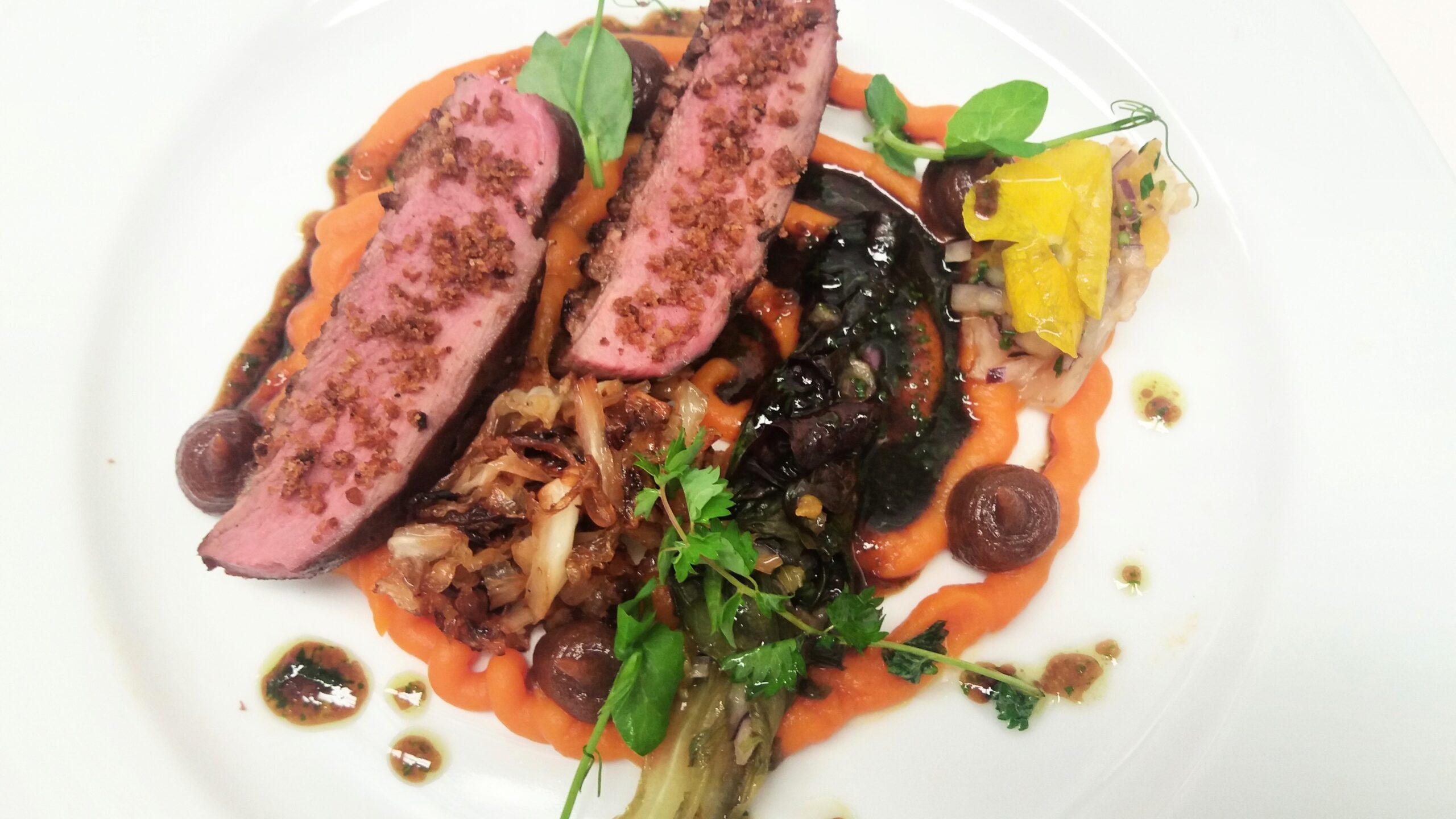
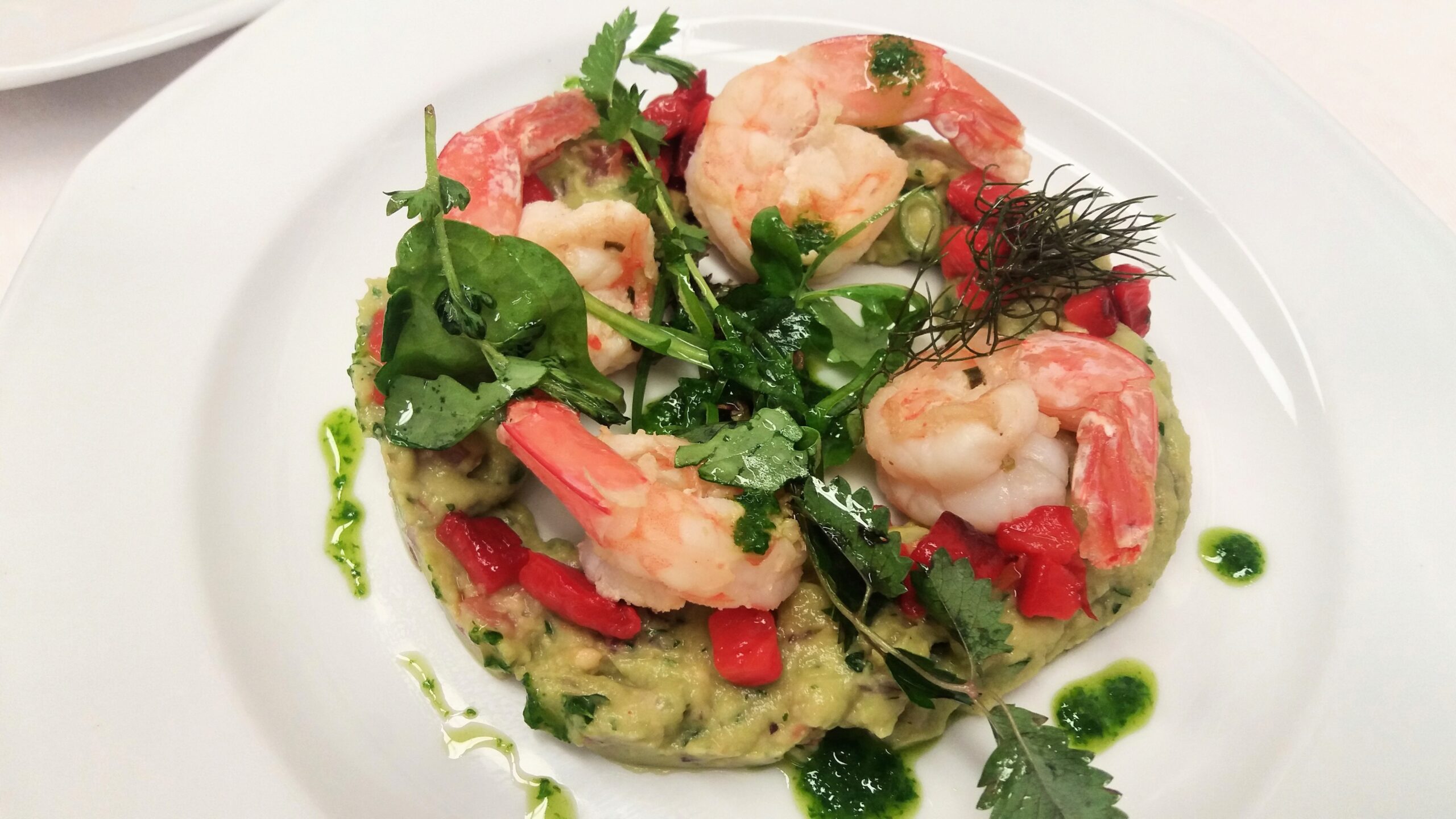
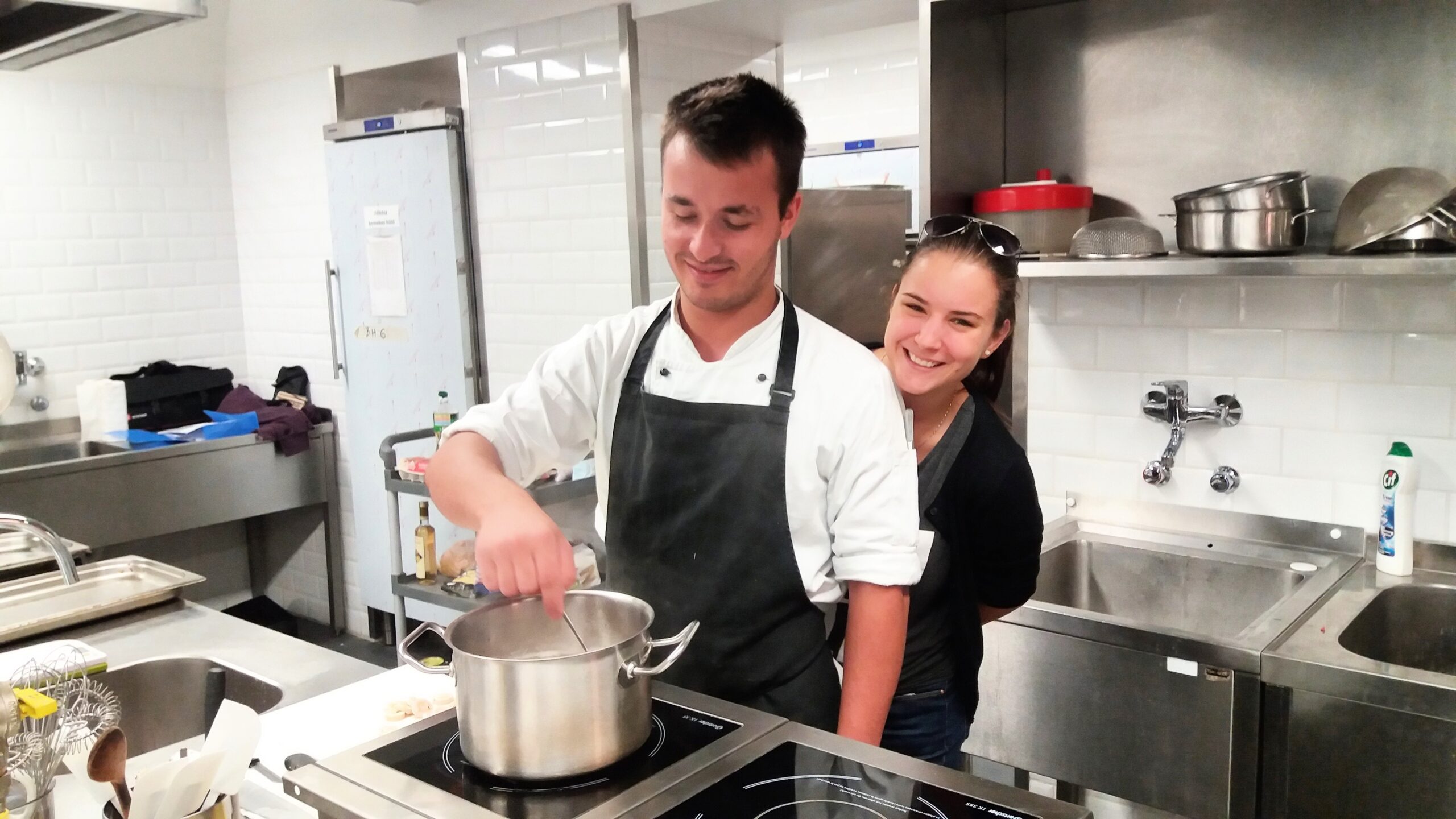
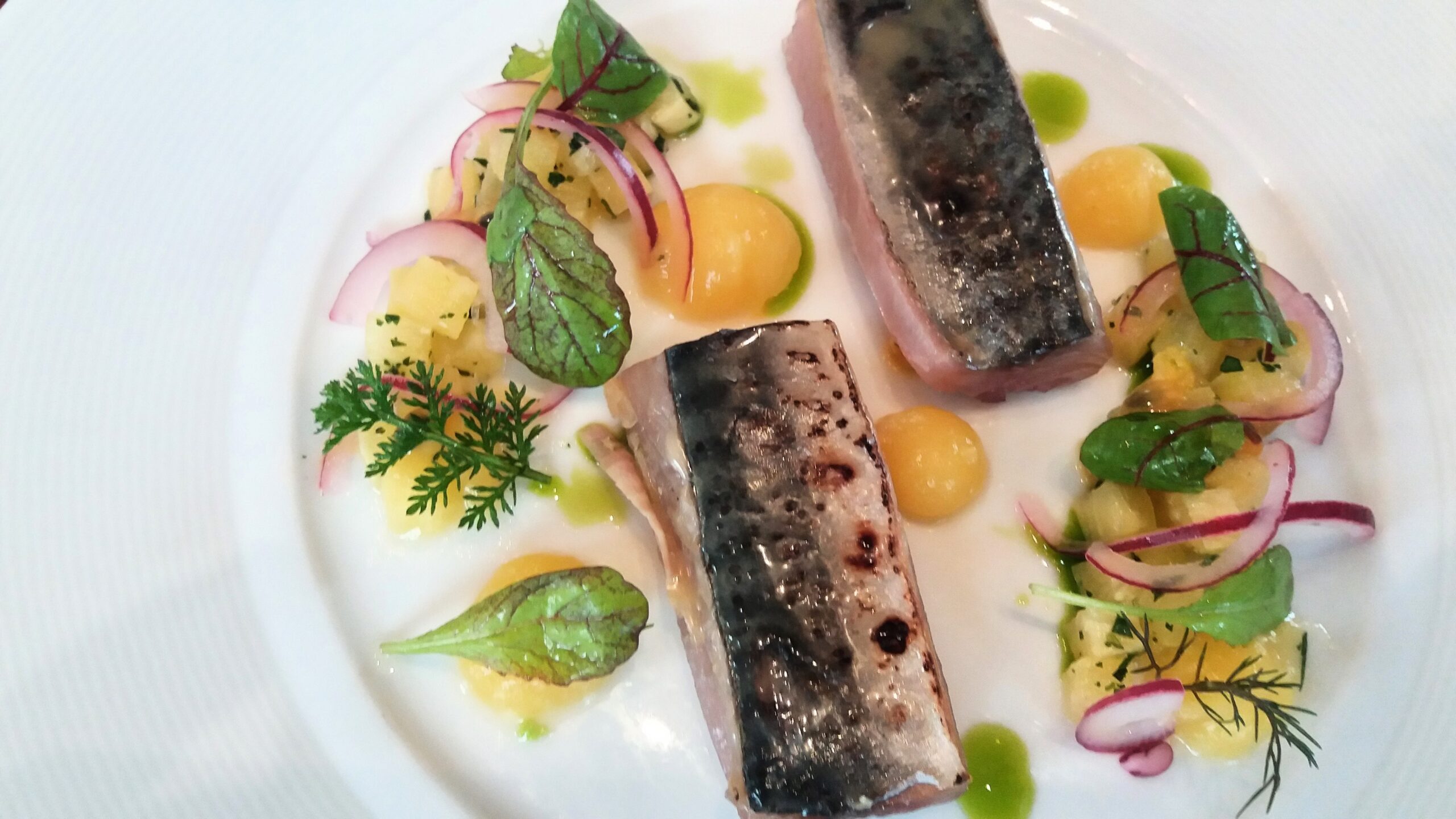
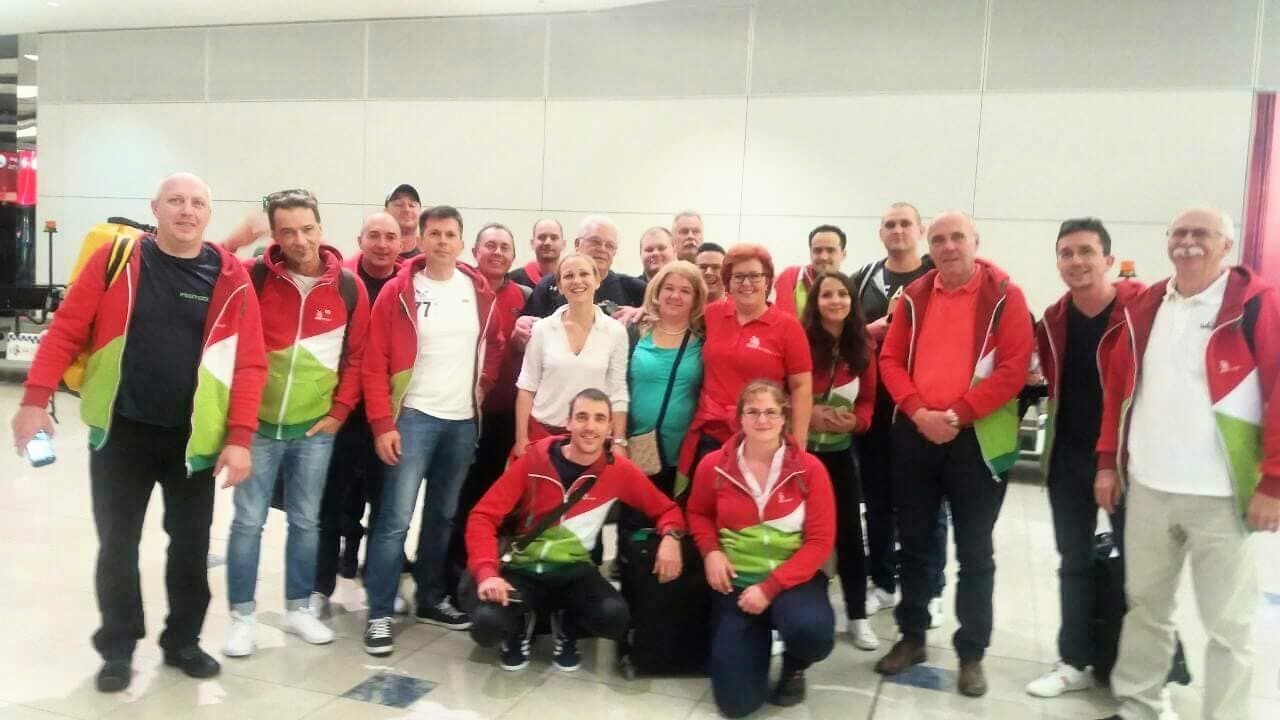
The Hungarian expert team, 2017, Abu Dhabi
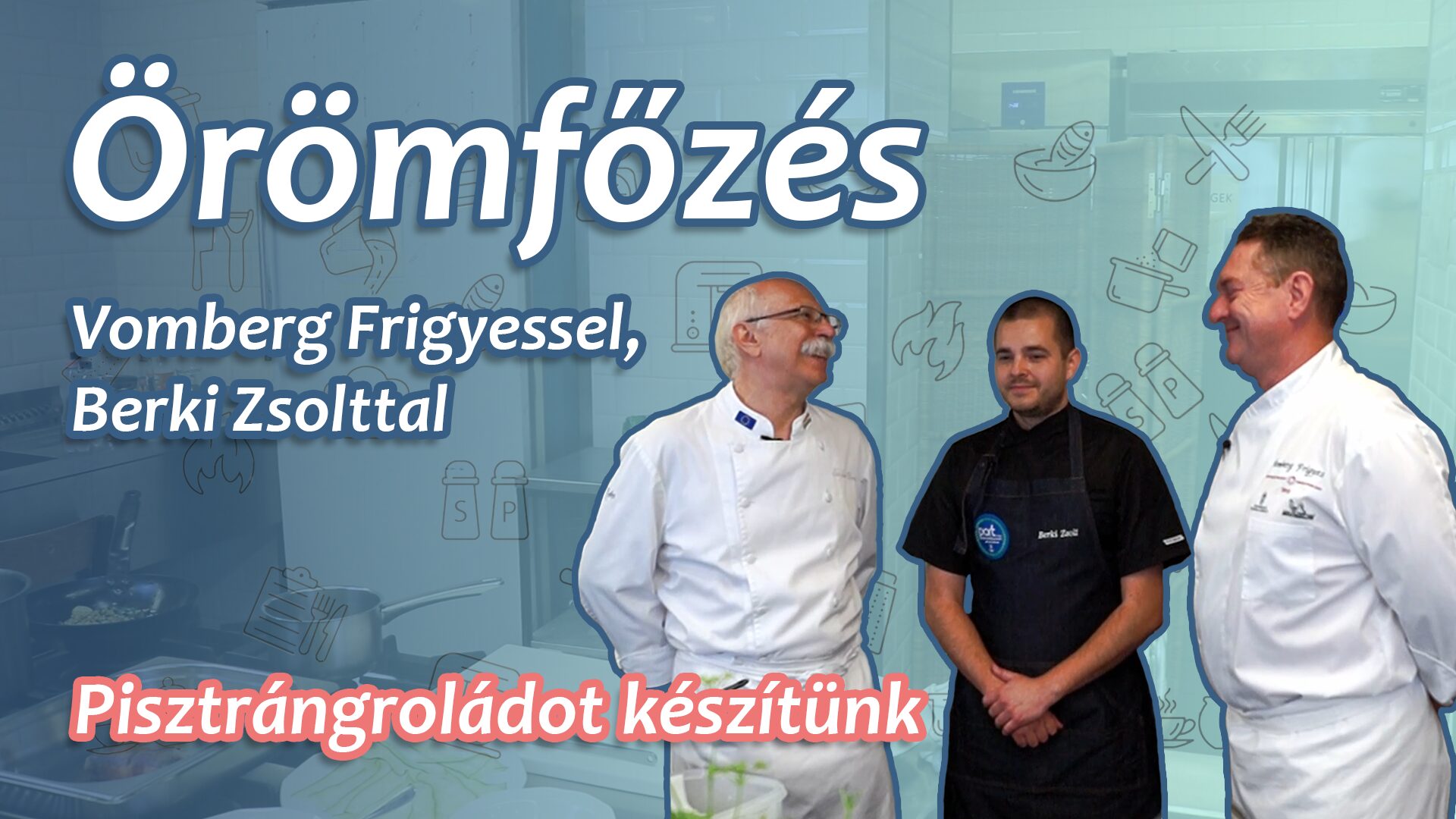
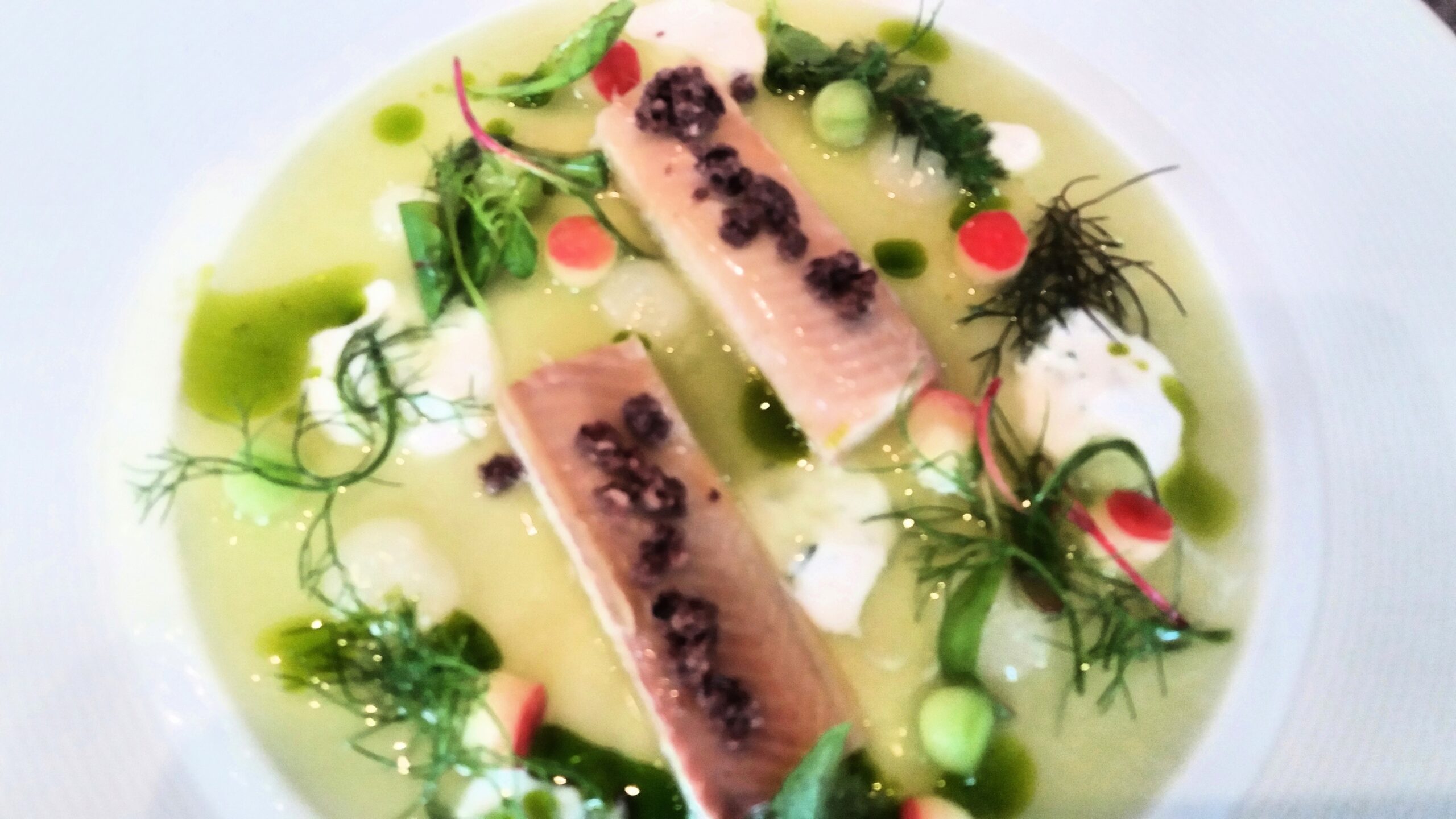
Click on the image for the video of the “Tapolca trout roulade, dill sour cream, pickled vegetables, sour cream foam, olive tapenade” prepared at Joyful Cooking! You can find the recipe below the video!
You can watch the interview with Zsolt Berki on YouTube by clicking here.
You can watch the interview with Frigyes Vomberg on YouTube by clicking here.
The spontaneous stories told during Joyful Cooking can be found here:
https://www.youtube.com/watch?v=jIJdcwlFISQ
https://www.youtube.com/watch?v=m1kyoWB31BA
https://www.youtube.com/watch?v=KwuxeZP2eK0
https://www.youtube.com/watch?v=Icip1T88GhU
https://www.youtube.com/watch?v=mDQTvWuNxSg
https://www.youtube.com/watch?v=AZFE7AaelSY
https://www.youtube.com/watch?v=OnRFzIp925o
https://www.youtube.com/watch?v=6odjUiyi9ok
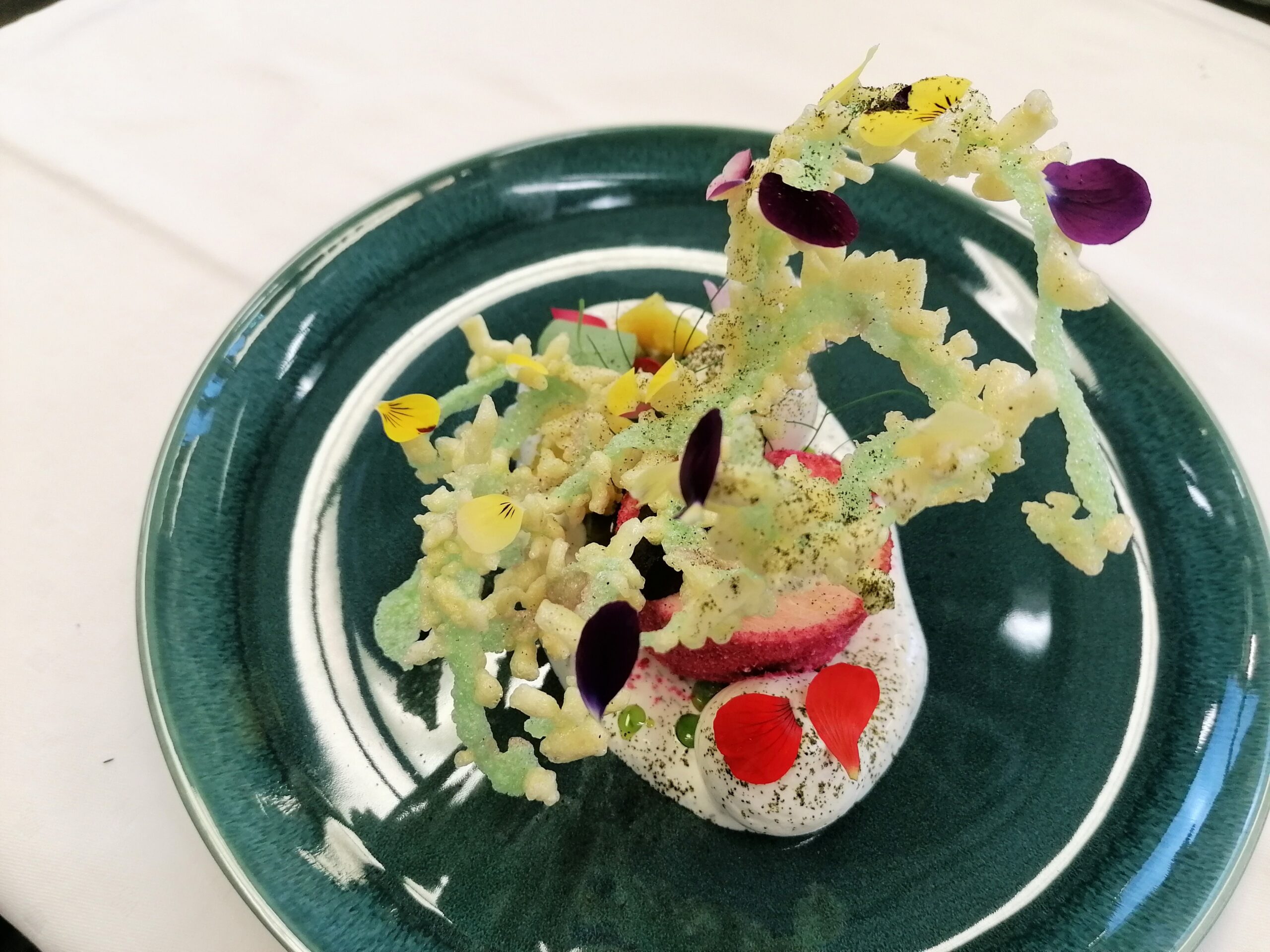
Tapolca trout roulade, dill sour cream, pickled vegetables, sour cream foam, olive tapenade
Recommended ingredient quantities for 4 people:
For the trout roulade:
6 trout fillets
100 ml olive oil
2 eggs
200 ml cream
salt, pepper
1 lemon
lemon verbena
For the beetroot crumbs:
50 g beetroot juice
100 g panko breadcrumbs
50 g lemon verbena
For the dill sour cream:
300 g sour cream
dill
salt
1 lime
For the pickled vegetables:
150 g cauliflower
200 g pickled cucumber
50 ml olive oil
fresh dill
100 g pearl onions
3 button mushrooms
300 ml apple cider vinegar
salt
sugar
100 ml beetroot juice
curry powder
rosemary
thyme
whole peppercorns
bay leaf
200 ml water per vegetable type
For the black olive tapenade:
200 g black olives
For the sour cream foam:
200 g sour cream
50 g milk
salt
The preparation process:
- The trout fillet is deboned and skinned, then marinated with salt, pepper, lemon juice, and olive oil. Meanwhile, 2 fillets are diced and a fish farce is made with cream and egg white, then seasoned with lemon balm, salt, pepper, and lemon juice. The prepared farce is filled into the center of the fillets, then rolled up, vacuum-sealed, and cooked in a 62-degree Celsius water bath for 35 minutes. It is refrigerated until serving.
- We prepare beetroot crumbs. The panko breadcrumbs are baked in the oven until golden brown, then blended together with beetroot juice and lemon balm using a Thermomix or blender. The mixture is dried, and before serving, the prepared trout roulade is rolled in these crumbs
- We start making the dill sour cream. The sour cream is strained on a cloth to obtain a thick cream. It is seasoned with grated lime zest, lime juice, fresh dill, salt, and pepper.
- We prepare the olive tapenade. A puree is made from pitted black olives using a Thermomix, then if it appears too liquid, the juice is strained off with a cheesecloth.
- We make the pickled vegetables. The pickled cucumber is diced and seasoned with olive oil and freshly chopped dill. The mushrooms are halved, the cut surface is scored, and they are seared in a hot pan. The cauliflower is separated into florets. The pickled pearl onions are drained, then topped with beetroot juice. Two rapid-boil pots are filled with water, each seasoned with salt, sugar, apple cider vinegar, bay leaf, and whole peppercorns. One pot is flavored with curry powder, the other is left neutral in color. Both bases are brought to a boil, then the prepared cauliflower is put into the boiling curry base, and the mushrooms into the other. They are boiled for 3 minutes, then removed from heat, cooled down, and refrigerated until serving.
- We assemble the sour cream foam. The sour cream is mixed with milk, seasoned with salt, then filled into a siphon and whipped with a cartridge to make foam. It is also kept refrigerated until serving.
- At plating, the trout roulade is sliced and rolled in the beetroot crumbs. A small spoonful of dill sour cream is placed in the center of the plate. On one side, a tablespoon of pickled cucumber is placed, on top of which the trout roulade is set. On the other side, the pickled vegetables are arranged. The black olive tapenade is placed on top of the trout roulade in the shape of small dumplings using two tablespoons. Sour cream foam is piped onto the plate. For garnish, fresh sprouts, parsley oil, etc., can be used.
*
Preview
Olivier Roellinger cooking competition.
Joyful cooking with Dániel Szűcs and Fanny Czompa, who both studied at BGE KVIK and have also achieved excellent results in international cooking competitions.
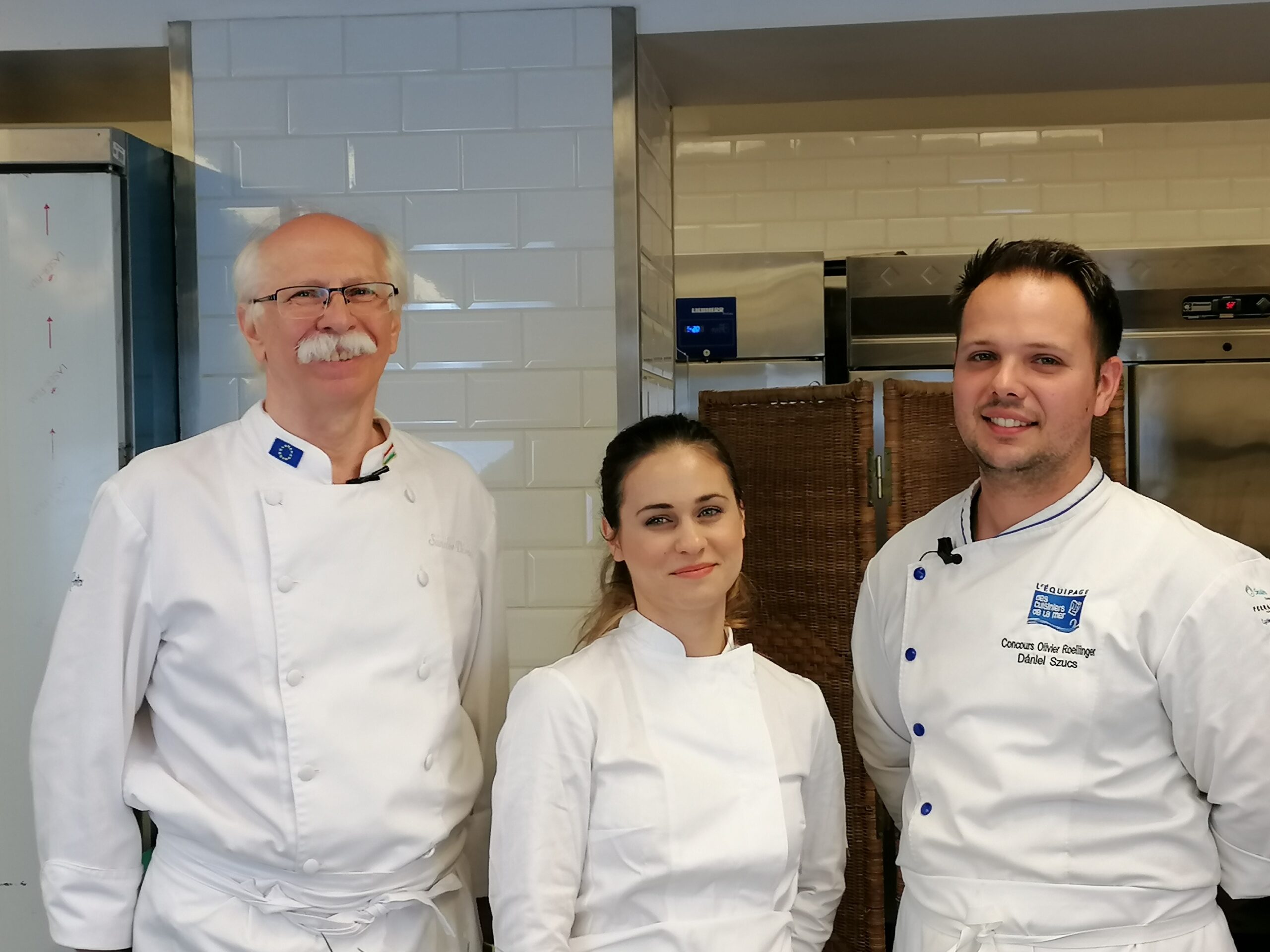
With Fanny Czompa and Dániel Szűcs
*