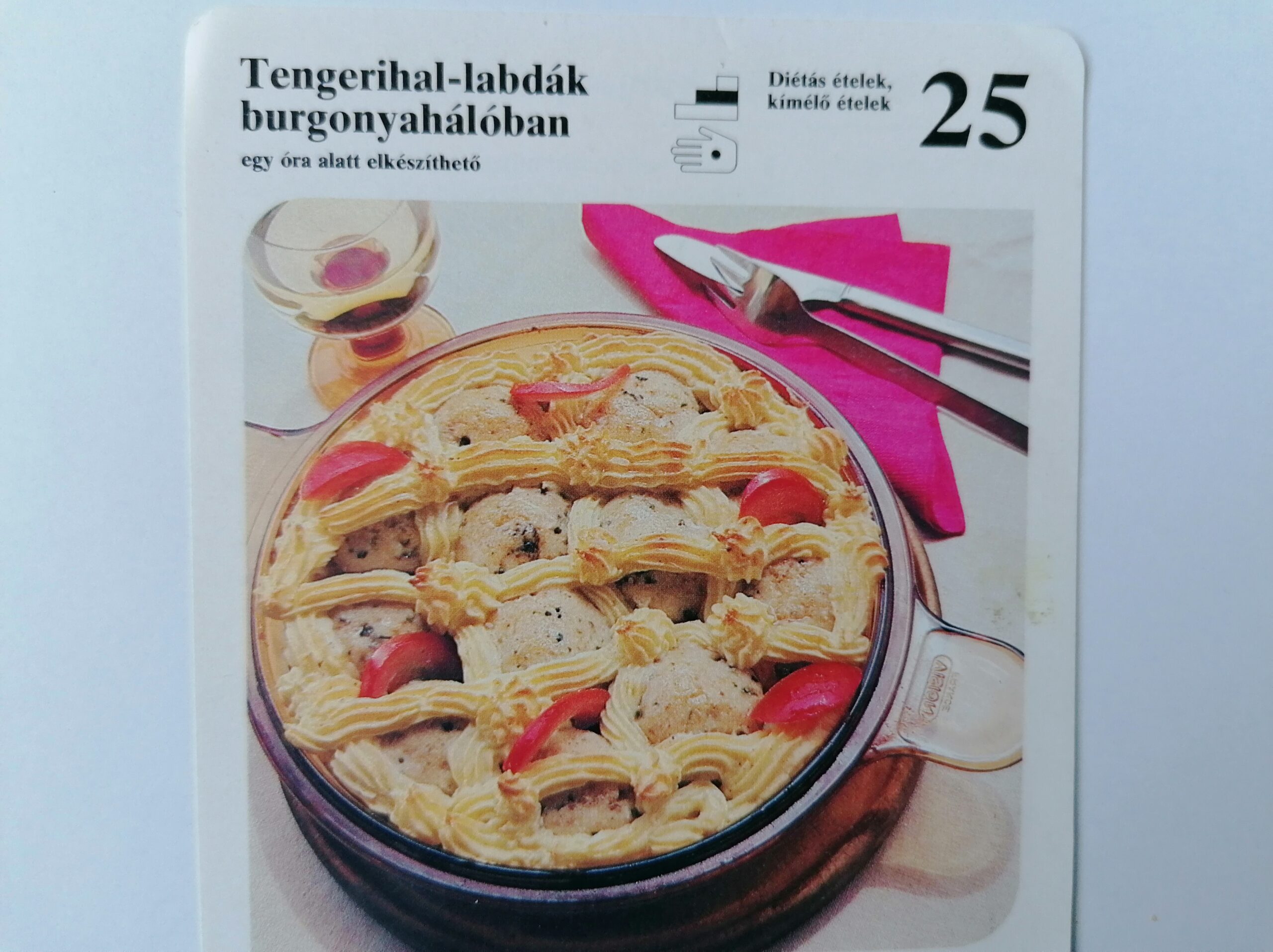
1970-80s Part 2.
Part-time jobs
In connection with my earlier professional career (1968-1980), I already mentioned various part-time jobs I performed, which continued during the period 1980-1992 as well. I kept helping out at the BM Club, where László Marosvölgyi was the manager, who strictly supervised the professional work but treated the staff with friendliness. In a few cases, he had to administer justice. One such instance was when food had to be served from the platter onto the guest’s plate at an event, but due to limited space—there was a pillar to the guest’s left—I served the food from the right side. Seeing this, uncle Laci’s deputy, a professional captain, started to complain that serving should be done from the left side. I told him that there was a pillar there and it was impossible to reach from that side. Uncle Laci appeared on the scene, saw and heard what happened, called his deputy aside, and gave him a stern talking-to. In another case, the boss had to put a guest in their place. During a Sunday lunch, which was always fully booked and often had multiple seatings, a guest finished their vegetable stew with topping— the latter was a small bread-shaped meatloaf in a personal-sized casserole dish—and then showed off a coin-sized overcooked end piece of meatloaf. I informed uncle Laci, who politely but firmly, I assume, told the guest that he must have enjoyed the meal because apart from that small piece, the guest had eaten everything, and also reminded them that the price of 9.90 Ft, being the BM Club, was a very favorable meal price.
*
I also worked as a serving assistant at several other places, for example at the Légrádi family’s restaurant on Magyar Street. According to a practice that I found a bit amusing, when a green salad was prepared at the guest’s table and the plate was placed in front of the guest on the table, I had to appear beside the guest with a pepper mill about 80 cm long and ask if they wanted a little pepper on their salad. Of course, this was professionally correct practice, but most guests, seeing the pepper mill—which could also be interpreted as a small weapon—asked for pepper without hesitation. It was an honor when László Légrádi, observing my work, praised me a few times saying, “Well done, professor!”
*
I also helped out at many events. At the Hilton Hotel, on one occasion, the dessert for the ADAC (German Automobile Club) gala dinner was Baked Ice Cream (Omelette Surprise), which had to be served for 80 guests. Chef Pista Juhász, who had been my colleague at the Sport Hotel, generously doused the dessert on a ten-person silver platter with alcohol, lit it on fire, and then the eight servers entered the dark event hall simultaneously through separate doors. The guests immediately broke into applause. At my table, I started serving the baked ice cream, but “thanks to” the excessively large amount of alcohol, even while serving the fourth guest, the dessert was still burning. The ladies in evening gowns instinctively pushed their chairs back to protect themselves. Fortunately, the adventurous service ended without any accidents.
*
László Légrádi also had a countryside restaurant in Ásványráró. On weekends, I worked there as a part-time cook. Péter Balló, my college classmate, who previously worked at the Légrádi restaurant on Magyar Street was the operational manager, invited me to work as part-time cook. The operation at the Ásványráró restaurant was also of a high standard. The cold mixed appetizer consisted of twelve components, such as caviar, pike perch roll, foie gras pâté, smoked salmon, beefsteak tartare, Swedish mushroom salad, etc. On one occasion, Péter came into the kitchen and asked me to fry a beef filet steak for a distinguished guest, cooked between rare and medium rare. This doneness level in international terminology is called “à point – medium rare.” I cooked it accordingly. The guest was very satisfied and listed several top European restaurants where they were unable to cook the meat so perfectly.
*
In the late 1980s and/or early 1990s — parallel to the previously mentioned Légrádi-run restaurant in Ásványráró — I often worked on weekends helping to start up a hotel kitchen at the Szent Flórián Hotel in Mosonmagyaróvár. At that time, my weekly work cycle looked like this: during the weekdays I worked at the college, while on weekends I traveled by train to Győr or Mosonmagyaróvár, from where I was driven by car to the respective restaurant, worked the two days, and then took the train back to Budapest after the Sunday lunch service.
At Szent Flórián, it was necessary to establish the kitchen operation system adapted to the expected demand. One of the owners was not from the hospitality industry but was a textile businessman, and he really did not interfere with the kitchen operations. It was extremely amusing when he appeared at one end of the kitchen and, walking rhythmically with his arm stretched out forward, loudly said, “Hi there!” and left the scene at the other end of the kitchen without stopping. An ideal owner who did not interfere with the workflow. Two members of the kitchen staff later deeply immersed themselves in the cooking profession and performed excellently at international competitions, winning medals. One of them was Zsolt Németh, who originally trained as a butcher and meat cutter. He absorbed kitchen knowledge like a sponge and fulfilled his tasks diligently. Precise processing of meats was never a problem for him; he only had to be shown the different kitchen cutting and slicing techniques once.
*
On one occasion, a former colleague from the Szent Flórián in Mosonmagyaróvár, who was working at a restaurant in Burgenland, asked me to come out for a weekend to substitute because he hadn’t been home for months. I went. It was a busy restaurant, so I did a lot of cooking and roasting. Among the dishes was “vadas marha” (braised beef with vegetable sauce) served with bread dumplings, a classic dish that nicely showcases the harmony of flavors. For the bread dumplings, it’s not just about the taste but also their delicate, trembling texture.
My guest appearance was very successful because the boss didn’t want to let me go back home to Hungary and insisted that I work at his restaurant. I told him it wasn’t possible because I had classes at the college in Budapest the next day, Monday. He tried to persuade me for about half an hour, even raising the originally agreed two-day fee by several hundred schillings, but of course, I was adamant.
My University Studies in Economics
Between 1982 and 1985, I attended and successfully completed the Marx Károly University of Economic Sciences, majoring in Domestic Trade, in the correspondence program. I took advantage of the opportunity to complete the university degree in three years with a prior college degree. At the college, which was a full-time program, the life at the building on Alkotmány Street was lively and bustling. At the university, I experienced the opposite — often empty corridors and minimal communication with my classmates.Completing university while working was not an easy task, but I managed to complete the always current midterm papers and exams. For example, I performed well in mathematics, even earning a “good” (grade 4) at the end of one semester. I followed the math teacher’s instructions, who approached integral calculus by stating that one must solve a thousand problems, and then this difficult topic would become manageable. Accordingly, I solved a few hundred integral calculus problems in preparation for the exam. However, programming and political economics were not my strengths.For philosophy, the comprehensive exam required studying 13 books/notes plus the lecture material, not counting the recommended literature. I took on the challenge and completed this subject with a grade of “good” (4). I felt a warm sense of satisfaction and pride when I passed the sociology exam with a grade of “excellent” (5) under Academician Dr. Rudolf Andorka.
*

Click on the image to watch the “Creamy risotto” video made at the Joyful cooking event! You can find the recipe below the video!
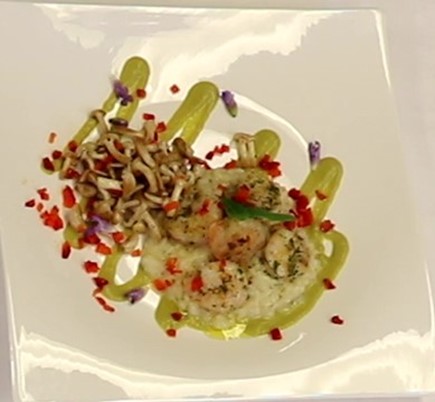
Creamy risotto, garlic shrimp, pepper coulis, roasted pepper, shimeji mushrooms
Recommended ingredients for 4 servings:
For the risotto:
30 + 30 g butter (for toasting the rice and creaming)
20 ml olive oil
40 g shallots
150 g risotto rice
500 ml stock
50 ml dry white wine
salt, fresh basil, oregano, thyme
50 g Parmesan cheese
sage, sage flowers
For the pepper coulis:
20 ml olive oil
250 g green bell pepper
salt
For the roasted pepper:
20 ml olive oil
200 g red bell pepper
salt
For the sautéed shimeji mushrooms:
10 ml olive oil
100 g shimeji mushrooms
salt, mixed peppercorns
For the garlic shrimp:
50 g butter
400 g peeled shrimp tails (size 26/30)
salt, garlic, parsley, lemon juice
Preparation steps:
Toast the risotto rice in a mixture of finely chopped shallots, butter, and olive oil until it becomes translucent. Salt it, then slowly add the stock and white wine, stirring constantly, and cook until the rice softens. (The Italians add the wine first to the rice, then gradually add the stock.) Season with finely chopped fresh herbs. Stir in butter and grated Parmesan cheese to make it creamy. The rice should be “al dente,” similar to Italian pasta.
Roast the green bell pepper in the oven at 180°C, then wrap it in cling film and let it cool. Once cooled, peel off the skin, blend it with olive oil and salt, and strain if necessary. Keep it in a sauce bottle in a warm water bath until serving.
For the fried pepper, sauté the finely diced red bell pepper in olive oil and salt.
Wash the small caps of the mushrooms, dry them, and sauté them in a little olive oil for a few minutes. Season with salt and pepper.
Quickly sauté the cleaned and dried shrimp tails in butter for 2-3 minutes, salt them, add crushed garlic and chopped parsley, and drizzle with lemon juice.
At serving, drizzle the plate diagonally back and forth with the coulis, place the risotto in the center. Top with a few shrimp, arrange the mushroom caps around the risotto, and sprinkle with red fried pepper pieces. Finally, garnish with sage flowers and leaves.
Preview
Gaining experience in more developed countries 1985-1992.
Joyful cooking with Károly Varga and Zoltán Kiss, whom I worked with in 1992 at the Seville World Expo in the Mathias Rex restaurant.
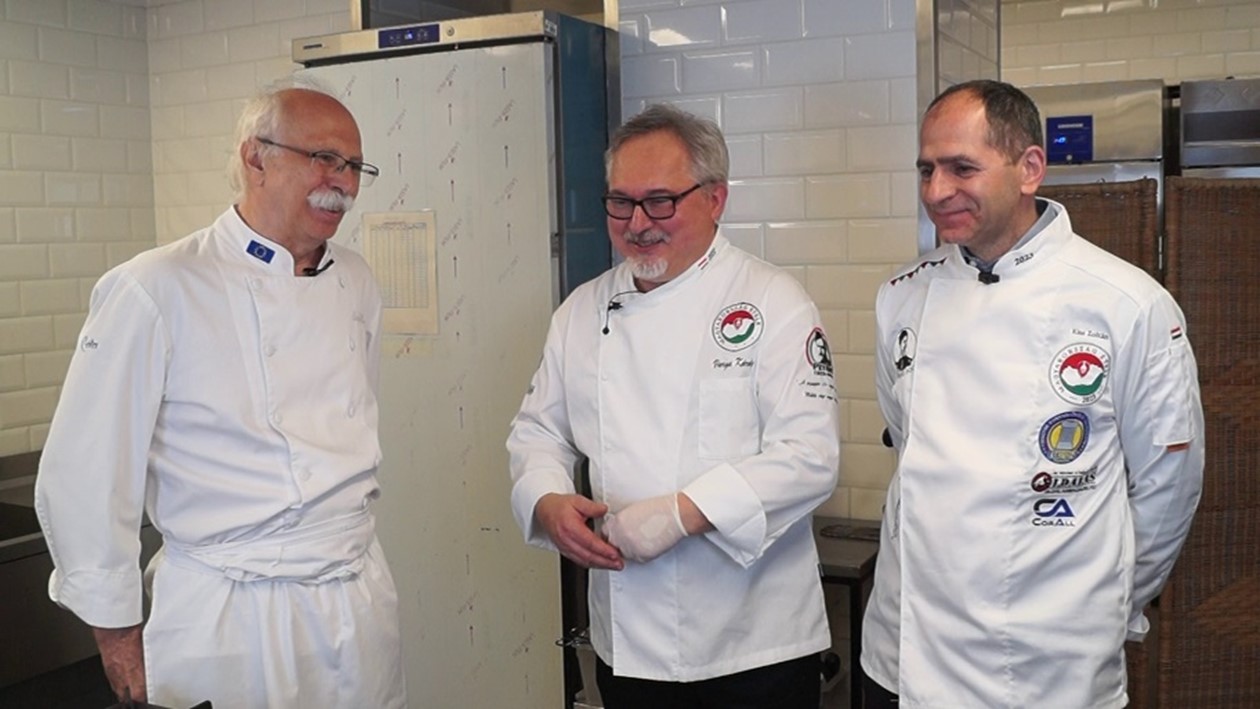
With Karcsi Varga and Zoli Kiss
*