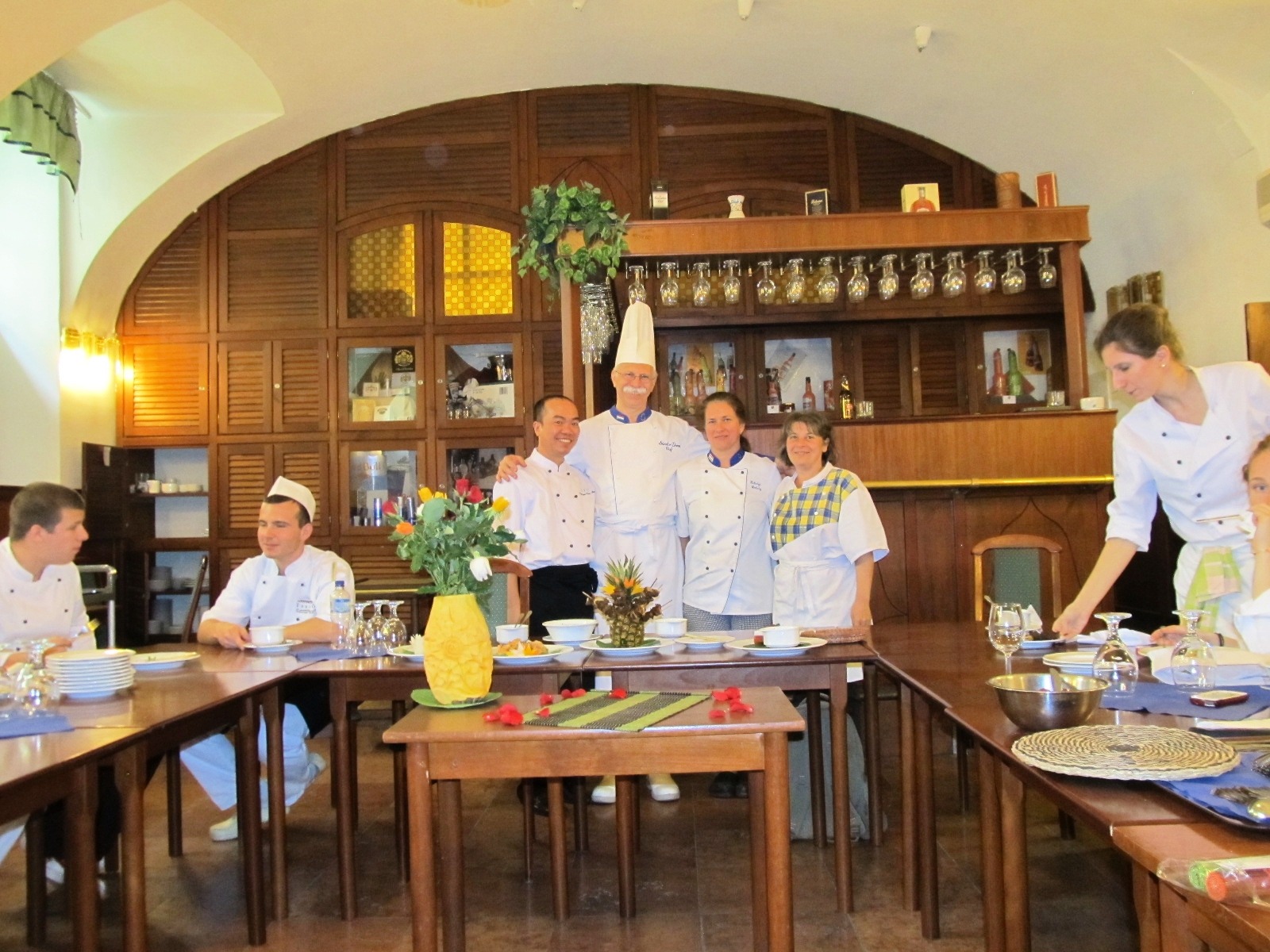
College of Hospitality (BGF KVIK) work 2005-2013 (Part 2)
In November 2009, the college training kitchen hosted the Hungarian selection round of the Bocuse d’Or competition. As host and competition director, together with my colleagues, I organized the necessary raw materials and ensured the smooth and fair running of the competition. The best eight contestants were selected, who then measured their skills against each other in February 2010 at Pavilion D of Hungexpo. Kiripolszki István, Kiri, recently told me that back in 2009 he competed alone in two different competitions (Bocuse d’Or and Chaine des Rotisseurs).
*
A quoted article from me from 2010 can be read about the kitchen-restaurant operations practice exam; incidentally, we had been doing this kind of routine similarly since 1993 in the college’s Teaching Cabinet.
“Spring exam fever, or the practical exam of future hospitality professionals at the Faculty of Commerce, Catering and Tourism of the Budapest Business School
In the last week of March 2010, organized by the BGF KVIF Teaching Cabinet, full-time students specializing in hospitality and hotel management took a practical exam to demonstrate their skill-level knowledge in kitchen and restaurant operations.
Part of the students prepared ten different dishes during the food preparation, assembling a table d’hôte menu, while the other half of the group carried out the restaurant service tasks. Among the dishes, after tasting the ‘Amuse-bouche’ and the aperitif, the esteemed guests representing the profession and the college had to choose between appetizer variations or a regional soup. The main courses—a fish dish and a poultry dish, along with three side dishes—were served from a silver platter by the students. The main courses were complemented by two hot sauces that did not contain flour.
For dessert, guests had to choose between three sweets—a restaurant-style pastry, a homemade ice cream, and a flambéed fruit—or a French cheese tasting.
Naturally, the invited guests also had the opportunity to taste the appropriate drinks alongside the selected and consumed dishes.
The exam took place under realistic conditions, involving a full shift of work. The coordinated tasks in both the training kitchen and the training restaurant were carried out with one student leader in each area (chef, restaurant manager), a student staff of 10-12 people per area, and the participation of a specialized instructor.
The results of the exams are noteworthy because, alongside the positive and negative critical remarks from the practical training instructors directed at the students, the feedback from the guests was clearly appreciative.”
A menu card from the time is shown to present the selection of dishes prepared for the exam.
Restaurant Operational Examination
Fresh salad with yogurt-herb dressing
Polenta mini pizza
Melon pears wrapped in air-dried ham
or
Somogy best man’s soup
Pike-perch routade with Tokay grapes
Duck breast roasted to pink with Rosé sauce
French chocolate cake with fambéed orange and ice cream
or
Cheese tasting (Bride de Meaux, Bleu des Causses, Pont I’Evéque)
*
In 2010, Csaba Pavlicsek, a student of the college, achieved excellent results in a cooking competition held in France, the details of which are included in the material I wrote at the time.
“Outstanding professional success
Csaba Pavlicsek, student of BGF KVIK, won the Les Nérois Jeunes junior hot kitchen cooking competition held in Montluçon, France, on October 18, 2010. The Hungarian competitor had to measure his skills against French, Italian, Greek, and Polish contestants. He was prepared for the competition by Dénes Sándor, head of the Teaching Cabinet of the Faculty of Commerce, Catering and Tourism of the Budapest Business School.
The jury, consisting of Michelin-starred chefs who strictly examined modern trends, highly appreciated the excellent knowledge of kitchen technology procedures in the winning menu, the appropriate use of red wine, the seasonal choice of side dishes, the optimal harmony of flavors in the courses, and the airy presentation.
In addition to this outstanding victory in a prestigious competition, Cyril Lenoir, the head of the jury, offered Csaba Pavlicsek a six-month contract at the three Michelin-starred Le Bristol restaurant in Paris.”
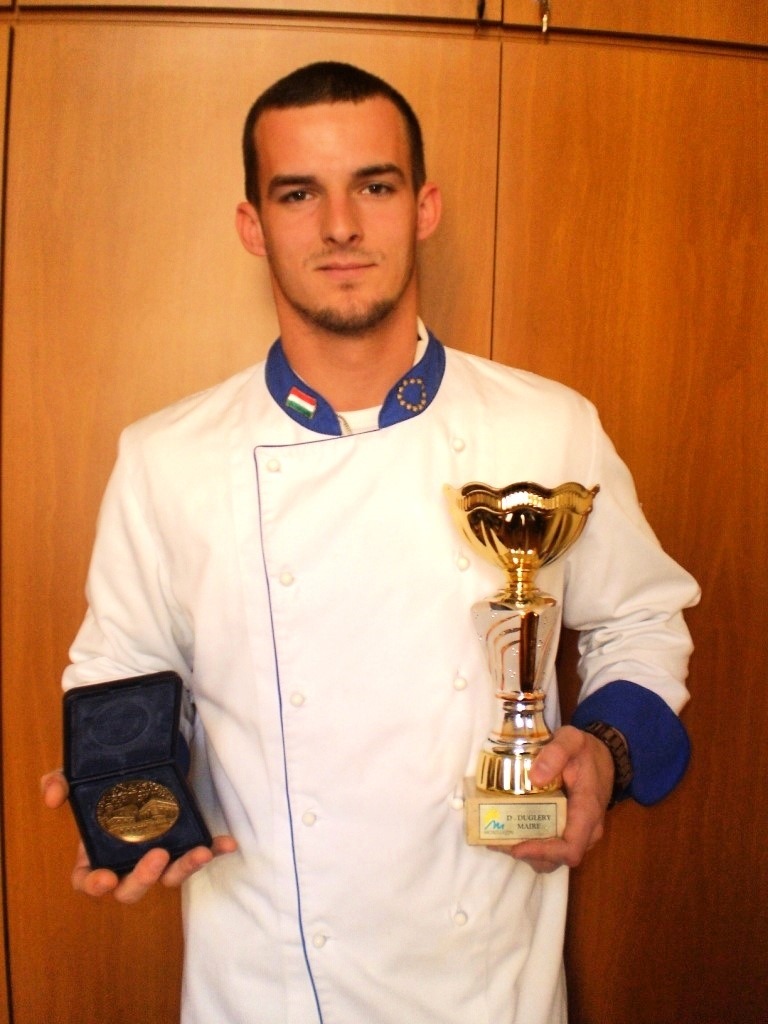
Csaba Pavlicsek with the winner’s cup and medal
*
In December 2010, we participated for the first time in a traditional culinary competition founded and organized by the Regional Tourism Association of Gödöllő and its surroundings. The competition was named after Dr. László Ketter, who had earned lasting merits as one of the founders of the College of Commerce and Catering, and later as the head and professor of the Department of Food Science.
We entered a team of three students in the competition, and they achieved second place.
In the following years, we participated in this competition every time. With our active involvement, we supported the preservation of gastronomic traditions. At our suggestion, three competitor categories were created for tradition-keeping civilians, restaurants, and schools. This way, everyone could feel more comfortable in their own category, and judging also became simpler, since it was no longer necessary to consider whether the traditional serving of soup—with a whole cooked chicken leg on the bone and large vegetable pieces—or julienned noodles made from the cooked chicken meat with similarly cut vegetables was more authentic.
We also suggested to the organizers—Pál Perna, president of GKRTE, and István Bárd, managing president—that the college should become the new home of the competition, as there was more space in the training kitchen and the training restaurant, allowing competitors, judges, and guests to fit more comfortably. The organizers accepted this suggestion as well, so starting from 2014, the college hosted this tradition-preserving competition for several years.
Below is a portion of the competition announcement from that time.
“Program and script of the Dr. László Ketter tradition-preserving gastronomic competition
8:30
The competitors, on-site in the kitchen of Csíkvölgyi Pipa Csárda, present the food courses characteristic of family celebratory meals, which form the basis of the competition’s requirements, following the final kitchen operations.
By the deadline, 14 tourism service providers, institutions, and civil organizations registered for the tradition-preserving gastronomic competition. The list of competitors marked with Roman numerals can be found in Annex 3.
After the gastronomic competition, the exact names of the participants, their rankings in the competition, and the presentation of the special dishes they prepared will also be available on the professional page of the website of the Regional Tourism Association of Gödöllő and its surroundings at www.gkrte.hu. The leaders or representatives of the participating teams will serve one portion each of soup, main course, and dessert to the professional jury; the remaining nine portions of each dish will be placed on a buffet table for guests to taste.
10:00
The jury will begin rating the food courses in the order previously drawn by lot, then award prizes offered by the competition sponsors according to the ranking established by the jury”.
Here you can read the menu prepared by the college students:
Soup:
Golden-colored broth made from poultry by my farmer
A clear meat broth prepared from three types of poultry, flavored with vegetables and spices, enriched and served with two types of small dumplings.
Main course:
Esterházy beef tenderloin mignon and beef shoulder ragout scented with Villány Red 2007 Hetes Cuvée and forest mushrooms, served with aristocratically toasted bread dumplings and stuffed zucchini basket
Tender beef tenderloin mignon prepared with classic Esterházy sauce, and beef shoulder ragout made with aromatic red wine and forest mushrooms, served with aristocratically toasted bread dumplings coated in green herbs and a zucchini basket filled with garden vegetables.
Dessert:
Sweet dream of traditions
Poppy seed cake tower with vanilla ice cream and flambéed red cranberry orange
A flourless poppy seed cake tower served with traditional cooked vanilla ice cream and freshly flambéed red cranberry orange.
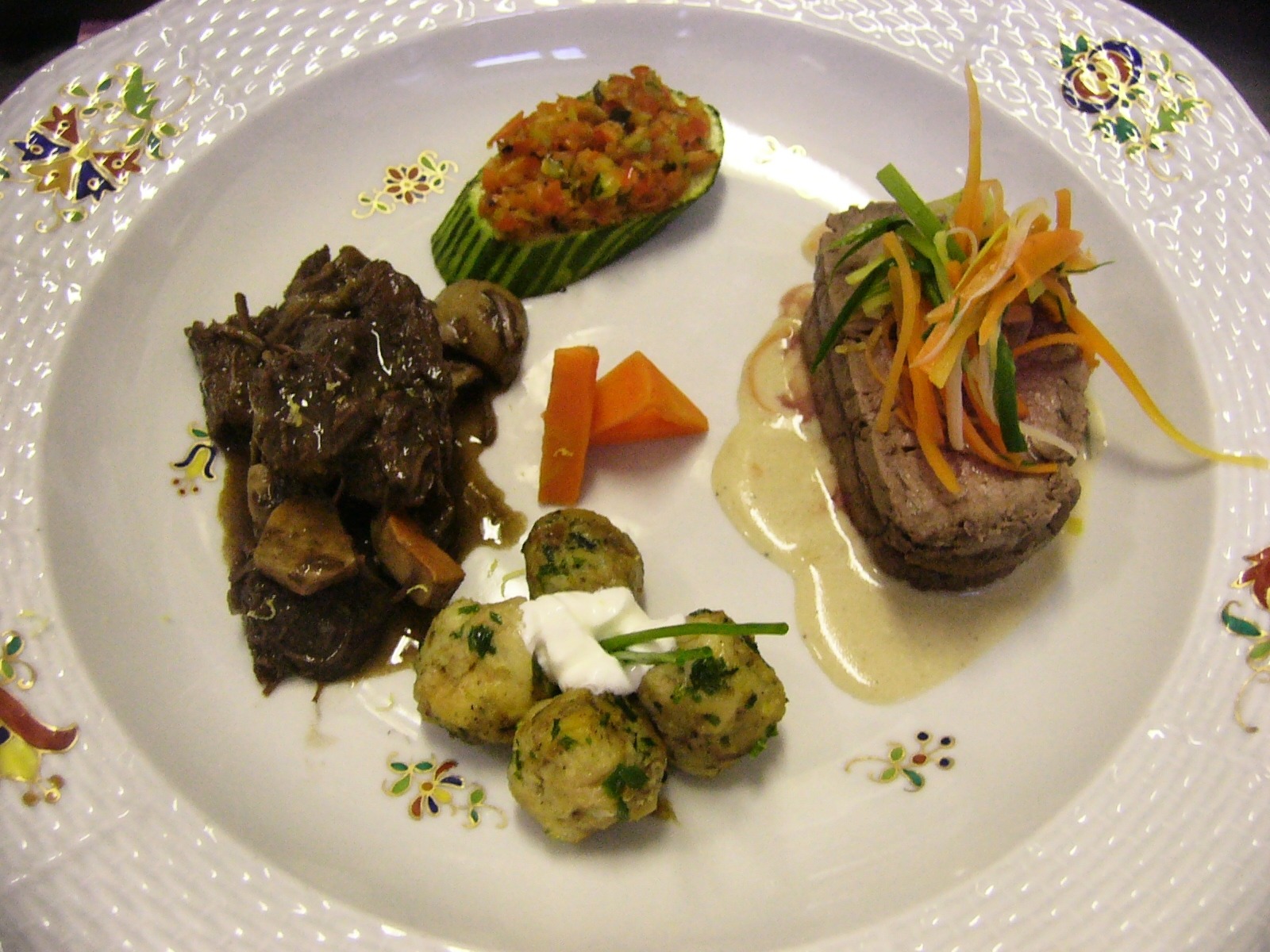
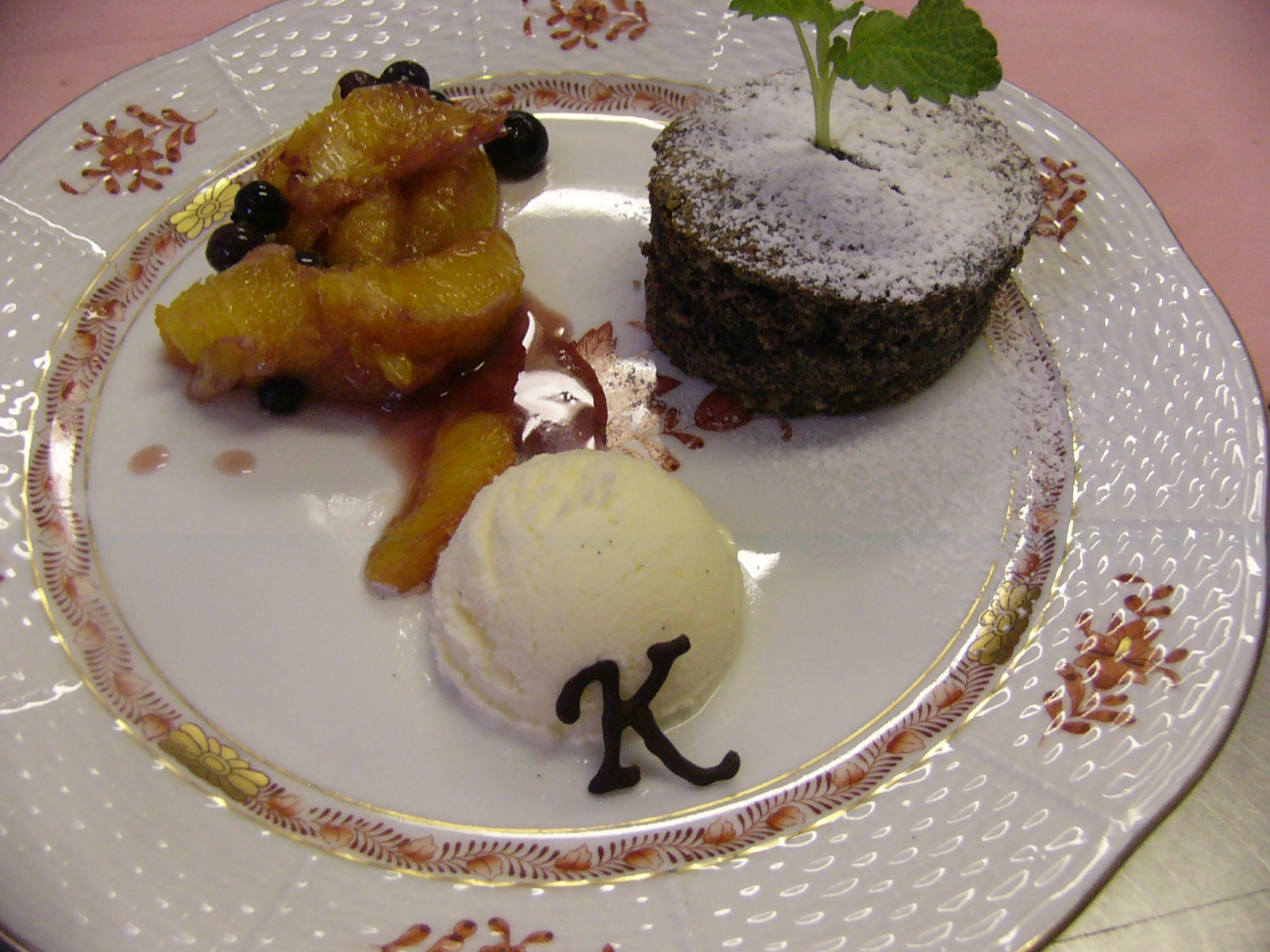
The main course and dessert of the Ketter competition, prepared by the college students
*
In 2011, the “Meeting of Generations” was included among the college events, as it was in the following years. Within this framework, we announced a cauldron cooking competition for the college staff and students. At the May event that year, participants had to cook paprikash chicken. In the following years, the competition tasks included dishes such as slambuc, lecsó, tarhonyás hús, and others.
You can read the details of the competition announcement in the following section:
„CALL FOR ENTRIES Cauldron Cooking Competition for Chicken Paprikash
IV. Meeting of Generations
Location: Near the Faculty of International Management, at the designated spot next to the MLTC football field (last year’s sports day location).
Task: Prepare chicken paprikash on-site in a 20-liter gas-heated cauldron for 20 people (+4 portions for tasting and judging).
Competition start: 11:00, when competitors can receive the necessary ingredients from Dénes Sándor. The technical conditions are provided by BGF (20-liter cauldron, gas heating, 10-liter plastic container, ingredients needed for chicken paprikash: filleted chicken thigh tops, onion, fat, salt, red paprika, sour cream). Teams are responsible for any additional seasoning (e.g., spices) and tools (e.g., knives, cutting boards, etc.). The chicken paprikash should be served in bite-sized pieces.
Competition end: 13:00, by which time the team captains ensure their cauldrons are placed at the designated location, from where the dishes prepared by the teams will be served. The side dish provided with the meal is fresh, crispy rolls. The jury will announce the results at 13:30, when the winners will receive their prizes”.
These competitions, including the one in 2011, were held in a very good atmosphere. During cooking, the competitors kindly offered me a little pálinka as a jury member, but I declined for two reasons: first, so I wouldn’t be influenced by the charm of the fine and even finer pálinkas, and second, because I had driven to and from the event.
On one occasion, someone tried to influence me with authority, insisting that their team was the best, but they did not succeed, just as no one else ever has throughout my entire career. For that reason, in the following years, I invited an external chef to take on the jury chairmanship duties.
*
In 2011 (plus or minus a year or two), Luxembourg master chef Léa Linster, who won the Bocuse d’Or in 1989 and remains the only woman to have won the competition, gave a cooking demonstration. Léa was very approachable and demonstrated how to prepare confit salmon fillet. Unfortunately, the otherwise well-functioning MKN combi oven, which was nearly 100% accurate, was not precise at that time because the salmon fillet pieces in the oil bath were overcooked in the oven set to the requested temperature and time.
However, this mishap inspired us to conduct research examining the optimal heat treatment parameters for confit salmon fillet.
*
In 2011, the college team finished in absolute first place at the Dr. László Ketter gastronomic tradition-preserving competition. The article from that time reads as follows: “Absolute first place with a gold medalOnce again, students of the Budapest Business School achieved outstanding professional success.
At the Dr. László Ketter traditional jubilee gastronomic competition, three students from the BGF Faculty of Commerce, Hospitality, and Tourism—Boglárka Balogh, Zsuzsanna Debrődy, and Jessica Kaskova—finished in absolute first place with a gold medal. At the competition held on December 14, 2011, at the Csíkvölgyi Pipa Tavern in Mogyoród, organized by the Gödöllő Regional Tourism Association, the students’ instructor was assistant professor Hedvig Hidvégi.”
*
The gold medal-winning menu:
Festive fish soup variations:
Baja-style fish soup with homemade garlic matchstick noodles and carp slices
Szeged-style batyu fish soup
Regős fish soup
Christmas veal tenderloin following Czifray’s tradition
Veal tenderloin roasted to rosé with Kékportó souce and steamed vegetable balls
Apple goose liver towel
Zuccini basket filled with buckwheat porridge
Pottato doughnut
Polenta
Mozart-style beigli with spiced orange garnish
Wallnut-poppy seed beigli with gingerbread stars, flambéed spiced orange segments and tangy orange ice cream
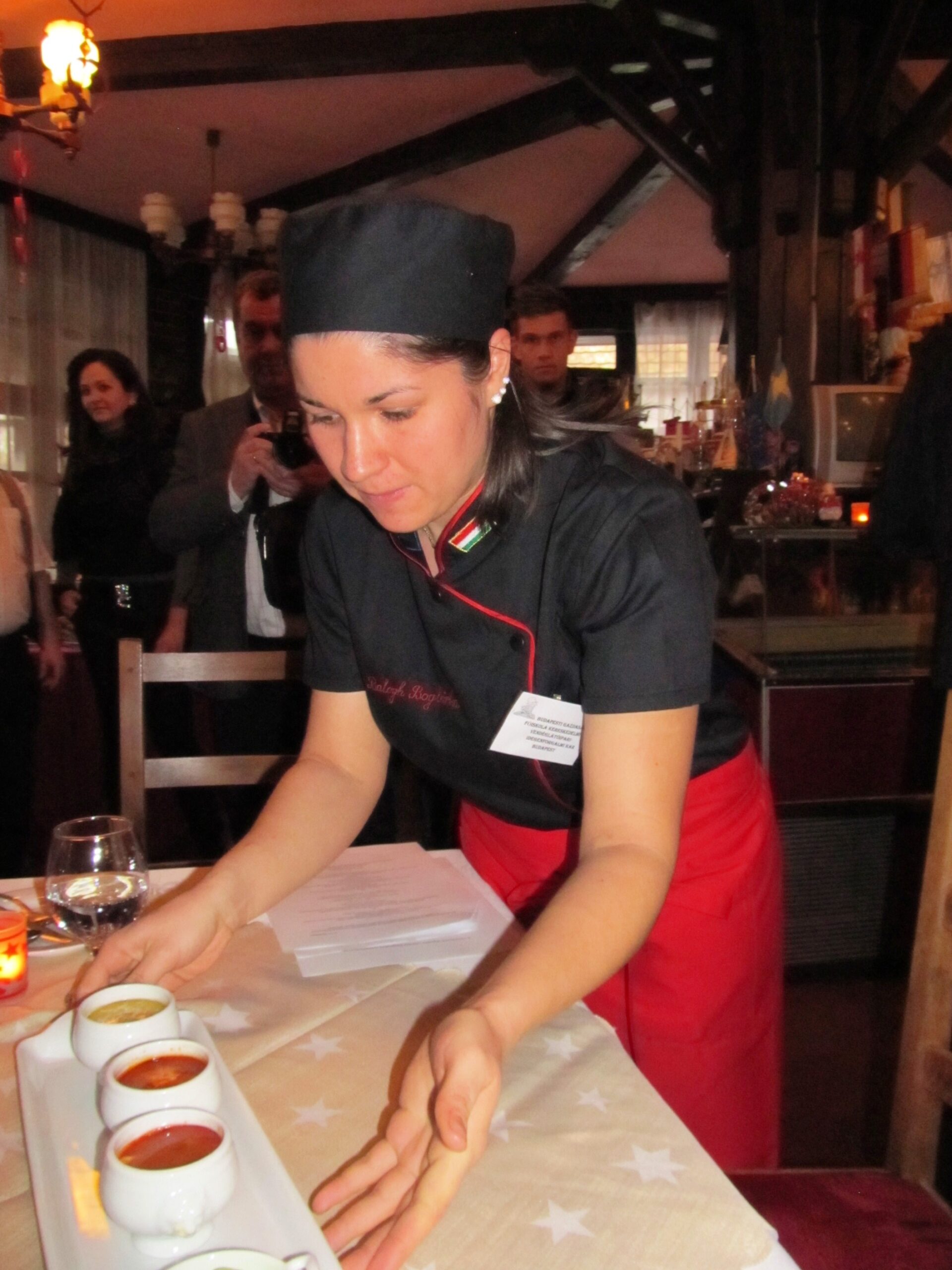
Soup variation service
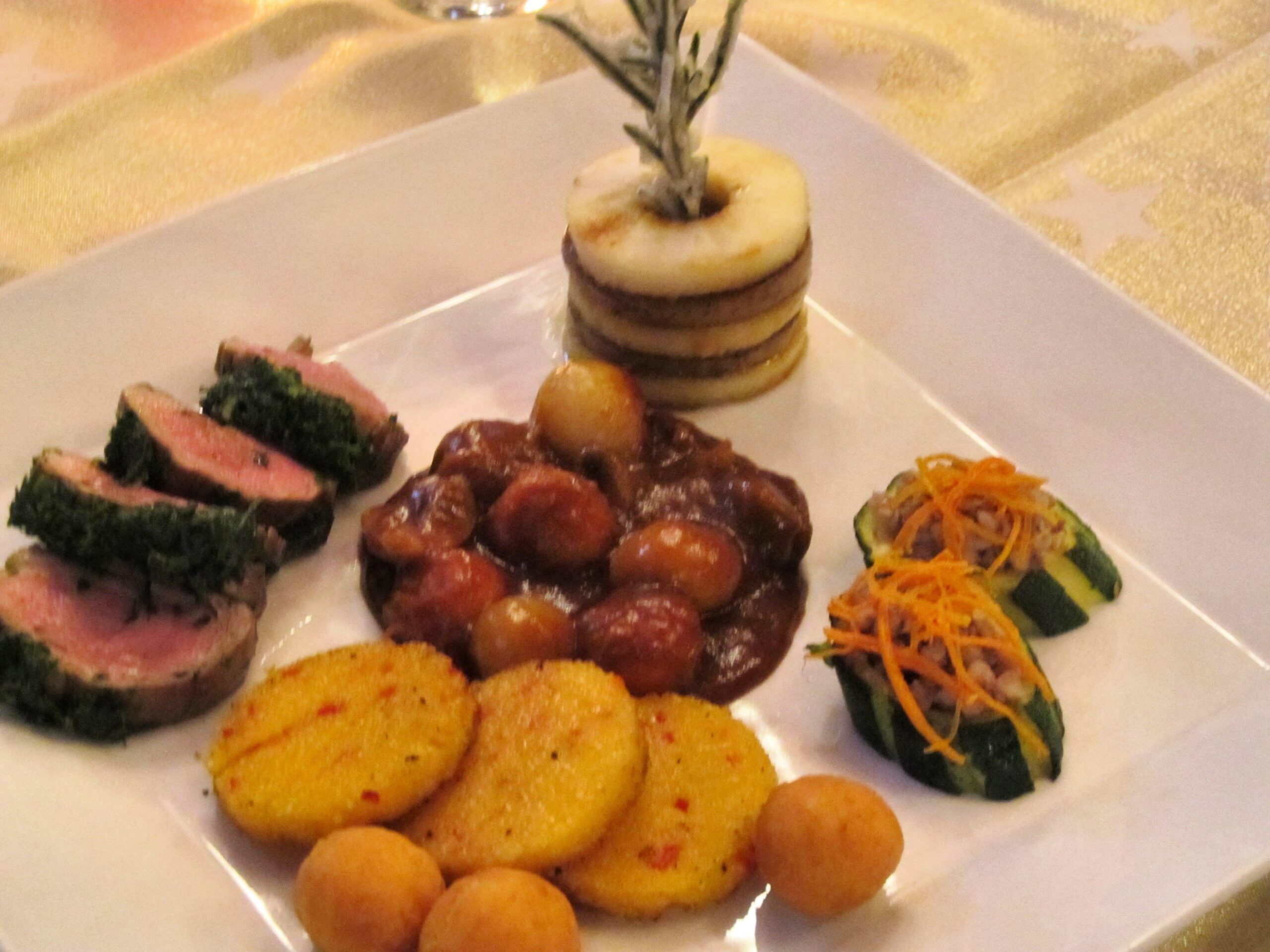
Main course
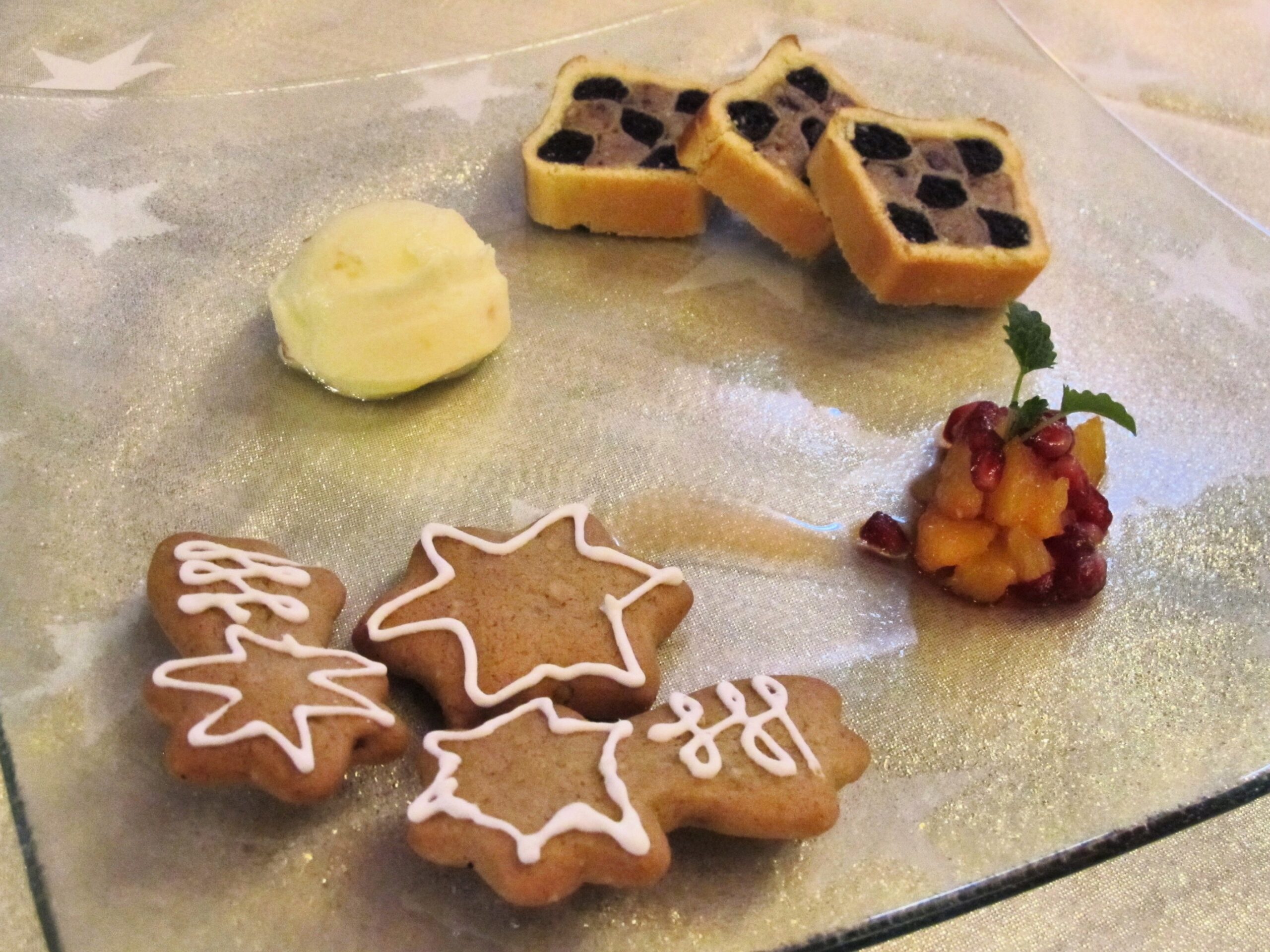
Dessert variation
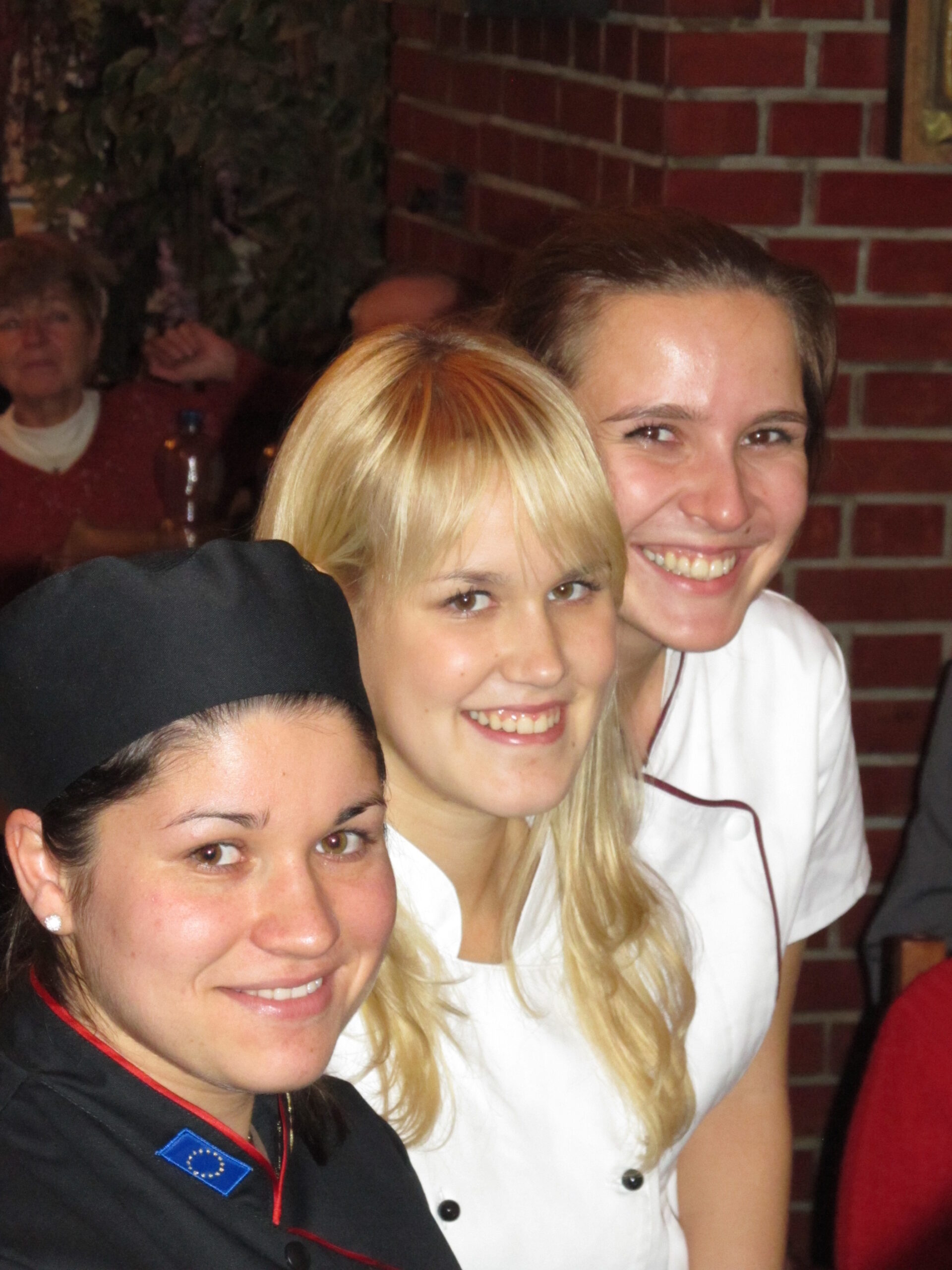
Boglárka Balogh, Zsuzsanna Debrődy and Jessica Kaskova
*
In 2012, Jean Marc Notelet, a French chef, gave a cooking demonstration at the college’s training kitchen. The article prepared at the time reads as follows:
“Jean Marc Notelet, chef of the Caïus restaurant operating in Paris, held a cooking demonstration at the Teaching Cabinet of the Budapest Business School, Faculty of Commerce, Hospitality and Tourism on June 11, 2012. In addition to the fact that the restaurant’s kitchen has very good references, the chef is a specialist in the use of spices. For this occasion, he brought “only” twenty kinds of exotic spices from Asia, Africa, and South America, although he mentioned that his restaurant uses 80 types of pepper or pepper-like spices. The college students and Hungarian head chefs found the presentation useful, where, among others, sautéed and steamed green asparagus with grilled leek, grapefruit and citrus sabayon, pan-fried duck breast marinated with a homemade curry blend, sautéed sorrel with candied lemon peel, and pan-fried Balaton pike-perch fillet were prepared with the individual seasoning of the assisting students.”
The chef possessed a remarkable and profound knowledge, especially in the world of exotic spices.
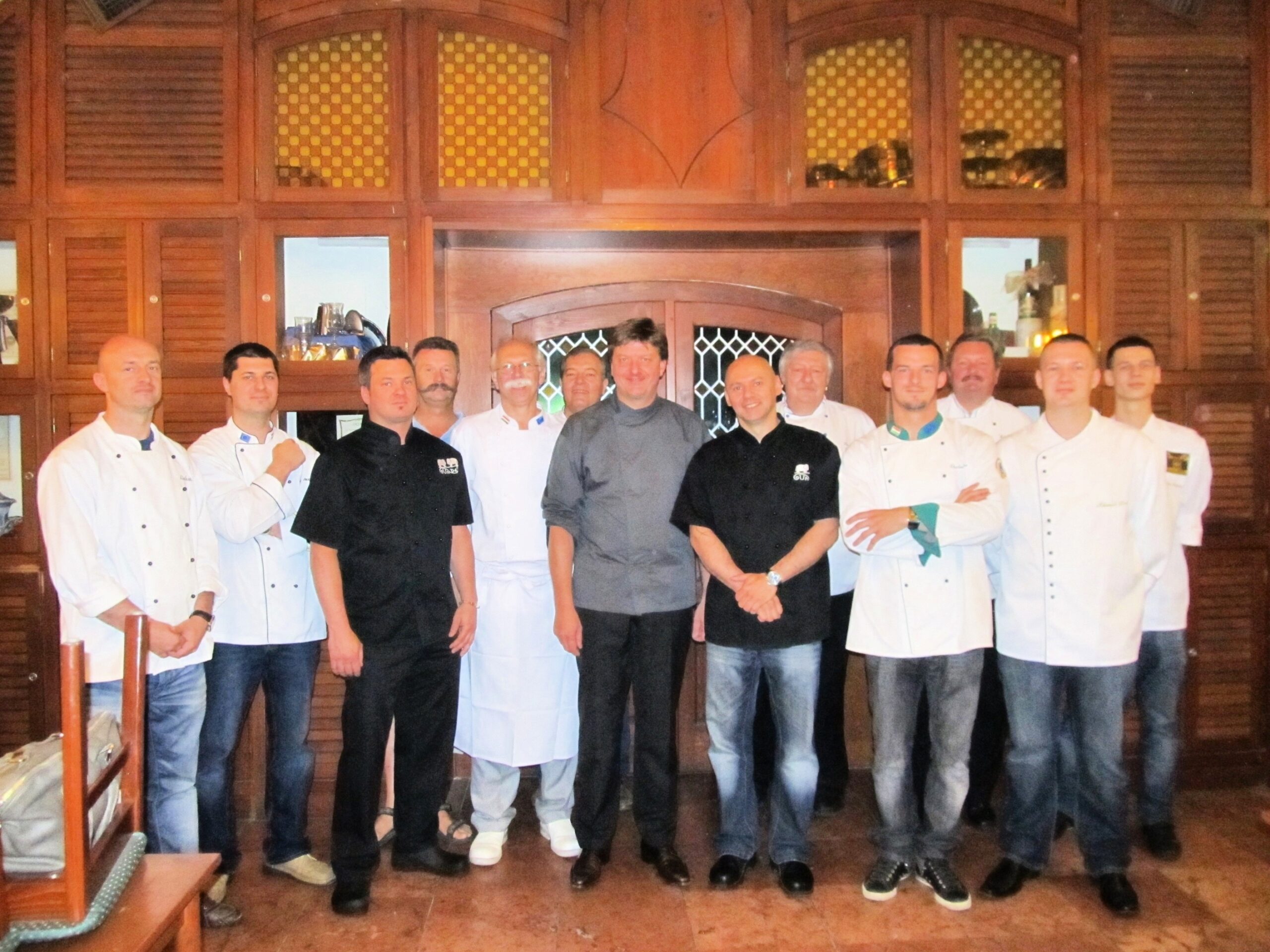
The pictures of the presentation:
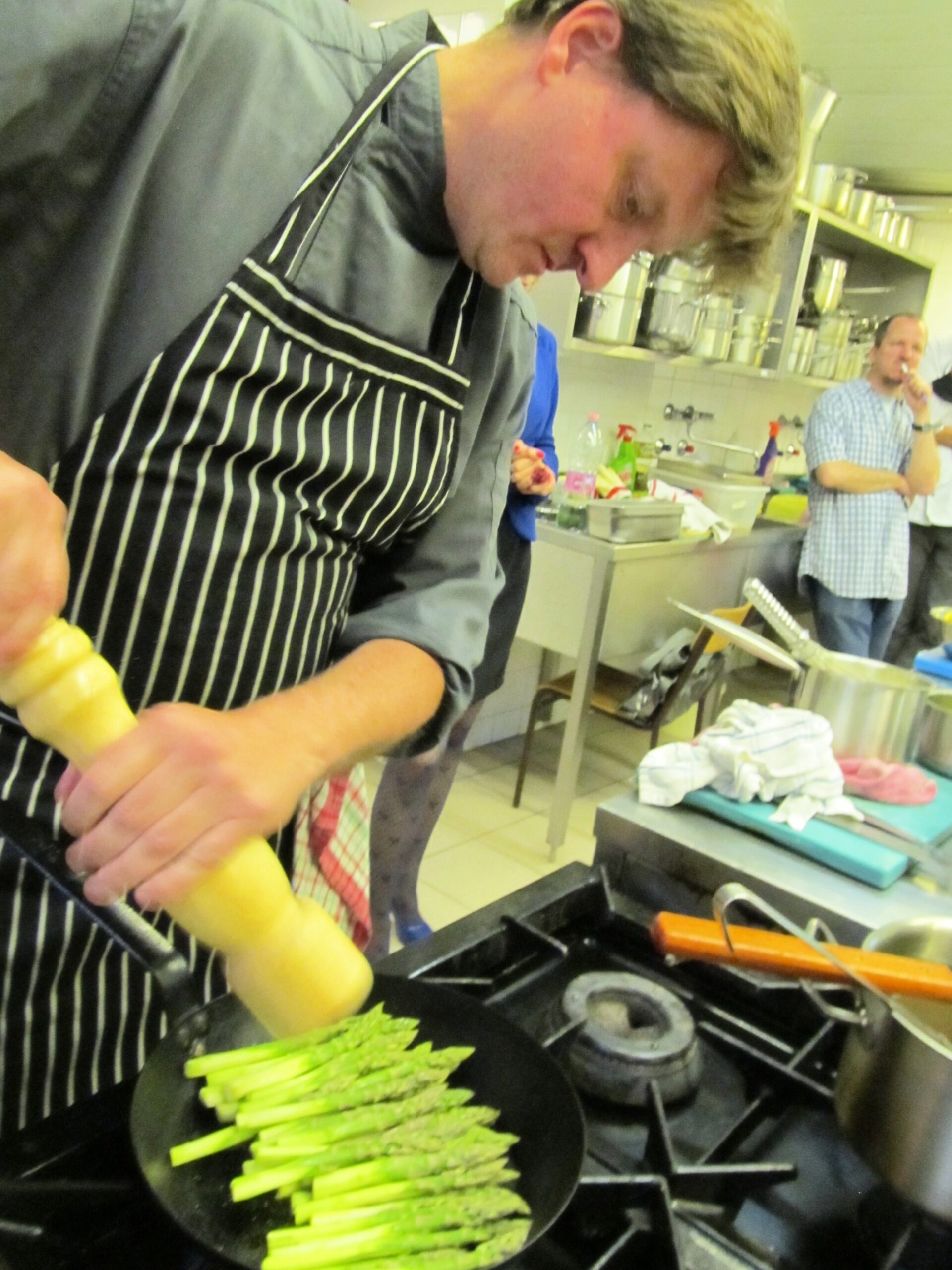
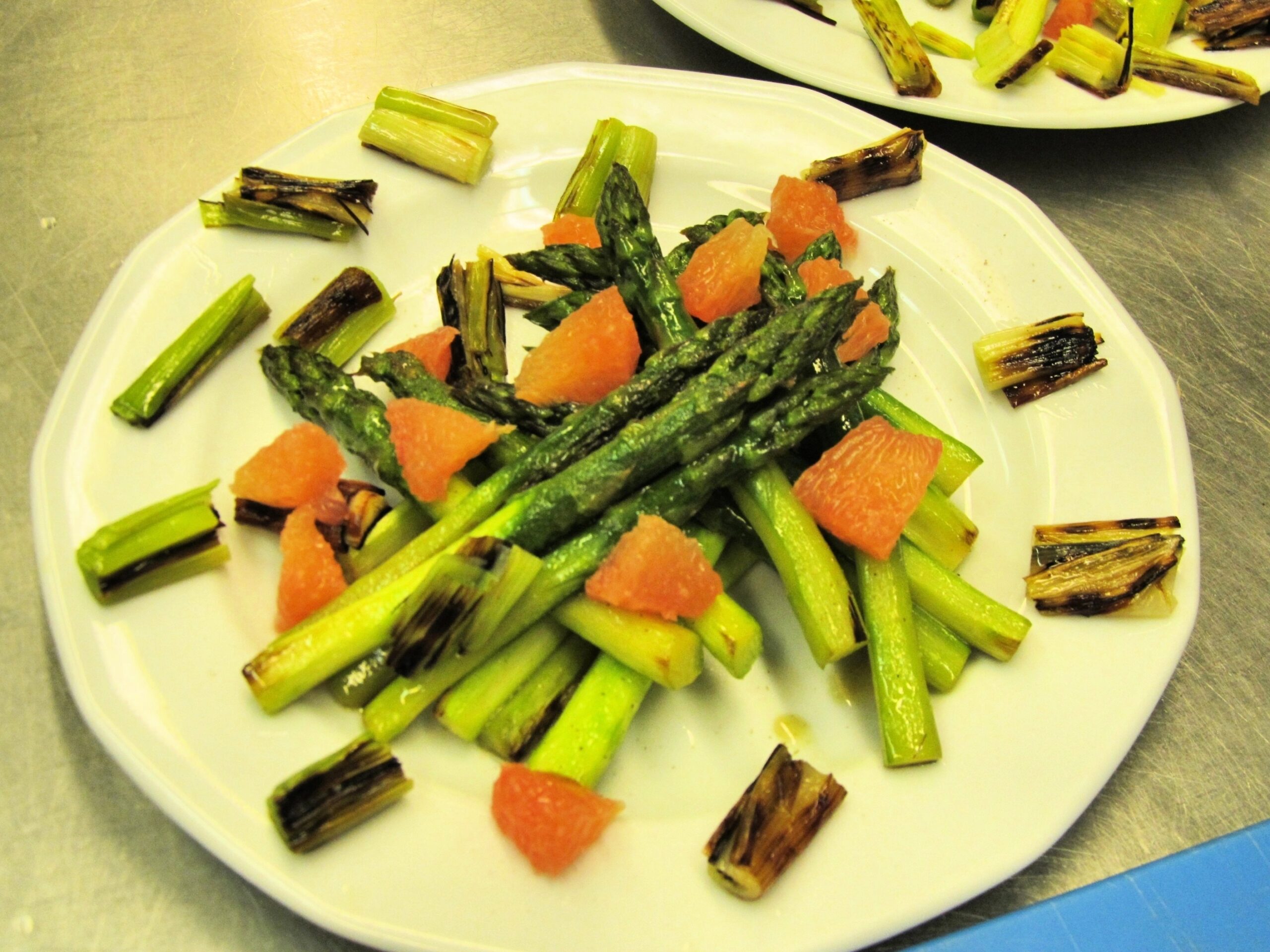
Jean Marc Notelet and the vegetable-fruit base of his dish
*
The year 2013 was rich in extra gastronomic programs, perhaps also because I had successfully completed my PhD studies and with the energy freed up, I helped organize numerous events in the Teaching Cabinet.
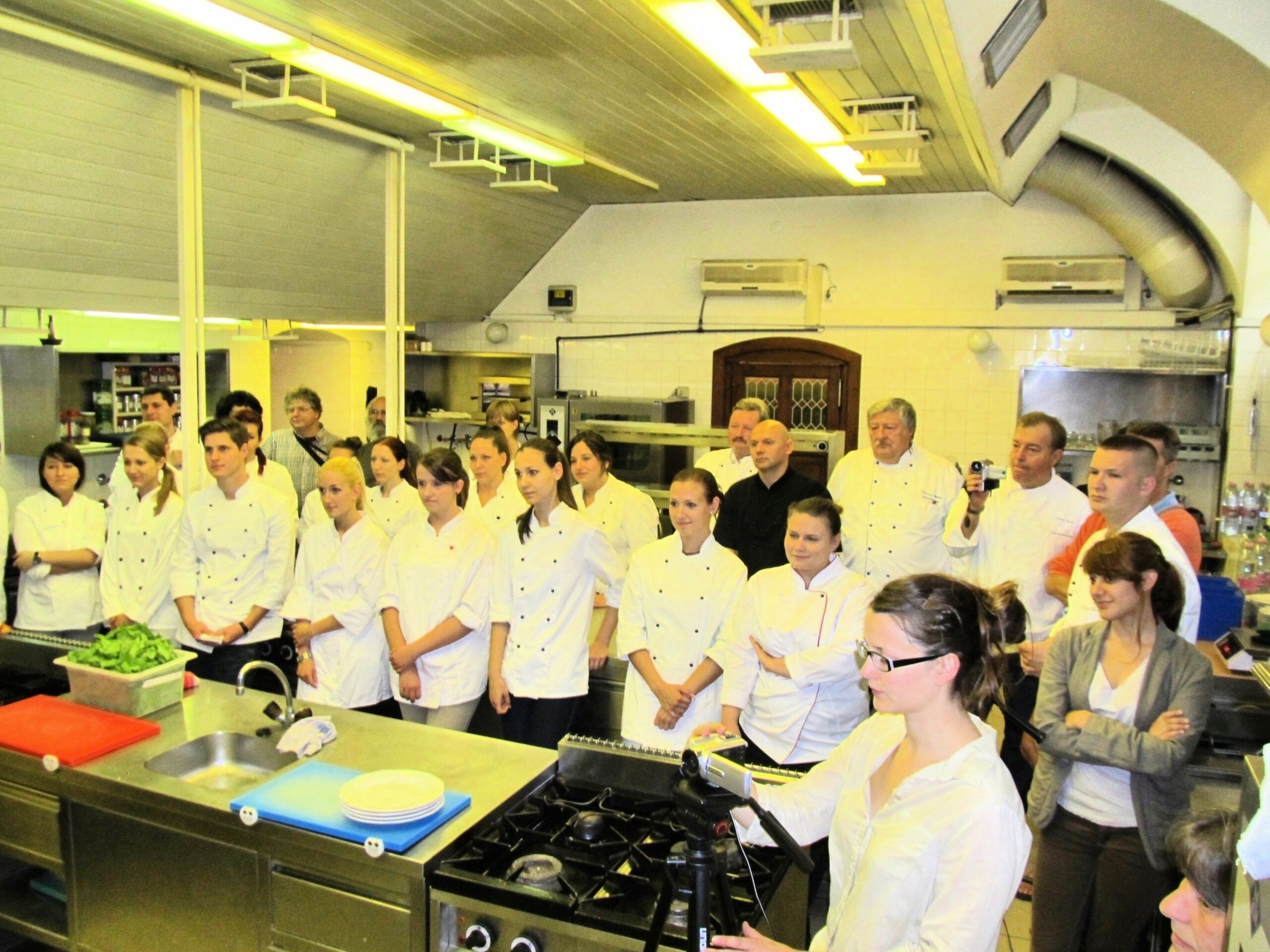
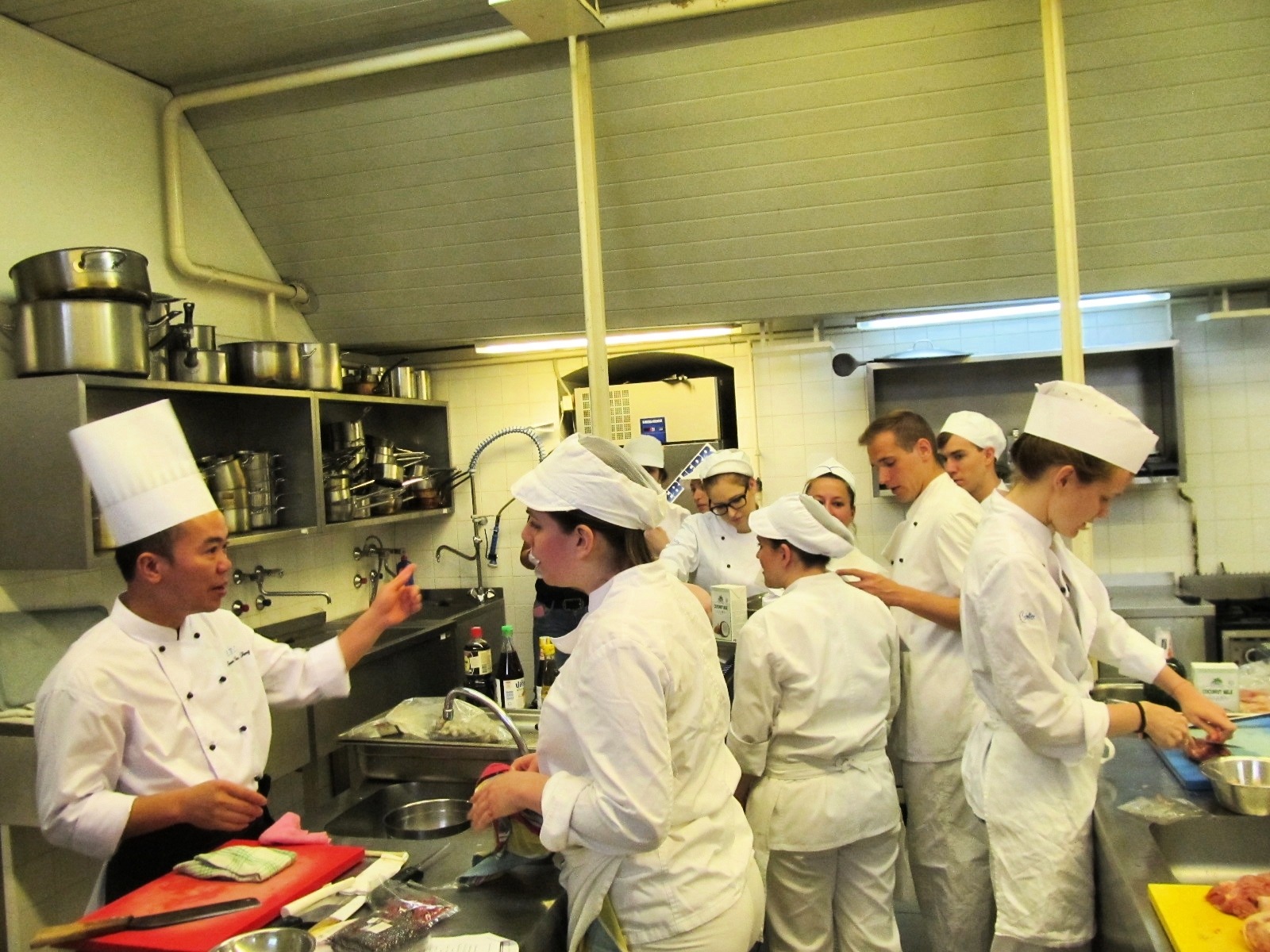
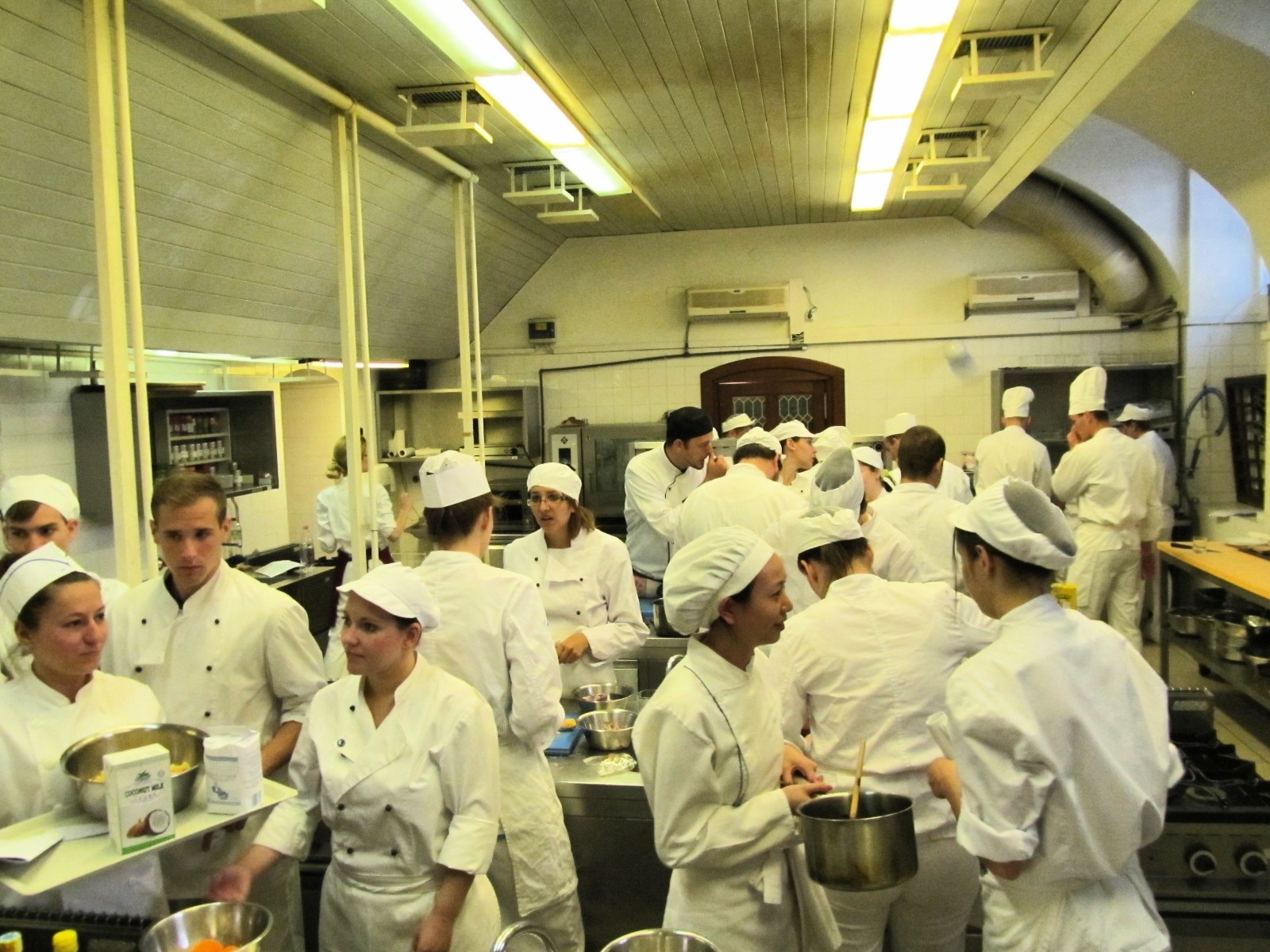
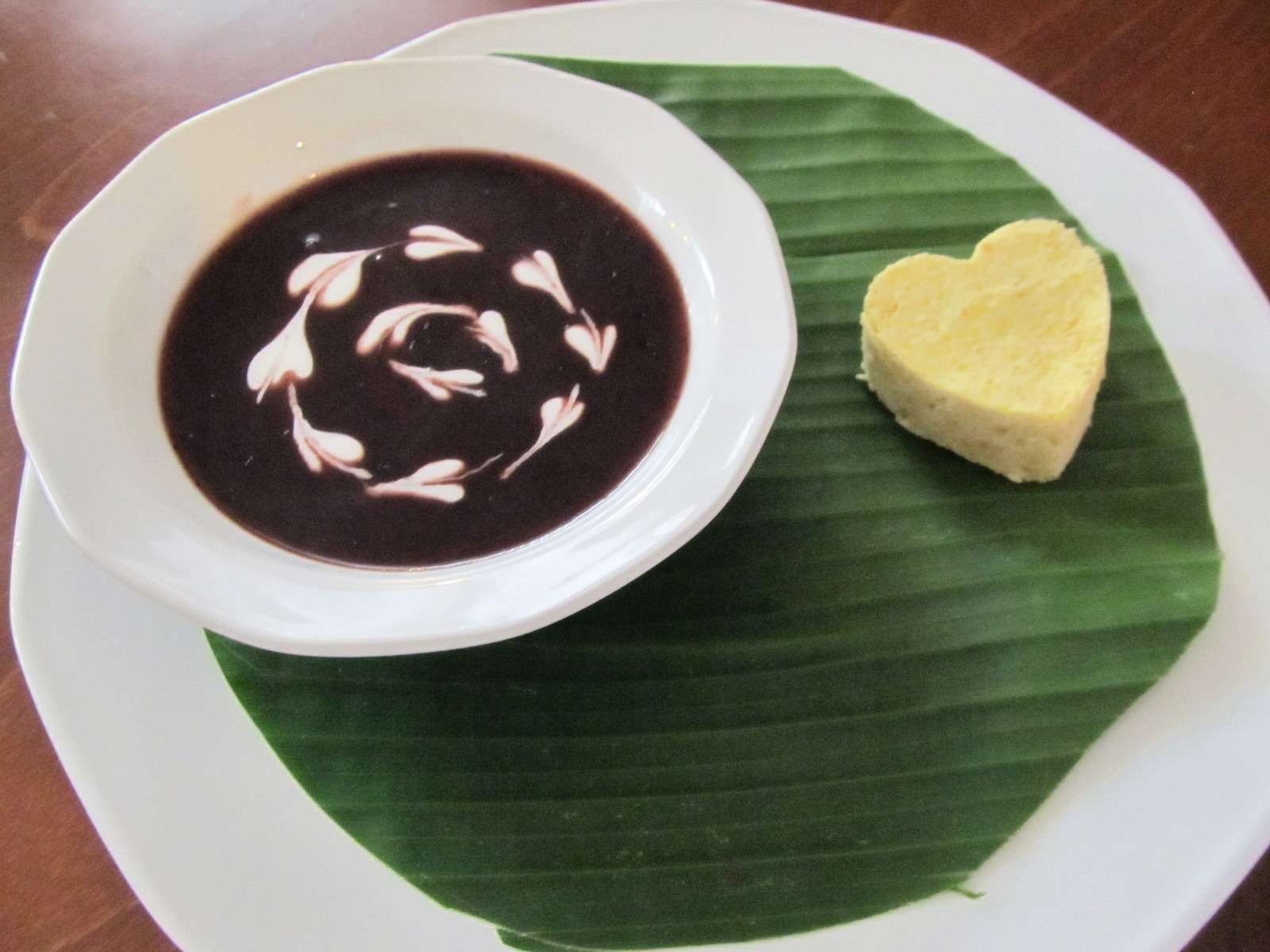
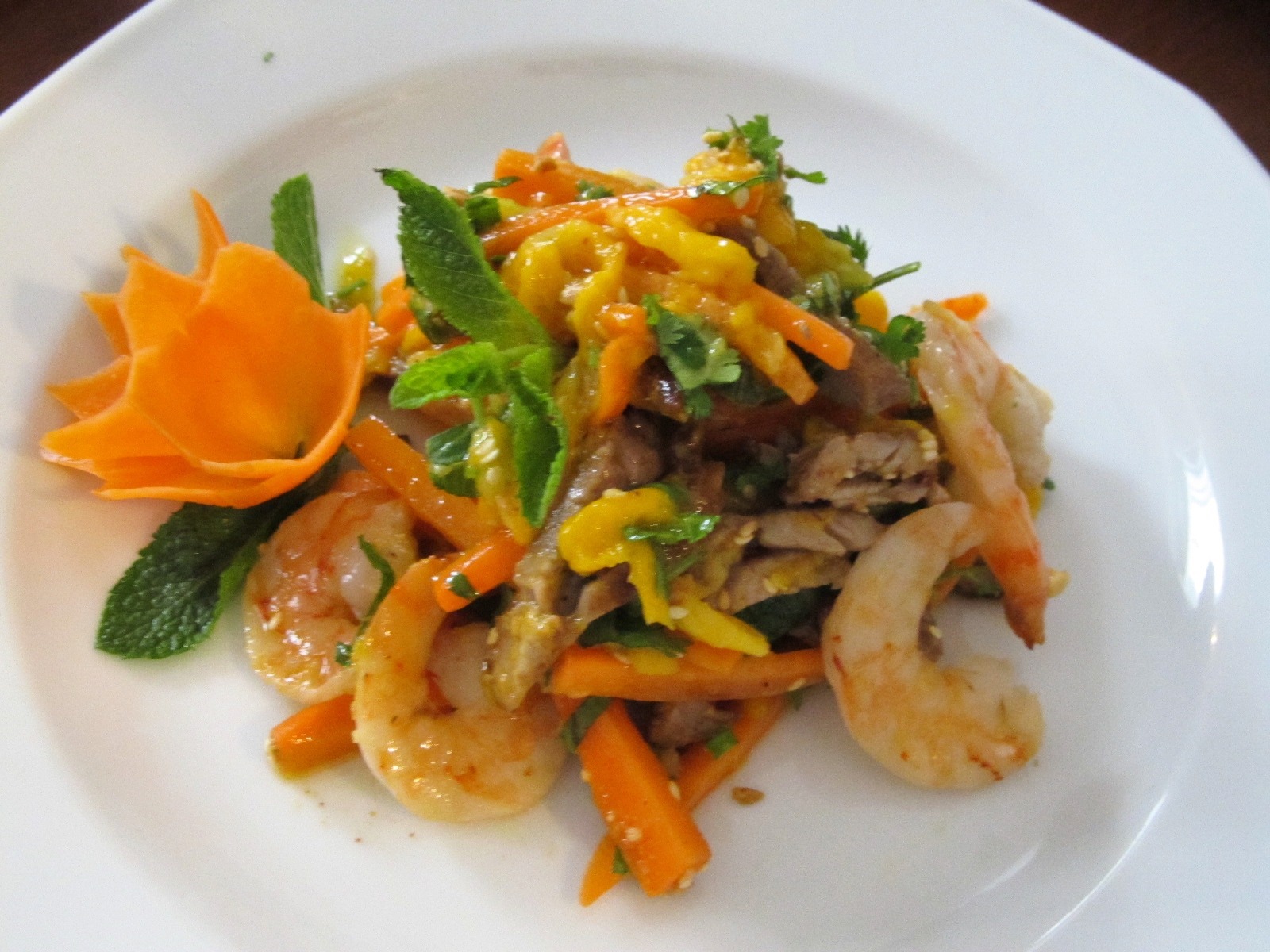
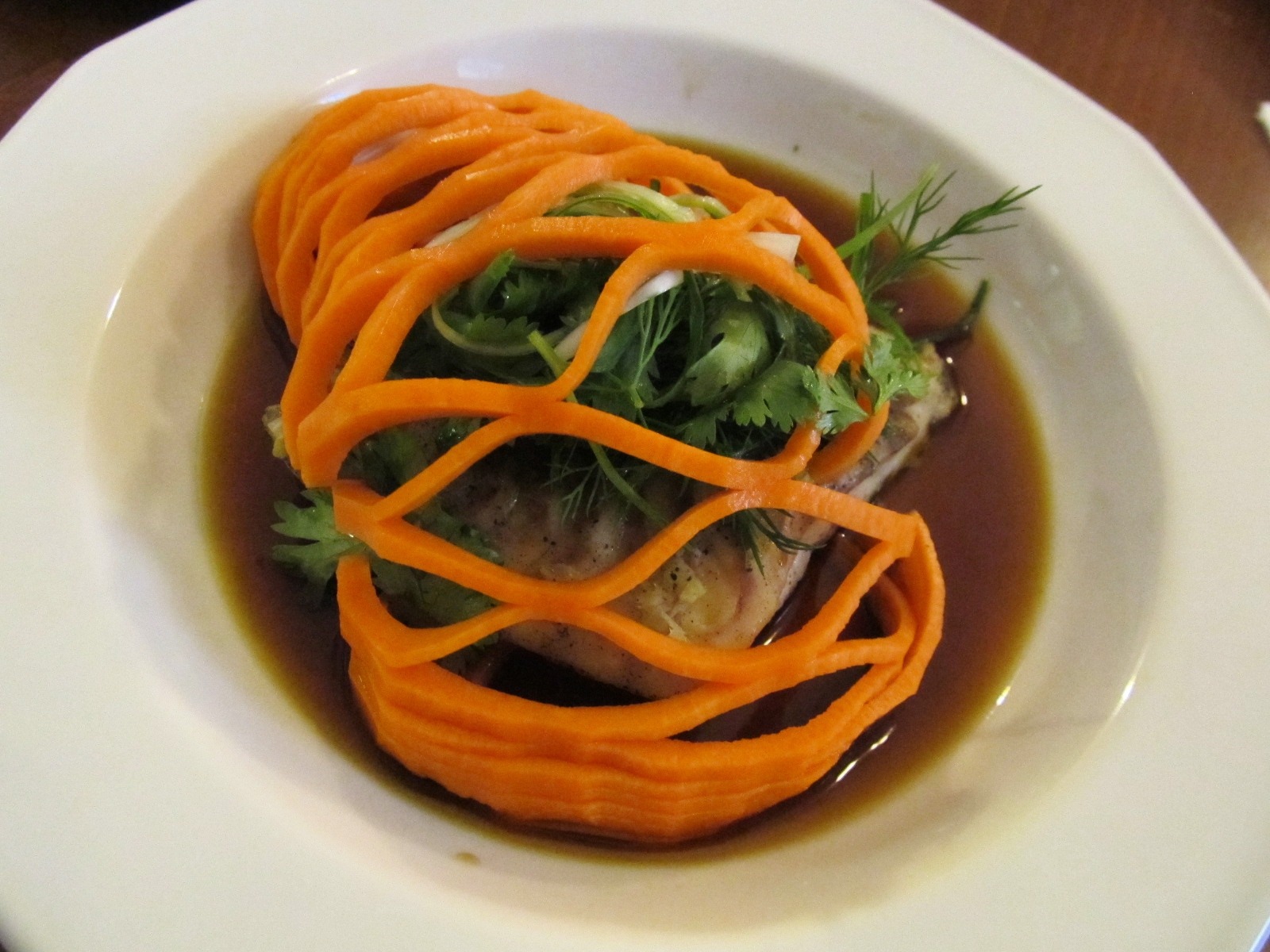
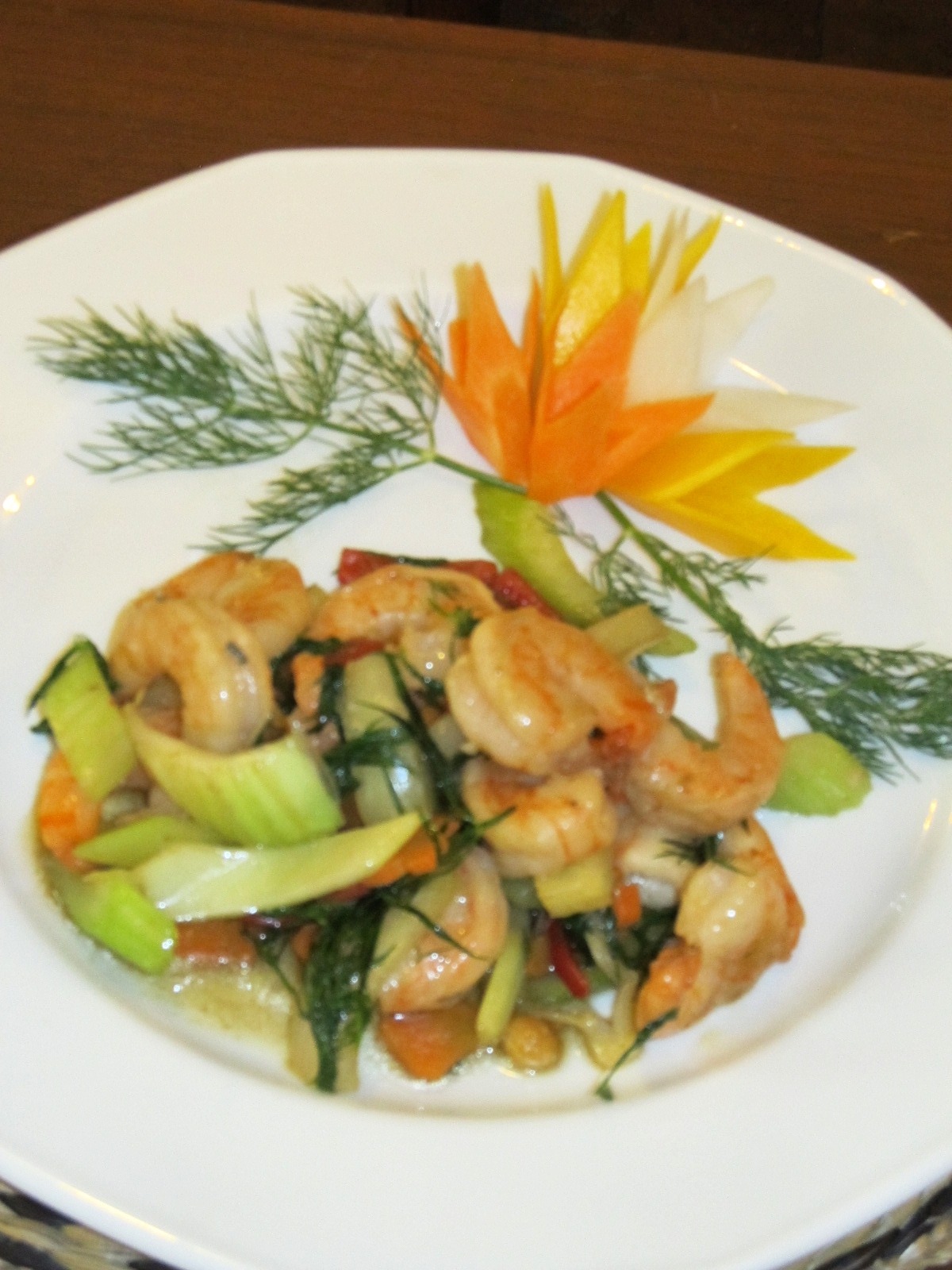
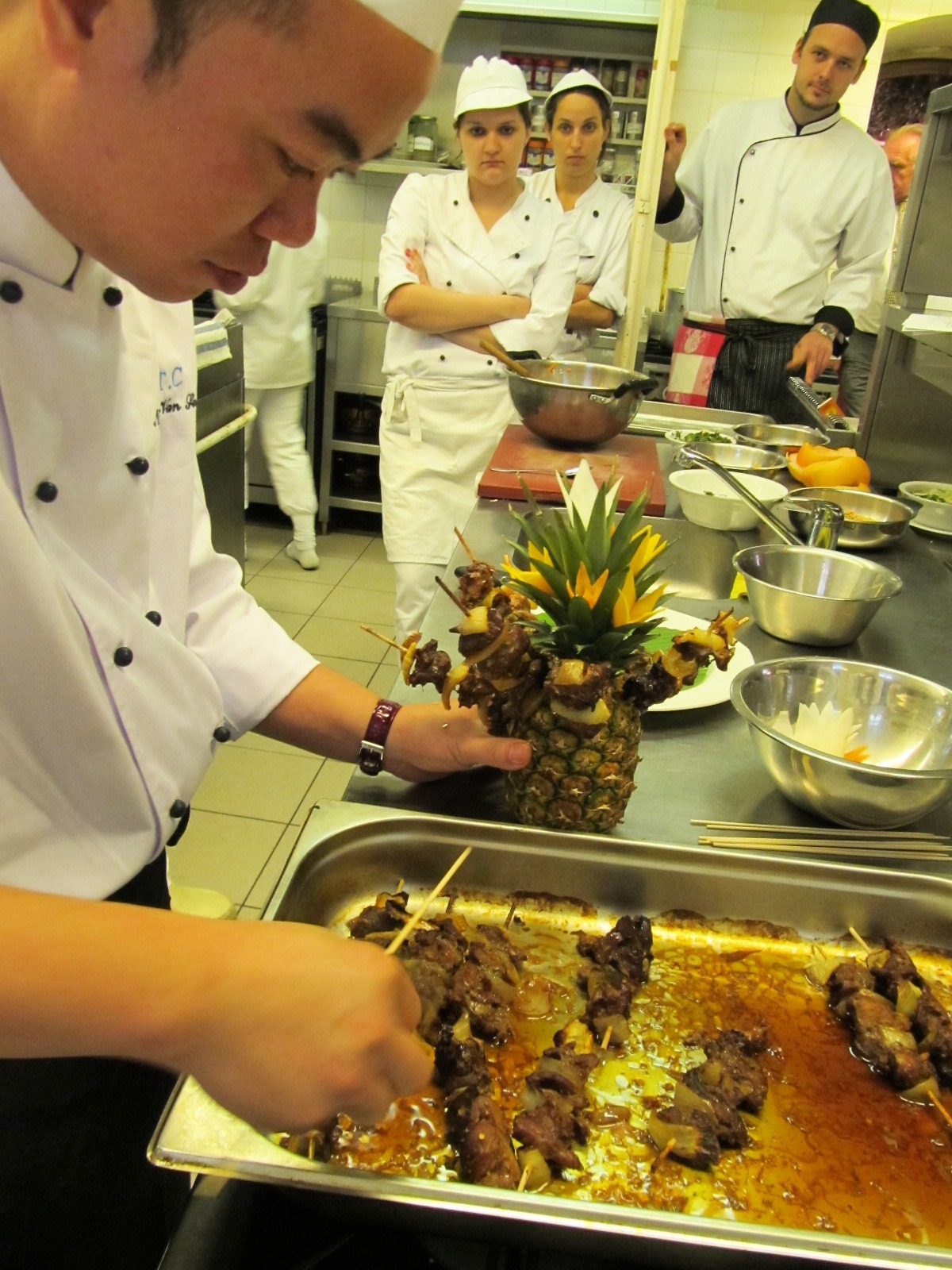
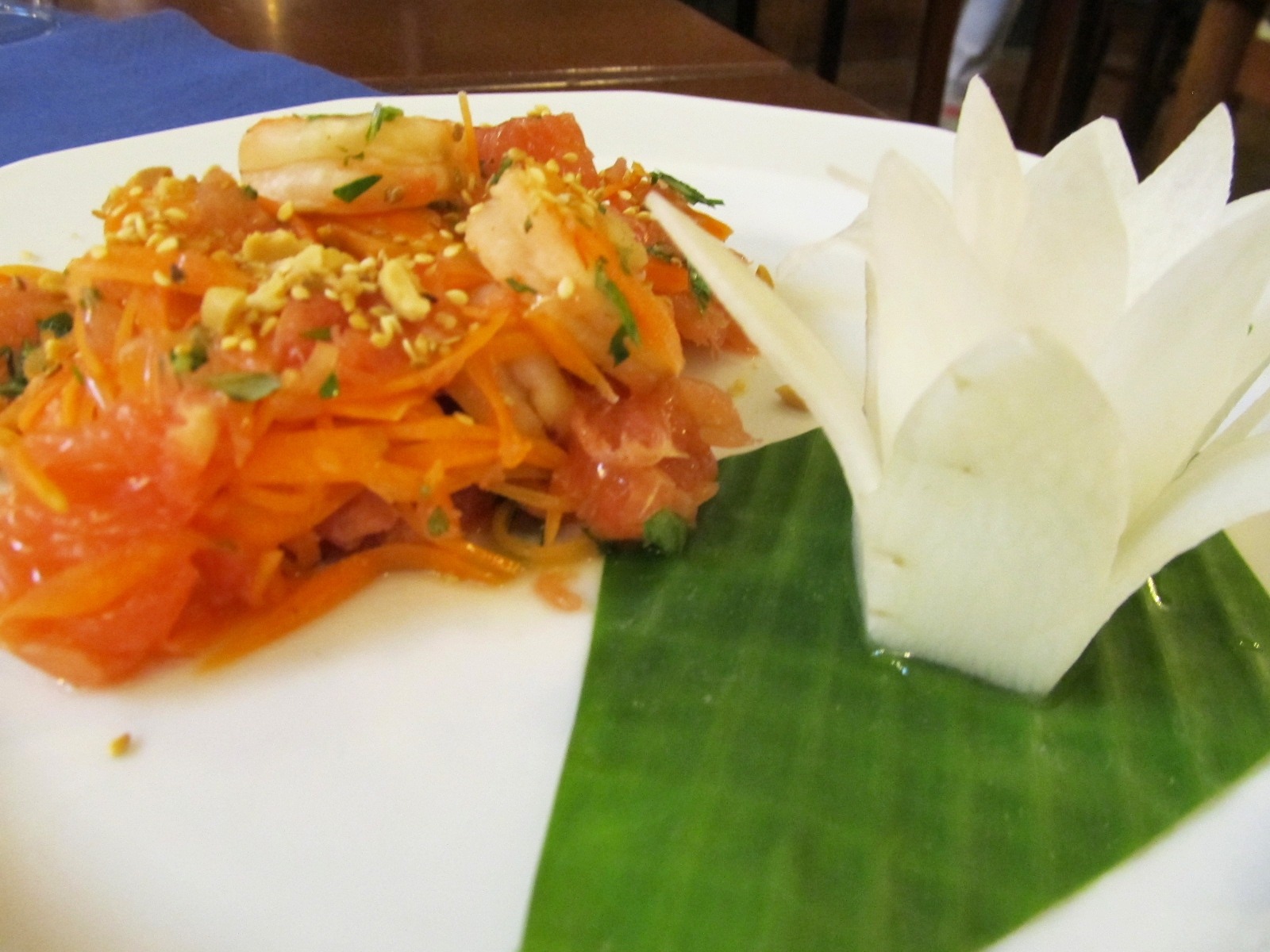
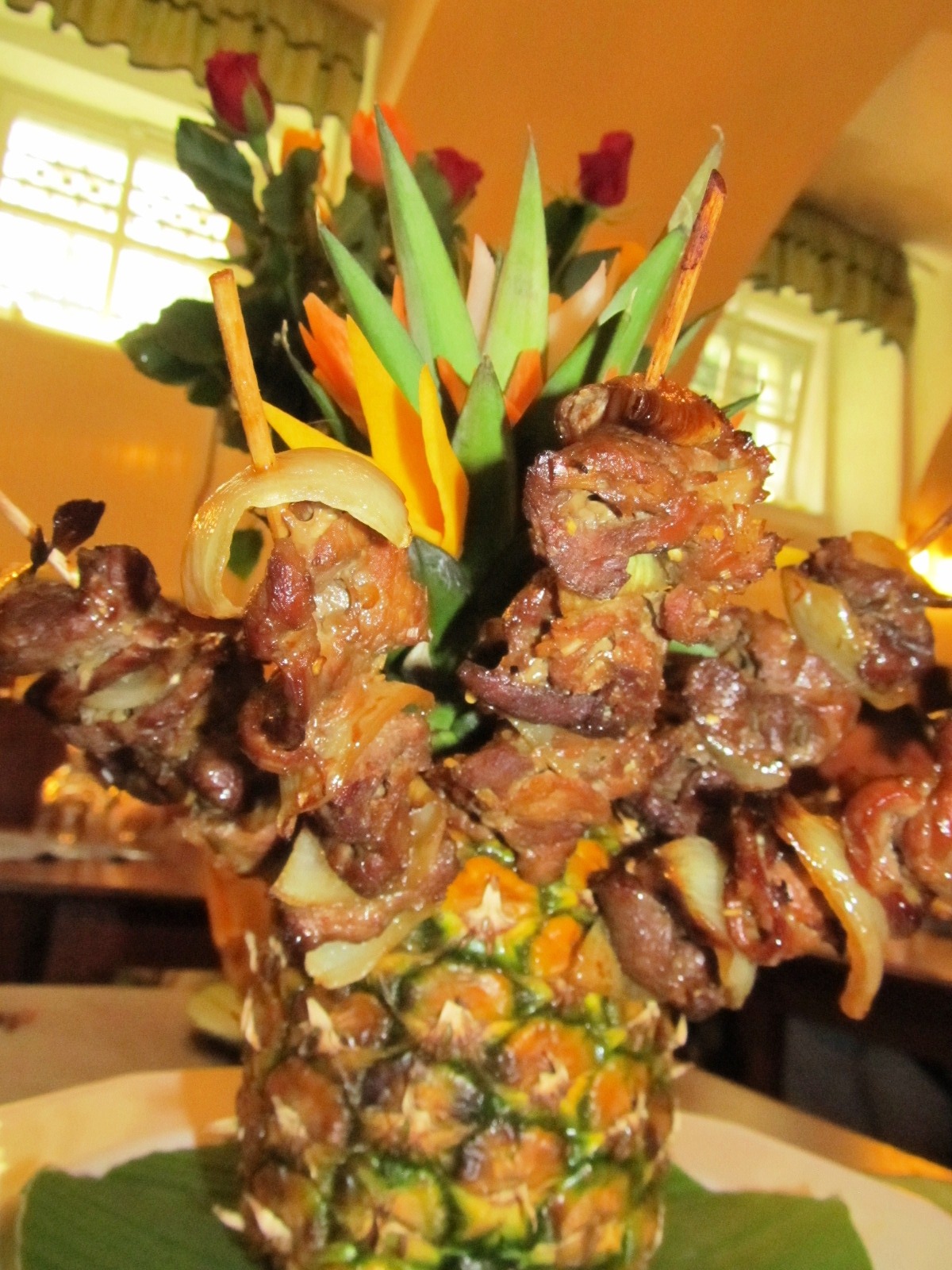
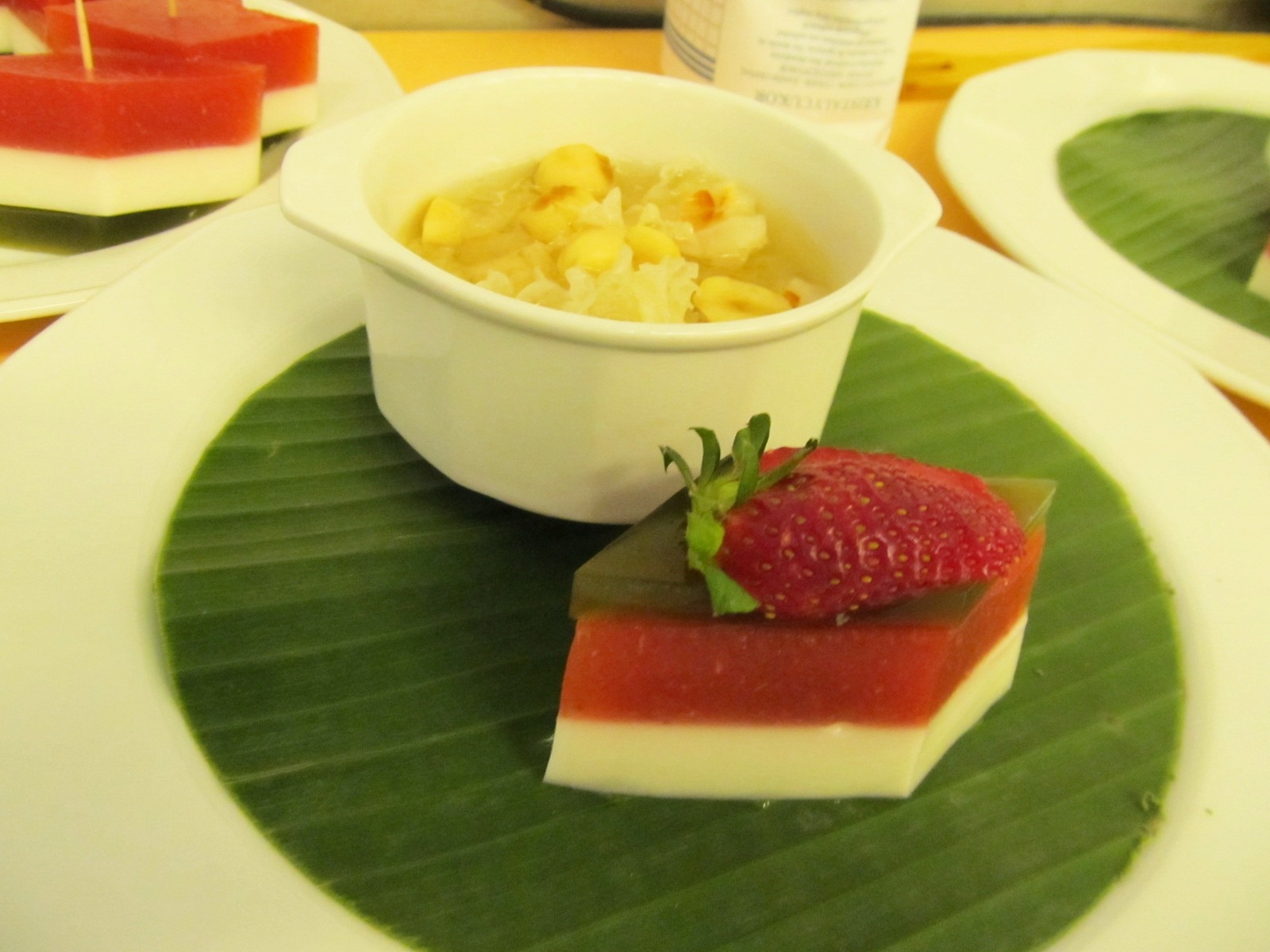
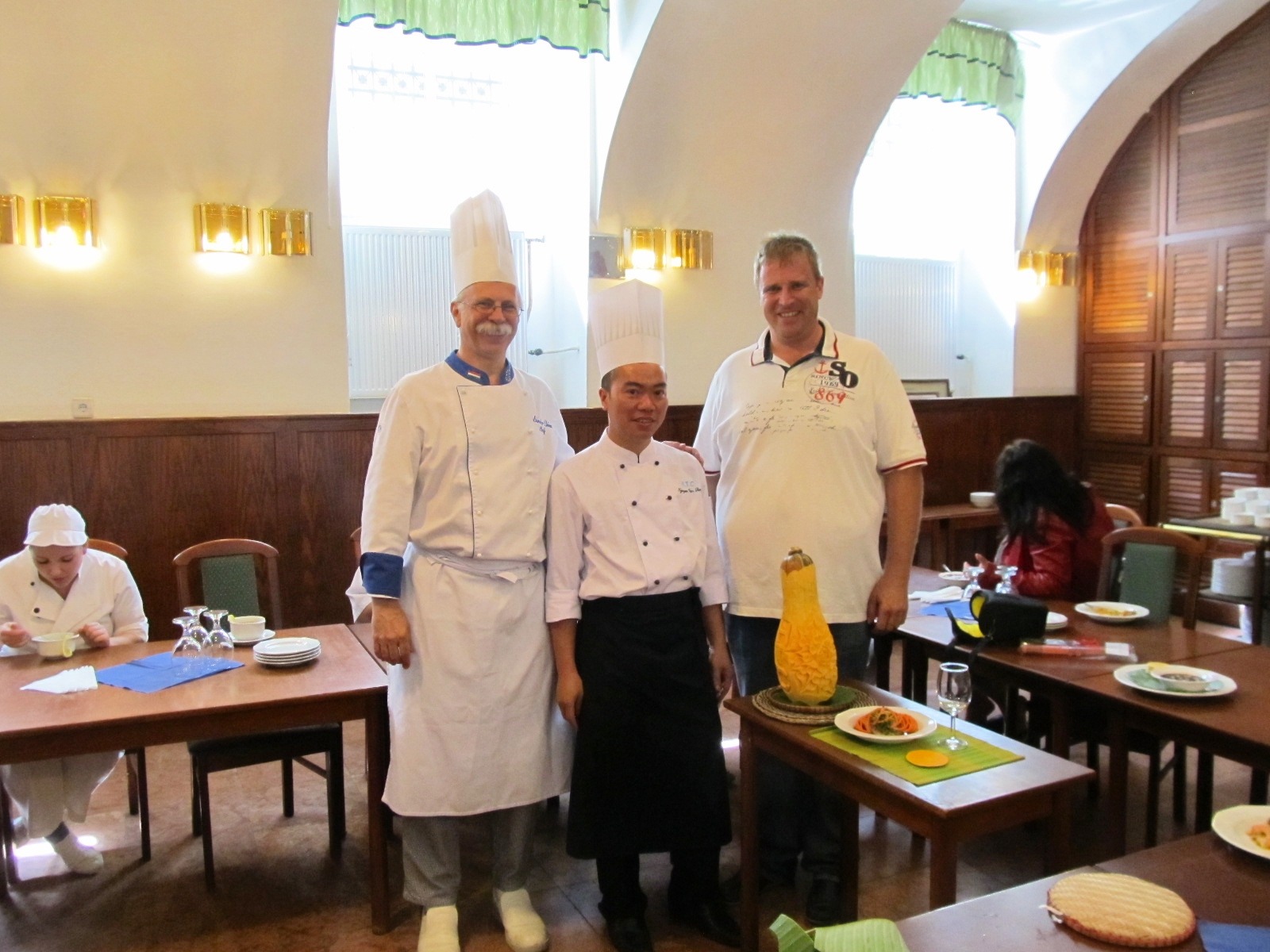
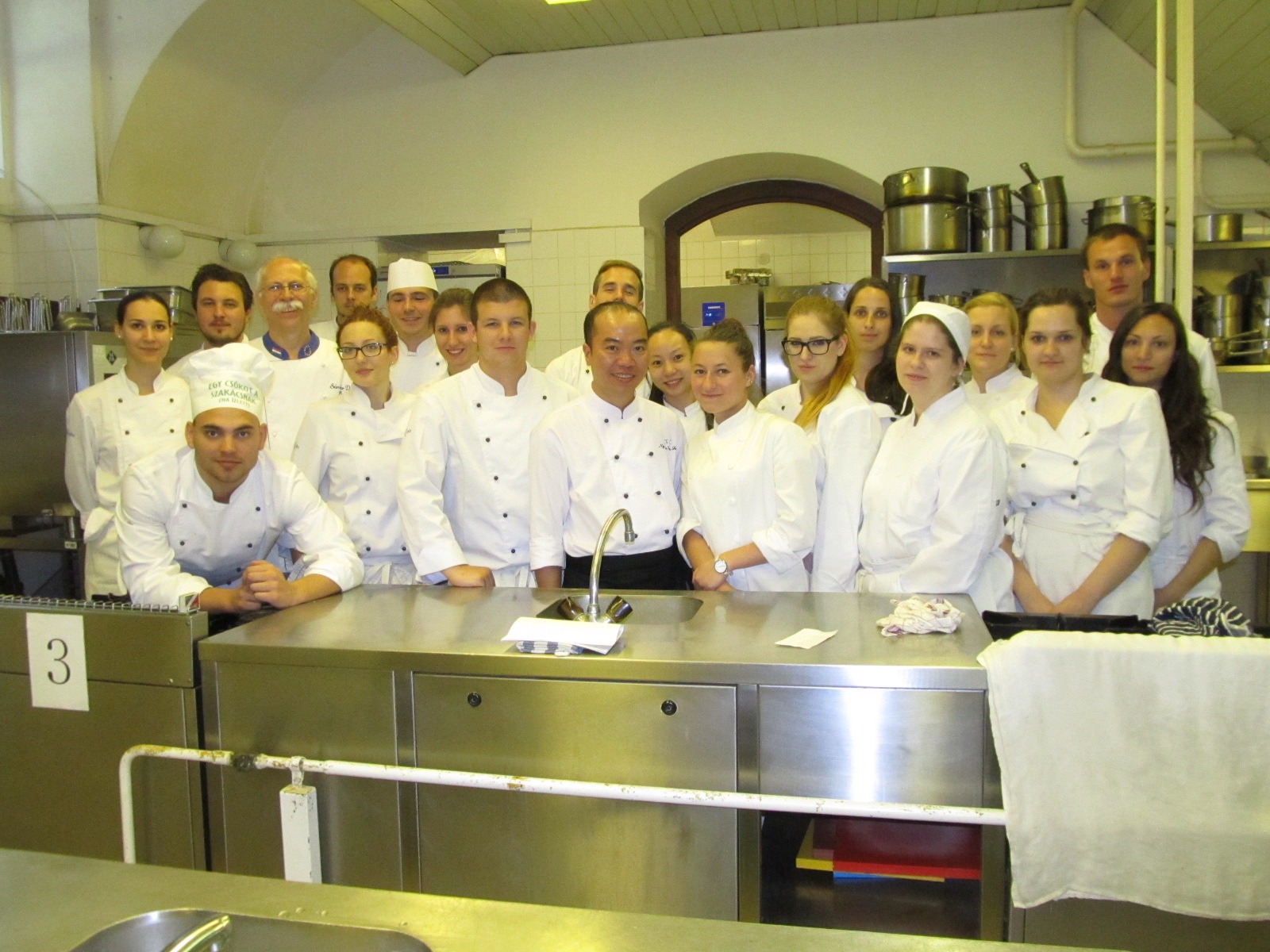
In 2013, following our good traditions, we once again hosted a Thai cooking demonstration at the college. We had the opportunity to taste the much-appreciated Thai flavor harmony that had been highly regarded many times before, and to admire the chef’s skillful knife work and aesthetic sense.
Images from the demonstration:
*
On May 17, 2013, I gave a presentation about Hungarian gastronomy to the chefs of Finnish Embassies, who had arrived from various countries, and I also showcased some interesting items from the Faculty Library’s special gastronomic collection.
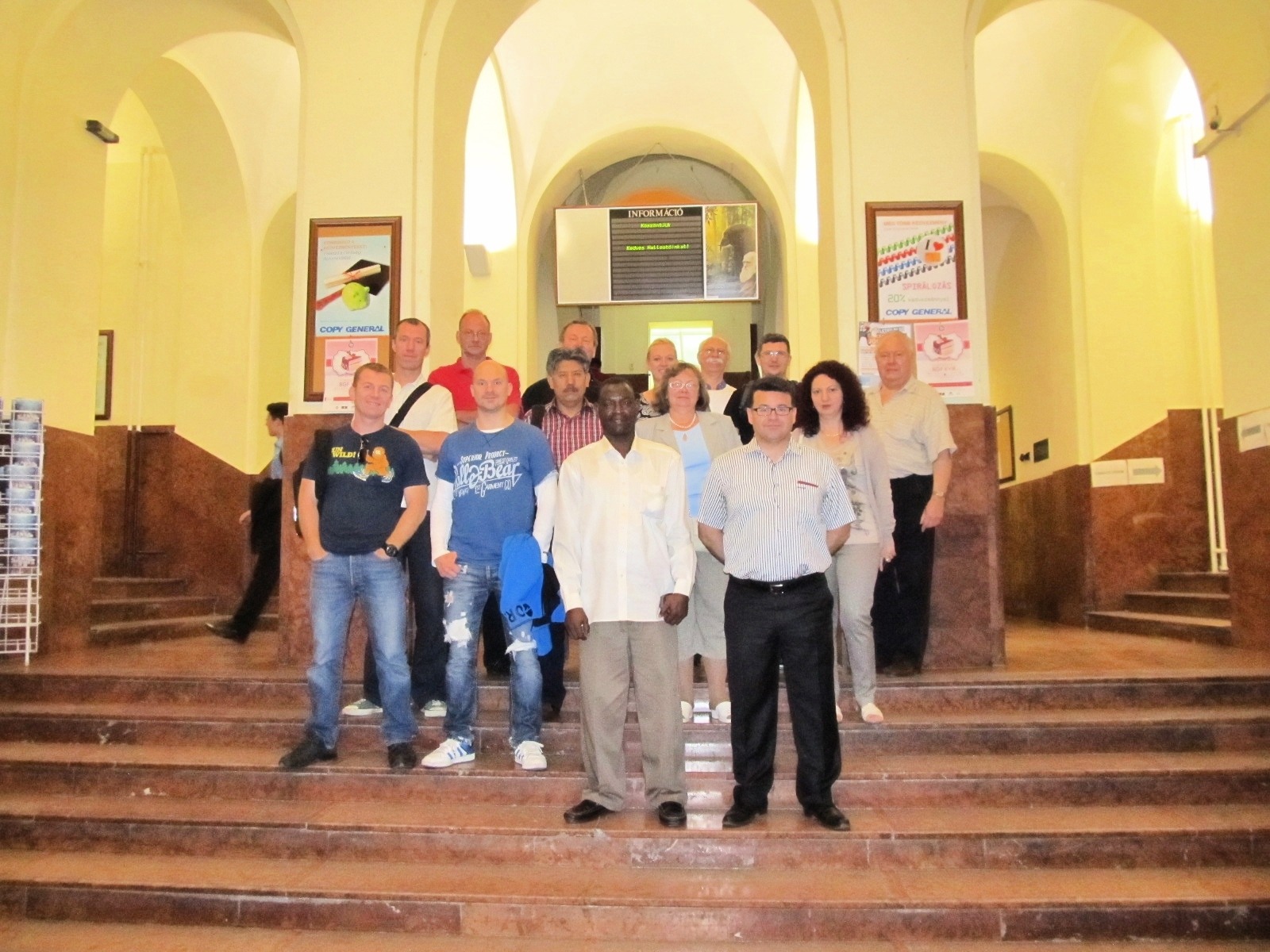
With the chefs of the Finnish embassies at BGF KVIK, 2013
*
After 2008, for the second time, we hosted the chef instructors from Hanoi Tourism College, who held a Vietnamese cooking demonstration at the BGF KVIK Teaching Cabinet in 2013. Over two days, the Vietnamese chefs prepared two menus involving our students. The dishes included Soups (Asparagus crab soup, Chicken soup with rice noodles), Cold appetizers (Green mango shrimp with pork salad, Grapefruit salad), Main courses (Steamed sterlet with soy sauce, Grilled chicken thigh with coconut sauce, Stir-fried shrimp with sticky rice, Grilled pork skewers), Desserts (Sticky rice in syrup, Sweet green bean cake, Silver tremella mushroom and lotus seed in syrup, Fruit jelly).
Regarding the above, two remarks. One is that in the Vietnamese menus, the Soups and Cold appetizers appear in this order, which is why I also listed the food groups similarly. The second is that during the preparation of the chicken soup, to achieve maximum flavor, the spices—cardamom, star anise, and cinnamon—are first dry-roasted to release their flavors before being added to the soup.
*
In 2013, the college hosted the domestic chefs’ competition of the Chaine des Rotisseurs, and the article from that time reads as follows:
“The 2013 Young Chefs Competition of the Hungarian Chaine des Rotisseurs was won by Gábor Fehér. The young chef of the Prímás Pince Tourism and Wine Culture Center was entered into the competition by László Jakabffy, a gastronomic consultant. The main organizer of the competition was chef Lázár Kovács, the venue was the BGF KVIK Teaching Cabinet, and the host on behalf of the college was Dr. Dénes Sándor.“
The winner’s menu:
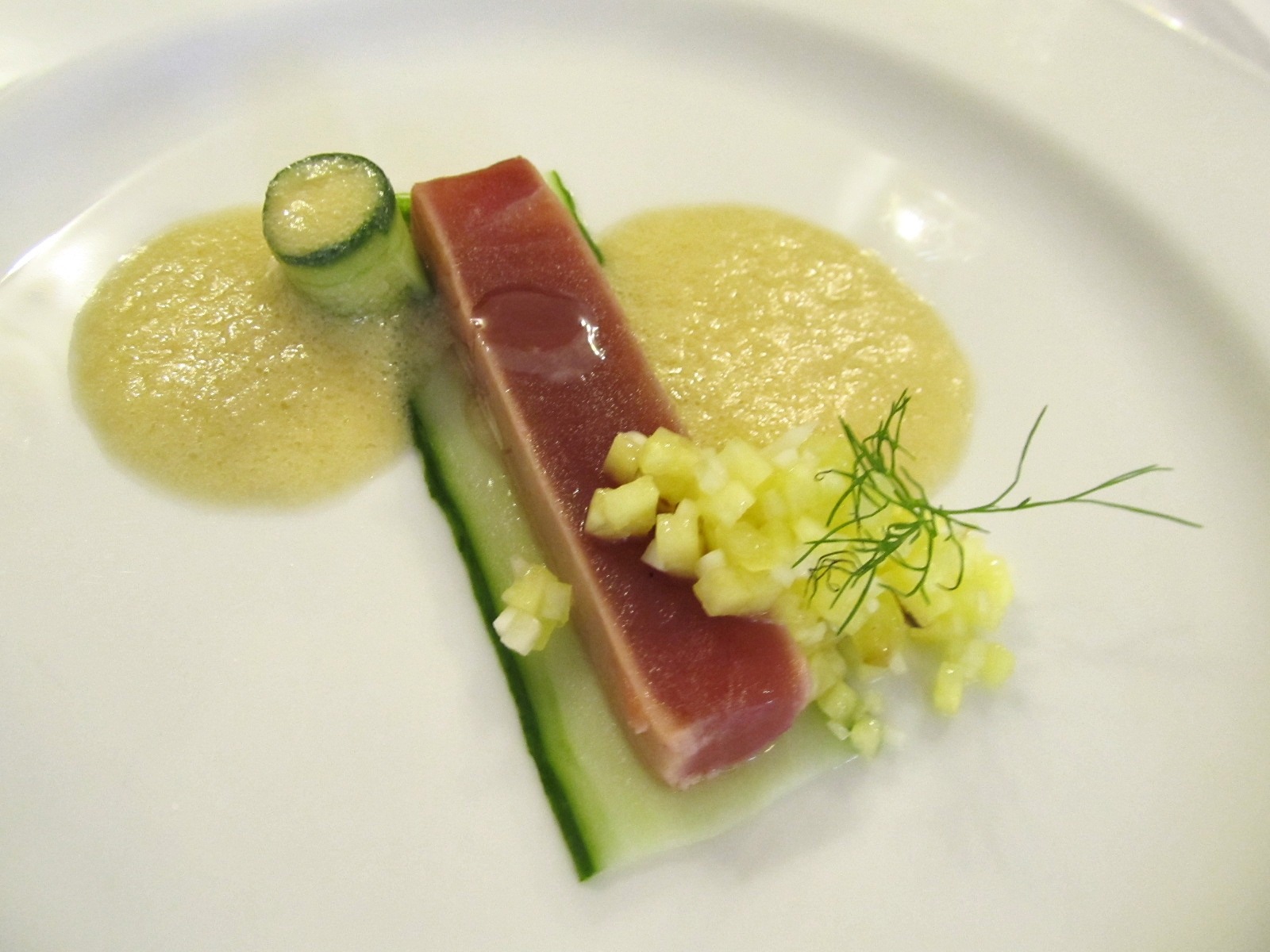
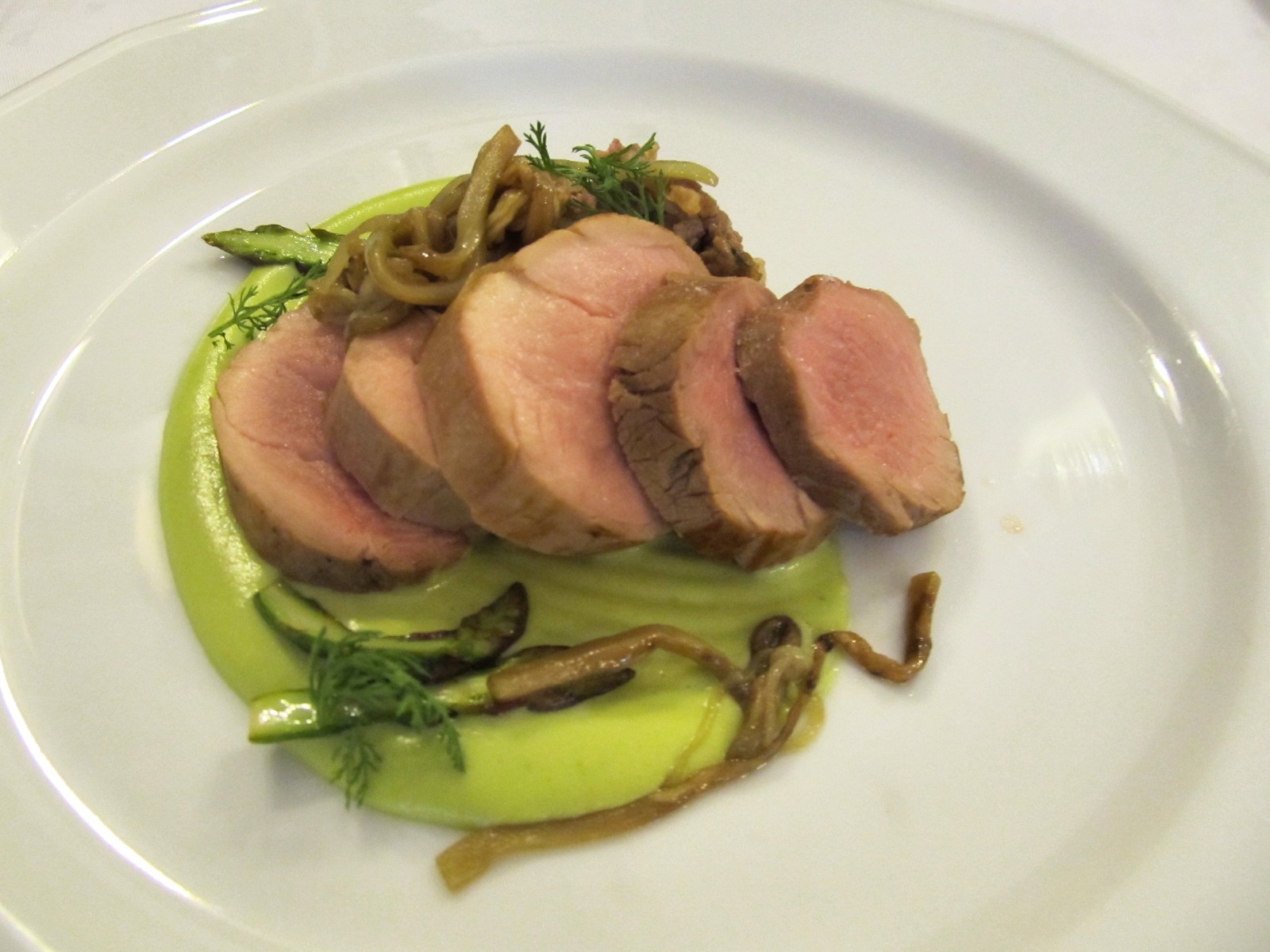
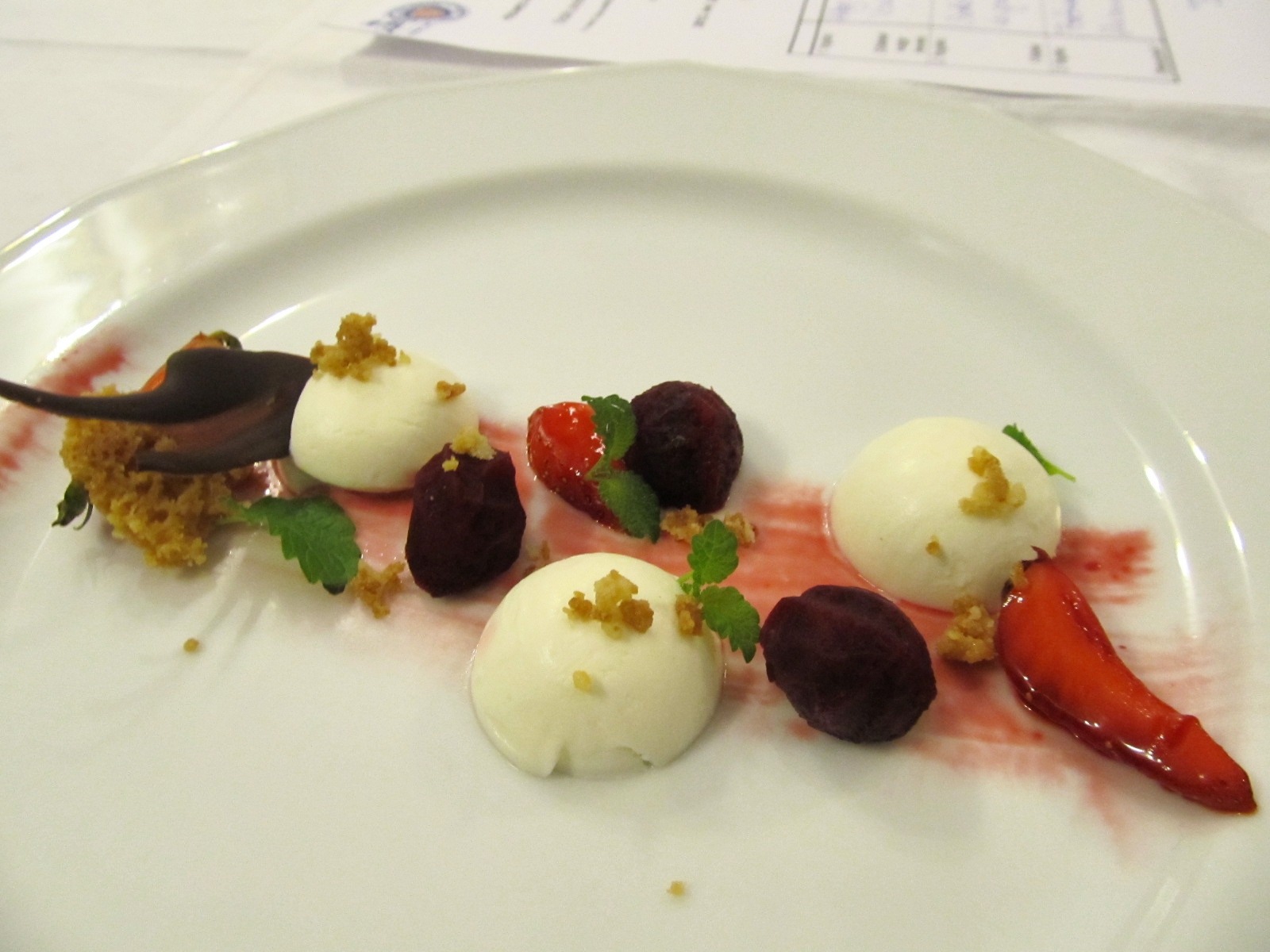
Red tuna with fresh salad, pork tenderloin with asparagus textures and eggplant, mascarpone cream with strawberry and beetroot
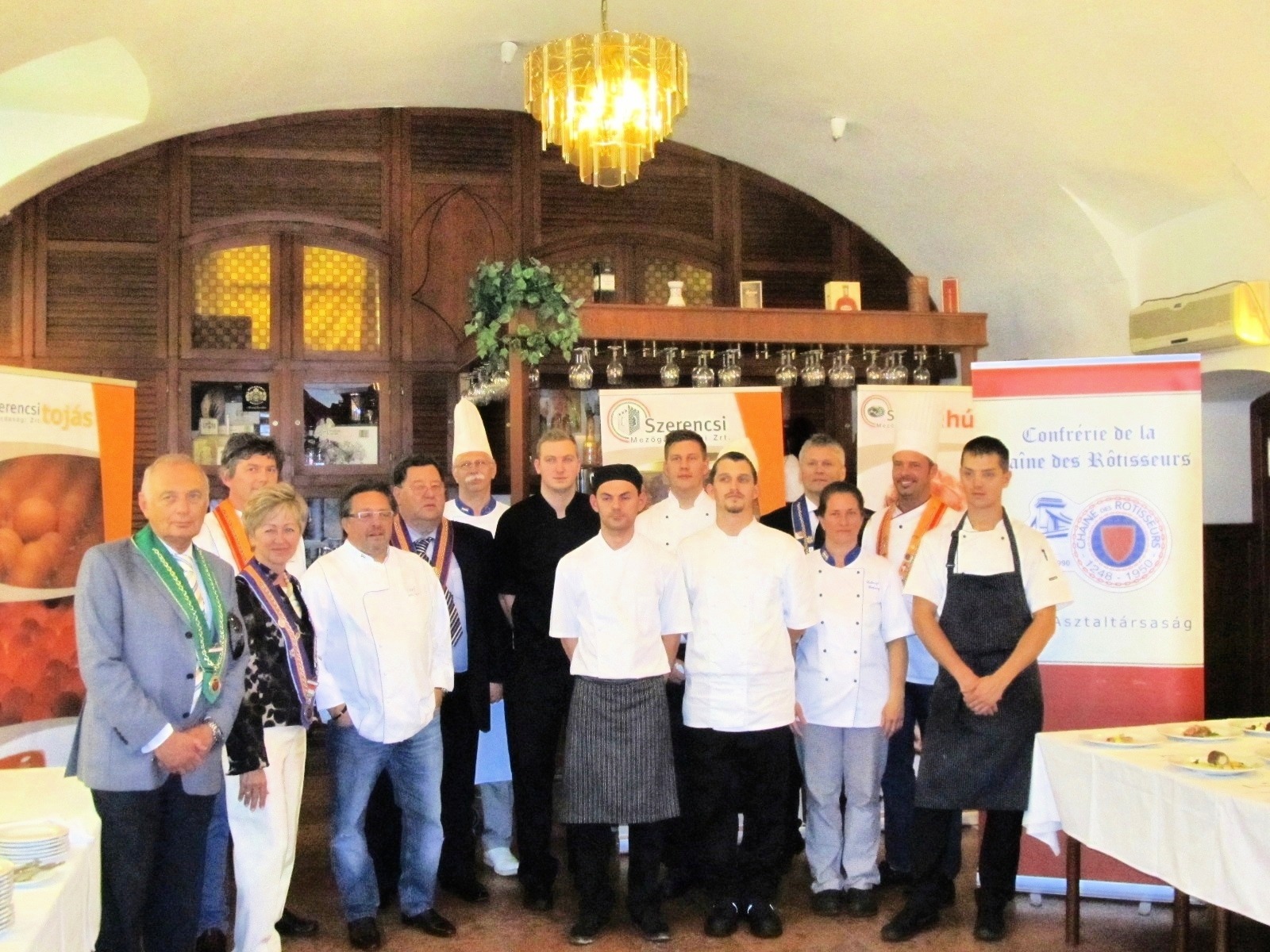
Chaine awards ceremony 2013, BGF KVIK
*
In 2013, we were once again able to host a French chef at the college. The material from that time can be read below.
“Once again, a French chef holds a cooking demonstration at the Budapest Business School, Faculty of Commerce, Hospitality and Tourism
Following last year’s highly successful gastronomic presentation, this year Cyril Haberland, chef of the one-Michelin-starred Château des Reynats restaurant in Chancelade, will hold a cooking demonstration for the students of the Budapest Business School, Faculty of Commerce, Hospitality and Tourism in the Teaching Cabinet of the college on September 10, 2013. The French Institute in Budapest, the Faculty’s Department of Specialized Languages, the Department of Hospitality, and the IT Center are involved in the successful organization of the event. Only 15 lucky students can attend the demonstration in person, but the rest of our students can follow the event live on a website.
We aim to make this prestigious event public through media appearances.”
Cyril Haberland prepared and served a dish made from roasted duck liver with a green anise, strawberry-rhubarb ragout and sauce, sweet crumbs, decorated with reduced balsamic vinegar.
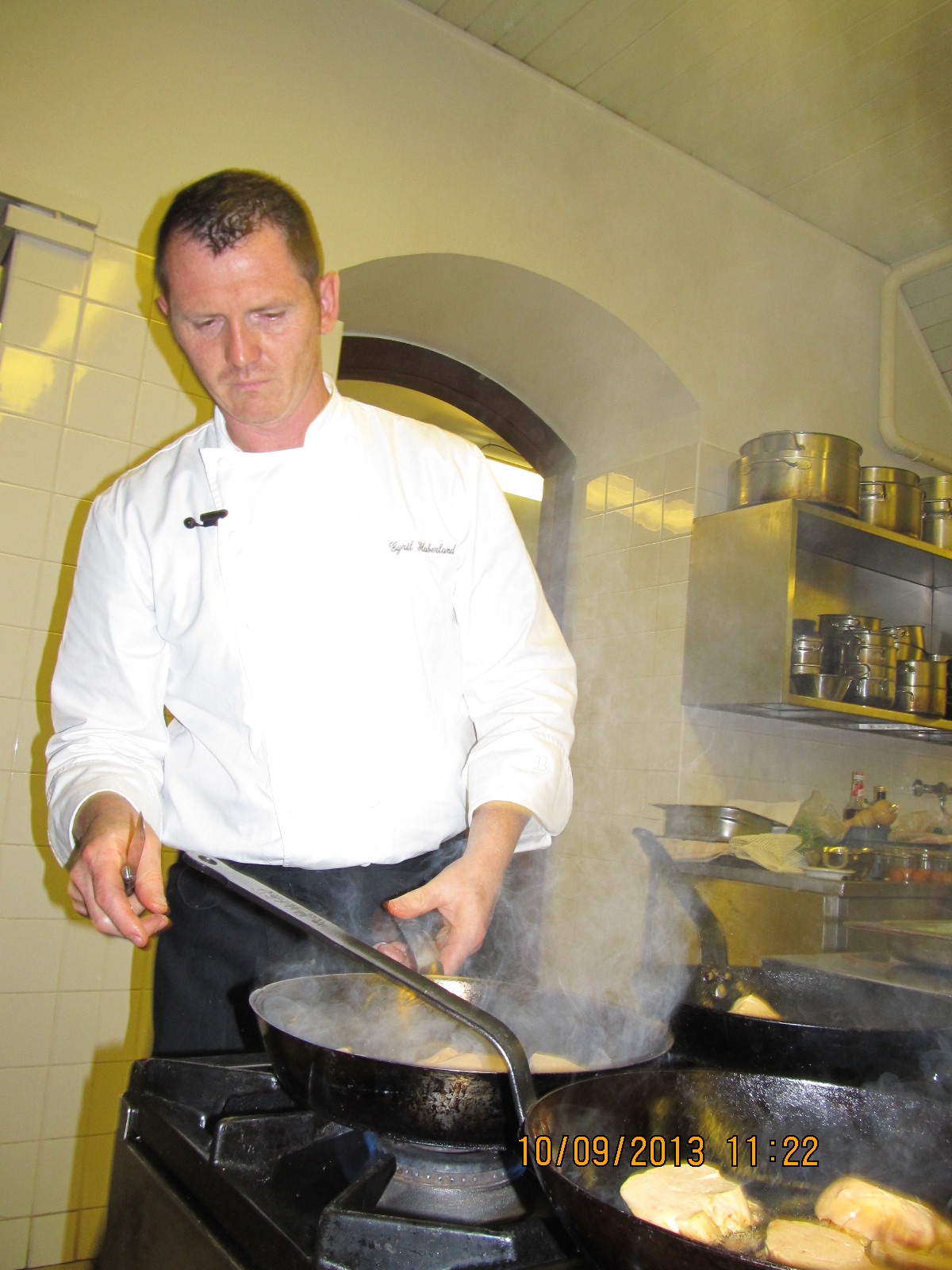
Cyril Haberland
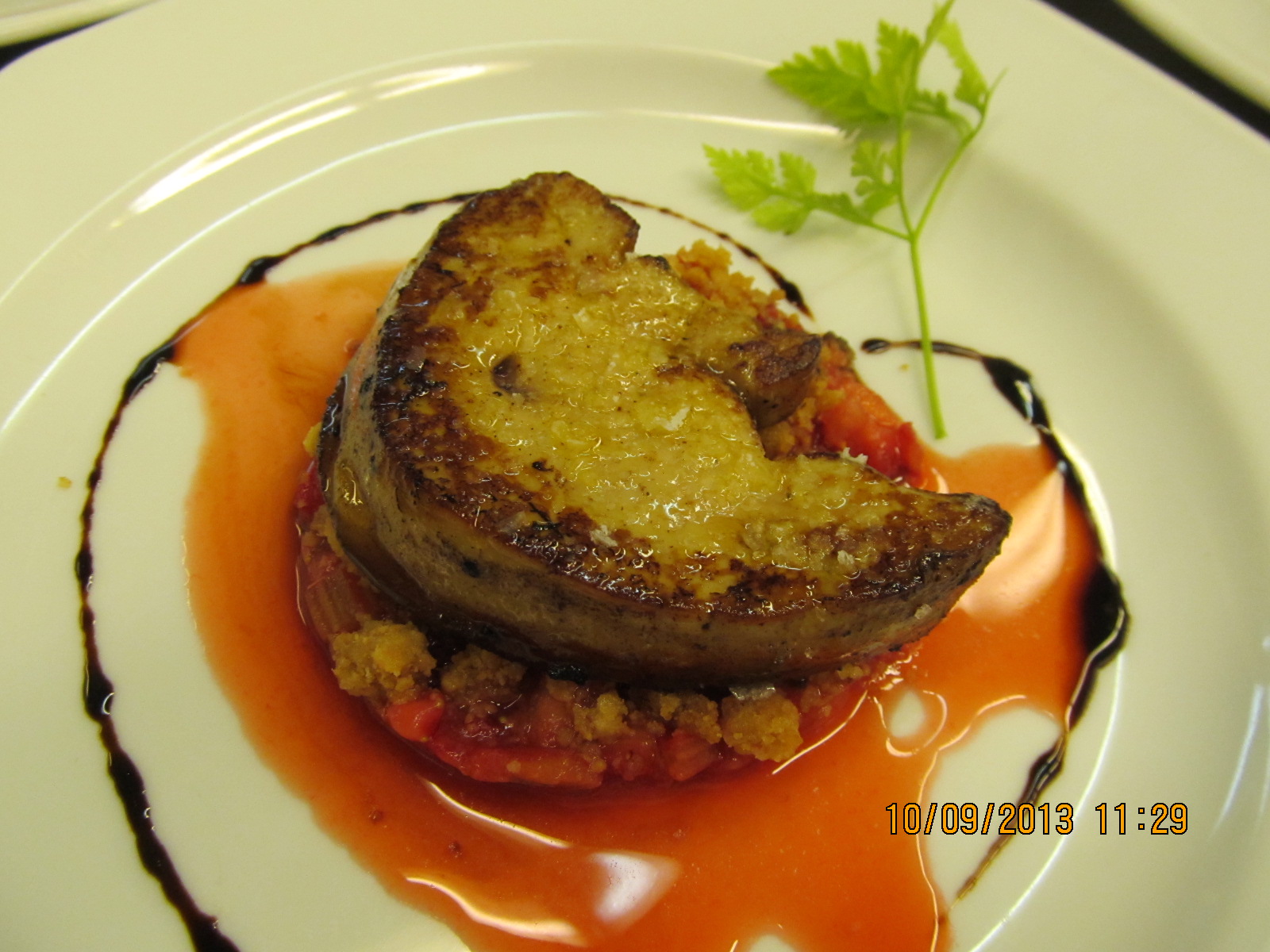
Duck liver dish
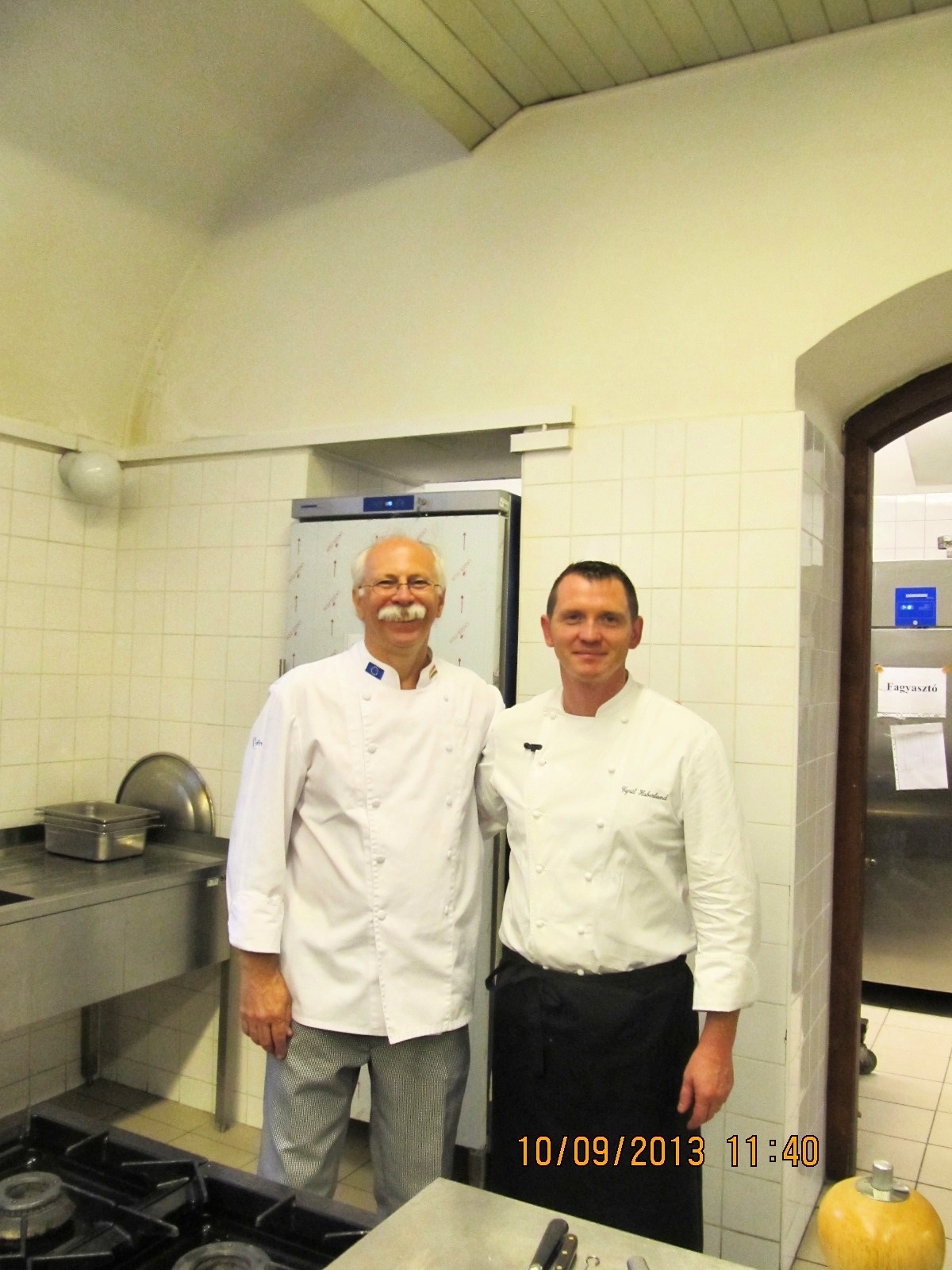
With Cyril Haberland
*
In September 2013, during the “Researchers’ Night” program at the college’s demonstration kitchen, Csaba Pavlicsek gave a presentation on molecular gastronomy for the students. The article about this event reads as follows:
“Gastronomy at Researchers’ Night at the Budapest Business School, Faculty of Commerce, Hospitality and Tourism
On September 27, as part of the Researchers’ Night presentation series, the Budapest Business School, Faculty of Commerce, Hospitality and Tourism also participated in the field of gastronomic sciences.
The program was titled ‘Aromas and textures – a glimpse into modern gastronomy.’ For the program, twenty-five participants registered twice in advance.
The presentation was given by Csaba Pavlicsek, a chef and graduate of BGF-KVIK, who acquired his molecular gastronomy knowledge at renowned restaurants across Europe, including the 3 Michelin-starred Fat Duck and under Attila Várnagy.
The program discussed the possibilities and methods of aromatization, the applications of distillation, and the identification of volatile aromas in special ingredients, followed by their pairing possibilities. After the theoretical knowledge, attendees could experience practically spherification, the making of liquid-centered spaghetti, presenting vegetables as desserts, and the importance of different textures within a dish.
Participants were able to taste the following small dishes:
Beetroot smoked with black tea, spherified beetroot flavored with vanilla, tarragon emulsion
Chocolate ice cream with black currant “spaghetti,” crispy chili raspberry “paper”
Celery ice cream flavored with white truffle oil, with toasted sesame seeds.”
In the successful execution of the program, Dr. Dénes Sándor, deputy head of the Department of Hospitality, Hedvig Hidvégi, the Faculty instructor, and Zita Tarsoly, laboratory technician, assisted Csaba Pavlicsek.
*
In November 2013, we launched courses built upon but extending beyond the college curriculum in various gastronomic fields. The program is shown below.
“Information
With the following short courses, the Department of Hospitality aims to offer primarily interested students the opportunity to acquire practical knowledge applied in today’s hospitality industry on specific gastronomic topics. The courses provide immediately usable practical skills and knowledge in subjects not covered in the basic training but appearing in the daily practice of hospitality.
The topics, instructors, and schedules of the short courses
The courses on Tuesdays, Thursdays, and Saturdays will be held from 9:00 AM to 2:00 PM.
Topics | Speakers, instructors | Date |
Healthy nutrition, dishes | István Varga, bio chef | 2013.11.04. and 2013.11.09. |
Barista (coffee specialties) | Andor Perna, barista | 2013.11.14. and 2013.11.16. |
Bartender (mixed drinks) | Péter Morafcsik, bartender | 2013.11.21. and 2013.11.23. |
Pálinka sommelier | Csaba Pavlicsek, pálinka sommelier | 2013.11.28. and 2013.11.30. |
Gastronomic artistry (vegetable) | Csaba Pavlicsek, food sculptor | 2013.12.05. and 2013.12.07. |
Regional dishes in a trendy way | Dr. Dénes Sándor | 2013.12.10.and 2013.12.14. |
Location: Teaching Cabinet (1054 Budapest, Alkotmány Street 9-11, Basement)
The participation fee for one course: 15,000 HUF.
The maximum group size is 15 people, except for the barista group, where the maximum size is 8 people.
Participants will receive a Certificate upon completion of the course.
Images from the barista course:
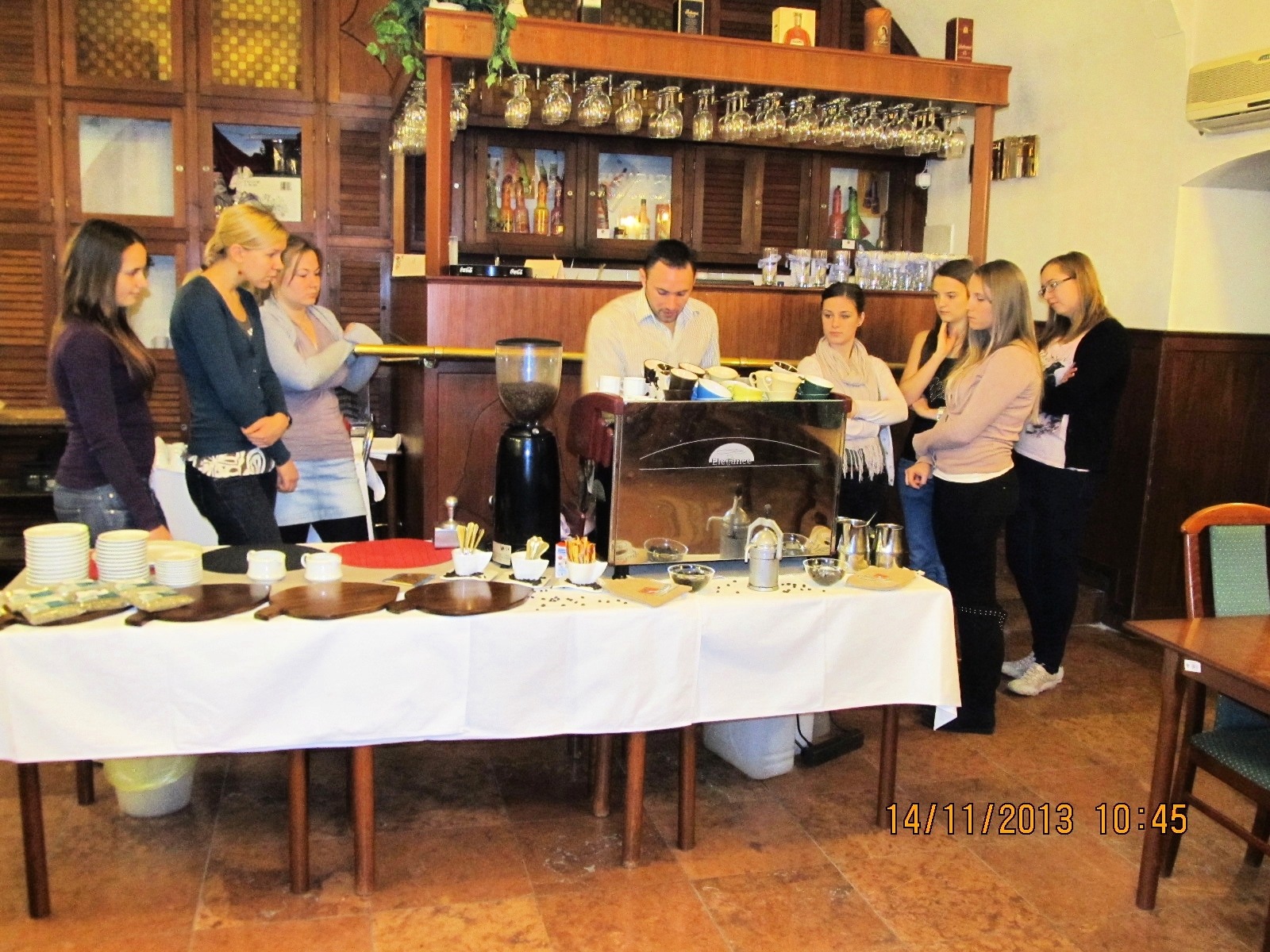
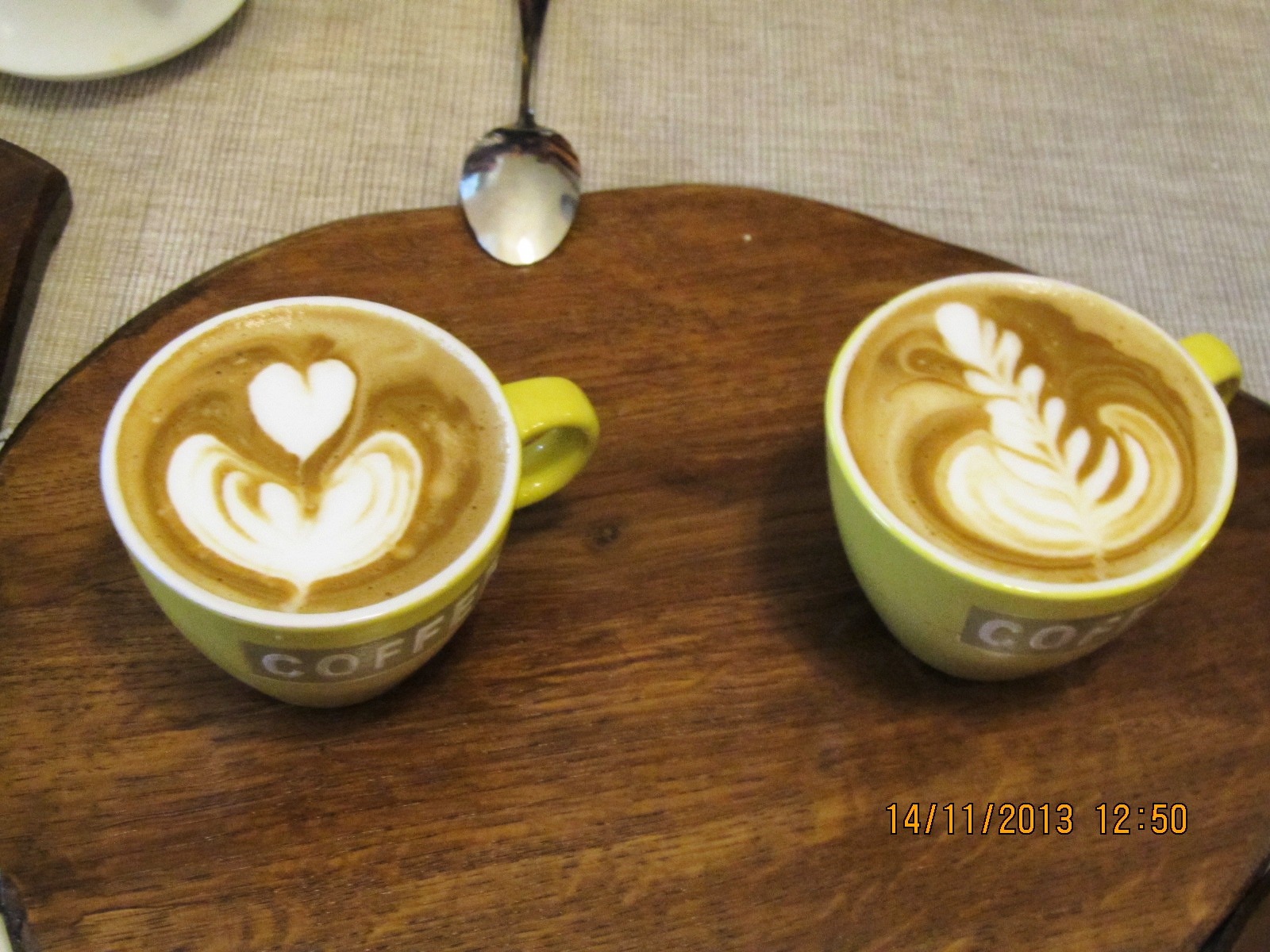
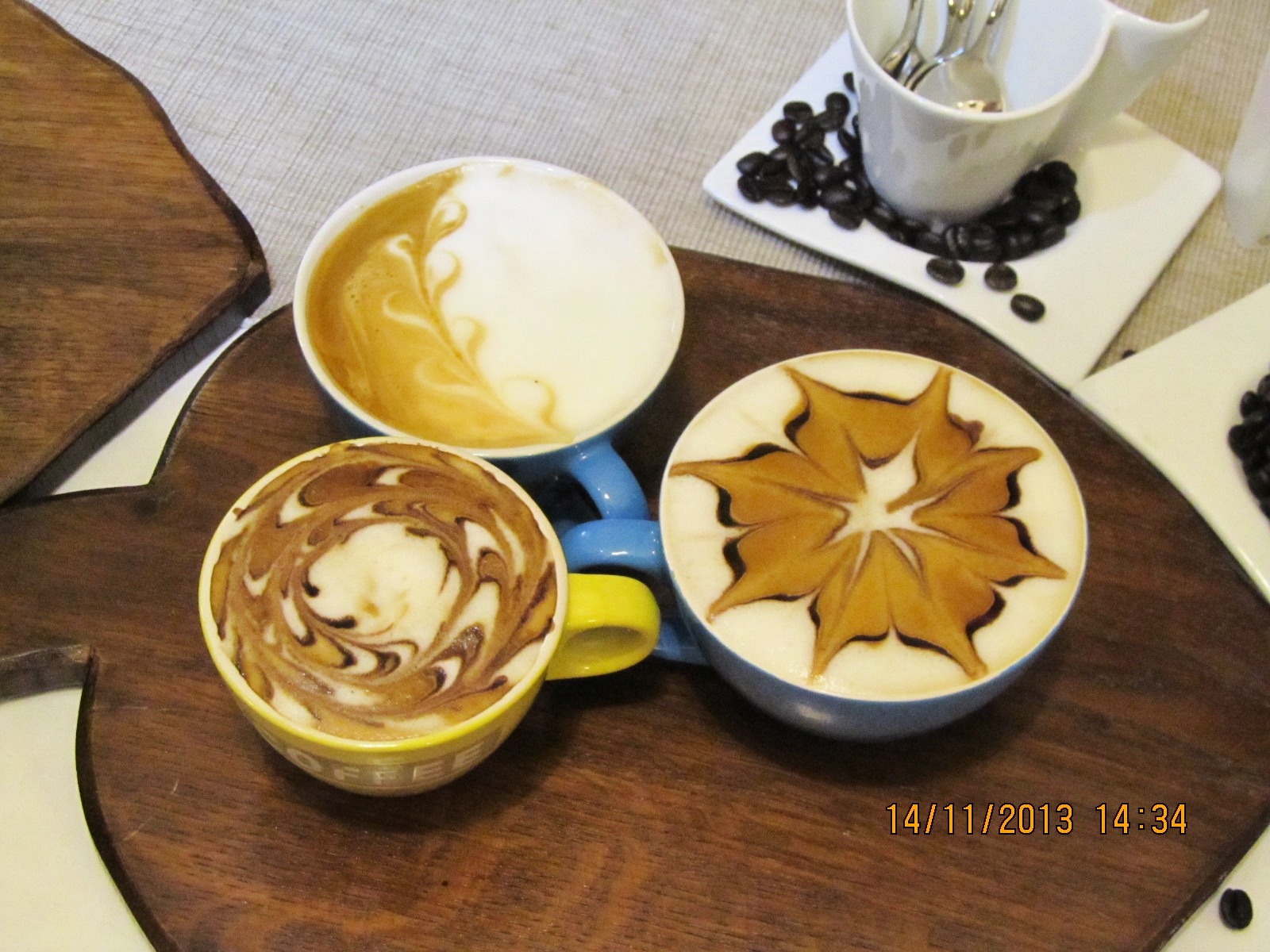
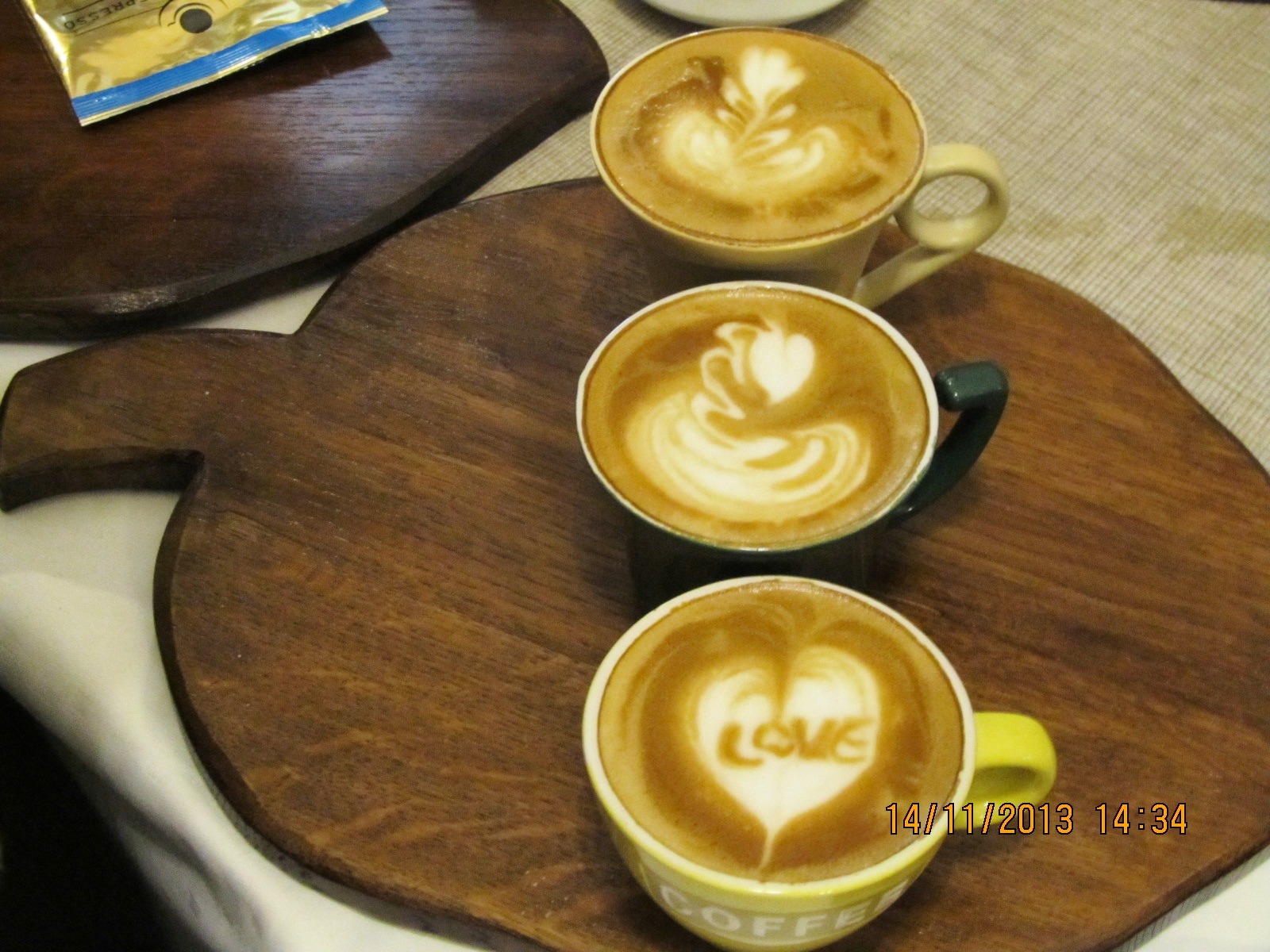
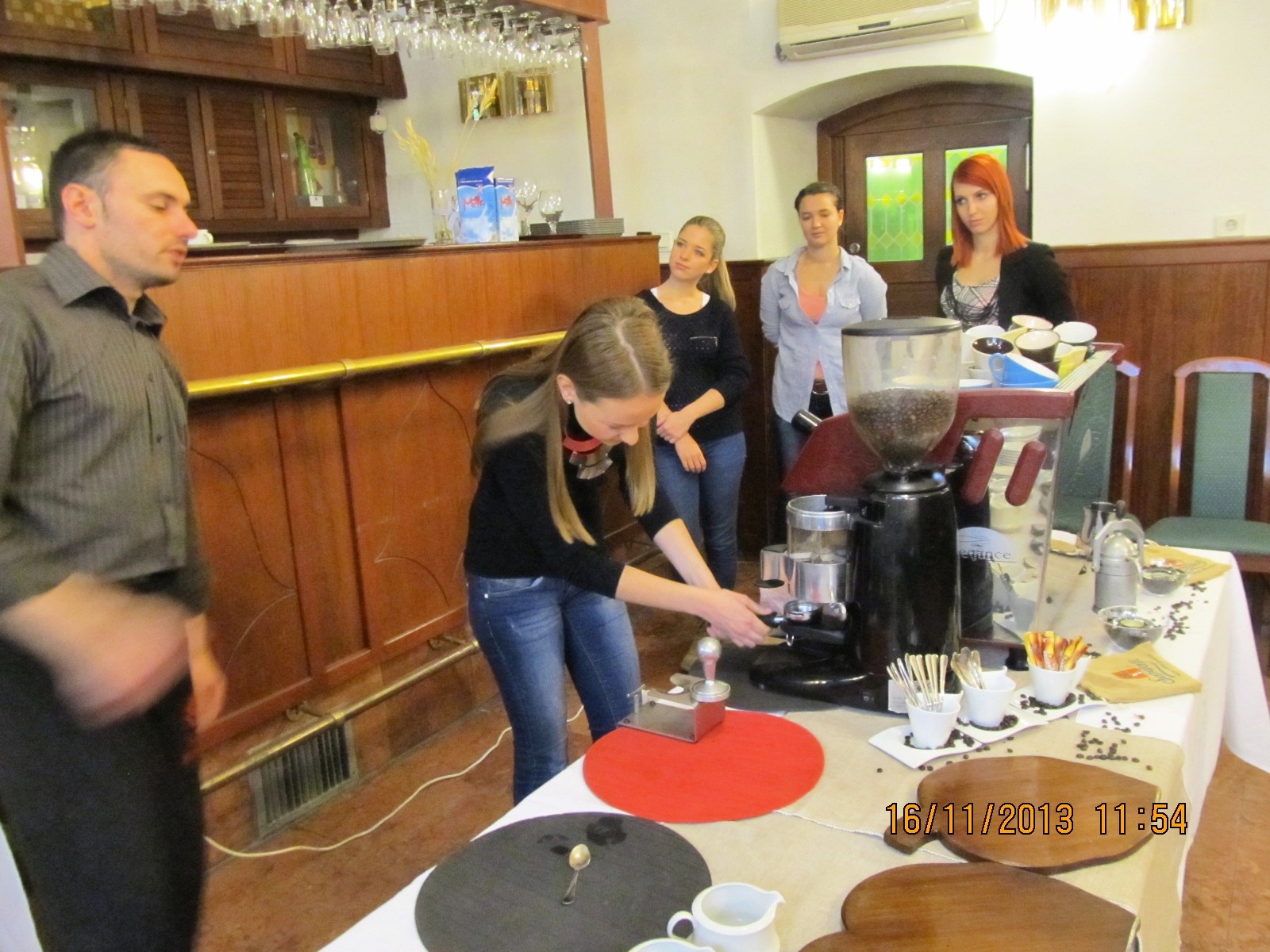
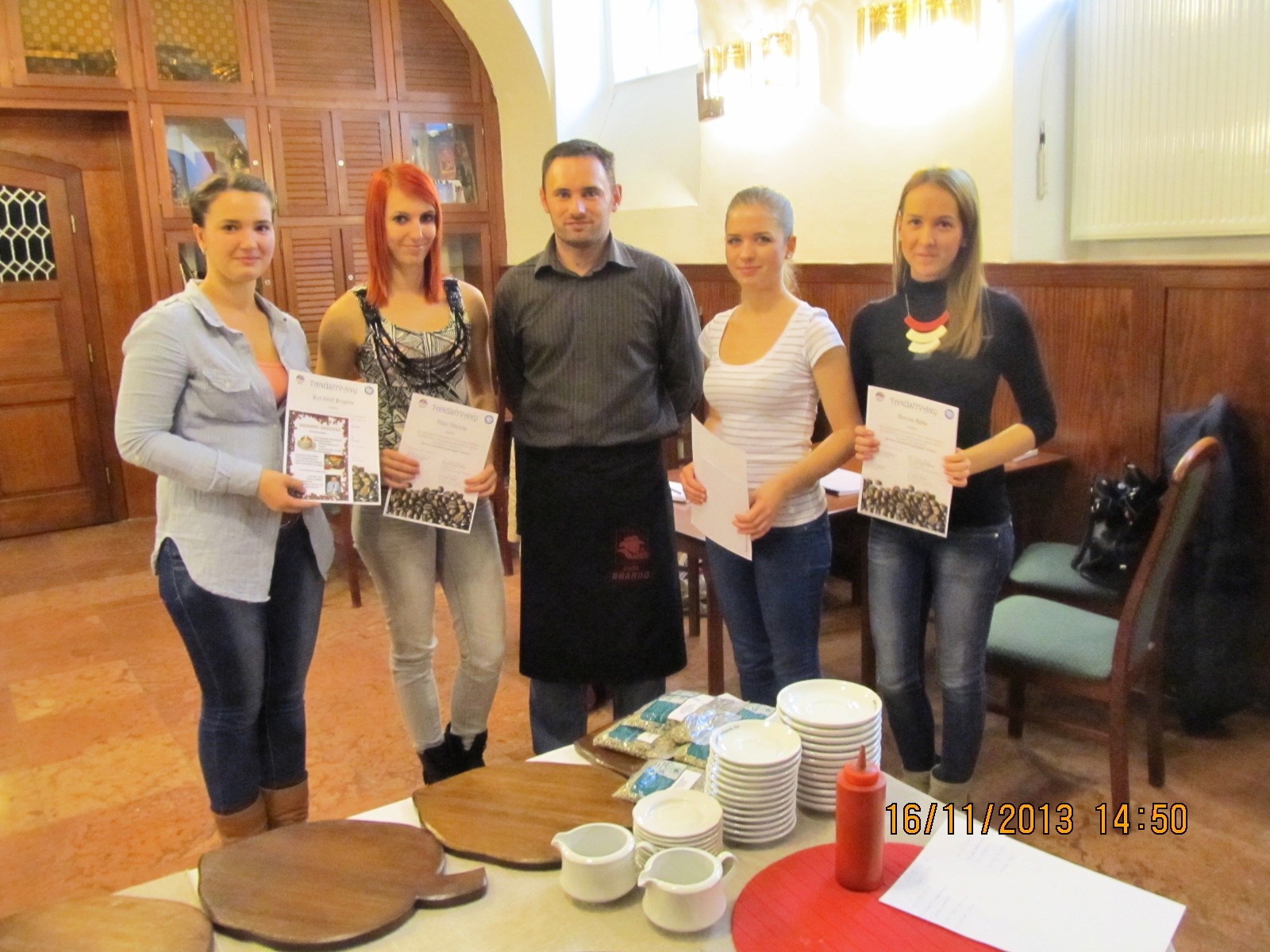
Perna Andor and some of the course participants
*
In 2013, we once again participated in the Dr. László Ketter Traditional Gastronomy Competition and Conference. The article about the event from that time can be read below.
“Dr. László Ketter Traditional Gastronomy Competition 2013
The head, former head, and deputy head of the Department of Hospitality at BGF KVIK gave presentations on the following topics at the Dr. László Ketter Traditional Gastronomy Competition held on December 11, 2013, in Mogyoród.”
Dr. Andrea Lugasi: “Report on the activities of the Budapest Business School, Faculty of Commerce, Hospitality and Tourism aimed at preserving the values of traditional hospitality.” Dr. János Gundel: Presentation titled “Regions and Flavors.” Dr. Dénes Sándor: “How does a cook become a PhD holder?”
At this competition, the three-member team representing the College—Hajnalka Csukás, Adrian De Negri, and Zsolt Horváth (3rd-year BA students, Hospitality-Hotel specialization)—achieved 4th place (tied with 3rd place) out of 12 participants, to whom we hereby also offer our congratulations! The team’s coach was Hedvig Hidvégi, assistant lecturer at BGF KVIK Department of Hospitality, whom we also congratulate, and we thank both the competitors and the coach for their dedicated professional work!”
*
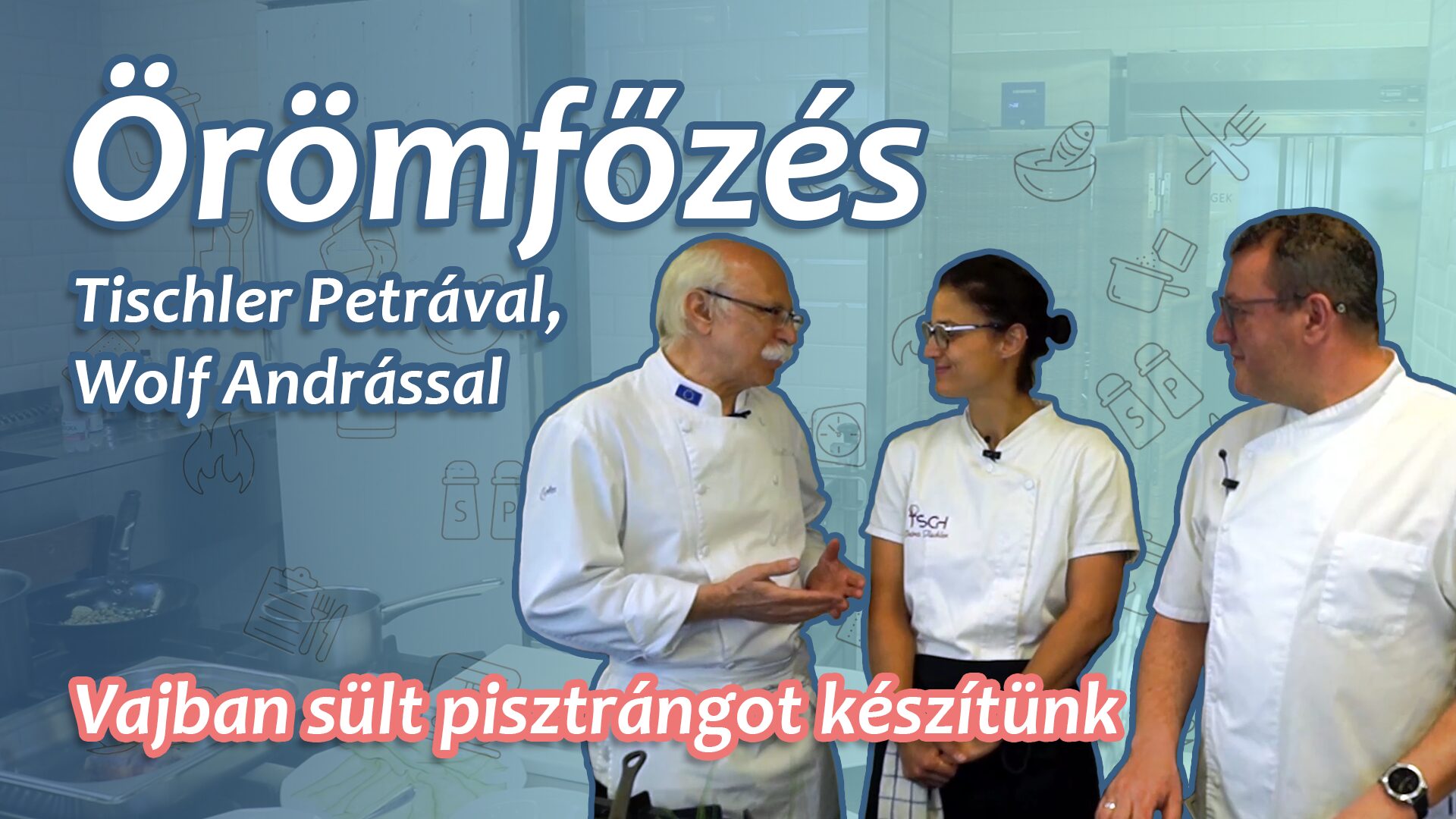
Click on the picture to watch the video of the “Trout fillet sautéed in butter with toasted vanilla new cabbage, sorrel-walnut gremolata sauce, red wine cherry compote, and pickled elderflower” prepared at the Joyful Cooking event! You can find the recipe below the video!
You can watch the interview with Petra Tischler on YouTube by clicking here.
You can watch the interview with András Wolf on YouTube by clicking here.
The spontaneous stories shared during the Joyful Cooking event can be found here:
https://www.youtube.com/watch?v=-bg3y2iyRgk
https://www.youtube.com/watch?v=yLMX3CM0iII
https://www.youtube.com/watch?v=V923dXpEzQI
https://www.youtube.com/watch?v=q3K0EqVsb3A
https://www.youtube.com/watch?v=bA0TvWzT26o
https://www.youtube.com/watch?v=zpjby9y-1mY
https://www.youtube.com/watch?v=MJ_63dp4FaU
https://www.youtube.com/watch?v=q4LmGNxQi7Q
https://www.youtube.com/watch?v=wbpS3sflV9w
https://www.youtube.com/watch?v=h7dpVm3nm80
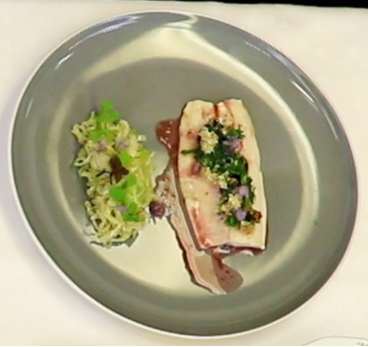
Trout fillet sautéed in butter with toasted vanilla new cabbage, sorrel-walnut gremolata sauce, red wine cherry compote, and pickled elderflower
Recommended ingredient quantities for 4 servings:
For the trout:
2 trout
salt
60 g butter
For the new cabbage:
250 g new cabbage
60 g butter
salt, vanilla, to taste
For the gremolata:
40 g walnut kernel
120 g sorrel
10 g shiso
30 ml extra virgin olive oil
1 lemon
For the cherry compote:
150 g cherry compote in red wine
For the pickled elderflower:
20 g pickled elderflower
For garnish:
green leaves
chives and elderflower
Preparation steps:
- The trout is filleted, small bones are removed from the fillets with tweezers, the skin is cut off – it is not used in this recipe – then salted and fried in butter over medium heat.
- The cabbage is thinly sliced into strips and sautéed in butter while being salted and flavored with vanilla.
- The gremolata is prepared by chopping the walnuts and the green leaves (sorrel, shiso) with a knife, then mixing them with olive oil and lemon juice.
- When making the red wine cherry compote, red wine is used to flavor the compote.
- For the pickled elderflower, the elderflowers are soaked in apple cider vinegar.
- For serving, place the fish on the plate, put the cabbage beside it, heap the warmed compote and gremolata on the trout, and finally garnish with green leaves, chives, and elderflowers.
*
Preview
Hospitality College (BGF KVIK) work 2014-2015.
Joyful Cooking with Péter Palotás and Viktor Segal. Péter helped a lot with fish support in various chef competitions during the 2010s. Thus, the good results achieved, such as the first, second, and third places at the Olivier Roellinger international competition, can be counted as shared successes. Viktor and I were jury members together at the first Tradition and Evolution chef competition in 2006.
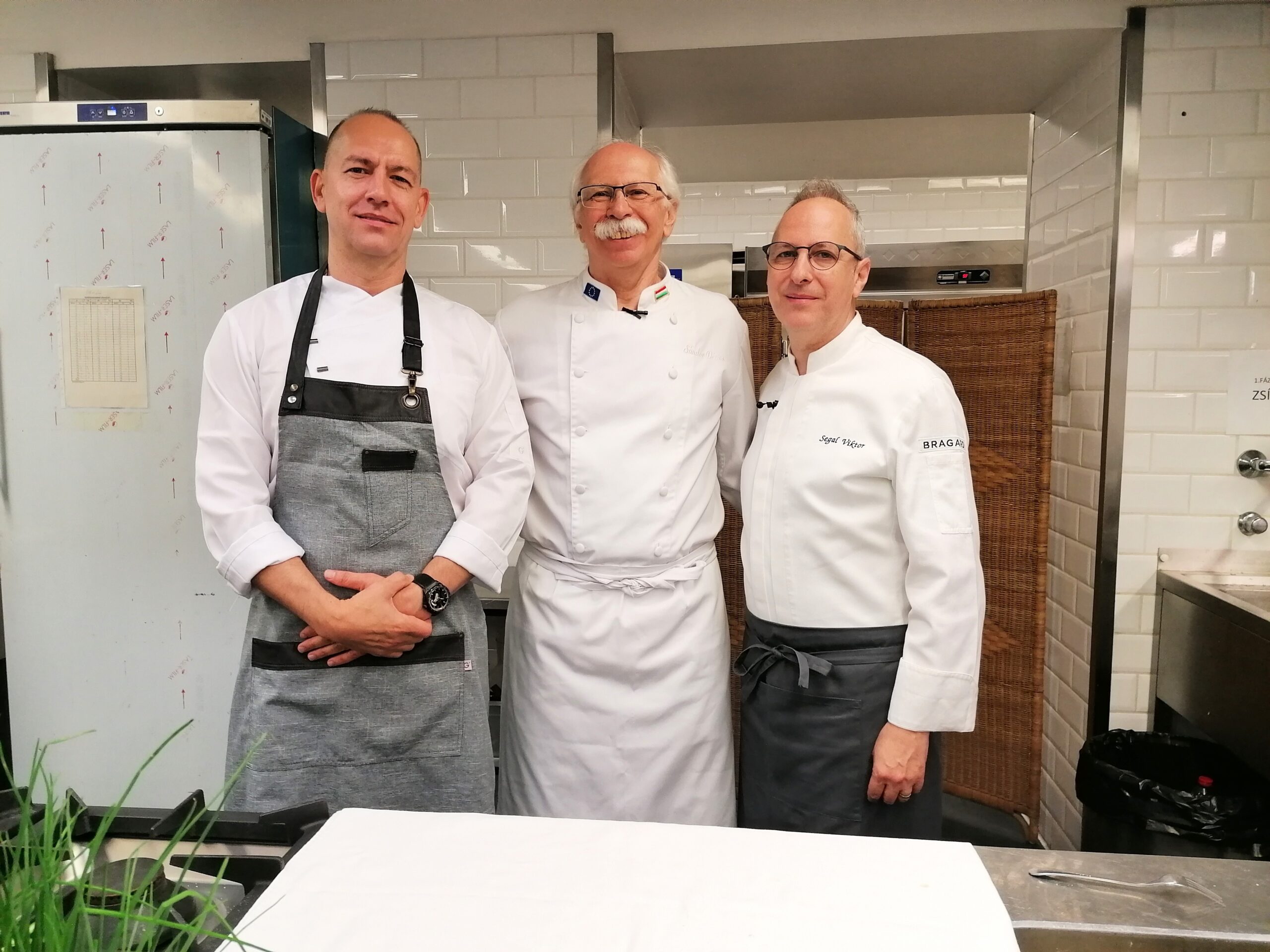
With Péter Palotás and Viktor Segal
*