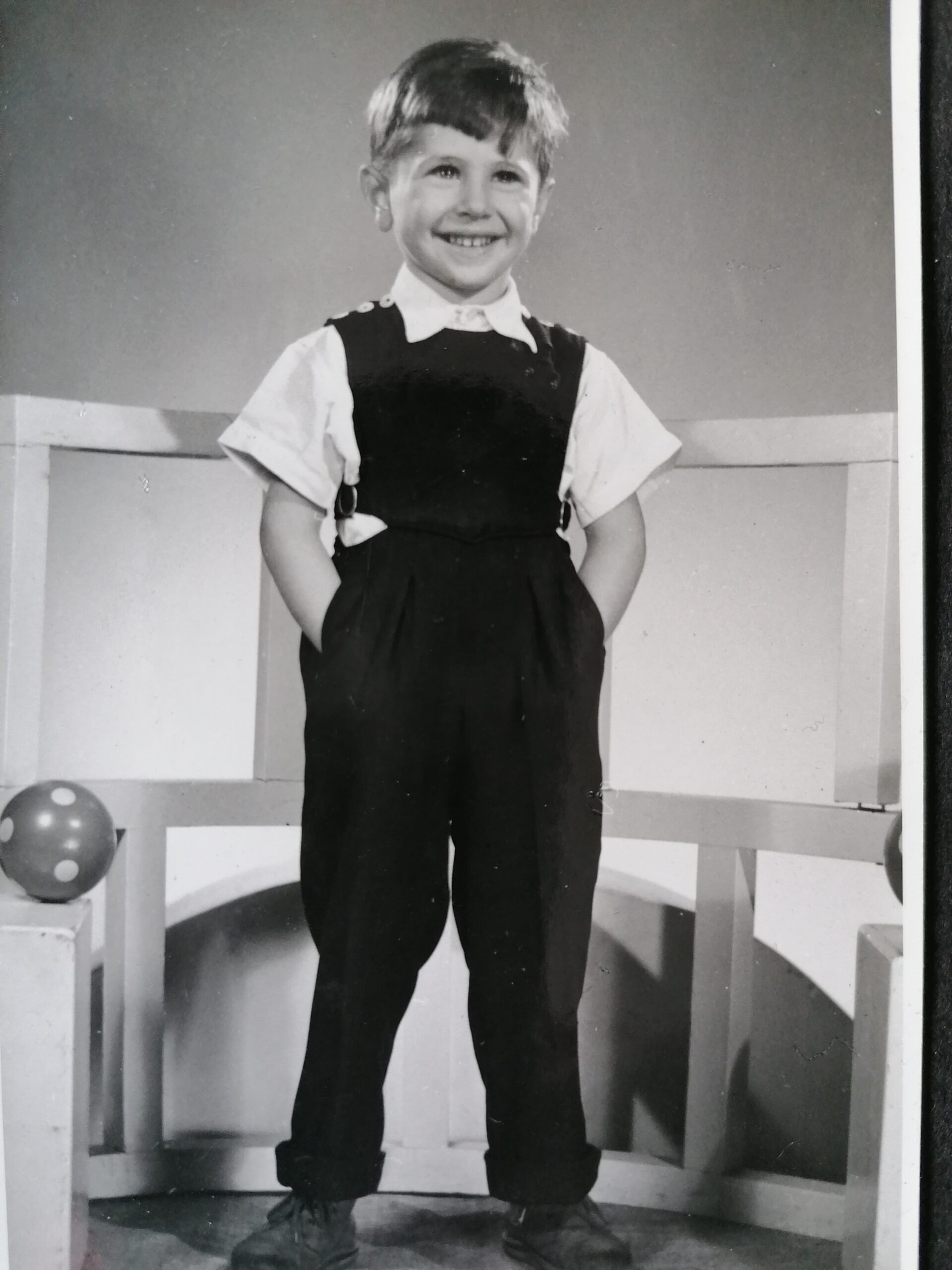
My Childhood
There are many possible answers to the question, “How does one even become a chef?”
In my case, my childhood played a significant role in career orientation.
My father, Alfonz Sándor, was 68 years old, and my mother, Katalin Goricsán, was 32 when I was born on April 20, 1954. As far as I can remember, although they loved each other very much, due to circumstances only partially known to me, my father did not live with us but with his siblings and their families on Andrássy Avenue (then called Népköztársaság Road).
It is certain that one of the main reasons for these circumstances was that we were forced into a four-family shared apartment after my father’s apartment with four rooms and staff quarters on Frankel Leó Street was nationalized and divided into shared flats. My mother and I had one room, with a shared kitchen, toilet, and bathroom.
Life went on despite these far-from-ideal living conditions.
From about the age of five or six, I was already going shopping at the small grocery store in our building. My mother would write a list on a small slip of paper telling me what to buy—¼ or ½ kg of bread, 100 g of bologna, 50 g of butter, etc. I was given money, then headed down to the shop with a tote bag and did the shopping.
Once, I had an adventure: I was running down the stairs from the fourth floor, skipping two or three steps at a time, and I fell—holding the bag instinctively raised above me, which also contained the returnable milk bottle. The bottle didn’t break, I was a bit bruised, but that was the extent of the damage.
Occasionally, I had to go shopping at the butcher on Mártírok Road (now Margit Boulevard). That kind of shopping was already related to my future chef’s career, although no one would have guessed that at the time. I had to buy beef and beef bones for soup, and occasionally marrow bones.
On the way back, I also had to stop at the greengrocer’s—which was also in our building—and buy vegetables for the soup, such as carrots, parsley root, celery, savoy cabbage, kohlrabi, etc.
My father was born on May 22, 1886, in Vinkovce (Syrmia County, Austro-Hungarian Monarchy, now Croatia), and he achieved outstanding accomplishments in many areas of life.
One of these was sports diplomacy. He participated in the founding of the Athletics Department of Ferencvárosi TC. He served as a jury member and timekeeper at two Olympic Games—Paris 1924 and Amsterdam 1928.
It is also thanks to him that the idea of an athletics European Championship and its proposal in 1929 to the Hungarian Athletics Association came to be.
“The first outstanding continental competition was organized by professionals of the Hungarian Athletics Association. First and foremost, the president Szilárd Stankovits (who was already the secretary when the Association was founded and served as president from 1919), and his colleagues Ottó Misángyi, István Moldoványi, and Alfonz Sándor deserve recognition for their professional preparatory work.”
https://atletika.hu/en/node/10057
As a result of his sports diplomacy activities, he came to know many of the prominent figures in domestic and international sports diplomacy during the first half of the 20th century.
In the following two photographs, we can see sports diplomacy events.
The first photo shows the founding meeting of the European Athletics Committee held in a private room at the Gundel Restaurant in 1934.
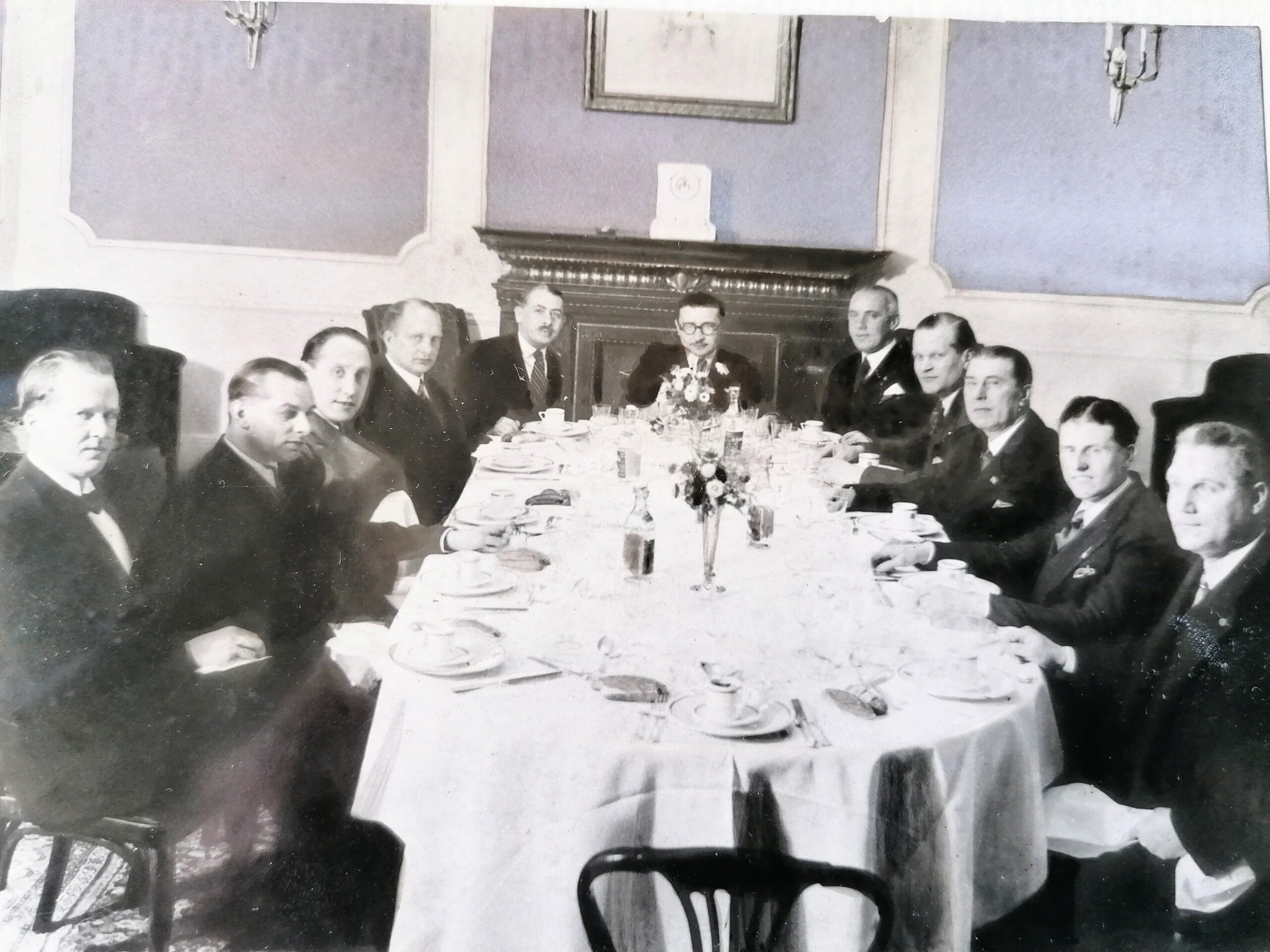
In the photo, from left to right: Vilmos Stefániai, treasurer of the Hungarian Athletics Association (MASZ); two Italian journalists; Georg Wisinszky, Polish member (initial “W” assumed based on handwriting); Alfonz Sándor, member of the MASZ organizing committee; Dr. Saini, delegate from Turin; Dr. Ottó Misángyi, secretary of the European Committee; Karl Ritter von Halt from Germany, member of the European Committee; Szilárd Stankovits, president of the European Committee and president of MASZ; Dr. Puccio Pucci from Italy, member of the European Committee; and Dr. István Moldoványi, executive vice president of MASZ.
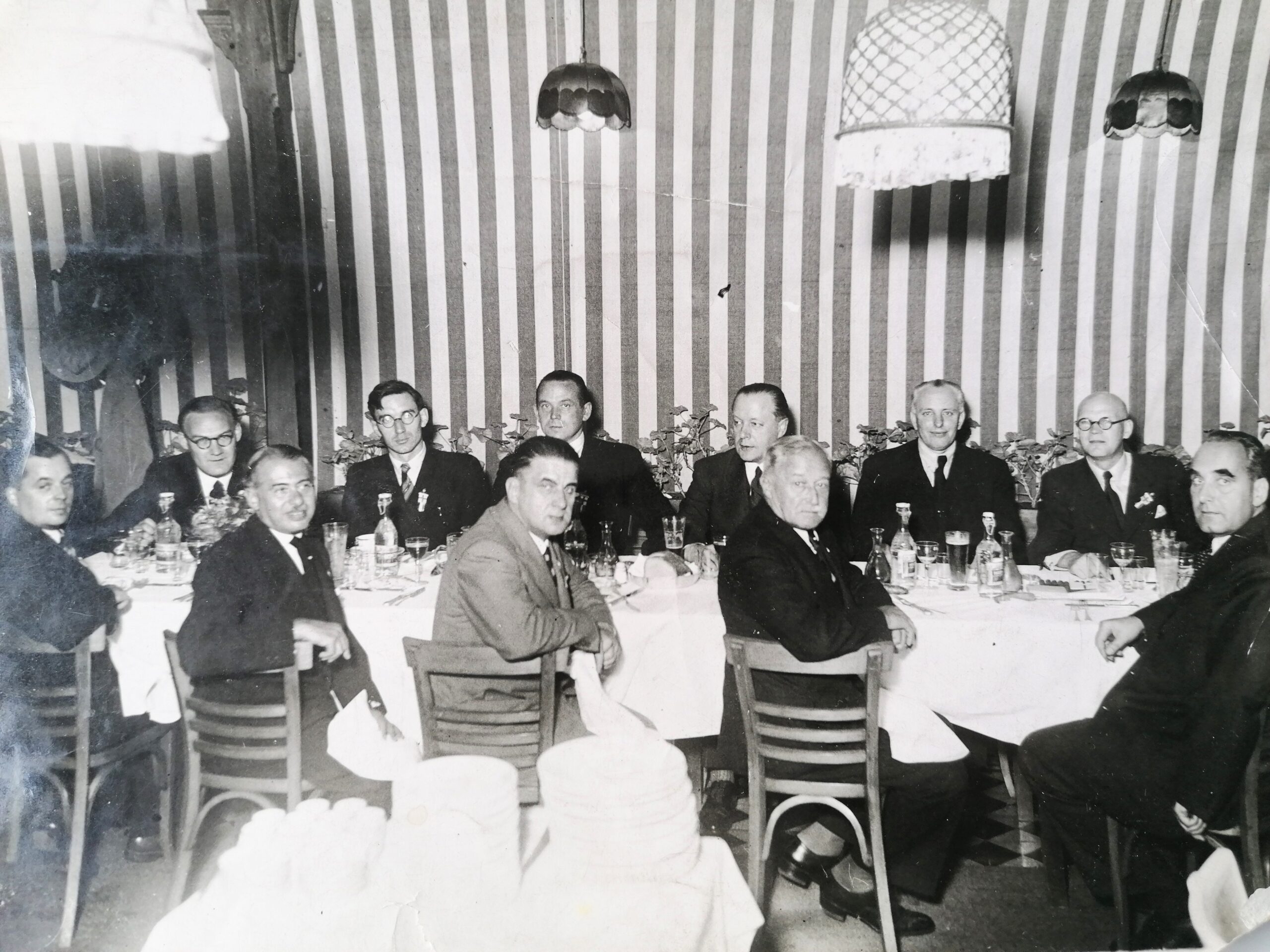
Top row from left: Imre Ráday, Kerkai, Kaihari, Arane Wuorimaa (Finnish ambassador), Dr. Gyula Vangel, Urho Kekkonen (later President of Finland);
bottom row from left: Vapaunori, Alfonz Sándor, Count Santala, József Takách-Tolvay, Dr. Lóránd Prém (some names are not entirely clear due to handwriting).
Details about the sporting event and the gala dinner can be read in the September 24, 1940 issue of Nemzeti Sport:
https://epa.oszk.hu/03900/03983/00269/pdf/EPA03983_nemzeti_sport_1940_09_187.pdf.
In other areas of life, similar to sports, my father could consider well-known and respected individuals as relatives or friends. His nephew was Angelo (Pál Funk, 1894–1974), a world-famous photographer, whose awards can be seen in the following photos.
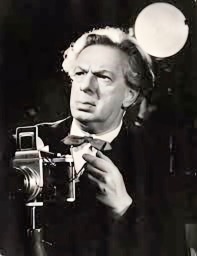
Angelo (Funk Pál)
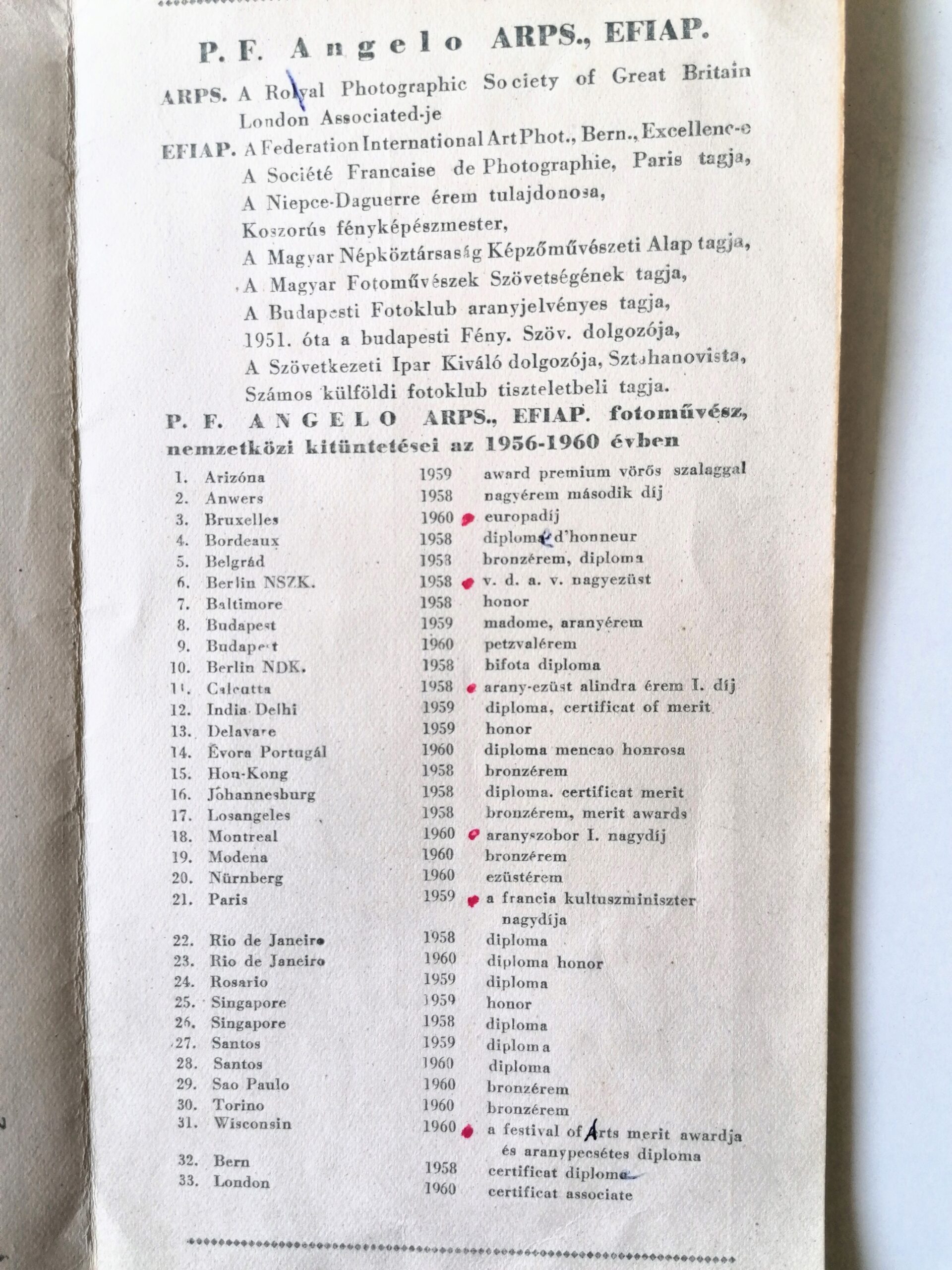
Angelo’s Awards Between 1956-60
In my childhood, I was fortunate to meet Uncle Pali, who lived at Madách Square (Tanács Boulevard), and he even took photographs of us in his studio.
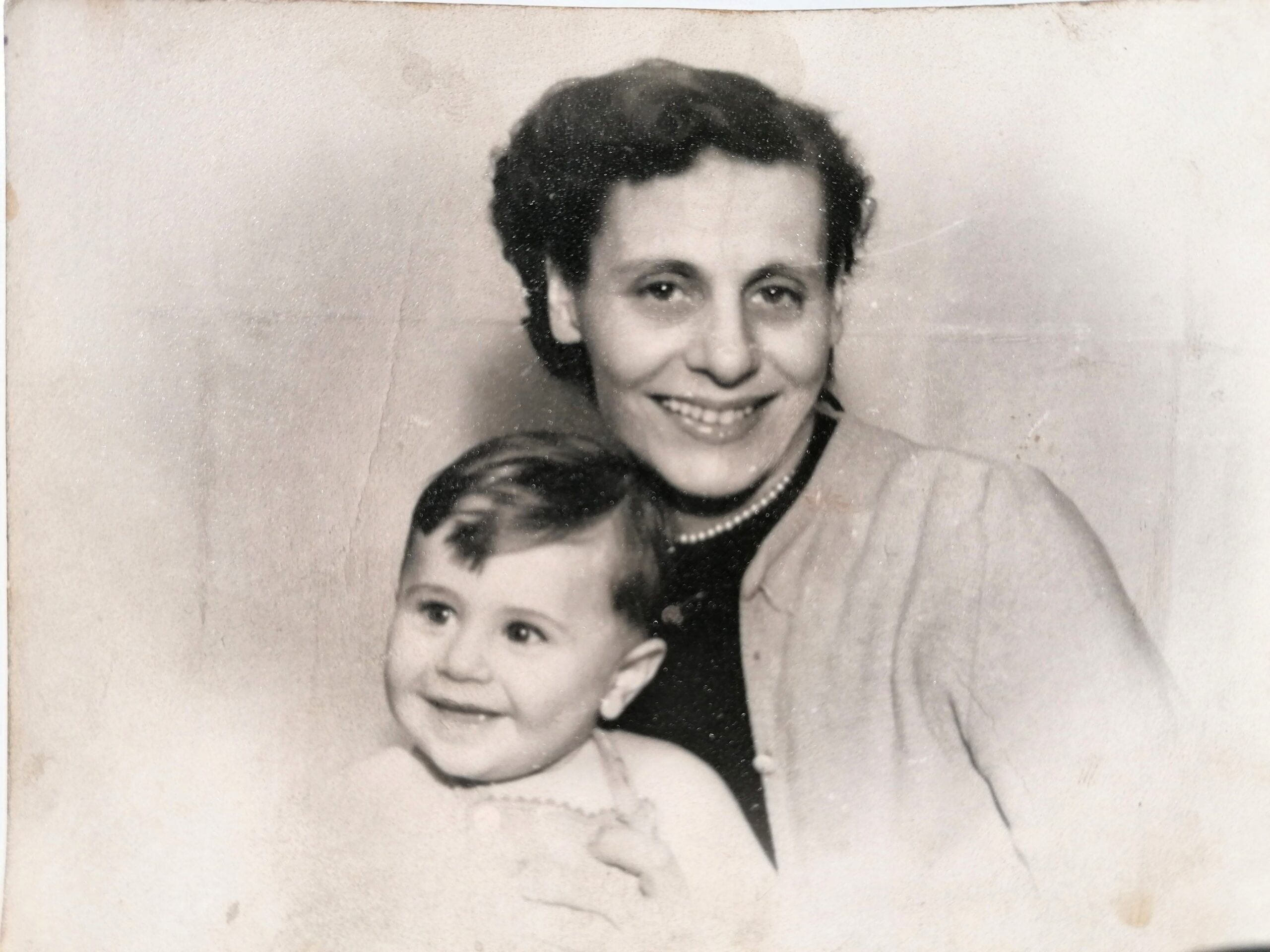
With my mother
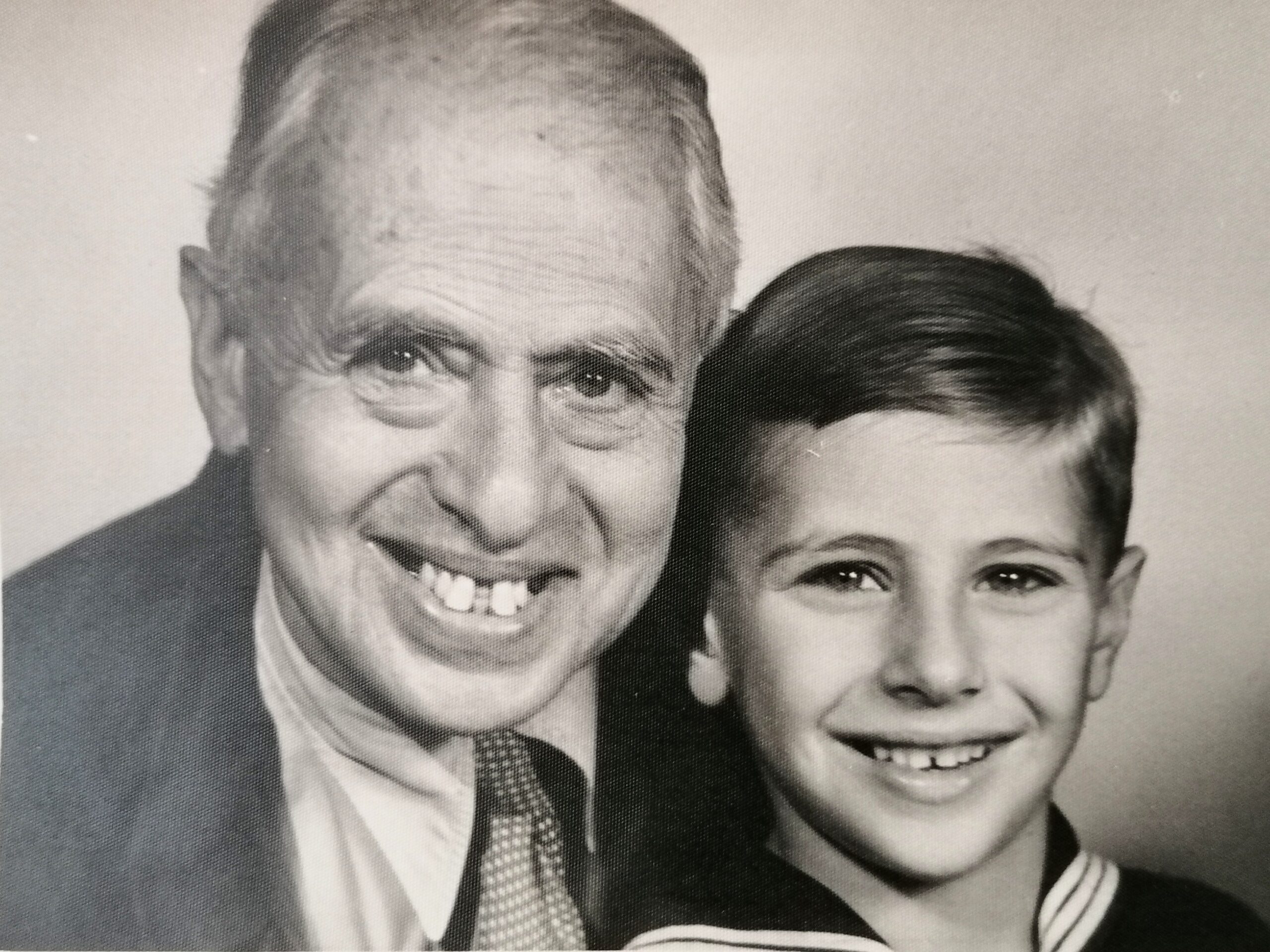
With my father
Angelo once greeted my father like this on the occasion of his birthday or name day:
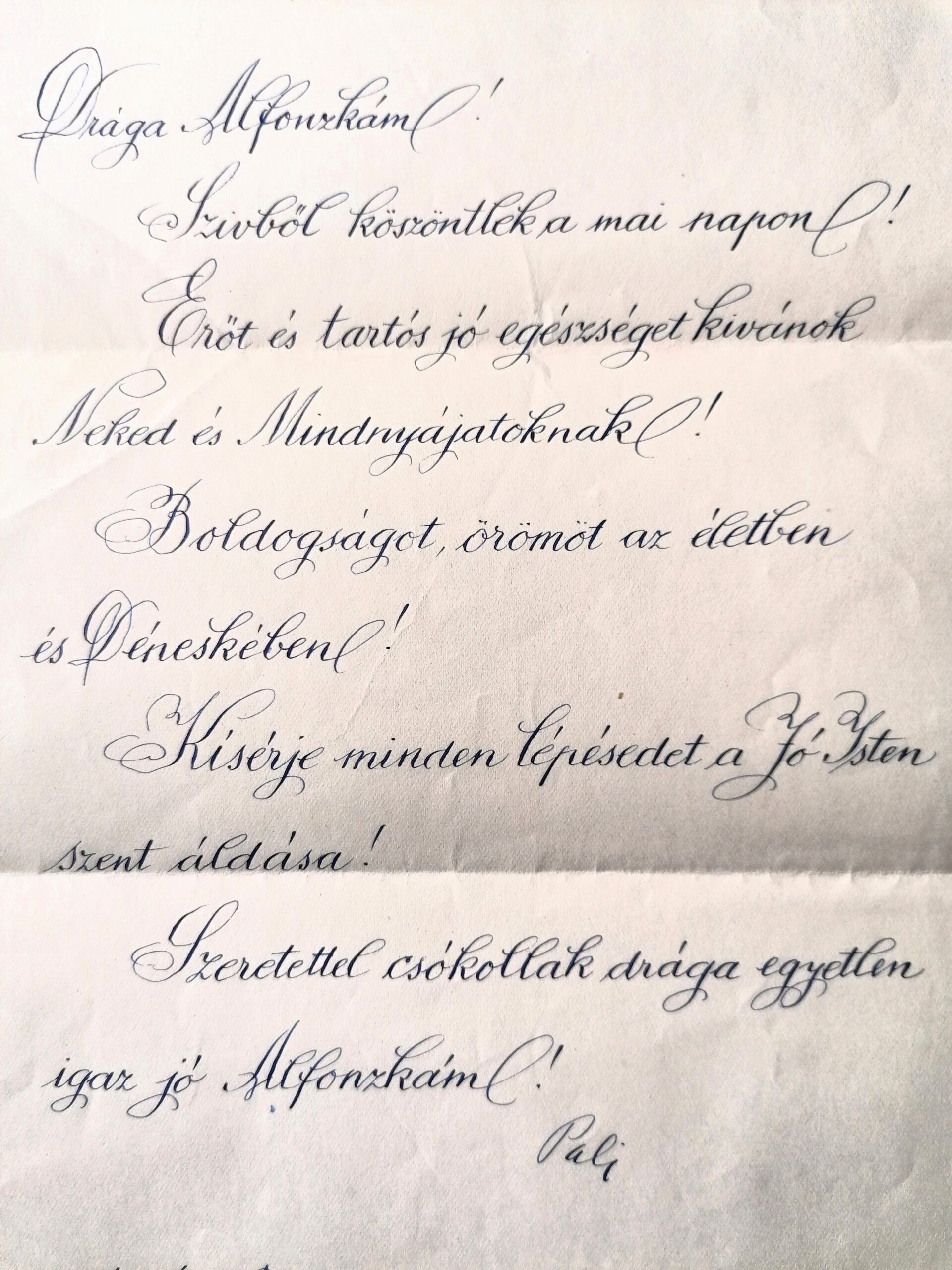
Angelo’s Greeting Letter
We once visited Kálmán Kittenberger (1881–1958, African explorer) in Nagymaros. I was three years old in 1957, but I remember the visit clearly, and even that my father had previously told me that Uncle Kálmán had become so skilled in Africa that he could catch a fly between two fingers. Armed with this knowledge, we arrived in Nagymaros, where Uncle Kálmán lived. Naturally, during our stay, this topic came up, and Uncle Kálmán demonstrated his “skill” in this regard. He carefully approached the resting fly from behind with two fingers, then with a quick motion, he caught the unsuspecting insect. It might have ended up in his palm, but I don’t remember that exactly. However, I do remember that when I was four years old, as I began learning to read, I only read storybooks briefly, then my attention shifted to various African hunting stories, such as “Csui” and “Nahar” by Zsigmond Széchenyi.
Back then, a photo of Kálmán Kittenberger always had a place on my father’s desk.
Kittenberger Kálmán
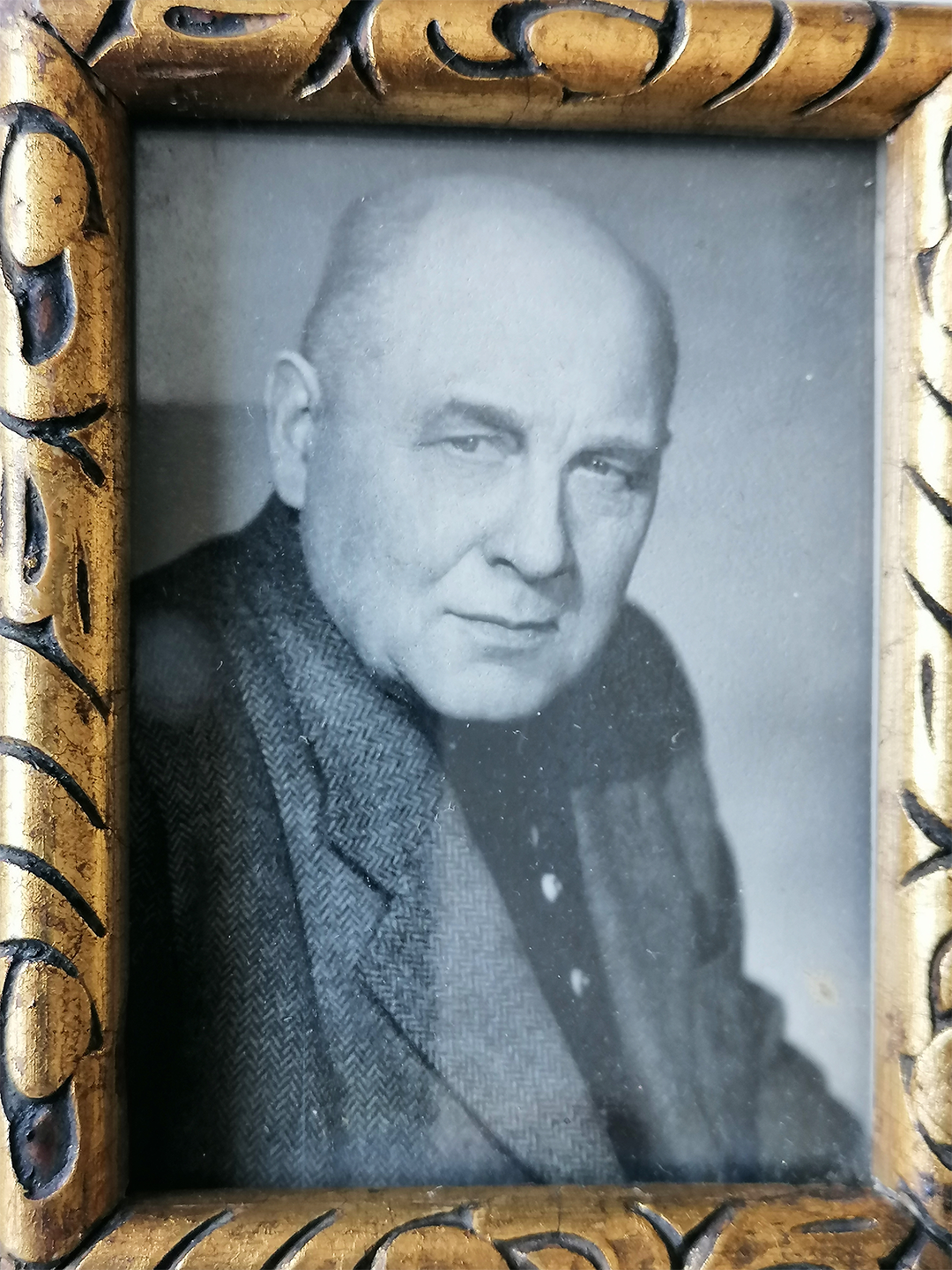
My father was also friends with Kálmán Csathó (1881–1964, writer, theater director, corresponding member of the Hungarian Academy of Sciences), whom we visited several times at his home in Hűvösvölgy. On one occasion, Csathó Kálmán was staying in Balatonederics and wrote a short letter to my father on October 13, 1961, asking him to visit for the weekend and to bring 5 kilograms of apples, which would make him very happy. He added: “Come! Warm hugs, Kálmán (It’s worth it with a free ticket).”
Earlier, in the 1950s, my father also worked for the Hungarian State Railways (MÁV), so he had free travel passes.
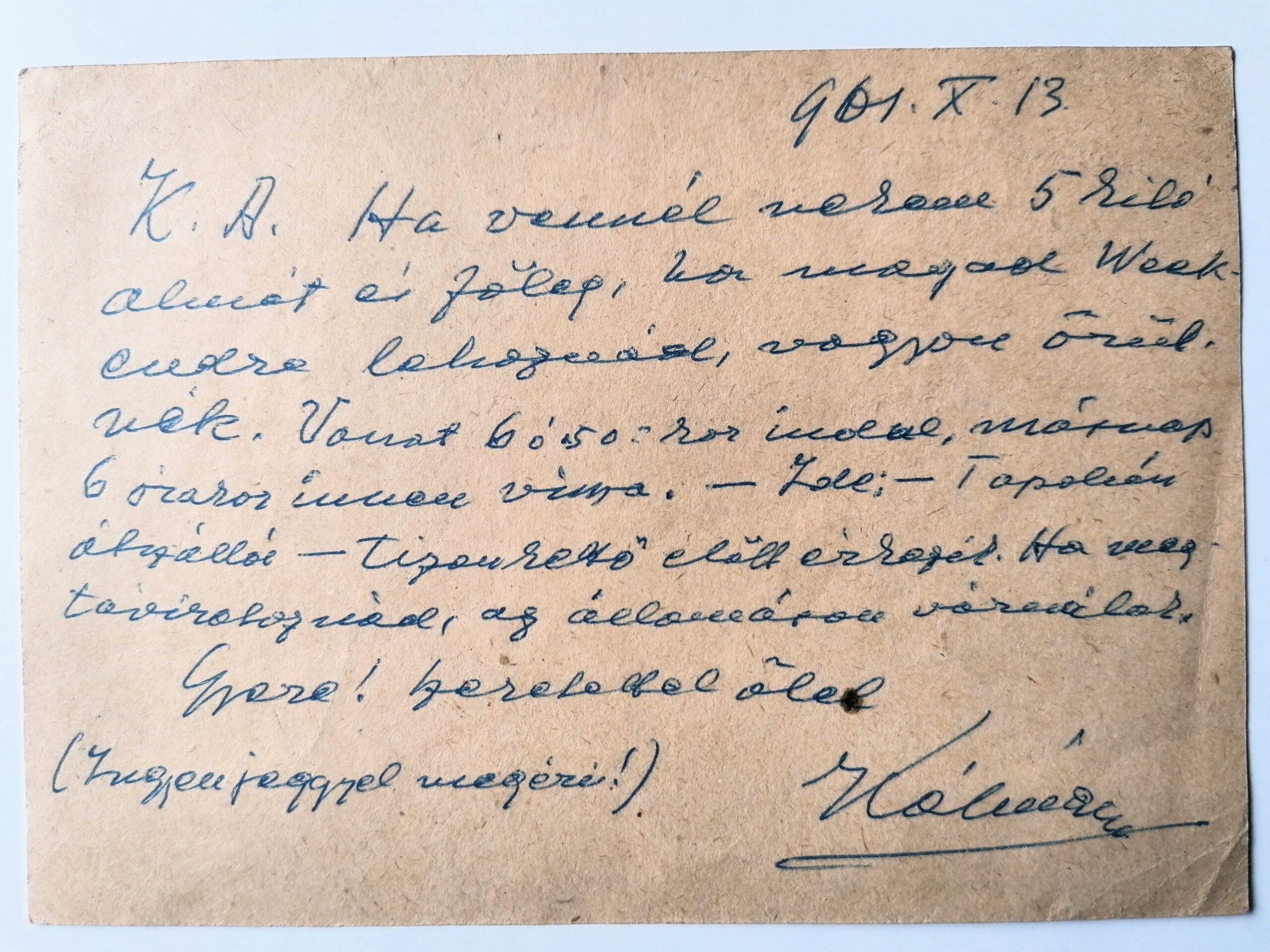
Kálmán Csató’s 1st Letter
In 1961, Kálmán Csathó also sent another letter and a photograph to my father.
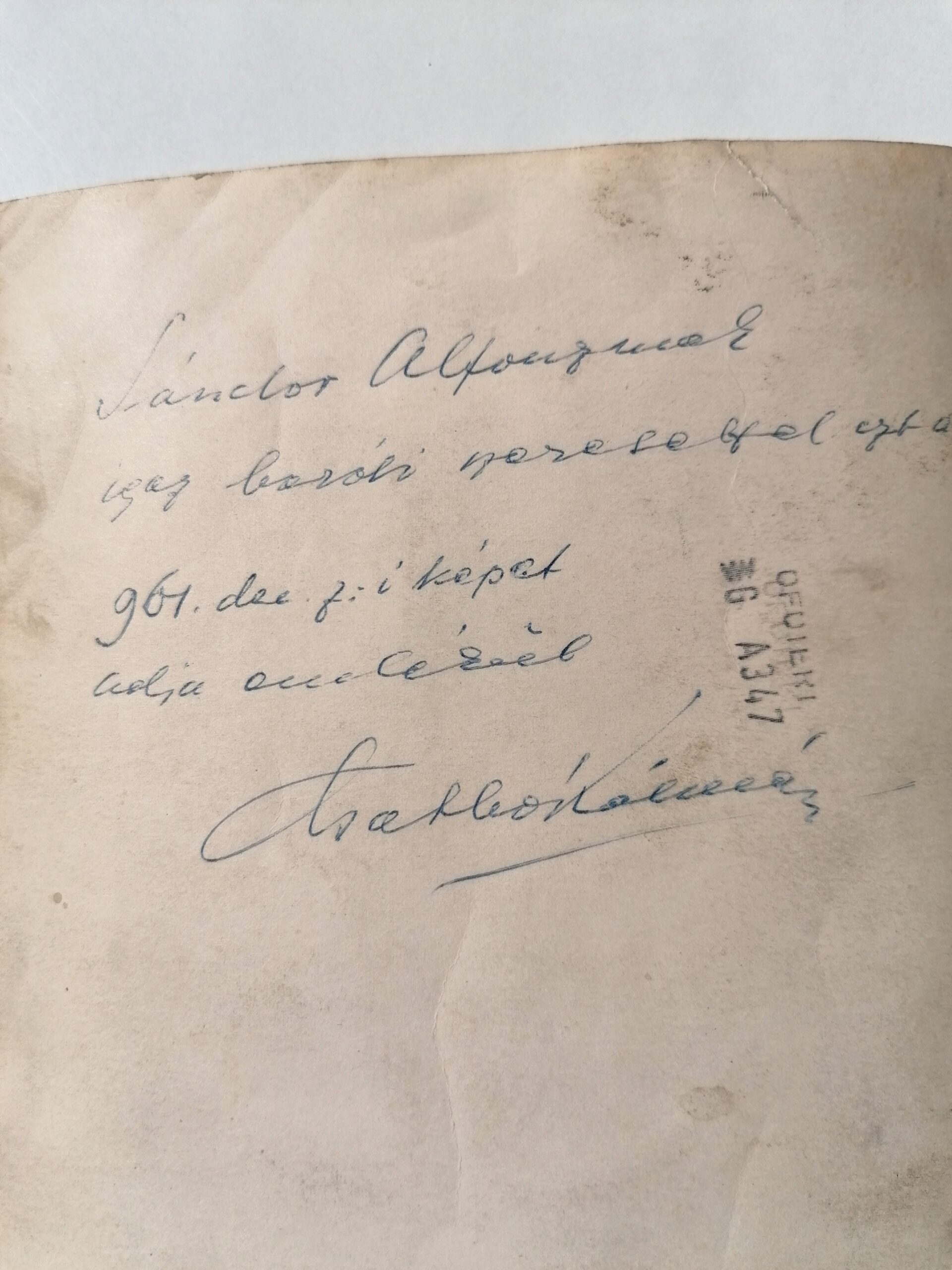
Kálmán Csathó’s 2nd Letter
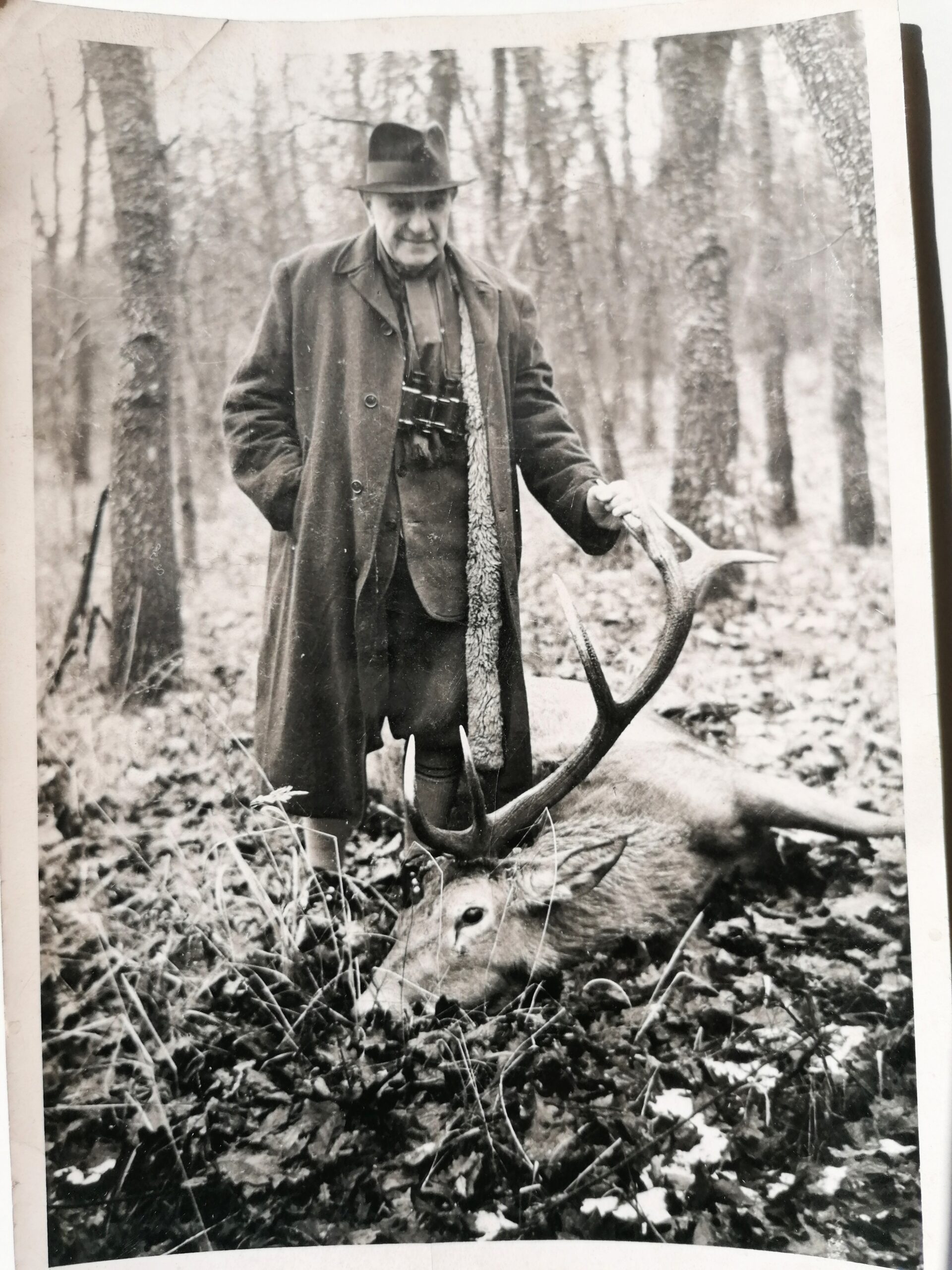
Photo of Kálmán Csathó
Among my father’s circle of friends, I must also mention István Fekete (1900–1970), a writer, from whom I have kept a handwritten business card addressed to my father, in which he inquires whether the books arrived safely. Fortunately, the two signed books, Vuk and Bogáncs, did arrive, and I have treasured and preserved them ever since.
The two sides of István Fekete’s business card, the cover of Vuk, and the signed page from Vuk can be seen in the following images:
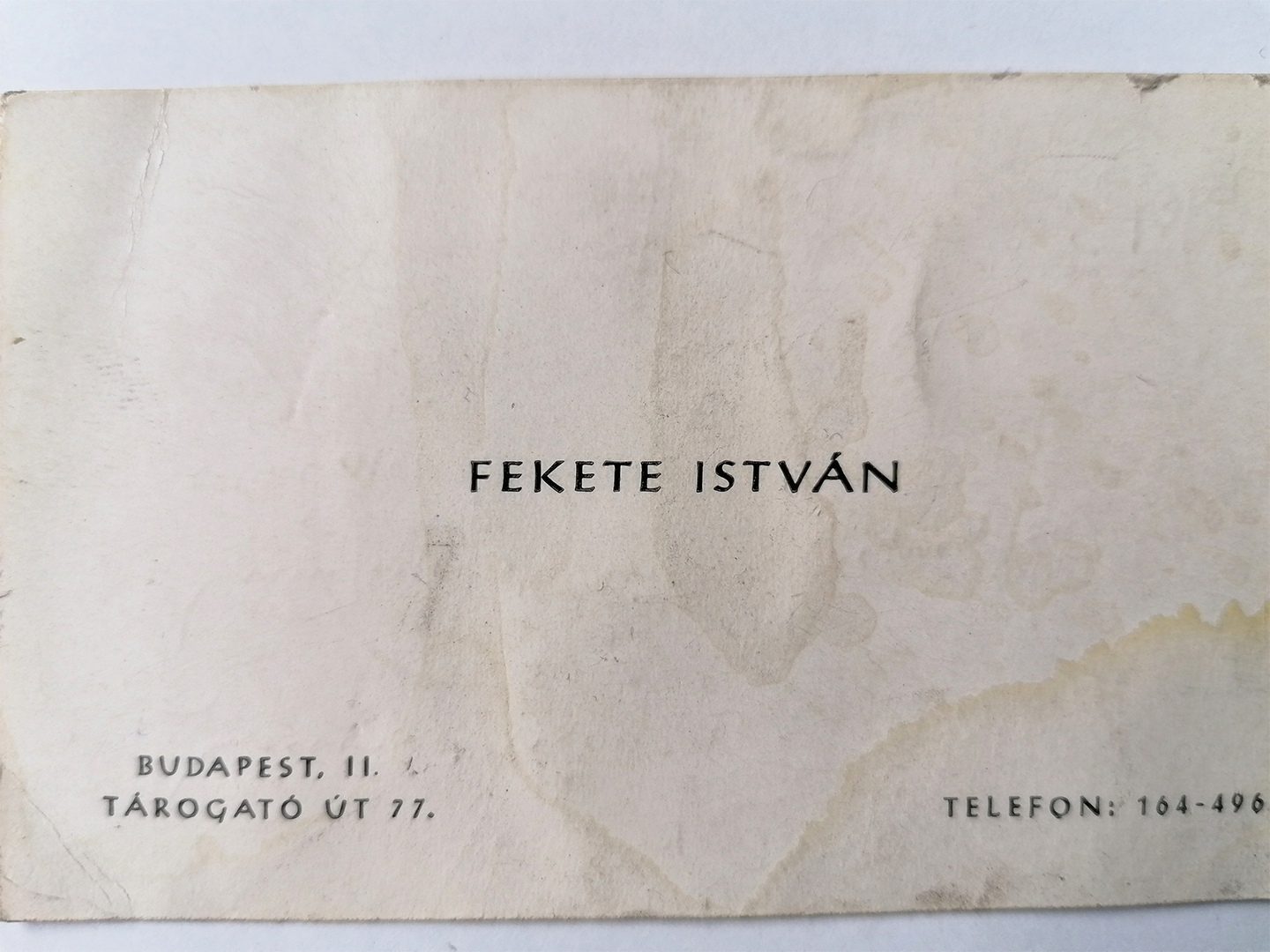
Business Card Front Side
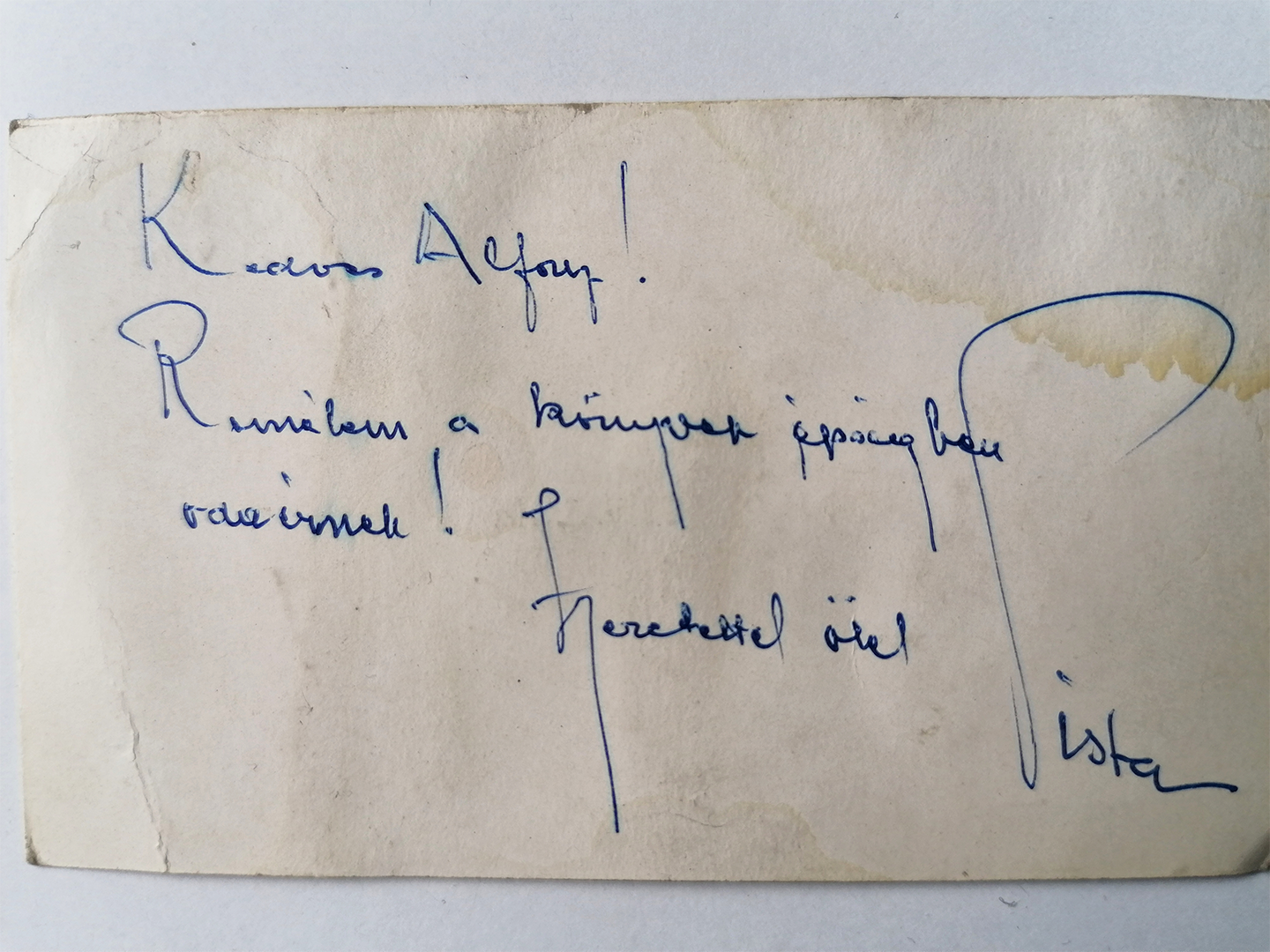
Business Card Back Side
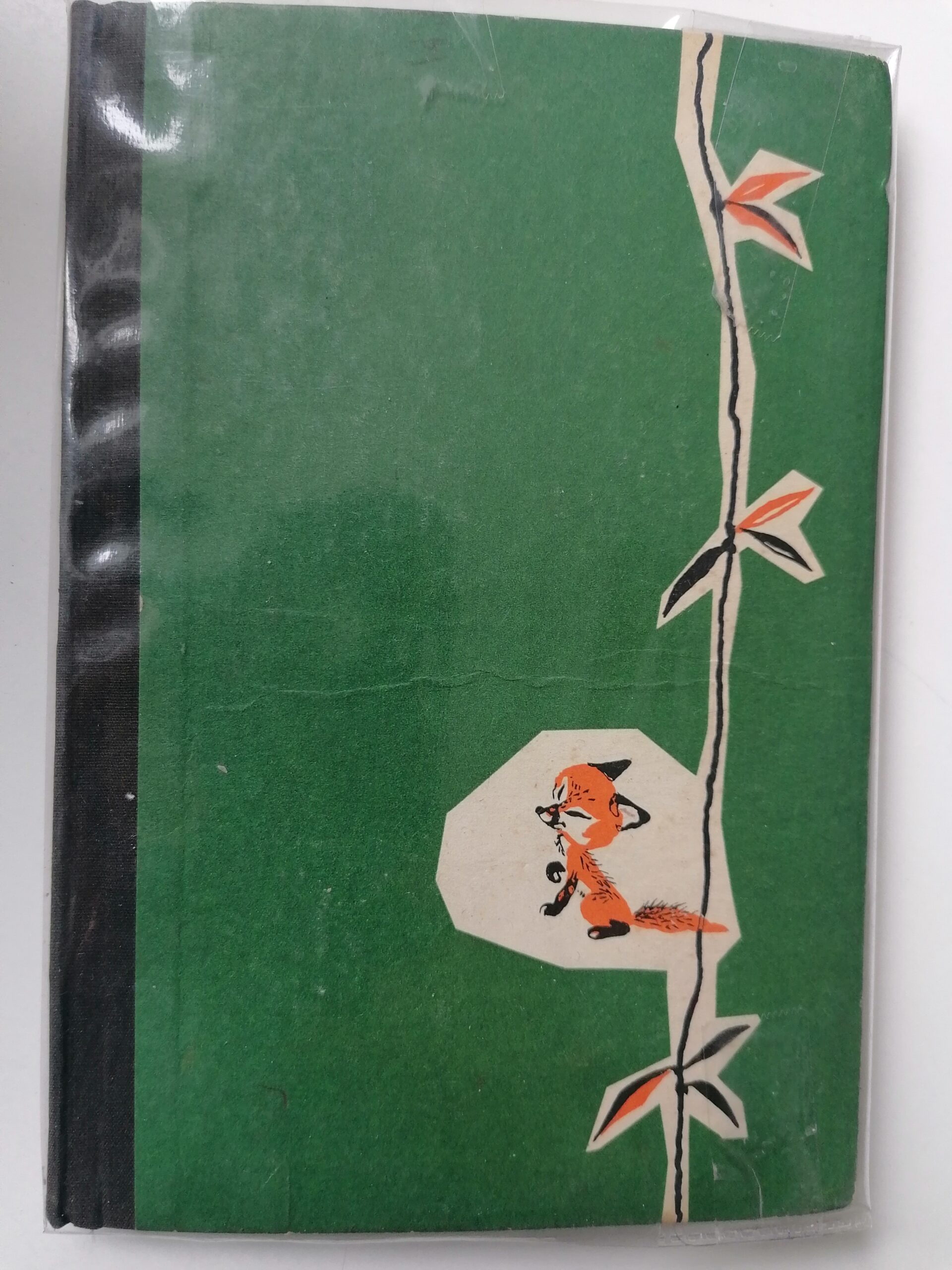
Vuk Cover
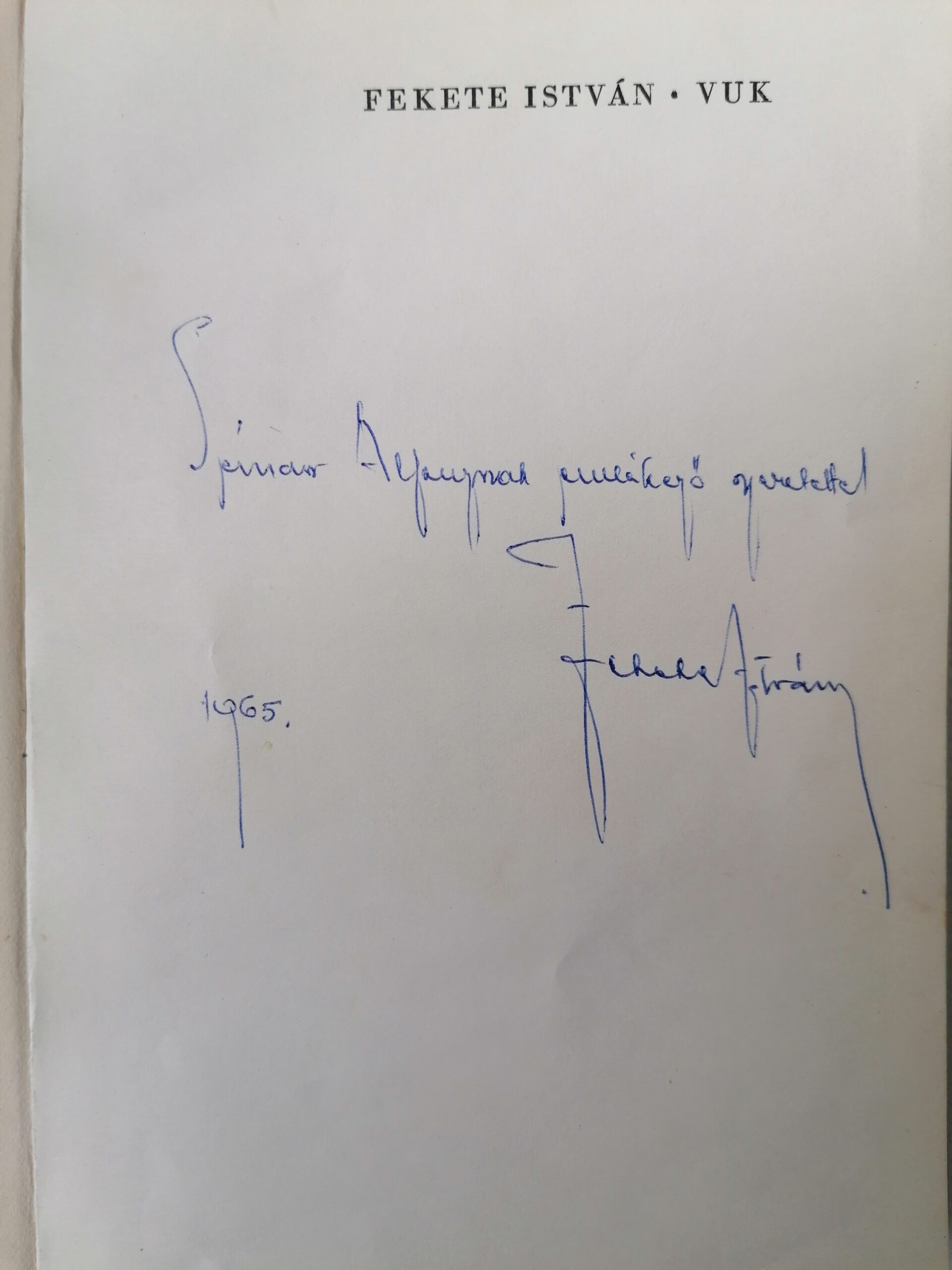
Vuk Dedicated Page
I hope the excellent hunters mentioned above would just smile at the joke about imaginary elderly hunters meeting in a café and nostalgically sharing their hunting adventures. One of them is right in the middle of the story, saying: “Imagine, the lion was already very close… it snarled at me… and… I sh*t myself. We can imagine that, no problem, it’s natural. Not then… now.”
My father was also friends with György Kürthy (1882–1972), an actor, set designer, and writer, whose photograph, a cover letter, and a poem can be seen in the following images.
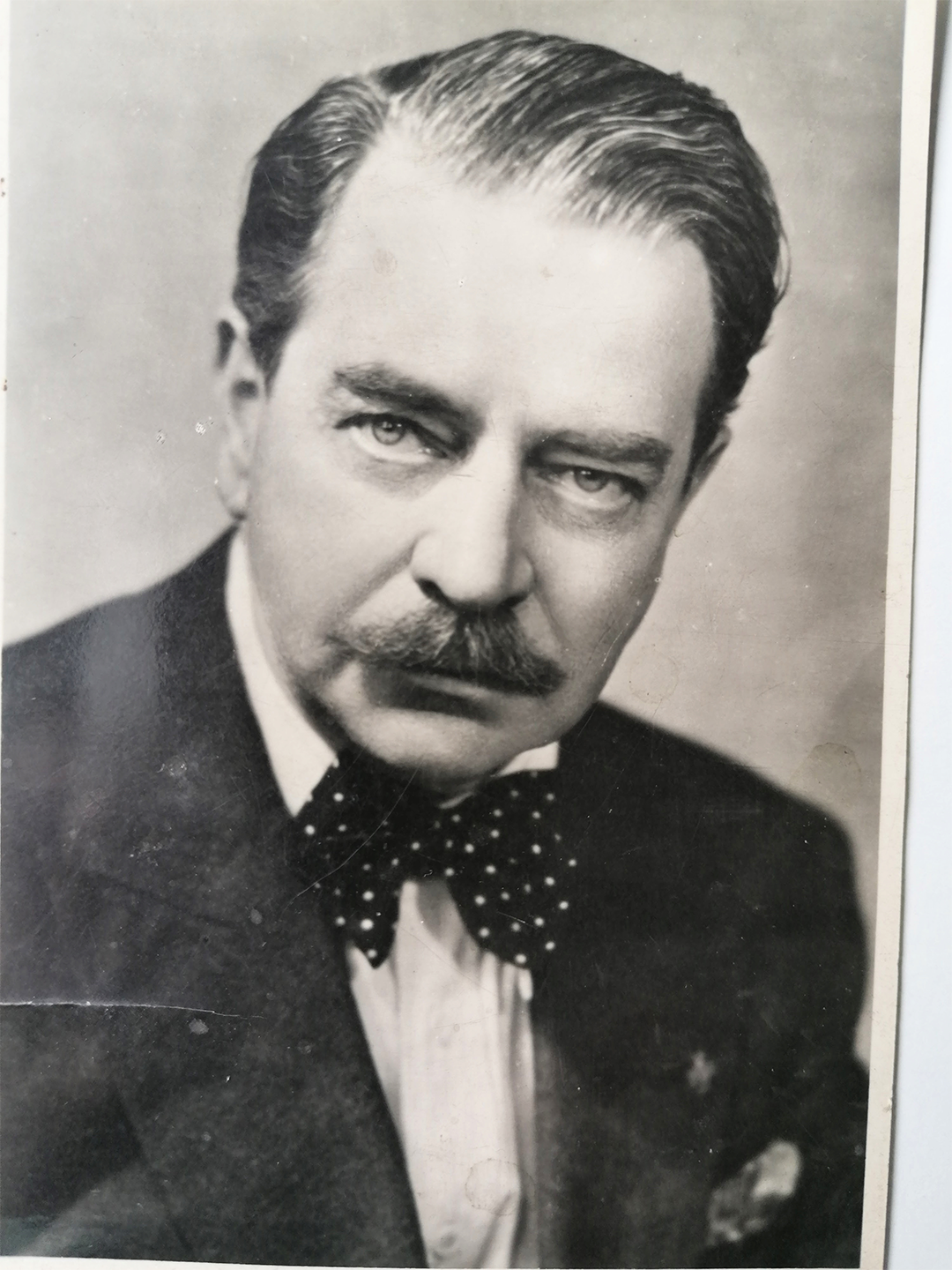
Kürthy György
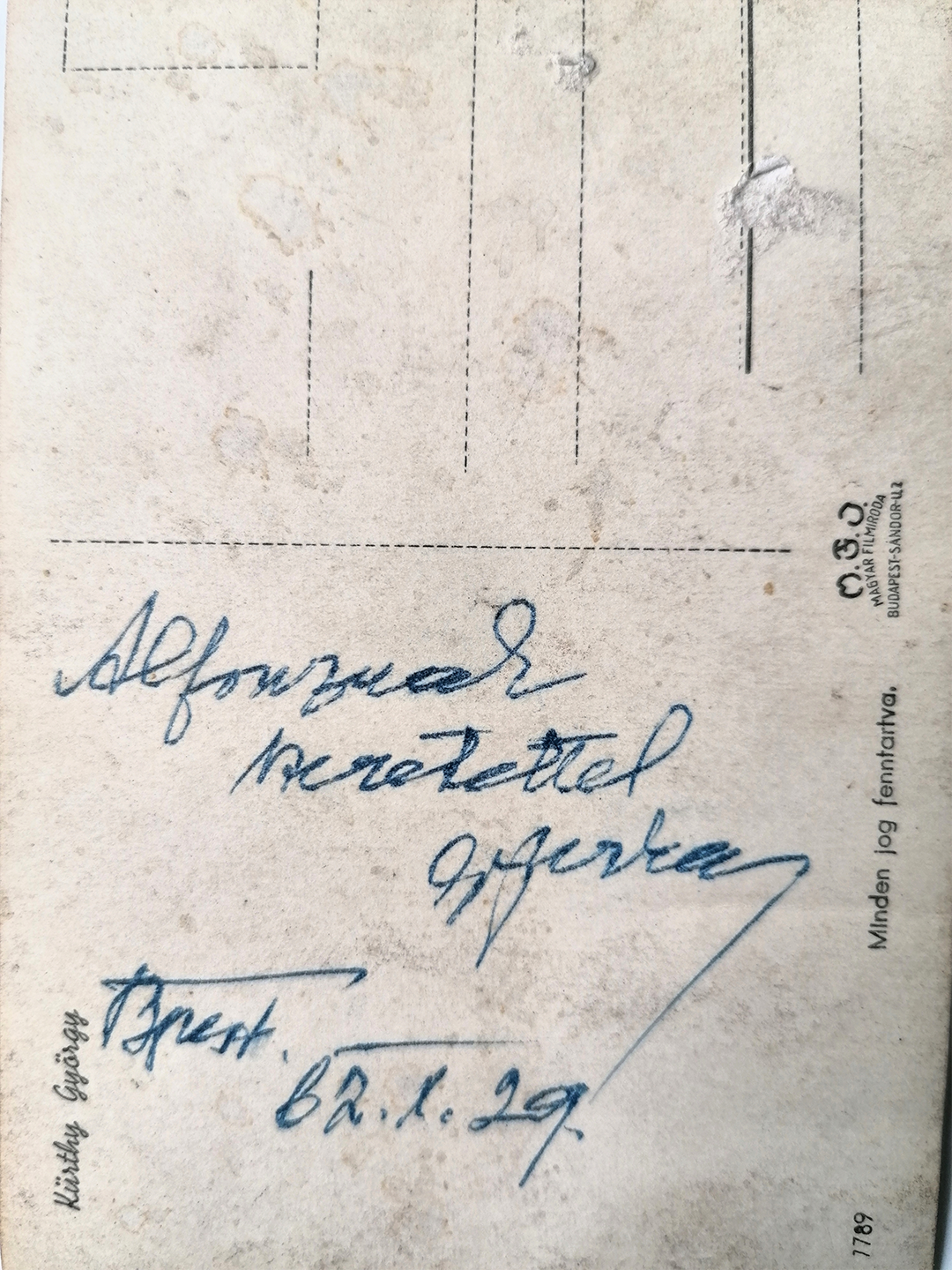
Accompanying Letter from György Kürthy
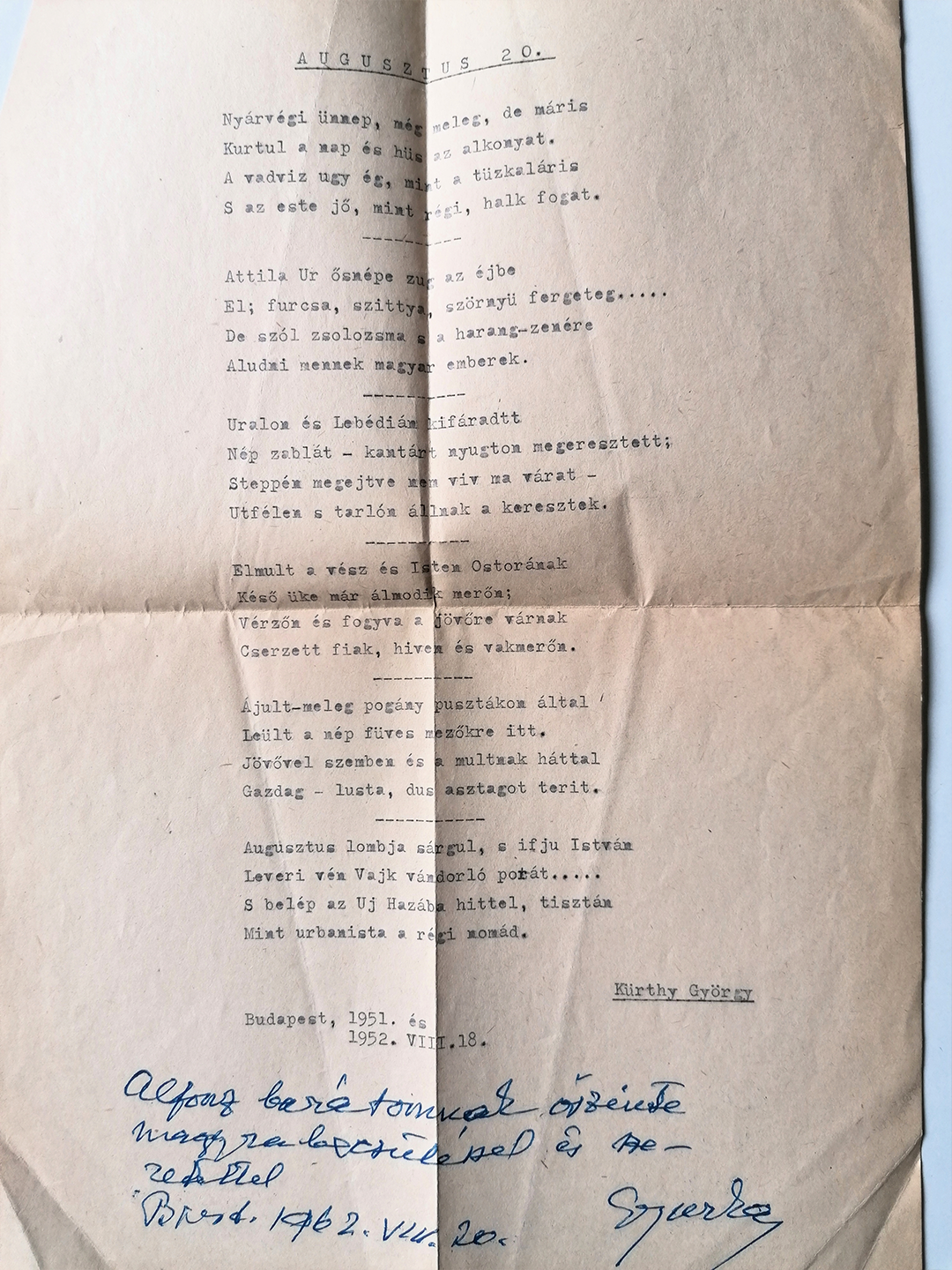
Kürthy György: Augusztus 20.
It was a big surprise for me as well when, while looking through old materials, I realized that my father studied in the very same building where I also studied and taught for decades—from the college entrance prep course in 1976 until my retirement in 2017. He completed his studies in 1902/1903 at the Budapest Commercial Academy’s Upper Commercial School, which is located at 9-11 Alkotmány Street in Budapest.
What’s more, my daughters, Orsolya and Katalin, as well as my wife’s mother, also studied in this building. So the time span covers over a hundred years (1902–2017) during which at least one of the five of us walked the halls and stairs of the building (of course, not continuously).
Today, the building on Alkotmány Street houses the Faculty of Commerce, Hospitality and Tourism at the Budapest Business University.
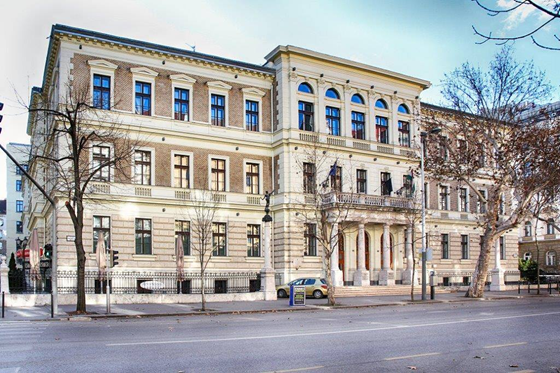
Budapest Business University Faculty of Commerce, Hospitality and Tourism Building
Between 1904 and 1946, my father worked at Magyar Kereskedelmi Rt., later known as the Anglo-Hungarian Bank, where he eventually became a director. However, after World War II, his previous high-ranking position at the bank was no longer an advantage, so he worked as a (chief) accountant and sworn book expert at several companies. Finally, from 1953 until his death in 1967, he was a sales representative and cost estimator at Első Járműgyártó.
My mother, Katalin Goricsán, was born on June 18, 1922, in Győr. In my early childhood, she worked as a dental assistant at the clinic on Visegrádi Street under chief physician Dr. Gyula Pollatschek. She loved her job very much and had great respect for the chief physician. Unfortunately, my mother began to suffer from health problems at a young age, not even forty years old. Perhaps the wonderful summers spent in Mátraszentimre between the ages of two and five, and the summer vacations at ages six and seven in Eger, were the only times she was free of illness. My favorite dessert was floating island made by my mother from fresh milk from Mátra Hills. I learned to swim in Eger from Uncle Józsi and Uncle Aladár. Aladár Bitskey, a two-time silver medalist at the European Swimming Championships, was also a good acquaintance of my father and perhaps even a friend.
Mátraszentimre pictures:
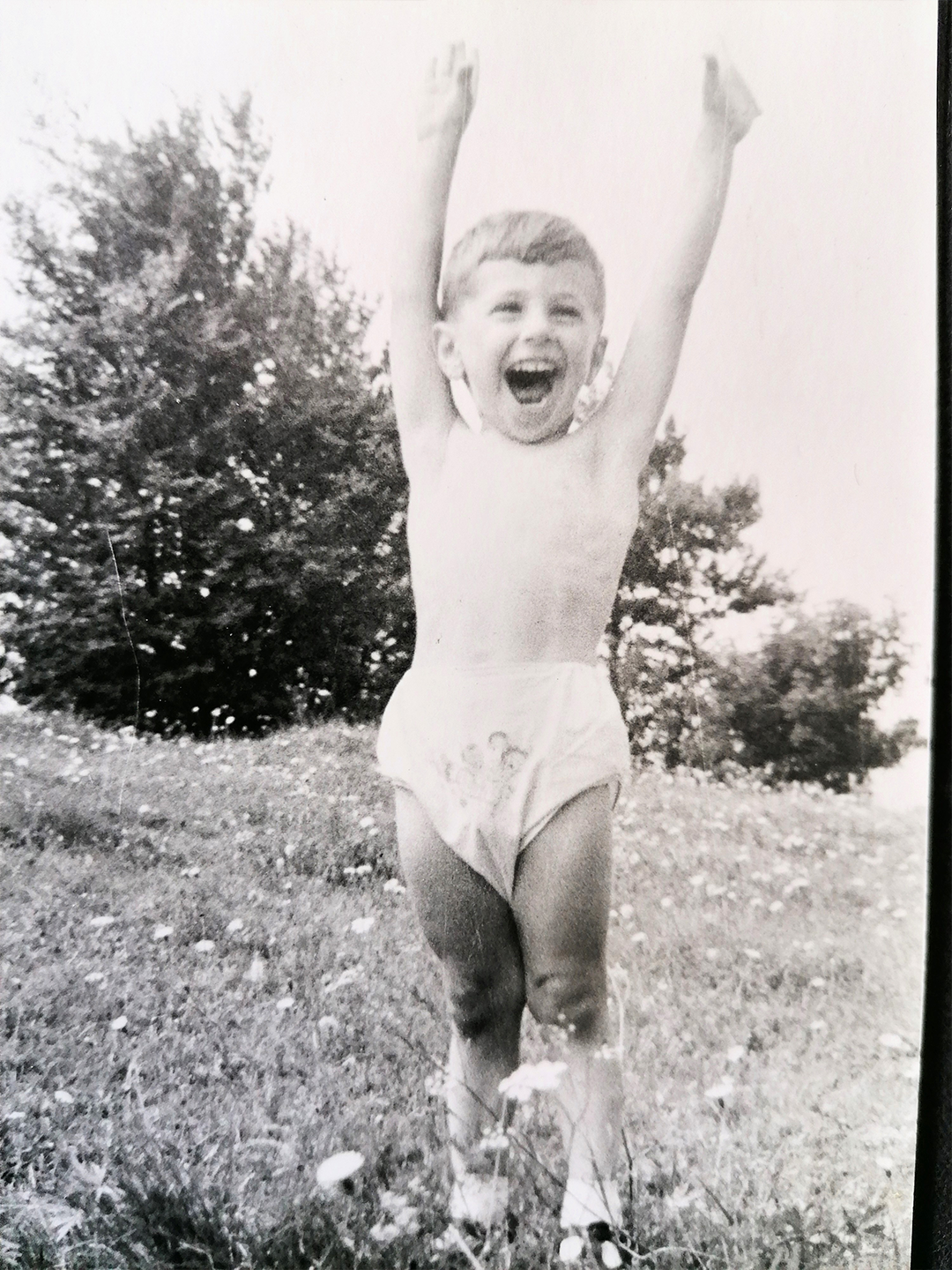
Yeees! Mátraszentimre
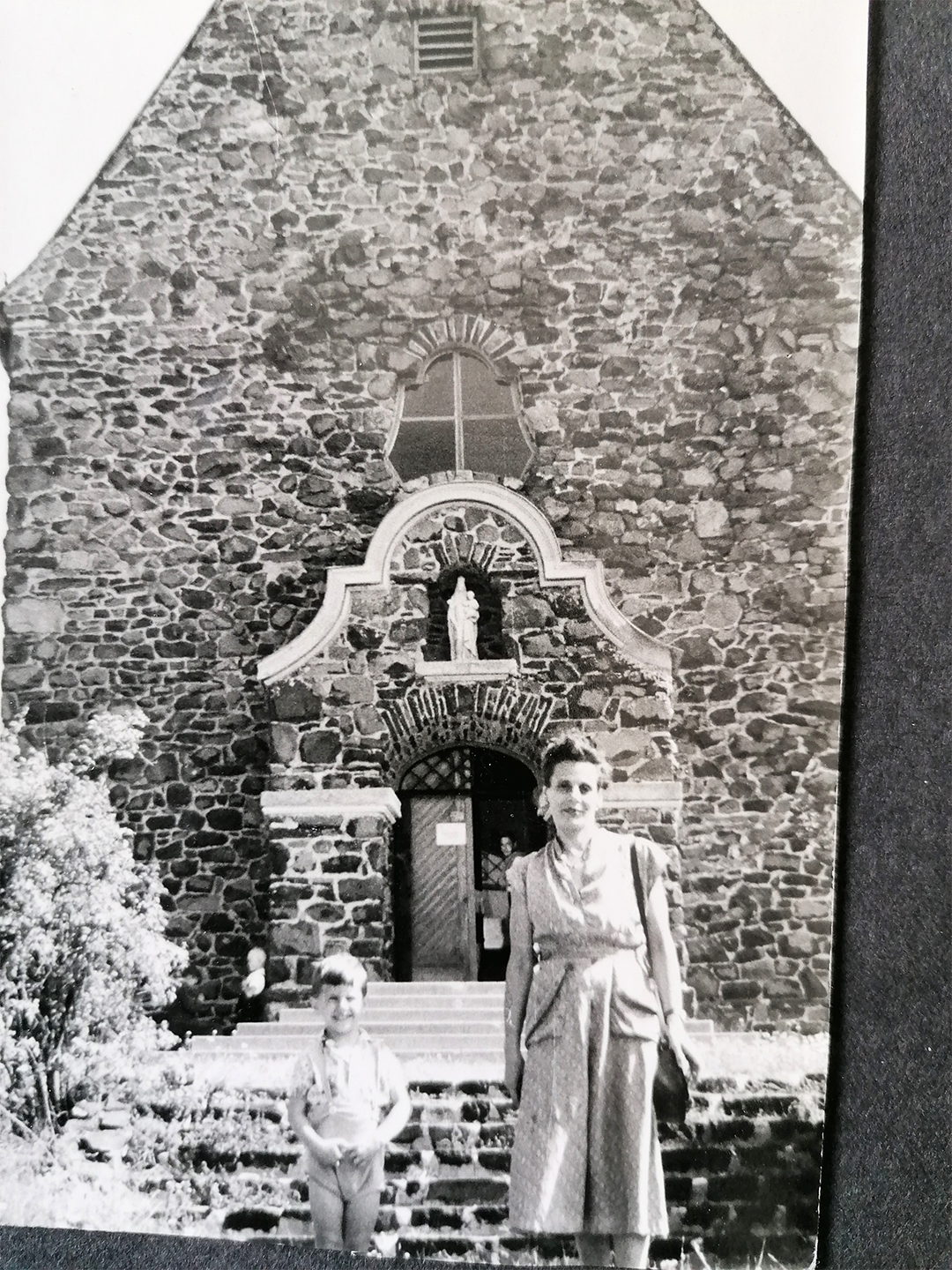
The Church of the Three Villages with My Mom
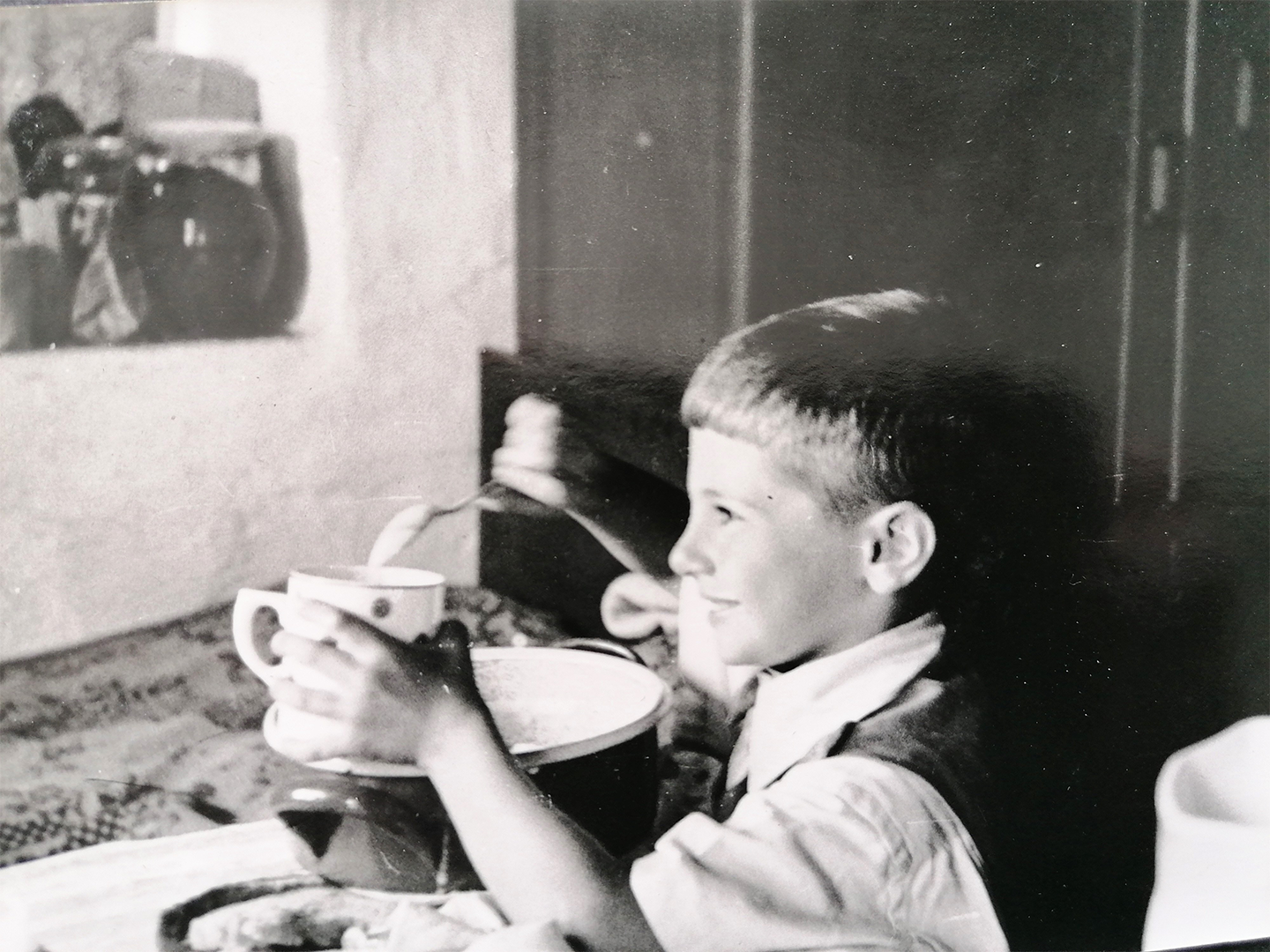
With My Favorite Floating Island Dessert
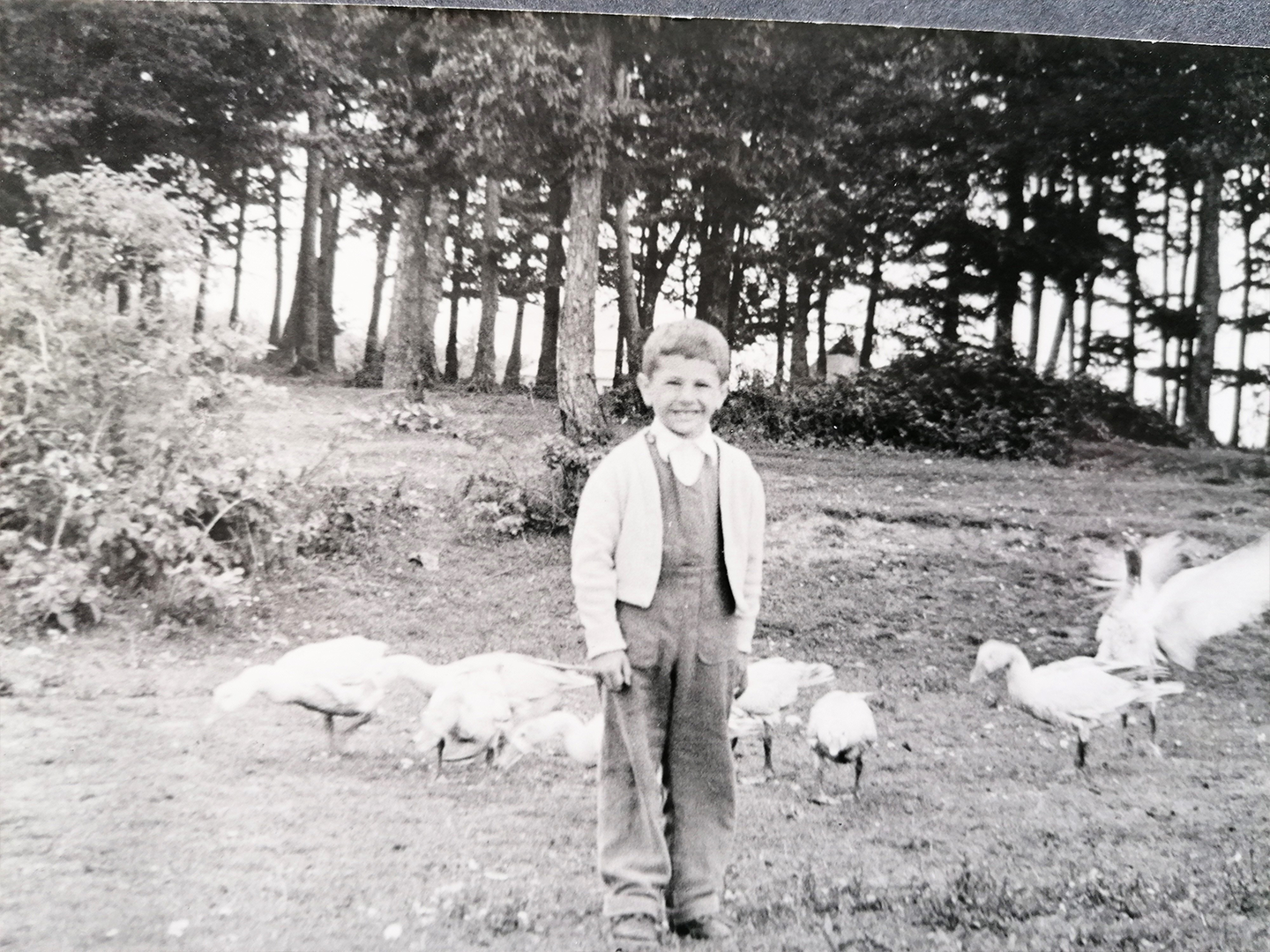
Geese Freely on the Meadow
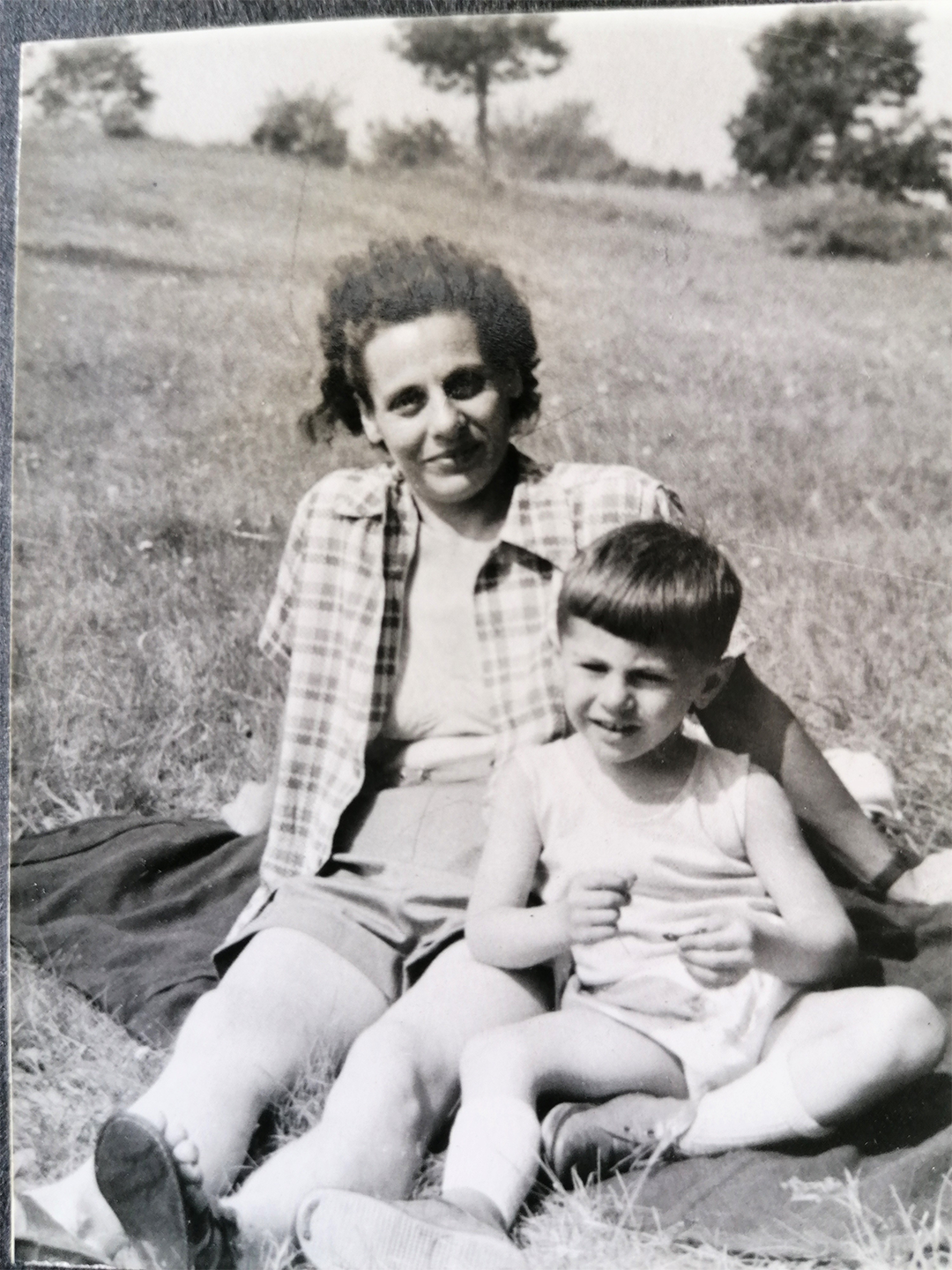
With My Mom in Mátraszentimre
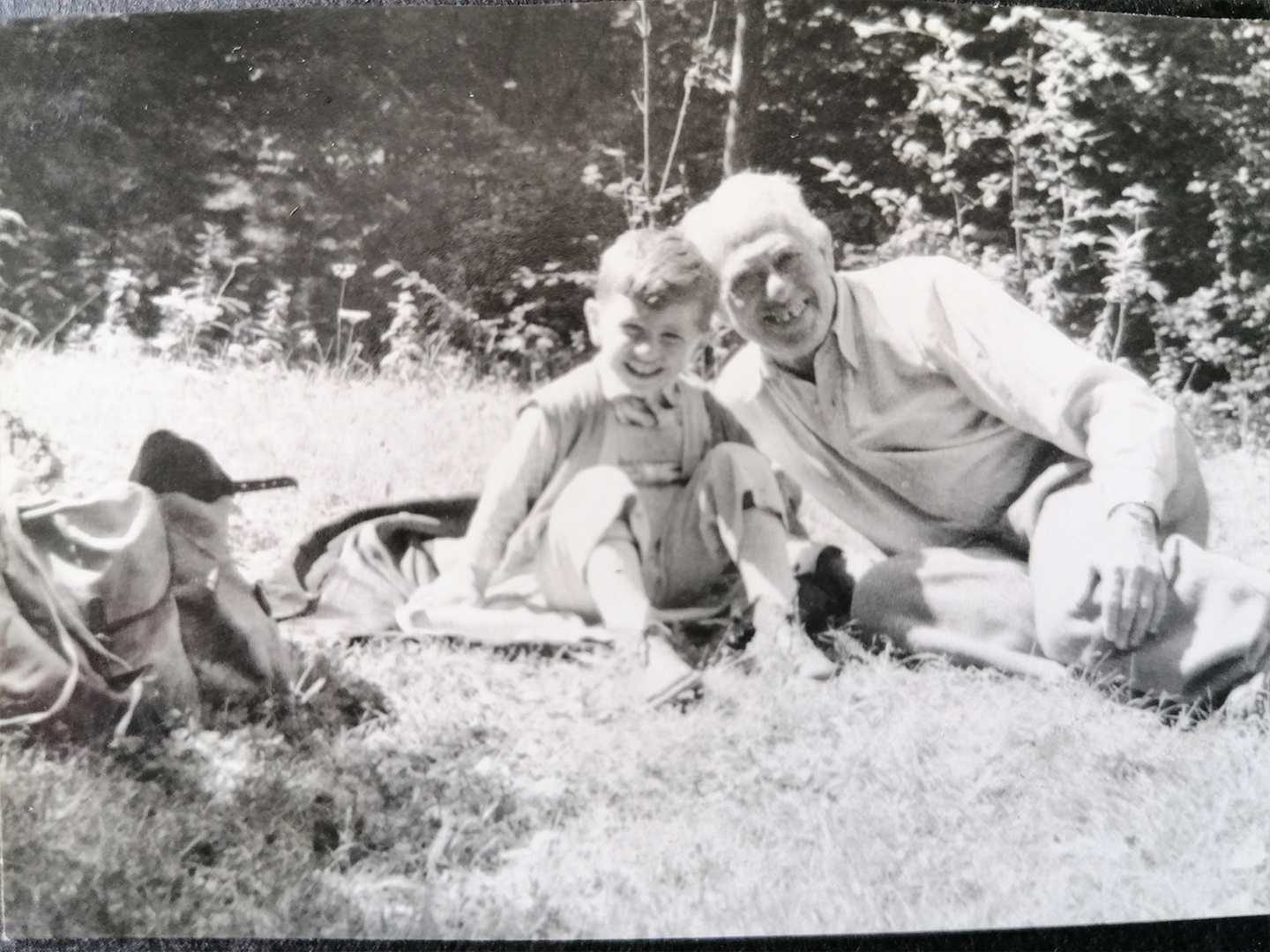
With My Dad in Mátraszentimre
We traveled to Eger by train from Budapest via Hatvan, Vámosgyörk, Kál-Kápolna, and Füzesabony, where we had to transfer to the Eger train. My favorite pastime, besides looking out the window at the scenery, was calculating the train’s speed. My father taught me how to do this calculation, which was based on the sound of the bumps caused by the rail joints. We used these sounds to determine the train’s current speed in km/h. Let’s look at the calculation with an example: suppose there is a bump sound every 5 seconds and the length of the rail is 120 meters, then in 1 second the train covers 24 meters. There are 3600 seconds in an hour, so in one hour the train travels 24*3600 = 86,400 meters, or 86.4 kilometers. It sounds a bit unbelievable today, but there was even a time when I was not yet ten years old that I traveled the entire mentioned route alone — my father put me on the train at Keleti Station, and I traveled all the way to Eger, with the transfer at Füzesabony, where my mother met me at the station.
Photos taken in Eger:
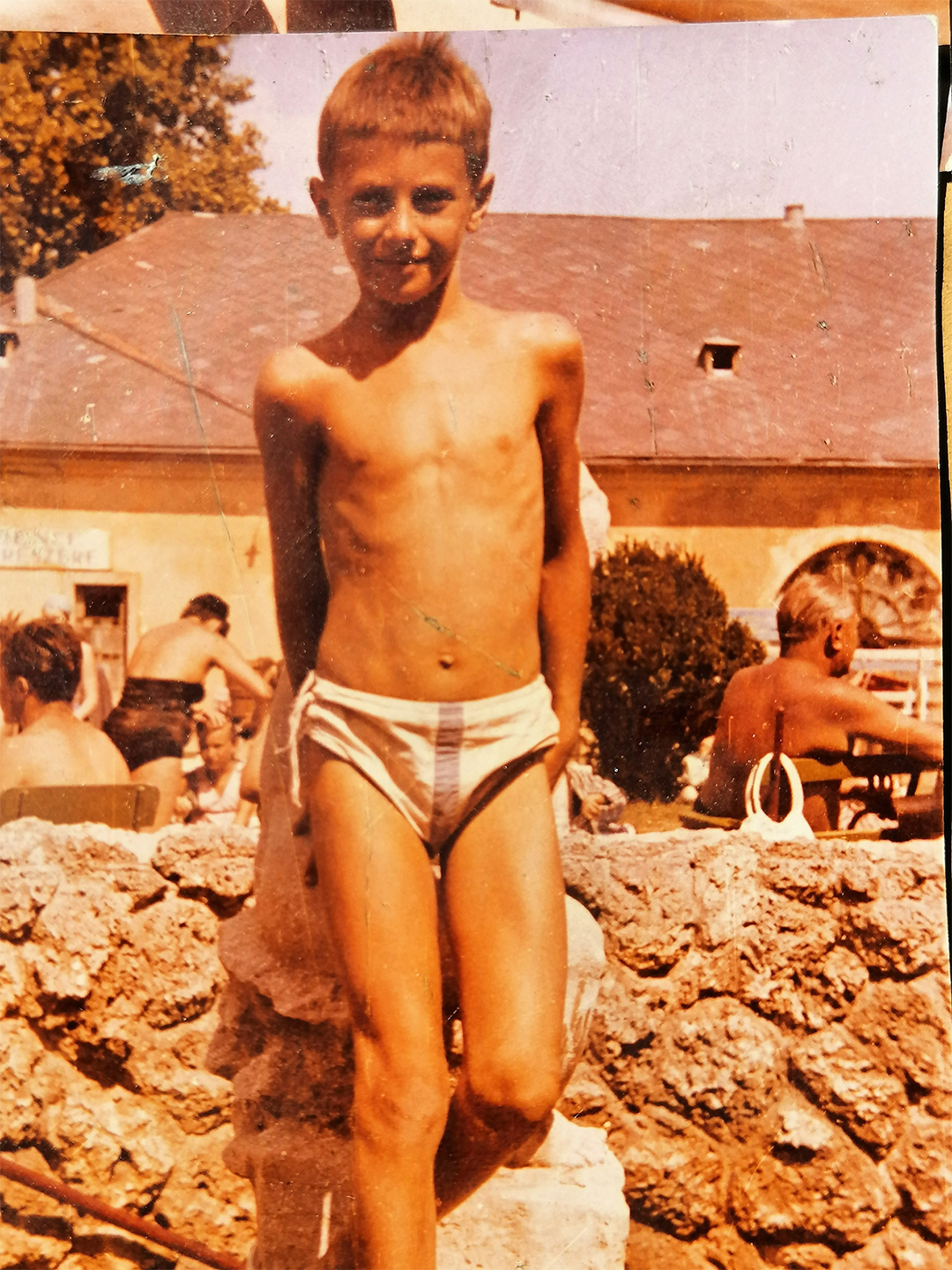
At the Eger Beach
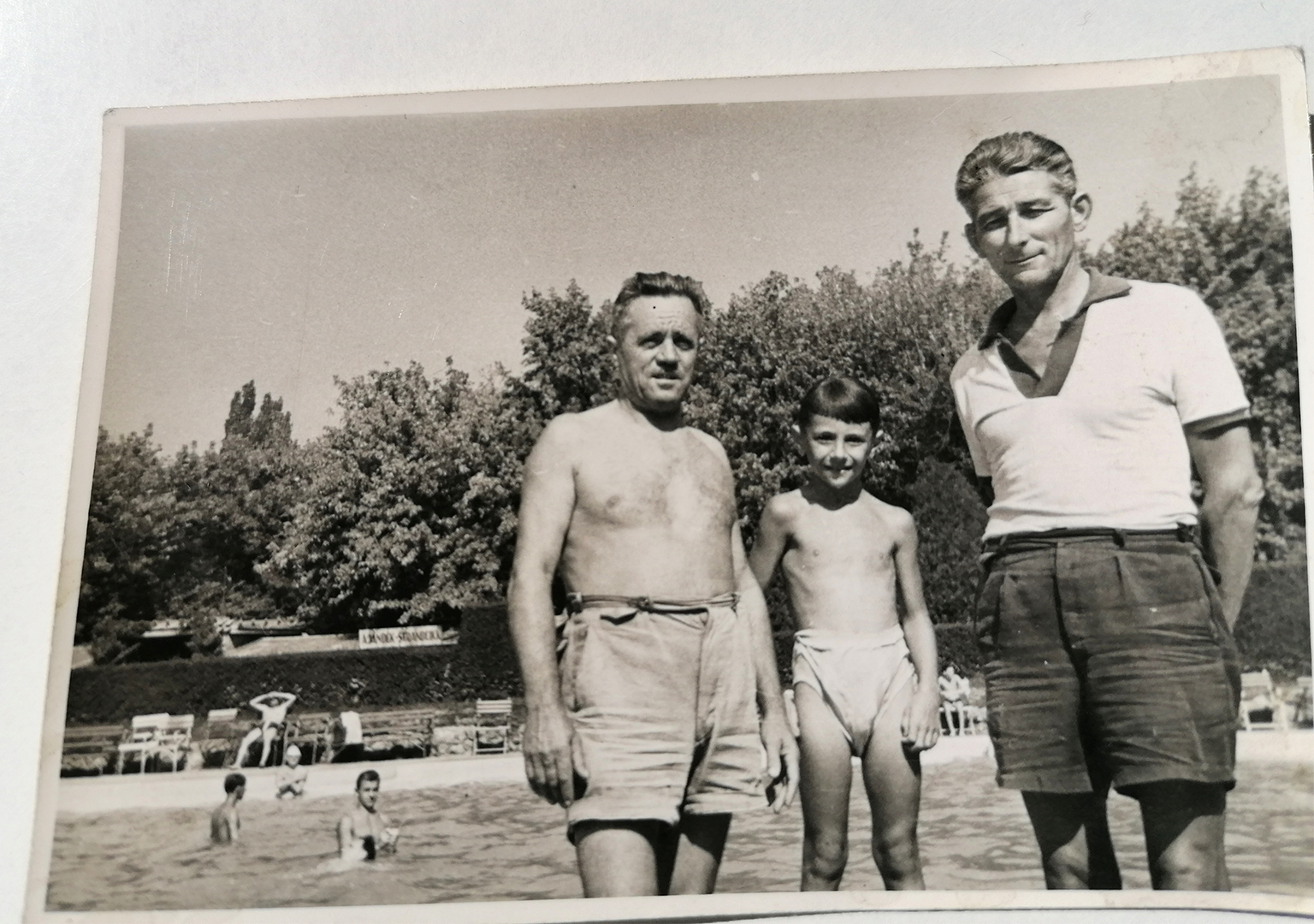
With Uncle Józsi and Uncle Aladár
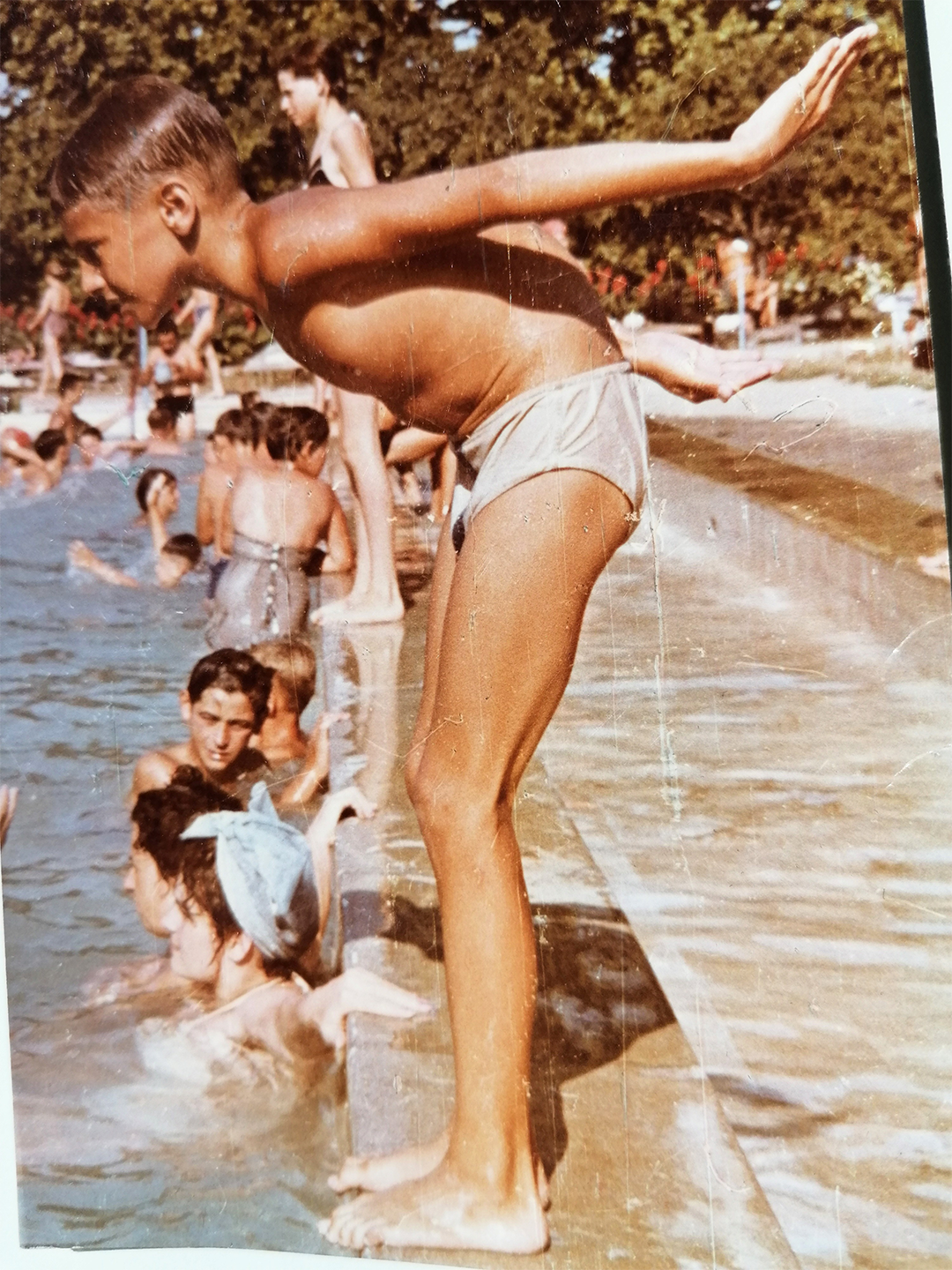
Before the Headfirst Dive
The memories of the vacations in the Mátra and Eger still fill me with happiness to this day: the beauty of the landscape, the fields of flowers, the pleasantly scented warm breeze, the cows, the geese, the butterflies, the stag beetles, and many other wonders live vividly within me. I am grateful to fate that, having realized my childhood dream, I can experience these magical moments together with my wife, daughters, and grandchildren in the Mátra house we have built in the meantime.
*
As my mother became ill — with a stomach ulcer that sometimes perforated, requiring immediate surgeries, as well as inflammation of the spinal nerve causing great pain — I gradually moved closer to the kitchen through grocery shopping. The first complex dish I had to prepare following my mother’s instructions was the meat soup. Naturally, the process started with the aforementioned shopping, then cooking step-by-step followed. At that time, I was not even ten years old.
What kind of foods did we eat in the 1960s? Among the soups: meat soup, green pea soup, tomato soup, caraway seed soup, egg soup, bean soup, gulash soup etc. Among the main dishes: paprika potatoes and layered potatoes, cabbage pasta, potato pasta, semolina pasta, dumplings with egg; vegetable stews: potatoes, kale cabbage, vegetable marrow, tomato cabbage, green peas, green beans; boiled cauliflower with toasted breadcrumbs and sour cream; breaded pork chops, chicken, mushrooms, Parisian cutlets, meatballs (fried both as patties and stuffed with eggs), pork or beef paprika stew, chicken paprikash, roasted ribs, stuffed pork belly, stuffed peppers, sautéed or breaded liver, braised beef with piquant sauce, etc. Among the side dishes: french fries fried in plenty of fat, potato chips, mashed potatoes, braised rice, braised green peas, egg barley, bread dumplings, and seasonal cooked asparagus (thanks to my father’s culinary experiences abroad), etc. As desserts, we often ate cooked pastas such as those with jam, walnuts, poppy seeds, or semolina with sugar and/or jam, various pancakes, semolina pudding, potato dumplings, plum dumplings, chestnut purée with whipped cream, ice cream, and the already mentioned floating island. Throughout the day, the base was bread and butter or lard or jam and apples. As a special treat, I ate the fresh, crispy crust of the bread, so by the time I carried the bread I bought up to the fourth floor, the crust (sercli) often disappeared :).
Unfortunately, my relationship with my mother was not entirely smooth. We obviously loved each other, but as she became ill, had pain, took medications, drank a couple of beers and strong coffee, and still smoked, she sometimes became quite aggressive and raised me harshly. There were rules, for example, I had to come up from the playground to the apartment precisely on time, and if I failed to do so, I would get beaten with a wooden spoon or/and had to kneel in the corner of the room on the floor for a while. It is true that I still consider punctuality important to this day. Probably my basic upbringing and similar rules I experienced during my cooking apprenticeship resulted in me regarding punctuality as a fundamental virtue and always observing it.
In the apartment — which was shared accommodation — lived my mother’s sister, Aunt Rózsi, and her son, Gyuri Hangody, who was two years older than me and with whom I spent a lot of time; we practically grew up together.
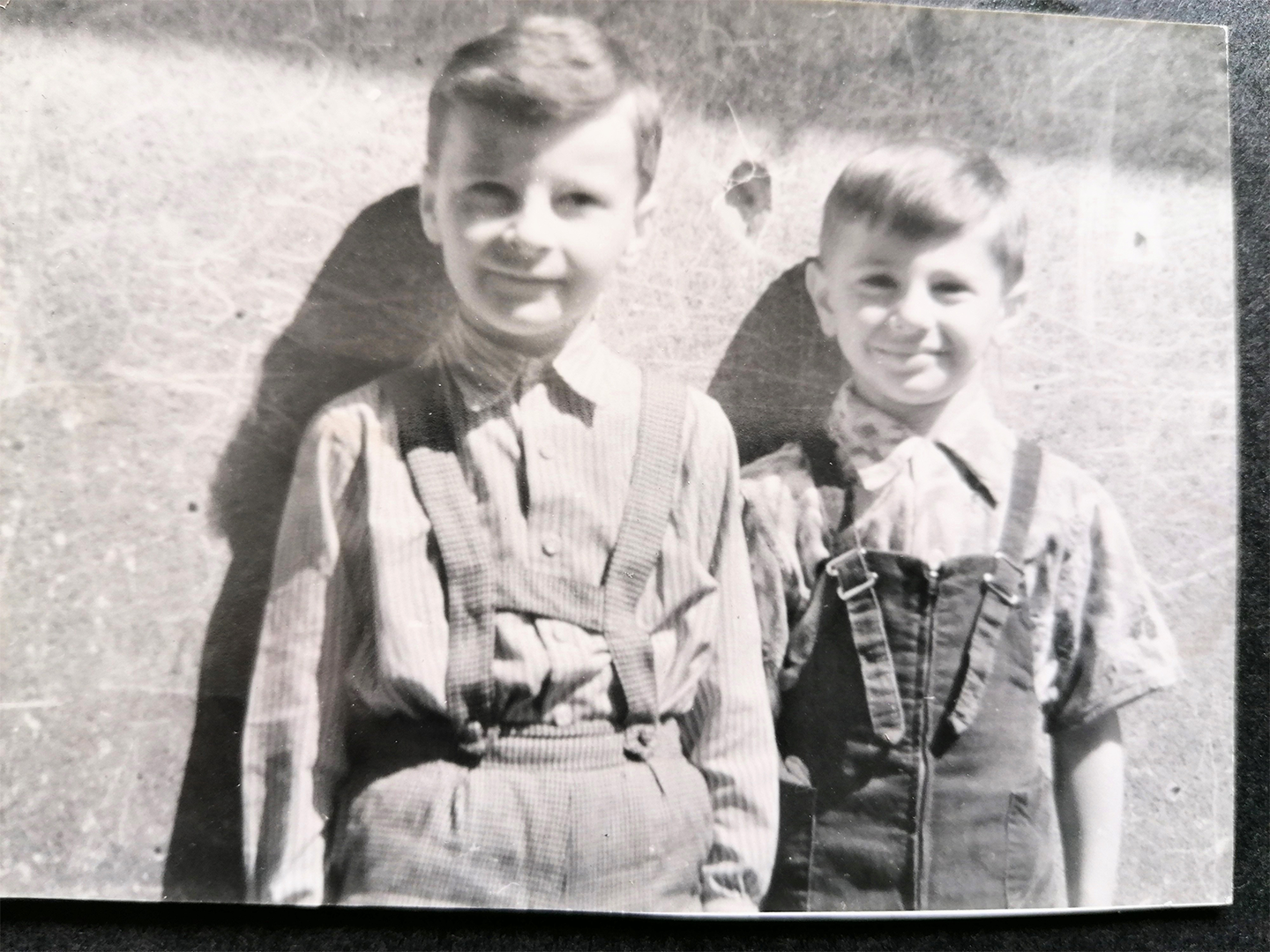
Gyuri and me
Our residential building (Frankel Leó Street 21-23) is next to the Lukács Bath/pool, so there were times when I went swimming daily (sometimes twice a day), or sometimes to the Csaszi (Császár pool, today Császár-Komjádi pool), which was also just a few minutes away, for swimming or just being there. My favorite was swimming underwater. At Lukács, I swam back and forth underwater in the square, cold 22-degree pool, of course without diving, only pushing off. It was an experience to meet well-known actors there, such as György Bárdy, Irén Psota, Zoltán Basilides, Dezső Garas, and to hear Ferenc Kállai joking around.
I spent a lot of time at the playground behind our house, mostly playing football or practicing long jump or triple jump by jumping into the sandbox. I learned the triple jump from my father, who—as I already mentioned—had huge sports experience. I still hear his words: hop, step, jump. For me, the “hop” meant the takeoff and push-off with the right foot, the “step” the landing and springing off with the right foot, and the “jump” the landing and leap with the left foot. For the long jump, he referred to Jesse Owens, the four-time Olympic champion at the 1936 Berlin Olympics, and explained and demonstrated his unique jumping technique: his cycling style. It often happened that I got so absorbed in the big game that I forgot to come up for mid-morning or afternoon snacks, so my mother came down to the square with a few slices of butter-and-jam or lard bread for me.
Living in our building was Zoltán Jékely, writer, poet, translator; his father was Lajos Áprily, poet and translator, his wife Adrienn Jancsó, actress, and daughter Adrienn Jékely. As I remember, I sometimes met their grandchildren, Gergely Péterfy and Bori Péterfy. My role model—besides my father—was Uncle Zoli, who whenever we met on the street, always greeted first: “Szerbusz Dénes.” I always tried to be the first to greet him, but I never succeeded because he always beat me to it. Imagine we were walking towards each other, for example, in front of the Irgalmasok Hospital (Budai Irgalmasrendi Hospital) next to our house, and when we were 10-15 meters apart, Uncle Zoli already loudly greeted. Understandably, as a child, I had no chance to greet first. In high school, I studied Goethe’s Faust and discovered that it was translated by Zoltán Jékely. I once told Uncle Zoli about this realization and how much I admired him for it, to which he modestly replied: “I’m glad you liked the work, Dénes.”
Also living in our building was Dénes Kovács, a violinist. It is worth mentioning here that Kodály Zoltán lived in the building on Andrássy Avenue 87-89 where my father lived, and I was fortunate to meet him a few times and even visited his apartment once through my father’s intervention.
My father came from a Jewish family, although they no longer followed Jewish religious traditions, and due to political events, my father was baptized out in 1938. According to the laws enacted, he still had to flee during World War II. He had a Swedish passport, which provided him with relative protection.
My father was a native German speaker (von Haus aus), spoke excellent English, and—according to him—no longer spoke French very well, and he played the piano well. In his youth, he often accompanied his father on the piano, who was the first violinist of the Ludovika Academy orchestra and who had heard Liszt Ferenc play several times. My father’s father moved from Pécs to Vienna in 1871 at the age of 14, where he lived with his uncle, who was the concertmaster of the Vienna Opera, who taught him to play the violin and helped him attend Liszt’s concerts. Unfortunately, my musical studies and German language learning ended in failure because I was not diligent in these areas. One must admit that one does not inherit everything.
Thanks to my father’s German knowledge, he escaped from the Óbuda brick factory collection camp in 1944. I myself heard his English and French at the open-air pool in Eger. On one occasion, a few young men of color were standing around confused, talking about something. My father went over and asked in English if he could help with anything. This led to a several-minute conversation, after which my father told me the young men were amazed and praised his excellent English highly. On another occasion, my father talked with a French lady for several minutes in the pool, and when I questioned him, saying he said his French was not good, he replied that this was true. All this must have been in the summer of 1960-61.
Fortunately, I inherited my love of sports from my father. Although I did not become an excellent athlete, I tried many different sports, and honestly, I did not want to become a professional athlete.
From early childhood, we often went hiking in the Buda Hills, Pilis, and Visegrád Hills. We often took the suburban railway (HÉV) to Pomáz, then walked into the hills, for example to Kő Hill, Kis- and Nagy-Kevély. A few times we took a boat to Dömös and hiked there. I loved boating very much; we always checked out the working steam engine in the engine room.
Pictures related to travel and hiking:
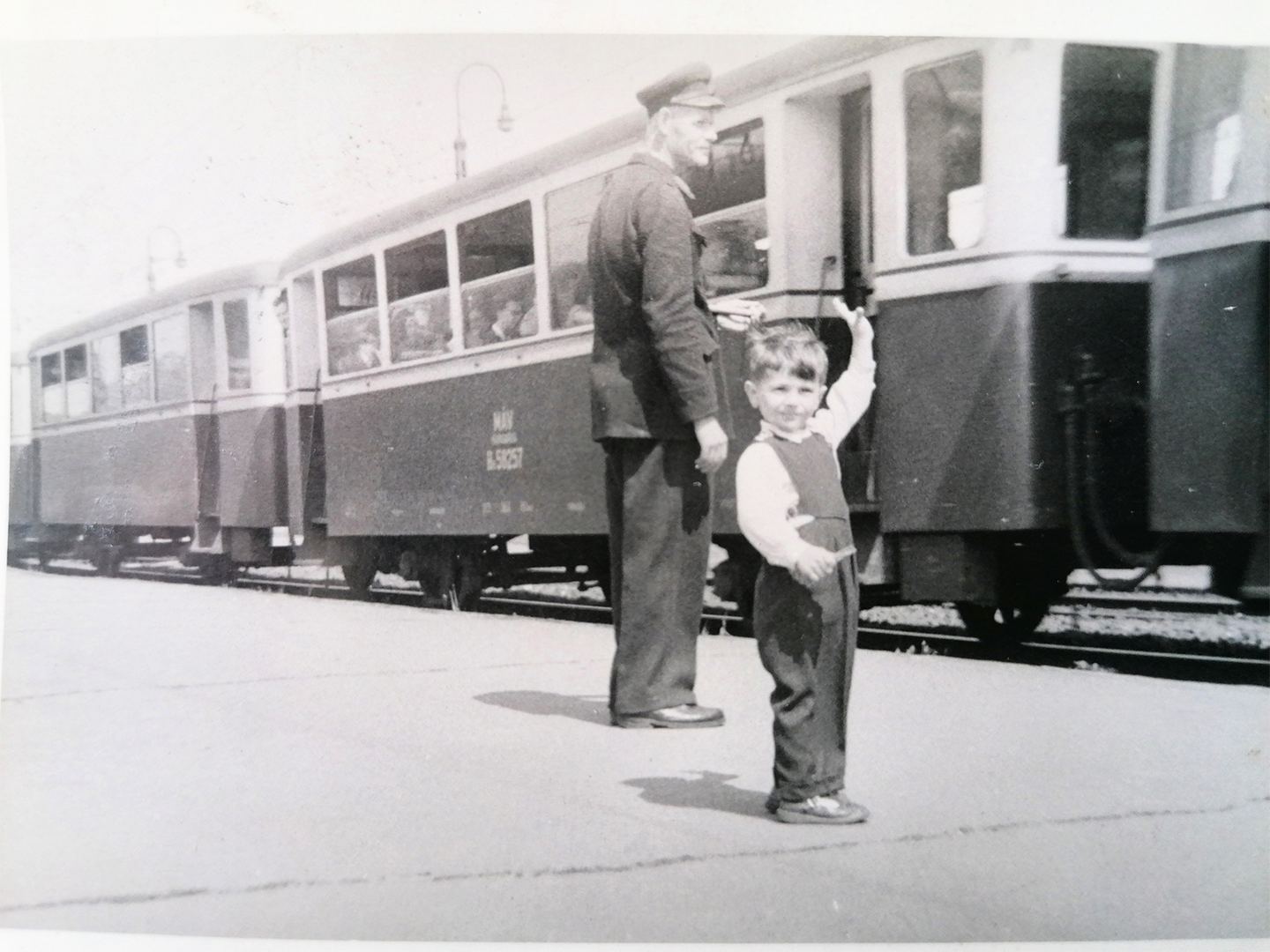
When I “Started” the HÉV (Suburban Train)
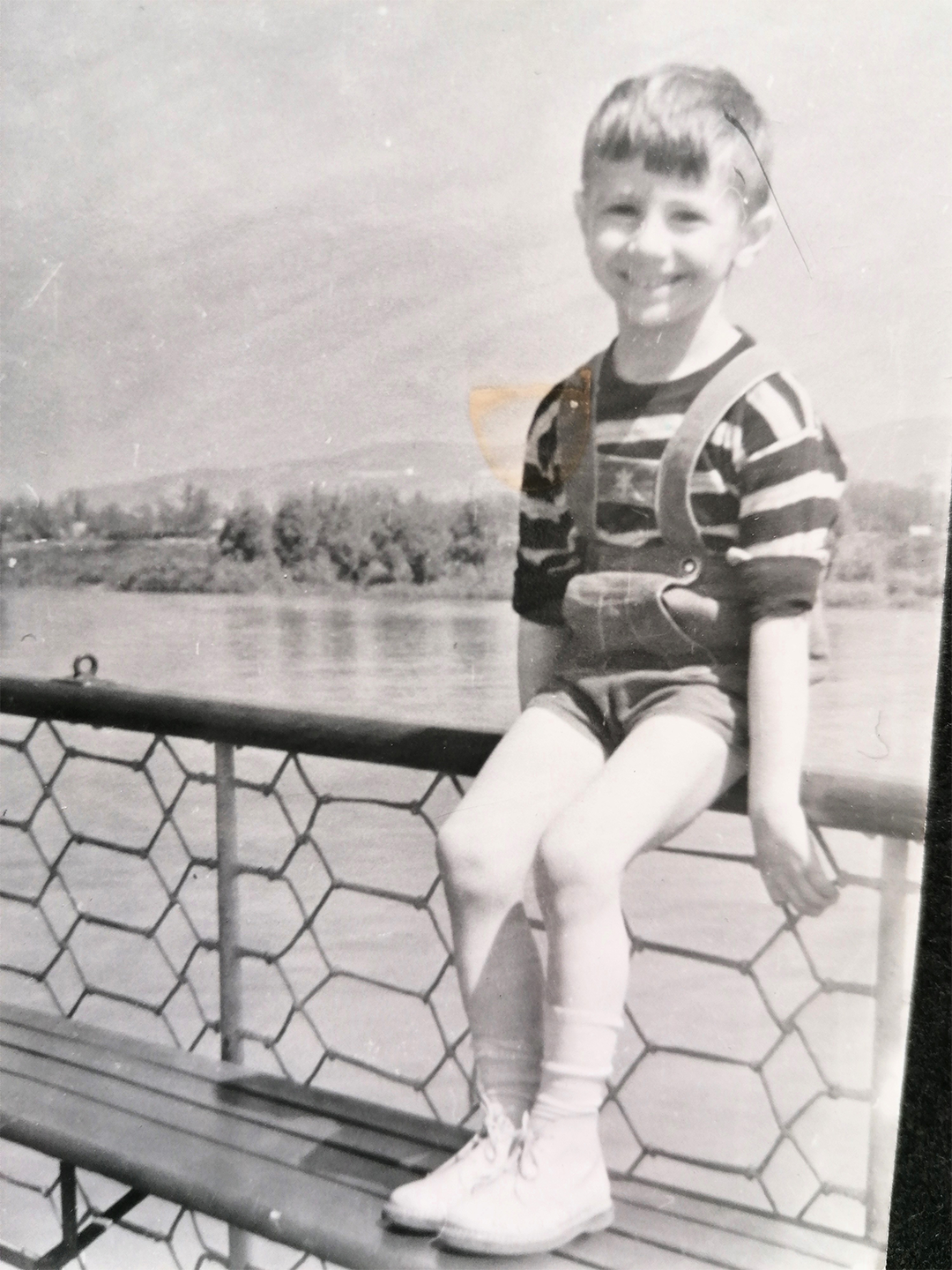
On the board
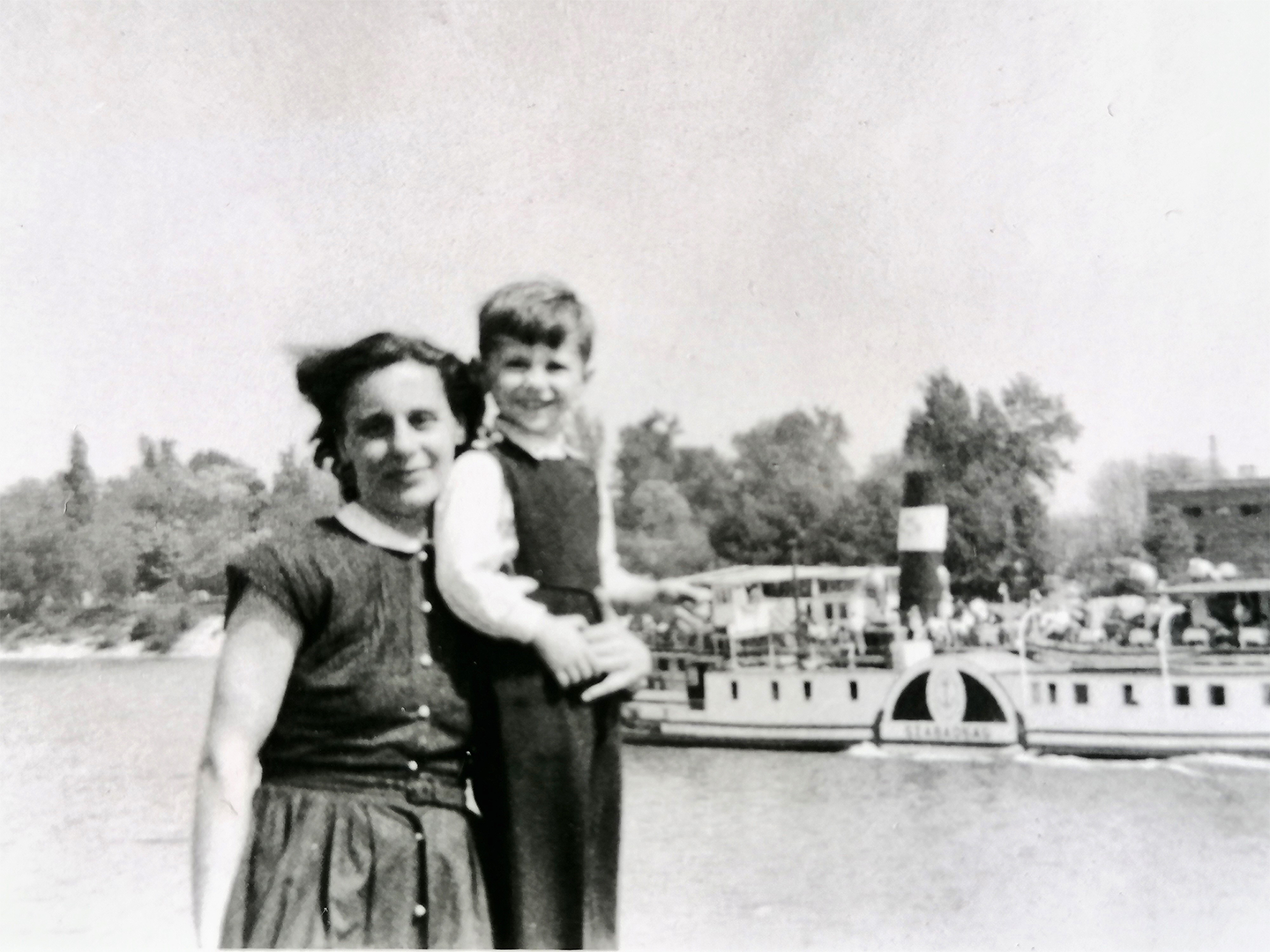
With My Mom, Steamship and Margaret Island in the Background
The first sport – not surprisingly – was athletics, which I practiced within a club framework. When I was 10-11 years old, my father took me down to the Vasas field on Pasaréti Street to Károly Kismartoni, a master coach and acquaintance, to work with me a bit. I took part in running, long jump, and high jump training sessions. Unfortunately, I got injured: I suffered a cartilage tear in my left knee, so I could not continue the training.
When I was 13 and in the seventh grade, my father died at the age of 80. I learned a lot from him; he was an extremely intelligent, respectable man. He often told me that one of the most important human qualities in life is diligence. He added that there are very few geniuses – he mentioned Mozart and Einstein – but with diligence, almost everything can be achieved. I feel that, consciously or unconsciously, I heeded his good advice, and thanks to persistent diligence, his wisdom was fulfilled in my case.
My mother continued to be ill, so with the help of my class teacher, dr. Zoltánné Bassola, aunt Klári, I moved for a while to one of my classmates, Tibor Sinka, and his family. Tibor’s parents and sister were very kind and welcoming. I was able to get through the difficult period of losing my father in a calm atmosphere.
When I started the eighth grade, following one of my classmates, Laci Kis, I began to learn kayaking in Újpest. This sport only lasted for a few months for me, but I gained many experiences. For example, kayaking on the Danube, up the small Danube branch to the Northern connecting railway bridge, then down the large Danube branch under the Árpád bridge to the boathouse on the Buda side. Once, around October, I managed to capsize the kayak into the water, but it was no problem, I swam out and, with some help, got the boat to the shore. Another experience related to kayaking was the series of gym trainings. They were very tough sessions, with many tasks to be performed one after another, for example, climbing a rope with alternating hands without using legs, or climbing two ropes with both hands, holding on without leg use.
Although my father had wanted, and we often talked during our hikes, that I become a forester, life rewrote the original plan. When choosing my career, it had to be taken into account that I should earn independently as soon as possible to support my mother. That is how the cooking profession came into focus. Moreover, as I mentioned, I had some home cooking experience, and Aunt Klári knew the director of the Hotel Sport (later Hotel Flamenco), to whom I had to send a résumé.
Yes, this is what a real class teacher is like, who cares about the students’ lives far beyond her duties. Instructive and exemplary.
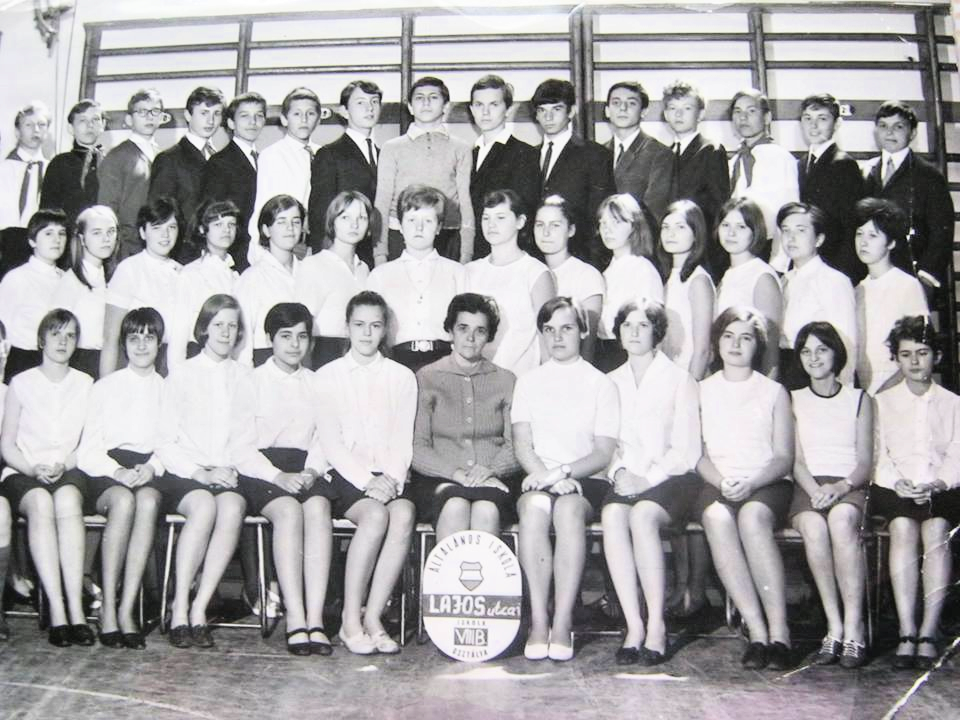
8th Grade Class Photo. Bottom row center Aunt Klári, top row from the left the eighth me
*
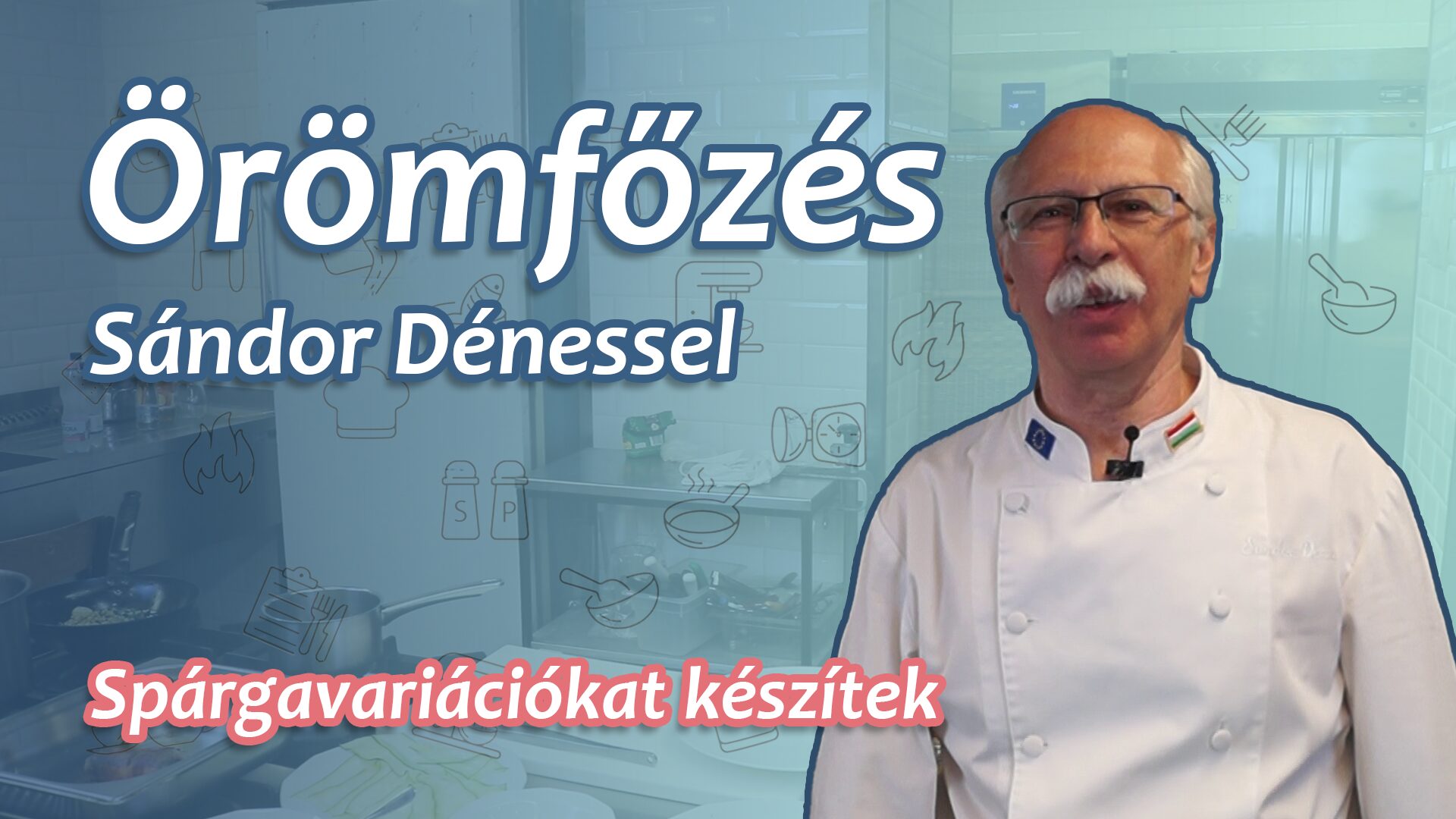
Click on the image to watch the “Asparagus Variations” video made at the Joyful cooking event!
You can find the recipe below the video!
You can watch the self-interview on YouTube by clicking here.
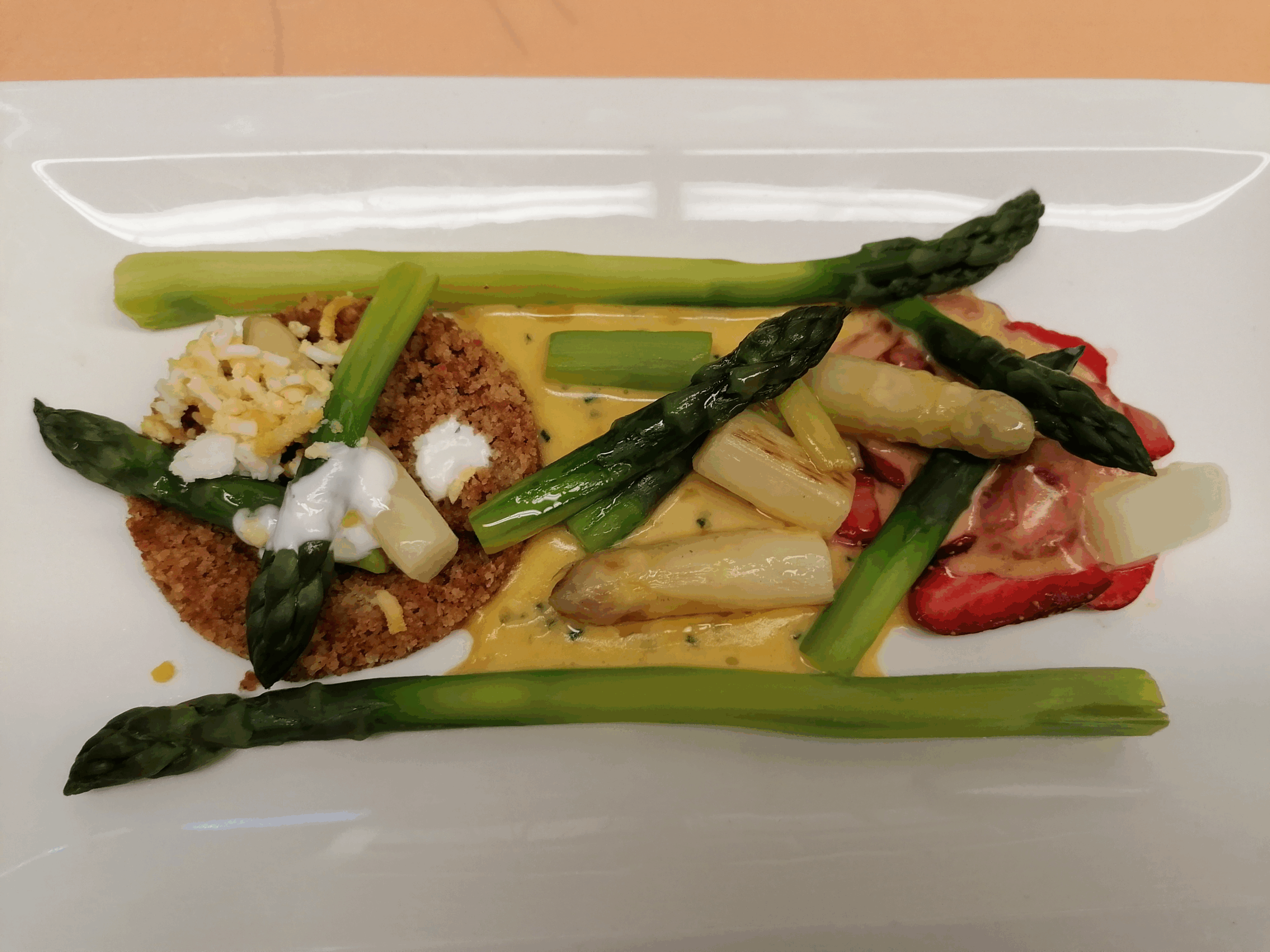
Asparagus Variations
Recommended ingredients for 4 servings:
for the asparagus:
300-300 g white and green asparagus
salt.
for the hollandaise sauce:
for the reduction:
50 ml water,
25 ml white wine or apple cider vinegar,
10 g shallot,
whole peppercorns.
additional ingredients:
180 g clarified butter,
3 egg yolks,
lemon juice (optional),
salt.
for the chive hollandaise sauce:
half of the hollandaise sauce,
chives.
for the strawberry ragout:
100 g strawberries,
10 g acacia honey,
balsamic vinegar,
grated organic orange zest.
for the strawberry ragout hollandaise sauce:
half of the hollandaise sauce,
the strawberry ragout,
whipped cream.
for the buttered breadcrumbs:
80 g butter,
80 g breadcrumbs,
1 pinch of salt,
1 hard-boiled egg (optional),
sour cream (optional).
for the sautéed asparagus:
50 g butter.
for serving:
sliced strawberries and melted butter.
The preparation steps:
For the hollandaise sauce, prepare an extract by boiling down water, white wine vinegar, shallots, and freshly ground pepper.
Cut off the ends of the asparagus, clean the asparagus, cut it into pieces, and cook it until tender-crisp in salted water, then cool it in ice water.
Toast the breadcrumbs in melted butter.
For the strawberry ragout, briefly cook the honey, balsamic vinegar, and diced strawberries together.
When preparing the hollandaise sauce, salt the egg yolks, strain in the extract, then thicken over steam with constant vigorous whisking, finally gradually adding clarified butter.
Mix finely chopped chives into one half of the finished sauce, while the other half is blended with the strawberry ragout and whipped cream.
Sauté part of the asparagus in butter.
When serving, place the strawberry ragout hollandaise sauce on strawberry slices, pour the chive sauce beside it, and add the toasted breadcrumbs alongside. Arrange the asparagus neatly, and finally drizzle the plated dish with melted butter.
*
Preview
Hotel Sport and Cooking School Part 1.
Joyful Cooking with Csaba Horváth, with whom I was a chef apprentice at the Hotel Sport in 1970.
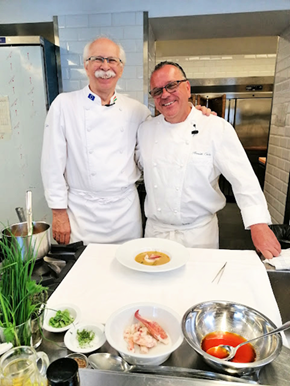
Joyful Cooking with Csaba Horváth