College of Hospitality (BGF KVIK) work 2005-2013 (Part 1)
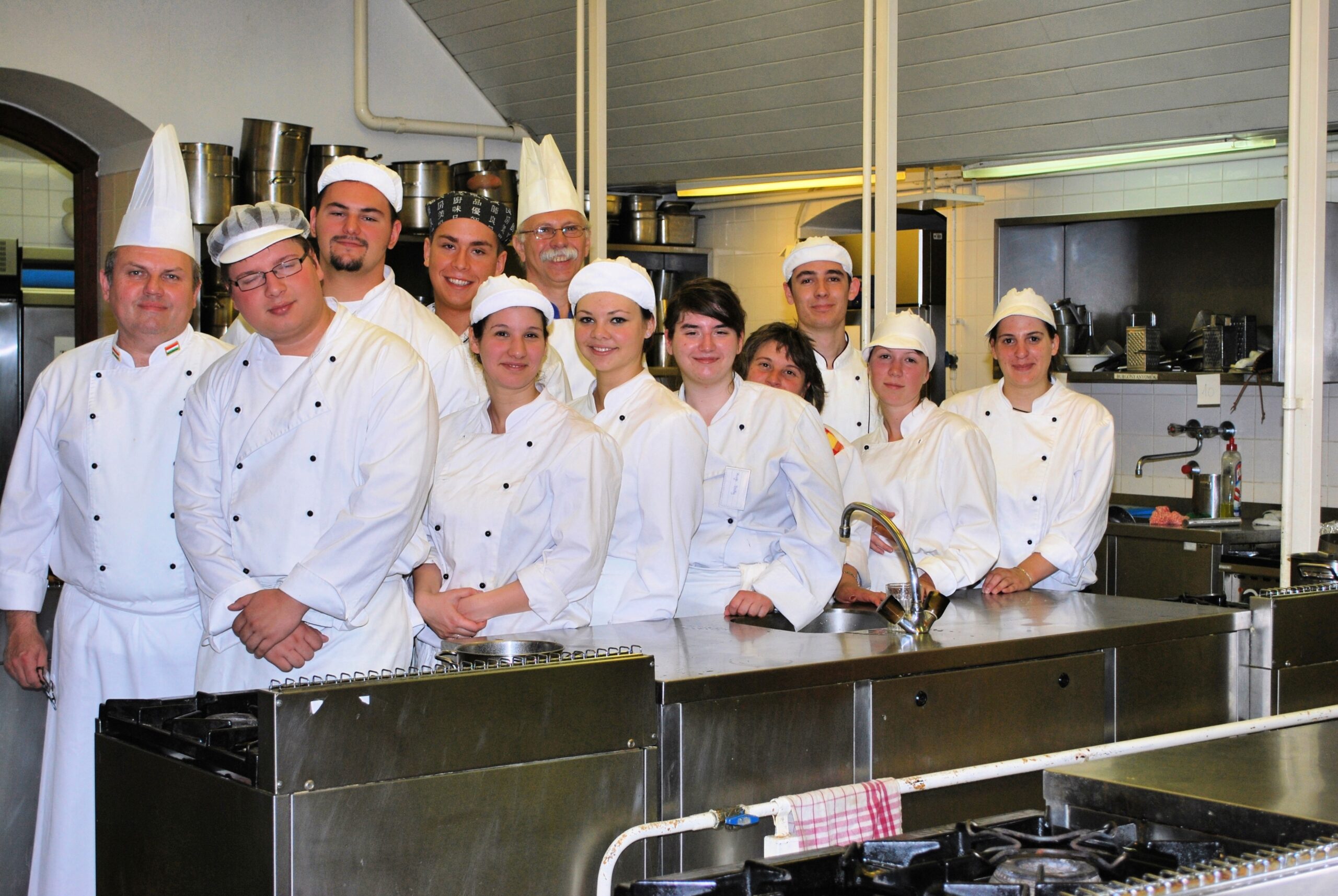
This chapter is the fifth part of my college/university teaching work, which has been divided into nine sections for manageability. One year earlier (in 2004), the English-language Hospitality Management program was launched at BGF KVIK, and I became its head (2004-2008). In addition to this, I continued to serve as the head of the Teaching Cabinet alongside teaching, so I had plenty of work and responsibility. We continuously updated our educational system, which we had established in the 1990s. For this purpose, demonstrations and competitions organized and conducted in the training kitchen, as well as gaining experience abroad, continued to receive great emphasis.
*
We continued the cooperation with the Thai Embassy and organized demonstrations with the involvement of chefs arriving from Thailand, where Hungarian chefs could literally taste the flavors of Thai cuisine, and then, based on what they had learned, they prepared a dish themselves.
*
In 2006, our guest chef was Cristian Broglia, the head chef of ALMA (The International School of Italian Cuisine), where the rector was Gualtiero Marchesi, who in Italy was held in the same esteem as Paul Bocuse in France.
Zoltán Magos—who had previously been the chef at the Hungarian Embassy in Rome for ten years—assisted with interpreting and sourcing ingredients.
Cristian held his cooking course over five days (2006.02.07-11.), which was very instructive from a professional perspective. The chef explained that the basic philosophy of preparing food is to use, whenever possible, excellent quality local ingredients combined with the most neutral kitchen technology. Primarily fresh animal-based ingredients were used, such as branzino (sea bass), tiger prawns, squid, domestic rabbit, veal breast, veal shank, etc. The cooking times were also varied, ranging from 0 minutes (beef tenderloin carpaccio), 1 minute (squid rings, shrimp tails), and 20 minutes (couscous), to veal breast braised for several hours.
Particularly noteworthy were the squid rings and cleaned shrimp tails, seared for one minute in a dry pan, naturally without any seasoning, which became buttery soft and retained their own flavor. They carried the sea salt within them, so no additional salt was needed. Moreover, because surface salting draws out free water, which did not happen here, both ingredients remained delicious and tender.
Cristian showed us classic Italian dishes such as Bolognese ragu, risotto, and Marchesi’s version.
Naturally, Cristian also prepared various types of pasta. For one of them, he kneaded 10 eggs into 1 kg of flour, and for another, he added 1 kg of egg yolks to 1 kg of flour and made pasta from that. From these basic doughs, he shaped more than twenty different kinds of pasta with different names and forms.
An article of mine about the demonstration was published in the April 2006 issue of Gasztro Fórum can be read here, in which you can read more details about this event. It is certain that this Italian gastronomic demonstration—out of the many events we organized and conducted at the college over the decades—was of outstanding professional significance.
The photos of the demonstration:
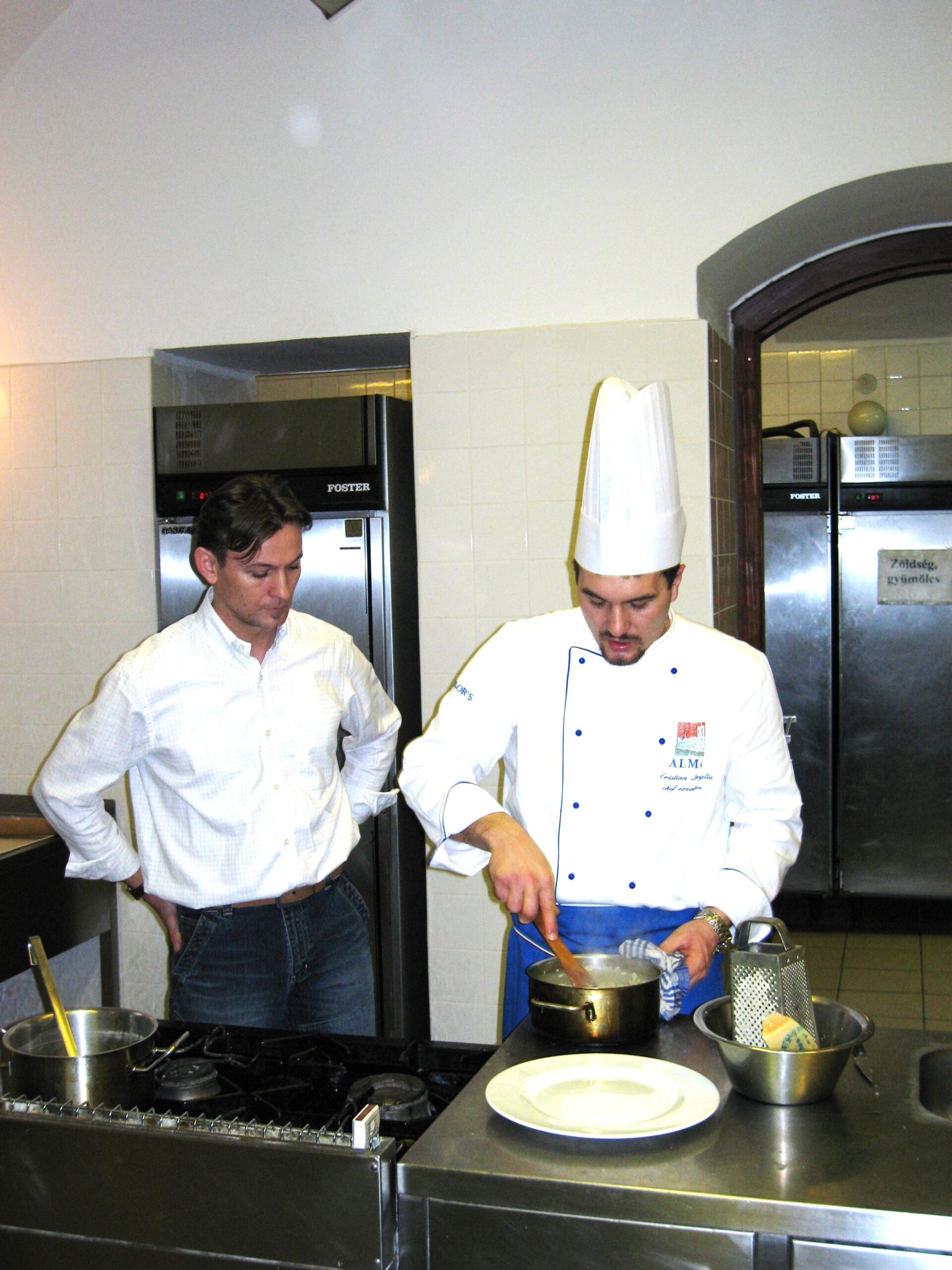
Zoltán Magos and Cristian Broglia
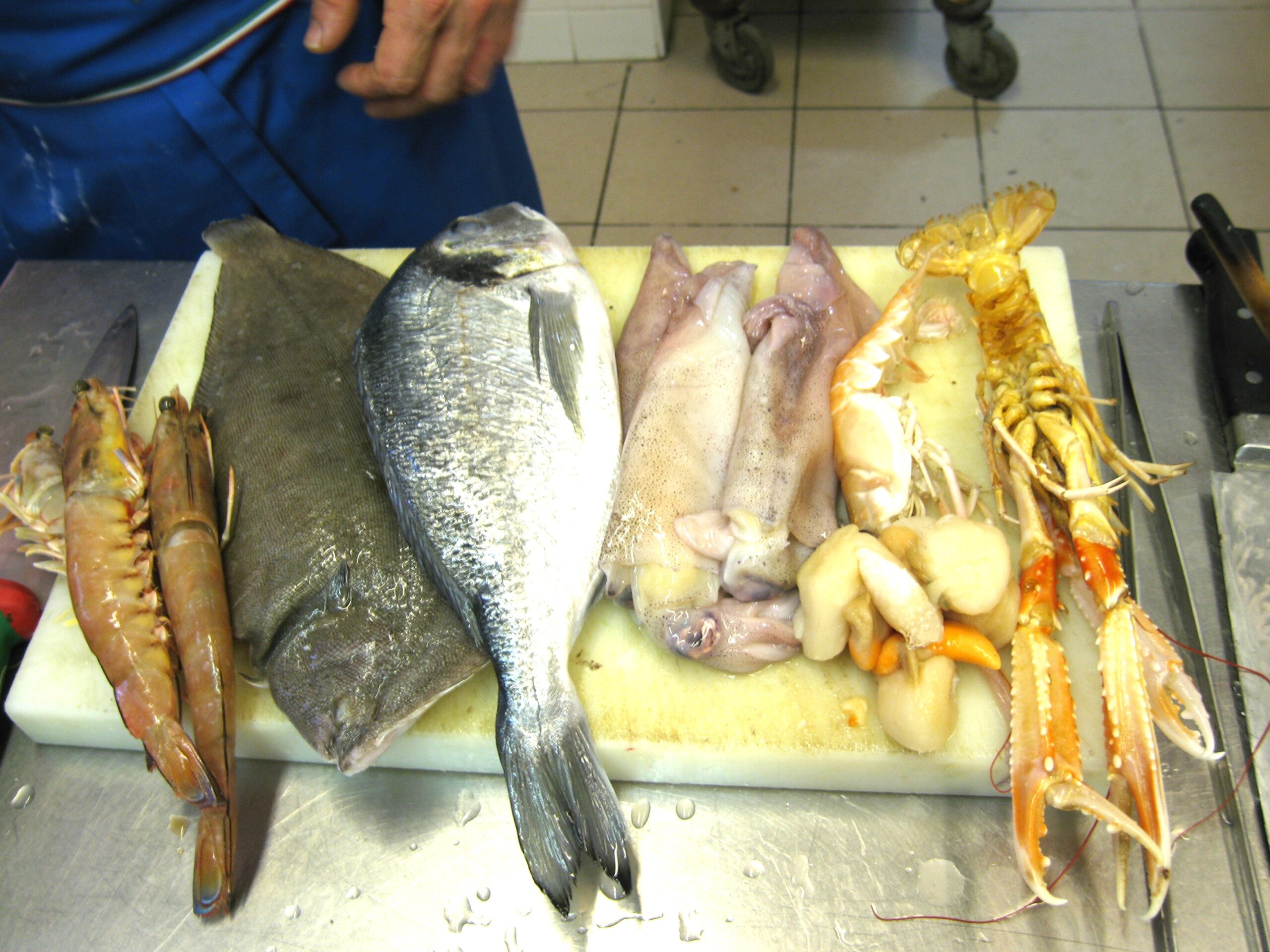
Fish and seafood
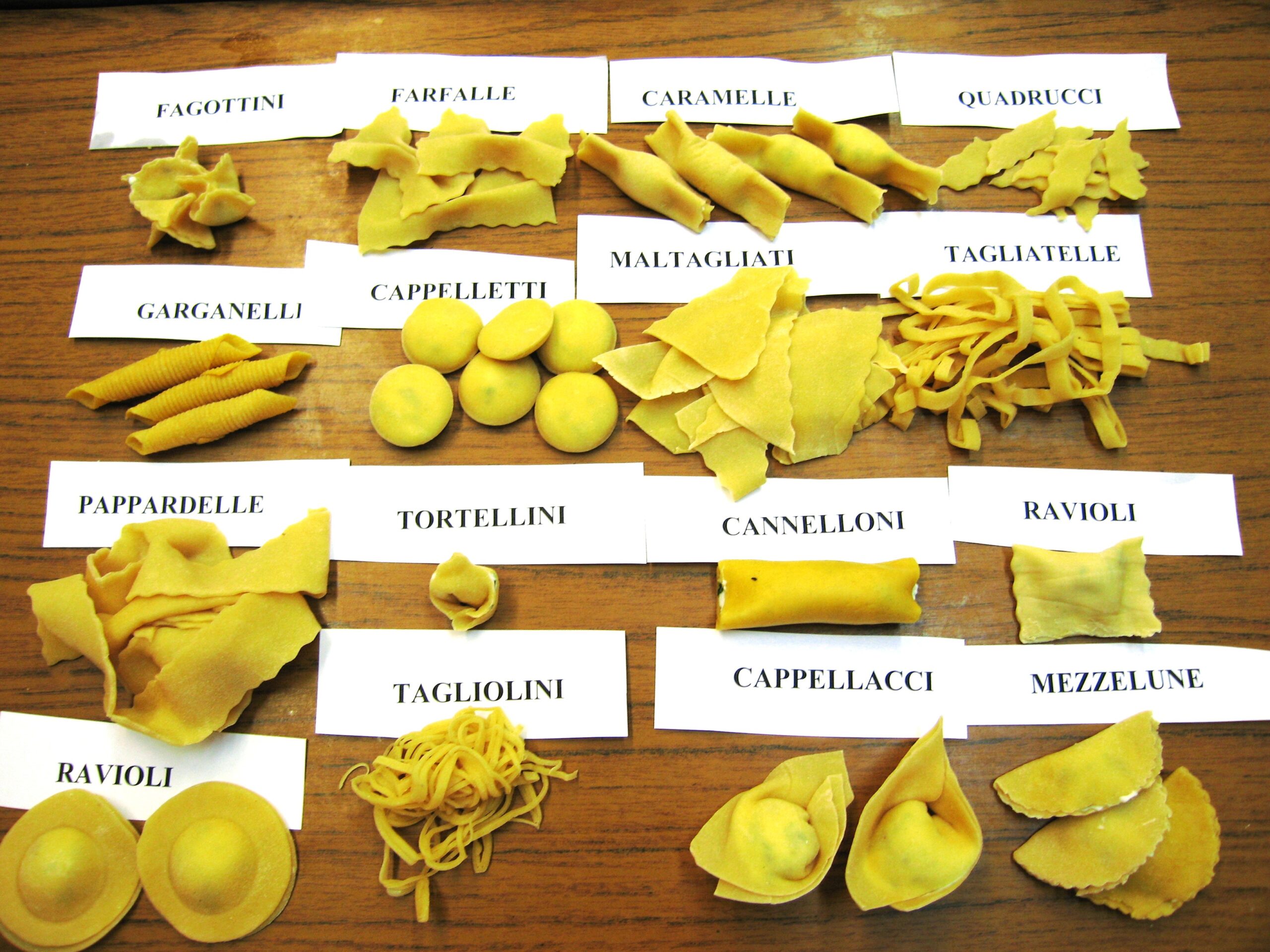
Pasta variations
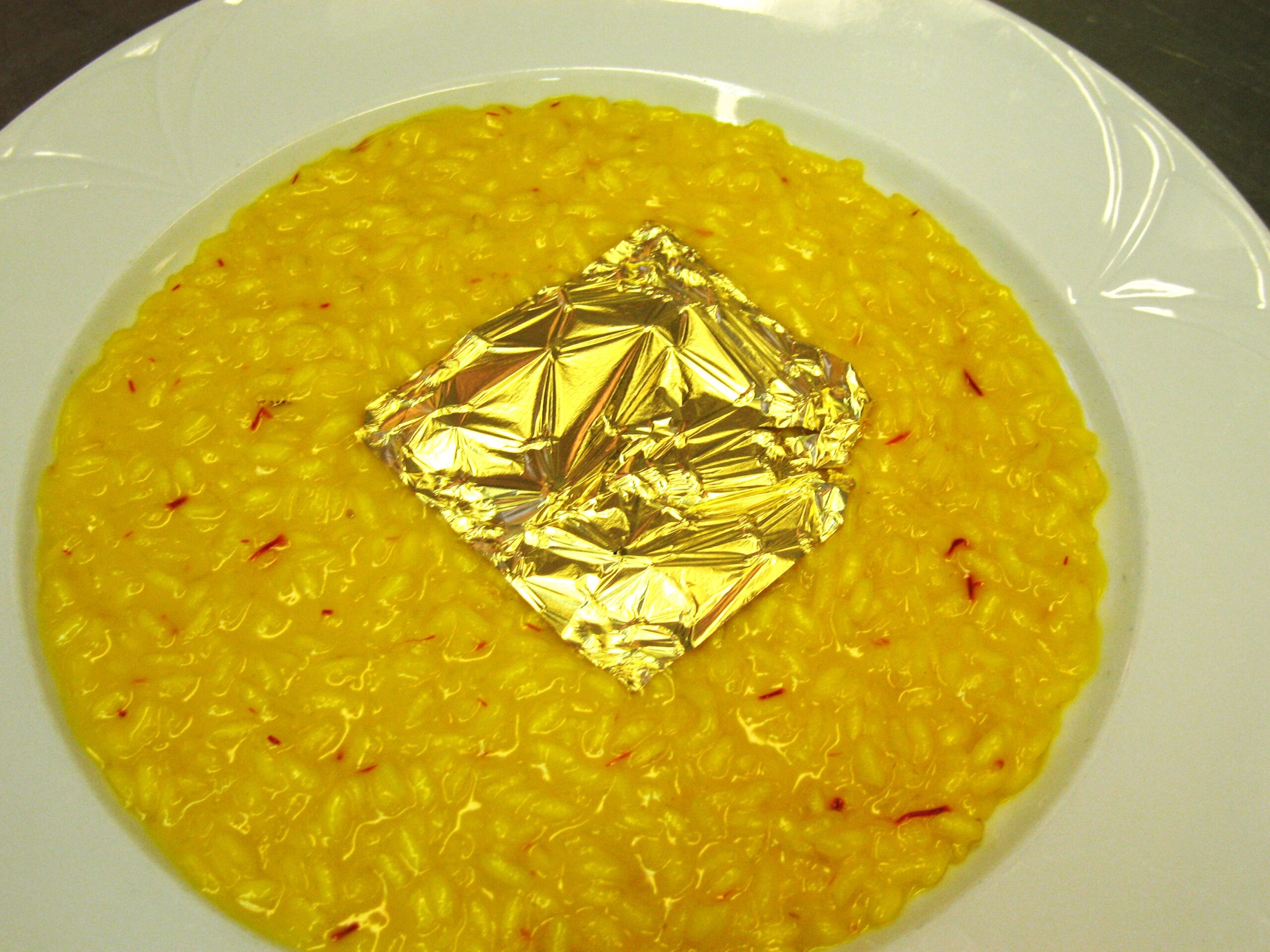
Saffron risotto with gold leaf
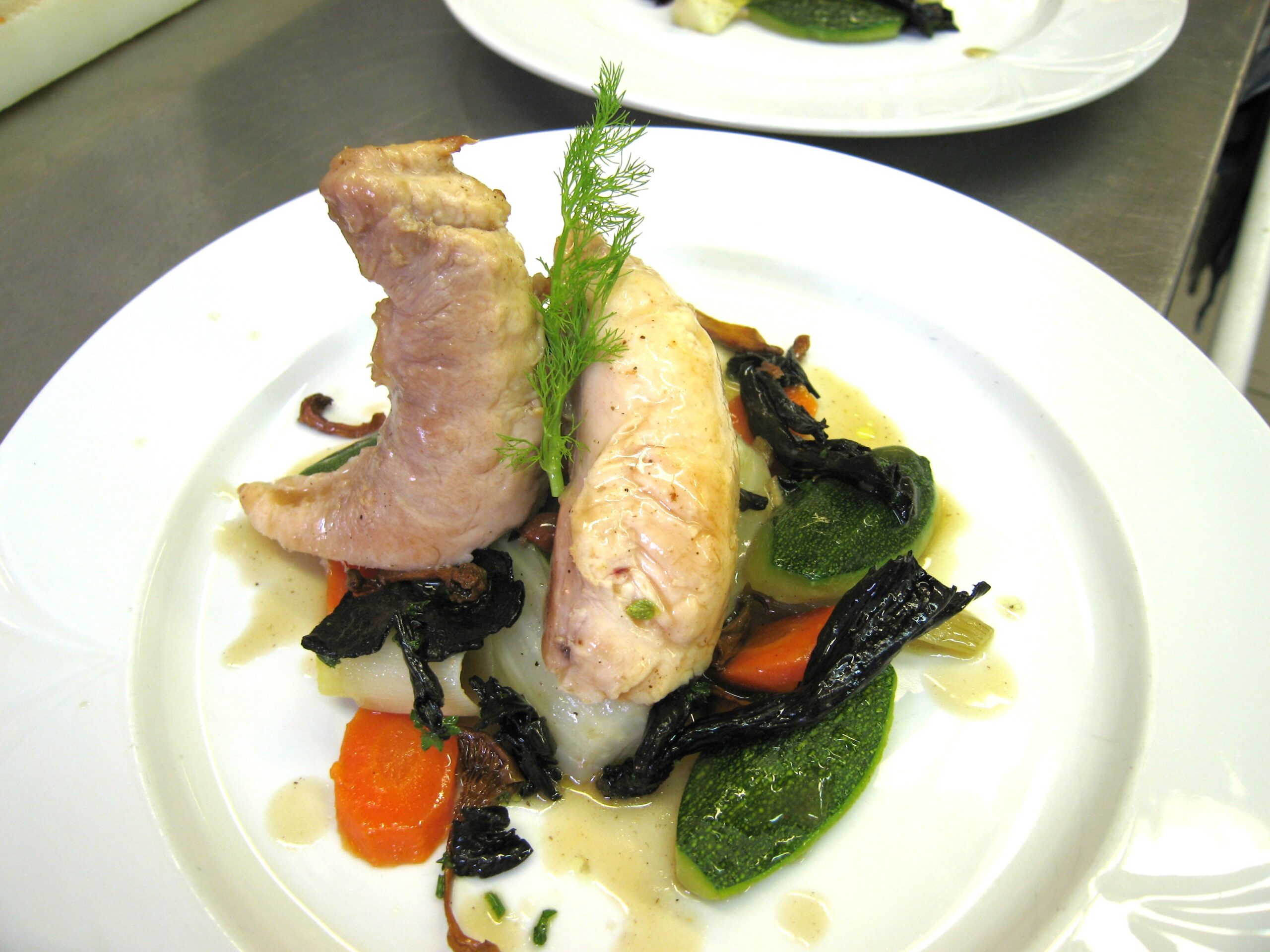
Roast rabbit fillet on a bed of vegetables
*
In 2006, on the 50th anniversary of Károly Gundel’s death, we organized a gastronomic competition at the college in cooperation with the Hungarian Museum of Trade and Hospitality. The two-round competition was announced for teams of three hospitality vocational school and college students. In the first round, a classic Gundel menu had to be prepared for three people: Pethes soup, veal chop Gundel style, and Gundel pancake. The second round was a quiz related to the work of Károly Gundel, and additionally, from the recipes in the “Little Hungarian Cookbook,” designing a menu card for an imaginary occasion was also a task.
*
Over the years, two chefs from the USA also held demonstrations in the training kitchen on various topics. In one of them, we learned how to make tortillas using wheat and corn flour, and “chili con carne” as well as hamburgers were also prepared. Regarding shaping the hamburgers, the chef said that if the meat patties are not exactly the same, it is not a problem at all because this way it is known that the burger is homemade.
*
On the other occasion, steaks were prepared from premium quality beef, which were truly very tender and delicious. Because of the excellent eating quality, the crossbred animals were fed only corn, and compared to the average American beef prices at the time, the meat presented was three times more expensive. We know the golden rule that it is easy to work with good quality ingredients, and if possible, and the guest can pay for it, then that is the only way to do it. Furthermore, the meat used was received frozen between dry ice from Poland. Our only task was to let the tenderloin, sirloin, and beef round thaw. The chef demonstrated to Hungarian chefs how he cooks the steaks he sliced to medium-rare in a little oil. Of course, everyone was familiar with the method. When I asked about their practice regarding salting, he said there are three variations. The first is not to salt the meat at all. The second is to cook one side of the steak, then salt the cooked side after flipping. The third is to salt the meat before cooking. The finished steaks were tender; only the meat cooked from the round needed a little chewing, but its texture was similar to the domestic tenderloins available at that time.
*
During the 2000s, we provided the training kitchens several times for the chamber’s “Master Chef” preparatory and exam practices. From the Pest County Chamber, Mária Szabóné Zéman was the organizer, who entrusted the professional organization to me, meaning I invited the lecturers. The professional framework—preparatory and exam theoretical-practical training and its main pillars—could not be changed. The theory ended with an oral exam, while in practice, a decorative platter had to be prepared, a dish imagined to be served warm but presented cold, and a three-course menu had to be cooked. The cold kitchen work was often assisted by Miklós Várhelyi and/or Gyula Ortó, while for the theoretical classes, I invited, among others, Péter Mózes, János Cseh, Frigyes Vomberg, and Viktor Segal.
Many people, shouting from the sidelines, criticized the chamber system as worthless. This mentality is typical in cases where the critic has no knowledge of what actually happens in such a “Master Chef” course. The names of the aforementioned professionals guarantee quality training. One can debate whether the cold kitchen part is necessary or not, but as I mentioned, I had no opportunity to change the framework. I can also refer to what Reinhold Metz, the European president of WACS, said—that the practice and examination or competition presentation of cold kitchen preparations is necessary for developing manual skills and precise work.
*
In 2007, I managed to arrange the installation of two six-tray MKN combi ovens with the help of the ASSUR company. Ferenc Takács, the owner representing ASSUR, and Edmond Finkenauer, the Central European sales manager of MKN, visited me at the college. I showed them the training kitchens—Feri knew them quite well, as he was a former student of mine—and I convinced the German gentleman within minutes that we needed a combi oven for each kitchen, since on the one hand, we have practical sessions from morning till evening, and our graduates, as leaders, would likely choose a brand they are already familiar with. On the other hand, we organize many domestic and international events, where the two ovens would also serve as good advertising.
The funny part was the paperwork, during which our financial director began to worry about what would happen if the ovens were taken back, that it would also be problematic that the cleaning cartridges would have to be purchased by the school, and that the school would have to pay for maintenance as well. I told him that obviously the ovens would not be taken back, because otherwise, why would they be installed. I continued that although it is true that the annual costs of cartridges and maintenance amount to a few tens of thousands of forints, the two ovens represent about 4 million forints in value, not to mention the advertising value mentioned earlier and the professional and training advantages from their use. In the end, we managed to solve the bureaucracy, and a few years later, with the financing of a grant, we even purchased another oven; MKN replaced the two ovens installed in 2007 with the latest models, and a few years later, the college bought one of the ovens used.
*
In 2007, we planned to launch a French-Hungarian culinary arts course under the name “Budapest Chef Academy,” with a brief description available here.
“Planned professional program
Introduction
The intensive chef training course will start in October 2007, organized by the Budapest Business School, the École Lenôtre in Paris (Lenôtre Culinary Arts School), and Cegos Ltd. At the end of the training, participants will take a practical exam in the presence of the examiner from the Lenôtre Culinary Arts School. Upon successful completion, a document issued by the above institutions will certify the completion of the culinary arts course.
The goal of the training
The goal of the training is primarily to provide colleagues working in the chef profession the opportunity to further develop through practical training. This is necessary because there is no formal continuing education in the culinary arts field in Hungary—except for the chamber master training.
Structure and schedule of the training
52 days (10 hours per day) professional chef training
12 days (10 hours per day) leadership theory training
Location of the training
The training location is the Training Kitchen of the Teaching Cabinet of the Faculty of Commerce, Hospitality and Tourism at the Budapest Business School.
Planned dates and program
October 2007 Dishes made from fish and other cold-blooded animals
January 2008 Dishes made from beef and game meat
January 2008 Dishes made from domestic and wild poultry
March 2008 Dishes made from veal and lamb
May 2008 Vegetarian dishes
June 2008 Practical exam
The planned course, involving renowned chef instructors including Sándor Facsar, Kálmán Kalla, and Roland Holzer (executive chef of Kempinski Hotel Corvinus), did not start, most likely due to the usual net tuition fee of 21,000 euros charged by the French side, which amounts to more than 5 million forints.
*
*
Similar to this French training cooperation, an agreement with the Paris Le Cordon Bleu Institute also did not come about, although we discussed several times that the world-famous school could have its Eastern European center in Budapest. The reasons were likely the same; according to the French, there probably would not have been a paying demand for the training.
*
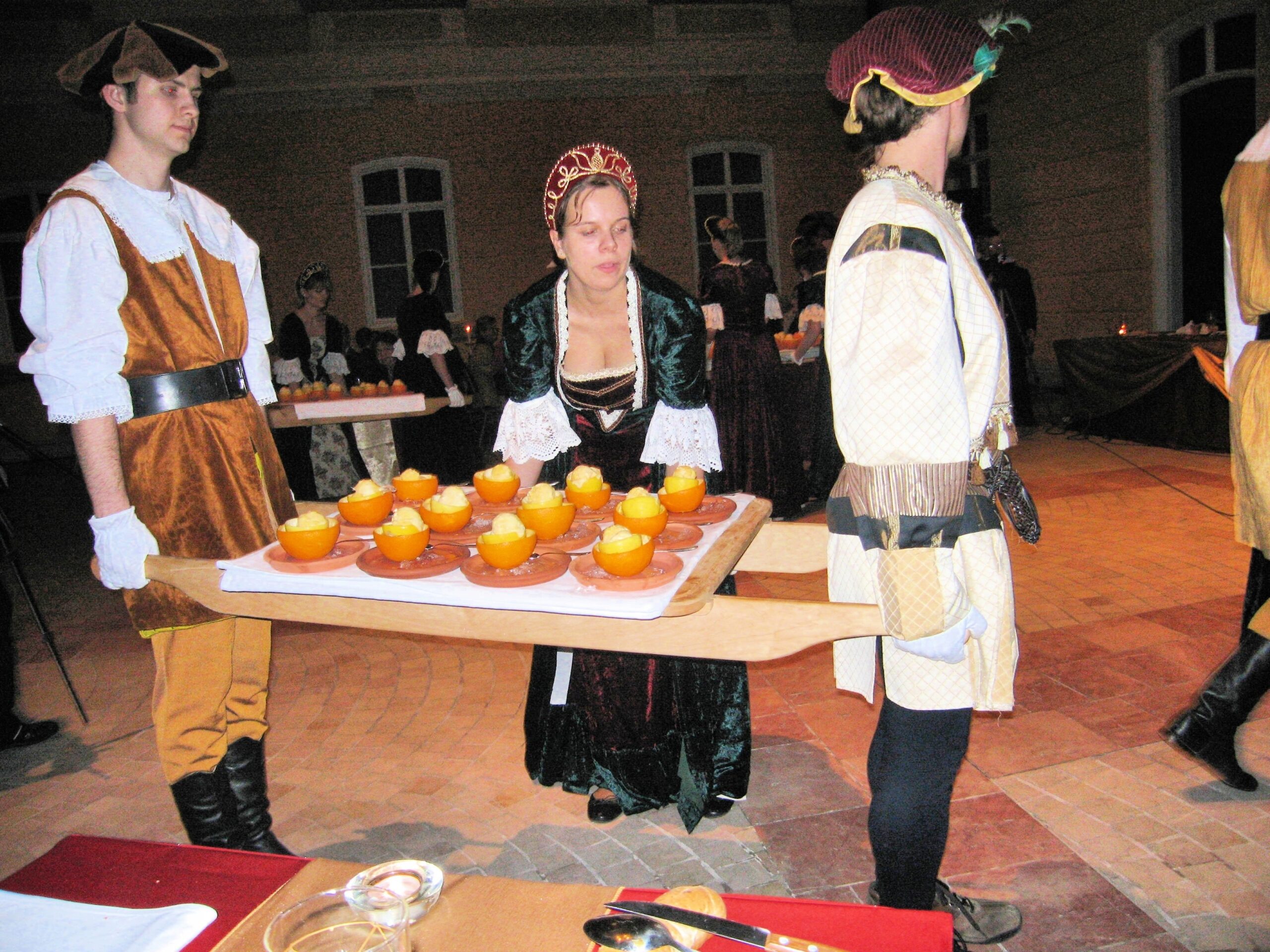
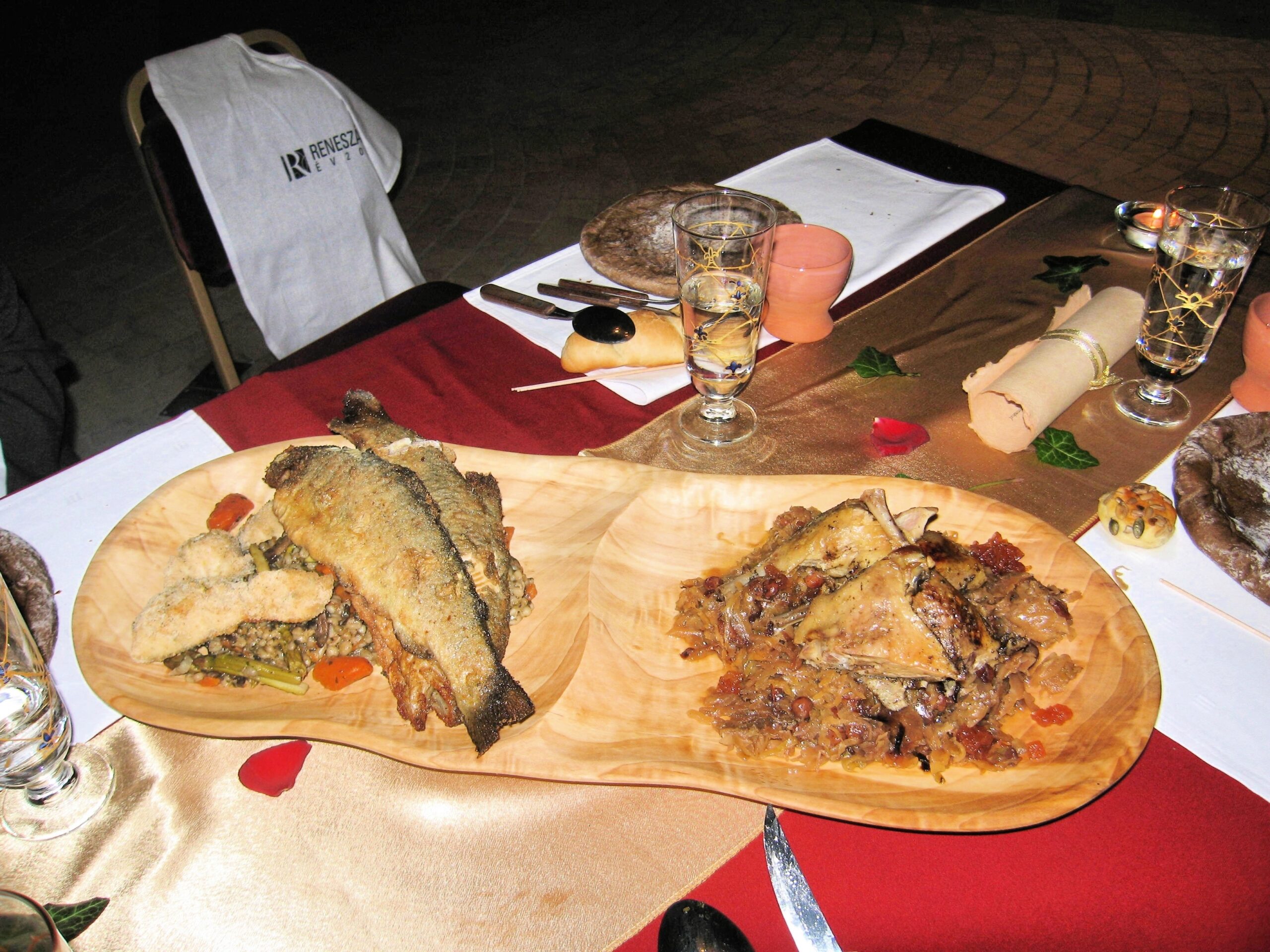
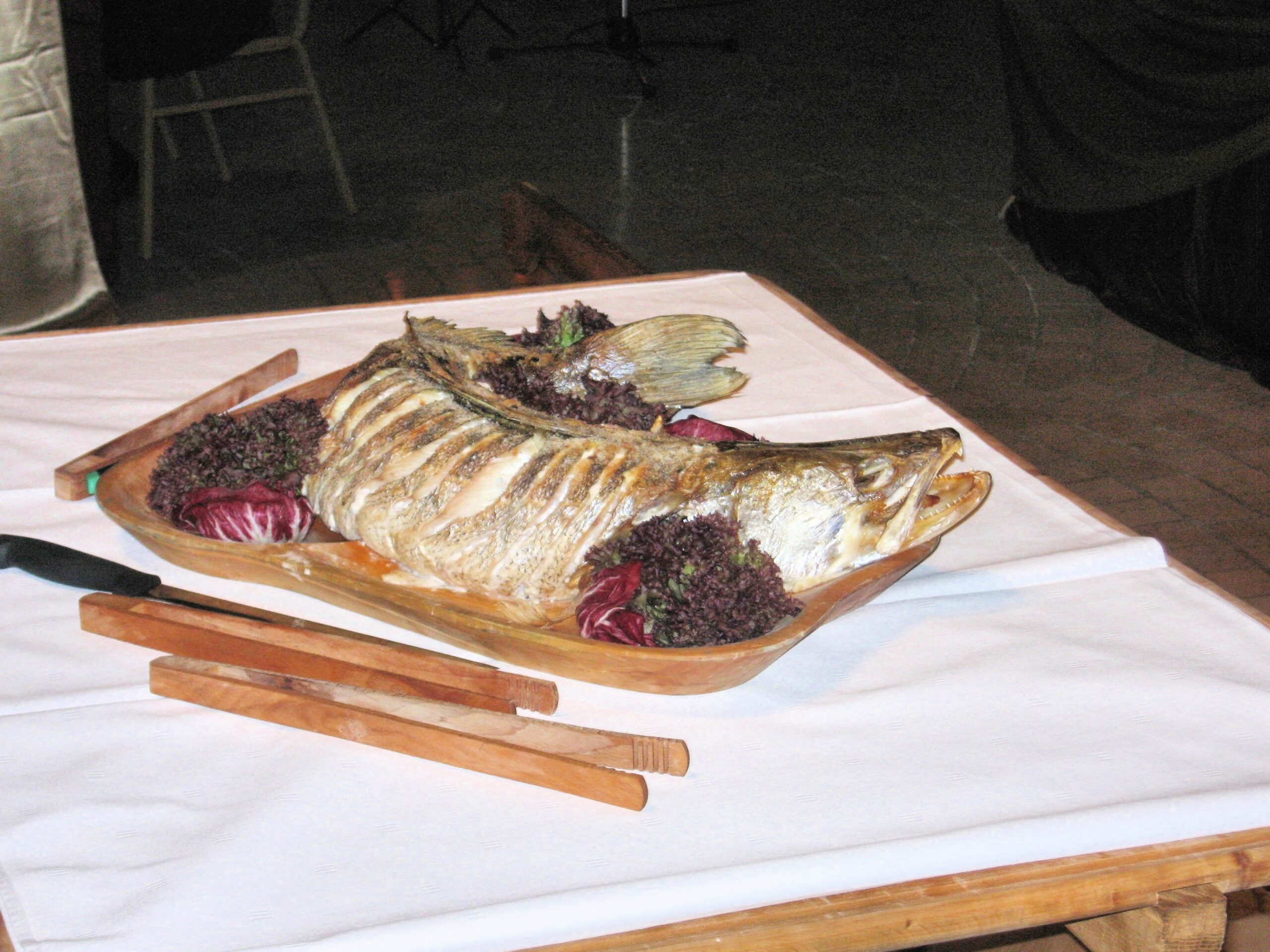
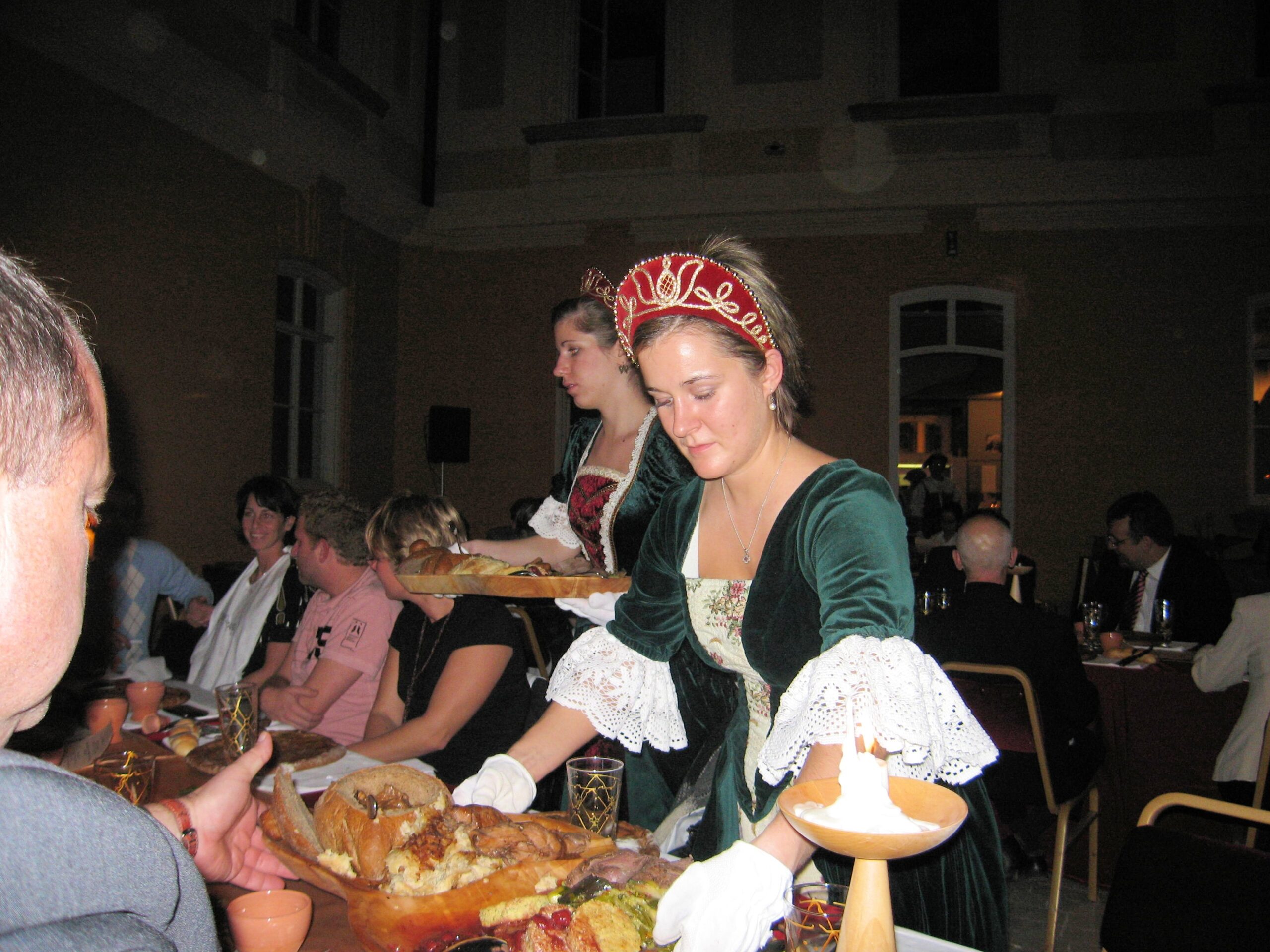
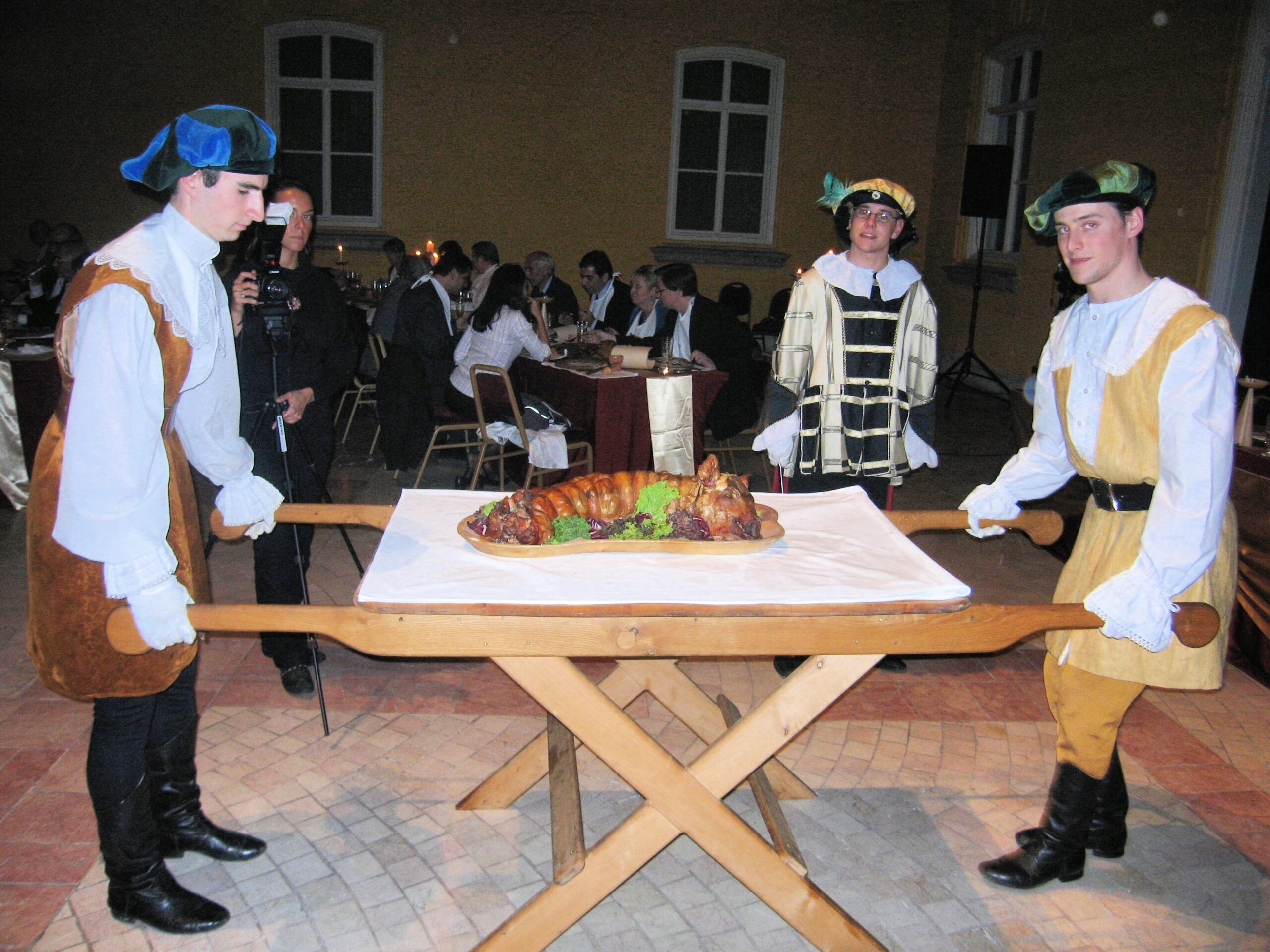
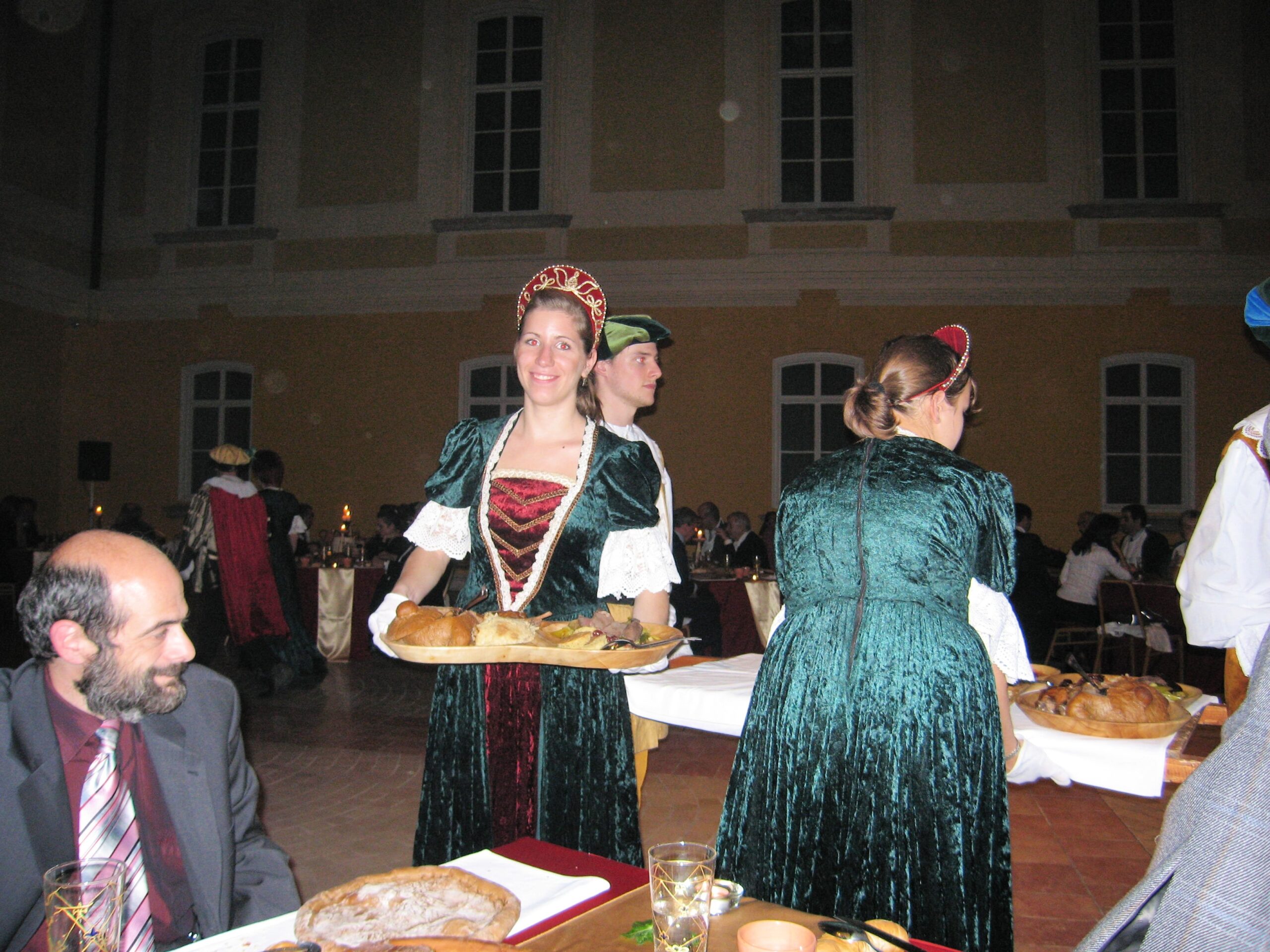
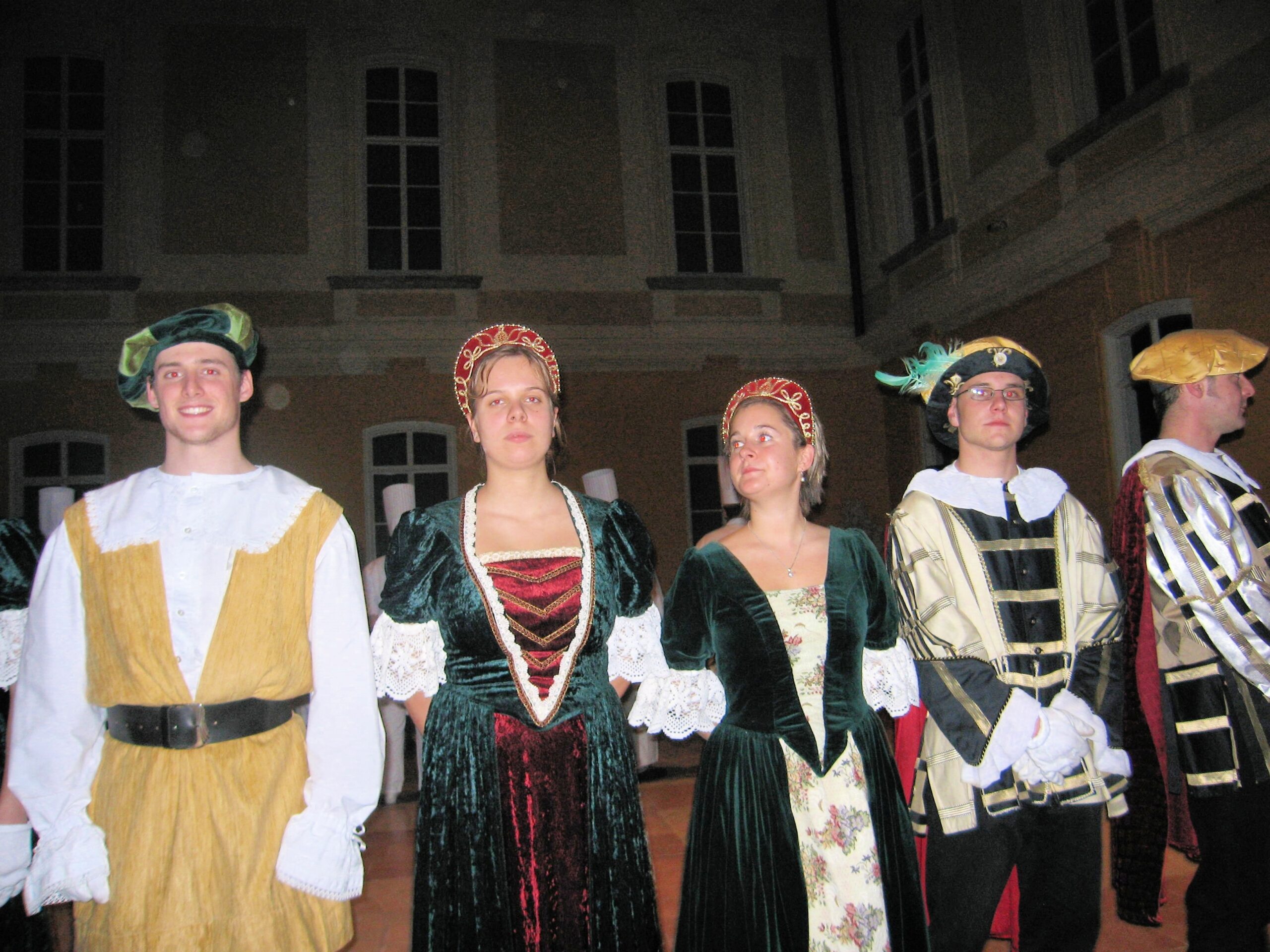
In 2008, we organized a Renaissance feast for the 550th anniversary of the coronation of King Matthias the 1., and we also announced a Renaissance gastronomic competition among the students.
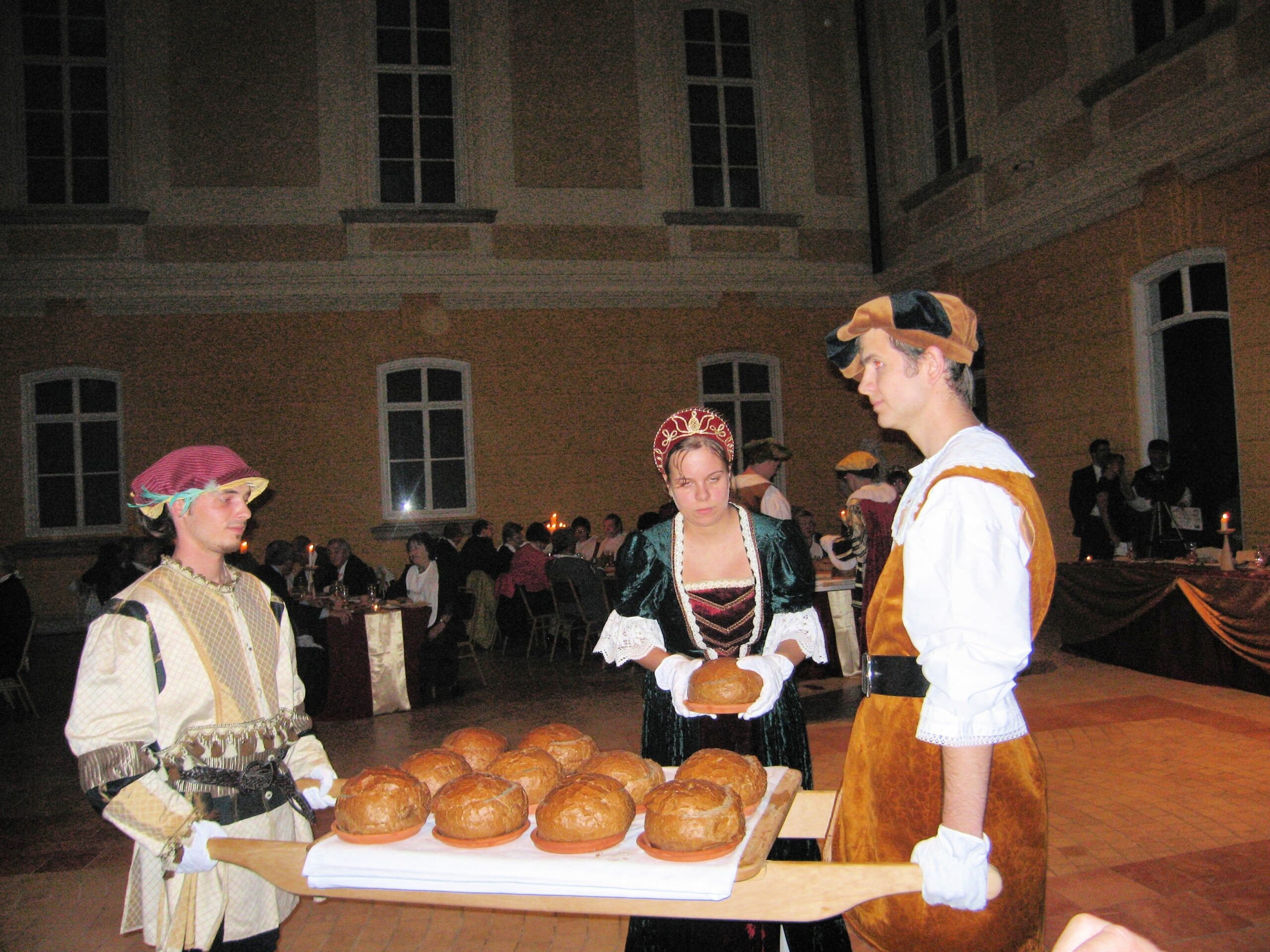
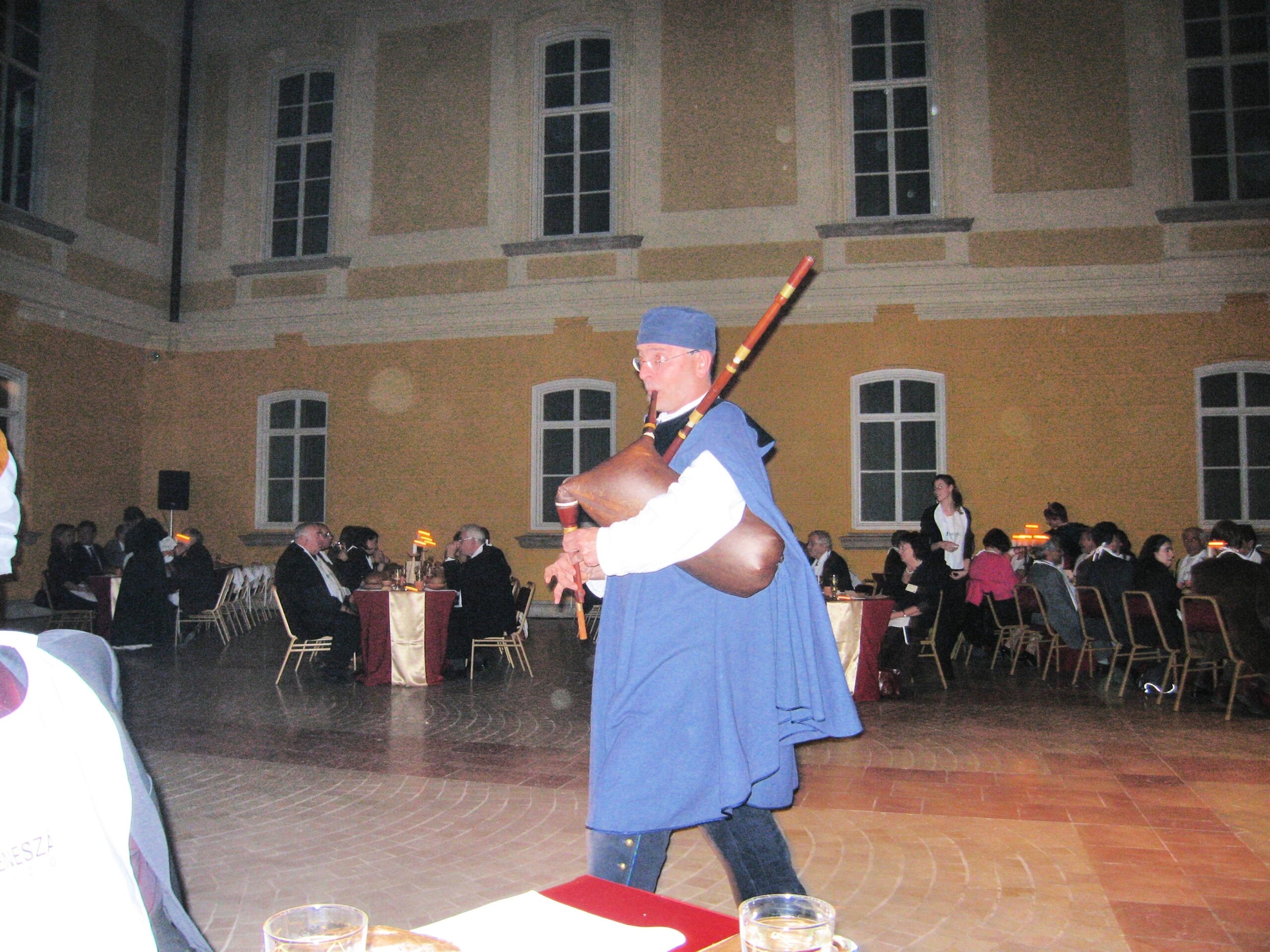
La Fiesta Party Service, under the direction of owner László Kovács, assisted the students in organizing the feast. During the dinner held in the building of the Budapest History Museum in Buda Castle, guests were served a menu based on authentic ingredients and kitchen technologies. The students and professionals serving wore period-appropriate clothing and busily attended to the guests. Naturally, combi ovens and thermoboxes in the hinterland also supported the kitchen work.
For the procurement of ingredients, a colleague from the Keszthely University of Agricultural Sciences selflessly helped in securing the fish (monkfish, pike-perch).
The menu of the contemporary event:
Menüsor
Apetizer bites – olives, artichoke hearts, edible flowers, sprouts
Cantaloupe and figs with sun dried ham
Fish trilogy– monkfish, catfish, pike perch with side dishes
Poultry cavalcade– guinea fowl, goose, quail with side dishes
Citrus sorbet
The best of forests and fields– venison tenderloin, roasted rabbit, wild boar ragout with side dishes
Sweet Renaissance delights
Pictures of the event:
In 2009, I announced the “Golden Spoon” cooking competition for the students. The details of the competition can be read in the following material written by me.
“The Golden Spoon student cooking competition was held at BGF KVIFK on May 19, 2009, and was won by Ferenc Keresztúri, a second-year student in the Hospitality-Hotel specialization in the English program, with a maximum score of 100 points. The dishes prepared by the 23 participating students represented varying qualities, but the creations of the leading group were executed at a professional level.
The theme of the competition was ‘Treasures of the Waters.’
According to the task, two servings of the main dish had to be prepared and plated on a Swiss plate within 60 minutes.
From the three main raw materials in the basket – halibut fillet, salmon fillet, and king prawn – two had to be used. Additionally, side dishes and a warm sauce had to be prepared to accompany the main dish.
Evaluation criteria: | |
Taste of the dish, flavor harmony, overall impression | 40 points |
Texture of the dish | 20 points |
Creativity | 20 points |
Work process, cleanliness, timing | 20 points |
Total | 100 points |
Jury members:
Kálmán Kocsonya, master chef, vice president of MNGSZ
Anikó Balog-Siposné Szőcze, college instructor
Dénes Sándor, college associate professor
It was a memorable competition; the students prepared numerous delicious dishes. The winner’s maximum score speaks for itself. Before or since, I have never had the opportunity to award such a score in any competition.
The pictures of the competition:
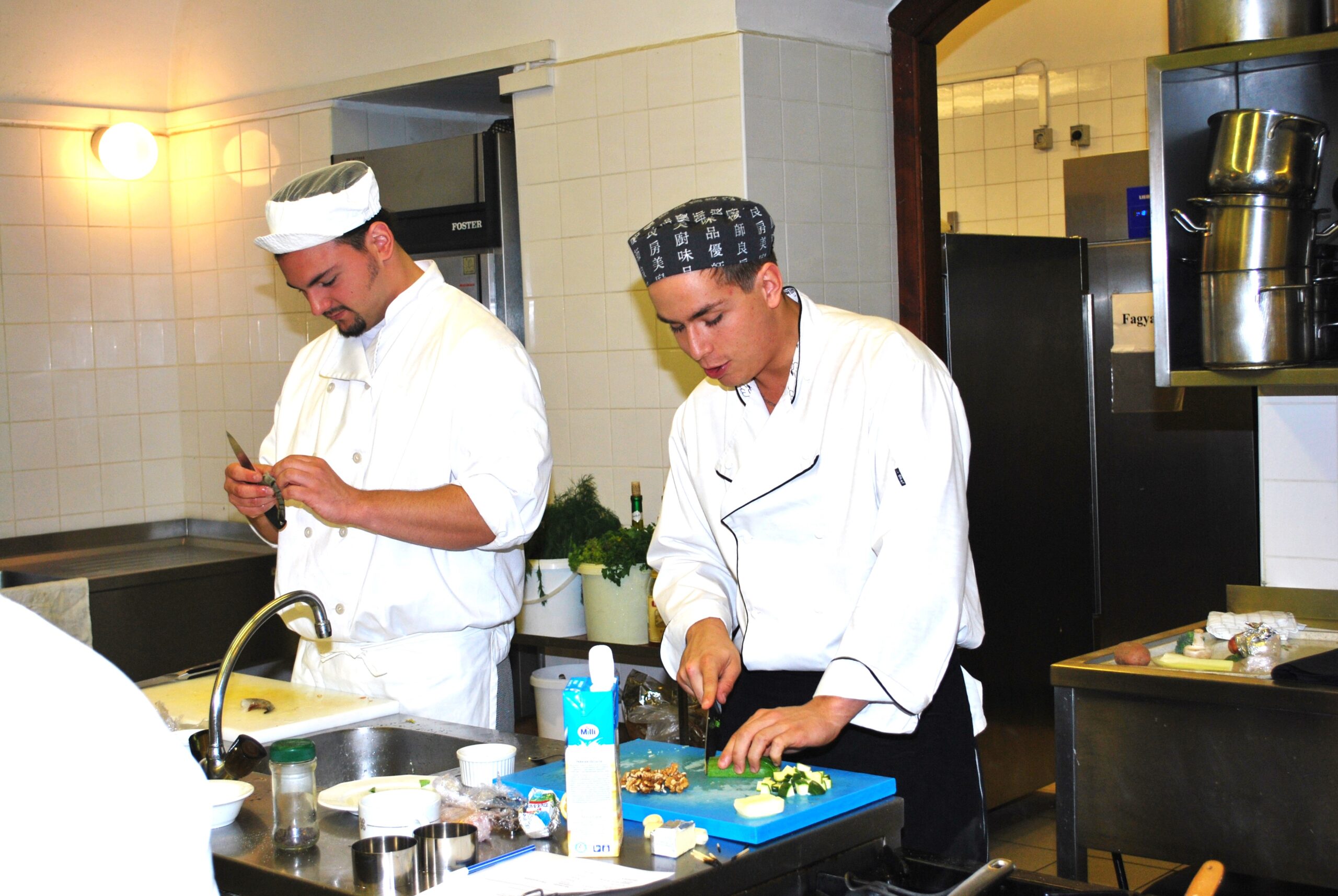
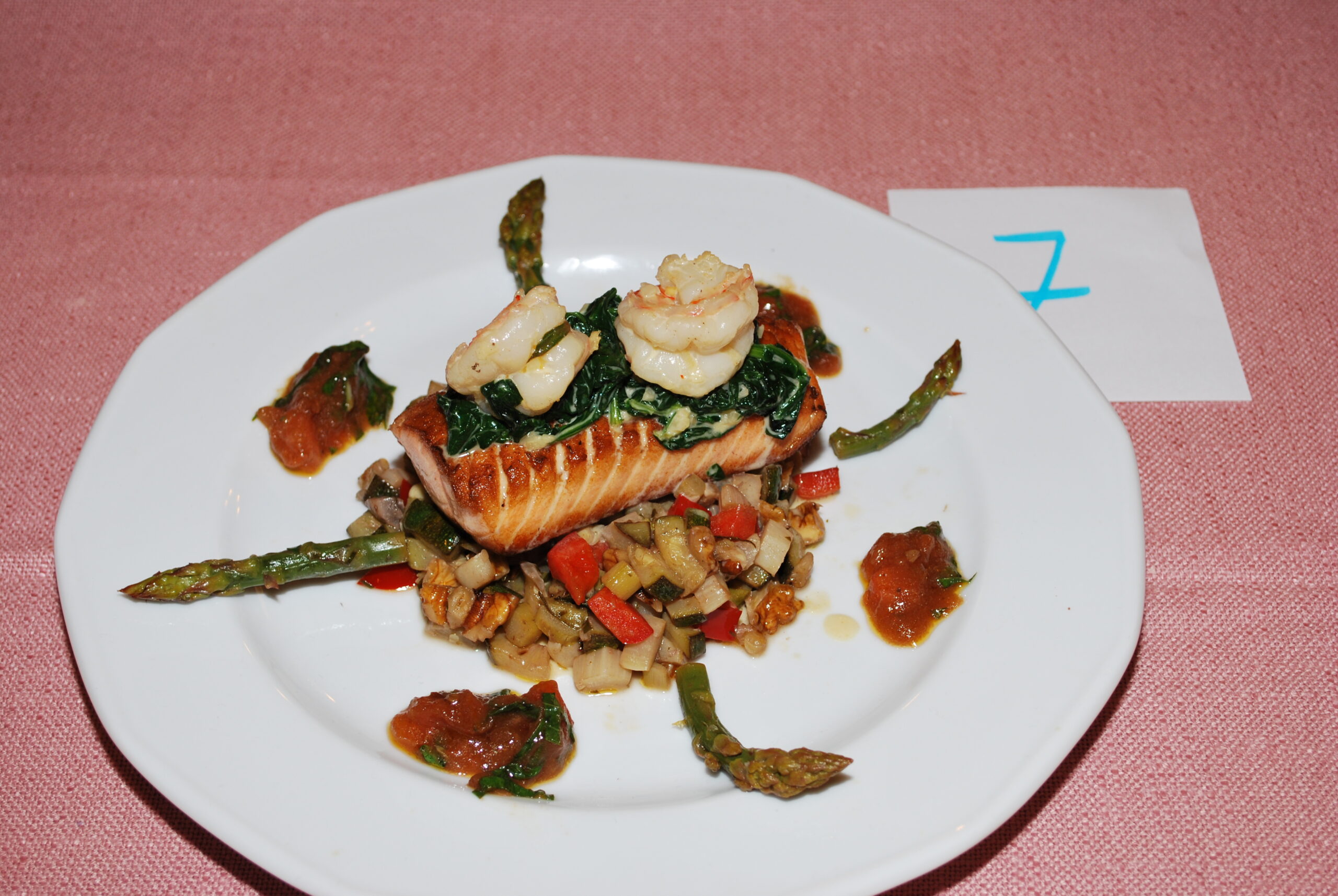
Ferenc Keresztúri on the right and the winning dish.
The finalists and the jury (Kálmán Kocsonya, Anikó Balog-Siposné Szőcze, and me)
*
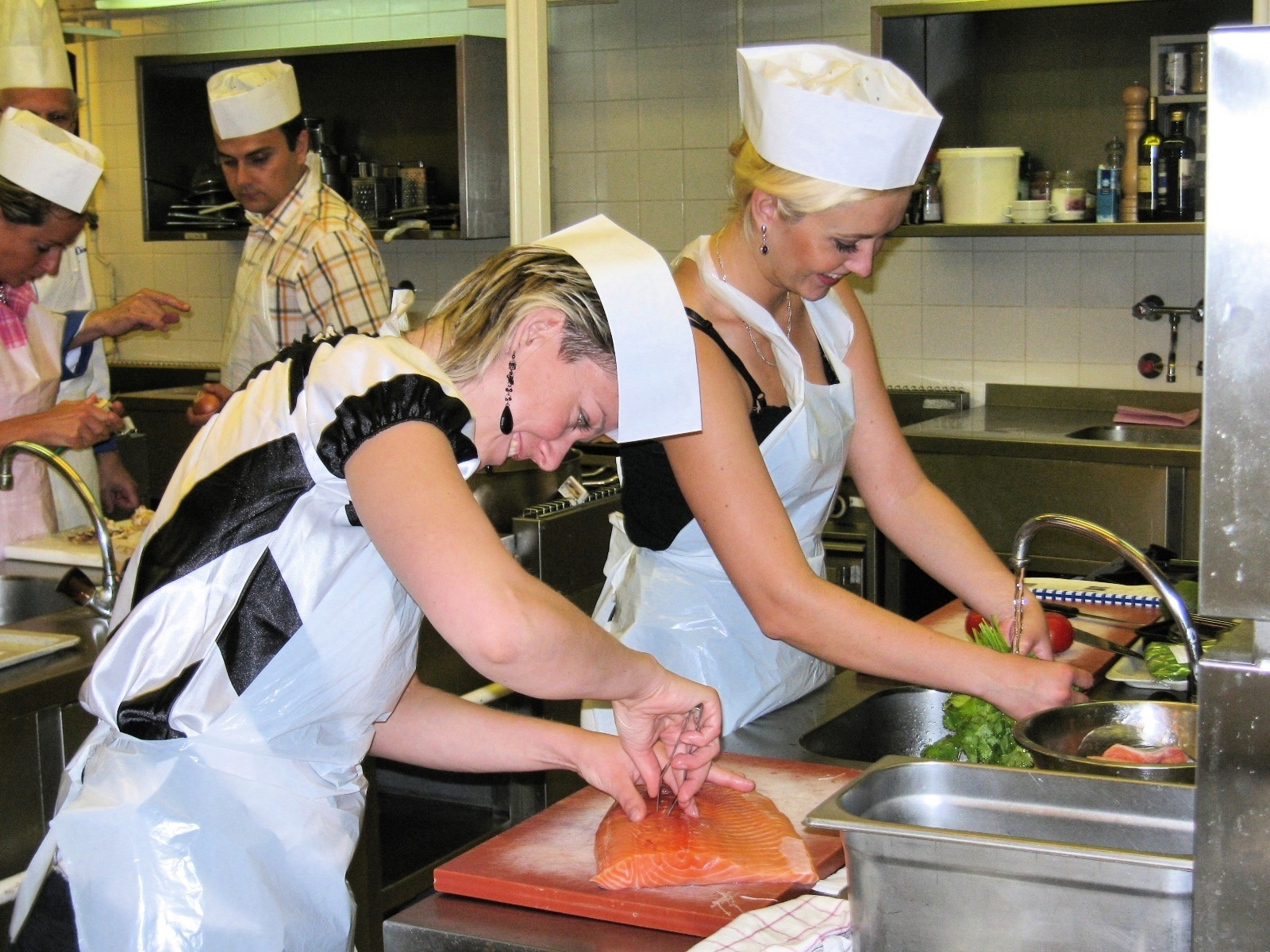
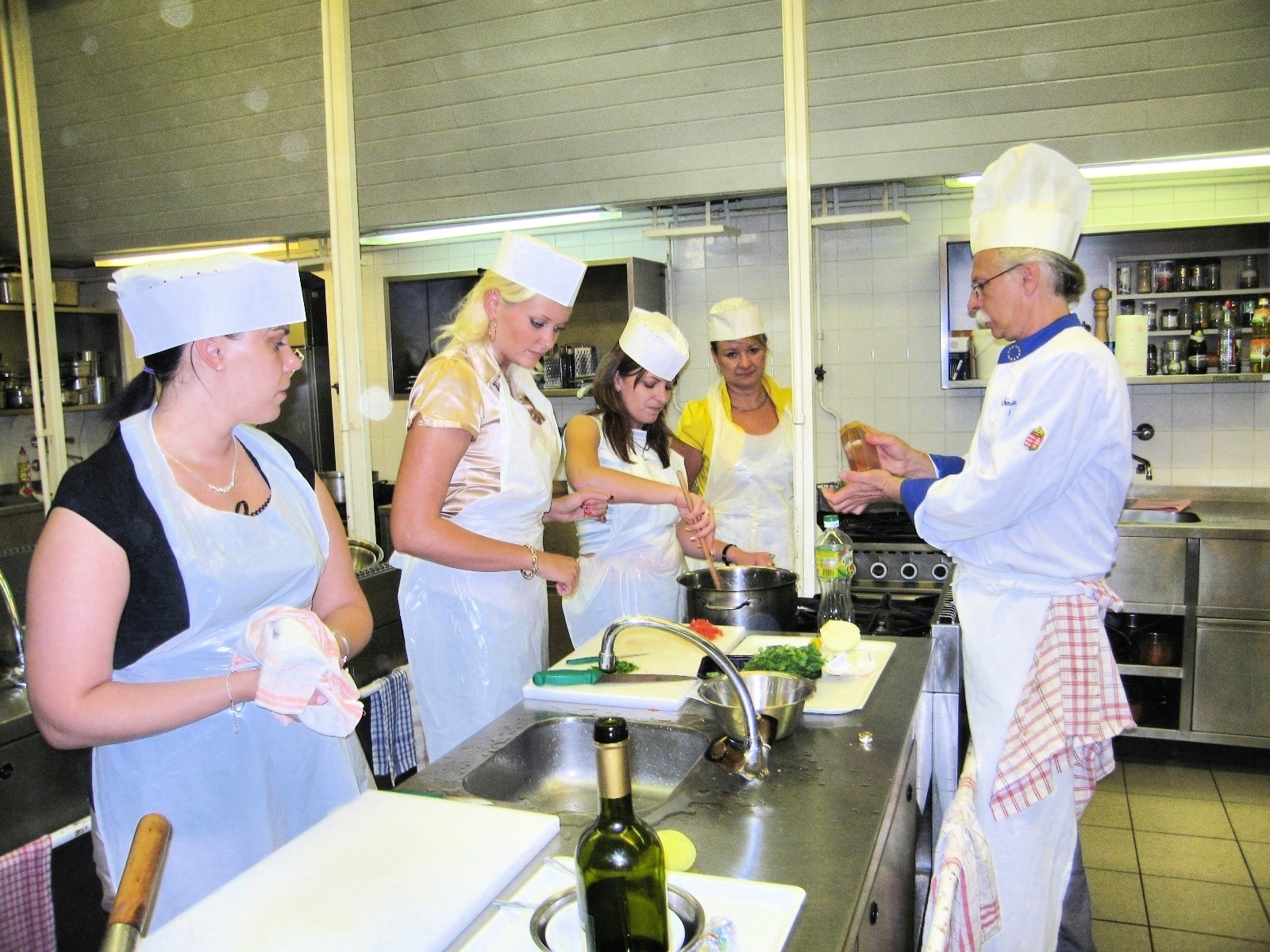
We held a large-scale training course for the employees of METRO Kereskedelmi Kft. in June. The goal of the training was to provide ideas to those working in various food sectors—fish and seafood, meat, fruits and vegetables, delicatessen—on how to prepare dishes using the ingredients they sell. Afterwards, they would be able to incorporate this knowledge into their daily routine. Several hundred employees from different parts of the country participated in this training.
The images from the training:
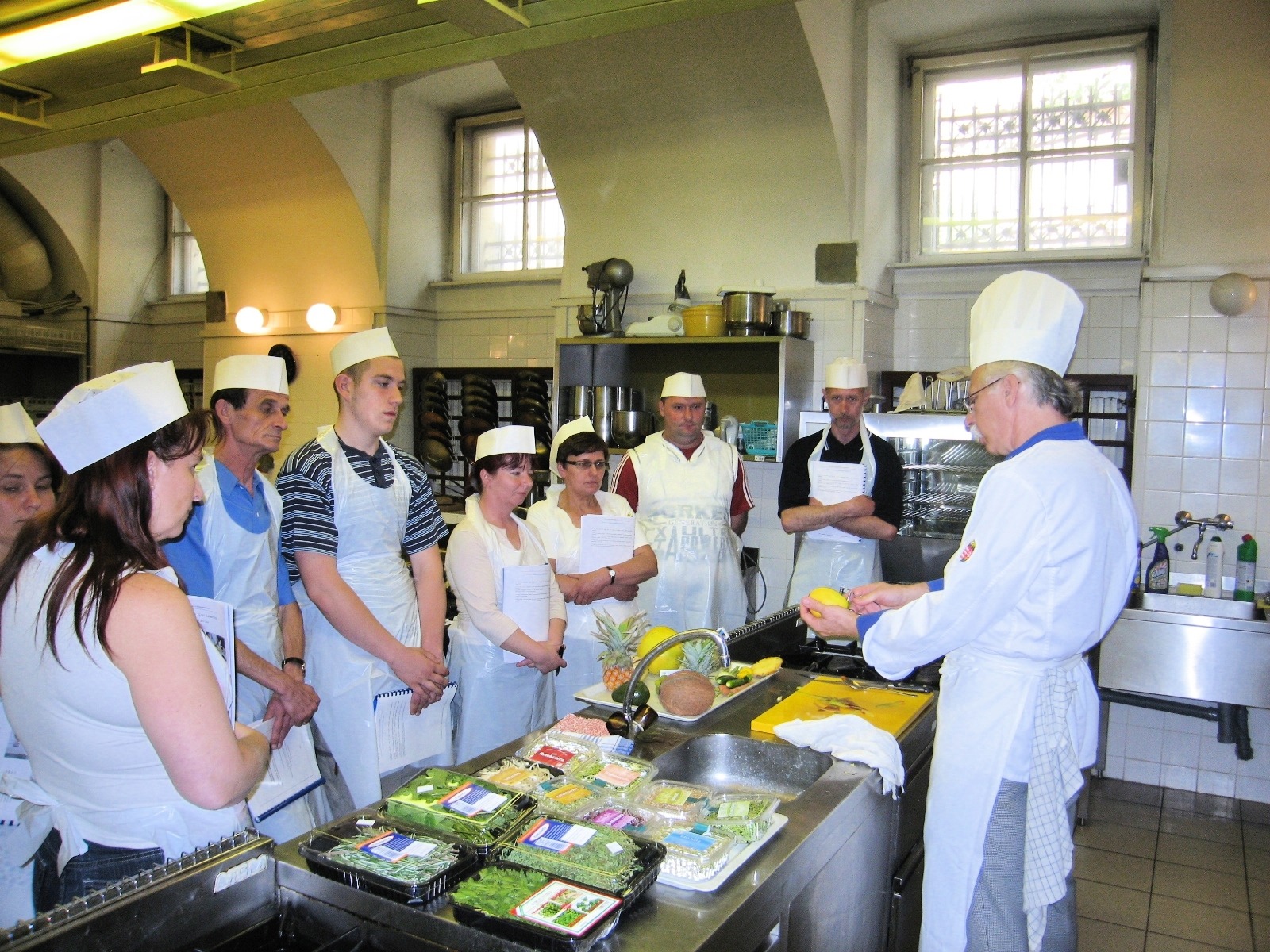
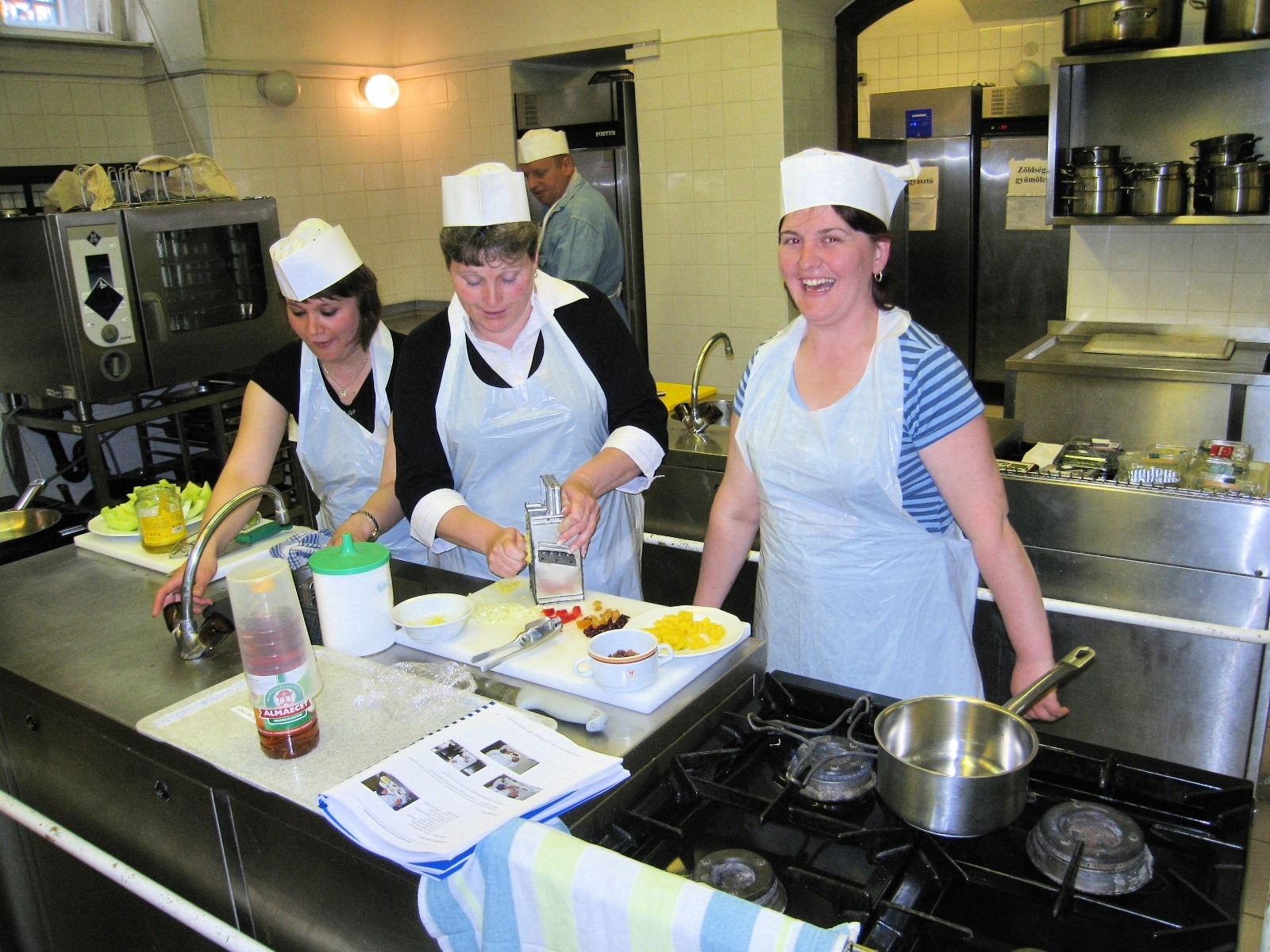
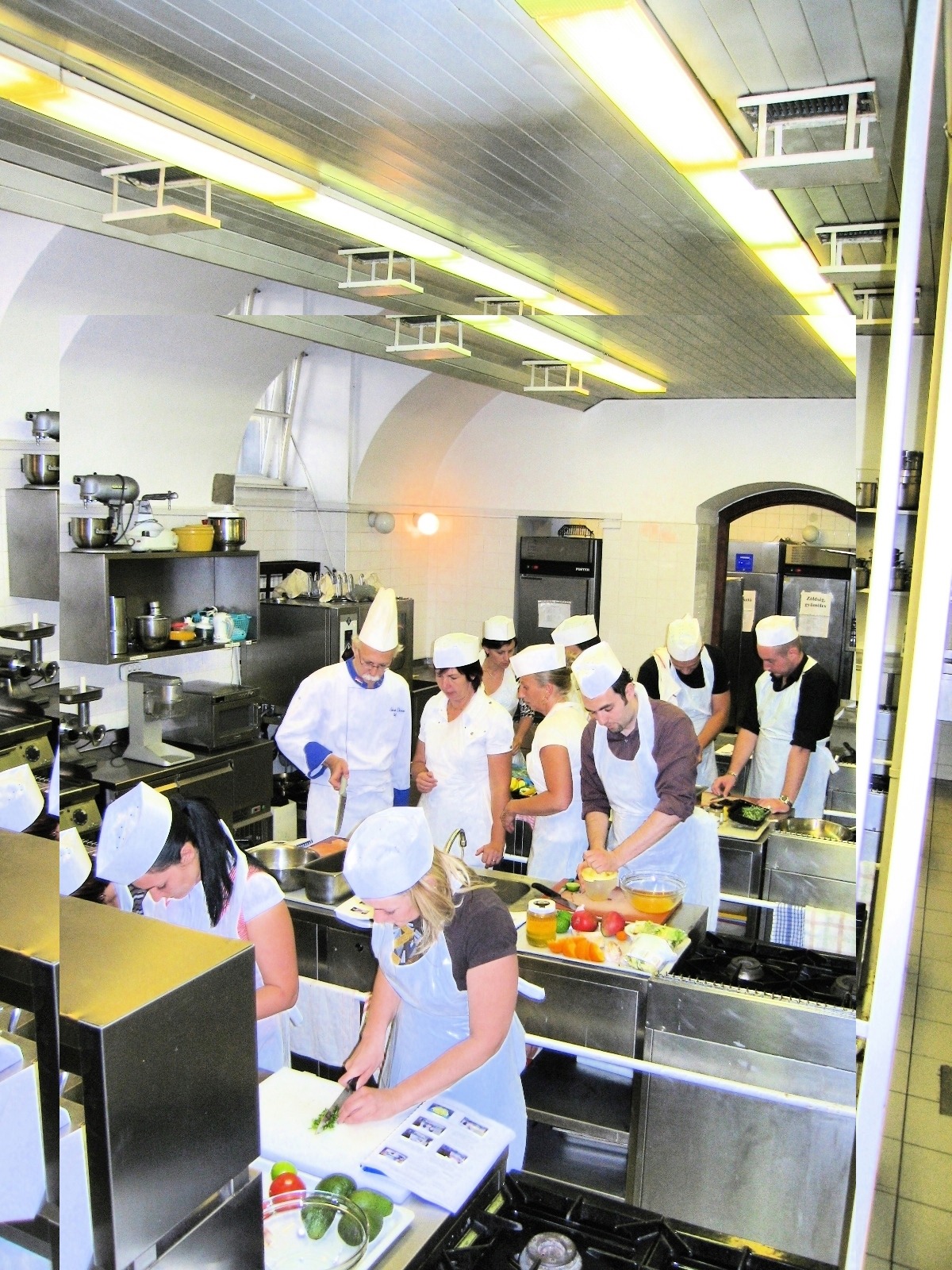
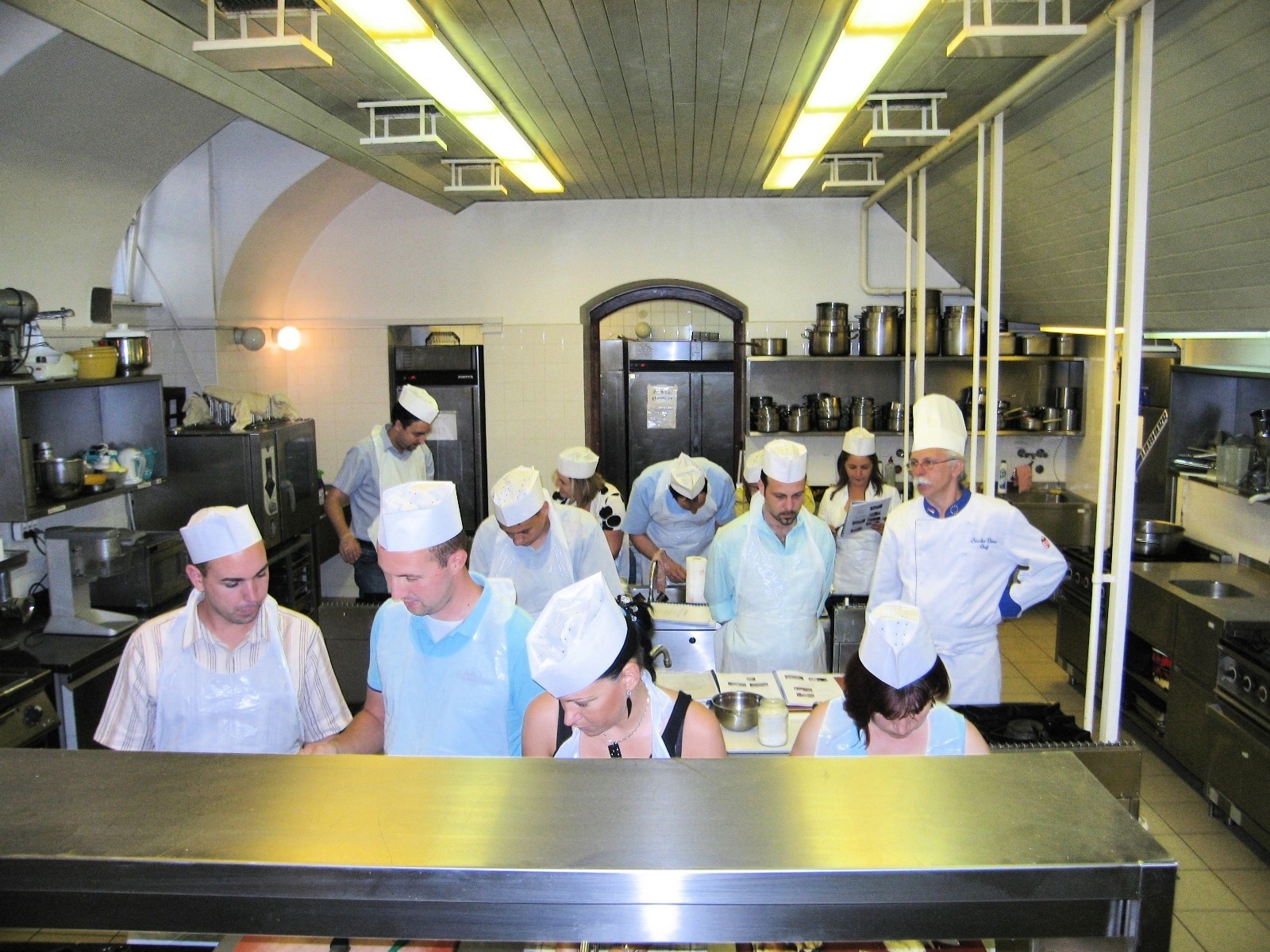
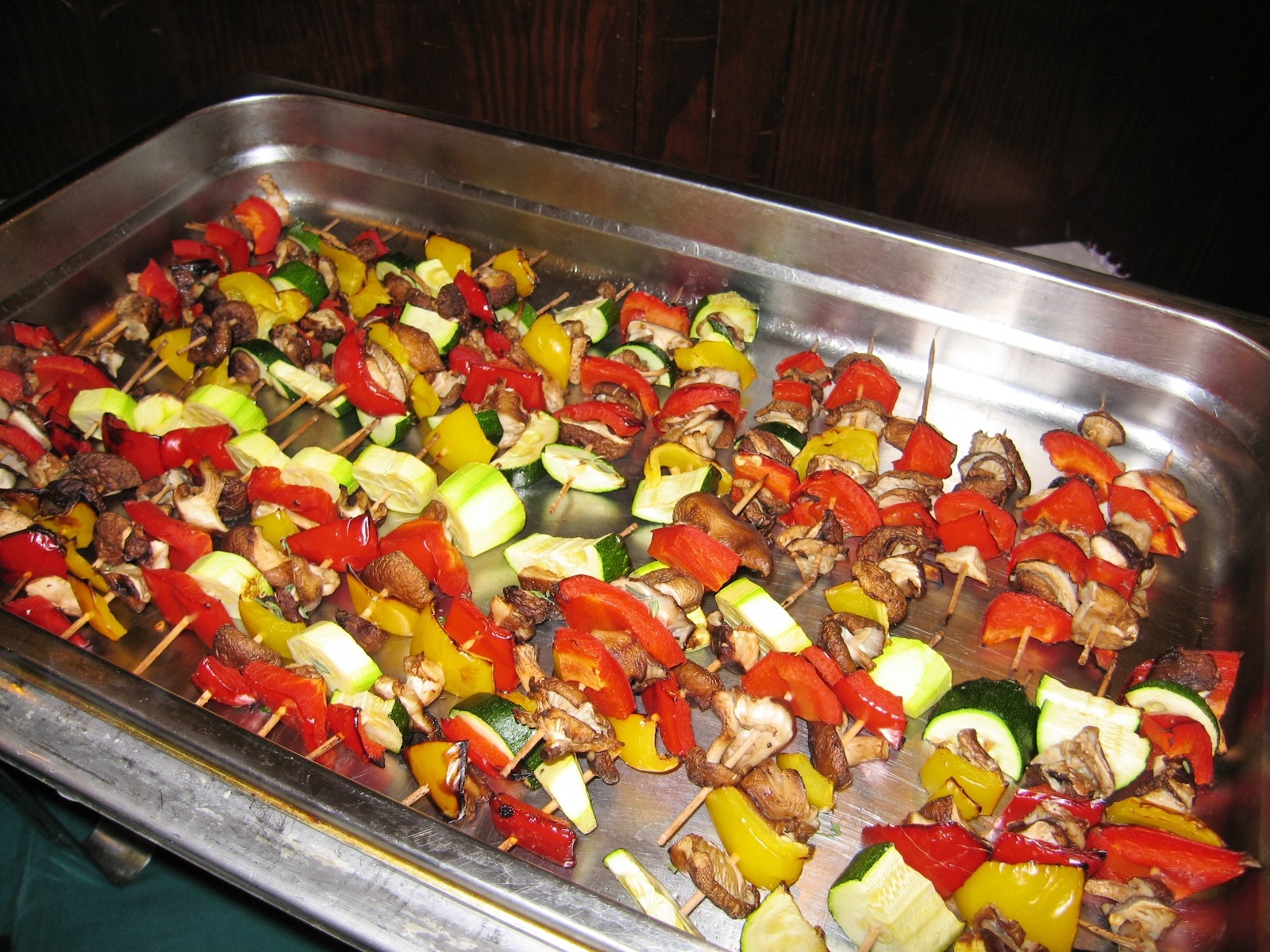
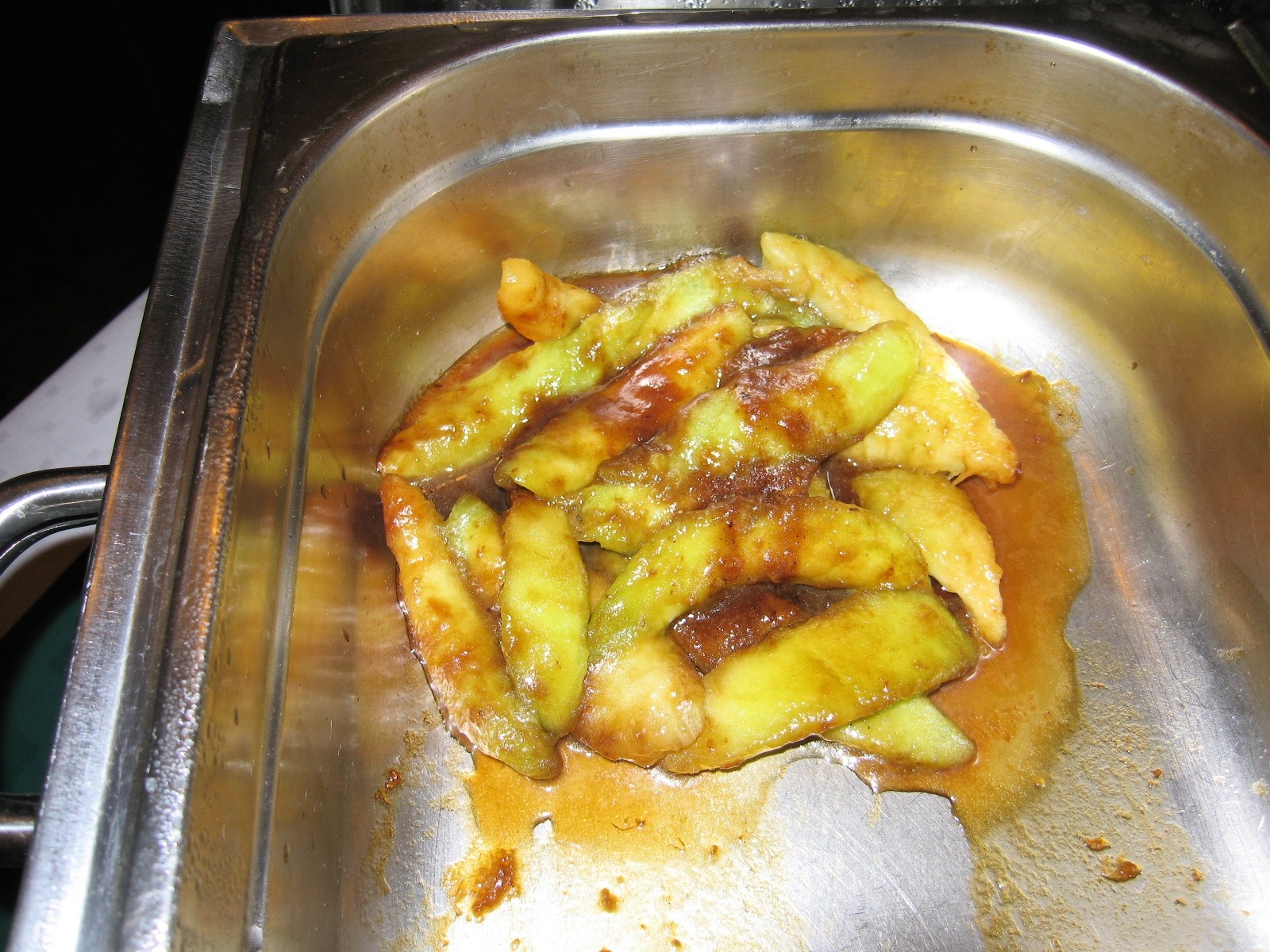
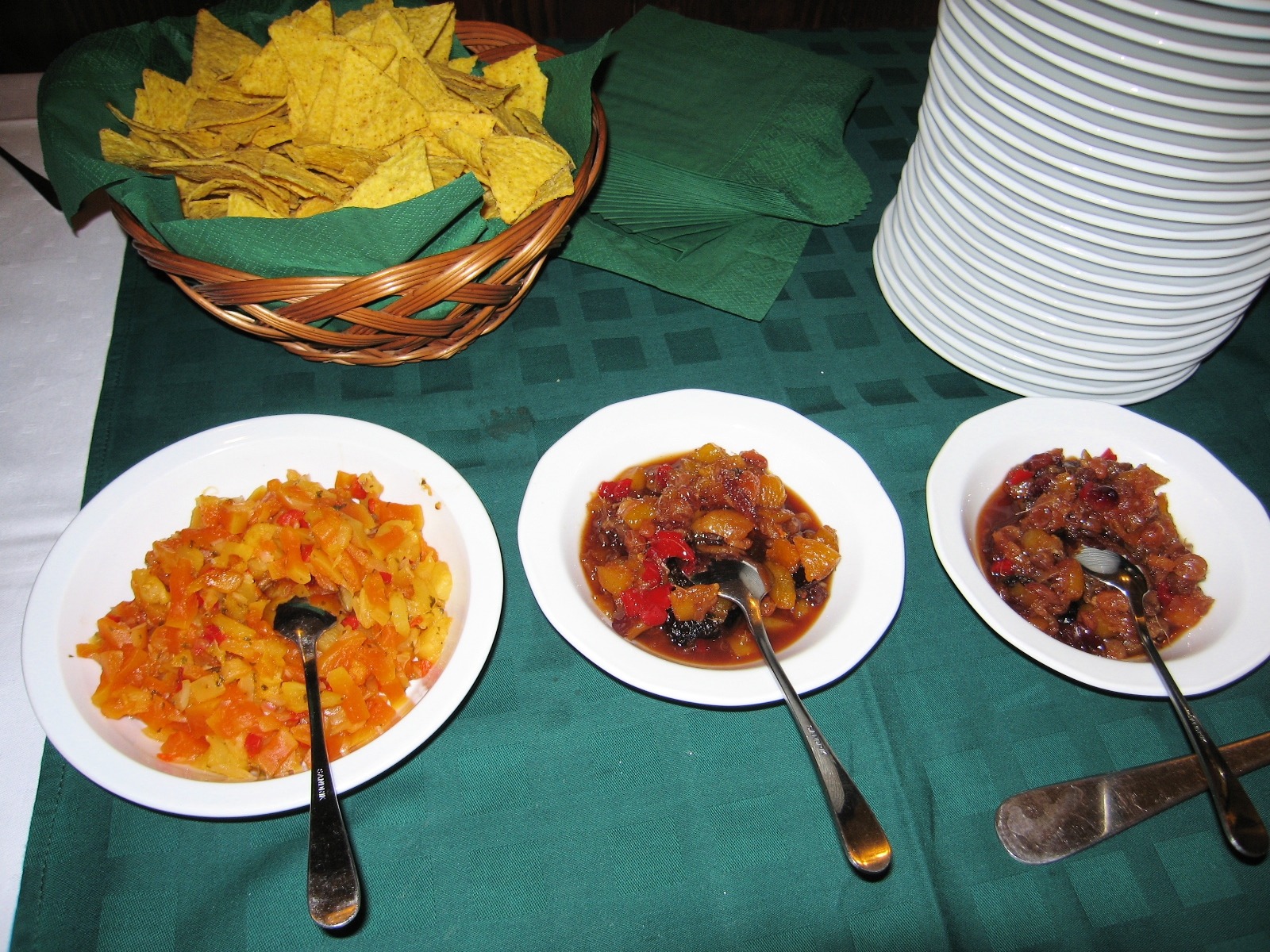

Click on the image to watch the video of the “Chicken breast roasted with aged ham and sage, served with creamy zucchini risotto” prepared at the Joyful Cooking event! You’ll find the recipe below the video.
You can watch the interview with István Kiripolszki on YouTube by clicking here.
You can watch the interview with Tamás Stiller on YouTube by clicking here.
The spontaneously told stories from the Joyful Cooking event can be found here.
https://www.youtube.com/watch?v=fvIGX7Anqkc
https://www.youtube.com/watch?v=6tM3JEYWbtY
https://www.youtube.com/watch?v=26b0Vp2ZvOI
https://www.youtube.com/watch?v=jqoODyzfb2Y
https://www.youtube.com/watch?v=DqaWLHxuC_0
https://www.youtube.com/watch?v=y2Ife3xQTyU
https://www.youtube.com/watch?v=AZbpGymB33s
https://www.youtube.com/watch?v=0lWZk3EsvHM
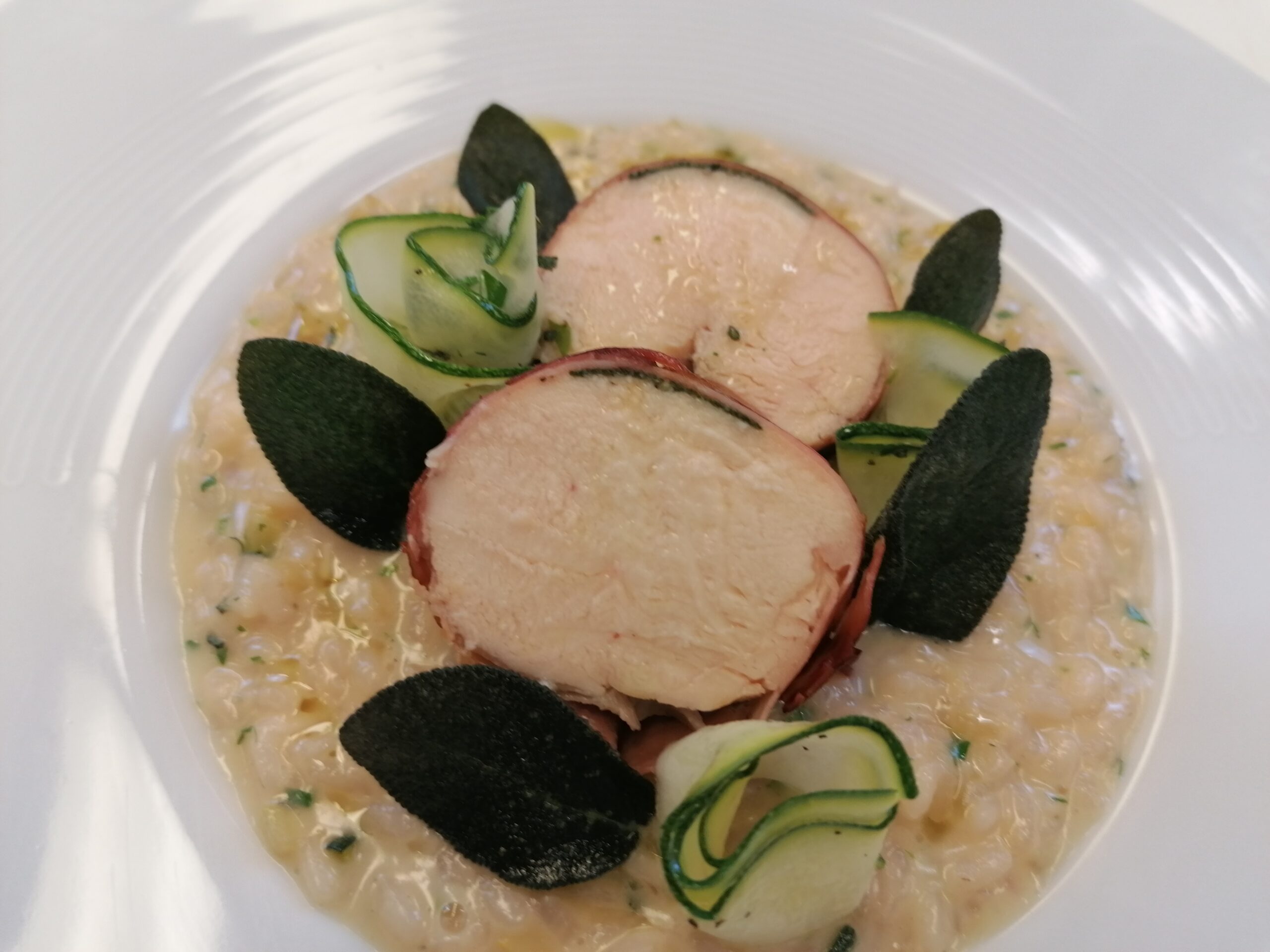
Young chicken breast roasted with aged ham and sage, served with creamy zucchini risotto
Recommended ingredient quantities for 4 persons:
For the chicken breast:
10 smaller chicken breast fillets, 120-140 g each (corn-fed, farm-raised),
20-24 slices of thinly sliced Parma or Serrano ham,
25-30 fresh sage leaves (larger leaves),
olive oil (sansa) for frying the meat.
For the risotto:
250 g butter 82% (50 g for sautéing, 200 g for creaming),
50 ml olive oil (sansa),
2 shallot onions,
500 g arborio or carnaroli risotto rice,
200 ml dry white wine,
2 liters vegetable stock,
200 g Parmesan cheese, grated.
For the zucchini cubes and ribbons:
4 medium zucchinis,
2 cloves garlic,
100 ml white wine vinegar,
extra virgin olive oil,
salt, pepper.
Sage leaves (for garnish)
sunflower oil for frying
Preparation steps:
- Clean and shape the skinless chicken breasts if necessary, season with salt, and prepare them for wrapping with the ham.
- Arrange the slices of ham side by side on a sheet of cling film, spread fresh sage leaves in the middle of the ham, and wrap the chicken breasts with the ham so that the ham slice fully covers them (like sushi).
- Twist both ends of the cling film to tighten the ham around the breasts and let rest in the refrigerator for one hour.
- Heat the risotto rice in a mixture of butter and olive oil, season with finely chopped shallots, then pour in the white wine. When the wine has evaporated, gradually cook the rice with warm vegetable stock until done.
- Dice the seedless part of the zucchini into 2-3 mm pieces. Sauté in a little olive oil, season with salt and pepper, add two cloves of garlic, then remove the garlic later.
- Using the nicer parts of the zucchini, shave longer ribbons and marinate them in a mixture of olive oil, wine vinegar, herbs, salt, and pepper. When serving, roll the ribbons for decoration.
- When cooking the chicken breasts, remove them from the cling film and sear the cylindrical breasts in a pan with a little oil, turning so the ham browns evenly without tearing.
- Roast the breasts in a preheated 120 °C oven until an internal temperature of 64 °C is reached, then rest for 2-3 minutes before slicing.
- In the final stage of cooking the risotto, add the diced sautéed zucchini, grated Parmesan, and butter pieces to cream it and prepare for serving.
- To serve, arrange the risotto on the plate. Cut the chicken breasts into equal cylinders to match the garnish. Place the marinated zucchini ribbons on the plate. Garnish the dish with fried sage leaves.
*
Preview
Work at the College of Hospitality (BGF KVIK) 2005-2013 (Part 2).
Joyful Cooking with Petra Tischler and András Wolf. Petra was also one of my outstanding students in the second half of the 2000s, while I recognized András’s talent at the first Tradition and Evolution competition in 2006.
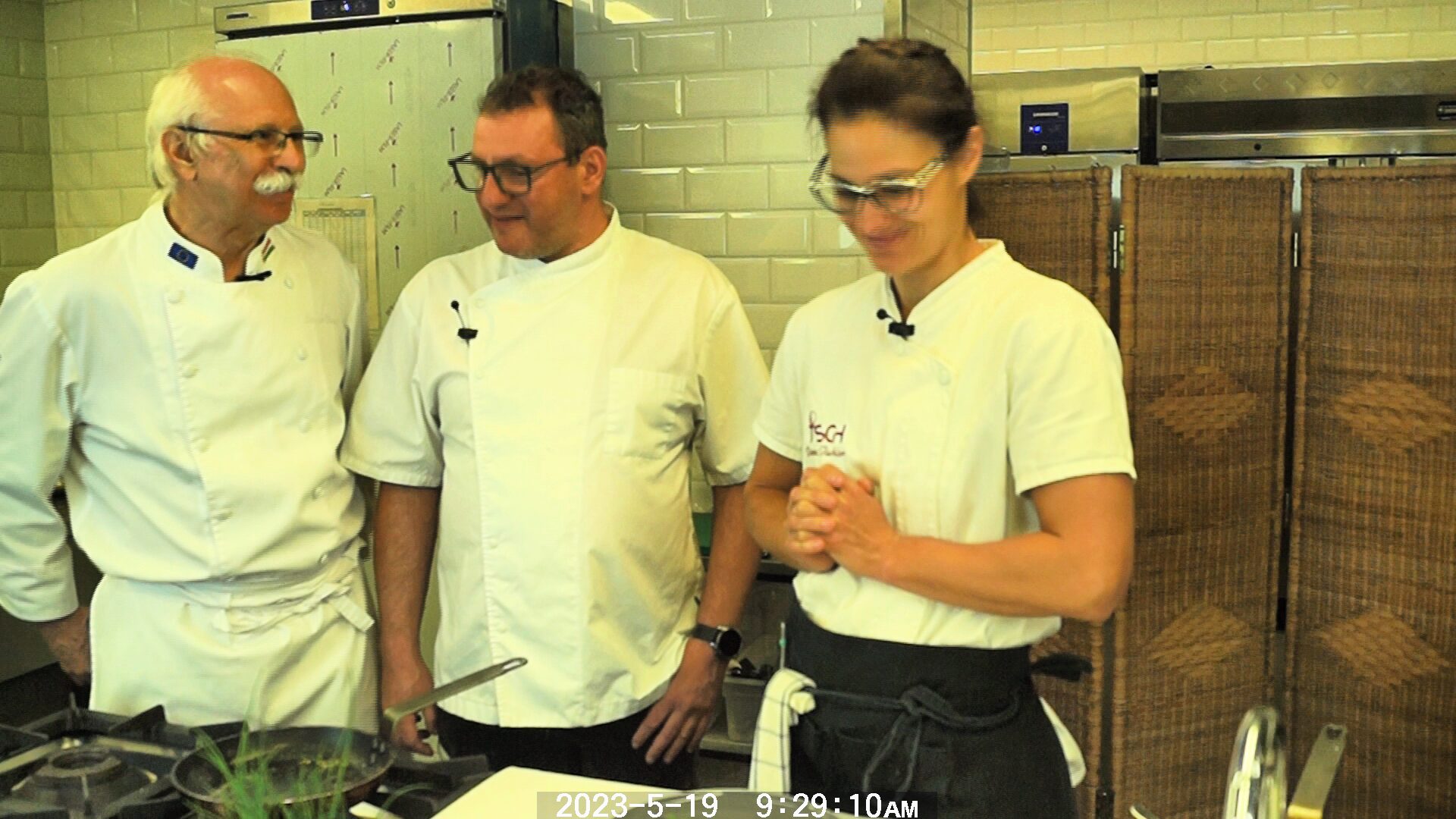
With Petra Tischler and András Wolf
*